


Search results
Search for "derivatives" in Full Text gives 2840 result(s) in Beilstein Journal of Organic Chemistry. Showing first 200.
Non-central chirality in organic chemistry
Beilstein J. Org. Chem. 2026, 22, 370–371, doi:10.3762/bjoc.22.24

- remote from the reaction site. Second, non-central chiral frameworks remain fertile ground for catalyst design, not only as derivatives of established motifs but also as newly conceived architectures that redefine how chirality can be embedded into catalytic systems. Third, the pronounced chiroptical and
Recent advances in the cleavage of non-activated amides
Beilstein J. Org. Chem. 2026, 22, 352–369, doi:10.3762/bjoc.22.23
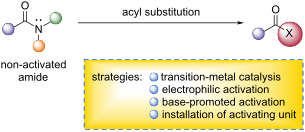
- of conventional, non-activated amides remains far more difficult. This review summarizes recent advances over the past decade in the activation and cleavage of non-activated amide C–N bonds for their conversion into diverse carboxylic acid derivatives. Key strategies covered include transition-metal
- valuable features, amide derivatives are ubiquitous across the pharmaceutical, agrochemical, dye, polymer, and renewable-energy industries [6][7][8][9][10][11]. Accordingly, the development of efficient methods for both amide-bond formation and the selective transformation of amide functionalities remains
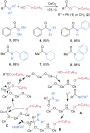
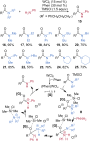
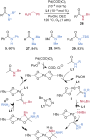
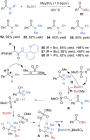
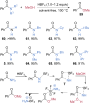
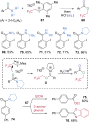
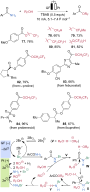
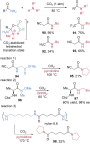
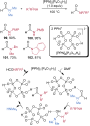
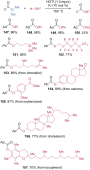
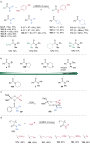
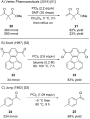
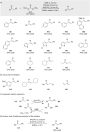
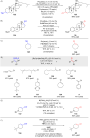
- scope of the esterification was indeed broad under mild conditions, enabling late-stage functionalization. For example, esterification of a fenofibric acid-derived primary amide with menthone derivatives furnished the corresponding ester 50 in 98% yield. In 2024, Aisa et al. reported a facile and










Synthesis of tricyclic fused pyrrolidine nitroxides from 2-alkynylpyrrolidine-1-oxyls
Beilstein J. Org. Chem. 2026, 22, 344–351, doi:10.3762/bjoc.22.22

- -alkynyl-substituted pyrrolidine nitroxides was studied. These nitroxides have been prepared via intramolecular Huisgen cycloaddition or intramolecular alkylation in 2-pyrazolyl derivatives prepared by Michael addition–cyclocondensation of the corresponding alkynones with hydrazine. The reduction kinetics
- literature data on reactivity of 5-azidopentyne derivatives in intramolecular Huisgen cycloaddition reactions are contradictory. Some authors successfully obtained 5-azidopentyne derivatives upon nucleophilic substitution at 80 °C in DMF, and additional heating at 170 °C was necessary for cyclization to
- triazoles to occur [25]. However, there are also examples where the corresponding triazoles were isolated instead of 5-azidopentyne derivatives under the same conditions (DMF, 80 °C) [26]. The nitroxides 3a–f were treated with excess of NaN3 in milder conditions, in DMSO at 60 °C, and a single product was


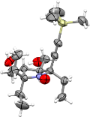


Spirobarbiturates with a pyrrolizidine moiety: synthesis, structure and biological evaluation
Beilstein J. Org. Chem. 2026, 22, 274–288, doi:10.3762/bjoc.22.20
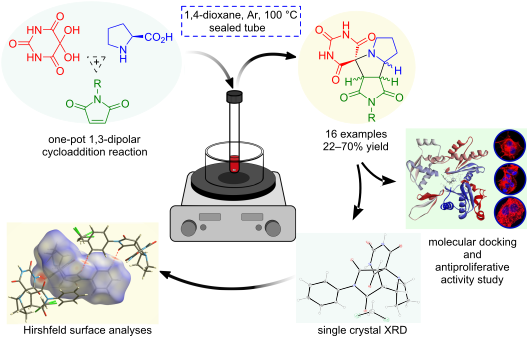
- of pharmaceutical use. Today, only slightly more than a dozen barbiturate-containing drugs remain in medical practice [4]. Nevertheless, interest in barbiturate derivatives resurged around the 1920s, when the first compounds containing a spirobarbiturate moiety were synthesized [5][6]. By the early
- ] and antiviral activities (7,7a-diepialexine) [40]. Some pyrrolizidine derivatives are inhibitors of enzymes such as acetylcholinesterase (AChE) (echimidine) [41] or β-N-acetylglucosaminidase (GlcNAcases) (pochonicine) [42]. Our previous studies have shown that spiro-fused barbiturates containing
- azabicyclo[3.1.0]hexane and cyclopropa[a]pyrrolizine moieties can be synthesized via 1,3-dipolar cycloaddition between cyclopropene derivatives and azomethine ylides generated in situ from alloxan and α-amino acids [43]. In [43], a mechanism was proposed for the formation of azomethine ylides from alloxan




Arene activation via π-bond localization: concepts and opportunities
Beilstein J. Org. Chem. 2026, 22, 257–273, doi:10.3762/bjoc.22.19
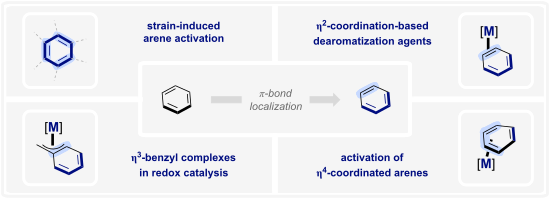
- cyclohexene derivatives beyond sulfone and sulfonamide motifs. By combining ester enolate and amine addition sequences, this methodology was subsequently extended to the synthesis of architecturally complex polyheterocyclic frameworks (Scheme 3B) [62]. Such scaffolds are scarcely represented in contemporary
- established a mechanistic foundation for exploiting η3-benzyl intermediates as conduits for controlled arene-to-cyclohexadiene conversion. Building on this foundational discovery, Bao and Yamamoto subsequently broadened the nucleophile scope to encompass allylsilanes [76], allylboronic acid derivatives [77
- (chloromethyl)naphthalene derivatives (Scheme 7A), thereby expanding the synthetic utility of the overarching platform [87]. This transformation furnished either ortho- or para-substituted carbocycles, depending on the substitution pattern of the malonate. Crucially, selective arene functionalization over




A mild and atom-efficient four-component cascade strategy for the construction of biologically relevant 4-hydroxyquinolin-2(1H)-one derivatives
Beilstein J. Org. Chem. 2026, 22, 244–256, doi:10.3762/bjoc.22.18
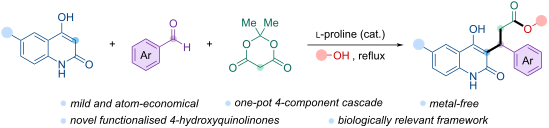
- and selective synthesis of previously inaccessible 4-hydroxyquinolin-2(1H)-one derivatives. Utilizing readily available 6-halo-4-hydroxyquinolinones, aromatic aldehydes, Meldrum’s acid, and alcohols under ʟ-proline catalysis, the reaction proceeds via in situ formation of arylidene-substituted Meldrum
- cycles and enables the parallel exploration of diverse chemical space. The impact of MCRs is well documented in medicinal chemistry and pharmaceutical research, including the development of several approved drugs [14][15][16][17][18]. Recently, 4-hydroxyquinoline-2(1H)-ones and their derivatives have
- ][31][32]. Notably, many derivatives display pronounced antimicrobial properties, with several members of this class exhibiting inhibitory activity against Mycobacterium tuberculosis, thus representing potential candidates for antituberculosis therapy [33]. Their efficacy has also been demonstrated


Conformational analysis of difluoromethylornithine: factors influencing its gas-phase and bioactive conformations
Beilstein J. Org. Chem. 2026, 22, 237–243, doi:10.3762/bjoc.22.17
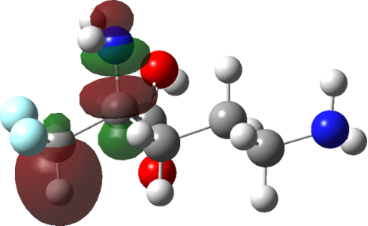
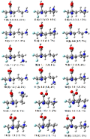
- intermolecular interactions in biological environments. This study clarifies the electronic origin of DFMO’s gauche effect and provides insight into how local electronic factors determine the structure of fluorinated amino acid derivatives. Keywords: conformational analysis; difluoromethylornithine; gauche




Synthesis of diaryl phosphates using phytic acid as a phosphorus source
Beilstein J. Org. Chem. 2026, 22, 213–223, doi:10.3762/bjoc.22.15
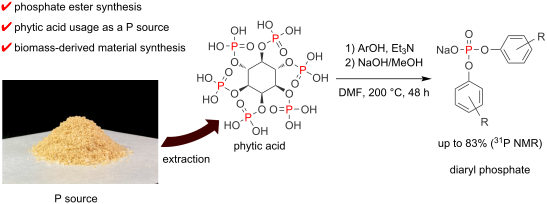
- utilization in metal-chelating agents, flame retardants, and catalysts [3][6][7][8][9][10][11][12][13][14]. However, these applications involved the use of either phytic acid itself or its derivatives. Our group has previously reported a method for synthesizing diaryl phosphates using phosphoric acid as the
- the corresponding free acids or sodium salts [15][46][47][48]. According to Figure 3, each diaryl phosphate was isolated with a yield of approximately 60%, except for some derivatives. It was presumed that 2-hydroxy-m-xylol (1c) having methyl groups at the ortho-positions, led to a diminished yield of
- recovery of 4.2%, and phosphate ester 2a was synthesized using the extracted phytic acid in a good yield (Scheme 4). Furthermore, we demonstrated that the reaction could be applied to phenol derivatives (Figure 3). The time-course analysis of the esterification process via 31P NMR (Scheme 3, Figure 4




Screwing the helical chirality through terminal peri-functionalization
Beilstein J. Org. Chem. 2026, 22, 205–212, doi:10.3762/bjoc.22.14
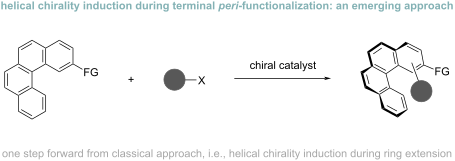
- -functionalization, where a bulkier handle provides the required enantiomerization barrier to screw helical chirality (Figure 1C and D). A straight forward preparation of various carbohelicenes via an organocatalytic enantioselective hydroamination reaction of polyaromatic phenols with diazodicarboxamide derivatives
- further transformed into representative derivatives. Notably, the reaction performed well in the scale-up demonstration and the post-synthetic transformations proceeded smoothly without hampering the enantiomeric excess (Scheme 2). Another report applying peri-C–H functionalization for the synthesis of
- catalysts [33]. A domino reaction was developed, beginning with a PPS L2-catalyzed Michael addition of phosphine oxides 7 to nitro-substituted oxa[5]helicenes 6, followed by a copper-promoted aromatization. This sequence efficiently produced phosphorus-containing oxa[5]helicene derivatives 8 in high yields


Base-promoted deacylation of 2-acetyl-2,5-dihydrothiophenes and their oxygen-mediated hydroxylation
Beilstein J. Org. Chem. 2026, 22, 192–204, doi:10.3762/bjoc.22.13
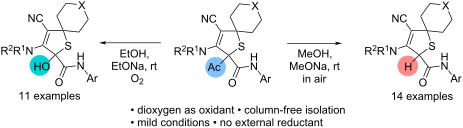
- , Leuven B-3001, Belgium 10.3762/bjoc.22.13 Abstract Solvent-dependent transformations of polysubstituted 2-acetyl-2,5-dihydrothiophenes to the corresponding 2-hydroxy- or deacetylated derivatives are described. The treatment of a methanolic solution of the dihydrothiophene substrates with sodium
- ] and more complex molecules [11]. Rearrangements of the oxidized compounds are equally important transformations [12]. Oxidation of compounds containing a carbonyl group into carboxylic acid derivatives can be divided into two large groups: direct oxidation and oxidative rearrangements. Direct
- conditions in hand, we have investigated the oxidation of 2-acetyl-2,5-dihydrothiophenes 1, containing various substituents (Scheme 2). Cyclohexano-, cycloheptano- and cyclooctano-spiroannulated 2-acetyl-3-morpholino-N-phenyl-2,5-dihydrothiophene-2-carboxamides 1a,c,f were oxidized into 2-hydroxy derivatives




A new synthesis of Tyrian purple (6,6’-dibromoindigo) and its corresponding sulfonate salts
Beilstein J. Org. Chem. 2026, 22, 167–174, doi:10.3762/bjoc.22.10
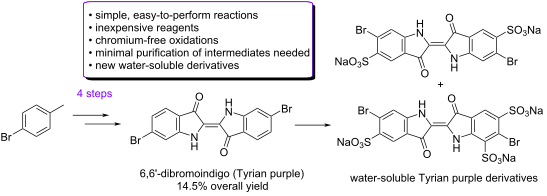
- advantages of inexpensive starting reagents, operationally simple reactions, and minimal purification of intermediates. Moreover, this work reports the successful sulfonation of 6,6’-dibromoindigo, producing water-soluble derivatives of this historically relevant dye. Keywords: 6,6’-dibromoindigo; dye
- indigo derivatives, an increasing number of sulfonic acid groups results in greater solubility of the 6,6’-dibromoindigo derivative (e.g., 10 has greater solubility in water than 9) [25]. When dissolved in aqueous solution, both 9 and 10 yield a bright blue solution. As shown in Figure 1A, salt 10
- red shift by 16 and 15 nm with a moderate increase in molar absorptivity, respectively, for compounds 9 and 10 [29]. This means that to the human eye, di- and trisulfonated derivatives of 1 appear blue, not purple. A smaller shift in λmax is observed when indigo is sulfonated, allowing for its blue


Circumventing Mukaiyama oxidation: selective S–O bond formation via sulfenamide–alcohol coupling
Beilstein J. Org. Chem. 2026, 22, 158–166, doi:10.3762/bjoc.22.9
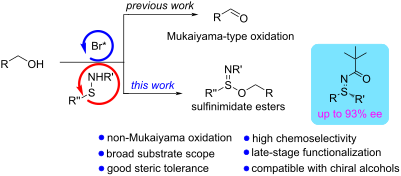
- aromatic ring were also evaluated. The unsubstituted benzamide-derived sulfenamide 3z reacted smoothly to afford the desired product in 90% yield, serving as a representative standard for comparison. Ortho-substituted substrates were compatible, including 2-chloro (3a’) and 2-bromo (3b’) derivatives which
- were obtained with 87% and 88% yield, respectively, indicating that steric hindrance at the ortho-position does not adversely affect the transformation. Meta- and para-substituted derivatives, regardless of their electronic nature, also reacted smoothly to afford the corresponding products 3c’–g’ in


Asymmetric Mannich reaction of aromatic imines with malonates in the presence of multifunctional catalysts
Beilstein J. Org. Chem. 2026, 22, 151–157, doi:10.3762/bjoc.22.8
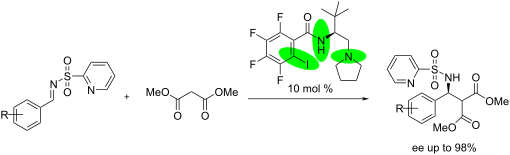
- between the catalyst and the reagents. The chirality of the catalysts is derived from either amino acid or amino alcohols (including cinchona alkaloid derivatives). There are three exceptional structures: catalysts A-H and E-H, which are the hydrogen analogues of the corresponding iodine-containing
- % ee, Table 1, entry 6). Aminoindane-based catalysts C and D were inefficient and stereomeric purity of the products were not determined (Table 1, entries 7 and 8). The next group of catalysts consists of amino acid derivatives. The most selective was tert-leucine-based catalyst E affording the Mannich
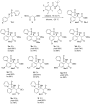
- ). Screened catalysts. Model for the interaction of the catalyst with the imine. Substrate scope of the asymmetric Mannich reaction. The catalytic Mannich reaction under study. Catalyst screening. Reaction in the presence of catalyst K and its derivatives. Supporting Information Supporting Information File


Symmetrical D–π–A–π–D indanone dyes: a new design for nonlinear optics and cyanide detection
Beilstein J. Org. Chem. 2026, 22, 131–142, doi:10.3762/bjoc.22.6
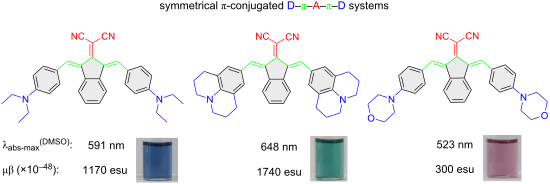
- can be shifted in the deep red/NIR region by changing the donor group with increased conjugated systems [19][20][21][22]. Gupta et al. studied optical properties of D–π–A system-based indan-2-one derivatives, and symmetric derivatives showed a significant bathochromic shift (≈300 nm) compared to
- toxic anion and dangerous to human health, by dyes gives advantages such as high sensitivity, fast response, low cost, and ease of operation [26][27][28]. In this study, symmetric novel indan-2-one derivatives with a D–π–A–π–D system were synthesized, and their structures were characterized using 1H NMR
- /acetic acid buffers with a good yield (84%). Target compounds were synthesized by a coupling reaction between 2-(1,3-dihydro-2H-inden-2-ylidene)malononitrile (1) and appropriate alkylaminobenzaldehyde derivatives in acetic anhydride. Compounds were obtained with low to good yields (25–75%, conventional


Highly electrophilic, gem- and spiro-activated trichloromethylnitrocyclopropanes: synthesis and structure
Beilstein J. Org. Chem. 2026, 22, 123–130, doi:10.3762/bjoc.22.5
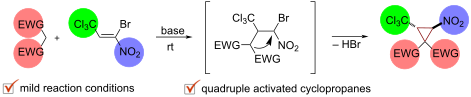
- biologically active properties. Thus, barbamide exhibits molluscicidal activity [7], and sintokamide A is active against prostate cancer [8] (Figure 1). As derivatives of strained and unique structure and properties [9][10] cyclopropanes are of interest for entering into various transformations along the path
- groups seems attractive for both theoretical chemistry and the synthesis of 2-aminocyclopropanecarboxylic acids, of which representatives have biologically active properties against kynurenine-3-monooxygenase [25] and GABA receptors [26]. Such aminocyclopropane derivatives can be classified as donor
- a CF3-containing substrate and a nitromethylene component (the tandem reaction of trifluoromethyl-substituted alkenes with nitromethane [34] or bromonitromethane derivatives [35][36]) (Scheme 1). At the same time, one of the methods of synthesis of vicinally substituted nitrocyclopropanes is the


Total synthesis of natural products based on hydrogenation of aromatic rings
Beilstein J. Org. Chem. 2026, 22, 88–122, doi:10.3762/bjoc.22.4
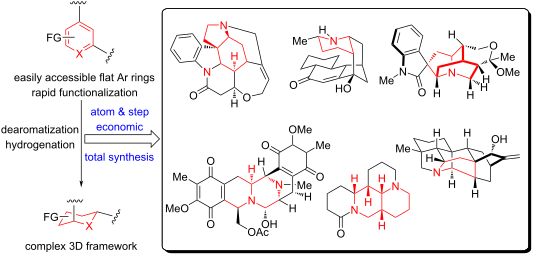
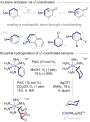
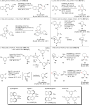
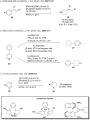
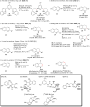
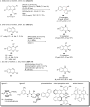
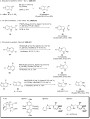
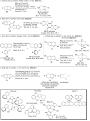
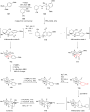
- . Between 2020 and 2021, the research groups of Zhang [39], Bao [40], Zhou [41], and Glorius [42] reported four different methods for the reductive hydrogenation of pyridine or pyridine derivatives (Scheme 3). By activating pyridine to a pyridinium salt, the hydrogenated product can be efficiently obtained
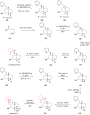
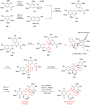
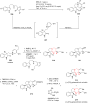
- partially or fully saturated derivatives [49]. Over the past years, several research groups worldwide have reported significant progress toward addressing these selectivity and reactivity issues (Scheme 5 and Scheme 6). Nevertheless, despite these advances, the field still suffers from fundamental
- catalyst to achieve the hydrogenation of the nitrogen heterocyclic moiety in quinoline, that yielded the target product in near-quantitative amounts [51]. In 2021, the research groups of Sun [52] and Zhang [53] reported the use of iridium or manganese as catalysts to convert quinoline derivatives into











Advances in Zr-mediated radical transformations and applications to total synthesis
Beilstein J. Org. Chem. 2026, 22, 71–87, doi:10.3762/bjoc.22.3
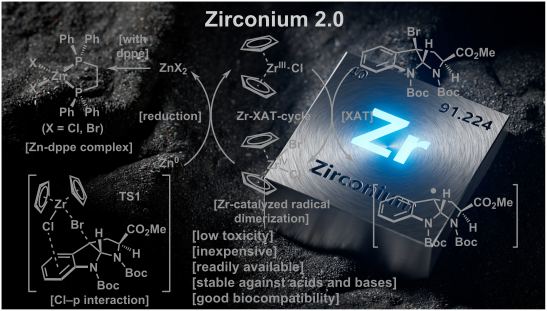
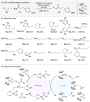
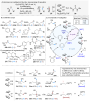
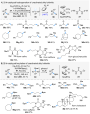
- corresponding vic-bis(dithiane) derivatives 16a–d. In 2018, Milsmann et al. reported the dimerization of benzyl bromide using a zirconium complex as a photosensitizer (Scheme 4) [14]. Heating a zirconium precursor with the pincer-type ligand 17, which can be synthesized in three steps from commercially
- formation to give the cyclic acetal 33. This transformation was applicable to a range of oxetanes 30a–c bearing benzylic alcohol derivatives, each affording the corresponding cyclic acetals in good yields. In 2023, Ota and Yamaguchi et al. reported the hydrogenation of alkyl chlorides via halogen atom
- strong affinity of zirconium for oxygen atoms [4][21]. Building on this concept, they envisioned that a similar reaction system could be applied to the homolytic cleavage of C–O bonds in alcohols and ethers. When benzyl alcohol and ether derivatives 49 were treated with zirconocene in the presence of a








Reactivity umpolung of the cycloheptatriene core in hexa(methoxycarbonyl)cycloheptatriene
Beilstein J. Org. Chem. 2026, 22, 64–70, doi:10.3762/bjoc.22.2
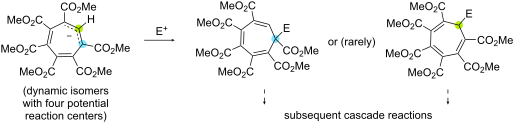
- unavailability of other stable cycloheptatrienyl anions until recently, its derivatives were not expected to show high selectivity in reactions. Herein, we present the first examples of selective reactions of low-symmetry hexa(methoxycarbonyl)cycloheptatrienyl anion 2 [20] towards electrophiles. Additionally
- α-position, respectively. Compounds 5 represent derivatives with two substituents at the sp3-carbon atoms which sometimes tend to rearrange into the corresponding norcaradiene derivatives [29][30]. Our reactions of anion 2 with electrophiles confirm this tendency – we always observed either a
- reported [31] halogenations of anion 1 only afforded the corresponding octasubstituted cycloheptatriene derivatives. The reactions of 2 with alkyl halides were selective in terms of the initial reaction – the i-substitution was never observed. However, the alkylation reactions were even more intricate than


Synthesis and applications of alkenyl chlorides (vinyl chlorides): a review
Beilstein J. Org. Chem. 2026, 22, 1–63, doi:10.3762/bjoc.22.1
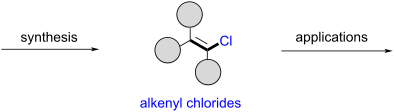
- -rich acetophenone derivatives, such as the p-methoxy-substituted example 34 afforded only low yields. It is noteworthy that performing the synthesis of 26 under neat conditions with an excess of PCl5 afforded substantial amounts of dichloride 41 (Scheme 8A) [57]. Engler showed that the use of a large
- constitutional isomeric chloro derivatives 66 and 67 were formed in a 65:35 ratio. In the case of non-enolizable ketones such as benzophenone, dichlorodiphenylmethane 68 was obtained in 93% yield. Aldehydes consistently afforded gem-dichlorides in excellent yields, regardless of enolizability (not shown). It is





















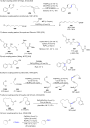


Sustainable electrochemical synthesis of aliphatic nitro-NNO-azoxy compounds employing ammonium dinitramide and their in vitro evaluation as potential nitric oxide donors and fungicides
Beilstein J. Org. Chem. 2025, 21, 2739–2754, doi:10.3762/bjoc.21.211
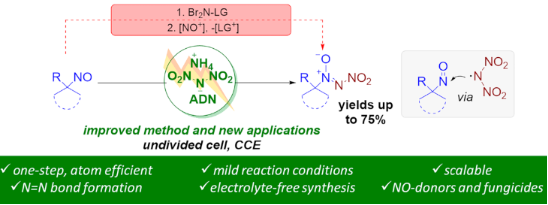
- substituents that are labile towards electrophiles. Thus, there is a need for new, more efficient methods for the synthesis of nitro-NNO-azoxy derivatives that do not have the disadvantages of the known approach and allow the use of a wide range of substrates, including various aliphatic ones. Recently, our
- Griess test results, all synthesized nitro-NNO-azoxy compounds released high fluxes of NO (36–137%) exceeding those of CAS-1609 (22.1%) and NG (15.3%). Interestingly, azoxy derivatives 2a–e,i showed NO-donor properties only in the presence of ʟ-cysteine proposing the thiol-dependent mechanism of NO





Total synthesis of asperdinones B, C, D, E and terezine D
Beilstein J. Org. Chem. 2025, 21, 2730–2738, doi:10.3762/bjoc.21.210
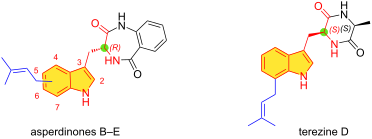
- -tert-butylbromobenzene [53]. We therefore adopted a prenylation method used by Knölker for bromocarbazole derivatives using Pd2(dba)3 [54]. Pleasingly, this led to the corresponding prenylindoles 14–17 without forming the isomeric reverse prenylated adducts, although the starting material was recovered


Competitive cyclization of ethyl trifluoroacetoacetate and methyl ketones with 1,3-diamino-2-propanol into hydrogenated oxazolo- and pyrimido-condensed pyridones
Beilstein J. Org. Chem. 2025, 21, 2716–2729, doi:10.3762/bjoc.21.209
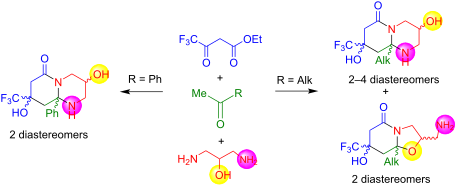
- ]. In general, the developed approach allows pyridone derivatives to be generated in various environments of condensed carbo- and heterocyclic structures. Among the synthesized pyridone derivatives we have found analgesic [20][26], antibacterial [20] and antifungal [20] agents, which show practical
- ], fluopyram [36], and the nematicide fluazaindolisine [37] (Figure 1). The trifluoromethyl piperidine backbone is part of the structure of anticancer [38] and antirheumatic [39] agents. The fluorine-containing pyridines and their heteroannelated derivatives are known to exhibit a high biological potential, on
- minor when heated in 1,4-dioxane (Scheme 3, Table 3). Previously, we proposed and experimentally confirmed an aldol mechanism underlying the three-component cyclization of polyfluoroalkyl-3-oxo esters with α-methylene ketones and amines in piperidone derivatives. According to this mechanism, the key


Synthesis of new tetra- and pentacyclic, methylenedioxy- and ethylenedioxy-substituted derivatives of the dibenzo[c,f][1,2]thiazepine ring system
Beilstein J. Org. Chem. 2025, 21, 2645–2656, doi:10.3762/bjoc.21.205
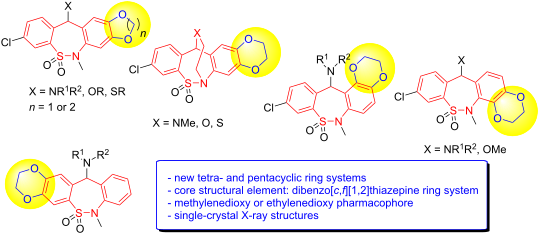
- Group, Magyar tudósok krt. 2, H-1117 Budapest, Hungary 10.3762/bjoc.21.205 Abstract New tetra- and pentacyclic derivatives of the dibenzo[c,f][1,2]thiazepine ring system have been synthesized. The target compounds contain methylenedioxy or ethylenedioxy substituents linked to the benzene ring. The key
- step for the construction of the ring systems has been implemented by an intramolecular Friedel–Crafts cyclization. Altogether eight new ring systems are described here, five of them are also characterized by single-crystal X-ray diffraction. Keywords: acylation; bridged derivatives; cyclization
- ; Friedel–Crafts reaction; heterocycles; new ring systems; Introduction In our prior report [1] we disclosed the synthesis of new fused ring derivatives of the dibenzo[c,f][1,2]thiazepine skeleton (1, Figure 1) shown by general structure 2. In recent publications we have also reported the synthesis of new


Thiazolidinones: novel insights from microwave synthesis, computational studies, and potentially bioactive hybrids
Beilstein J. Org. Chem. 2025, 21, 2618–2636, doi:10.3762/bjoc.21.203
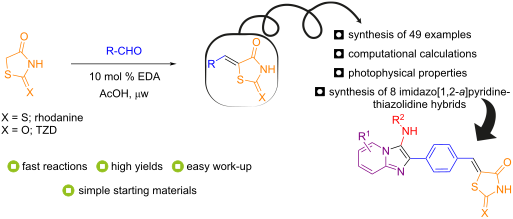
- 10.3762/bjoc.21.203 Abstract Various 5-arylidene derivatives were prepared via a Knoevenagel condensation-type reaction of aromatic/heteroaromatic aldehydes with rhodanine or thiazolidine-2,4-dione (TZD) catalyzed by EDA/AcOH under microwave heating. This convenient methodology is broad in scope (49
- scaffolds for several synthetic or natural compounds [5]. Five-membered heterocycles include the thiazolidinone nucleus, characterized by two heteroatoms and a carbonyl group on the fourth carbon, as seen in compounds like rhodanine and thiazolidine-2,4-dione derivatives (Figure 1). These privileged
- , ciglitazone, and rosiglitazone [9][10]. Rhodanine (2-thioxothiazolidin-4-one) derivatives exhibit a wide range of pharmacological activities, including antiviral [11], antimalarial [12], antimicrobial [13], anti-inflammatory [14], anticancer [15], antidiabetic [16], antibacterial [17], and antifungal [18






Silica gel with covalently attached bambusuril macrocycle for dicyanoaurate sorption from water
Beilstein J. Org. Chem. 2025, 21, 2604–2611, doi:10.3762/bjoc.21.201
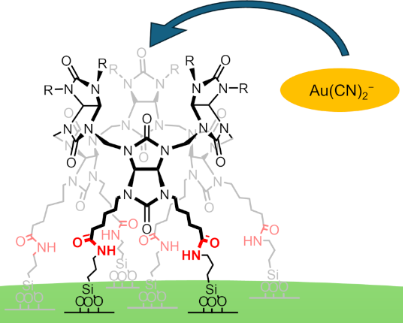
- leading not only to improved extraction effectivity but also to enhanced selectivity [2]. Anion extractants based on functionalized polystyrene or silica gel typically incorporate calixarenes [6] and their analogues, calixpyrroles [7][8], azacalixarene derivatives [9], or expanded porphyrin-like sapphyrin





