Search results
Search for "hydrogen-bonding" in Full Text gives 535 result(s) in Beilstein Journal of Organic Chemistry. Showing first 200.
Asymmetric synthesis of β-amino cyanoesters with contiguous tetrasubstituted carbon centers by halogen-bonding catalysis with chiral halonium salt
Beilstein J. Org. Chem. 2025, 21, 547–555, doi:10.3762/bjoc.21.43
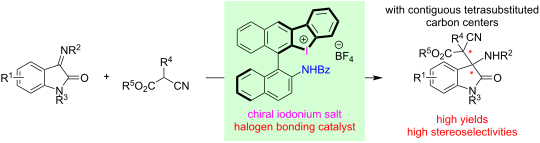
- importance of halogen bonding in the catalyst for the present reaction, chiral amide 9d and tetrabutylammonium bromide (9e) were applied as catalysts. The results indicate that 9d with only hydrogen bonding provided 17b in a lower yield than without catalyst maybe due to the deactivation of base by acidic


Vinylogous functionalization of 4-alkylidene-5-aminopyrazoles with methyl trifluoropyruvates
Beilstein J. Org. Chem. 2025, 21, 533–540, doi:10.3762/bjoc.21.41
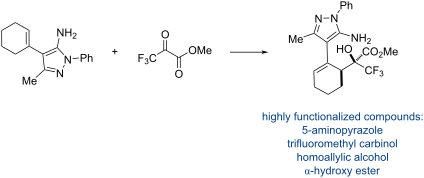
- . Considering the high diastereoselectivity observed both in the presence and absence of the squaramide catalyst, we propose a plausible mechanism (Scheme 3) that involves hydrogen bonding activation of the methyl trifluoropyruvate by the NH₂ group of the aminopyrazole. This interaction directs the attack of


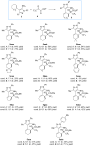

Unprecedented visible light-initiated topochemical [2 + 2] cycloaddition in a functionalized bimane dye
Beilstein J. Org. Chem. 2025, 21, 500–509, doi:10.3762/bjoc.21.37
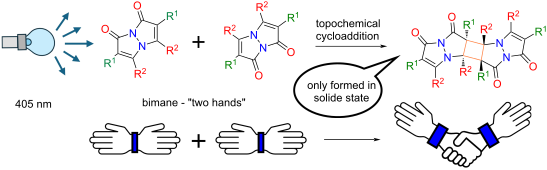
- in P-1 and the molecules pack in a different arrangement, where the double bonds are neither coplanar nor parallel. This product was obtained from propan-2-ol, which may have influenced the crystallization kinetics. The reactive packing mode of Cl2B is enhanced by the hydrogen bonding where the ester
- reported bimane, syn-(H,Cl)bimane (BIYGUL), reveals a ribbon-like packing pattern, which arises from a hydrogen-bonding network [23], which also features a coplanar and parallel arrangement of the potentially reactive double bonds. Due to these characteristics, the reaction site can be represented by a


Organocatalytic kinetic resolution of 1,5-dicarbonyl compounds through a retro-Michael reaction
Beilstein J. Org. Chem. 2025, 21, 473–482, doi:10.3762/bjoc.21.34
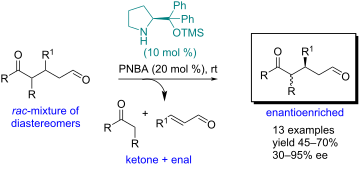
- organometallic catalysis [15], enzymatic catalysis [16], aminocatalysis [17][18][19], and hydrogen-bonding catalysis [20][21][22]. The Michael addition reaction is a versatile synthetic methodology that allows the formation of new carbon–carbon and carbon–heteroatom bonds through the coupling of electron-poor


The effect of neighbouring group participation and possible long range remote group participation in O-glycosylation
Beilstein J. Org. Chem. 2025, 21, 369–406, doi:10.3762/bjoc.21.27
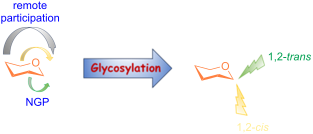
- temperature or the activation entropy, hydrogen bonding, solvent [24], nature of the leaving groups and the promoter used [25]. The mechanism of glycosylation reactions has long been categorised mostly as dissociative SN1 reactions proceeding through stabilised oxocarbenium ions with the role of counterions
- , Scheme 18) gave product 108 with higher 1,2-cis selectivity. In protocol A, the tosylamide forms an intramolecular hydrogen bonding with the benzylic oxygen forming a quasi-bicyclic intermediate acting as a 1,2-trans directing protecting group. Thus, following subsequent formation of the oxocarbenium ion
- disturbs the intramolecular hydrogen bonding, as in 107 thereby generating a non-participating form as an intermediate. Thus, the acceptor easily attacks from the α-face of the sugar ring, and thereby, leading to the product with higher 1,2-cis stereoselectivity (87:13). A similar bimodal protocol was also


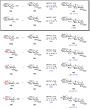


Quantifying the ability of the CF2H group as a hydrogen bond donor
Beilstein J. Org. Chem. 2025, 21, 189–199, doi:10.3762/bjoc.21.11
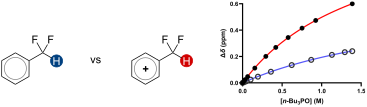
- (CF2H); fluorine; hydrogen bond donors; hydrogen bond strength; Introduction Hydrogen bonding interactions are ubiquitous non-covalent forces in chemistry and biology [1][2][3][4]. In canonical hydrogen bond (HB) donor–acceptor pairs, the donor typically comprises an electronegative heteroatom, such as
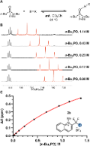
- constructs. Although many of the CF2H HB donors studied here can promote relatively strong hydrogen bonding interactions with n-Bu3PO, even the strongest CF2H HB donor (3b) is still 30 times weaker than phenol (10), corresponding to about a 2 kcal/mol reduction in binding energy at 25 °C. These results
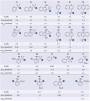
- oxygen lone pairs (LPs) of Me3PO with the H–CF2Ar antibonding orbital (σ*). Such hyperconjugative interactions indicate the magnitudes of the charge transfer from the LPs to the σ* orbitals and are considered the major contributors to hydrogen bonding [57]. Using this analysis, strong linear correlations



Hydrogen-bonded macrocycle-mediated dimerization for orthogonal supramolecular polymerization
Beilstein J. Org. Chem. 2025, 21, 179–188, doi:10.3762/bjoc.21.10
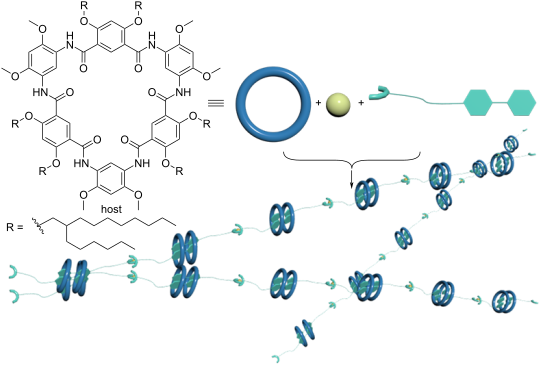
- ., metal coordination interactions and hydrogen bonding), providing access to various multiresponsive orthogonal self-assemblies or smart supramolecular polymers [24][25]. For example, the discovery of cucurbit[8]uril complexation in a 1:2 and 2:2 host–guest stoichiometry leads to a wide spectrum of
- upon increasing the concentration of each component. Conclusion We have introduced a new recognition motif based on a hydrogen-bonded aramide macrocycle, which drives the linear polymerization of a heterodifunctional monomer in the presence of zinc ions. In addition to hydrogen bonding interactions
- -ray structure of the complex H2 ⊃ G1. a) Dimeric structure formed by cyclo[6]aramide H2 and cationic guest G1, with each guest molecule threading one molecule of H2 at its end. b) A portion of the dimeric structure showing an array of hydrogen bonding interactions between the amide oxygen atoms of H2



Recent advances in organocatalytic atroposelective reactions
Beilstein J. Org. Chem. 2025, 21, 55–121, doi:10.3762/bjoc.21.6
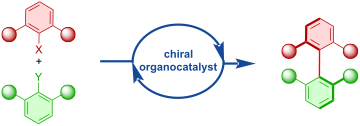
- , previous findings from the literature, and experimental results, a reaction mechanism was proposed [46]. Hydrogen bonding as well as π–π interaction with the catalyst (R)-C22 activates both substrates in the stable intermediate Int-35. This stabilized state ensures the concerted control of
- reported. However, the reaction did not tolerate a variety of substitutions on the amide group, probably because of its involvement in hydrogen bonding with the organocatalyst (R)-C23. Expanding on earlier methodologies of Chen et al. [60][61] and Wang et al. [62] utilizing indole derivatives instead of β
- indole nitrogen in control experiments led to halted reactivity or loss of enantiocontrol. These results suggest the importance of hydrogen bonding between the NH group and the organocatalyst. Bisindoles 142 reacted with ninhydrin-derived 3-indoylmethanol 143 in the presence of the CPA (S)-C22 to afford




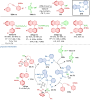


Non-covalent organocatalyzed enantioselective cyclization reactions of α,β-unsaturated imines
Beilstein J. Org. Chem. 2024, 20, 3221–3255, doi:10.3762/bjoc.20.268
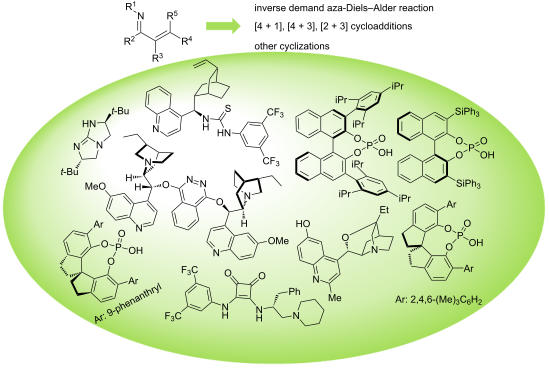
- ]. Although quite important in all organocatalytic processes, there are specific organocatalysts which activate reactants through non-covalent interactions such as hydrogen bonding. These interactions are crucial to obtain high enantioselectivity in the reaction. The 1-azadienes possess an electronegative
- covered in this review are hydrogen-bond donors such as thioureas and squaramides, Brønsted bases such as tertiary amines, and Brønsted acids such as chiral phosphoric acids. As depicted in Figure 4, a bifunctional squaramide is able to activate both an α,β-unsaturated imine through hydrogen bonding with
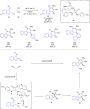
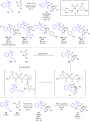
- Michael addition product was obtained with low diastereoselectivity. The mechanism is described in Scheme 4: the bifunctional squaramide activates the azadiene through hydrogen bonding while the malononitrile is deprotonated by the tertiary amine present in the backbone of the catalyst, establishing



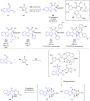
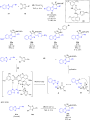
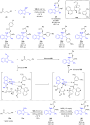


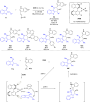


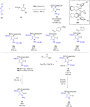


Advances in the use of metal-free tetrapyrrolic macrocycles as catalysts
Beilstein J. Org. Chem. 2024, 20, 3085–3112, doi:10.3762/bjoc.20.257
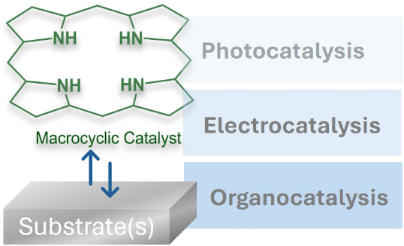
- second-sphere interactions with a multipoint hydrogen-bonding pattern enhance CO2 reduction in organic solvents, improving stability, facilitating proton transfer, reducing energy barriers, and increasing selectivity [20]. Apart from advances in synthetic methodologies [2][21][22][23], the exploration of
- active groups for a variety of substrates, making their use as supramolecular organocatalysts based on bifunctional activation mechanism (hydrogen-bonding/Lewis basicity) highly promising. At the same time, additional functional groups that are required for the catalysis can be easily installed on the
- addition of furan-based silyloxydiene synthons to a variety of achiral aldehydes using four different calix[4]pyrrole macrocycles (3, 4, 11, and 12) as organocatalysts (Figure 3) [38]. These calixpyrrole macrocycles acted as hydrogen-bond donors, activating substrate aldehydes through hydrogen-bonding


Synthesis of the 1,5-disubstituted tetrazole-methanesulfonylindole hybrid system via high-order multicomponent reaction
Beilstein J. Org. Chem. 2024, 20, 3077–3084, doi:10.3762/bjoc.20.256
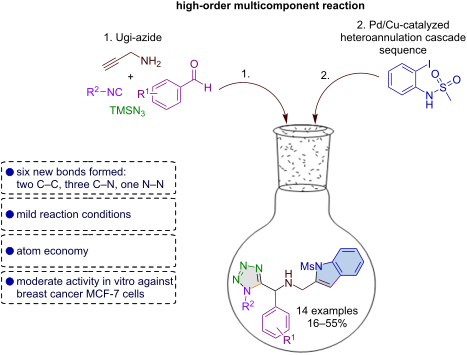
- combining the indole moiety with the 1,5-disusbtituted tetrazole pharmacophore could increase the non-covalent interactions, including π–π stacking, hydrogen bonding, and hydrophobic interactions. This combination may improve the pharmacodynamic profile, providing a solid foundation for developing compounds

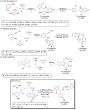
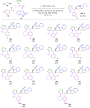


Cyclodextrin-based rotaxanes for polymer materials: challenge on simultaneous realization of inexpensive production and defined structures
Beilstein J. Org. Chem. 2024, 20, 3026–3049, doi:10.3762/bjoc.20.252
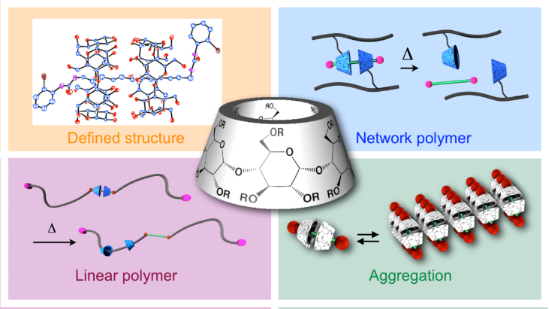
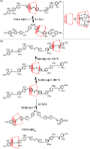
- the hydrogen bonding by the primary- or secondary-alcohol groups, as confirmed by theoretical analyses. This structure was consistent with a previously reported X-ray crystal structure analysis of the complex structure comprising α-CD, polyion, and Li+ or Cd2+ [45]. Regarding the small rotaxane
- , or 24 methylene units as the axle component. The results revealed that the weakened hydrogen bonding and hydrophobic interaction by PMα-CD was the key to the formation of rotaxane molecules with an odd number of wheel components as well as their much lower yields than the native-CD-based rotaxanes
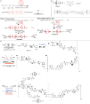
- component, is not so easy because of the strong hydrogen bonding between the CD units. Beckham and Zhao reported that an increase in the molecular weight of the axle polymer caused a decrease in the coverage ratio, although the coverage ratio in the same molecular weight polymer could not be controlled at






C–C Coupling in sterically demanding porphyrin environments
Beilstein J. Org. Chem. 2024, 20, 2784–2798, doi:10.3762/bjoc.20.234
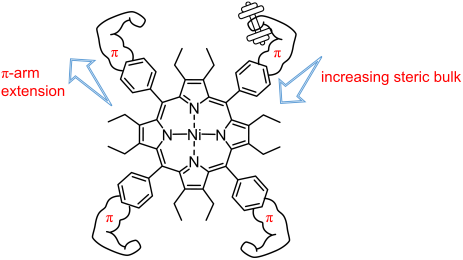
- porphyrins Nonplanar porphyrins are known to form supramolecular assemblies [6], either through hydrogen-bonding networks or through π–π interactions. Examples of this can be seen in the trapping of Keggin-type heteropolyoxometalate (POM) through nonplanar Mo(V)–porphyrin complexes [58], or porphyrin


Transition-metal-free decarbonylation–oxidation of 3-arylbenzofuran-2(3H)-ones: access to 2-hydroxybenzophenones
Beilstein J. Org. Chem. 2024, 20, 2655–2667, doi:10.3762/bjoc.20.223
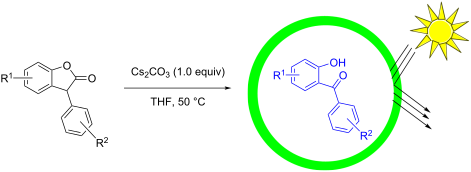
- presence of a strong-electron donating substituent, e.g., a -OCH3 on the benzene ring attached to the carbonyl center has a more pronounced effect on the UV-protection abilities (4bb, 4cb, 4eb and 4fb) since it increases the electron density on the carbonyl center, and hence the hydrogen bonding between




Deciphering the mechanism of γ-cyclodextrin’s hydrophobic cavity hydration: an integrated experimental and theoretical study
Beilstein J. Org. Chem. 2024, 20, 2635–2643, doi:10.3762/bjoc.20.221

- hydrogen bonding, although generally not dominant, can influence the complex formation as well [5]. Cyclodextrins form inclusion complexes with polar and non-polar substances of various aggregate states. This incredible versatility, combined with the enhanced stability against oxidation, as well as
- enlarging the aperture (“open” configuration). In the “open” configuration, the primary hydroxy groups are not involved in the intramolecular hydrogen-bonding interactions with neighboring OH groups. Relatively weak hydrogen bonds are formed between the secondary hydroxy groups at the wider/lower rim of the
- water molecules and the CD host system: β-CD hydration is dominated by water–water hydrogen bonding interactions rather than water–CD interactions. In contrast, the interactions between water guests and the cavity walls are more significant at α-CD and γ-CD, favoring a consecutive water release process


Applications of microscopy and small angle scattering techniques for the characterisation of supramolecular gels
Beilstein J. Org. Chem. 2024, 20, 2608–2634, doi:10.3762/bjoc.20.220

- may be assumed to provide an in situ environment. While D2O is chemically identical to H2O, it does exhibit differences in properties including density, viscosity, hydrogen-bond strength, a more pronounced hydrophobic effect. As hydrogen bonding and hydrophobicity are critical to hydrogel


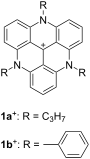
Anion-dependent ion-pairing assemblies of triazatriangulenium cation that interferes with stacking structures
Beilstein J. Org. Chem. 2024, 20, 2567–2576, doi:10.3762/bjoc.20.215
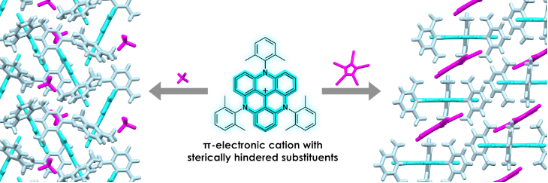
- File 1). As a crystallization solvent, three CHCl3 molecules were located between the 2,6-dimethylphenyl units by forming hydrogen bonding with Cl− with C(–H)···Cl− distances of 3.36, 3.36, and 3.37 Å. A similar arrangement of the counteranions was observed for 2+-BF4− and 2+-PF6−, with the BF4− and



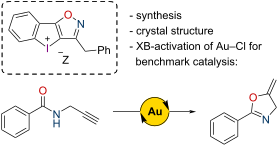
Evaluating the halogen bonding strength of a iodoloisoxazolium(III) salt
Beilstein J. Org. Chem. 2024, 20, 2401–2407, doi:10.3762/bjoc.20.204
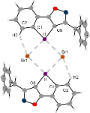
- , halogen bonding [I1···Br1 = 3.0610(5) Å, 80% of Σr, and C8–I1···Br1 = 171.67(9)°] and hydrogen bonding were found [H2···Br1 = 2.7991(4) Å, 95% of Σr, C2···Br1 = 3.545(4) Å, 100% of Σr and C2–H2···Br1 = 136.1(2)°]. On the other axis, no ortho proton is present, so only XB is observed [I1···Br1 = 3.2023(5
- ). Halogen bonding dimer found in the crystal structure of 7Br. Ellipsoids are shown at 50% probability (carbon: grey, nitrogen: blue, oxygen: red, bromine: orange, iodine: purple) and hydrogen atoms are shown in standard ball-and-stick model (white). Halogen and hydrogen bonding is indicated dashed. 1H NMR




Asymmetric organocatalytic synthesis of chiral homoallylic amines
Beilstein J. Org. Chem. 2024, 20, 2349–2377, doi:10.3762/bjoc.20.201
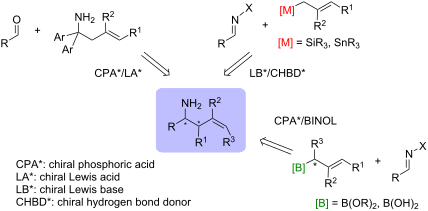
- the asymmetric addition of organoboron reagents to imines (Scheme 3). An intermolecular hydrogen bonding between a non-rigid organocatalyst and a non-rigid substrate was shown to play a key role in assembling a configurationally stable transition structure. As a result, this approach unveiled the


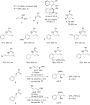


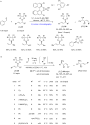


Stereoselective mechanochemical synthesis of thiomalonate Michael adducts via iminium catalysis by chiral primary amines
Beilstein J. Org. Chem. 2024, 20, 2313–2322, doi:10.3762/bjoc.20.198
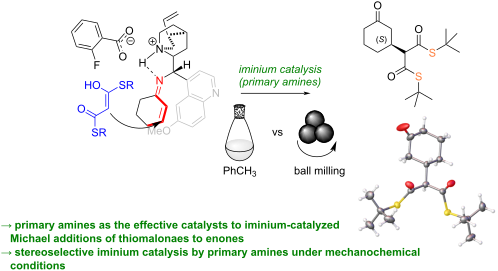
- catalysis with hydrogen bonding units has been essential for achieving high reactivity and enantioselectivities [21][22]. Additionally, the reactivity of the nucleophilic addition is influenced by substitutions near the electron-poor double bond. This approach requires 30 mol % of catalyst and a reaction
- proved ineffective in facilitating the Michael addition of bisthiomalonates to conjugated ketones, whereas DABCO enabled the formation of desired products under mild conditions [30]. However, reports of highly stereoselective protocols utilizing hydrogen bonding catalysis have mainly focused on
- -based catalytic system for the highly stereoselective addition of various bisthiomalonates to chalcones and dienones [29]. While recognizing the potential for greater selectivity enhancement and time savings with ball milling, hydrogen-bonding catalysis was effective only with aromatic enones, yielding


Hydrogen-bond activation enables aziridination of unactivated olefins with simple iminoiodinanes
Beilstein J. Org. Chem. 2024, 20, 2305–2312, doi:10.3762/bjoc.20.197
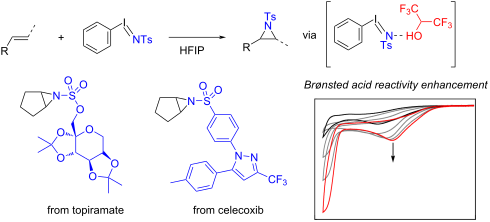
- iminoiodinanes for the metal-free aziridination of unactivated olefins. 1H NMR and cyclic voltammetry (CV) studies indicate that hydrogen-bonding between HFIP and the iminoiodinane generates an oxidant capable of direct NGT to unactivated olefins. Stereochemical scrambling during aziridination of 1,2
- at 5.52 ppm with a FWHM = 56.6 Hz (Scheme 4a). This resonance was broader and more downfield than that of free HFIP in CD3CN (5.41 ppm with FWHM = 5.0 Hz), suggesting a hydrogen bonding interaction between HFIP and 2c, and similar observations were also reported for the hydrogen bonding between HFIP
- (denoted by asterisk *) of HFIP in the presence of iminoiodinane 2c suggesting hydrogen bonding observed in 1H NMR spectra (CD3CN) of: 8.0 mM 2c with no HFIP (blue line), 8.0 mM 2c with 32 mM HFIP (green line), 4.0 mM of 4-(trifluoromethyl)benzenesulfonamide with 32 mM HFIP (purple line), only 32 mM HFIP


Factors influencing the performance of organocatalysts immobilised on solid supports: A review
Beilstein J. Org. Chem. 2024, 20, 2129–2142, doi:10.3762/bjoc.20.183
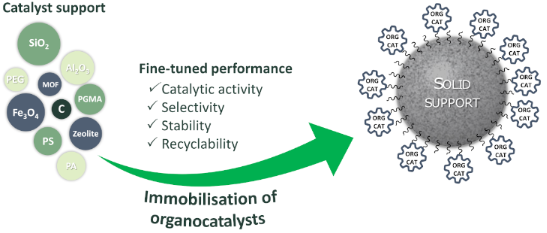
- adsorbed onto the support surface through weaker intermolecular forces, such as van der Waals forces and hydrogen bonding. Ionic catalysts form ionic bonds or those that can be ionised under immobilisation conditions. Encapsulation involves physically trapping the catalyst within the pores or cavities of
- catalyst can easily leach into the solution as it reaches equilibrium between the absorbed species on the surface and the solubilised species. To improve the stability of the supported catalyst, it is important to modify the catalyst and support to enable hydrogen bonding. This method can also bring the
- organocatalyst [113], reactants [114], product [115] or solvent [116] can significantly impact catalytic activity. These interactions often manifest in various forms of adsorption: physisorption, involving forces like van der Waals interactions and hydrogen bonding, or chemisorption, which may involve ionic or


Solvent-dependent chemoselective synthesis of different isoquinolinones mediated by the hypervalent iodine(III) reagent PISA
Beilstein J. Org. Chem. 2024, 20, 1914–1921, doi:10.3762/bjoc.20.167
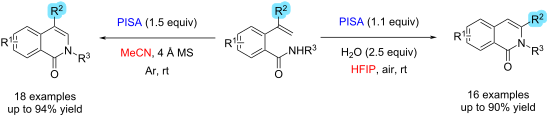
- substrate 1c may act as an electrophilic center, forming a C–O bond with the alkenyl group to give the isochromen-1-one oxime product 2c'. When wet HFIP was used as the solvent, the reaction followed a different pathway. HFIP, a strong hydrogen bonding donor [26][27][28], interacts with the amide moiety of




The Groebke–Blackburn–Bienaymé reaction in its maturity: innovation and improvements since its 21st birthday (2019–2023)
Beilstein J. Org. Chem. 2024, 20, 1839–1879, doi:10.3762/bjoc.20.162
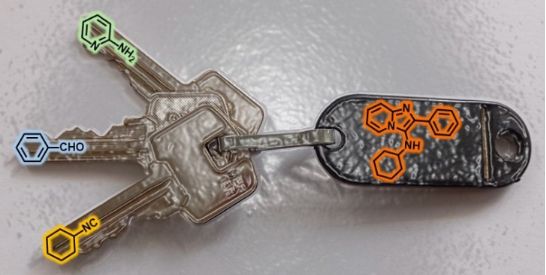
- . Sashidhara et al. reported no conversion, while Liu et al. reported a 58% yield of the GBB product, postulating the ability of ethylene glycol to function as an activator (through hydrogen bonding) and a facilitator of proton transfer. After this discovery, ethylene glycol has never been employed in GBB
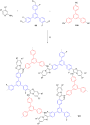
- significantly more active than 9, owing to higher rigidity and the correct position of the ortho H atoms in close proximity to the σ-holes on the I atom. The authors demonstrated that hydrogen bonding between H in ortho position of 8 and both O atom of aldehyde and N atom of imine significantly increased the






Supramolecular assemblies of amphiphilic donor–acceptor Stenhouse adducts as macroscopic soft scaffolds
Beilstein J. Org. Chem. 2024, 20, 1590–1603, doi:10.3762/bjoc.20.142
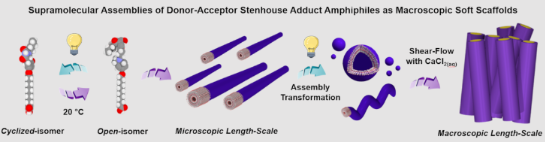
- stronger fatigue effect was observed in the photoisomerization of DA7 and DA6, this might be attributed to stabilization through hydrogen bonding and a favored cyclized-isomer in polar solvents. The increased alkyl linker length of DA10 and DA11 provided an improved photostability compared to DA7 and DA6