


Search results
Search for "intermolecular" in Full Text gives 808 result(s) in Beilstein Journal of Organic Chemistry. Showing first 200.
Recent advances and future challenges in the bottom-up synthesis of azulene-embedded nanographenes
Beilstein J. Org. Chem. 2025, 21, 1272–1305, doi:10.3762/bjoc.21.99
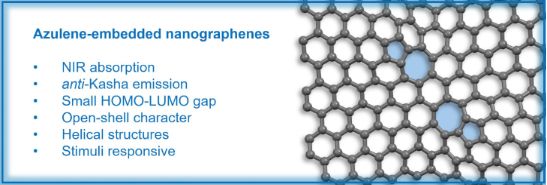
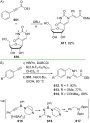
- and co-workers [55]. A palladium-catalysed variation of [3 + 2] annulation, accompanied by ring expansion [56], was used for the intermolecular reaction between acenes bearing alkyne substituents 55a–d and di-n-butylacetylene (56). The reaction gave a series of azulene-embedded isomers of linear




Recent advances in oxidative radical difunctionalization of N-arylacrylamides enabled by carbon radical reagents
Beilstein J. Org. Chem. 2025, 21, 1207–1271, doi:10.3762/bjoc.21.98
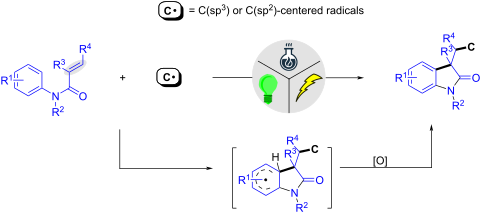
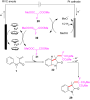
- oxidant and initiator, enabling an efficient intermolecular cascade cyclization process (Scheme 5) [5]. In this strategy, a novel, selective, metal-free synthetic method was introduced for the synthesis of isoxazoline-featured oxindoles through iminoxyl radical-promoted cascade oxyalkylation
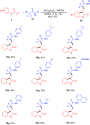
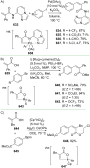
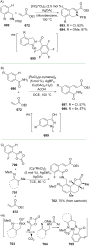
- elimination or single-electron oxidation and deprotonation, yielding the final oxindole products 81 and regenerating the Pd(0) catalyst I. In the same year, Zhang’s group developed a novel visible-light-induced palladium-catalyzed intermolecular radical cascade cyclization of N-arylacrylamides with
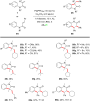
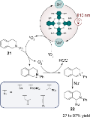
- for constructing quaternary carbon centers in oxindoles via an N-heterocyclic carbene (NHC)-catalyzed intermolecular Heck-type alkyl radical addition and annulation reaction (Scheme 47) [28]. The reaction proceeds through a redox-neutral mechanism, where the NHC catalyst serves a dual role as both a












Supramolecular assembly of hypervalent iodine macrocycles and alkali metals
Beilstein J. Org. Chem. 2025, 21, 1095–1103, doi:10.3762/bjoc.21.87
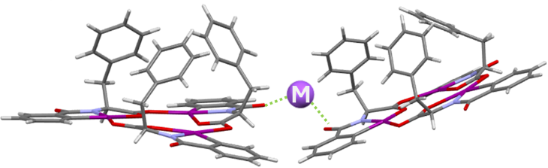
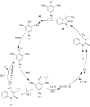
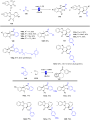
- bonding is characterized as those interactions that involve intermolecular hypervalent connections with lengths shorter than the sum of the van der Waals radii between a heavy p-block element and an electron-pair donor (typically O, N, S, or halogen) [15]. Secondary I···O interactions have been found to


Recent advances in synthetic approaches for bioactive cinnamic acid derivatives
Beilstein J. Org. Chem. 2025, 21, 1031–1086, doi:10.3762/bjoc.21.85
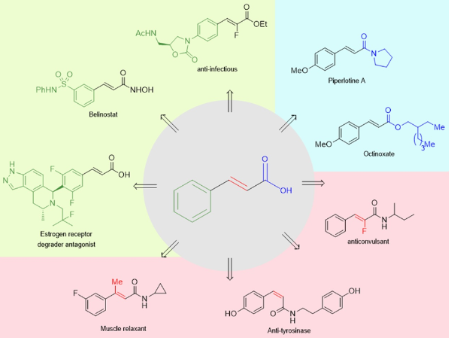
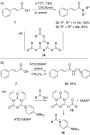
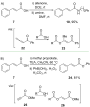
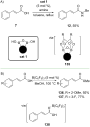
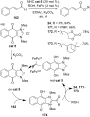
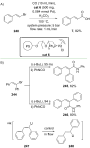
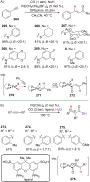
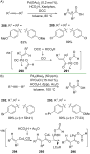
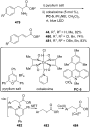
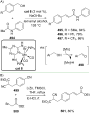
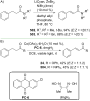
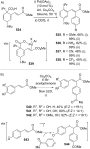
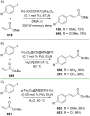
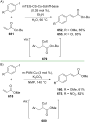
- styrenes with alkyl formates and the oxidant 4-cyano-1-(1-methylethoxy)pyridinium trifluoromethanesulfonate to give the corresponding cinnamate esters 185–192 via intermolecular addition of styrene to an alkoxyradical forming radical adduct 193 (Scheme 59) [102]. Iwasawa and co-workers (2020) employed CO2
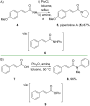
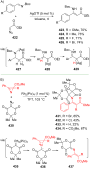
- )-cinnamic acid esters 445–448 in excellent yields via E-to-Z photoisomerization mediated by the photocatalyst (Scheme 90) [152]. Nguyen and co-workers (2019) employed iodine to catalyze the intermolecular olefin-carbonyl metathesis reaction of benzaldehyde (449) and acrylate 450 to give the corresponding








































Recent advances in controllable/divergent synthesis
Beilstein J. Org. Chem. 2025, 21, 890–914, doi:10.3762/bjoc.21.73

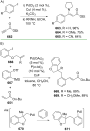
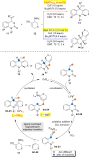
- achieved selective synthesis of either enantiomer of a target product by controlling the reaction duration (Scheme 13) [42]. When performing the asymmetric intermolecular allylic amination of 6-hydroxyisoquinoline (49) with tert-butyl(1-phenylallyl)carbonate ((rac)-50) using an Ir catalyst derived from [Ir




Dicarboxylate recognition based on ultracycle hosts through cooperative hydrogen bonding and anion–π interactions
Beilstein J. Org. Chem. 2025, 21, 884–889, doi:10.3762/bjoc.21.72
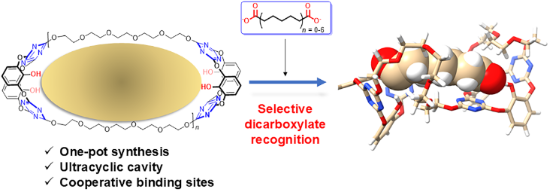
- , while the glycol chains are oriented along the long axis in the opposite orientations. In packing mode, the submacrocycle units form close contacts through intermolecular hydrogen bonding, C–H···π, and lone pair–π interactions, resulting in a 1D linear assembly. Anion recognition With the functional


Light-enabled intramolecular [2 + 2] cycloaddition via photoactivation of simple alkenylboronic esters
Beilstein J. Org. Chem. 2025, 21, 854–863, doi:10.3762/bjoc.21.69
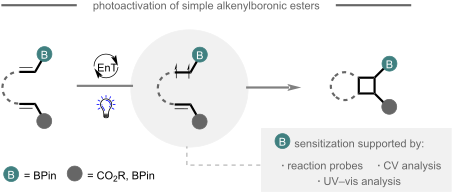
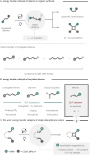
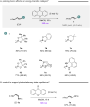
- process (Figure 2B) [19]. In a bid to translate sensitization reaction probes to meaningful synthetic transformations, conventional intermolecular [2 + 2] cycloaddition reactions were initially trialled (Figure 3A). Preliminary reactions using styrene or methyl acrylate were unsuccessful, with no [2 + 2
- ] cycloaddition observed, despite the use of higher catalyst loadings. The efficient isomerization of 1a during these reactions indicated that substrate lifetime for efficient intermolecular reactivity may be problematic. While substrate-tethered reactivity, developed by Brown and co-workers was unsuccessful [49
- as an operational mechanism. While intermolecular alkene quenching to enable [2 + 2] cycloaddition was inefficient, presumably due to poor substrate lifetime, intramolecular [2 + 2] reactivity with both acrylates and alkenylboronic esters was effective. The small 3D, boron-containing fragments could



Unraveling cooperative interactions between complexed ions in dual-host strategy for cesium salt separation
Beilstein J. Org. Chem. 2025, 21, 845–853, doi:10.3762/bjoc.21.68

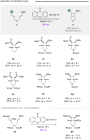
- six Cs–O ion-dipole interactions (2.9 Å and 3.2 Å). These intermolecular interactions of Cs+ cations with18-crown-6 and hexaurea receptors help to form 3D framework in the solid state (Supporting Information File 1, Figure S2), which may reinforce cooperative interactions between complexed Cs+ and
- with 18-crown-6 and tripodal receptor (CCDC: 2411575) and (b) chemical structures for three types of intermolecular interactions with complexed Cs+. (c) IGM plot illustrating the attraction between complexed Cs+ and complexed phosphate. Color coding in the range of −0.5 < ρ sign(λ2) < 0.5 a.u. Atom


Development and mechanistic studies of calcium–BINOL phosphate-catalyzed hydrocyanation of hydrazones
Beilstein J. Org. Chem. 2025, 21, 755–765, doi:10.3762/bjoc.21.59
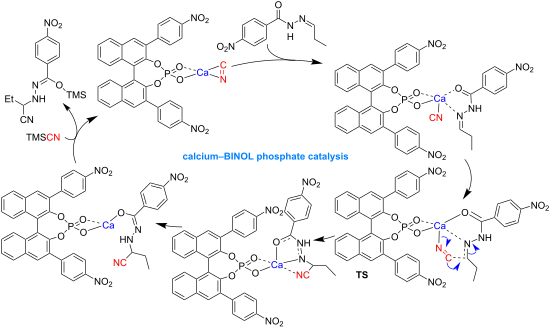
- –(Ca) five-ring. This initial product is consumed in a tautomerization step to give slightly more stable 11, in which the cyanide group is no longer bound to the calcium atom. Tautomerization 10 → 11 (with Nβ hydrogen shifting to Nα, the former imine nitrogen) is most likely intermolecular, as direct


Copper-catalyzed domino cyclization of anilines and cyclobutanone oxime: a scalable and versatile route to spirotetrahydroquinoline derivatives
Beilstein J. Org. Chem. 2025, 21, 749–754, doi:10.3762/bjoc.21.58
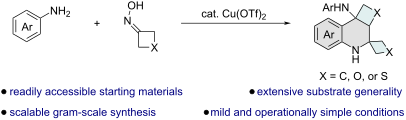
- to generate an enamine intermediate. Subsequently, an intermolecular cyclization occurs between the enamine and imine intermediates, ultimately yielding the final target product through an aromatization process (Scheme 4). Conclusion In summary, we have developed an efficient and practical copper
- intermediates, followed by intermolecular cyclization and aromatization. The scalability of this method was demonstrated through a gram-scale reaction, highlighting its potential for practical applications in medicinal chemistry and drug discovery. Synthetic strategies for the construction of


Origami with small molecules: exploiting the C–F bond as a conformational tool
Beilstein J. Org. Chem. 2025, 21, 680–716, doi:10.3762/bjoc.21.54
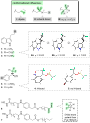
- molecules’ intermolecular interactions too. The intramolecular H-bond makes the hydroxy group a weaker intermolecular H-bond donor [104] (e.g., 55 vs 54, Figure 8). This runs counter to a longstanding assumption [105] that the inductive effect of fluorine should always make the hydroxy group a stronger H
- -bond donor. For non-rigid molecules, the greater the population of intramolecularly H-bonded conformers, the worse the hydroxy group will be as an intermolecular H-bond donor [106]. To be clear, fluorine can make the hydroxy group a stronger intermolecular H-bond donor in certain circumstances, for
- instance in highly-fluorinated alcohols (e.g., hexafluoroisopropanol) [107], or in rigid molecules where intramolecular H-bonding is not possible [104] (e.g., 56, Figure 8); but it is not a universal phenomenon. The issue of intra- vs intermolecular H-bonding of vicinal fluorohydrins can complicate matters








Photochemically assisted synthesis of phenacenes fluorinated at the terminal benzene rings and their electronic spectra
Beilstein J. Org. Chem. 2025, 21, 670–679, doi:10.3762/bjoc.21.53

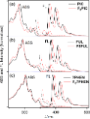
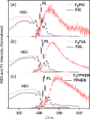
- wavelength region for the corresponding parent phenacenes whereas their fluorescence bands markedly red-shifted and broadened. These observations suggest that the intermolecular interactions of excited-state F8-phenacene molecules are significantly different from those of the corresponding parent molecules
- - and 13-fluoropicene, formed dimeric structures through intermolecular F∙∙∙H contacts and behaved as p-channel semiconductors. By contrast, little information is available about the effects of polyfluorination on the physical properties and structures of phenacenes. It is expected that polyfluorination
- processes contributing to the low fluorescence quantum yield of the F8-phenacenes (cf. Table 1). Because fluorescence behavior in the solid state reflects molecular alignment and intermolecular interactions in the crystals, solid-state fluorescence of the F8-phenacenes was investigated. We observed





Deep-blue emitting 9,10-bis(perfluorobenzyl)anthracene
Beilstein J. Org. Chem. 2025, 21, 515–525, doi:10.3762/bjoc.21.39
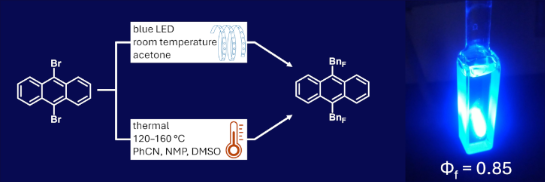
- for material scientists [12][13][14]. One of the structural features favorable for an efficient anthracene-based blue emitter is the introduction of bulky substituents in the 9 and 10 positions, which results in a solid-state packing with limited π–π intermolecular interactions, which, in turn, tends
- to suppress undesirable fluorescence self-quenching [15]. Not only do bulky substituents disrupt intermolecular interactions of this type, they can also provide higher chemical stability and reduce or prevent the photodimerization and photo-oxidation to which all acenes are prone [13]. Furthermore





Unprecedented visible light-initiated topochemical [2 + 2] cycloaddition in a functionalized bimane dye
Beilstein J. Org. Chem. 2025, 21, 500–509, doi:10.3762/bjoc.21.37
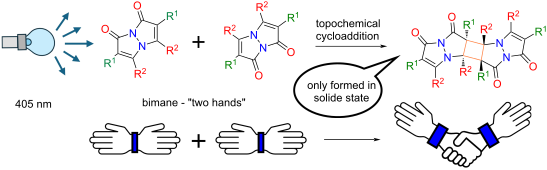
- crystalline compounds significantly enhances the stereoselectivity and yield of topochemical reactions compared to those conducted in solution [10]. A key requirement for these reactions is the intermolecular distance between the two reactive double bonds. Schmidt’s rule, which governs topochemical [2 + 2
- optimized, which can only be predicted computationally – a process that becomes increasingly complex with more intricate structures [12]. Since these reactions depend on both crystal packing and specific intermolecular distances, another key challenge lies in designing novel structures capable of undergoing
- conventions. Although these dyes have been known since 1978, their photochemistry has only been briefly explored. In this work, during the synthesis of a series of these dyes (Figure 2a), we observed an unprecedented intermolecular [2 + 2] cycloaddition of syn-(ethoxycarbonyl,chloro)bimane (Cl2B), seen in


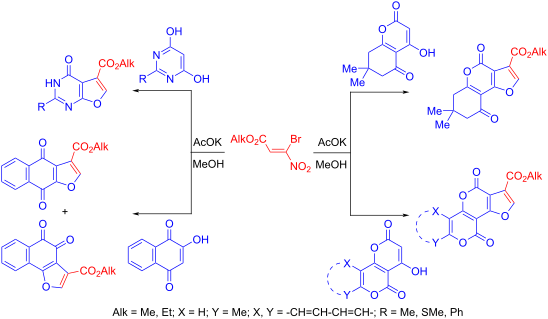
Synthesis of new condensed naphthoquinone, pyran and pyrimidine furancarboxylates
Beilstein J. Org. Chem. 2025, 21, 340–347, doi:10.3762/bjoc.21.24
- atoms were refined in anisotropic approximation. The hydrogen atoms were placed in calculated positions and refined according to the rider model. The figures were performed in the Mercury 2020.3 program [38], the analysis of intermolecular contacts was performed according to the PLATON program [39]. The


Red light excitation: illuminating photocatalysis in a new spectrum
Beilstein J. Org. Chem. 2025, 21, 296–326, doi:10.3762/bjoc.21.22

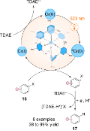
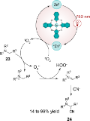
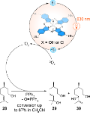
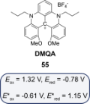
- transformations have been addressed by Gianetti et al. such as C(sp3)–H oxidation, intermolecular atom transfer radical addition and C(sp)–H arylation using red light and DMQA (Figure 14), hence showing the great versatility of this photocatalyst. Red-light photocatalysis in biological systems Photochemical

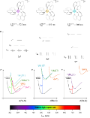














Oxidation of [3]naphthylenes to cations and dications converts local paratropicity into global diatropicity
Beilstein J. Org. Chem. 2025, 21, 277–285, doi:10.3762/bjoc.21.20

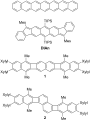
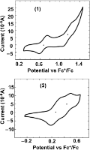
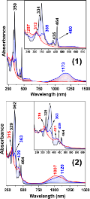
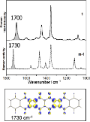
- ] reported a stable heptacene dication in concentrated sulfuric acid, a stability attributed to the intermolecular Coulomb repulsion between the charged molecules, which prevents the dimerization of the acene. This exciting finding suggests possible modes of kinetic stabilization of oxidized species of π


Heteroannulations of cyanoacetamide-based MCR scaffolds utilizing formamide
Beilstein J. Org. Chem. 2025, 21, 217–225, doi:10.3762/bjoc.21.13
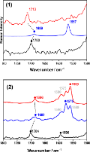
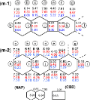
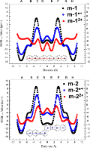
- was observed at an average wavelength of 384 nm for 5a–e, 439 nm for 6a–e and 430 nm for 7a–e (see Supporting Information File 1 for detailed information). In support of the proposed scaffold 7b, we were able to solve its crystal structure (Figure 3). An intermolecular bifurcated hydrogen bond network


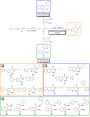


Quantifying the ability of the CF2H group as a hydrogen bond donor
Beilstein J. Org. Chem. 2025, 21, 189–199, doi:10.3762/bjoc.21.11
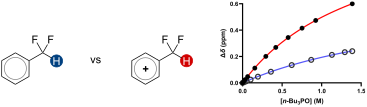
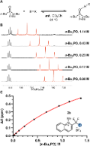
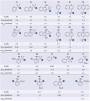
- intermolecular forces, collectively, may also play a role. This proposal is further supported by the weaker linear relationship between ΔGexp and ELP→σ* (Figure 6E and Figure S46 in Supporting Information File 1). Collectively, these results indicate that the ΔδDMSO–CDCl3 or ΔδDMSO–CD3NO2 measurement can



Hydrogen-bonded macrocycle-mediated dimerization for orthogonal supramolecular polymerization
Beilstein J. Org. Chem. 2025, 21, 179–188, doi:10.3762/bjoc.21.10
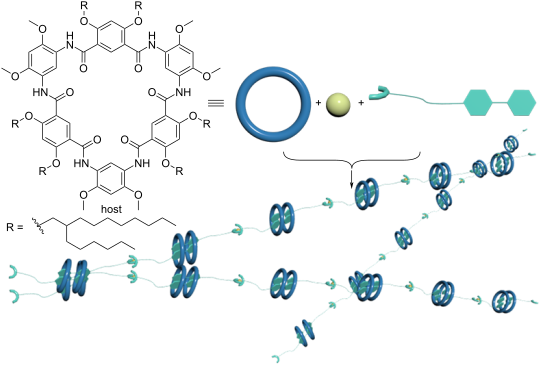
- cooperative intermolecular forces. Zinc ion-induced coordination with the macrocycle and a terpyridinium derivative enabled orthogonal polymerization, as revealed by 1H NMR, DLS, and TEM techniques. In addition, viscosity measurements showed a transition from oligomers to polymers at the critical
- , including pyridinium and its derivatives [40]. More importantly, it favors intermolecular π-stacking interactions with aromatic guests [48]. Herein, we report on a novel supramolecular dimerization motif in 2:2 stoichiometry using H-bonded aramide macrocycles for constructing orthogonal supramolecular
- noncovalent interactions, particularly intermolecular π–π-stacking and C–H···O interactions. Specifically, π–π-stacking interactions were found between two guest molecules with aromatic rings arrayed in an offset fashion with a distance of 3.3 Å (Figure 3a). Interestingly, these interactions also existed



Cu(OTf)2-catalyzed multicomponent reactions
Beilstein J. Org. Chem. 2025, 21, 122–145, doi:10.3762/bjoc.21.7

- -difunctionalization of alkenes carried out with carbazates (N-aminocarbamates) and (hetero)arene nucleophiles or amines exploiting N-(tert-butyl)-N-fluoro-3,5-bis(trifluoromethyl)benzenesulfonamide (NFBS) as intermolecular hydrogen-atom-transfer reagent results in alkylarylation processes (Scheme 5) [19]. The
- reaction proceeds through an initial single-electron transfer from NFBS assisted by the active copper species, followed by intermolecular hydrogen-atom transfer from the carbazate. The nitrogen radical intermediate I thus formed is decomposed into the acyl or alkyl radical intermediates II and III






Efficient synthesis of fluorinated triphenylenes with enhanced arene–perfluoroarene interactions in columnar mesophases
Beilstein J. Org. Chem. 2024, 20, 3263–3273, doi:10.3762/bjoc.20.270
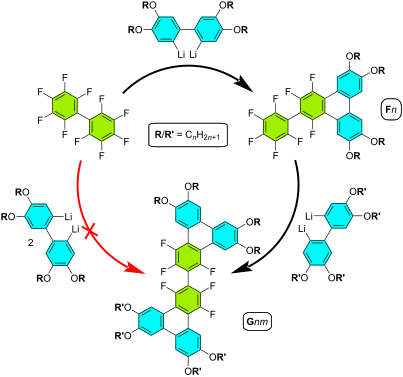
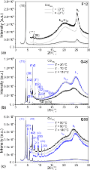
- -67034 Strasbourg, France 10.3762/bjoc.20.270 Abstract The high potential of non-covalent arene–fluoroarene intermolecular interactions in the design of liquid crystals lies in their ability to strongly promote self-assembly, improve the order and stability of the supramolecular mesophases, and enable
- derivatives and the antiparallel stacking mode into columnar structures stabilized by arene–perfluoroarene intermolecular interactions were confirmed by the single-crystal structure of the alkoxy-free side chain analog, i.e., 1,2,4-trifluoro-3-(perfluorophenyl)triphenylene (F). UV–vis absorption and
- red-shift of the emission peak. Keywords: arene–perfluoroarene interaction; decafluorobiphenyl; fluorinated triphenylene; fluoroarene nucleophilic substitution; organolithium; Introduction Non-covalent arene–fluoroarene intermolecular interactions [1][2] are drawing increasing attention due to their




Non-covalent organocatalyzed enantioselective cyclization reactions of α,β-unsaturated imines
Beilstein J. Org. Chem. 2024, 20, 3221–3255, doi:10.3762/bjoc.20.268
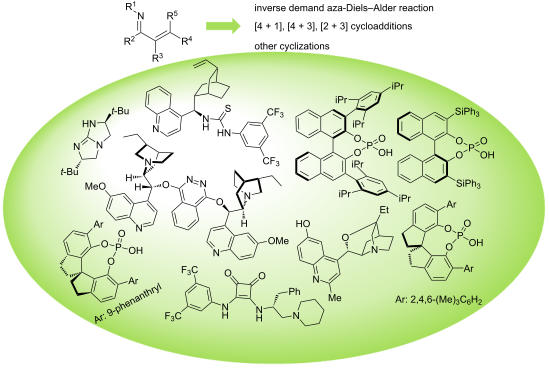
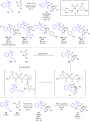
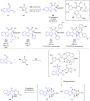
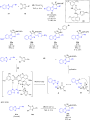
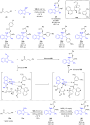
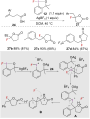
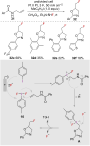
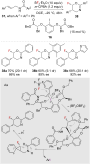
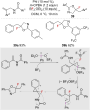
- , Mei and co-workers reported a chiral phosphoric acid-catalyzed asymmetric intermolecular formal (3 + 2) cycloaddition of azoalkenes 53 with azlactones 15 (Scheme 28). This methodology provides fully substituted 4-pyrrolin-2-ones 78 bearing a quaternary carbon atom in high yields (72–95%) and
- -Diels–Alder reaction of 1,3-diazadienes and 3-vinylindoles. Chiral phosphoric acid-catalyzed asymmetric Attanasi reaction between 1,3-dicarbonyl compounds and azoalkenes. Synthetic applicability of the NPNOL derivatives. Chiral phosphoric acid-catalyzed asymmetric intermolecular formal (3 + 2









Hypervalent iodine-mediated intramolecular alkene halocyclisation
Beilstein J. Org. Chem. 2024, 20, 3113–3133, doi:10.3762/bjoc.20.258
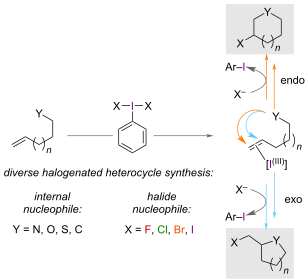
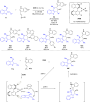
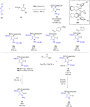
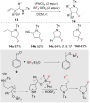
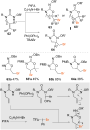
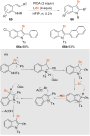
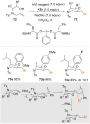
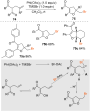
- , including ligand coupling, oxidative addition, intermolecular nucleophilic attack, 1,2-aryl migration, reductive elimination, and intramolecular nucleophilic attack. This approach offers a rapid and effective way to produce 5-fluoro-2-aryloxazoline compounds, which are valuable building blocks in organic



















Advances in the use of metal-free tetrapyrrolic macrocycles as catalysts
Beilstein J. Org. Chem. 2024, 20, 3085–3112, doi:10.3762/bjoc.20.257
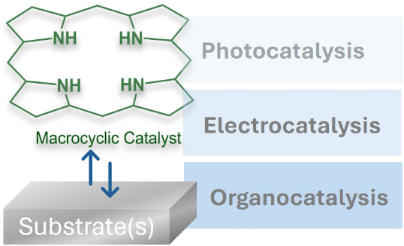
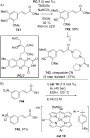
- metalloporphyrins that are easily accessible for the incoming substrates, pyrrole –N/NH moieties inside the core of metal-free porphyrins are mostly hidden and unavailable for any kind of intermolecular hydrogen-bonding interactions or molecular recognition as they are 'shielded' by the planar macrocyclic system





