


Search results
Search for "separation" in Full Text gives 886 result(s) in Beilstein Journal of Organic Chemistry. Showing first 200.
Unraveling cooperative interactions between complexed ions in dual-host strategy for cesium salt separation
Beilstein J. Org. Chem. 2025, 21, 845–853, doi:10.3762/bjoc.21.68

- /bjoc.21.68 Abstract The dual-host strategy offers a straightforward approach to ion separation, yet the nature of cooperative interactions between receptor-complexed cations and anions remains poorly understood. In this study, we utilize 18-crown-6 as a cation receptor and a tripodal hexaurea receptor
- dual-host systems for selective ion separation. Keywords: anion binding; cesium extraction; dual-host strategy; ion-pair interaction; solid–liquid extraction; Introduction Ion-pair interaction, defined as the electrostatic attraction between a positively charged cation and a negatively charged anion
- separation [4][5][6][7][8]. Building on the extensive research into anion and cation receptors within the realm of supramolecular chemistry [9][10][11][12], numerous heteroditopic ion-pair receptors have been elaborately developed [13][14][15]. These receptors, consisting of binding sites for both anions and


Substituent effects in N-acetylated phenylazopyrazole photoswitches
Beilstein J. Org. Chem. 2025, 21, 830–838, doi:10.3762/bjoc.21.66

- discovered that simple acylation of the pyrazole moiety leads to increased quantum yields of isomerization, long Z-isomer life-times, good spectral separation, and high photostability. Keywords: azobenzenes; azopyrazoles; photochromism; photoswitches; substituent effects; Introduction Organic photoswitches
- reported to either bathochromically shift the UV–vis absorption spectrum or lead to a better separation of the n→π* bands of the two photoisomers and allow for visible-light-responsive switches [23][24][25][26]. In recent years, heteroaryl azobenzene derivatives have revealed superior properties to
- , such as OH or OMe, they are shifted towards the blue. Especially for NAc-PAPs, we observe a higher spectral separation of the π→π* and the n→π* transitions of the Z isomers compared to NMe-PAPs and NH-PAPs. For instance, the separation for the π→π* transition band and the n→π* is 176 nm for NAc-PAP-CN


4-(1-Methylamino)ethylidene-1,5-disubstituted pyrrolidine-2,3-diones: synthesis, anti-inflammatory effect and in silico approaches
Beilstein J. Org. Chem. 2025, 21, 817–829, doi:10.3762/bjoc.21.65

- and charge separation. In the resonance forms 3a’–e’, the 4-methoxybenzylamino group is covalently attached to the 4-position of the 1,5-disubstituted pyrrolidine-2,3-dione core via a Schiff’ base (C=N) linkage in which the positive charge could be delocalized on both carbon and nitrogen atoms. In


Recent advances in the electrochemical synthesis of organophosphorus compounds
Beilstein J. Org. Chem. 2025, 21, 770–797, doi:10.3762/bjoc.21.61
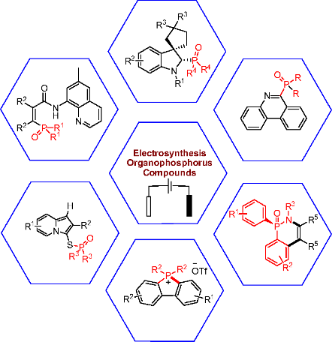
- reduction occur in separate compartments, separated by a diaphragm or salt bridge, to prevent reactant mixing and improve efficiency (e.g., Daniel cell). However, in undivided cells, both reactions occur in a single compartment without separation, resulting in a more straightforward design but potentially


Acyclic cucurbit[n]uril bearing alkyl sulfate ionic groups
Beilstein J. Org. Chem. 2025, 21, 717–726, doi:10.3762/bjoc.21.55
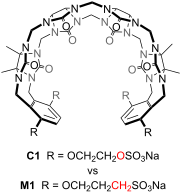
- and water [1][2][3][4]. Building on this fundamental knowledge, supramolecular chemists created a variety of functional systems including supramolecular polymers, sensing ensembles, molecular machines, supramolecular separation phases, and drug delivery systems [5][6][7][8][9]. A primary subfield of




Photochemically assisted synthesis of phenacenes fluorinated at the terminal benzene rings and their electronic spectra
Beilstein J. Org. Chem. 2025, 21, 670–679, doi:10.3762/bjoc.21.53

- 18-crown-6 produced fluorine-containing diarylethene 8 as a mixture of E- and Z-isomers. Subsequently, the E/Z mixture of 8 was subjected to the Mallory photoreaction without separation. Thus, compound 8 was irradiated with fluorescent black-light lamps (300 nm, 6 × 16 W) in the presence of a





Formaldehyde surrogates in multicomponent reactions
Beilstein J. Org. Chem. 2025, 21, 564–595, doi:10.3762/bjoc.21.45
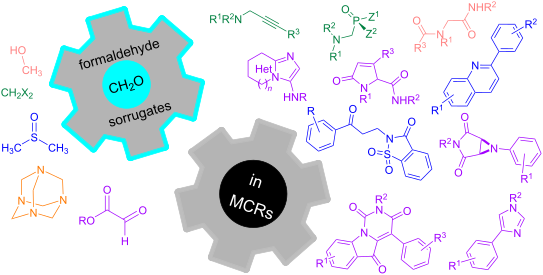
- separation processes are required [32][35][36]. In this context, DMSO has been used as an alternative to formaldehyde for the MCR synthesis of a wide variety of quinolines and related compounds. For example, Zhang et al. showed that starting from anilines and substituted styrenes while using K2S2O8 for the


Deep-blue emitting 9,10-bis(perfluorobenzyl)anthracene
Beilstein J. Org. Chem. 2025, 21, 515–525, doi:10.3762/bjoc.21.39
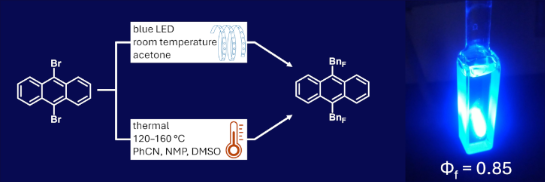
- the Cu powder. The solvents were removed in vacuo producing an orange oil. 9,10-ANTH(BnF)2 was isolated via multiple stages of HPLC separation. Yield (isolated): 9-Br-10-BnF-ANTH (11%), 9,10-(BnF)2-ANTH (14%). Method 1.3 (9,10-ANTH(Br)2, Cu, PhCl): 9,10-ANTH(Br)2 (13.4 mg, 39.8 µmol) was mixed with Cu
- separation. Yield (isolated): 9-Br-10-BnF-ANTH (14%), 9,10-(BnF)2-ANTH (5%). Method 1.4 (9,10-ANTH(Br)2, Cu, NMP): 9,10-ANTH(Br)2 (13.4 mg, 39.8 µmol) was mixed with Cu powder (100 mg, 1.57 mmol) in a 10 mL rotavis reaction tube fitted with a wired septum in a glove box. NMP (5 mL) was added to the reaction
- reaction mixture was filtered to remove the Cu powder. The solvents were removed in vacuo producing an orange oil. 9,10-ANTH(BnF)2 was isolated via one stage of HPLC separation. Yield (isolated): 9-Br-10-BnF-ANTH (23%), 9,10-(BnF)2-ANTH (17%). Method 1.5 (9,10-ANTH(Br)2, Cu, PhCN): Cu (50 mg, 0.79 mmol





Synthesis of the aggregation pheromone of Tribolium castaneum
Beilstein J. Org. Chem. 2025, 21, 510–514, doi:10.3762/bjoc.21.38
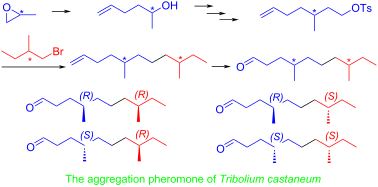
- , Mori and Phillips achieved the complete separation of the derivatives from the four stereoisomers by reversed-phase HPLC at −54 °C, and revealed that the natural pheromone consists of four stereoisomers of 4,8-dimethyldecanal (Figure 1) [16][17]. Previous syntheses mainly focused on chiral sources of


Unprecedented visible light-initiated topochemical [2 + 2] cycloaddition in a functionalized bimane dye
Beilstein J. Org. Chem. 2025, 21, 500–509, doi:10.3762/bjoc.21.37
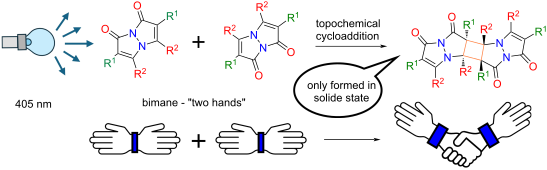
- °) (crystallographic unit cell can be seen in Figure 6a). However, in Me2B, the bonds are further apart, with an intermolecular separation of 3.862(2) Å. Although this is still within the range for a potential reaction, no reaction was observed. In contrast, Me4B lacks the proper alignment of the reactive double bonds


Synthesis of N-acetyl diazocine derivatives via cross-coupling reaction
Beilstein J. Org. Chem. 2025, 21, 490–499, doi:10.3762/bjoc.21.36
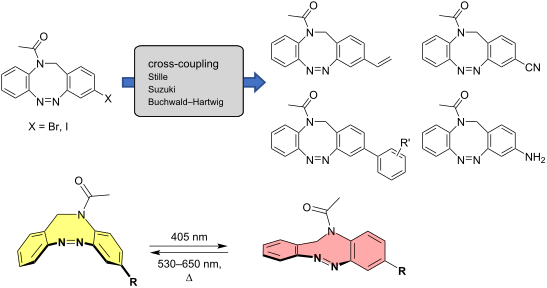
- ) exhibit an n–π*-transition at approximately 400 nm, matching the n–π*-transition of unsubstituted N-acetyl diazocine 1 (Table 6). Irradiation with light of 405 nm gives the metastable E isomers with photoconversion yields of 76–85% due to a very good separation of the n–π*-transitions. N-Acetyl diazocine


Photomechanochemistry: harnessing mechanical forces to enhance photochemical reactions
Beilstein J. Org. Chem. 2025, 21, 458–472, doi:10.3762/bjoc.21.33
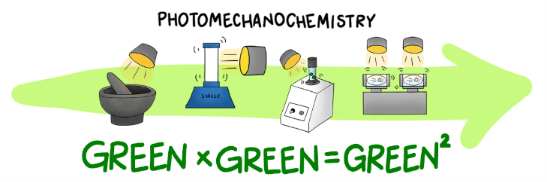
- cost for photomechanochemical reactions. However, its primary limitation lies in the manual operation and the separation of the grinding and photoreaction steps. This approach affects the reproducibility of the reaction, as it depends on the energy applied by the operator. Moreover, it is time




Beyond symmetric self-assembly and effective molarity: unlocking functional enzyme mimics with robust organic cages
Beilstein J. Org. Chem. 2025, 21, 421–443, doi:10.3762/bjoc.21.30
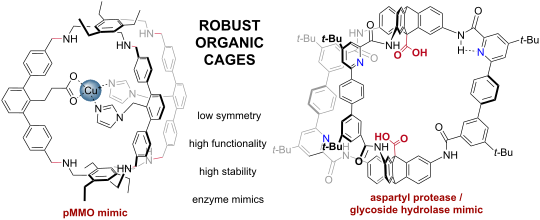
- mixtures of ring sizes, either by enzymatic synthesis (cyclodextrins) or thermodynamic synthesis, and are used after separation of the different ring sizes. Since the macrocycles are generically hydrophobic on the interior, they can perform catalysis by dual-confinement of two hydrophobic substrates from
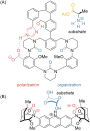
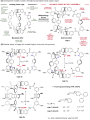
- purification possibilities available for robust organic cages mean access to structural families via stepwise synthesis or statistical methods followed by separation is facile, as demonstrated by Otte [42][43][44] and ourselves [41]. The lack of internal functionality in cavities doesn’t just reduce the




Identification and removal of a cryptic impurity in pomalidomide-PEG based PROTAC
Beilstein J. Org. Chem. 2025, 21, 407–411, doi:10.3762/bjoc.21.28
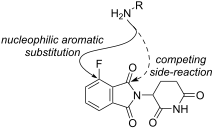
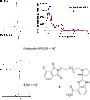
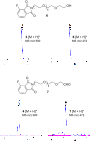
- product on HPLC even for the reaction of diethylene glycolamine and 1. Capping the free hydroxy group with a methyl group improved the separation on HPLC marginally. However, incorporating a clickable propargyl group greatly benefited separation. Similar to the alcohol, amino-PEG5-acid also reacted with 1
- enable an easy separation of the byproduct. Pleasingly, reacting the mixture of 3 and 6 with taurine converted 6 to sulfonate 10 (Scheme 2) that can be removed by a simple aqueous wash with sodium bicarbonate. Whereas taurine may also react with 3, the overall yield of 3 was not affected significantly




Red light excitation: illuminating photocatalysis in a new spectrum
Beilstein J. Org. Chem. 2025, 21, 296–326, doi:10.3762/bjoc.21.22

- have been proven to be efficient in photoredox catalysis [9][10][11][12]. Actually, MLCT enables a charge separation for which the ligand-based electron can trigger a chemical reduction while the metal-centered hole, a chemical oxidation. This type of excitation is particularly enhanced in heavy metals















Hydrogen-bonded macrocycle-mediated dimerization for orthogonal supramolecular polymerization
Beilstein J. Org. Chem. 2025, 21, 179–188, doi:10.3762/bjoc.21.10
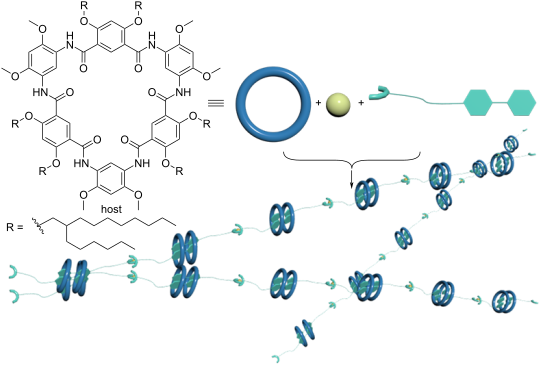
- noncovalent bonding interactions. It also confers on supramolecular assemblies with higher complexity and multilevel ordering [9][10][11], leading to a vast number of applications, for example, for use in detection and separation [12], sensing [13], photocatalysis [14], release [15], and as thermochromic and

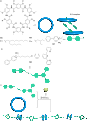


Recent advances in organocatalytic atroposelective reactions
Beilstein J. Org. Chem. 2025, 21, 55–121, doi:10.3762/bjoc.21.6
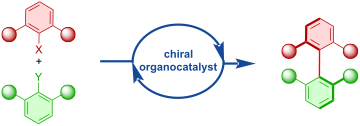
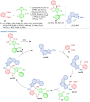
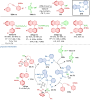
- 50 °C in isopropanol just after a couple of hours. The racemization barriers of the products were only slightly higher (28 kcal/mol) than the minimal requirement for separation of atropoisomers (24 kcal/mol). Scale-up done on the one-mmol-scale provided the corresponding product in comparable yields






Facile one-pot reduction of β-nitrostyrenes to phenethylamines using sodium borohydride and copper(II) chloride
Beilstein J. Org. Chem. 2025, 21, 39–46, doi:10.3762/bjoc.21.4
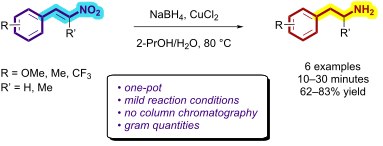
- atmosphere, special precautions, and with isolated yields up to 60% [14][15]. Due to the formation of side products, final purification of the amino derivatives requires the use of either multiple separation techniques, chromatography, or distillation [15][16][17][18] (Scheme 1). Differently from lithium
- extraction process and copper(II) removal. However, the addition of DETA led to decreased yields and a deterioration of the phase separation. It was observed that using a 20% aqueous sodium hydroxide solution, instead of 35%, negatively impacted phase separation, making the extraction process more time
- ). UPLC-MS analyses were performed on a Waters Acquity H-class UPLC with a Sample Manager FTN and a TUV dual wavelength detector coupled to a QDa single quadrupole analyzer using electrospray ionization (ESI). UPLC separation was achieved with a C18 reversed-phase column (Acquity UPLC BEH C18, 2.1 mm × 50


Emerging trends in the optimization of organic synthesis through high-throughput tools and machine learning
Beilstein J. Org. Chem. 2025, 21, 10–38, doi:10.3762/bjoc.21.3
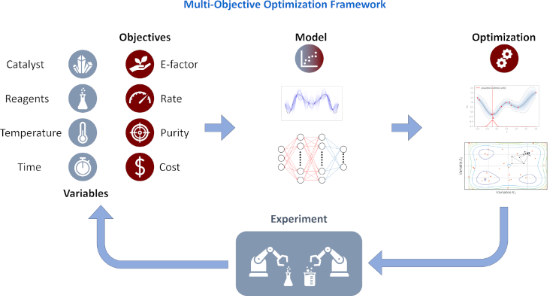
- , stirring, heating, and cooling modules for enhanced versatility. In addition, the platform is capable of performing under inert and low-pressure atmospheres, handling separation steps, and pressure sensing for reaction monitoring. Its efficacy and robustness were confirmed through the successful synthesis
- , differing from established isolation and separation techniques, holds the promise of not only enhancing the efficiency of HTE flow synthesis but also paving the way for more sustainable growth in this research area. Autonomous self-optimizing flow reactors Autonomous self-optimizing flow reactors (ASFRs


Synthesis, characterization, and photophysical properties of novel 9‑phenyl-9-phosphafluorene oxide derivatives
Beilstein J. Org. Chem. 2024, 20, 3299–3305, doi:10.3762/bjoc.20.274
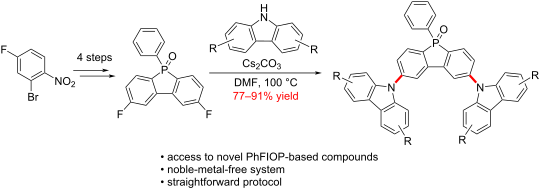
- recent years, and they are mostly based on purely organic electron donor−electron acceptor (D−A) or D−A−D systems with significant intramolecular charge transfer interactions for frontier molecular orbital separation [28][29][30]. Due to the electron-accepting properties, PhFlOP can clearly act as an




Ceratinadin G, a new psammaplysin derivative possessing a cyano group from a sponge of the genus Pseudoceratina
Beilstein J. Org. Chem. 2024, 20, 3215–3220, doi:10.3762/bjoc.20.267
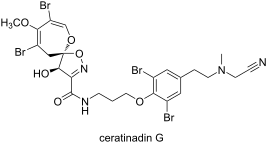
- ), as well as additional signals not matching those of any known psammaplysin derivatives. Further separation of this fraction using C18 HPLC led to the isolation of ceratinadin G (1, 0.4 mg, 3.2 × 10⁻⁴%) along with psammaplysin F (2) [10][11][12]. Ceratinadin G (1) was isolated as an optically active


Discovery of ianthelliformisamines D–G from the sponge Suberea ianthelliformis and the total synthesis of ianthelliformisamine D
Beilstein J. Org. Chem. 2024, 20, 3205–3214, doi:10.3762/bjoc.20.266
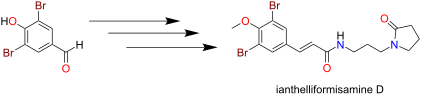
- -bonded silica (≈1 g), packed into a stainless-steel guard cartridge, and subjected to phenyl semipreparative RP-HPLC separation. Isocratic conditions of 90% H2O (0.1% TFA)/10% MeOH (0.1% TFA) were initially employed for the first 10 min, then a linear gradient to 100% MeOH (0.1% TFA) was run over 40 min


![[Graphic 1]](/bjoc/content/inline/1860-5397-20-266-i2.svg?max-width=637&scale=1.18182)
![[Graphic 2]](/bjoc/content/inline/1860-5397-20-266-i3.svg?max-width=637&scale=1.18182)
![[Graphic 3]](/bjoc/content/inline/1860-5397-20-266-i4.svg?max-width=637&scale=1.18182)

![[Graphic 4]](/bjoc/content/inline/1860-5397-20-266-i5.svg?max-width=637&scale=1.18182)
![[Graphic 5]](/bjoc/content/inline/1860-5397-20-266-i6.svg?max-width=637&scale=1.18182)

Advances in the use of metal-free tetrapyrrolic macrocycles as catalysts
Beilstein J. Org. Chem. 2024, 20, 3085–3112, doi:10.3762/bjoc.20.257
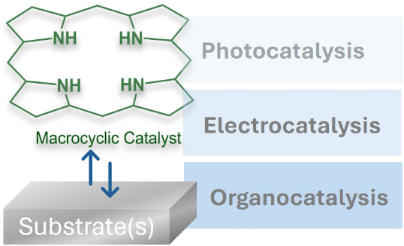
- and separation technology [3][4][5][6][7][8]. Conversely, porphyrins are connected via methine (=CH-) bridges, resulting in an 18 π-electron macrocyclic system affording macrocyclic planarity as well as unique photophysical and electrochemical properties (Figure 1b). While corroles share similarities
- optically active form with 16.7% ee for 63a and 11.8% ee for 63b, respectively (Table 4). The pH-induced aggregation does not only enable to control the catalytic activity, but it also allows a straightforward separation and recovery of the catalyst from the reaction mixture by acidification and


Enantioselective regiospecific addition of propargyltrichlorosilane to aldehydes catalyzed by biisoquinoline N,N’-dioxide
Beilstein J. Org. Chem. 2024, 20, 3069–3076, doi:10.3762/bjoc.20.255
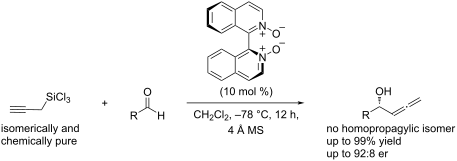
- ][15][16][17][18][19], the separation of which is by no means trivial [20] (Scheme 1). Nonetheless, substituents at the carbon atom indicated by γ (R2) of these reagents have been shown to bias the metallotropic rearrangement and/or the kinetic reactivity of the competing regioisomeric intermediates


Extension of the π-system of monoaryl-substituted norbornadienes with acetylene bridges: influence on the photochemical conversion and storage of light energy
Beilstein J. Org. Chem. 2024, 20, 3061–3068, doi:10.3762/bjoc.20.254
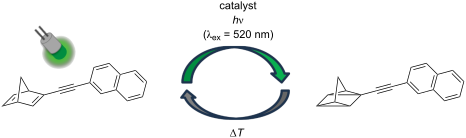
- because by-products interfered with the chromatographic separation; however, these yields are similar to the ones reported for resembling norbornadienes [34][37]. The novel compounds 1h–l,n were identified and fully characterized by NMR spectroscopy (1H, 13C, COSY, HSQC, HMBC), melting point, and





