Search results
Search for "X-ray" in Full Text gives 1343 result(s) in Beilstein Journal of Organic Chemistry. Showing first 200.
Oxetanes: formation, reactivity and total syntheses of natural products
Beilstein J. Org. Chem. 2025, 21, 1324–1373, doi:10.3762/bjoc.21.101
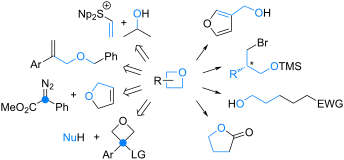
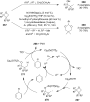
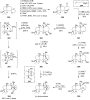
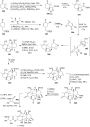
- was generally accepted that this cyclic ether is planar but this myth was eventually debunked by Luger and Buschmann in 1984 who carried out the first X-ray analysis of oxetane [2] and calculated a small puckering angle of 8.7° at 140 K, which is much smaller than the approximate 30° puckering angle








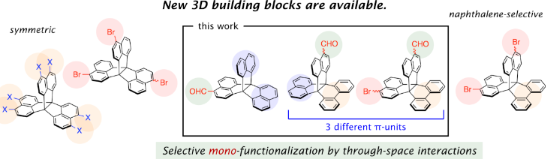
Selective monoformylation of naphthalene-fused propellanes for methylene-alternating copolymers
Beilstein J. Org. Chem. 2025, 21, 1183–1191, doi:10.3762/bjoc.21.95
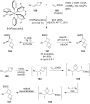
- heating process. T90 and CY of [3.3.3]_branch (415 °C and 64 wt %) were lower than those of [3.3.3]_linear because of two-step decay profile (Figure S703a in Supporting Information File 1). All the samples showed broad powder X-ray diffraction (PXRD) patterns with unclear peaks at around 2θ = 11° and 20


A multicomponent reaction-initiated synthesis of imidazopyridine-fused isoquinolinones
Beilstein J. Org. Chem. 2025, 21, 1161–1169, doi:10.3762/bjoc.21.92
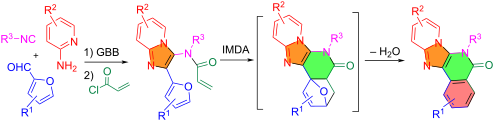
- , Supporting Information File 1), but it was not stable enough for isolation. The structure of 8a was confirmed by single crystal X-ray diffraction analysis. The optimized reaction conditions were used to evaluate the substrate scope of the synthesis of imidazopyridine-fused isoquinolinones 8 (Scheme 3). The
- detected by LC–MS from the reaction mixture. The X-ray structure of 6t indicated that the diene and dienophile are perpendicular to each other which prevents them from being properly aligned for the IMDA reaction. The transition state of the IMDA is electronically destabilized by the sulfur group of the
- chromatography with 30:70 EtOAc/hexanes. Product structures were confirmed by 1H and 13C NMR analysis and X-ray crystal structure analysis of 8a. Density functional theory (DFT) calculations DFT computations were conducted utilizing Gaussian 16W with the B3LYP functional and the 6-31G(d,p) basis set [21][22




Synthetic approach to borrelidin fragments: focus on key intermediates
Beilstein J. Org. Chem. 2025, 21, 1135–1160, doi:10.3762/bjoc.21.91
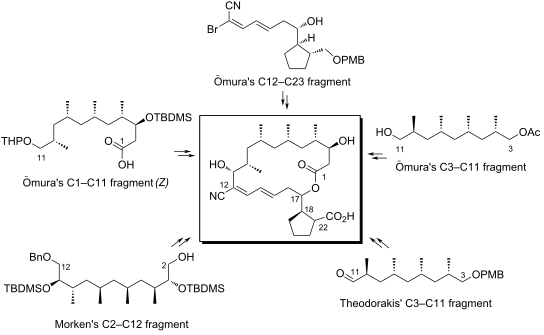
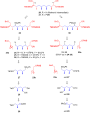
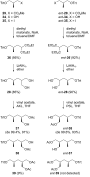
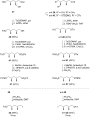
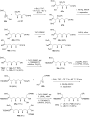
- a cancer therapeutic, exhibiting anti-inflammatory, anti-angiogenic, antimicrobial, antifungal, and antimalarial activities. While Keller-Schierlein first determined its chemical structure, Anderson later confirmed its absolute configuration using X-ray crystallography [16]. During the screening of








Investigations of amination reactions on an antimalarial 1,2,4-triazolo[4,3-a]pyrazine scaffold
Beilstein J. Org. Chem. 2025, 21, 1126–1134, doi:10.3762/bjoc.21.90
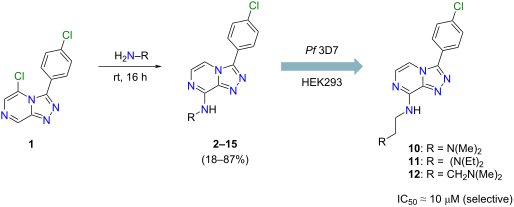
- undescribed amine analogues 2–15 were fully characterised following 1D/2D NMR, UV, and HRMS data analyses. X-ray crystallographic analysis of crystals obtained from the aminated products 2, 7, 10, and 15 are also reported here. The new library of amine-substituted triazolopyrazines was screened against the
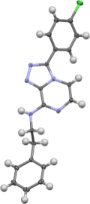
- with relevant position numbering. Crystals obtained for 2 were analysed by X-ray crystallographic studies and confirmed the NMR-based structure assignment. The crystal structure of 2 is shown as a thermal ellipsoid plot below (Figure 3). With a simplified approach for the synthesis of aminated
- NMR and HRESIMS data. Further X-ray crystallographic studies were undertaken on crystalline material of compounds 7, 10, and 15. The thermal ellipsoid plots for these compounds are shown in Figure 4. It is notable that piperidine, both at room temperature and under reflux, has been reported to give




Gold extraction at the molecular level using α- and β-cyclodextrins
Beilstein J. Org. Chem. 2025, 21, 1116–1125, doi:10.3762/bjoc.21.89
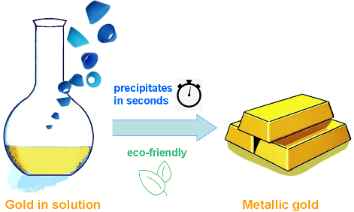
- the constant composition of 2:1 for α-CD to KAuBr4, in consistency with the single-crystal X-ray data. Application studies in gold mining facilities Process patenting and scale-up pilot trials in the United States: The discovery that α-CD can quickly precipitate gold, as detailed in the previous
- desorption of KAu(CN)2. The ability of α-CD to strip gold from carbon was shown to result from the formation of inclusion complexes directly with the cyanoaurate ions, with (at least) two different stoichiometries of α-CD:KAu(CN)2, 1:1 and 2:2. Structural elucidation was achieved by isolation and X-ray


Supramolecular assembly of hypervalent iodine macrocycles and alkali metals
Beilstein J. Org. Chem. 2025, 21, 1095–1103, doi:10.3762/bjoc.21.87
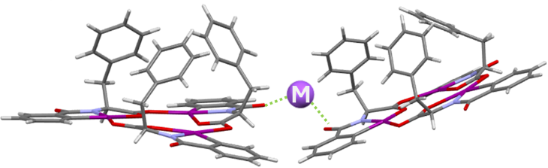
- Krishna Pandey Lucas X. Orton Grayson Venus Waseem A. Hussain Toby Woods Lichang Wang Kyle N. Plunkett School of Chemical and Biomolecular Sciences, Southern Illinois University, Carbondale, IL 62901, United States George L. Clark X-ray Facility and 3M Materials Laboratory, University of Illinois
- NaBArF24. Supporting Information Supporting Information File 29: Detailed experimental procedures, NMR spectra, and X-ray crystallography details. Supporting Information File 30: Crystallographic Information Files for 1/LiBArF20 and 1/NaBArF24. Funding We thank the National Science Foundation (#2003654


Recent total synthesis of natural products leveraging a strategy of enamide cyclization
Beilstein J. Org. Chem. 2025, 21, 999–1009, doi:10.3762/bjoc.21.81
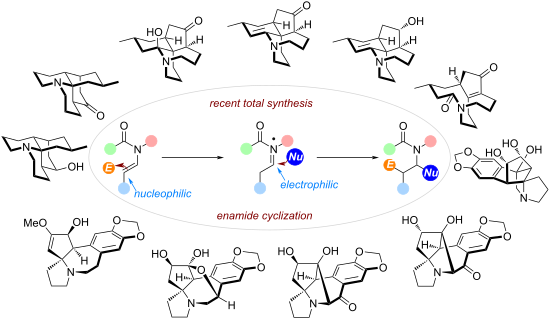
- cyclization to form products in high yields and excellent enantioselectivities. Notably, only a single diastereomer was produced in each case. The single-crystal X-ray crystallography revealed a cis-configuration for both the alkene and ketone substituents on the enamide, indicating that the intramolecular




Studies on the syntheses of β-carboline alkaloids brevicarine and brevicolline
Beilstein J. Org. Chem. 2025, 21, 955–963, doi:10.3762/bjoc.21.79

- catalyst, overreduced product 31, i.e., the tetrahydro derivative of racemic brevicolline ((±)-1) was obtained in 91% yield. Structure determination of 31 was supported by single-crystal X-ray diffraction, as well (Figure 2). Changing the catalyst [Pd(OH)2, Ru, Rh], did not alter the course of the reaction
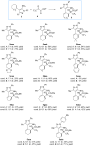
- -carbolines. Some surprising reactions were also observed, such as the unexpected formation of racemic tetrahydrobrevicolline and the trifluoroethylation of the pyrrole moiety, which can also serve as favorable starting points for further research. The structure of brevicolline ((S)-1) and brevicarine (2). X
- -ray structure of compound 31. Synthesis of racemic brevicolline ((±)-1) starting from 1-methyl-9H-β-carbolin-4-yl trifluoromethanesulfonate (3). Synthesis of brevicarine (2) from brevicolline ((S)-1). First total synthesis of brevicarine (2). Multistep synthesis of brevicarine (2) starting from


Harnessing tethered nitreniums for diastereoselective amino-sulfonoxylation of alkenes
Beilstein J. Org. Chem. 2025, 21, 947–954, doi:10.3762/bjoc.21.78

- diacetate was necessary for product formation (Table 3, products 20 and 25–28). X-ray crystallographic analysis of 20 (CCDC 2391529) allowed us to unambiguously determine its identity and relative stereochemistry, and we have assigned other products by analogy. A variety of carbamate substrates were
- functional group compatibility. Supporting Information Supporting Information File 2: Additional experimental details including reaction procedures, X-ray crystallographic data, and NMR spectra of synthesized compounds. Acknowledgements Justin Douglas and Sarah Neuenswander (KU NMR Lab) are acknowledged


A convergent synthetic approach to the tetracyclic core framework of khayanolide-type limonoids
Beilstein J. Org. Chem. 2025, 21, 926–934, doi:10.3762/bjoc.21.75
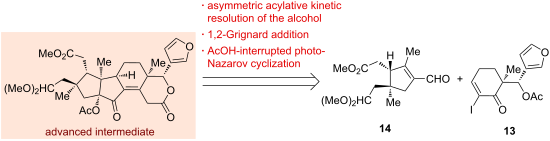
- tricyclo[4.2.110,30.11,4]decane ring system. Additionally, krishnolides A and C contain 9–11 stereogenic centers and exhibit diverse oxidation patterns. Their relative and absolute configurations were determined through NMR, HRESIMS and ECD experiments, as well as single crystal X-ray diffraction analysis
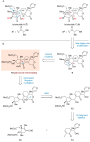
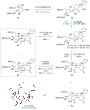
- 10 was unequivocally determined through X-ray crystallographic analysis (ORTEP drawing, Scheme 4). Further optimization by elevating the reaction temperature did not noticeably alter the ratio of 32 and 33 (Table 1, entries 8 and 9). Moreover, attempts to apply interrupted Nazarov cyclization with
- ). Construction of α-iodoenone 13. Construction of aldehyde 14. Synthesis of the advanced intermediate 10 (in the X ray structure of 10 solvent molecule is omitted for clarity). Optimization of the interrupted Nazarov cyclization.a Supporting Information Deposition number 2406738 contains the supplementary




Silver(I) triflate-catalyzed post-Ugi synthesis of pyrazolodiazepines
Beilstein J. Org. Chem. 2025, 21, 915–925, doi:10.3762/bjoc.21.74
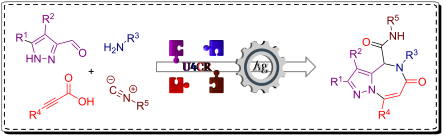
- trifluoromethyl and nitro groups. Furthermore, substrates 15m–o derived from aliphatic amines, also performed well, furnishing pyrazolodiazepines 16m–o in up to 89% yield. The structure of 16m, a representative compound of this series, was confirmed through single-crystal X-ray diffraction (scXRD) analysis




Dicarboxylate recognition based on ultracycle hosts through cooperative hydrogen bonding and anion–π interactions
Beilstein J. Org. Chem. 2025, 21, 884–889, doi:10.3762/bjoc.21.72
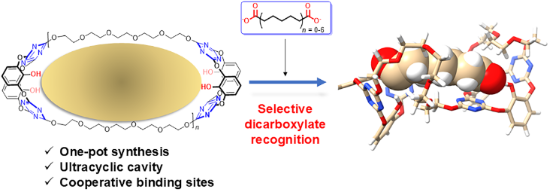
- . Synthesis of ultracycles. Supporting Information Supporting Information File 4: Experimental details and characterization data (including 1H NMR, 13C NMR, IR, and HRMS of precursor compounds and ultracycles, X-ray data for B4aH, theoretical calculations, and NMR titration data). Funding Financial support


Data accessibility in the chemical sciences: an analysis of recent practice in organic chemistry journals
Beilstein J. Org. Chem. 2025, 21, 864–876, doi:10.3762/bjoc.21.70

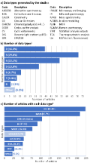
- ., b.p., elemental analysis, optical rotation), thermochemical data, computational data, structure information, cell culture and bioassay data; and excludes X-ray crystallography. ‘NMR’ refers to those examples where a distinct policy for NMR spectroscopic data is available, in addition to the ‘All data





Unraveling cooperative interactions between complexed ions in dual-host strategy for cesium salt separation
Beilstein J. Org. Chem. 2025, 21, 845–853, doi:10.3762/bjoc.21.68

- by the joint Cambridge Crystallographic Data Centre and Fachinformationszentrum Karlsruhe Access Structures service via https://www.ccdc.cam.ac.uk/. Supporting Information File 50: Nuclear magnetic resonance (NMR), mass and X-ray diffraction data. Acknowledgements We thank support from Analysis


4-(1-Methylamino)ethylidene-1,5-disubstituted pyrrolidine-2,3-diones: synthesis, anti-inflammatory effect and in silico approaches
Beilstein J. Org. Chem. 2025, 21, 817–829, doi:10.3762/bjoc.21.65

- spectroscopy, the structure of 4-(1-methylamino)ethylidene-1,5-diphenylpyrrolidine-2,3-dione (5a) was also verified through single-crystal X-ray diffraction. Furthermore, the synthesized molecules were evaluated for compliance with established drug-likeness rules (Lipinski, Veber, Ghose, Egan, and Muegge), as
- single-crystal X-ray diffraction [19]. According to a previous publication, the condensation between pyrrolidine-2,3-diones and an amine as nucleophile normally occurred at the 3-position of nitrogen-containing heterocyclic ring which results in the corresponding enamine product [18]. However, the
- the weaker base, 4-methoxybenzylamine. X-ray study of 4-(1-methylamino)ethylidene-1,5-diphenylpyrrolidine-2,3-dione (5a) Compound 5a crystallizes in the triclinic space group P−1, with one molecule in the asymmetric unit (Figure 2). The pyrrolidine ring is planar (r.m.s. deviation = 0.004 Å) and forms


Acyclic cucurbit[n]uril bearing alkyl sulfate ionic groups
Beilstein J. Org. Chem. 2025, 21, 717–726, doi:10.3762/bjoc.21.55
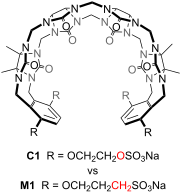
- alkyl sulfate ionic groups. The X-ray crystal structure of the C1·Me6CHDA complex is reported. Host C1 is significantly less soluble in water (4 mM) compared to the analogous acyclic CB[n] host M1 which features sulfonate ionic groups (346 mM). Host C1 does not undergo significant self-association
- specific guest. C1 binds more tightly to quaternary ammonium guests compared to the corresponding primary ammonium ions. Keywords: cucurbituril; host–guest chemistry; isothermal titration calorimetry; molecular container; X-ray crystallography; Introduction Molecular recognition interactions are key
- spectroscopic characterization of C1 along with determination of its inherent aqueous solubility and self-association properties. Next, we present the X-ray crystal structure of C1 as its C1·Me6CHDA complex. Subsequently, we describe a qualitative investigation of C1·guest and M1·guest complexation by 1H NMR




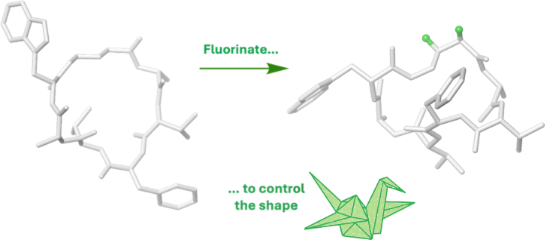
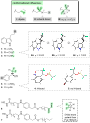
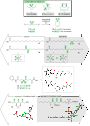
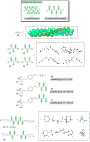
Origami with small molecules: exploiting the C–F bond as a conformational tool
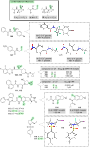
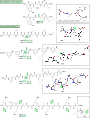
Beilstein J. Org. Chem. 2025, 21, 680–716, doi:10.3762/bjoc.21.54


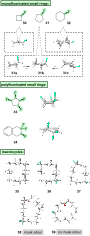


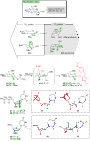
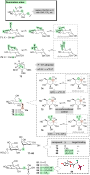
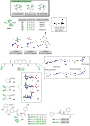




Photochemically assisted synthesis of phenacenes fluorinated at the terminal benzene rings and their electronic spectra
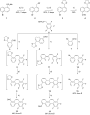
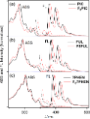
Beilstein J. Org. Chem. 2025, 21, 670–679, doi:10.3762/bjoc.21.53

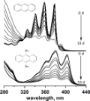
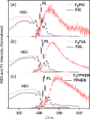
- -phenacenes for clarifying the different solid-fluorescence behavior between the parent and fluorinated phenacenes. Although we have extensively examined crystallization of F8-phenacenes, no single crystal suitable for an X-ray diffraction analysis was obtained. The crystalline structural analysis is still





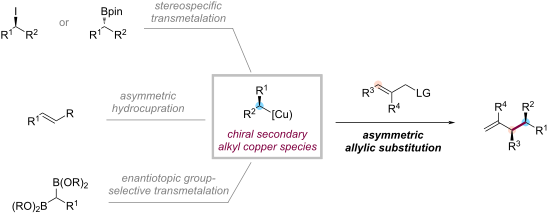
Recent advances in allylation of chiral secondary alkylcopper species
Beilstein J. Org. Chem. 2025, 21, 639–658, doi:10.3762/bjoc.21.51
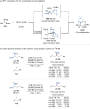
- transfer, X-ray crystallographic analysis of the (tert-butyl)(adamantyl)Bpin·Li(THF)2 complex revealed that the B–(adamantyl) bond is shorter than the B–(tert-butyl) bond (1.673 vs 1.692 Å). DFT calculations further illuminated the underlying mechanism by comparing two distinct transition states: TS1




Entry to 2-aminoprolines via electrochemical decarboxylative amidation of N‑acetylamino malonic acid monoesters
Beilstein J. Org. Chem. 2025, 21, 630–638, doi:10.3762/bjoc.21.50
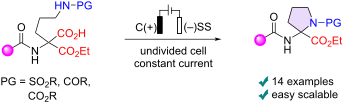
- NMR methods, and all attempts to obtain crystals suitable for X-ray crystallographic analysis were unsuccessful. N-Protected 2-aminoproline derivatives 6 are relatively stable under basic conditions as evidenced by successful hydrolysis of the ester moiety in 6a,d,e using aqueous LiOH to provide acids



Photocatalyzed elaboration of antibody-based bioconjugates
Beilstein J. Org. Chem. 2025, 21, 616–629, doi:10.3762/bjoc.21.49
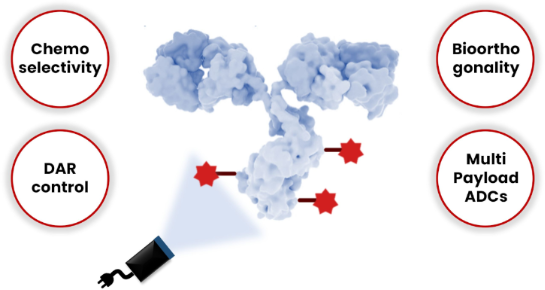
- such methods are generally reported with a heterogeneous DAR, the group developed a site-specific approach leading to a homogeneous DAR 2, thanks to a photoreactive Fc-binding peptide derivative (pFcBP) containing a photoleucine (pLeu) [46]. By analyzing the X-ray crystal structure of IgG, the


Study of the interaction of 2H-furo[3,2-b]pyran-2-ones with nitrogen-containing nucleophiles
Beilstein J. Org. Chem. 2025, 21, 556–563, doi:10.3762/bjoc.21.44
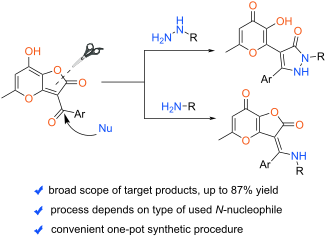
- unambiguously confirmed by X-ray diffraction. Keywords: allomaltol; enamines; 2H-furo[3,2-b]pyran-2-ones; pyrazol-3-ones; recyclization; Introduction Substituted furan-2(5H)-ones (butenolides) are widely used as precursors for the preparation of diverse types of heterocyclic compounds possessing various
- % yield. Based on X-ray analysis data the synthesized compound 4a is 2H-furo[3,2-b]pyran-2,7(3H)-dione bearing an enamine fragment at the furanone ring (Scheme 2b). It’s interesting to note that prepared product 4a exists in form of the Z-isomer. This configuration is apparently stabilized by an
- established by X-ray analysis. The proposed mechanism of the considered processes is outlined at Scheme 8. Initially, the free nitrogen nucleophile is reversibly generated from the corresponding hydrochloride or acetate. Next, acid-catalyzed addition of the amine component to the carbon atom of the aroyl


Vinylogous functionalization of 4-alkylidene-5-aminopyrazoles with methyl trifluoropyruvates
Beilstein J. Org. Chem. 2025, 21, 533–540, doi:10.3762/bjoc.21.41
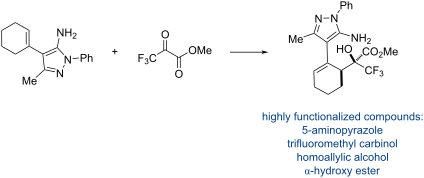
- to determine the role of the squaramide. The relative configuration of the stereogenic centres in compound 5aca was determined by X-ray crystallographic analysis (Scheme 3) [33]; the relative configurations of the other compounds 5 were assigned on the assumption of a uniform mechanistic pathway
- chromatography. Diastereoisomeric ratio (dr) determined by 1H NMR of the crude reaction mixture. Plausible mechanism and X-ray structure of compound 5aca. Optimization of the reaction conditions.a Supporting Information Supporting Information File 14: Detailed experimental procedures, characterization data, and
- copies of 1H NMR and 13C NMR spectra. Acknowledgements Access to NMR, MS, and X-ray facilities from the Servei Central de Suport a la Investigació Experimental (SCSIE)-UV and the NMR U26 facility of ICTS “NANBIOSIS” is acknowledged. Funding L.C.-F. thanks the Universitat de València for a predoctoral



Deep-blue emitting 9,10-bis(perfluorobenzyl)anthracene
Beilstein J. Org. Chem. 2025, 21, 515–525, doi:10.3762/bjoc.21.39
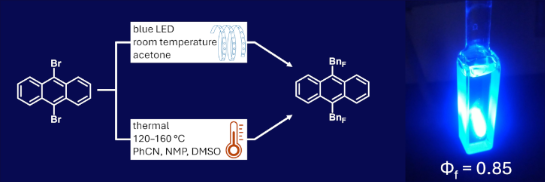
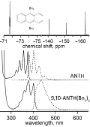
- photochemical reaction. Its structure was elucidated by NMR spectroscopy and single crystal X-ray diffractometry. The latter revealed no π–π interaction between neighboring ANTH cores. A combination of high photoluminescence quantum yield (PLQY) of 0.85 for 9,10-ANTH(BnF)2, its significantly improved
- ratio was found to be 1.74 (theoretical = 1.75), confirming the composition to be ANTH(BnF)2. Slow evaporation of a CH2Cl2 solution of 9,10-ANTH(BnF)2 at 2 °C afforded off-white plates suitable for X-ray diffraction. The structure shown in Figure 2 (top panel) confirmed the 9,10-substitution pattern
- concentrations used for ANTH, 9,10-ANTH(BnF)2, and quinine sulfate were 1.89, 1.14, and 1.94 (10−5 M), respectively. Relative quantum yields were calculated using the following equation referenced to quinine sulfate (Φf = 0.55 in 0.1 M H2SO4): X-ray crystallography The diffraction-quality single crystals of 9