Search results
Search for "ether" in Full Text gives 1416 result(s) in Beilstein Journal of Organic Chemistry. Showing first 200.
Unraveling cooperative interactions between complexed ions in dual-host strategy for cesium salt separation
Beilstein J. Org. Chem. 2025, 21, 845–853, doi:10.3762/bjoc.21.68

- binding Na+ and K+ by oligourea foldamers and macrocycles [37][38][39]. However, in the solid−liquid extraction of Li2SO4 in DMSO, addition of crown ether did not help to increase the extraction efficiency. This is because ion-dipole interactions are negligible in high polar solvent, and Li+ binding is
- to be slightly upfield-shifted in comparison to that of the free crown ether, indicating Cs+ binding, consistent with their extraction efficiency. The relatively upfield shifted chemical shift for the Cs3PO4 complex may indicate strong cooperative interaction upon solid–liquid extraction. To
- understand cooperative interactions between complexed ions, we tried to grow the crystal structure of studied salts. Fortunately, single crystals of Cs2CO3 and Cs3PO4 complexes were obtained by slow vapor diffusion from acetonitrile and diethyl ether. Notably, clearly stronger ion-dipole interactions of


Regioselective formal hydrocyanation of allenes: synthesis of β,γ-unsaturated nitriles with α-all-carbon quaternary centers
Beilstein J. Org. Chem. 2025, 21, 800–806, doi:10.3762/bjoc.21.63
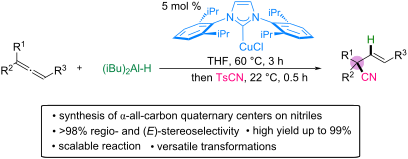
- efficiently constructed α-all-carbon quaternary centers on β,γ-unsaturated nitriles with excellent >98% regioselectivity and >98% (E)-selectivity. 1,1-Disubstituted allenes bearing silyl ether- and benzyl ether-tethered propyl groups were successfully converted into the desired nitriles 3a–c in yields ranging
- regioselectivity (>98%). Functional groups such as silyl ether, benzyl ether, and chloro moieties on allenes 4d–f were well tolerated under the reaction conditions, producing nitrile-substituted tertiary carbon products 5d–f in yields ranging from 73% to 85%. Moreover, aryl-substituted allene 4g was efficiently




New advances in asymmetric organocatalysis II
Beilstein J. Org. Chem. 2025, 21, 766–769, doi:10.3762/bjoc.21.60

- prominent Hayashi–Jørgensen catalyst. This prolinol silyl ether was independently discovered by the respective Hayashi and Jørgensen research teams in 2005 [13][14]. Interestingly, the use of prolinol alkyl ethers for asymmetric Michael additions, although at the time added in a stoichiometric manner, has

Synthesis of HBC fluorophores with an electrophilic handle for covalent attachment to Pepper RNA
Beilstein J. Org. Chem. 2025, 21, 727–735, doi:10.3762/bjoc.21.56
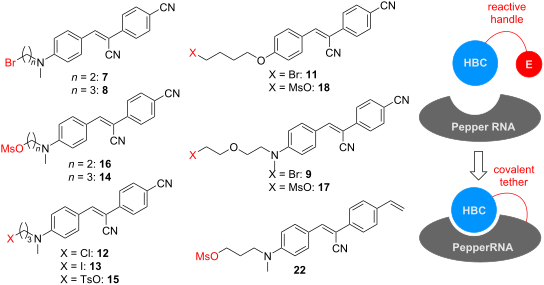
- was impractical for the HBC derivative with a C4-handle (N-(4-bromobutyl)-HBC) due to intramolecular cyclization with the amine. To prevent intramolecular cyclization, we considered the 4-bromobutyl HBC ether 11 as a potential candidate with a 4-atom spacer. Accordingly, 4-hydroxybenzaldehyde was
- observed for the HBC ether 11 (C4 homolog) and the bromoethoxyethyl HBC 9 (“C5” homolog). No reaction was observed for the C2 homolog 7 (Figure 2). Notably, the reaction yields for all derivatives increased when the DMSO content of the reaction mixture was increased from 5 to 15%. (DMSO was initially used
- provide fluorophore 19. Subsequent palladium-catalyzed cross-coupling with tributyl(vinyl)tin resulted in the installation of the vinyl group (compound 20). Finally, cleavage of the silyl ether gave the free alcohol 21, which was converted into the corresponding mesyloxypropyl HBC ligand 22. The



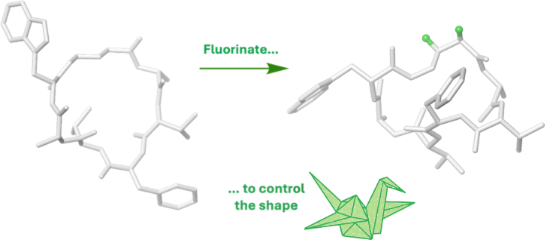
Origami with small molecules: exploiting the C–F bond as a conformational tool
Beilstein J. Org. Chem. 2025, 21, 680–716, doi:10.3762/bjoc.21.54
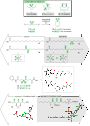
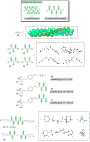
- macrocycle [74][75]. 2 Ethers We now turn our attention from alkanes to what is arguably the simplest heteroatom-containing functional group: the ether. The presence of oxygen within a carbon chain offers several new opportunities for engagement by an introduced fluorine atom. First, we will consider what
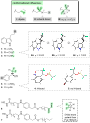
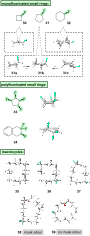
- ) bond, such that the endo orientation of the C–F bond (as depicted in I, Figure 6) is lower in energy than the exo conformer (not shown). This is an example of the anomeric effect [77]. The anomeric effect can be visualised perhaps most clearly when the ether moiety is embedded within a small ring [78
- also seen when Ar–O–CF2- is a linker moiety. For example, consider compound 47 (Figure 6), which is a fluorinated analogue of the antipsychotic drug, aripiprazole (46). The presence of the fluorine atoms in 47 causes a change in the conformation of the aryl ether moiety from planar in 46 [83] to








Asymmetric synthesis of fluorinated derivatives of aromatic and γ-branched amino acids via a chiral Ni(II) complex
Beilstein J. Org. Chem. 2025, 21, 659–669, doi:10.3762/bjoc.21.52
- precipitated product was filtered, washed with H2O (20 mL), and dried in vacuo at 60 °C. The crude material was purified by flash column chromatography (SiO2, 10 → 100% EtOAc in diethyl ether) to yield 7 as a red solid (10.7 g, 12.9 mmol, 78%, 99% purity determined by analytical HPLC). 1H NMR (600 MHz, CDCl3
- , H2O (50 mL) was added, and the mixture was treated with aq HCl (6 M) to pH 2. The resulting solution was extracted with EtOAc (4 × 50 mL), dried over Na2SO4, filtered, and concentrated in vacuo. The crude material was purified by flash column chromatography (SiO2, 20 → 100% EtOAc in diethyl ether) to


Recent advances in allylation of chiral secondary alkylcopper species
Beilstein J. Org. Chem. 2025, 21, 639–658, doi:10.3762/bjoc.21.51
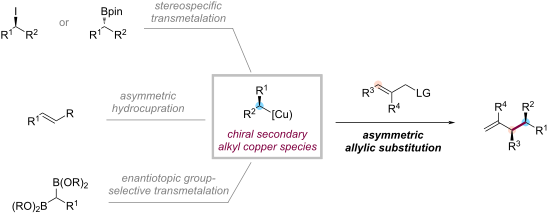
- otherwise predominant β-F elimination from the α-CF3-alkylcopper intermediate 39. Detailed kinetic studies confirmed the effect of the crown ether. When KOPiv was employed alone, the initial rate of defluorination increased by 1.57-fold, whereas the addition of 18-crown-6 reduced this acceleration to 1.22
- -fold. These observations supported the hypothesis that the crown ether effectively disrupts the interaction between the alkali metal cation and fluorine atom, thereby decreasing the rate of β-F elimination. This asymmetric copper-catalyzed protocol represents one of the rare examples that allows to




Total synthesis of (±)-simonsol C using dearomatization as key reaction under acidic conditions
Beilstein J. Org. Chem. 2025, 21, 601–606, doi:10.3762/bjoc.21.47
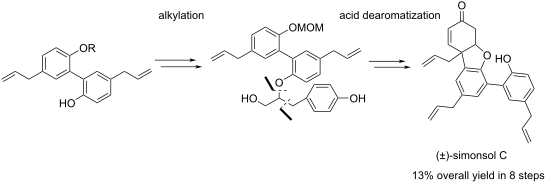
- ] and has been used in syntheses of natural products containing aryl quaternary carbon centers [9][10]. Unlike the intramolecular alkylation strategy of a phenol derivative, which can only be applied in basic dearomatization reactions, our approach using an α-iodophenol ether as precursor of the


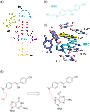
Binding of tryptophan and tryptophan-containing peptides in water by a glucose naphtho crown ether
Beilstein J. Org. Chem. 2025, 21, 541–546, doi:10.3762/bjoc.21.42
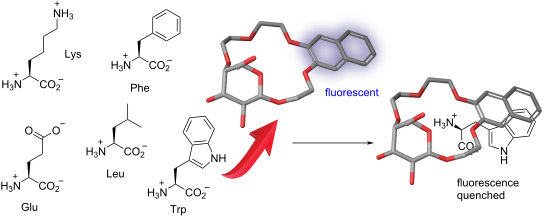
- binding of tryptophan is therefore important for diagnostic and medicinal applications. Recently, we reported a glucose naphtho crown ether which is a chemoselective receptor for the esters of aromatic amino acids, in particular tryptophan, in water. Herein, we demonstrate that the same compound also
- aqueous media is limited (Figure 1a–c) [13][14][15][16][17][18]. In particular, receptors which bind tryptophan residues in peptides are rare [19][20]. Recently, we developed a glucose-based naphtho crown ether 1 (Figure 1d) which binds amino acid methyl esters with aromatic side chains chemoselectively
- in water [21]. Crown ether 1 is particularly suited for the sensing of Trp methyl ester, which it binds with a higher affinity than the Phe and Tyr esters. Additionally, the binding of Trp-OMe results in a highly efficient fluorescence quenching of the naphthalene unit in the receptor. Herein, we


Deep-blue emitting 9,10-bis(perfluorobenzyl)anthracene
Beilstein J. Org. Chem. 2025, 21, 515–525, doi:10.3762/bjoc.21.39
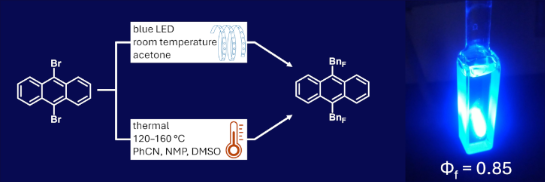
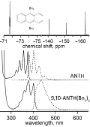
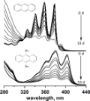
- , dried over 4 Å molecular sieves); quinine hemisulfate salt monohydrate (Fluka); sulfuric acid (EMD Chemicals); diethyl ether anhydrous (EMD Chemicals, ACS grade); chloroform-d (CDCl3, Cambridge Isotope Labs, 99.8%); hexafluorobenzene (C6F6, Oakwood Products); deionized distilled water (purified with a





The effect of neighbouring group participation and possible long range remote group participation in O-glycosylation
Beilstein J. Org. Chem. 2025, 21, 369–406, doi:10.3762/bjoc.21.27
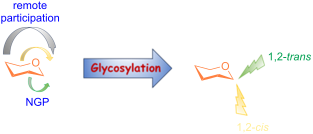
- the C-2 position also contribute to the concept of ‘armed–disarmed’ glycosylation wherein C-2 ether-protected ‘armed’ thioglycosides were selectively activated over C-2 ester-protected ‘disarmed’ thioglycosides owing to the electron-withdrawing attribute of the ester carbonyl functionality [93
- intermediates [144]. However, C-2 phthalimidoxy-protected trichloroacetimidate glycosyl donors gave higher 1,2-trans selectivity in comparison to C-2 phthalimidoxy-protected N-phenyl 2,2,2-trifluoroacetimidate glycosyl donors. Ether-type participating protecting groups: In the absence of neighbouring acyl-type
- of a mixture of 1,2-cis and 1,2-trans glycosides. In this respect ether-type non-participating protecting groups like benzyl (OBn), p-methoxybenzyl (OMBn), and allyl (OAll) are implemented as the temporary protection in the C-2 position in order to obtain 1,2-cis glycoside products. Moreover, the




Red light excitation: illuminating photocatalysis in a new spectrum
Beilstein J. Org. Chem. 2025, 21, 296–326, doi:10.3762/bjoc.21.22





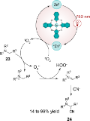

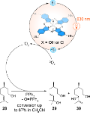


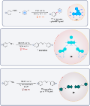


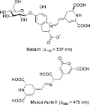






Synthesis and characterizations of highly luminescent 5-isopropoxybenzo[rst]pentaphene
Beilstein J. Org. Chem. 2025, 21, 270–276, doi:10.3762/bjoc.21.19
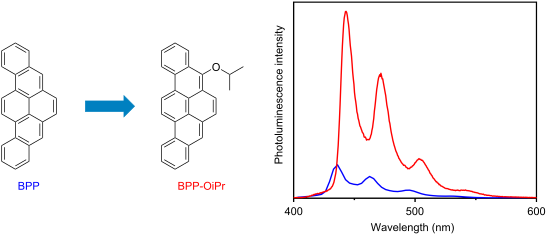
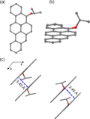
- analysis was obtained by slow evaporation of a diethyl ether/n-hexane solution, enabling its unambiguous structural determination by single-crystal X-ray diffraction (Figure 1). The planar BPP core and the isopropyloxy group on the zigzag edge are clearly visualized (Figure 1a and b). In a unit cell




Three-component reactions of conjugated dienes, CH acids and formaldehyde under diffusion mixing conditions
Beilstein J. Org. Chem. 2025, 21, 262–269, doi:10.3762/bjoc.21.18
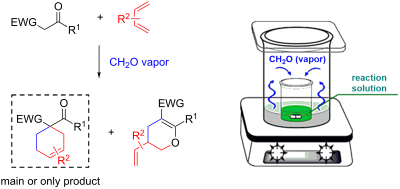
- alcohol 2. Its 1H NMR spectrum contained a triplet with a coupling constant of 5.1 Hz at 5.52 ppm and a doublet at 4.30 ppm. In methanol, ethanol and petroleum ether, with an increasing reaction time, a significant amount of product 3 was observed in the 1H NMR spectra of the mixtures, as identified by


Effect of substitution position of aryl groups on the thermal back reactivity of aza-diarylethene photoswitches and prediction by density functional theory
Beilstein J. Org. Chem. 2025, 21, 242–252, doi:10.3762/bjoc.21.16
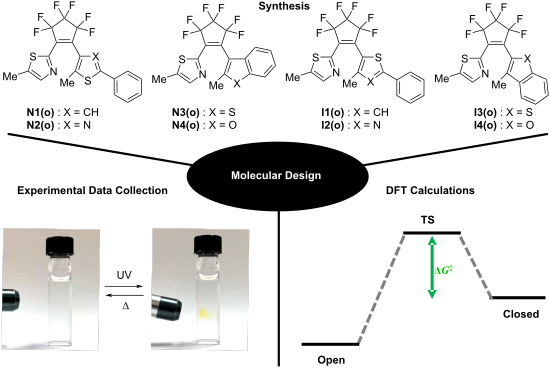
- solution, extracted with ether, washed with brine, dried over MgSO4, filtered, and concentrated in vacuo. The crude product was purified by column chromatography on silica gel using n-hexane and ethyl acetate 95:5 to give 1.4 g of I2(a) in 50% yield. 1H NMR (300 MHz, CDCl3, TMS) δ = 2.55 (d, JHF = 3.2 Hz
- mixture was refluxed for 40 min. Perfluorocyclopentene (2.2 mL, 17 mmol) was added, and the mixture was stirred for 5 h. An adequate amount of distilled water was added to the mixture to quench the reaction. The reaction mixture was neutralized by HCl aqueous solution, extracted with ether, washed with
- reaction mixture was neutralized by HCl aqueous solution, extracted with ether, washed with brine, dried over MgSO4, filtered, and concentrated in vacuo. The crude product was purified by column chromatography on silica gel using n-hexane and ethyl acetate 8:2 and recycling HPLC using chloroform as the


Dioxazolones as electrophilic amide sources in copper-catalyzed and -mediated transformations
Beilstein J. Org. Chem. 2025, 21, 200–216, doi:10.3762/bjoc.21.12
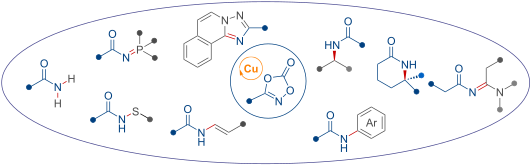
- were tolerated, while a dioxazolone containing bromobenzene displayed lower reactivity (26c). The enamide 26d, derived from lobatamide, was successfully produced without altering the stereochemistry of the oxime ether. Terminal alkynes with linear alkyl group, protected alcohol, and sulfonamide


Nickel-catalyzed cross-coupling of 2-fluorobenzofurans with arylboronic acids via aromatic C–F bond activation
Beilstein J. Org. Chem. 2025, 21, 146–154, doi:10.3762/bjoc.21.8
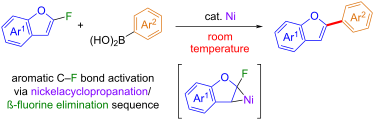
- mmol), and K2CO3 (50 mg, 0.36 mmol) were added toluene (3.0 mL) and H2O (0.6 mL). After stirring at room temperature for 13 h, the reaction mixture was diluted with H2O. Organic materials were extracted with diethyl ether three times. The combined extracts were washed with brine and dried over Na2SO4



Cu(OTf)2-catalyzed multicomponent reactions
Beilstein J. Org. Chem. 2025, 21, 122–145, doi:10.3762/bjoc.21.7

- obtain cyclic ether-fused tetrahydroquinolines 24 has been reported starting from secondary anilines, cyclic ethers and paraformaldehyde (Scheme 18) [35]. In addition to Cu(OTf)2 as a catalyst, the most effective reaction conditions required a substoichiometric amount of p-nitrobenzoic acid as an
- corresponding saturated compounds. Subsequent nucleophilic addition of the cyclic vinyl ether to the iminium salt generates an intermediate XXI susceptible of intramolecular electrophilic attack to give a tricyclic structure XXII. The final deprotonation provides the desired product 24. The multicomponent
- dihydropyrimidines 18. Regioselective synthesis of 1,4-dihydropyridines 20. Synthesis of tetrahydropyridines 21. Synthesis of furoquinoxalines 22. Synthesis of 2,4-substituted quinolines 23. Synthesis of cyclic ether-fused tetrahydroquinolines 24. Practical route for 1,2-dihydroisoquinolines 25. Synthesis of 2,3






Facile one-pot reduction of β-nitrostyrenes to phenethylamines using sodium borohydride and copper(II) chloride
Beilstein J. Org. Chem. 2025, 21, 39–46, doi:10.3762/bjoc.21.4
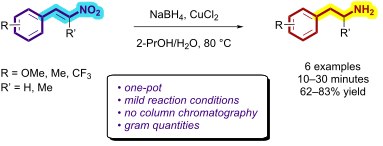
- is simplified thanks to the ability of 2-propanol to partition from the sodium hydroxide aqueous solution, which allows prompt extraction of the products. Once 2-propanol is evaporated, the products can also be isolated as free amines by dissolving the residue in diethyl ether, decanting it into
- NaOH (10 mL) was added under stirring. The mixture was extracted with 2-PrOH (3 × 10 mL), and the organic extracts were combined, thoroughly dried over MgSO4, and filtered. (I): The residue was concentrated under reduced pressure and dissolved in a large amount of diethyl ether. The amino products were
- precipitated under stirring with an excess of 2 N HCl in diethyl ether solution and the vessel was cooled to 5 °C. The solid was filtered, washed with cold diethyl ether, and dried under reduced pressure as the amine hydrochloride salt. (II) An excess of 4 N HCl in dioxane solution was added and the filtrate


Synthesis of acenaphthylene-fused heteroarenes and polyoxygenated benzo[j]fluoranthenes via a Pd-catalyzed Suzuki–Miyaura/C–H arylation cascade
Beilstein J. Org. Chem. 2024, 20, 3290–3298, doi:10.3762/bjoc.20.273
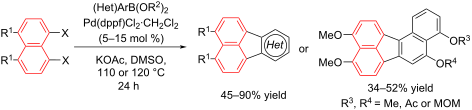
- via the deprotection of the -OTIPS silyl ether under the reaction conditions. A final MOM-deprotection under acidic conditions led to the formation of the desired benzo[j]fluoranthene 28 in 82% yield. Conclusion In conclusion, we have demonstrated the successful synthesis of heterocyclic fluoranthene


Cyclodextrin-based rotaxanes for polymer materials: challenge on simultaneous realization of inexpensive production and defined structures
Beilstein J. Org. Chem. 2024, 20, 3026–3049, doi:10.3762/bjoc.20.252
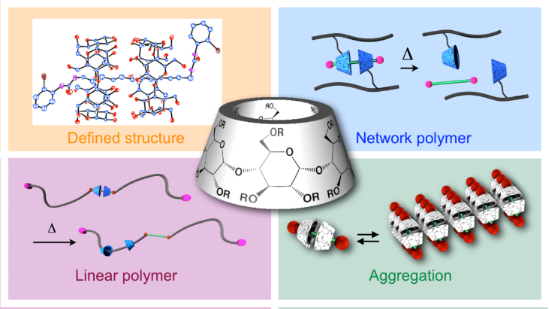
- such stimuli. When the rotaxane motif contains cyclophane or a crown ether, stimuli induced by a transition metal or an electrostatic interaction have been widely used. These interactions are easily controlled, and they induce relatively strong coordination interactions among the components, making
- acceptable to reduce the production costs, suggesting the industrial potential of this random modification protocol. As suggested by the recent study on the RCP made of crown ether-based [3]rotaxane crosslinker, the force distribution effect worked sufficiently to toughen RCPs, even when the translation






Advances in radical peroxidation with hydroperoxides
Beilstein J. Org. Chem. 2024, 20, 2959–3006, doi:10.3762/bjoc.20.249
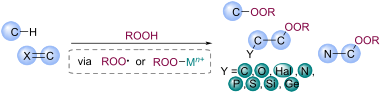
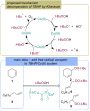
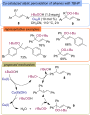
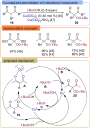
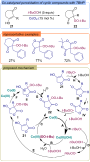
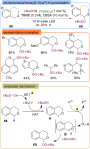
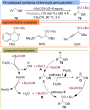
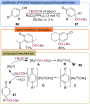
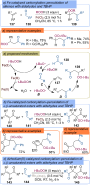
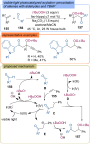
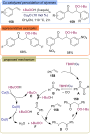
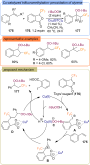
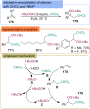
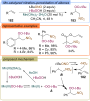
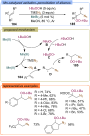
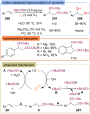
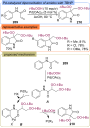
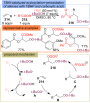
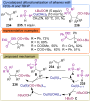
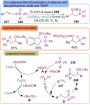
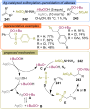
- molecule of TBHP is oxidized by Fe(III) into tert-butylperoxy radical B. Radical A abstracts a hydrogen atom from ether 78 to give the C-centered radical C. The authors propose two further pathways for the formation of the target product 79. Pathway I: The C-centered radical C is oxidized to carbocation D







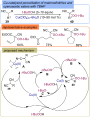


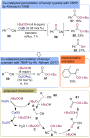
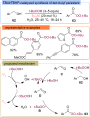

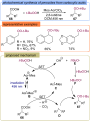





















Synthesis of fluorinated acid-functionalized, electron-rich nickel porphyrins
Beilstein J. Org. Chem. 2024, 20, 2954–2958, doi:10.3762/bjoc.20.248
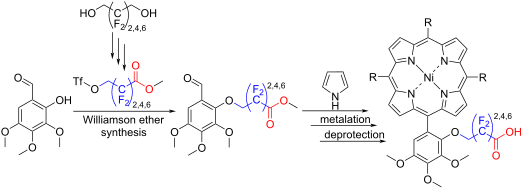
- –CH2–(CF2)n–COOCH3 (n = 2,4,6, Tf = triflate) were synthesized. The triflates were reacted with 2-hydroxy-3,4,5-trimethoxybenzaldehyde via Williamson ether syntheses. The resulting electron-rich compounds were used as aldehydes in the Rothemund reaction with pyrrole to form ester-substituted porphyrins
- –CH2–(CF2)n–COOCH3) with triflate as leaving group in terminal position are easily accessible and versatile building blocks for attaching long chain acids (pKa 0–1) to substrates in Williamson ether-type reactions. Keywords: acid-functionalized porphyrin; electron-rich porphyrin; nickel porphyrin
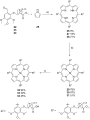
- ) as the aldehyde component due to its commercial availability. A OH group was introduced to serve as the nucleophile in the Williamson ether synthesis with the triflates 16, 17, and 18 (Scheme 2). Towards this end, 3,4,5-trimethoxybenzaldehyde (19) was iodinated using N-iodosuccinimide (NIS) to give


The charge transport properties of dicyanomethylene-functionalised violanthrone derivatives
Beilstein J. Org. Chem. 2024, 20, 2921–2930, doi:10.3762/bjoc.20.244
- dichloromethane (3 × 20 mL). The combined organic extract was dried over MgSO4, filtered and concentrated under reduced pressure. The crude product was purified by silica column chromatography (SiO2, CH2Cl2/diethyl ether 98:2) to give the title compound as a dark solid (30.0 mg, 13%). Mp 295–296 °C; 1H NMR (400
- extracted with dichloromethane (3 × 20 mL). The combined organic extract was dried over MgSO4, filtered and concentrated under reduced pressure. The crude product was purified by column chromatography (SiO2, petroleum ether/CH2Cl2 1:9) to give the title compound as a dark solid (110 mg, 48%). Analysis is in
- × 20 mL). The combined organic extracts were dried over MgSO4, filtered and concentrated under reduced pressure. The crude product was purified by silica column chromatography (SiO2, CH2Cl2/diethyl ether 98:2) to give the title compound as a dark solid (120 mg, 36%). Mp 241–242 °C; 1H NMR (400 MHz


N-Glycosides of indigo, indirubin, and isoindigo: blue, red, and yellow sugars and their cancerostatic activity
Beilstein J. Org. Chem. 2024, 20, 2840–2869, doi:10.3762/bjoc.20.240
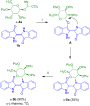
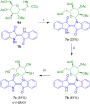
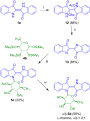
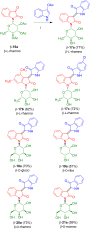
- ). Dehydrogenation of the latter with DDQ afforded the anomerically pure indol-N-glycoside β-26a which upon benzylation and methylation gave products β-27a and β-27b, respectively. Iodination gave products β-28a and β-28b, however, due to the basic reaction conditions (I2, NaOH, DMF), ether rather than ester