


Search results
Search for "isolation" in Full Text gives 1002 result(s) in Beilstein Journal of Organic Chemistry. Showing first 200.
Cryptophycin unit B analogues
Beilstein J. Org. Chem. 2025, 21, 526–532, doi:10.3762/bjoc.21.40
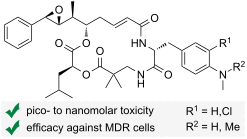
- isolation from cyanobacteria [2], their extraordinarily high cytotoxicity was apparent and attracted attention, not least because of their still high efficacy against multidrug-resistant (MDR) cells [3]. Cryptophycin-52, a synthetic development candidate by Eli Lilly based on the initially discovered



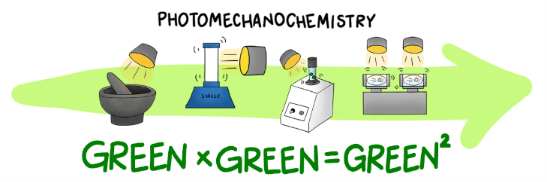
Photomechanochemistry: harnessing mechanical forces to enhance photochemical reactions
Beilstein J. Org. Chem. 2025, 21, 458–472, doi:10.3762/bjoc.21.33
- yield (94%). The reaction remained efficient across a variety of substrates, as shown in Scheme 3. The authors noted that, if the mixture was not ground before irradiation, product 3.3 was obtained in just 46% yield after isolation. Thus, the role of mechanochemistry was to achieve optimal mixing of the
- ]. As an example, the authors were able to convert 4,4’-dimethoxybenzhydrol (6.1) to 4,4’-dimethoxybenzophenone (6.2) in 74% yield after isolation using 5 mol % RFTA under air (24 h), all performed without any additional solvent (Scheme 6). The authors noted that the reaction proceeds via a molten state
- oxidation of 1,2-diphenylethyne to benzil [71]. Thus, when a 1:2 mixture of 7.1 and 4-chlorothiophenol (7.2) was ground in the presence of eosin Y as the photocatalyst and anhydrous Na2SO4 as a bulking agent, benzil (7.3) was obtained in 43% GC yield under blue light irradiation (LED, 14.5 W). Isolation led


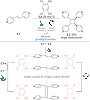


Beyond symmetric self-assembly and effective molarity: unlocking functional enzyme mimics with robust organic cages
Beilstein J. Org. Chem. 2025, 21, 421–443, doi:10.3762/bjoc.21.30
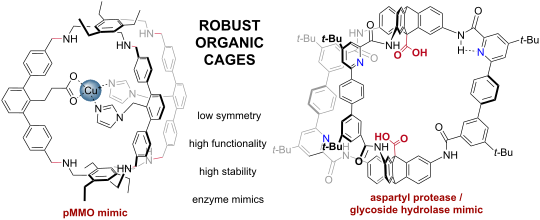
- , sometimes under the moniker “enzyme mimic” [22][138]. MOCs are typically soluble in polar organic solvents or water [156][157], and so their dynamics can be studied using solution-phase techniques [22]. Isolation from solution is not always possible, since their dynamic nature can make them sensitive to


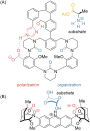


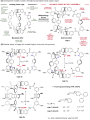
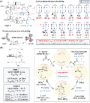
The effect of neighbouring group participation and possible long range remote group participation in O-glycosylation
Beilstein J. Org. Chem. 2025, 21, 369–406, doi:10.3762/bjoc.21.27
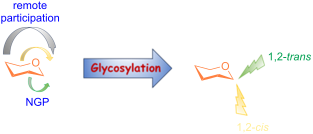
- isolation of any trace of β-product (Scheme 12). Based on the same concept and stabilisation of the intermediate α-triflate by the participation of the 2-O-protection group in glycosyl donors, Yamago et al. illustrated the use of dialkyl phosphates as the 2-O-protecting group (compound 75 in Scheme 13) for
- the formation of 1,2-trans stereodirected glycosyl products 77 when the donor was suitably activated using BSP and Tf2O [139]. The role of the 2,2-dimethyltrimethylene (DMTM) phosphate group at the participating C-2 protection was analysed wherein the NMR studies showed no isolation of the




Antibiofilm and cytotoxic metabolites from the entomopathogenic fungus Samsoniella aurantia
Beilstein J. Org. Chem. 2025, 21, 327–339, doi:10.3762/bjoc.21.23
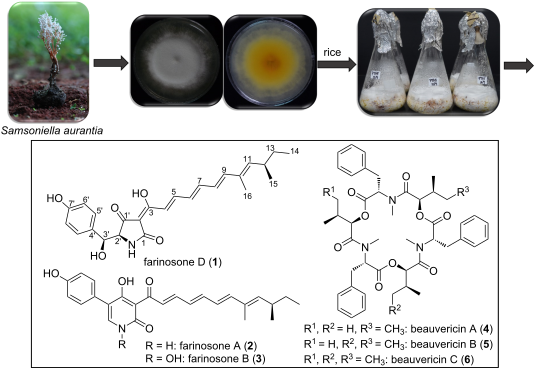
- [6], which has to the best of our knowledge not been studied before on its secondary metabolism. The current study deals with the isolation and characterization of the major bioactive principles of the ex-holotype strain of Samsoniella aurantia. Results and Discussion Structure elucidation Compound 1
- evaporation at 40 °C, forming a semi-solid residue dispersed in water. Liquid–liquid extraction against EtOAc (1:1) was conducted twice. The organic phases were combined, filtered, and evaporated under vacuum, while the aqueous phase was discarded. Isolation of compounds 1–6 The obtained organic crude extract
- ), a gradient elution was implemented, starting from 60% B and progressing to 100% B in 30 minutes. The gradient was then held at 100% B for 10 minutes, resulting in the isolation of 6 (30 mg, tR = 34 min). For the purification of fraction 4 (306 mg), a gradient elution was applied, transitioning


Synthesis of disulfides and 3-sulfenylchromones from sodium sulfinates catalyzed by TBAI
Beilstein J. Org. Chem. 2025, 21, 253–261, doi:10.3762/bjoc.21.17
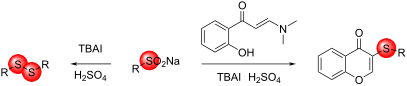
- -hydroxyacetophenone and N,N-dimethylformamide dimethyl acetal (DMF-DMA) were reacted at 120 °C to give compound 3a, and without further isolation and purification, 1a, H2SO4 and TBAI were added directly to the reaction solution and the reaction was continued at 120 °C for 12 hours. In this way, the product 4a could


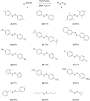
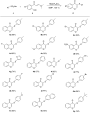


Streamlined modular synthesis of saframycin substructure via copper-catalyzed three-component assembly and gold-promoted 6-endo cyclization
Beilstein J. Org. Chem. 2025, 21, 226–233, doi:10.3762/bjoc.21.14
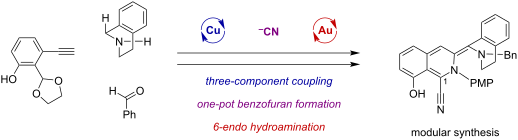
- Information File 1, Figure S2 [57], and the benzylic position on the THIQ ring [58]. Indeed, termination of the reaction just after 90 minutes instead of 20 h resulted in the isolation of the fluorescent intermediate 18 in 55% yield (Scheme S1, Supporting Information File 1). Even with the use of both


Cu(OTf)2-catalyzed multicomponent reactions
Beilstein J. Org. Chem. 2025, 21, 122–145, doi:10.3762/bjoc.21.7

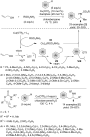
- was crucial for the formation of the organozinc reagent (Scheme 19) [36]. Spiro-2,3-dihydroquinazolinones 26 were formed exploiting a one-pot multicomponent reaction, using isatoic anhydride, ketones and primary amines. The isolation of the amide intermediate XXIII obtained by the copper-catalyzed






Facile one-pot reduction of β-nitrostyrenes to phenethylamines using sodium borohydride and copper(II) chloride
Beilstein J. Org. Chem. 2025, 21, 39–46, doi:10.3762/bjoc.21.4
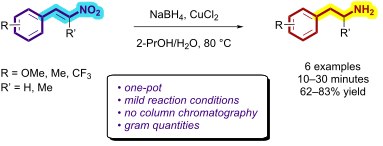
- substituted β-nitrostyrenes. This one-pot procedure allows the quick isolation of substituted β-nitrostyrene scaffolds with 62–83% yield under mild conditions, without the need for special precautions, inert atmosphere, and time-consuming purification techniques. Keywords: 2C-X; CuCl2; NaBH4; β-nitrostyrene
- suspensions and precipitation of the starting materials, make these solvents unsuitable for this reaction and the isolation of the products troublesome. The use of 2-propanol/water (2:1), together with the application of heat, ensures optimal solubility of the species involved. Moreover, the workup procedure


Emerging trends in the optimization of organic synthesis through high-throughput tools and machine learning
Beilstein J. Org. Chem. 2025, 21, 10–38, doi:10.3762/bjoc.21.3
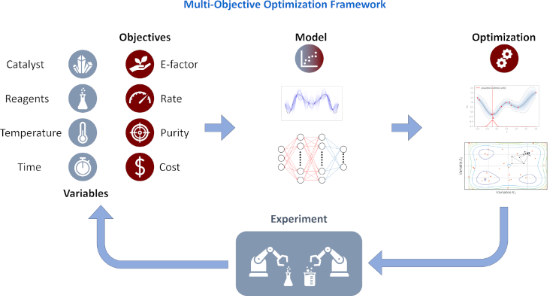
- , differing from established isolation and separation techniques, holds the promise of not only enhancing the efficiency of HTE flow synthesis but also paving the way for more sustainable growth in this research area. Autonomous self-optimizing flow reactors Autonomous self-optimizing flow reactors (ASFRs


Reactivity of hypervalent iodine(III) reagents bearing a benzylamine with sulfenate salts
Beilstein J. Org. Chem. 2024, 20, 3281–3289, doi:10.3762/bjoc.20.272
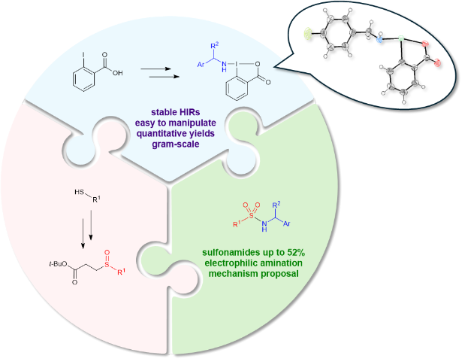
- from the simultaneous formation of sulfinamide 6ea also isolated in this reaction for the first time (both in trace amounts). Reaction mechanism The inability to detect sulfinamide 6 and the isolation of sulfonamide 5, along with other byproducts (3, 4, and 7), stimulated us to propose a plausible



Ceratinadin G, a new psammaplysin derivative possessing a cyano group from a sponge of the genus Pseudoceratina
Beilstein J. Org. Chem. 2024, 20, 3215–3220, doi:10.3762/bjoc.20.267
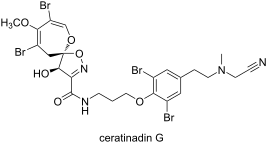
- discovery of an additional psammaplysin derivative, ceratinadin G (1) (Figure 1). This paper details the isolation, structural elucidation, and biological activity of compound 1. Results and Discussion The marine sponge Pseudoceratina sp., collected in Okinawa, Japan, was initially extracted with MeOH
- ), as well as additional signals not matching those of any known psammaplysin derivatives. Further separation of this fraction using C18 HPLC led to the isolation of ceratinadin G (1, 0.4 mg, 3.2 × 10⁻⁴%) along with psammaplysin F (2) [10][11][12]. Ceratinadin G (1) was isolated as an optically active
- 49.8 ppm were used as internal references. Mass spectra were acquired on a JEOL JMS-T100LP spectrometer. Flash column chromatography was performed using a Biotage Isolera flash purification system. Extraction and isolation The EtOAc-soluble material (2.45 g) of the methanol extract (38.06 g) from the


Discovery of ianthelliformisamines D–G from the sponge Suberea ianthelliformis and the total synthesis of ianthelliformisamine D
Beilstein J. Org. Chem. 2024, 20, 3205–3214, doi:10.3762/bjoc.20.266
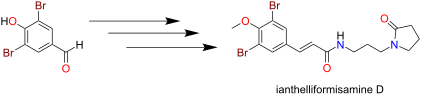
- aeruginosa biofilm inhibitors and antibiotic enhancers. Large-scale extraction and isolation studies resulted in the discovery of four new and minor natural products, ianthelliformisamines D–G (4–7) and the known steroid, aplysterol (8). Compounds 4–7 were fully characterised following 1D/2D NMR, MS and UV
- describe the large-scale extraction, isolation, and structure elucidation of four new metabolites, ianthelliformisamines D–G (4–7). Additionally, we report the isolation of the known natural products, aplysterol (8) and ianthelliformisamines A–C (1–3). Owing to the novelty of ianthelliformisamine D (4) we
- HPLC (RP-HPLC), which led to the purification of the known metabolites, ianthelliformisamines A–C (1–3) [7] and aplysterol (8) [13], and four new natural products, ianthelliformisamines D–G (4–7) (Figure 1). This extraction and isolation process was repeated twice to obtain sufficient quantities of the


![[Graphic 1]](/bjoc/content/inline/1860-5397-20-266-i2.svg?max-width=637&scale=1.18182)
![[Graphic 2]](/bjoc/content/inline/1860-5397-20-266-i3.svg?max-width=637&scale=1.18182)
![[Graphic 3]](/bjoc/content/inline/1860-5397-20-266-i4.svg?max-width=637&scale=1.18182)

![[Graphic 4]](/bjoc/content/inline/1860-5397-20-266-i5.svg?max-width=637&scale=1.18182)
![[Graphic 5]](/bjoc/content/inline/1860-5397-20-266-i6.svg?max-width=637&scale=1.18182)

Synthesis of the 1,5-disubstituted tetrazole-methanesulfonylindole hybrid system via high-order multicomponent reaction
Beilstein J. Org. Chem. 2024, 20, 3077–3084, doi:10.3762/bjoc.20.256
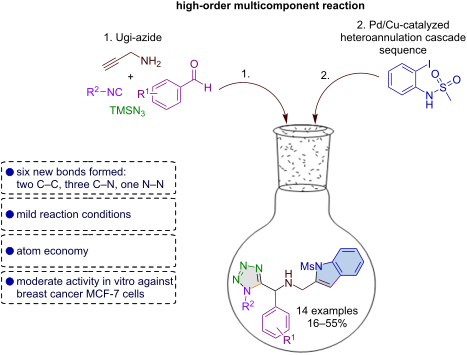
- studies, we employed benzaldehyde derivatives with various stereoelectronic decoration, excluding aliphatic ones due to their decreased reactivity resulting in failures to proceed [24][25][26][27]. Commercially available isocyanides utilized were cyclohexyl and tert-butyl isocyanide. Notably, an isolation



Chemical structure metagenomics of microbial natural products: surveying nonribosomal peptides and beyond
Beilstein J. Org. Chem. 2024, 20, 3050–3060, doi:10.3762/bjoc.20.253

- . Fractionation is an iterative process guided by screening for the desired bioactivity until the isolation of a pure compound. This workflow was invented by Selman Waksman and has facilitated the identification of the vast majority of natural products known to date. However, it has fallen out of favor due to


Cyclodextrin-based rotaxanes for polymer materials: challenge on simultaneous realization of inexpensive production and defined structures
Beilstein J. Org. Chem. 2024, 20, 3026–3049, doi:10.3762/bjoc.20.252
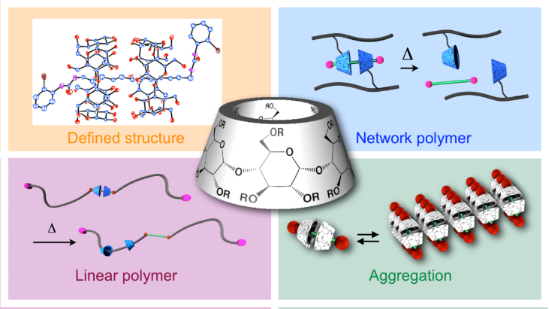
- . A size-complementary rotaxane contains axle-end groups that are as large as the wheel cavity. Thus, it is sufficiently stable for isolation under ambient conditions, although a certain stimulus, e.g., heat or the addition of a base, can induce the deslipping reaction to degrade itself as each
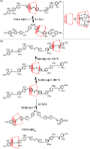
- reaction confirmed that the deslipping of [3]rotaxane 3 was approximately 10 times faster than that of [2]rotaxane 6, offering a local maximum of the yield of [2]rotaxane species in the developing process (approximately 80% by the theoretical calculation) and enabling the isolation of [2]rotaxane during






Synthesis of fluorinated acid-functionalized, electron-rich nickel porphyrins
Beilstein J. Org. Chem. 2024, 20, 2954–2958, doi:10.3762/bjoc.20.248
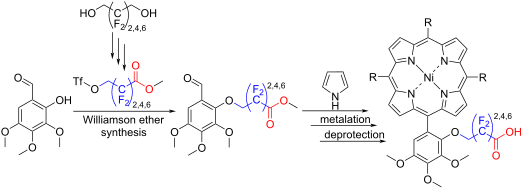
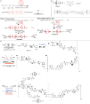
- , see Scheme 1). In order to break the symmetry and to generate the acid function only on one side, benzyl protection was performed. From diols 1, 2, and 3 statistical mixtures of unprotected, mono-, and di-protected products were obtained, from which the isolation of the desired mono-protected products
- bicarbonate (NaHCO₃) provided acids 7, 8, and 9. A byproduct is obtained during oxidation and it is assumed that this is the molecule oxidized at the benzyl position (see Supporting Information File 1, compounds 35–40). Work-up and isolation proved to be difficult, and therefore, the acids were directly


Recent advances in transition-metal-free arylation reactions involving hypervalent iodine salts
Beilstein J. Org. Chem. 2024, 20, 2891–2920, doi:10.3762/bjoc.20.243

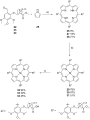
- the reaction to proceed under gentle conditions. This prevents the subsequent transformation of the obtained S-aryl xanthates, thereby facilitating their isolation with satisfactory to excellent yields. During the assessment of the reaction's versatility, first variously substituted (4-anisyl)(aryl




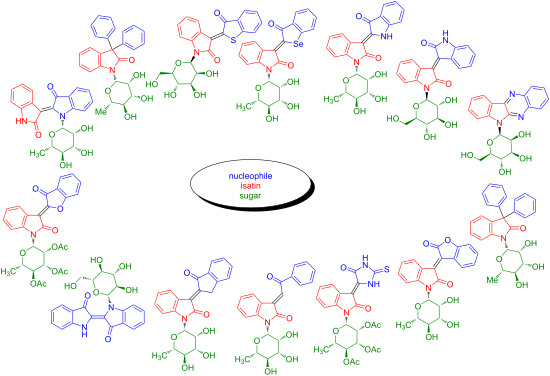
N-Glycosides of indigo, indirubin, and isoindigo: blue, red, and yellow sugars and their cancerostatic activity
Beilstein J. Org. Chem. 2024, 20, 2840–2869, doi:10.3762/bjoc.20.240
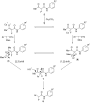
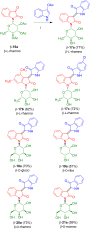
- material in Europe (Scheme 1). It is obtained by extraction and isolation of the colorless indole-O-glycoside indicane which is then hydrolyzed to give indoxyl. The latter undergoes oxidative dimerization to provide indigo. In the 19th century, syntheses of indigo were developed which made the pigment
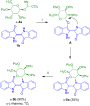
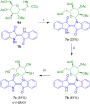
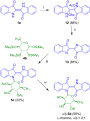
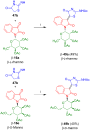
- , indirubin, and isoindigo which can be regarded as blue, red, and yellow sugars, respectively. Review Indigo-N-glycosides (blue sugars) In 2002, Laatsch and Maskey reported the isolation of the akashins A, B and C, indigo-N-glycosides, from terrestric Streptomyces (Scheme 2) [17][18]. These natural products










Synthesis of tricarbonylated propargylamine and conversion to 2,5-disubstituted oxazole-4-carboxylates
Beilstein J. Org. Chem. 2024, 20, 2827–2833, doi:10.3762/bjoc.20.238

- 3) [13][14]. To a dry THF solution of adduct 4a, butyllithium was added, and the reaction mixture was stirred at −78 °C for 5 min. Following the addition of acetic acid, the reaction mixture was concentrated and subjected to silica gel column chromatography, resulting in the isolation of ethyl 5


Mechanochemical difluoromethylations of ketones
Beilstein J. Org. Chem. 2024, 20, 2799–2805, doi:10.3762/bjoc.20.235
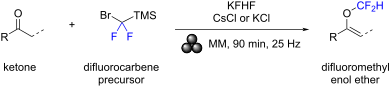
- ketones reacted well too. Accordingly, 3j was obtained in 42% yield. Enone 1k gave 3k in 51% yield, and after isolation by column chromatography the product was obtained in 13% yield. Difluoromethyl enol ether 3l was formed from diketone 1l in 25% yield. Finally, conversions of the two cyclic ketones 1m


Young investigators in natural products chemistry, biosynthesis, and enzymology
Beilstein J. Org. Chem. 2024, 20, 2720–2721, doi:10.3762/bjoc.20.229
- , Japan 10.3762/bjoc.20.229 There is just something about natural products. When staring at these structurally complex molecules produced by diverse organisms on our planet, one may wonder why a particular natural product is made, how it is made, how I can make it, or how I can use it. The isolation and
Synthesis of benzo[f]quinazoline-1,3(2H,4H)-diones
Beilstein J. Org. Chem. 2024, 20, 2708–2719, doi:10.3762/bjoc.20.228
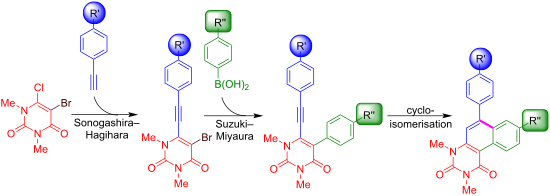
- investigation or modulation of desired properties. Conclusion In summary, we have developed the synthesis of novel polycyclic uracil-based compounds. Careful optimisation of the reaction conditions led to the isolation of the desired products in excellent to moderate yields. The developed methodology tolerates




Transition-metal-free decarbonylation–oxidation of 3-arylbenzofuran-2(3H)-ones: access to 2-hydroxybenzophenones
Beilstein J. Org. Chem. 2024, 20, 2655–2667, doi:10.3762/bjoc.20.223
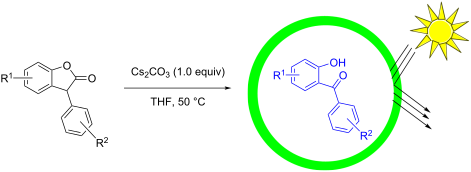
- . However, it must be noted that the yields recorded in Table 1 are isolated yields. For the sake of eliminating errors in isolation, we have carried out every reaction in triplicate, and have considered the average yield as the isolated yield. Earlier, Qui et al. reported [2] that a transition-metal




The scent gland composition of the Mangshan pit viper, Protobothrops mangshanensis
Beilstein J. Org. Chem. 2024, 20, 2644–2654, doi:10.3762/bjoc.20.222
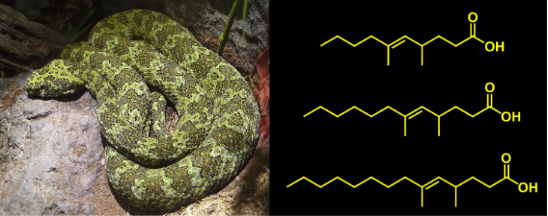
- ) were observed with similar mass spectra. The amount of secretion available and the complex mixture did not allow for the isolation of enough material for NMR analysis. Therefore, for the structure elucidation of these unknown compounds, we used different analytical methods, including GC–MS, GC–IR, and





