


Search results
Search for "optimization" in Full Text gives 1213 result(s) in Beilstein Journal of Organic Chemistry. Showing first 200.
Synthetic approach to borrelidin fragments: focus on key intermediates
Beilstein J. Org. Chem. 2025, 21, 1135–1160, doi:10.3762/bjoc.21.91
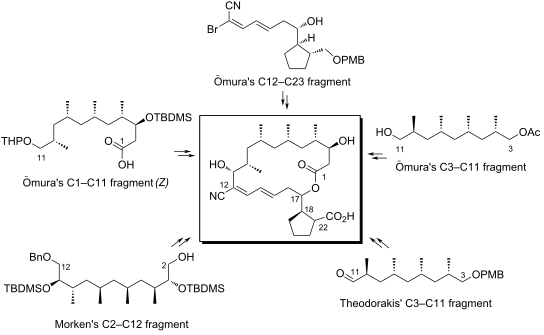
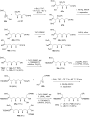
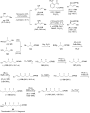
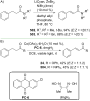
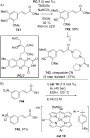
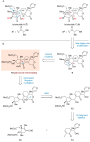
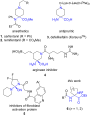
- -substituted acrylic acid 51 (Scheme 7). After optimization, the iridium complex (Ra)-50, in the presence of cesium carbonate, was identified as the most efficient catalyst, producing compound 52 in 97% yield with an enantiomeric excess of 97.6%. Subsequently, compound 52 was treated with Meldrum’s acid in the








Salen–scandium(III) complex-catalyzed asymmetric (3 + 2) annulation of aziridines and aldehydes
Beilstein J. Org. Chem. 2025, 21, 1087–1094, doi:10.3762/bjoc.21.86
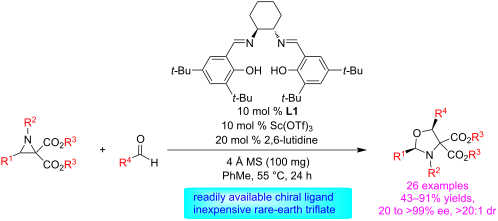
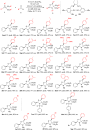
- mechanism. Gram-scale synthesis. Optimization of reaction conditions.a Supporting Information Supporting Information File 24: Analytic data and copies of 1H and 13C NMR spectra of compounds 1 and 3, copies of HRMS spectra of unknown compound 3 and copies of HLPC profiles of compounds 3. Funding This


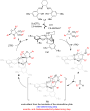

Recent advances in synthetic approaches for bioactive cinnamic acid derivatives
Beilstein J. Org. Chem. 2025, 21, 1031–1086, doi:10.3762/bjoc.21.85
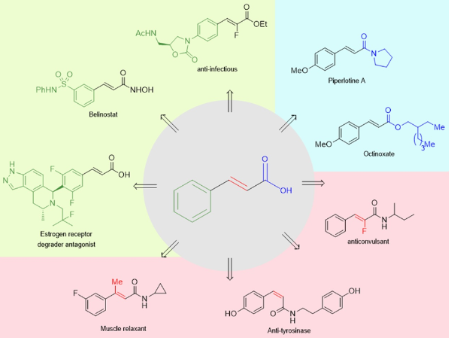
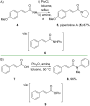
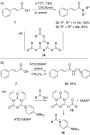
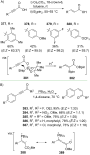
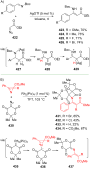
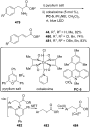
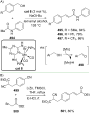
- sustainable approaches. Given the widespread incorporation of the cinnamic acid framework in various therapeutic agents, this review delivers critical insights into a molecular design for hit-to-lead optimization, offering detailed synthetic strategies for diverse functional modifications. By critically













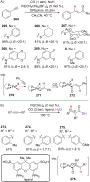


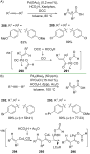


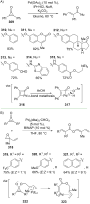
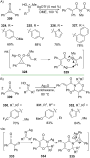














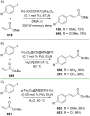

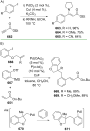


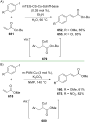


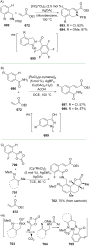




Pd-Catalyzed asymmetric allylic amination with isatin using a P,olefin-type chiral ligand with C–N bond axial chirality
Beilstein J. Org. Chem. 2025, 21, 1018–1023, doi:10.3762/bjoc.21.83
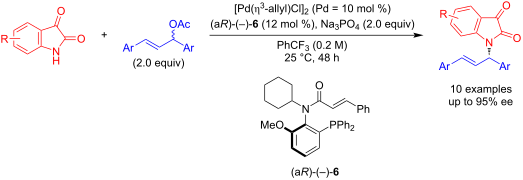
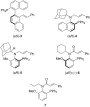
- . The chiral amides (aR)-(−)-6 and (−)-7 were evaluated as ligands in Pd-catalyzed asymmetric allylic amination, and while (−)-7 exhibited promising enantioselectivity, its yield was lower than (aR)-(−)-6. Further optimization of reaction conditions led to improved yields and enantioselectivities up to
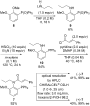
- )-(−)-6 as a chiral ligand: The reaction was carried out at 0.1 mmol scale; yields refer to isolated yields. Transformation of the reaction product (S)-13a: The reaction was carried out at 0.1 mmol scale and the yield refers to the isolated yield. Optimization of conditions for the Pd-catalyzed asymmetric




Synthesis of pyrrolo[3,2-d]pyrimidine-2,4(3H)-diones by domino C–N coupling/hydroamination reactions
Beilstein J. Org. Chem. 2025, 21, 1010–1017, doi:10.3762/bjoc.21.82
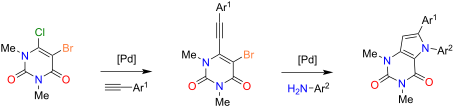
- /hydroamination reaction. Synthesis of 4a–m. Conditions: Pd(OAc)2 (5 mol %), DPEphos (5 mol %), K3PO4 (3 equiv), DMA, 100 °C, 15 h. Yields of isolated products. Optimization of the synthesis of 4a. Photophysical data of 4a, 4j, 4k, 4l, and 4m in dichloromethane (c = 1·10−5 M) at 20 °C. Supporting Information



Recent total synthesis of natural products leveraging a strategy of enamide cyclization
Beilstein J. Org. Chem. 2025, 21, 999–1009, doi:10.3762/bjoc.21.81
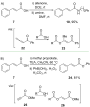
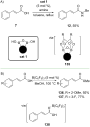
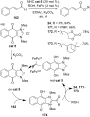
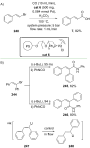
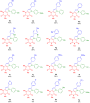
- elegant [2 + 3] cycloaddition of secondary enecarbamates [28], the extension of this reaction to enamides lacking an N–H group is a notable advancement. After extensive optimization, the chiral dirhodium catalyst cat. 1 was found to be most capable in terms of both stereocontrol and efficiency. The use of
- . Optimization studies identified the tetraphenyl-substituted PyBox ligand L1 as particularly effective in controlling the stereochemistry of the polycyclization, yielding high enantioselectivity for most substrates. As illustrated in Scheme 5, tertiary enamides with a tethered electron-rich arene could undergo
- alkaloids, though it features a truncated cyclopentane rather than the characteristic cyclohexane or cyclohexene. In their optimization studies, the authors found the sequential catalysis of a chiral binol–Ti complex and BF3·Et2O to be the most efficient, providing products 39 in high yields with excellent




On the photoluminescence in triarylmethyl-centered mono-, di-, and multiradicals
Beilstein J. Org. Chem. 2025, 21, 964–998, doi:10.3762/bjoc.21.80
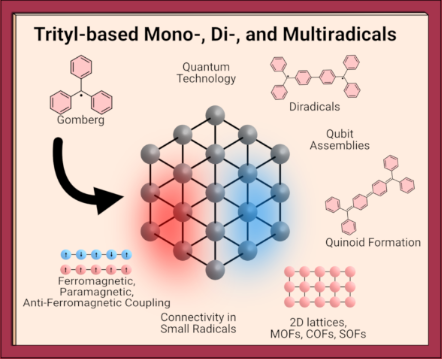
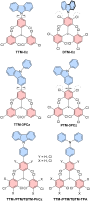
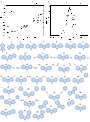
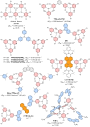
- ][14]. While first examples of radical emitters in light-emitting diodes (LEDs) only delivered around 12% internal quantum efficiency [7], representing no improvement compared to conventional emitters, optimization of the donor-functionalized TTM radical and of the device geometry quickly allowed









Harnessing tethered nitreniums for diastereoselective amino-sulfonoxylation of alkenes
Beilstein J. Org. Chem. 2025, 21, 947–954, doi:10.3762/bjoc.21.78

- there was a weakly basic counter anion with excellent displaceability, such as trifluoroacetate or sulfonate, the nitrenium refused to engage with the pendant alkene, and complex mixtures, presumably containing N-N dimeric products of starting material, were observed. During reaction optimization, we
- examples of amino-sulfonoxylations using tethered nitreniums. Putative reaction mechanism. (A) Scale-up and (B) applications. Optimization results. Structure–reactivity relationship with nitrenium tethers. Examination of sulfonic acid scope. Substrate scope exploration with an emphasis on stereocontrol and


A convergent synthetic approach to the tetracyclic core framework of khayanolide-type limonoids
Beilstein J. Org. Chem. 2025, 21, 926–934, doi:10.3762/bjoc.21.75
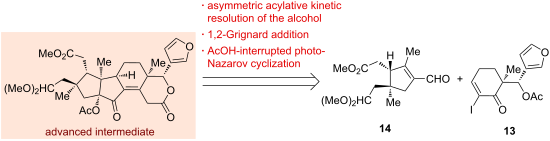
- 10 was unequivocally determined through X-ray crystallographic analysis (ORTEP drawing, Scheme 4). Further optimization by elevating the reaction temperature did not noticeably alter the ratio of 32 and 33 (Table 1, entries 8 and 9). Moreover, attempts to apply interrupted Nazarov cyclization with
- ). Construction of α-iodoenone 13. Construction of aldehyde 14. Synthesis of the advanced intermediate 10 (in the X ray structure of 10 solvent molecule is omitted for clarity). Optimization of the interrupted Nazarov cyclization.a Supporting Information Deposition number 2406738 contains the supplementary




Silver(I) triflate-catalyzed post-Ugi synthesis of pyrazolodiazepines
Beilstein J. Org. Chem. 2025, 21, 915–925, doi:10.3762/bjoc.21.74
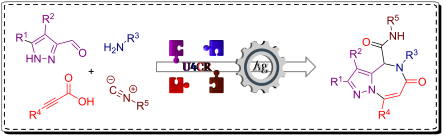
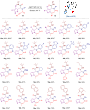
- pyrazolo[1,5-a][1,4]diazepine core. aDetermined by 1H NMR spectroscopy analysis of crude reaction mixtures. bIsolated yield. Optimization reactions of the intramolecular post-Ugi heteroannulation.a Supporting Information Deposition Numbers 2410526 (for 16m) and 2441192 (for 17-cis) contain the




Cu–Bpin-mediated dimerization of 4,4-dichloro-2-butenoic acid derivatives enables the synthesis of densely functionalized cyclopropanes
Beilstein J. Org. Chem. 2025, 21, 877–883, doi:10.3762/bjoc.21.71
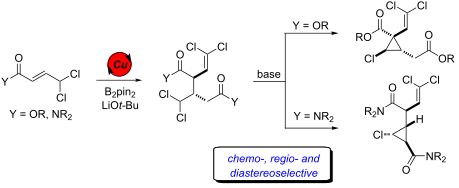
- mechanism for the Cu-catalyzed dimerization of 4,4-dichoro-2-butenoic acid derivatives. a) KOt-Bu-mediated intramolecular cyclization of 9. b) Direct formation of cyclopropane 20 from gem-dichloride 5 using KOt-Bu as base. Optimization studies. Synthesis of densely functionalized (2,2-dichlorovinyl


Data accessibility in the chemical sciences: an analysis of recent practice in organic chemistry journals
Beilstein J. Org. Chem. 2025, 21, 864–876, doi:10.3762/bjoc.21.70

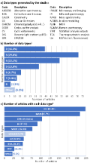
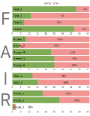
- share their data, to take advantage of recent advances in machine learning (ML) for synthesis planning, reaction optimization, and property prediction [30][31][32]. The discoverability and reusability of data, especially by machines, is central to the ‘FAIR Guiding Principles for scientific data





Light-enabled intramolecular [2 + 2] cycloaddition via photoactivation of simple alkenylboronic esters
Beilstein J. Org. Chem. 2025, 21, 854–863, doi:10.3762/bjoc.21.69
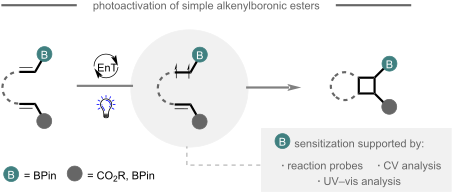
- scrambling.a Reaction optimization of intramolecular [2 + 2] cycloaddition.a Supporting Information Supporting Information File 52: Experimental section, characterization, and copies of spectra. Acknowledgements We thank Eduardo Garcia Alonso for preliminary results and Dr. Roza Bouchal for help with cyclic



Chitosan-supported CuI-catalyzed cascade reaction of 2-halobenzoic acids and amidines for the synthesis of quinazolinones
Beilstein J. Org. Chem. 2025, 21, 839–844, doi:10.3762/bjoc.21.67
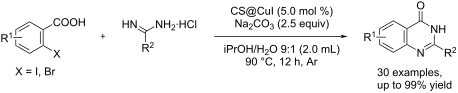
- ). Optimization of reaction conditionsa. Supporting Information Supporting Information File 48: Full experimental details, characterization data and copies of NMR spectra of all products. Funding This work was financially supported by Project of Science and Technology Research of Hubei Provincial Department of


4-(1-Methylamino)ethylidene-1,5-disubstituted pyrrolidine-2,3-diones: synthesis, anti-inflammatory effect and in silico approaches
Beilstein J. Org. Chem. 2025, 21, 817–829, doi:10.3762/bjoc.21.65

- ) production, with an IC50 value of 43.69 ± 5.26 µM. The presence of an electron-withdrawing group (-NO2 group) on the benzene ring at the 1-position of the pyrrolidine-2,3-dione subunit in compound 5e may be responsible for the observed high inhibition activity due to the enhancement and optimization of
- enhance its interaction with iNOS via the optimization of the hydrogen bond with Cys200. These results highlight the potential of compound 5e as a lead compound for further development in targeting iNOS-related pathologies. Experimental results have confirmed that compound 5e is a promising candidate for


Recent advances in the electrochemical synthesis of organophosphorus compounds
Beilstein J. Org. Chem. 2025, 21, 770–797, doi:10.3762/bjoc.21.61
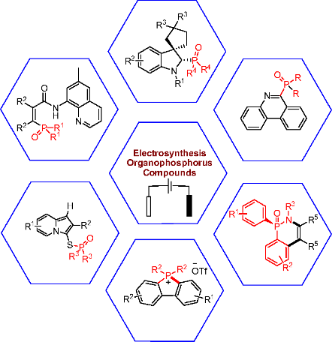
- optimization of the reaction, an HTe−Chem reactor was used in the presence of Me₄NOAc as the electrolyte. The use of NMP and Me₄NOAc was beneficial, as in many cases, adding water led to the precipitation of the desired product from the reaction mixture. A wide range of iminophosphoranes were synthesized


Copper-catalyzed domino cyclization of anilines and cyclobutanone oxime: a scalable and versatile route to spirotetrahydroquinoline derivatives
Beilstein J. Org. Chem. 2025, 21, 749–754, doi:10.3762/bjoc.21.58
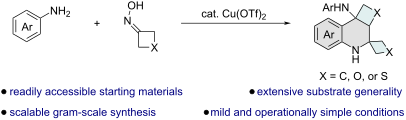
- under copper catalysis. After extensive optimization of the reaction parameters, the desired product 3aa was obtained in 92% yield under the following optimal conditions: the reaction between aniline (1a) and cyclobutanone oxime (2a) as the model system, hexane as the solvent, and copper(II
- spirotetrahydroquinoline (STHQ) scaffolds. Substrate scope. General reaction conditions: aniline 1 (0.2 mmol), 2 (0.4 mmol), and Cu(TFA)2 (0.04 mmol) in hexane (2.0 mmol) under air atmosphere, 12 h, 80 °C. Yields refer to isolated yields. Scale-up reaction.a Proposed mechanism. Optimization of reaction conditions.a


Asymmetric synthesis of fluorinated derivatives of aromatic and γ-branched amino acids via a chiral Ni(II) complex
Beilstein J. Org. Chem. 2025, 21, 659–669, doi:10.3762/bjoc.21.52
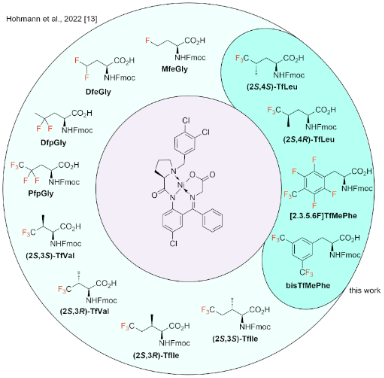
- different fluorinated amino acids and target fluorinated amino acids described in the context of this work. Synthesis of fluorinated aromatic amino acids 2 and 3. a) Gram-scale synthesis of fluorinated alkyl iodide precursor 10; b) Synthesis of trifluorinated leucine analogs 12a and 12b. Optimization of the
- reaction conditions for the alkylation step using bromide 4. Optimization of the reaction conditions for the alkylation step using bromide 5. Optimization of the reaction conditions for the synthesis of the alkyl iodide 10. Optimization of the reaction conditions for the synthesis of alkylated complexes


Recent advances in allylation of chiral secondary alkylcopper species
Beilstein J. Org. Chem. 2025, 21, 639–658, doi:10.3762/bjoc.21.51
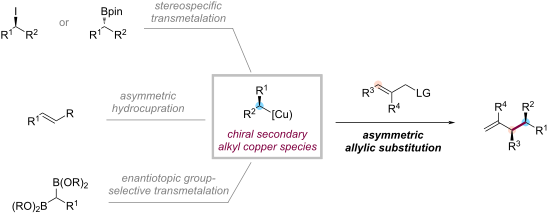
- investigation into whether such moderate activation strategies could facilitate copper-mediated coupling reactions of sterically demanding alkylboronic esters under mild conditions. After thorough reaction optimization, t-BuLi emerged as the superior activating agent, outperforming other organolithium compounds
- optimization revealed LiOt-Bu and diphenyl phosphate as the optimal metal alkoxide and leaving group, delivering the desired product 32 in high yield and high enantioselectivity at room temperature with only 2 mol % catalyst loading. The scope of this transformation proved to be remarkably broad. In addition
- approach focused on the diastereoselective formation of homoallylic boronic esters 36 through a carefully controlled sequence of hydrocupration and allylic substitution [39]. Through optimization studies, Yun found that CuCl with the Walphos ligand (L2) in Et2O provided optimal results, delivering the




Entry to 2-aminoprolines via electrochemical decarboxylative amidation of N‑acetylamino malonic acid monoesters
Beilstein J. Org. Chem. 2025, 21, 630–638, doi:10.3762/bjoc.21.50
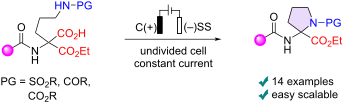
- -aminoproline derivatives 6. Optimization of anodic decarboxylation/amidation reaction. Supporting Information Supporting Information File 16: Detailed experimental procedures, analytical and spectroscopic data for the synthesized compounds, and copies of NMR spectra.



Photocatalyzed elaboration of antibody-based bioconjugates
Beilstein J. Org. Chem. 2025, 21, 616–629, doi:10.3762/bjoc.21.49
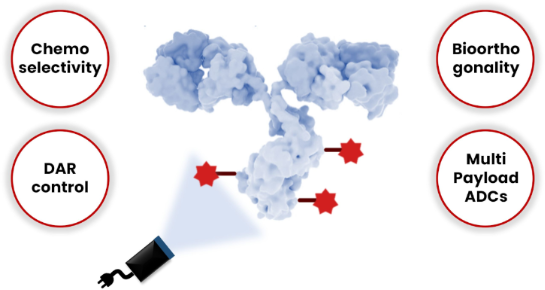
- stability, and/or a shorter ADC half-life [14]. Optimization of the drug/antibody ratio (DAR) and payload distribution/location thus becomes significant for ideal ADC design. Given the complexity of biological macromolecules, there are inherent limitations in terms of the types of reactions that can be used
- light control might also be improved using photochemical transformations. Importantly, optimization of bioconjugation reactions with technologies such as high-throughput experimentation has already been applied on antibodies [51]. Bioorthogonality Bioorthogonal chemistry has transformed our capability


Sequential two-step, one-pot microwave-assisted Urech synthesis of 5-monosubstituted hydantoins from L-amino acids in water
Beilstein J. Org. Chem. 2025, 21, 596–600, doi:10.3762/bjoc.21.46
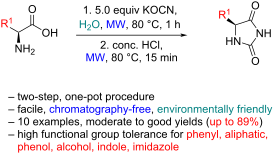
- amino acids. Optimization of N-carbamylation of H1a. Supporting Information Supporting Information File 10: NMR and MS spectra of synthesized compounds. Funding The authors gratefully acknowledge the financial support from the TAR UMT Publication Incentive (FOAS/PS/86000-4923) provided by the Tunku


Formaldehyde surrogates in multicomponent reactions
Beilstein J. Org. Chem. 2025, 21, 564–595, doi:10.3762/bjoc.21.45


Study of the interaction of 2H-furo[3,2-b]pyran-2-ones with nitrogen-containing nucleophiles
Beilstein J. Org. Chem. 2025, 21, 556–563, doi:10.3762/bjoc.21.44
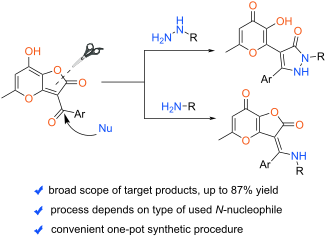
- conditions: 1c (1 mmol, 0.30 g), hydroxylamine hydrochloride (1.2 mmol, 0.08 g), EtOH (5 mL). Proposed reaction mechanism. Synthesis of product 13. Reaction conditions: 8o (1 mmol, 0.37 g), pivaloyl chloride (3 mmol, 0.36 g), MeCN (5 mL). Optimization of the reaction conditionsa. Supporting Information


Asymmetric synthesis of β-amino cyanoesters with contiguous tetrasubstituted carbon centers by halogen-bonding catalysis with chiral halonium salt
Beilstein J. Org. Chem. 2025, 21, 547–555, doi:10.3762/bjoc.21.43
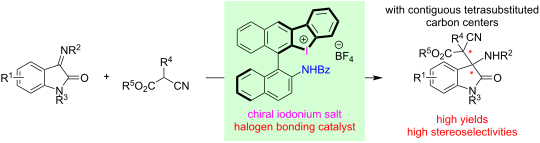
- , the reaction catalyzed by only 1 mol % of iodonium salt 9b provided the opposite diastereomer of 17a as the major product compared with that without a catalyst, which revealed the high catalytic activity of our catalyst. Further reaction conditions optimization was conducted using 9a as a catalyst
- chiral halonium salt. Next, the reaction temperature was optimized, and −40 °C was found to be optimal (Table 1, entries 7–9). Further optimization of the reaction conditions (amounts of potassium carbonate and pre-nucleophile, catalyst loading, and concentration) were conducted, and the reaction with
- optimization of the substituent on the 1-position of imines was conducted (Scheme 2). In most cases, the products were obtained in high yields with moderate to high enantioselectivities; the sterically less-hindered methyl-substituted substrate 7b was found to be better than the other substrates. The bulky





