


Search results
Search for "organolithium" in Full Text gives 83 result(s) in Beilstein Journal of Organic Chemistry.
α,β-Aziridinylphosphonates by lithium amide-induced phosphonyl migration from nitrogen to carbon in terminal aziridines
- David. M. Hodgson and
- Zhaoqing Xu
Beilstein J. Org. Chem. 2010, 6, 978–983, doi:10.3762/bjoc.6.110

- substrate 1a (57%, Scheme 4) [28]. Initially, we examined organolithiums for their propensity to induce deprotonation-migration in N-phosphonate aziridine 1a. Despite it being previously noted by Zwierzak that the reaction of organolithium reagents with such substrates resulted in preferential attack at

Graphical Abstract

Scheme 1: Proposed aziridinyl anion induced N- to C-phosphonyl migration.
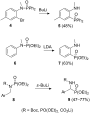
Scheme 2: Selected previously observed N- to C-phosphorous migrations [17,18,21].

Scheme 3: Partial N- to C-migration with N-diphenylphosphinylaziridine 10 [24].

Scheme 4: Synthesis and rearrangement of aziridine 1a.

Figure 1: Aziridines 1h–j.

Scheme 5: Synthesis and rearrangement of aziridine (S)-1k.

Scheme 6: Hydrogenolysis of aziridinylphosphonate (–)-3k.
Aromatic and heterocyclic perfluoroalkyl sulfides. Methods of preparation
- Vladimir N. Boiko
Beilstein J. Org. Chem. 2010, 6, 880–921, doi:10.3762/bjoc.6.88
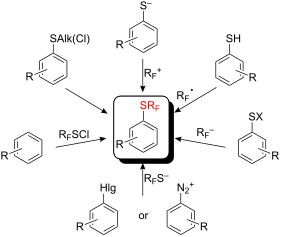
- behavior in their reactions with nucleophiles. For example, the reaction of CF3I with alkali gives fluoroform (CHF3) and potassium hypoiodide (KIO) [122]. The interaction of organolithium compounds with perfluoroalkyl iodides [123][124][125][126] does not result in combination of the two alkyl species (RF

Graphical Abstract

Figure 1: Examples of industrial fluorine-containing bio-active molecules.

Figure 2: CF3(S)- and CF3(O)-containing pharmacologically active compounds.

Figure 3: Hypotensive candidates with SRF and SO2RF groups – analogues of Losartan and Nifedipin.

Figure 4: The variety of the pharmacological activity of RFS-substituted compounds.

Figure 5: Recent examples of compounds containing RFS(O)n-groups [12-18].

Scheme 1: Fluorination of ArSCCl3 to corresponding ArSCF3 derivatives. For references see: a[38-43]; b[41,42]; c[43]; d[44]; e[38-43,45-47]; f[38-43,48,49]; g...

Scheme 2: Preparation of aryl pentafluoroethyl sulfides.

Scheme 3: Mild fluorination of the aryl SCF2Br derivatives.

Scheme 4: HF fluorinations of aryl α,α,β-trichloroisobutyl sulfide at various conditions.

Scheme 5: Monofluorination of α,α-dichloromethylene group.

Scheme 6: Electrophilic substitution of phenols with CF3SCl [69].

Scheme 7: Introduction of SCF3 groups into activated phenols [71-74].

Scheme 8: Preparation of tetrakis(SCF3)-4-methoxyphenol [72].

Scheme 9: The interactions of resorcinol and phloroglucinol derivatives with RFSCl.

Scheme 10: Reactions of anilines with CF3SCl.

Scheme 11: Trifluoromethylsulfanylation of anilines with electron-donating groups in the meta position [74].

Scheme 12: Reaction of benzene with CF3SCl/CF3SO3H [77].

Scheme 13: Reactions of trifluoromethyl sulfenyl chloride with aryl magnesium and -mercury substrates.

Scheme 14: Reactions of pyrroles with CF3SCl.

Scheme 15: Trifluoromethylsulfanylation of indole and indolizines.

Scheme 16: Reactions of N-methylpyrrole with CF3SCl [80,82].

Scheme 17: Reactions of furan, thiophene and selenophene with CF3SCl.

Scheme 18: Trifluoromethylsulfanylation of imidazole and thiazole derivatives [83].

Scheme 19: Trifluoromethylsulfanylation of pyridine requires initial hydride reduction.

Scheme 20: Introduction of additional RFS-groups into heterocyclic compounds in the presence of CF3SO3H.

Scheme 21: Introduction of additional RFS-groups into pyrroles [82,87].

Scheme 22: By-products in reactions of pyrroles with CF3SCl [82].

Scheme 23: Reaction of aromatic iodides with CuSCF3 [93,95].

Scheme 24: Reaction of aromatic iodides with RFZCu (Z = S, Se), RF = CF3, C6F5 [93,95,96].

Scheme 25: Side reactions during trifluoromethylsulfanylation of aromatic iodides with CF3SCu [98].

Scheme 26: Reactions with in situ generated CuSCF3.

Scheme 27: Perfluoroalkylthiolation of aryl iodides with bulky RFSCu [105].

Scheme 28: In situ formation and reaction of RFZCu with aryl iodides.

Figure 6: Examples of compounds obtained using in situ generated RFZCu methodology [94].

Scheme 29: Introduction of SCF3 group into aromatics via difluorocarbene.

Scheme 30: Tetrakis(dimethylamino)ethylene dication trifluoromethyl thiolate as a stable reagent for substitut...

Scheme 31: The use of CF2=S/CsF or (CF3S)2C=S/CsF for the introduction of CF3S groups into fluorinated heteroc...

Scheme 32: One-pot synthesis of ArSCF3 from ArX, CCl2=S and KF.

Scheme 33: Reaction of aromatics with CF3S− Kat+ [115].

Scheme 34: Reactions of activated aromatic chlorides with AgSCF3/KI.

Scheme 35: Comparative CuSCF3/KI and Hg(SCF3)2/KI reactions.

Scheme 36: Me3SnTeCF3 – a reagent for the introduction of the TeCF3 group.

Scheme 37: Sandmeyer reactions with CuSCF3.

Scheme 38: Reactions of perfluoroalkyl iodides with alkali and organolithium reagents.

Scheme 39: Perfluoroalkylation with preliminary breaking of the disulfide bond.

Scheme 40: Preparation of RFS-substituted anilines from dinitrodiphenyl disulfides.

Scheme 41: Photochemical trifluoromethylation of 2,4,6-trimercaptochlorobenzene [163].

Scheme 42: Putative process for the formation of B, C and D.

Scheme 43: Trifluoromethylation of 2-mercapto-4-hydroxy-6-trifluoromethylyrimidine [145].

Scheme 44: Deactivation of 2-mercapto-4-hydroxypyrimidines S-centered radicals.

Scheme 45: Perfluoroalkylation of thiolates with CF3Br under UV irradiation.

Scheme 46: Catalytic effect of methylviologen for RF• generation.

Scheme 47: SO2−• catalyzed trifluoromethylation.

Scheme 48: Electrochemical reduction of CF3Br in the presence of SO2 [199,200].

Scheme 49: Participation of SO2 in the oxidation of ArSCF3−•.

Scheme 50: Electron transfer cascade involving SO2 and MV.

Scheme 51: Four stages of the SRN1 mechanism for thiol perfluoroalkylation.

Scheme 52: A double role of MV in the catalysis of RFI reactions with aryl thiols.

Scheme 53: Photochemical reaction of pentafluoroiodobenzene with trifluoromethyl disulfide.

Scheme 54: N- Trifluoromethyl-N-nitrosobenzene sulfonamide – a source of CF3• radicals [212,213].

Scheme 55: Radical trifluoromethylation of organic disulfides with ArSO2N=NCF3.

Scheme 56: Barton’s S-perfluoroalkylation reactions [216].

Scheme 57: Decarboxylation of thiohydroxamic esters in the presence of C6F13I.

Scheme 58: Reactions of thioesters of trifluoroacetic and trifluoromethanesulfonic acids in the presence of ar...

Scheme 59: Perfluoroalkylation of polychloropyridine thiols with xenon perfluorocarboxylates or XeF2 [222,223].

Scheme 60: Interaction of Xe(OCORF)2 with nitroaryl disulfide [227].

Scheme 61: Bi(CF3)3/Cu(OCOCH3)2 trifluoromethylation of thiophenolate [230].

Scheme 62: Reaction of fluorinated carbanions with aryl sulfenyl chlorides.

Scheme 63: Reaction of methyl perfluoromethacrylate with PhSCl in the presence of fluoride.

Scheme 64: Reactions of ArSCN with potassium and magnesium perfluorocarbanions [237].

Scheme 65: Reactions of RFI with TDAE and organic disulfides [239,240].

Scheme 66: Decarboxylation of perfluorocarboxylates in the presence of disulfides [245].

Scheme 67: Organization of a stable form of “CF3−” anion in the DMF.

Scheme 68: Silylated amines in the presence of fluoride can deprotonate fluoroform for reaction with disulfide...

Figure 7: Other examples of aminomethanols [264].

Scheme 69: Trifluoromethylation of diphenyl disulfide with PhSO2CF3/t-BuOK.

Scheme 70: Amides of trifluoromethane sulfinic acid are sources of CF3− anion.

Scheme 71: Trifluoromethylation of various thiols using “hyper-valent” iodine (III) reagent [279].

Scheme 72: Trifluoromethylation of p-nitrothiophenolate with diaryl CF3 sulfonium salts [280].

Scheme 73: Trifluoromethyl transfer from dibenzo (CF3)S-, (CF3)Se- and (CF3)Te-phenium salts to thiolates [283].

Scheme 74: Multi-stage paths for synthesis of dibenzo-CF3-thiophenium salts [61].
Synthesis of unsymmetrically substituted biaryls via sequential lithiation of dibromobiaryls using integrated microflow systems
- Aiichiro Nagaki,
- Naofumi Takabayashi,
- Yutaka Tomida and
- Jun-ichi Yoshida
Beilstein J. Org. Chem. 2009, 5, No. 16, doi:10.3762/bjoc.5.16
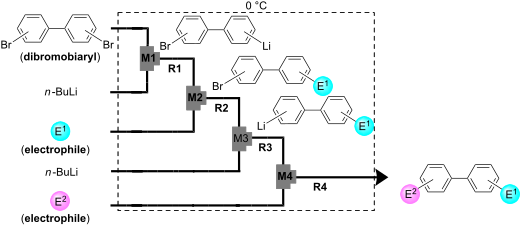
- temperatures such as 0 °C. It is also noteworthy that monolithiation of 2,2′-dibromobibenzyl (43) can be achieved with high selectivity even at 0 °C and 24 °C. The resulting organolithium intermediate reacted with various electrophiles to give the corresponding products in high yields with high selectivity

Graphical Abstract

Scheme 1: Sequential introduction of two electrophiles onto dibromobiaryls using Br-Li exchange reactions.

Scheme 2: Br-Li exchange reaction of 2,2′-dibromobiphenyl (1) with n-BuLi using a conventional macrobatch rea...

Figure 1: Microflow system for Br-Li exchange reaction of 2,2′-dibromobiphenyl (1). T-shaped micromixer: M1 (...

Figure 2: Effect of temperature and residence time in Br-Li exchange reaction of 2,2′-dibromobiphenyl (1) usi...

Figure 3: A microflow system for sequential introduction of two electrophiles. T-shaped micromixer: M1 (ø = 2...

Scheme 3: Br-Li exchange reaction of 4,4′-dibromobiphenyl (17) with n-BuLi using a conventional macrobatch re...

Figure 4: Microflow system for Br-Li exchange reaction of 4,4′-dibromobiphenyl (17). T-shaped micromixer: M1 ...

Figure 5: Effect of temperature and residence time in Br-Li exchange reaction of 4,4′-dibromobiphenyl (17) us...
Recent progress on the total synthesis of acetogenins from Annonaceae
- Nianguang Li,
- Zhihao Shi,
- Yuping Tang,
- Jianwei Chen and
- Xiang Li
Beilstein J. Org. Chem. 2008, 4, No. 48, doi:10.3762/bjoc.4.48

Graphical Abstract

Scheme 1: Total synthesis of longifolicin by Marshall’s group.

Scheme 2: Total synthesis of corossoline by Tanaka’s group.

Scheme 3: Total synthesis of corossoline by Wu’s group.

Scheme 4: Total synthesis of pseudo-annonacin A by Hanessian’s group.

Scheme 5: Total synthesis of tonkinecin by Wu’s group.

Scheme 6: Total synthesis of gigantetrocin A by Shi’s group.

Scheme 7: Total synthesis of annonacin by Wu’s group.

Scheme 8: Total synthesis of solamin by Kitahara’s group.

Scheme 9: Total synthesis of solamin by Mioskowski’s group.

Scheme 10: Total synthesis of cis-solamin by Makabe’s group.

Scheme 11: Total synthesis of cis-solamin by Brown’s group.

Scheme 12: The formal synthesis of (+)-cis-solamin by Donohoe’s group.

Scheme 13: Total synthesis of cis-solamin by Stark’s group.

Scheme 14: Total synthesis of mosin B by Tanaka’s group.

Scheme 15: Total synthesis of longicin by Hanessian’s group.

Scheme 16: Total synthesis of murisolin and 16,19-cis-murisolin by Tanaka’s group.

Scheme 17: Synthesis of a stereoisomer library of (+)-murisolin by Curran’s group.

Scheme 18: Total synthesis of murisolin by Makabe’s group.

Scheme 19: Total synthesis of reticulatain-1 by Makabe’s group.

Scheme 20: Total synthesis of muricatetrocin C by Ley’s group.

Scheme 21: Total synthesis of (4R,12S,15S,16S,19R,20R,34S)-muricatetrocin (146) and (4R,12R,15S,16S,19R,20R,34S...

Scheme 22: Total synthesis of parviflorin by Hoye’s group.

Scheme 23: Total synthesis of parviflorin by Trost’s group.

Scheme 24: Total synthesis of trilobacin by Sinha’s group.

Scheme 25: Total synthesis of 15-epi-annonin I 181b by Scharf’s group.

Scheme 26: Total synthesis of squamocin A and squamocin D by Scharf’s group.

Scheme 27: Total synthesis of asiminocin by Marshall’s group.

Scheme 28: Total synthesis of asiminecin by Marshall’s group.

Scheme 29: Total synthesis of (+)-(30S)-bullanin by Marshall’s group.

Scheme 30: Total synthesis of uvaricin by the group of Sinha and Keinan.

Scheme 31: Formal synthesis of uvaricin by Burke’s group.

Scheme 32: Total synthesis of trilobin by Marshall’s group.

Scheme 33: Total synthesis of trilobin by the group of Sinha and Keinan.

Scheme 34: Total synthesis of asimilobin by the group of Wang and Shi.

Scheme 35: Total synthesis of squamotacin by the group of Sinha and Keinan.

Scheme 36: Total synthesis of asimicin by Marshall’s group.

Scheme 37: Total synthesis of asimicin by the group of Sinha and Keinan.

Scheme 38: Total synthesis of asimicin by Roush’s group.

Scheme 39: Total synthesis of asimicin by Marshall’s group.

Scheme 40: Total synthesis of 10-hydroxyasimicin by Ley’s group.

Scheme 41: Total synthesis of asimin by Marshall’s group.

Scheme 42: Total synthesis of bullatacin by the group of Sinha and Keinan.

Scheme 43: Total synthesis of bullatacin by Roush’s group.

Scheme 44: Total synthesis of bullatacin by Pagenkopf’s group.

Scheme 45: Total synthesis of rollidecins C and D by the group of Sinha and Keinan.

Scheme 46: Total synthesis of 30(S)-hydroxybullatacin by Marshall’s group.

Scheme 47: Total synthesis of uvarigrandin A and 5(R)-uvarigrandin A by Marshall’s group.

Scheme 48: Total synthesis of membranacin by Brown’s group.

Scheme 49: Total synthesis of membranacin by Lee’s group.

Scheme 50: Total synthesis of rolliniastatin 1 and rollimembrin by Lee’s group.

Scheme 51: Total synthesis of longimicin D by the group of Maezaki and Tanaka.

Scheme 52: Total synthesis of the structure proposed for mucoxin by Borhan’s group.

Scheme 53: Modular synthesis of adjacent bis-THF annonaceous acetogenins by Marshall’s group.

Scheme 54: Total synthesis of 4-deoxygigantecin by Tanaka’s group.

Scheme 55: Total synthesis of squamostatins D by Marshall’s group.

Scheme 56: Total synthesis of gigantecin by Crimmins’s group.

Scheme 57: Total synthesis of gigantecin by Hoye’s group.

Scheme 58: Total synthesis of cis-sylvaticin by Donohoe’s group.

Scheme 59: Total synthesis of 17(S),18(S)-goniocin by Sinha’s group.

Scheme 60: Total synthesis of goniocin and cyclogoniodenin T by the group of Sinha and Keinan.

Scheme 61: Total synthesis of jimenezin by Takahashi’s group.

Scheme 62: Total synthesis of jimenezin by Lee’s group.

Scheme 63: Total synthesis of jimenezin by Hoffmann’s group.

Scheme 64: Total synthesis of muconin by Jacobsen’s group.

Scheme 65: Total synthesis of (+)-muconin by Kitahara’s group.

Scheme 66: Total synthesis of muconin by Takahashi’s group.

Scheme 67: Total synthesis of muconin by the group of Yoshimitsu and Nagaoka.

Scheme 68: Total synthesis of mucocin by the group of Sinha and Keinan.

Scheme 69: Total synthesis of mucocin by Takahashi’s group.

Scheme 70: Total synthesis of (−)-mucocin by Koert’s group.

Scheme 71: Total synthesis of mucocin by the group of Takahashi and Nakata.

Scheme 72: Total synthesis of mucocin by Evans’s group.

Scheme 73: Total synthesis of mucocin by Mootoo’s group.

Scheme 74: Total synthesis of (−)-mucocin by Crimmins’s group.

Scheme 75: Total synthesis of pyranicin by the group of Takahashi and Nakata.

Scheme 76: Total synthesis of pyranicin by Rein’s group.

Scheme 77: Total synthesis of proposed pyragonicin by the group of Takahashi and Nakata.

Scheme 78: Total synthesis of pyragonicin by Rein’s group.

Scheme 79: Total synthesis of pyragonicin by Takahashi’s group.

Scheme 80: Total synthesis of squamostanal A by Figadère’s group.

Scheme 81: Total synthesis of diepomuricanin by Tanaka’s group.

Scheme 82: Total synthesis of (−)-muricatacin [(R,R)-373a] and its enantiomer (+)-muricatacin [(S,S)-373b] by ...

Scheme 83: Total synthesis of epi-muricatacin (+)-(S,R)-373c and (−)-(R,S)-373d by Scharf’s group.

Scheme 84: Total synthesis of (−)-muricatacin 373a and 5-epi-(−)-muricatacin 373d by Uang’s group.

Scheme 85: Total synthesis of four stereoisomers of muricatacin by Yoon’s group.

Scheme 86: Total synthesis of (+)-muricatacin by Figadère’s group.

Scheme 87: Total synthesis of (+)-epi-muricatacin and (−)-muricatacin by Couladouros’s group.

Scheme 88: Total synthesis of muricatacin by Trost’s group.

Scheme 89: Total synthesis of (−)-(4R,5R)-muricatacin by Heck and Mioskowski’s group.

Scheme 90: Total synthesis of muricatacin (−)-373a by the group of Carda and Marco.

Scheme 91: Total synthesis of (−)- and (+)-muricatacin by Popsavin’s group.

Scheme 92: Total synthesis of (−)-muricatacin by the group of Bernard and Piras.

Scheme 93: Total synthesis of (−)-muricatacin by the group of Yoshimitsu and Nagaoka.

Scheme 94: Total synthesis of (−)-muricatacin by Quinn’s group.

Scheme 95: Total synthesis of montecristin by Brückner’s group.

Scheme 96: Total synthesis of (−)-acaterin by the group of Franck and Figadère.

Scheme 97: Total synthesis of (−)-acaterin by Singh’s group.

Scheme 98: Total synthesis of (−)-acaterin by Kumar’s group.

Scheme 99: Total synthesis of rollicosin by Quinn’s group.

Scheme 100: Total synthesis of Rollicosin by Makabe’s group.

Scheme 101: Total synthesis of squamostolide by Makabe’s group.

Scheme 102: Total synthesis of tonkinelin by Makabe’s group.
Allylsilanes in the synthesis of three to seven membered rings: the silylcuprate strategy
- Asunción Barbero,
- Francisco J. Pulido and
- M. Carmen Sañudo
Beilstein J. Org. Chem. 2007, 3, No. 16, doi:10.1186/1860-5397-3-16
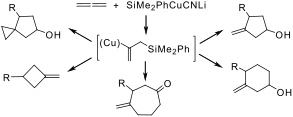
- before (see Scheme 3), gives chemoselectively methylenecyclopentanols, while the vinylsilane unit remains unchanged (Scheme 10). [24] Recent work revealed that addition one equivalent of organolithium reagent (R1Li) to the reaction mixture leads to the formation of ketones of type 46 (Scheme 10), which

Graphical Abstract

Scheme 1: The silylcupration of allenes.

Scheme 2: Silylcupration of 1,2-propadiene and reaction with oxo compounds.

Scheme 3: Silicon assisted cyclization of oxoallylsilanes.

Scheme 4: Silylcupration of terminal alkynes bearing electron-withdrawing functions.
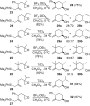
Scheme 5: The acid-catalyzed cyclization of epoxyallylsilanes.

Scheme 6: Intramolecular cyclization of TMS-epoxyallylsilanes.

Scheme 7: Spiro-cyclopropanation from oxoallylsilanes.

Scheme 8: Cyclobutane formation from hydroxy-functionalized allysilanes.

Scheme 9: Cyclobutene formation from vinyltin cuprates and epoxides.

Scheme 10: Silylcupration of 1,2-propadiene and reaction with α,β-unsaturated nitriles.

Scheme 11: Cycloheptane formation from silylcupration of α,β-unsaturated imines.

Scheme 12: Seven membered ring formation from functionalized allylsilanes.
Pd-catalysed [3 + 3] annelations in the stereoselective synthesis of indolizidines
- Olivier Y. Provoost,
- Andrew J. Hazelwood and
- Joseph P. A. Harrity
Beilstein J. Org. Chem. 2007, 3, No. 8, doi:10.1186/1860-5397-3-8
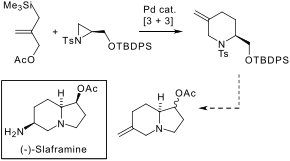
- the absence of the alkyllithium reagent. As outlined in Table 1, Entries 2–4, the annelation was found to proceed in the absence of n-BuLi, however, in all cases the yield of cyclisation product was significantly lower than with catalyst generated by the organolithium reagent. Whilst the underlying

Graphical Abstract

Scheme 1: [3 + 3] Annelation approach to indolizidine skeleta.

Scheme 2: Enantiospecific aziridine synthesis (ADDP: 1,1'-(azodicarbonyl)dipiperidine).

Scheme 3: Diastereoselective aldol addition.

Scheme 4: Indolizidinone formation.

Scheme 5: Preparation of a functionalised indolizidine.
An efficient synthesis of novel pyrano[2,3-d]- and furopyrano[2,3-d]pyrimidines via indium- catalyzed multi- component domino reaction
- Dipak Prajapati and
- Mukut Gohain
Beilstein J. Org. Chem. 2006, 2, No. 11, doi:10.1186/1860-5397-2-11
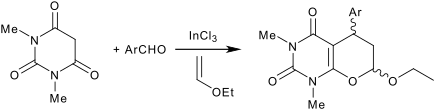
- %). Introduction The emergence of indium(III) compounds as efficient Lewis acid catalysts presents new and exciting opportunities for organoindium chemistry. [1][2] It was found that the low reactivity of trivalent organoindium reagents can be increased by complex formation with organolithium compounds.[3] The

Graphical Abstract

Scheme 1: Reagents and conditions: i) 1 mol% InCl3, acetonitrile:water (3:1)

Scheme 2: Reagents and conditions: i) 1 mol% InCl3, room temperature
An exceptional P-H phosphonite: Biphenyl- 2,2'-bisfenchylchlorophosphite and derived ligands (BIFOPs) in enantioselective copper- catalyzed 1,4-additions
- T. Kop-Weiershausen,
- J. Lex,
- J.-M. Neudörfl and
- B. Goldfuss
Beilstein J. Org. Chem. 2005, 1, No. 6, doi:10.1186/1860-5397-1-6
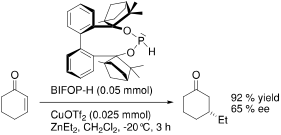
- recently applied in chiral organolithium reagents [52][53][54][55][56][57][58] and in organozinc [59][60][61][62] as well as in organopalladium catalysts [63][64][65][66][67] to study origins of enantioselectivities in C-C-couplings. The rigid, terpene-based bicyclo[2.2.1]heptane unit enables efficient

Graphical Abstract

Scheme 1: Monodentate phosphorus ligands, e.g. BINOL-based phosphoramidites or TADDOL-based phosphites, are h...

Scheme 2: Modular phosphoramidites (R= NR'2) or phosphites (R= OR') from reactive chlorophosphite intermediat...
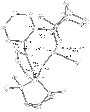
Figure 1: X-ray crystal structure of BIFOP-Cl (1). Distances are given in Å. (BAA = biaryl angle between C2-C1...
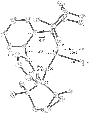
Figure 2: X-ray structures of BIFOP-Br (2). Distances are given in Å. (BAA = biaryl angle between C2-C1-C1'-C2...

Scheme 3: Synthesis of biphenyl-2,2'-bisfenchol (BIFOL) based phosphane derivatives (BIFOPs).
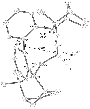
Figure 3: X-ray structures of BIFOP-H (3). Distances are given in Å. (BAA = biaryl angle between C2-C1-C1'-C2...

Figure 4: X-ray structures of BIFOP-nBu (5). Distances are given in Å. (BAA = biaryl angle between C2-C1-C1'-C...
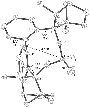
Figure 5: X-ray structures of BIFOP(O)-H (8). Distances are given in Å. (BAA = biaryl angle between C2-C1-C1'...

Figure 6: X-ray structures of phosphite BIFOP-OPh (6). Distances are given in Å. (BAA = biaryl angle between C...

Figure 7: X-ray structures of phosphoramidite BIFOP-NEt2 (7). Distances are given in Å. (BAA = biaryl angle b...
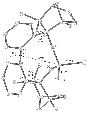
Figure 8: X-ray structures of BIFOP(O)-Cl (9). Distances are given in Å. (BAA = biaryl angle between C2-C1-C1...

Scheme 4: Geometries of BIFOP-systems with respect to biaryl dihedral angles (C2-C1-C1’-C2’, BAA), fenchyl-ar...
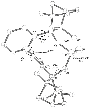
Figure 9: Computed geometry (PM3) of plus-(P)-BIFOP-Cl with unnatural plus-(P)-biaryl conformation. Distances...

Scheme 5: Biphenyl-2,2'-bisfenchol based phosphanes (BIFOPs) as chiral ligands in enantioselective Cu-catalyz...

Scheme 6: Anharmonic B3LYP/6-31G*(C,H,N,O,F,Cl,Br) /SDD(Cu) CO-stretching frequencies to assess metal to liga...



