


Search results
Search for "pH" in Full Text gives 1056 result(s) in Beilstein Journal of Organic Chemistry. Showing first 200.
Organocatalytic kinetic resolution of 1,5-dicarbonyl compounds through a retro-Michael reaction
Beilstein J. Org. Chem. 2025, 21, 473–482, doi:10.3762/bjoc.21.34
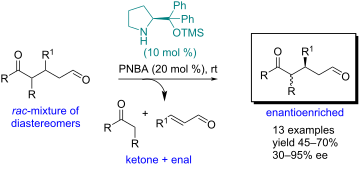
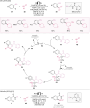
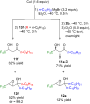
- -functionalized aldehydes with at least one stereocenter in the C3 position. The results, which are collected in Table 5, show that the kinetic resolution depends on the characteristics of the substituents. The best results were achieved for the Michael adduct 12, derived from acetylacetone, with R1 = Ph (entry


The effect of neighbouring group participation and possible long range remote group participation in O-glycosylation
Beilstein J. Org. Chem. 2025, 21, 369–406, doi:10.3762/bjoc.21.27
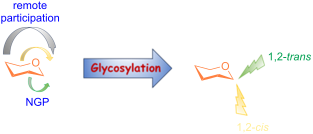
- -2 position of glycosyl donors which can contribute towards 1,2-trans glycosylations without affecting the reactivity of the donor. They introduced carbamate ester moieties as alternative protecting groups. The N-phenylcarbamoyl (PhCar) moiety showed high stability in the pH range of 1–12 and it


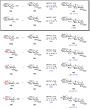


Recent advances in electrochemical copper catalysis for modern organic synthesis
Beilstein J. Org. Chem. 2025, 21, 155–178, doi:10.3762/bjoc.21.9

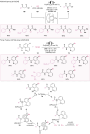
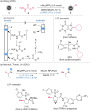
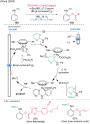
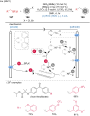
- enantioenriched nitrile products 29. The proposed mechanism is illustrated in Figure 8. [Mes-Acr-Ph]+* is generated through the photoexcitation of the photocatalyst [Mes-Acr-Ph]+, which undergoes electron transfer to the heteroarene 28, resulting in the formation of the [Mes-Acr-Ph]• and heteroarene radical
- cation 30. The [Mes-Acr-Ph]• is regenerated to the ground-state acridinium [Mes-Acr-Ph]+ through a single oxidation step on the anode, and the heteroarene radical cation 30 then reacts with the arylalkene 27 to form a benzylic radical intermediate 31. The benzylic radical intermediate 31 is subsequently


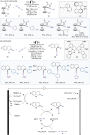

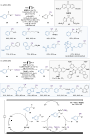
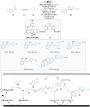
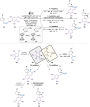
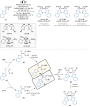





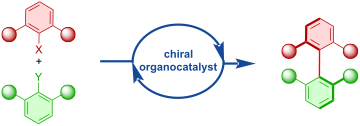
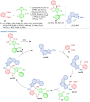
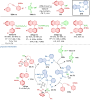
Recent advances in organocatalytic atroposelective reactions
Beilstein J. Org. Chem. 2025, 21, 55–121, doi:10.3762/bjoc.21.6






Synthesis, characterization, and photophysical properties of novel 9‑phenyl-9-phosphafluorene oxide derivatives
Beilstein J. Org. Chem. 2024, 20, 3299–3305, doi:10.3762/bjoc.20.274
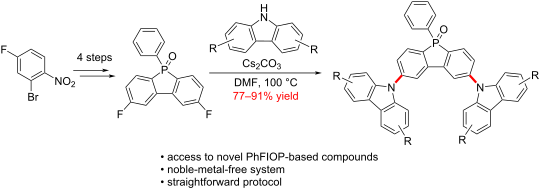
- redshifts are observed for 7-Ph-1 (λmax = 354 nm) and 7-Ph-2 (λmax = 366 nm). In contrast to 7-H, 7-Br (λmax = 327 nm) and 7-Cz-1 (λmax = 316 nm) show a blueshift. With a stronger electron-donating ability than 7-Cz-1, 7-Cz-2 shows a lower energy level for the absorption band stemming from intramolecular
- donor carbazole group (Figure 3a). Compared to 7-H (λem = 408 nm, Table 2), compounds 7-t-Bu (λem = 424 nm), 7-Cz-1 (λem = 436 nm), 7-Cz-2 (λem = 444 nm), and 7-Ph-1 (λem = 425 nm) all show a redshift due to the electron-donating groups (t-Bu, Cz, Ph) on the carbazole moiety. However, 7-Ph-2 exhibits a




Efficient synthesis of fluorinated triphenylenes with enhanced arene–perfluoroarene interactions in columnar mesophases
Beilstein J. Org. Chem. 2024, 20, 3263–3273, doi:10.3762/bjoc.20.270
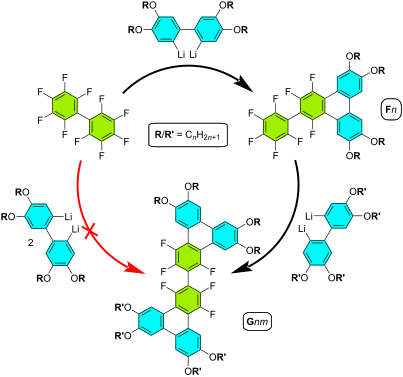
- variety of triphenylene derivatives (Figure 1) [44][45][46][47] based on the nucleophilic substitution of various electrophilic perfluoroarenes, including C6F2H4, C6F6, C10F8, and C6F5-Ph, by nucleophilic organolithium reagents. e.g., 2,2’-dilithio-4,4’,5,5’-tetrakis(alkoxy)-1,1’-biphenyls, 2Li-BPn




Advances in the use of metal-free tetrapyrrolic macrocycles as catalysts
Beilstein J. Org. Chem. 2024, 20, 3085–3112, doi:10.3762/bjoc.20.257
- their aggregates. Moyano, Crusats and co-workers have done an extensive work on the development of supramolecular organocatalysts containing an amphiphilic metal-free porphyrin meso-(4-sulfonatophenyl)porphyrin and its J-aggregates [67][68][69][70]. In acidic (pH < 4.8) aqueous solutions, the central
- or achiral cyclic secondary amine moieties oscillate between the aggregated and non-aggregated state depending on pH (Figure 11). The diprotonated species generated at lower pH forms supramolecular aggregates whereas the metal-free macrocycle is unable to aggregate and remains in the solution as a
- monomer. Since the aggregates were found catalytically inactive, while the monomers in the solution were active, the system acts as a pH-switchable ‘ON–OFF’ organocatalyst. In the case of the enamine-mediated addition of cyclohexanone (62) to 4-nitrobenzaldehyde (7), using 10 mol % of 58 provided up to 99


Investigation of a bimetallic terbium(III)/copper(II) chemosensor for the detection of aqueous hydrogen sulfide
Beilstein J. Org. Chem. 2024, 20, 2818–2826, doi:10.3762/bjoc.20.237

- − in the aqueous state at a pH of 7.4 due to its weak acidic nature and high solubility in water (80 mM at 37 °C) [6]. Elevated levels of H2S in groundwater pose high risks to both human health and aquatic ecosystems [7], compelling rigorous monitoring of water sources. Even though sensors for
- ). Response of Tb.1 with Cu2+ ions The addition of excess Cu2+ ions to Tb.1 was expected to result in complete saturation of emission signals. However, upon the titration of Cu2+ ions to 5 μM Tb.1 (10 mM Tris-HCl buffer containing 5% DMSO, pH 7.4), emission signal saturation was not observed until 5
- containing 5% DMSO, pH 7.4 was used (Figure S4 in Supporting Information File 1), with a similar degree of quenching to that observed in 10 mM Tris-HCl buffer. The incomplete quenching in luminescence was previously also observed for the Eu(III)/Cu(II) complex [16]. Supramolecular.org [18], an Open Access


C–C Coupling in sterically demanding porphyrin environments
Beilstein J. Org. Chem. 2024, 20, 2784–2798, doi:10.3762/bjoc.20.234
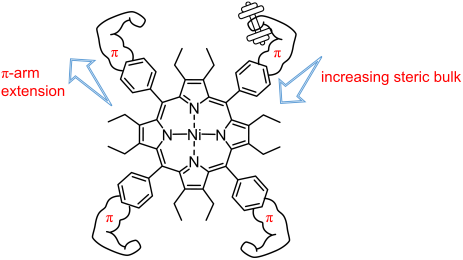
- porphyrins, achieved porphyrins 32 and 33 in a 47% and 56% yield, respectively (Table 1, entries 13 and 21), using Cs2CO3 as the base. Electron-withdrawing sulfur-containing heterocyclic substrates 21 and 23 do not readily undergo protodeboronation even at high pH [44][47] making the yields of porphyrins 31
- explored, or further changes in the pH of the solution. Enrichment to the αβαβ-atropisomer may also be favorable [50], as to alleviate the steric hindrance caused by the short distances (4.3–4.4 Å) between bromines in the α2β2-atropisomers (cf., Figure 5). Borylation and further coupling of
- was synthesized through classic C–C coupling reactions at the meso-phenyl position. It was found varying temperature and the pH of the solution are effective mitigations to overcome unfavorable reaction electronics or demanding sterics presented at the meso-phenyls’ meta- or para-position


Synthesis of spiroindolenines through a one-pot multistep process mediated by visible light
Beilstein J. Org. Chem. 2024, 20, 2722–2731, doi:10.3762/bjoc.20.230
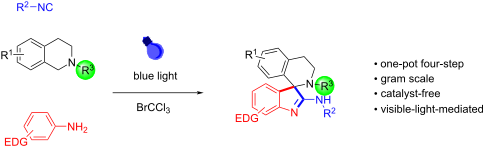
- ] 3. Based on our experience on the use of graphene oxide (GO) as heterogeneous catalyst to promote MCRs and subsequent C–N bond oxidation [16][21], we first investigated the GO-promoted oxidation of N-Ph-THIQ and the subsequent 3C Ugi reaction to give α-aminoamidine 2a. Applying the previously
- synthetic process in a one-pot manner, adding all the components from the very beginning. So, the blue-light-promoted reaction between N-Ph-THIQ, 3-methoxyaniline and tert-butyl isocyanide in the presence of BrCCl3 was extensively optimized by varying several parameters, such as solvent, relative quantity
- α-aminoamidines 2a, while the spiro-compound 3a was the main product. 3a was the result of a four-step one-pot process where an oxidation of N-Ph-THIQ, a 3C Ugi-type reaction, a second oxidation of the Ugi-type product 2a and a final cyclization took place, as we had initially planned. Excited by





Applications of microscopy and small angle scattering techniques for the characterisation of supramolecular gels
Beilstein J. Org. Chem. 2024, 20, 2608–2634, doi:10.3762/bjoc.20.220


Efficient modification of peroxydisulfate oxidation reactions of nitrogen-containing heterocycles 6-methyluracil and pyridine
Beilstein J. Org. Chem. 2024, 20, 2599–2607, doi:10.3762/bjoc.20.219
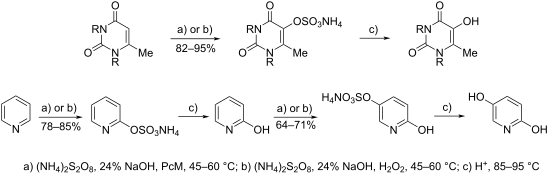
- mixture to room temperature, concentrated H2SO4 was slowly added until pH 6–7 according to litmus paper and left standing for 12 h. The precipitated white crystals were filtered off, washed with water, and dried in air. Compound 2 yields are given in [13] and compound 5 yields are given in Table 1. b
- temperature, concentrated H2SO4 was slowly added until pH 6–7 according to litmus paper and left standing overnight (12 h). The precipitated crystals were filtered off, washed with water, acetone, and dried in air. The crude product was recrystallized from water with activated carbon. The yield of compound 2
- H2SO4 was added and the reaction mixture was stirred at the same temperature for 1 h and cooled. The precipitated crystals were filtered off, washed with cold distilled water to pH 6–7 (2 × 5 mL), and recrystallized from ethanol. 5-Hydroxy-6-methyluracil (3). Yield 98%. The spectral characteristics are


Transition-metal-free synthesis of arylboronates via thermal generation of aryl radicals from triarylbismuthines in air
Beilstein J. Org. Chem. 2024, 20, 2577–2584, doi:10.3762/bjoc.20.216
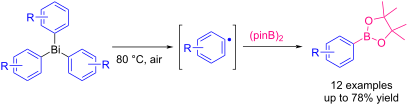
- aryl radicals without photocatalysts, and the trapping with diselenides afforded a variety of diaryl selenides [59]. Based on these backgrounds of our studies and the fundamental property, i.e., the weak bond dissociation energy of the Ph–Bi bond (46 kcal/mol) [60], we hypothesized that aryl radicals



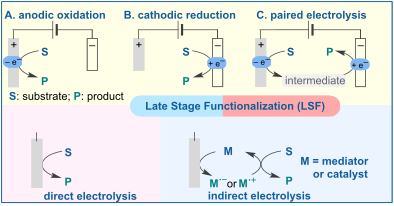
A review of recent advances in electrochemical and photoelectrochemical late-stage functionalization classified by anodic oxidation, cathodic reduction, and paired electrolysis
Beilstein J. Org. Chem. 2024, 20, 2500–2566, doi:10.3762/bjoc.20.214
















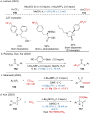


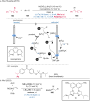


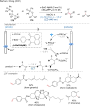


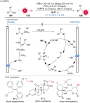




Machine learning-guided strategies for reaction conditions design and optimization
Beilstein J. Org. Chem. 2024, 20, 2476–2492, doi:10.3762/bjoc.20.212

- , which use historical literature on similar chemical contexts to suggest suitable reaction conditions for synthetic steps. However, the predictive output often lacks fine-grained details such as reaction time, pressure, and pH values. These details depend on the problem formulation specific to each


Hypervalent iodine-mediated cyclization of bishomoallylamides to prolinols
Beilstein J. Org. Chem. 2024, 20, 2455–2460, doi:10.3762/bjoc.20.209
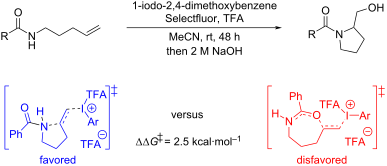
- 2019, we reported our DFT study on the cyclization of N-allylbenzamide (1a) to the 2-oxazoline 4a, i.e., where n = 1 and Ar = Ph [18]. This work indicated that the alkene is activated by the iodine(III) species and that this triggers cyclization. Intrigued by the change in mechanism from O- to N


Facile preparation of fluorine-containing 2,3-epoxypropanoates and their epoxy ring-opening reactions with various nucleophiles
Beilstein J. Org. Chem. 2024, 20, 2421–2433, doi:10.3762/bjoc.20.206
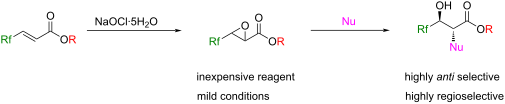
- failed in this transformation and recovery of 2b was observed (Table 2, entry 10). As was pointed out in the introductory section, the highly regioselective epoxy ring opening is well compared with the case when the nonfluorinated substrate (Ph instead of CF3 in 2b) was employed [25][26]. With the
- decreased the chemical yields as well as the diastereomeric ratios (Table 3, entries 1–4). The higher pKa values of the carbonyl α-proton of 4 (for example, the pKa values of the protons of X-CH2C(O)Ph in DMSO were reported to be 17.1 (X: PhS) [45] and 20.3 (X: Ph2N) [46]) would result in the contamination
- , respectively, along with small amounts of the corresponding epoxyalcohols 12b and 12c. On the other hand, 12d and 12e were substantially formed by ArMgBr (Ar: Ph and 4-MeOC6H4, respectively), the former of which was reported to be obtained by the action of PhLi alone [29]. It was intriguing to note that the





Tandem diazotization/cyclization approach for the synthesis of a fused 1,2,3-triazinone-furazan/furoxan heterocyclic system
Beilstein J. Org. Chem. 2024, 20, 2342–2348, doi:10.3762/bjoc.20.200

- conducted a series of studies. Thus, due to the presence of a furoxan fragment, triazinones 1 can act as NO-donors. To assess their NO-release capability, compounds 1 were kept for 1 hour under physiological conditions (pH 7.4, 37 °C), then Griess reagent was added and studied by spectrophotometry (this


Improved deconvolution of natural products’ protein targets using diagnostic ions from chemical proteomics linkers
Beilstein J. Org. Chem. 2024, 20, 2323–2341, doi:10.3762/bjoc.20.199
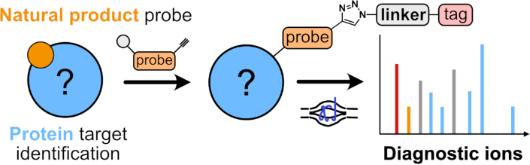
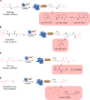
- –azide (DTB–azide) linker still possesses strong binding to streptavidin (Kd ≈ 1 × 10⁻¹¹ M), but it can be released by mild washing conditions with organic solvent and low pH (Figure 8C) [105][106]. Similarly, desthiobiotin releases upon HCD fragmentation a set of characteristic diagnostic ions including
- . The fragmentation of the triazole ring leaving the primary amine and b-ion resulting from the fragmentation of the TEV-recognition peptide sequence. The chemical cleavage of the linker to release probe–peptide conjugates is achieved mainly by the change of the pH or via reducing conditions to release




Stereoselective mechanochemical synthesis of thiomalonate Michael adducts via iminium catalysis by chiral primary amines
Beilstein J. Org. Chem. 2024, 20, 2313–2322, doi:10.3762/bjoc.20.198
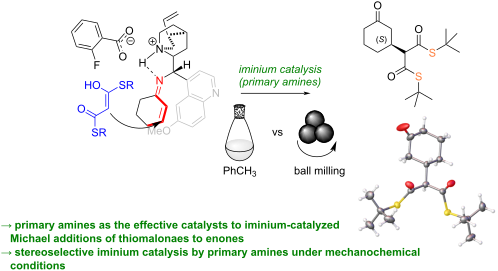
- = Ph). Finally, an interesting group of β-ketothioesters 5–8, which are rarely utilized in asymmetric catalysis [45], were employed as nucleophiles in reactions with acceptor E1 (Scheme 7). While additions of various β-ketothioesters, including 5–8, to nitrostyrenes proceeded efficiently, leading to


Cell-free protein synthesis with technical additives – expanding the parameter space of in vitro gene expression
Beilstein J. Org. Chem. 2024, 20, 2242–2253, doi:10.3762/bjoc.20.192
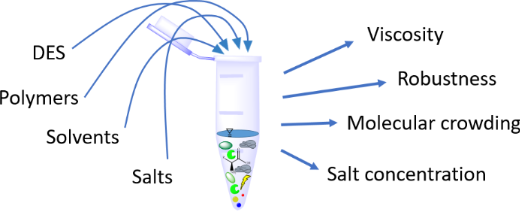
- each system was affected differently by the individual components [15]. This shows that the different CFPS systems have different requirements for their composition, which must be highly balanced. At most, pH and ionic strength are general variables that are considered [13]. Since the main influences
- reaction solution in 98 µL 0.5 M HEPES buffer (pH 8.0) in 384-well microplates with a FLUOstar® Omega multi-mode microplate reader (BMG LABTECH, Ortenberg, Germany). The endpoint measurement was set to a gain of 1390, λex 485 nm and λem 520 nm. For the experiments with organic solvents, the corresponding

Selective hydrolysis of α-oxo ketene N,S-acetals in water: switchable aqueous synthesis of β-keto thioesters and β-keto amides
Beilstein J. Org. Chem. 2024, 20, 2225–2233, doi:10.3762/bjoc.20.190

- thioesters 2 (2a as an example) A mixture of (E)-3-(ethylthio)-1-phenyl-3-(phenylamino)prop-2-en-1-one (1a, 70.8 mg, 0.25 mmol) and DBSA (87.9 mg, 0.25 mmol) in water (2 mL) was stirred at reflux in an oil bath under air for 5 h until 1a was completely consumed, as confirmed by TLC monitoring. Then, the pH
- water (2 mL) was stirred at reflux in an oil bath under air for 24 h until 1a was completely consumed, as confirmed by TLC monitoring. Then, the pH value of the reaction mixture was adjusted to neutral using a 10% CH3COOH solution, and the reaction mixture was extracted with CH2Cl2 (3 × 20 mL). The

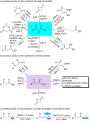


O,S,Se-containing Biginelli products based on cyclic β-ketosulfone and their postfunctionalization
Beilstein J. Org. Chem. 2024, 20, 2143–2151, doi:10.3762/bjoc.20.184
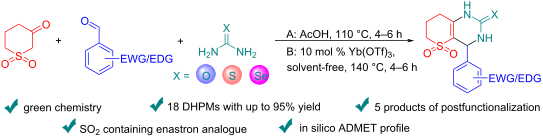
- signals clearly corresponds to the heterocycles depicted above. Figure S8 (see Supporting Information File 1) shows 1H NMR spectra for Ph-substituted O,S,Se-DHPMs 2a,h,o. It can be seen from them that when going from oxygen to selenium (2h→2a→2o), the signals of both NH groups shift to down field (7.87



Computational toolbox for the analysis of protein–glycan interactions
Beilstein J. Org. Chem. 2024, 20, 2084–2107, doi:10.3762/bjoc.20.180


Cage-like microstructures via sequential Ugi reactions in aqueous emulsions
Beilstein J. Org. Chem. 2024, 20, 2078–2083, doi:10.3762/bjoc.20.179
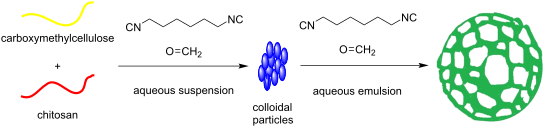
- structures existed only within a narrow pH range: when the pH value dropped below 5.5, the chitosan easily dissolved, and when the pH value was above 7, the CMC domains swelled and lost their properties. It is known that the Ugi reaction can be successfully used to obtain cross-linked gels based on
- polysaccharides [18]. Therefore, to stabilize such structures, the Ugi reaction in water was chosen, for which this particular pH value range is optimal [19]. The amino groups of chitosan and the carboxy groups of CMC reacted with each other and formed a stable structure that was no longer sensitive to changes in
- pH value. According to atomic force microscopy (AFM) data, the resulting particles had a domain structure and were similar in appearance to raspberries [20]. An interesting feature of the resulting particles was the high efficiency as Pickering emulsifiers: even at a concentration below 0.3 g/L





