Search results
Search for "terminal" in Full Text gives 1001 result(s) in Beilstein Journal of Organic Chemistry. Showing first 200.
Visible-light-promoted radical cyclisation of unactivated alkenes in benzimidazoles: synthesis of difluoromethyl- and aryldifluoromethyl-substituted polycyclic imidazoles
Beilstein J. Org. Chem. 2025, 21, 234–241, doi:10.3762/bjoc.21.15
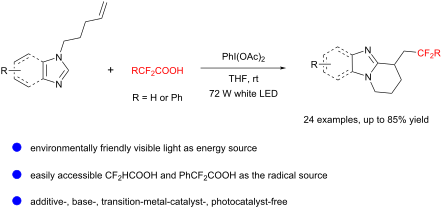
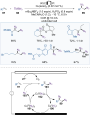
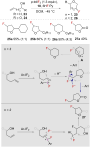
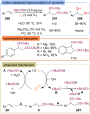
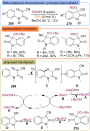
- . Furthermore, terminal olefins with varying chain lengths also reacted successfully, resulting in 5-membered and 7-membered cyclized products (3l–p) with yields between 44% and 66%. The lower yields in these cases might be due to the low reactivity of the intermediate C (Scheme 3), which may have made it less


Dioxazolones as electrophilic amide sources in copper-catalyzed and -mediated transformations
Beilstein J. Org. Chem. 2025, 21, 200–216, doi:10.3762/bjoc.21.12
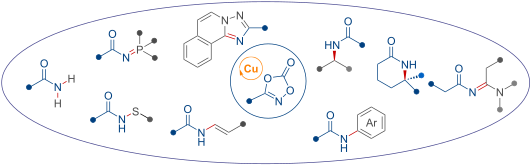
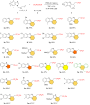
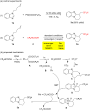
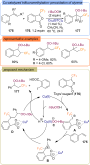
- ) nitrenoid intermediate INT-7. Subsequent nitrene insertion, protodemetalation, and intramolecular cyclization furnish the desired 1,2,4-triazole. 1.3 Three-component formation of N-acyl amidines In 2019, N-acyl amidines were prepared from dioxazolones using a copper catalyst with terminal alkynes and
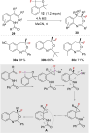
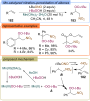
- bearing linear alkyl groups were transformed into N-acyl amidines 10a–c by copper catalysis. Moreover, good functional group tolerance was observed with a terminal alkene motif (10d). The cyclohexyl-substituted dioxazolone successfully provided the corresponding N-acyl amidine 10e. However, the
- terminal alkynes did not result in the desired N-acyl amidine 10l. Based on the substrate scope of acetylenes, the authors noted that the lower acidity of terminal acetylenes led to a diminished formation of the copper acetylide intermediate. Based on several mechanistic experiments and density functional


Recent advances in electrochemical copper catalysis for modern organic synthesis
Beilstein J. Org. Chem. 2025, 21, 155–178, doi:10.3762/bjoc.21.9

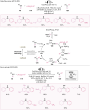
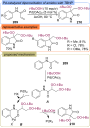
- Cu-catalyzed electrochemical C–H activation strategy through C–H alkynylation of arylamides followed by electrooxidative cascade annulation (Figure 4) [48]. This reaction enables sustainable C–H functionalization by utilizing electricity as the terminal oxidant instead of stoichiometric amounts of
- toxic chemical oxidants and releasing hydrogen gas as the sole byproduct. Various benzamides 1 and terminal arylalkynes 2 bearing electron-rich or electron-withdrawing groups provided the desired products 3 with high chemoselectivities. However, terminal alkynes with alkyl substituents did not yield the
- desired annulation products. Moreover, the same products were generated using alkynyl carboxylic acids instead of terminal alkynes via decarboxylative C–H alkynylation and annulation. Cyclic voltammetry (CV) studies exhibited an oxidative current at 0.95 V vs SCE in the presence of the Cu(II) salt, base


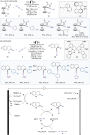

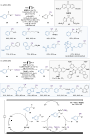
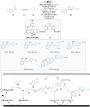





Cu(OTf)2-catalyzed multicomponent reactions
Beilstein J. Org. Chem. 2025, 21, 122–145, doi:10.3762/bjoc.21.7

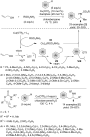
- ]. Three-component coupling of amines, aldehydes or ketones, and terminal alkynes catalyzed by Cu(OTf)2 is a fruitful tool for the production of α-substituted propargylamines 10 (Scheme 7) [20]. The reaction involves the alkynylation of the corresponding imines formed in situ and provides higher yields
- as a catalyst in three-component processes was also demonstrated in three-component reactions involving alkynes, amines and α,β-unsaturated aldehydes to obtain 1,4-dihydropyridines 20 (Scheme 14) [31]. By using terminal alkynes, 2,6-unsubstituted products were achieved. Concerning the mechanism, it
- the initial formation of imine XII and enamine XIII, reacting each other in a mechanism that involved two Mannich-type reactions (Scheme 15) [32]. Activation of terminal alkynes with Cu(OTf)2 is the key step for the preparation of furoquinoxalines 22 from o-phenylenediamine and ethyl glyoxylate






Synthesis, structure and π-expansion of tris(4,5-dehydro-2,3:6,7-dibenzotropone)
Beilstein J. Org. Chem. 2025, 21, 1–7, doi:10.3762/bjoc.21.1
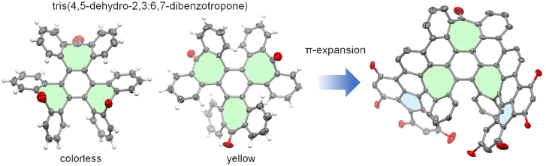
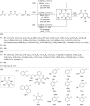
- symmetry in the polycyclic skeleton of 3. This indicates that the polycyclic skeleton of 3 is flexible, similar to that of 1. In the crystal, the neighbouring enantiomers of 3 show minimal π-overlap with each other and a large π to π distance of 3.68 Å between terminal benzene rings. Compound 3 forms


Efficient synthesis of fluorinated triphenylenes with enhanced arene–perfluoroarene interactions in columnar mesophases
Beilstein J. Org. Chem. 2024, 20, 3263–3273, doi:10.3762/bjoc.20.270
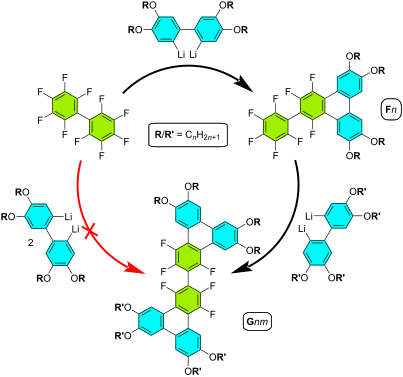
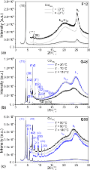
- substitution of the terminal phenyl ring with a pentafluorophenyl ring. Thus, as expected, they display a Colhex mesophase over large temperature ranges, with only small differences in the mesophase stability and transition temperatures. Furthermore, the presence of the terminal fluorophenyl group enables a
- new, structurally-related series of π-conjugated aromatic compounds (Figure 1) based on a simple triphenylene core and evaluating the mesomorphic and optical properties. Specifically 1,2,4-trifluoro-6,7,10,11-tetraalkoxy-3-(perfluorophenyl)triphenylenes (Fn, Figure 1), bearing a terminal fluoroarene
- ring was obtained using the same reaction as previously reported for PHn (Figure 1) [45], between 2,2’-dilithiobiphenyl derivatives but this time with the electrophile decafluorobiphenyl C6F5–C6F5 instead of C6H5–C6F5 (Fn, n = 3–12, Scheme 1). The presence of the terminal fluoroarene group in Fn




Discovery of ianthelliformisamines D–G from the sponge Suberea ianthelliformis and the total synthesis of ianthelliformisamine D
Beilstein J. Org. Chem. 2024, 20, 3205–3214, doi:10.3762/bjoc.20.266
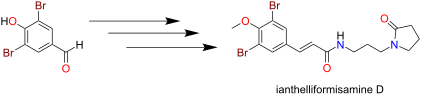
- ]. Methylenes resonating at δH 3.14, 1.64 and 3.20 were assigned to a three-carbon alkyl spin system that was flanked by nitrogen atoms [NH–(CH2)3–N] based on COSY correlations from the amide proton at δH 8.04. A terminal pyrrolidone was assigned based on COSY data for the three remaining methylene protons (δH
- integrated for three protons and a triplet (δH 8.23) that were indicative of a protonated terminal amino group and a secondary amide functionality, respectively [7]. 13C NMR shifts and COSY correlations associated with the methylene signals of 7 enabled the assignment of an NH–(CH2)3–NH2 moiety, which was


![[Graphic 1]](/bjoc/content/inline/1860-5397-20-266-i2.svg?max-width=637&scale=1.18182)
![[Graphic 2]](/bjoc/content/inline/1860-5397-20-266-i3.svg?max-width=637&scale=1.18182)
![[Graphic 3]](/bjoc/content/inline/1860-5397-20-266-i4.svg?max-width=637&scale=1.18182)

![[Graphic 4]](/bjoc/content/inline/1860-5397-20-266-i5.svg?max-width=637&scale=1.18182)
![[Graphic 5]](/bjoc/content/inline/1860-5397-20-266-i6.svg?max-width=637&scale=1.18182)

Hypervalent iodine-mediated intramolecular alkene halocyclisation
Beilstein J. Org. Chem. 2024, 20, 3113–3133, doi:10.3762/bjoc.20.258
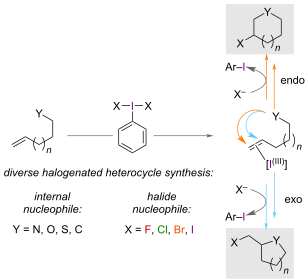
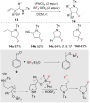
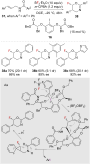
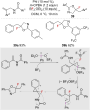
- good yields, demonstrating the scope of the reaction. The authors proposed an alternative reaction mechanism to those already described, in which trans-aminopalladation of the alkene, mediated by Pd(II), occurs with intramolecular attack of the nitrogen on the terminal carbon, generating a 6-membered
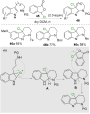
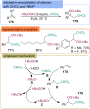
- system was used due to concerns with the long-term stability of iodosylbenzene and unwanted reactions of BF3·Et2O with other reagents. In addition, a catalytic system was reported that employed 20 mol % iodotoluene with 1 equivalent of m-CPBA as terminal oxidant. The authors proposed that
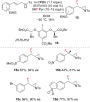
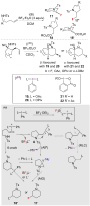
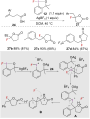
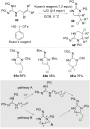
- guanidines 61 (Scheme 33) alongside their chlorinated cyclic guanidines 44 (vide supra) [47]. Koser’s reagent was employed with LiBr to form 5- and 6-membered brominated cyclic guanidines 61 and 61’ in good yields from allylic guanidines 43. A range of substrates with substituents on the terminal alkene were



















Synthesis of the 1,5-disubstituted tetrazole-methanesulfonylindole hybrid system via high-order multicomponent reaction
Beilstein J. Org. Chem. 2024, 20, 3077–3084, doi:10.3762/bjoc.20.256
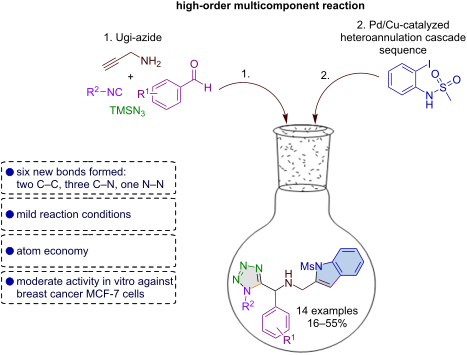
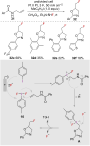
- trifluoroethanol as the solvent and at room temperature [23][24][25][26]. In the initial reaction, propargylamine served as a bifunctional reagent, with the primary amine group participating in the first step and the terminal alkyne promoting the subsequent heteroannulation. (Scheme 2). As observed in our previous



Chemical structure metagenomics of microbial natural products: surveying nonribosomal peptides and beyond
Beilstein J. Org. Chem. 2024, 20, 3050–3060, doi:10.3762/bjoc.20.253

- , respectively. Based on the position of the nucleophile, a NRP can be cyclized head-to-tail, via an amino acid side-chain, a nucleophilic heteroatom on the N-terminal fatty acyl chain, or as a multimer of repeating sub-structures (Figure 5b). The ring size, ratio of ʟ- and ᴅ-amino acids, etc. may also be the


Advances in radical peroxidation with hydroperoxides
Beilstein J. Org. Chem. 2024, 20, 2959–3006, doi:10.3762/bjoc.20.249
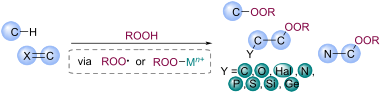
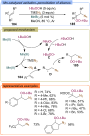
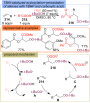
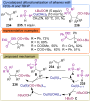
- peroxides, oxaziridines, and their derived species are often applied as terminal oxidants [7][8]. The weakness of the O–O bond allows alkoxy radicals to form through homolysis or reduction [9]. The generated alkoxy radicals provide an accessible tool for selective radical cascades, where a variety of































Synthesis of fluorinated acid-functionalized, electron-rich nickel porphyrins
Beilstein J. Org. Chem. 2024, 20, 2954–2958, doi:10.3762/bjoc.20.248
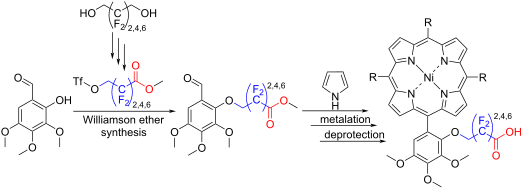
- –CH2–(CF2)n–COOCH3) with triflate as leaving group in terminal position are easily accessible and versatile building blocks for attaching long chain acids (pKa 0–1) to substrates in Williamson ether-type reactions. Keywords: acid-functionalized porphyrin; electron-rich porphyrin; nickel porphyrin


N-Glycosides of indigo, indirubin, and isoindigo: blue, red, and yellow sugars and their cancerostatic activity
Beilstein J. Org. Chem. 2024, 20, 2840–2869, doi:10.3762/bjoc.20.240
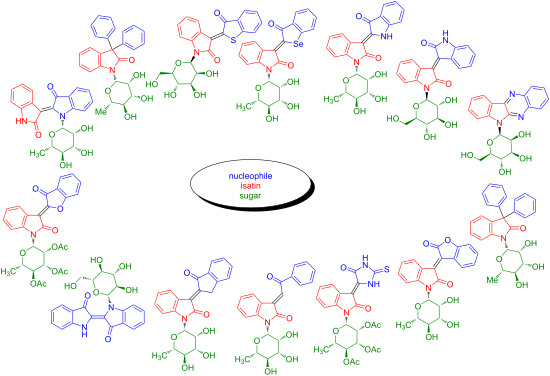
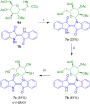
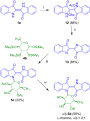
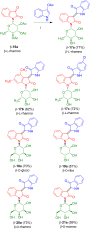
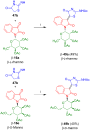
- antitumor effects were related to the inhibition of the survival pathway of c-Jun and JNK2 (Jun N-terminal kinase). In an additional study, it was shown that treatment with derivative E-β-46b results in an increase of melanoma cell sensitivity for death ligands and allows to overcome resistance against










Copper-catalyzed yne-allylic substitutions: concept and recent developments
Beilstein J. Org. Chem. 2024, 20, 2739–2775, doi:10.3762/bjoc.20.232
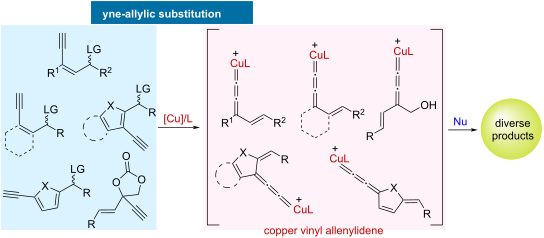
- terminal alkyne is the active species in the reactions. In this regard, merging the unique feature of Cu-catalyzed propargylic substitution with allylic substitution is a feasible solution to the challenge, which will represent a new sort of substitution reaction. From 2022, the Cu-catalyzed yne-allylic
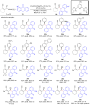
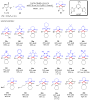
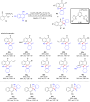
- chelation interaction between the enolate derived from acyclic 1,3-dicarbonyl compounds and copper (Scheme 5, 8a–j). Detailed control experiments indicate that the terminal alkyne moiety is critical and the reaction proceeds through an SN1 mechanism. An outer-sphere nucleophilic attack through copper
- demonstrated that the terminal alkyne unit is crucial for the process and the reactions using different isomers all proceed via the same intermediate. Nonlinear relationship experiments proved that the active catalyst is a mono-copper complex containing one ligand. A catalytic cycle is proposed in which copper








Computational design for enantioselective CO2 capture: asymmetric frustrated Lewis pairs in epoxide transformations
Beilstein J. Org. Chem. 2024, 20, 2668–2681, doi:10.3762/bjoc.20.224
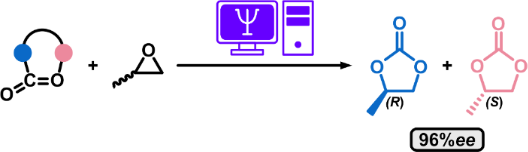
- group facilitates a greater stabilisation of the intermediary positive charge at the central carbon compared to the hydrogen after bond-breaking at the terminal carbon, thereby reducing the activation barrier. Henceforth, in this paper, the optimised TSs will consistently represent the breaking of the O


Phenylseleno trifluoromethoxylation of alkenes
Beilstein J. Org. Chem. 2024, 20, 2434–2441, doi:10.3762/bjoc.20.207
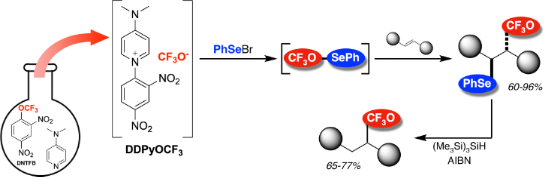
- were usually obtained when the substituents at the double bond differed significantly. When the substituent hindrance was less pronounced, the ratio was less significant (2f, 2j). Interestingly, a reverse regioselectivity was observed depending on the starting alkenes. For the terminal alkenes, the
- Markovnikov product (i.e. with the CF3O in the “internal” position) was predominant, whereas for the allylic alcohol derivatives, the anti-Markovnikov addition (i.e. with the CF3O in the “terminal” position) was predominant (2e vs 2g and 2h vs 2i). This could be rationalized by the electronic effect of the
- oxygen atom which disfavors the episelenonium opening with the CF3O− anion in the closest position to the oxygen atom. It is noteworthy that the regioisomeric ratio of terminal alkenes (2e, 2i) evolved with the reaction time. The amount of the kinetic terminal regioisomer (anti-Markovnikov – 2e’, 2i




Asymmetric organocatalytic synthesis of chiral homoallylic amines
Beilstein J. Org. Chem. 2024, 20, 2349–2377, doi:10.3762/bjoc.20.201
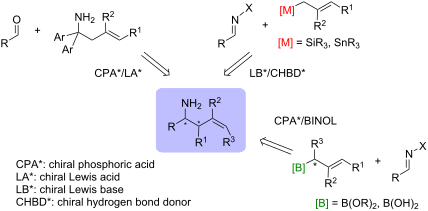
- resolution of chiral secondary allylboronates 35. In late 2020, an important method for synthesising enantiopure terminal (E)-trifluoromethyl homoallylic amines 44 was described by Szabó and co-workers (Scheme 9) [31]. This methodology is based on the use of enantiopure α-trifluoromethylallylboronic acids 43
- -diaminonaphthalene derivatives 42, which after hydrolysis and extraction into toluene, were reacted with indole, 3-methylindole, 3,4-dihydroisoquinoline, and benzoyl hydrazone ethyl glyoxylate ester to afford terminal (E)-trifluoromethyl homoallylic amines 44 with up to 3 adjacent stereocentres with high to
- terminal halogen or acetate. The 2-ethynylallylsilane decomposed in the reaction conditions, while simple allyltrimethylsilane was unreactive. Among allylstannanes, the (3-phenylallyl)tri-n-butylstannane was also unreactive. Interestingly, both tetraallylsilane and tetraallylstannane gave racemic products






Tandem diazotization/cyclization approach for the synthesis of a fused 1,2,3-triazinone-furazan/furoxan heterocyclic system
Beilstein J. Org. Chem. 2024, 20, 2342–2348, doi:10.3762/bjoc.20.200

- obtained. Thus, we have demonstrated that the terminal nitrogen atom in the diazonium fragment of intermediate 9 becomes the N5 atom of compound 8 (corresponding 15N NMR spectra are provided in Supporting Information File 1). To explore the potential application of the obtained compounds 1 and 7, we


Improved deconvolution of natural products’ protein targets using diagnostic ions from chemical proteomics linkers
Beilstein J. Org. Chem. 2024, 20, 2323–2341, doi:10.3762/bjoc.20.199
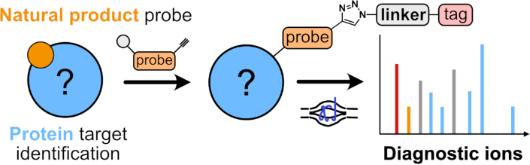
- prerequisite required for a probe used in a chemical proteomic study is an embedded bioorthogonal handle, for example a terminal alkyne or azide, which is able to react chemoselectively with a tag facilitating unambiguous identification by a selected analytical technique, for example LC–MS/MS (Figure 1) [35
- CuAAC due to its rapid reaction kinetics, robustness, and relatively small steric hindrance of the terminal alkyne, which is usually attached to the probe core scaffold to form an alkyne probe [5][63]. Once the covalent bond between the probe and protein is formed, the cells are lysed, and the probe
- alkyne probe from the CuAAC reaction mixture or by increasing the concentration of the reducing agent such as tris(2-carboxyethyl)phosphine (TCEP). The reversed chemical proteomics approach in which the azide probe and alkyne tag are used suffers from similar unspecific reactivity of the terminal alkyne




gem-Difluorination of carbon–carbon triple bonds using Brønsted acid/Bu4NBF4 or electrogenerated acid
Beilstein J. Org. Chem. 2024, 20, 2261–2269, doi:10.3762/bjoc.20.194
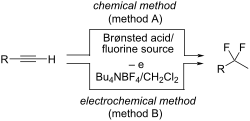
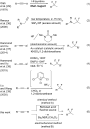
- the use of HF or its complexes as a reagent. These reactions seem to proceed via the formation of the vinyl fluoride as the intermediate [25][26][27][28]. In the first example, Olah and co-workers reported the reaction of terminal alkynes with HF/pyridine (Olah reagent) (Figure 1, reaction 1) [29][30
- the case of an aliphatic terminal alkyne, such as dec-1-yne (1d), the 19F NMR study indicated 46% yield with method A (Table 2, entry 5), but it was difficult to purify and isolate product 2d because of the low molecular weight. Scale up conditions of method A, for the purpose of the isolation, led to
- substrate for gem-difluorination to yield the difluorinated compound 2e (Table 2, entries 8 and 9). Interestingly, terminal alkynes bearing –OH and –O– functional groups, such as 1f and 1g, were used for reactions, and the corresponding products 2f and 2g were obtained by both methods (Table 2, entries 10



From perfluoroalkyl aryl sulfoxides to ortho thioethers
Beilstein J. Org. Chem. 2024, 20, 2108–2113, doi:10.3762/bjoc.20.181
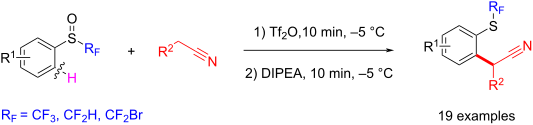
- -position of the nitrile is also detrimental to the reaction, resulting in less than 30% yield of the desired product 3d. Nevertheless, the reaction is compatible with halogens elsewhere in longer nitrile alkyl chains (3e,g). Finally, it was possible to obtain the terminal alkene 3f with a yield of 58



Multicomponent syntheses of pyrazoles via (3 + 2)-cyclocondensation and (3 + 2)-cycloaddition key steps
Beilstein J. Org. Chem. 2024, 20, 2024–2077, doi:10.3762/bjoc.20.178

- -carbon alkynoyl building blocks [121][122] could be generated catalytically [123], thereby facilitating reactions under mild reaction conditions and opening novel one-pot pathways for consecutive multicomponent syntheses of pyrazoles. Sonogashira alkynylation of terminal alkynes and (hetero)aroyl
- possible in a pseudo-seven-component reaction starting from 1,4-diiodobenzene. The product 108c showed strong solvatochromism. The synthesis of pyrazoles from terminal alkynes, acyl chlorides, and hydrazines [124][126] can be extended by subsequent halogenation at position 4 with N-halosuccinimide 109 (X
- synthesized 4 halopyrazoles 111 and their Suzuki products 110 fluoresce blue in solution and have quantum yields of 29–72 % (Scheme 40) [137]. The Suzuki coupling can also be used for the functionalization of pyrazoles. For this purpose, p-bromo-substituted terminal alkynes 112, acyl chlorides 114, and




Allostreptopyrroles A–E, β-alkylpyrrole derivatives from an actinomycete Allostreptomyces sp. RD068384
Beilstein J. Org. Chem. 2024, 20, 1981–1987, doi:10.3762/bjoc.20.174
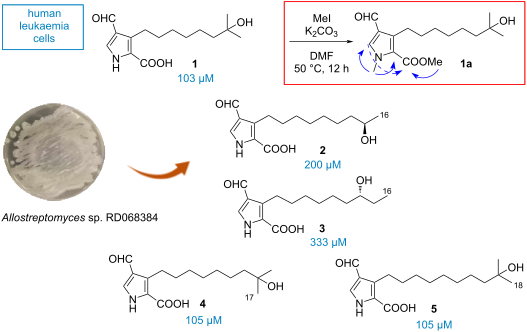
- HRESITOFMS and NMR analytical data (Table 2), inferring that compounds 2 and 3 were isomers of 1. In fact, their NMR spectra were closely similar to those for 1 except a little difference in the alkyl side chain terminus. In a COSY spectrum of 2, the terminal doublet methyl proton was correlated with an
- oxymethine H15, which in turn was correlated with a methylene H214. The pyrrole moiety with the same substituents as 1 was deduced from HMBC correlations. Therefore, compound 2 was determined to have a non-branched alkyl chain with a hydroxy group at C15. Meanwhile, 3 possessed a terminal ethyl group, which


Development of a flow photochemical process for a π-Lewis acidic metal-catalyzed cyclization/radical addition sequence: in situ-generated 2-benzopyrylium as photoredox catalyst and reactive intermediate
Beilstein J. Org. Chem. 2024, 20, 1973–1980, doi:10.3762/bjoc.20.173
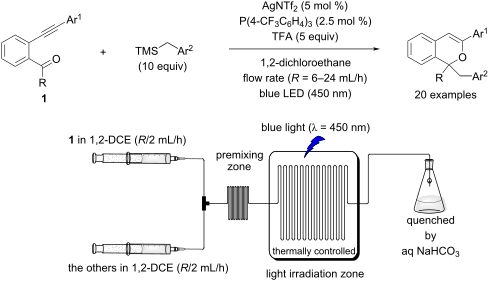
- photochemical sequential transformation. With the optimal flow reaction conditions in hand, we next investigated the scope of substrates 1 by introducing a series of substituents to the terminal phenyl group. The results of the batch reaction system are also shown for comparison in Table 2 (right-hand side) [55
- reactions of aldehydes with a series of substituents introduced to the terminal phenyl group were further investigated (Table 3, entries 4–7). Aldehydes having an electron-donating methyl group and an electron-withdrawing bromo group at the para-position of the phenyl moiety gave products 3o and 3p


Solvent-dependent chemoselective synthesis of different isoquinolinones mediated by the hypervalent iodine(III) reagent PISA
Beilstein J. Org. Chem. 2024, 20, 1914–1921, doi:10.3762/bjoc.20.167
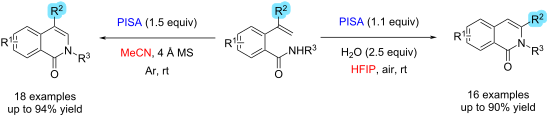
- peracetic acid as a terminal oxidant [20]. Recently, Kočovský et al. disclosed a method employing 2-methylbenzamide and benzonitrile to yield 3-aryl-substituted isoquinolinone derivatives in the presence of n-butyllithium [21]. On the other hand, the intramolecular oxidative cyclization is also a viable