


Search results
Search for "water" in Full Text gives 2261 result(s) in Beilstein Journal of Organic Chemistry. Showing first 200.
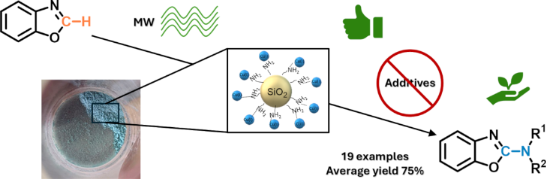
Microwave-enhanced additive-free C–H amination of benzoxazoles catalysed by supported copper
Beilstein J. Org. Chem. 2025, 21, 1462–1476, doi:10.3762/bjoc.21.108
- , and the organic phase was extracted with 3.5 M aqueous ammonia solution (1 × 10 mL) and distilled water (2 × 10 mL). The organic phase was washed with brine, dried over sodium sulphate, and filtered. The solvent was removed under reduced pressure to obtain a pure product. Where required, the residue
- h, and the catalyst was then removed by filtration and recovered where required. The solvent was evaporated under reduced pressure. The resulting residue was dissolved in 10 mL of CHCl3, and the organic phase was extracted with distilled water (2 × 10 mL). The organic phase was washed with brine



Tautomerism and switching in 7-hydroxy-8-(azophenyl)quinoline and similar compounds
Beilstein J. Org. Chem. 2025, 21, 1404–1421, doi:10.3762/bjoc.21.105
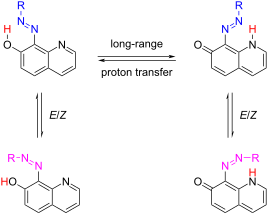
- addition of water to acetonitrile (Figure 3) lead to increase of the content of the keto tautomers, but the enol form is still present. As suggested by the theoretically predicted chemical shifts of the tautomeric proton (Table 1), the use of NMR could shed more light on the tautomeric composition in
- solution during 20 min. The resulting red-orange mixture was stirred at 0 °C for 2 h, and at rt for 15 h. The mixture was neutralized with 1 N aqueous sodium hydroxide, filtered, washed with cold water (5 mL) and dried under vacuum. The dark orange crude material was purified by flash column chromatography
- , 3.5 mmol) and 1 N aqueous HCl solution (12.0 mL) and methanol (7.0 mL). The mixture was stirred at rt for 2 h, then cooled in an ice bath to 0 °C, and treated slowly with a cold solution of sodium nitrite (0.38 g, 5.5 mmol) in distilled water (3.0 mL). The mixture was left stirring at 0 °C for 2 h. In




N-Salicyl-amino acid derivatives with antiparasitic activity from Pseudomonas sp. UIAU-6B
Beilstein J. Org. Chem. 2025, 21, 1388–1396, doi:10.3762/bjoc.21.103
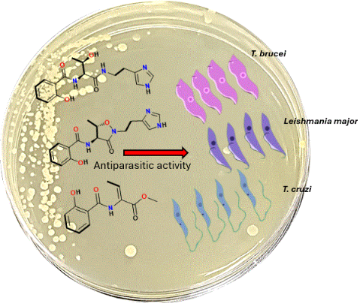
- dried under reduced pressure, to yield 7.5 g of crude extract. Fractionation and isolation of compounds 1–4 The crude extract (7.5 g) was subjected to fractionation by Kupchan partitioning [33]. The extract was dissolved in water (300 mL) and dichloromethane (300 mL × 3) and placed in a separating


High-pressure activation for the solvent- and catalyst-free syntheses of heterocycles, pharmaceuticals and esters
Beilstein J. Org. Chem. 2025, 21, 1374–1387, doi:10.3762/bjoc.21.102
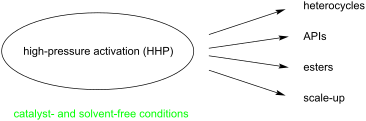
- generation. Using water as pressure transmitting fluid, the reaction vessel is immersed in water minimizing fire hazard during the reactions. Finally, most procedures can be carried out at ambient temperature, improving safety and energy efficiency. Energy efficiency is also supported by the nature of the
- instrument is depicted in Figure 1. The core of the instrument is the intensifier which generates the required pressure by amplifying the relatively low pressure (about 140 psi) supplied by an air compressor. The intensifier pressurizes the water in the pressure chamber where the sealed samples are placed
- . Water is used as a pressure transmitting medium that has relatively low compressibility, readily available, and non-toxic. Results and Discussion HHP-assisted synthesis of 1,3-dihydrobenzimidazoles Heterocycles are extremely versatile compounds and are used as building blocks for fine chemicals and


Optimized synthesis of aroyl-S,N-ketene acetals by omission of solubilizing alcohol cosolvents
Beilstein J. Org. Chem. 2025, 21, 1201–1206, doi:10.3762/bjoc.21.97
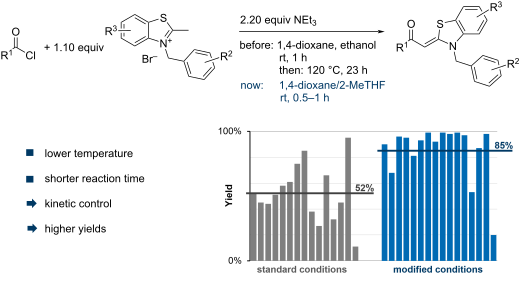
- -on of emission upon induced aggregation in alcohol–water mixtures [1]. This chromophore class has been extensively developed in recent years, even to aggregation-induced emissive (AIE) multichromophores [2] and even bichromophoric fluorimetric sensors [3][4]. The retrosynthesis of the title compounds


A multicomponent reaction-initiated synthesis of imidazopyridine-fused isoquinolinones
Beilstein J. Org. Chem. 2025, 21, 1161–1169, doi:10.3762/bjoc.21.92
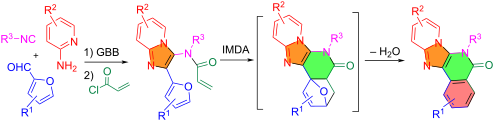
- intermediate 7, the carbonyl oxygen interacts with AlCl₃, enhancing the electrophilicity and promoting the rearrangement to form stable oxonium ions. The removal of water from 7 is facilitated by protonation, producing reactive carbocations which undergo dehydrative aromatization to produce products 8


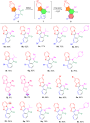
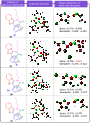


Investigations of amination reactions on an antimalarial 1,2,4-triazolo[4,3-a]pyrazine scaffold
Beilstein J. Org. Chem. 2025, 21, 1126–1134, doi:10.3762/bjoc.21.90
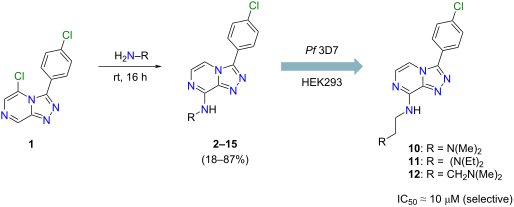
- (Göttingen, Lower Saxony, Germany) Arium™ Pro VF ultrapure water system. Synthetic reagents were purchased from Sigma-Aldrich (St. Louis, MO, USA) and used without further purification. The starting material, 5-chloro-3-(4-chlorophenyl)-[1,2,4]triazolo[4,3-a]pyrazine (1), was previously synthesised and




Gold extraction at the molecular level using α- and β-cyclodextrins
Beilstein J. Org. Chem. 2025, 21, 1116–1125, doi:10.3762/bjoc.21.89
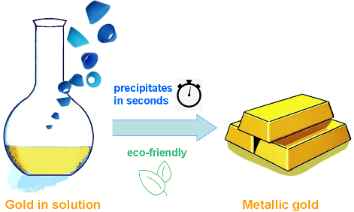
- accumulation in soil and water [17]. The shortage of natural resources in tandem with the increasing market demand for gold are driving the need to obtain this commodity from low grade ores, typically containing less than 1 wt % in gold, materials of difficult extraction, such as the gold-bearing silicates and
- -former, that is, a substance that causes the precipitation of the product as a solid. In this context, the addition of anti-solvents to aqueous solutions is a common strategy in precipitate formation. In 2023, the same research group showed that various solvents, some miscible with water and others not


A versatile route towards 6-arylpipecolic acids
Beilstein J. Org. Chem. 2025, 21, 1104–1115, doi:10.3762/bjoc.21.88
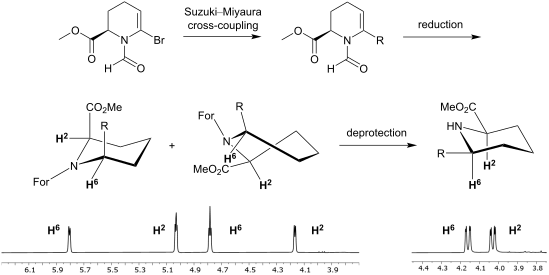
- amount of water was added to activate the boronic species and to dissolve the inorganic base under otherwise inert conditions. The reaction mixture was then stirred at room temperature overnight. Under these conditions, a variety of boronic acids with different steric and electronic properties was





Salen–scandium(III) complex-catalyzed asymmetric (3 + 2) annulation of aziridines and aldehydes
Beilstein J. Org. Chem. 2025, 21, 1087–1094, doi:10.3762/bjoc.21.86
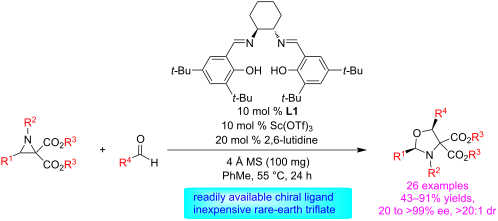
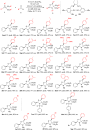
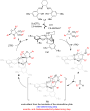
- , dried over sodium sulfate, and freshly distilled prior to use. All solid aldehydes were used after recrystallization from petroleum ether (PE, 60–90 °C fraction) or a mixture of ethanol and water. All dialkyl 3-aryl-1-sulfonylaziridine-2,2-dicarboxylates 1 were synthesized by previously reported



Recent advances in synthetic approaches for bioactive cinnamic acid derivatives
Beilstein J. Org. Chem. 2025, 21, 1031–1086, doi:10.3762/bjoc.21.85
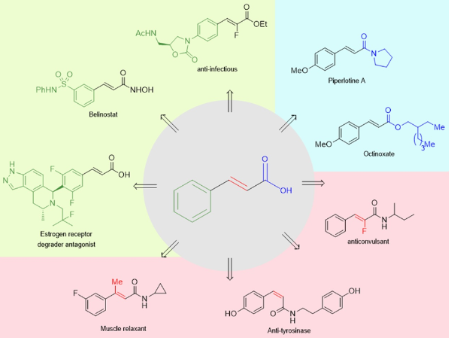
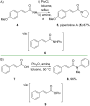
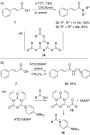
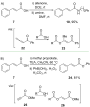
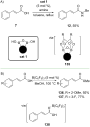
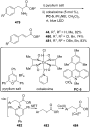
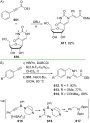
- 2.1.1 Stoichiometric reagents: Anhydride formation is one reliable method to activate the carboxylic group of cinnamic acid. For instance, in 2020, Longobardo and DellaGreca utilized isobutyl chloroformate in water to construct an O-protected amide derivative 2 of hydroxycinnamic acid 1 with an
- excellent yield (Scheme 2) [32]. The formed anhydride 3 was smoothly converted to the amide at room temperature. This method provides a green approach by allowing cinnamic acid derivatization in water as a benign solvent. Similarly, Rajendran and Rajan (2023) reported a one-pot transamidation of cinnamamide
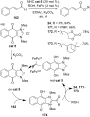
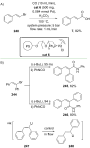
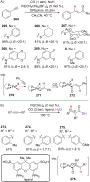
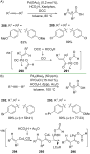
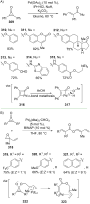
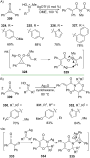
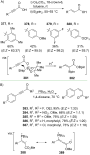
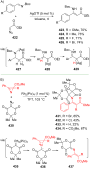
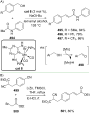
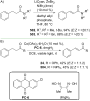
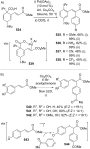
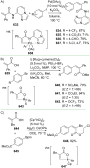
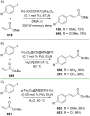
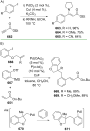
- -branched (L/B) selectivity of >20:1. The reaction involves the formation of palladium hydride (Pd–H) 270 as the key species followed by alkyne and CO insertion reactions via 271 and 272 (Scheme 68A) [116]. On the one hand, Jia and co-workers (2021) utilized environmentally benign water as the hydrogen








































Biobased carbon dots as photoreductants – an investigation by using triarylsulfonium salts
Beilstein J. Org. Chem. 2025, 21, 1024–1030, doi:10.3762/bjoc.21.84
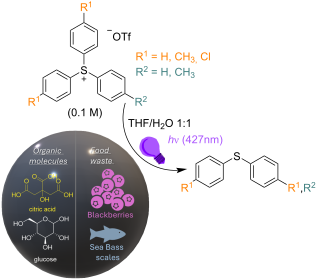
- carbon nanomaterials category in view of their stability, water affinity/dispersibility, and low toxicity [1][2][3][4]. Such nanomaterials significantly absorb in the 280–350 nm region due to a wide range of π–π* (C=C) and n–π* (C=O) transitions in both the core and on the surface of the particles. CDs
- dissolved or suspended in water, and the resulting mixture transferred to an autoclave and treated at a temperature ranging 140–200 °C; the treatment yields CDs with an amorphous structure. The synthetic procedure, as well as the structural and morphological characteristics of these materials, have been
- types of CDs and aims to promote the use of these sustainable materials, it opens the way for further exploitation of such compounds in visible-light-catalyzed reactions. UV–vis spectra of the CDs. All the measurements have been performed in water, except for CD-a-GLU, where a H2O/acetonitrile 1:1


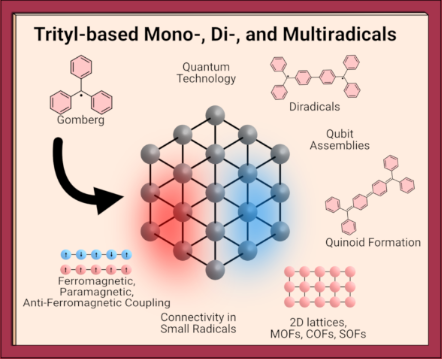
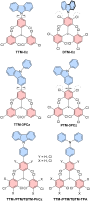
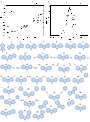
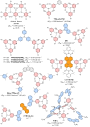
On the photoluminescence in triarylmethyl-centered mono-, di-, and multiradicals
Beilstein J. Org. Chem. 2025, 21, 964–998, doi:10.3762/bjoc.21.80







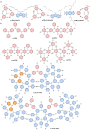
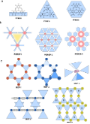


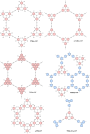
Recent advances in controllable/divergent synthesis
Beilstein J. Org. Chem. 2025, 21, 890–914, doi:10.3762/bjoc.21.73

- , tetrabutylammonium iodide (TBAI), and water significantly accelerated aryne generation, thereby increasing its local concentration. This favored aryne coordination to the palladium center, followed by CO insertion and reductive elimination to furnish phenanthridinones. In contrast, when dppm was introduced


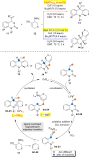


Unraveling cooperative interactions between complexed ions in dual-host strategy for cesium salt separation
Beilstein J. Org. Chem. 2025, 21, 845–853, doi:10.3762/bjoc.21.68

- that a tripodal hexaurea receptor L (Figure 1b) could selectively and reversibly extract sulfate and phosphate anions from water into organic phase (under pH control) [30][31][32][33]. Single crystal structures of the receptor–K2SO4 complex in the presence of 18-crown-6 clearly displayed ion-dipole


Chitosan-supported CuI-catalyzed cascade reaction of 2-halobenzoic acids and amidines for the synthesis of quinazolinones
Beilstein J. Org. Chem. 2025, 21, 839–844, doi:10.3762/bjoc.21.67
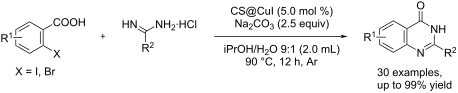
- ). Notably, the reaction was also successful in water, affording the target product in moderate yield (Table 1, entry 5, 51% yield). Next, to further improve the yield, a mixed solvent of iPrOH and H2O was examined. The reaction conducted with a solvent ratio of iPrOH/H2O = 4:1 gave an 83% yield (Table 1


Substituent effects in N-acetylated phenylazopyrazole photoswitches
Beilstein J. Org. Chem. 2025, 21, 830–838, doi:10.3762/bjoc.21.66

- classical azobenzenes. Heterocyclic rings offer, for example, enhanced polarity, electron pairs for metal coordination [27], better water-solubility, and variable pKa [28][29]. Special attention has been given to 5-membered N-heterocyclic azobenzenes, which not only maintain the azobenzenes properties but


4-(1-Methylamino)ethylidene-1,5-disubstituted pyrrolidine-2,3-diones: synthesis, anti-inflammatory effect and in silico approaches
Beilstein J. Org. Chem. 2025, 21, 817–829, doi:10.3762/bjoc.21.65

- pyrrolidine-2,3-diones 3b–e are not expected to affect the scope of the reaction (Scheme 2, Table 1). When the reaction between 3a (1 equiv) and methylamine (4) (4 equiv, 40% in water) was carried out in absolute ethanol (0.3 mL) at reflux, 4-(1-methylamino)ethylidene-1,5-diphenylpyrrolidine-2,3-dione (5a
- ) was obtained in 80.8% yield. Gratifyingly, substrate 3a is well soluble in methylamine solution (40% in water) and conducting the reaction between 3a (1 equiv) and methylamine (4) (40% in water, 0.3 mL, 47 equiv), without any other solvent added, the yield of product 5a increased to 92.2% (Table 1
- ). Therefore, excess methylamine (40% in water, 47 equiv), served as both the solvent and nucleophilic reactant in the above reaction. In the 1H NMR spectrum of 3a, there are two doublets of doublets at 4.40 ppm and 4.49 ppm corresponding to two methylene protons (CH2) which are diastereotopic and therefore


Recent advances in the electrochemical synthesis of organophosphorus compounds
Beilstein J. Org. Chem. 2025, 21, 770–797, doi:10.3762/bjoc.21.61
- and nickel were used as the cathode and graphite as the anode, the efficiencies of the processes were very close to each other. The use of dry acetonitrile as the reaction medium significantly reduced the yield. These results indicate that water plays a crucial role in this reaction, as its
- optimization of the reaction, an HTe−Chem reactor was used in the presence of Me₄NOAc as the electrolyte. The use of NMP and Me₄NOAc was beneficial, as in many cases, adding water led to the precipitation of the desired product from the reaction mixture. A wide range of iminophosphoranes were synthesized
- according to the following mechanism via an anodic trimethylsilyl cyanide radical formation (Scheme 24). The formation of the Ph₃P=O as the side product was assumed to be due to the presence of water or oxygen in the reaction mixture, which competes with the aminating reagent. Electrochemical O–P bond


Development and mechanistic studies of calcium–BINOL phosphate-catalyzed hydrocyanation of hydrazones
Beilstein J. Org. Chem. 2025, 21, 755–765, doi:10.3762/bjoc.21.59
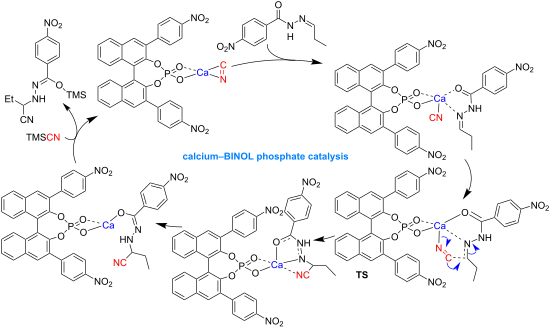
- used it after isolation and characterization. In these cases, BINOL phosphate 5 was purchased, and used either without any further purification (Table 2, entries 5–7), or it was washed first with 2 N HCl solution, then rinsed with water, to remove possible traces of Ca2+, which could stem from


Orthogonal photoswitching of heterobivalent azobenzene glycoclusters: the effect of glycoligand orientation in bacterial adhesion
Beilstein J. Org. Chem. 2025, 21, 736–748, doi:10.3762/bjoc.21.57
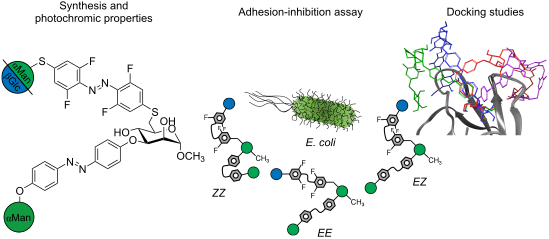
- α-ᴅ-mannoside (MeMan) measured on the same plate as reference. This leads to relative inhibitory potencies, so-called RIP values. Because of limited water solubility, the samples had to be dissolved in DMSO and therefore, the effect of pure DMSO was also tested in every individual assay (cf
- , Figures S13–S16), the analysis of the testing results shows that determination of the inhibitory potencies of the various isomers is indeed valid in spite of the limited water solubility of the samples. Looking over the measured inhibitory potentials, it can be concluded that (i) the isomeric state of the
- like glycoclusters 1 and 2 are capable of many conformational alternatives and therefore, the control of molecular shape by photoisomerization of azobenzene linkers has its limitations. In addition, water solubility requires improvement. Furthermore, our study, combining synthesis, analysis of


Synthesis of HBC fluorophores with an electrophilic handle for covalent attachment to Pepper RNA
Beilstein J. Org. Chem. 2025, 21, 727–735, doi:10.3762/bjoc.21.56
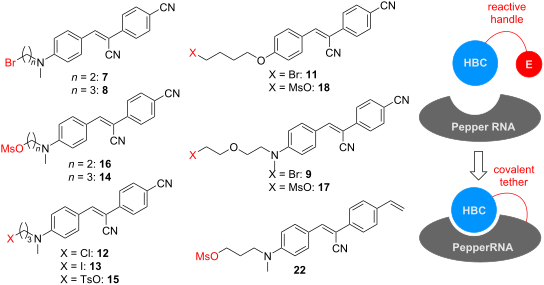
- in 40 µL of water, followed by the addition of 12 µL of buffer (250 mM HEPES, 500 mM KCl, pH 7.0) and 6.0 µL of MgCl2 solution (20 mM). The aptamer was annealed by heat shock at 90 °C for 2 minutes and cooled on ice. Then, 2.0 µL of a ligand stock solution (3.0 mM, in DMSO) was added. The final



Acyclic cucurbit[n]uril bearing alkyl sulfate ionic groups
Beilstein J. Org. Chem. 2025, 21, 717–726, doi:10.3762/bjoc.21.55
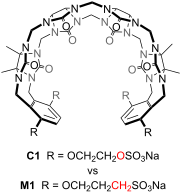
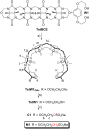
- alkyl sulfate ionic groups. The X-ray crystal structure of the C1·Me6CHDA complex is reported. Host C1 is significantly less soluble in water (4 mM) compared to the analogous acyclic CB[n] host M1 which features sulfonate ionic groups (346 mM). Host C1 does not undergo significant self-association
- and water [1][2][3][4]. Building on this fundamental knowledge, supramolecular chemists created a variety of functional systems including supramolecular polymers, sensing ensembles, molecular machines, supramolecular separation phases, and drug delivery systems [5][6][7][8][9]. A primary subfield of
- important role driving the inclusion of Me6CHDA inside of C1 to form the C1·Me6CHDA complex. Of course, the inclusion of the hydrophobic cyclohexyl moiety inside the cavity of C1 provides a hydrophobic driving force for complexation in water. Given that C1 is a tetraanion and that Me6CHDA is a dication, an




Origami with small molecules: exploiting the C–F bond as a conformational tool
Beilstein J. Org. Chem. 2025, 21, 680–716, doi:10.3762/bjoc.21.54
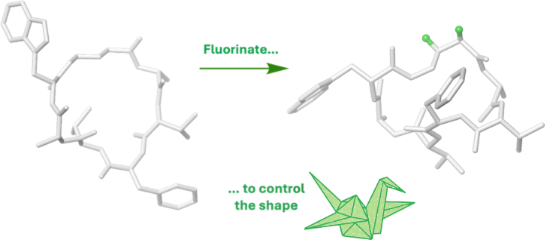
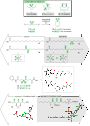
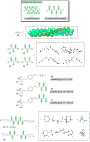
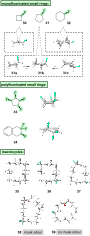
- , conformations in which the two C–F bonds are aligned gauche will be favoured in water due to their high molecular dipole moment. A final layer of complexity is afforded by the stereochemistry of the 1,2-difluoroalkane motif: the various conformational factors described above will aggregate differently depending
- upon whether the 1,2-difluoro stereochemistry is threo or erythro. For example, the diastereoisomeric difluorinated stearic acids 14 and 15 (Figure 3) are found to have very different physical properties [28]. When deposited into a monolayer above a water phase, the threo-isomer 14 occupies a small
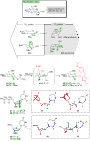
- be altered, too [44]. For example, consider compounds 26 and 27 (Figure 4), which are fluorinated analogues of the multiple sclerosis drug gilenya (25) [45]. The syn,anti-fluorinated stereoisomer 26 has a much higher water solubility than gilenya (25), attributable to the presence of new polar bonds








Asymmetric synthesis of fluorinated derivatives of aromatic and γ-branched amino acids via a chiral Ni(II) complex
Beilstein J. Org. Chem. 2025, 21, 659–669, doi:10.3762/bjoc.21.52
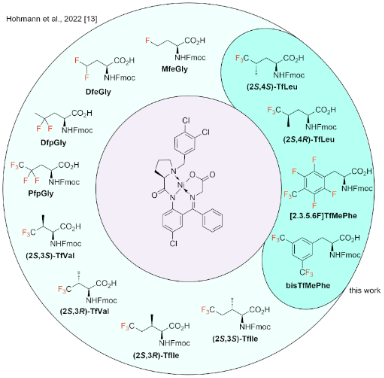
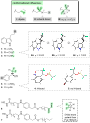
- fluorinated amino acids that can be synthesized from a single starting material is a unique feature of this method, making it an important cornerstone of fluoropeptide chemistry. Experimental General information Air- and hydrolysis-sensitive reactions were carried out under exclusion of air and water in





