


Search results
Search for "electrostatic interactions" in Full Text gives 120 result(s) in Beilstein Journal of Organic Chemistry.
Crystal design using multipolar electrostatic interactions: A concept study for organic electronics
Beilstein J. Org. Chem. 2013, 9, 2367–2373, doi:10.3762/bjoc.9.272
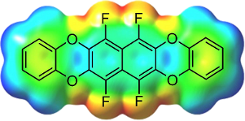
- distribution of partial charges are readily available. In contrast to most other acenes, these compounds crystallize with a slipped-stack, brickwork-like packing which is mainly controlled by electrostatic interactions. This type of packing offers an advantage for organic semiconductors, because it allows more
- attraction by sliding the π-systems against each other by about half a molecular length. The advantage of this concept is not only a brick-like 2D structure, but also supposedly a tighter packing with smaller interplanar distances due to the strong electrostatic interactions. A similar effect has been
- fluorinated arenes, without expanding the geometry too much. Arene–perfluoroarene interactions are well known to stabilize molecular crystals [11][12][13] through multipolar electrostatic interactions, and there are a few examples for their use in organic electronics [10][14]. Another point to consider are


Synthesis of enantiomerically pure (2S,3S)-5,5,5-trifluoroisoleucine and (2R,3S)-5,5,5-trifluoro-allo-isoleucine
Beilstein J. Org. Chem. 2013, 9, 2009–2014, doi:10.3762/bjoc.9.236
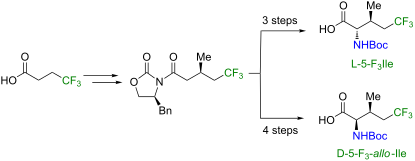
- polarized than the C–H bond, and electrostatic interactions of the fluorinated group with the solvent are energetically more favored. As a consequence, fluoroalkyl side chains possess two seemingly contrary physicochemical properties, hydrophobicity and polarity, and the combination of both leaves


Self-assembly of 2,3-dihydroxycholestane steroids into supramolecular organogels as a soft template for the in-situ generation of silicate nanomaterials
Beilstein J. Org. Chem. 2013, 9, 1826–1836, doi:10.3762/bjoc.9.213
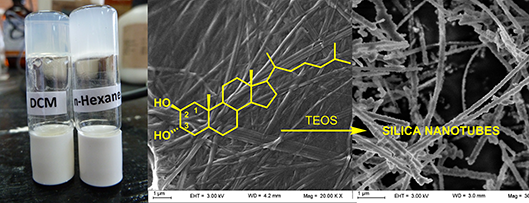
- conditions, the fibrillar superstructure of the organogel was successfully used as a template for the in-situ sol–gel polymerization of tetraethoxysilane and the further preparation of silica nanotubes. We propose that the driving forces for templating are hydrogen bonding and electrostatic interactions


Polymeric redox-responsive delivery systems bearing ammonium salts cross-linked via disulfides
Beilstein J. Org. Chem. 2013, 9, 1652–1662, doi:10.3762/bjoc.9.189
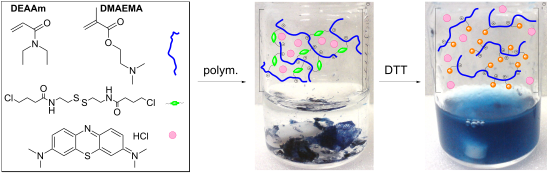
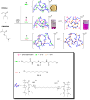
- ammonium salts, either intramolecular in the same polymer or intermolecular with other polymer chains. This results in additional electrostatic interactions between the polymer chains leading to decreased cloud points. Conclusion Novel redox-responsive polycationic hydrogels of DEAAm and DMAEMA were




A peptidic hydrogel that may behave as a “Trojan Horse”
Beilstein J. Org. Chem. 2013, 9, 417–424, doi:10.3762/bjoc.9.44
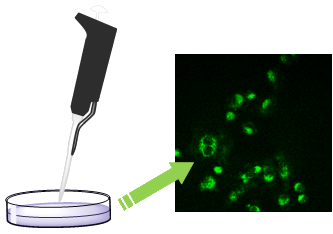
- this “Trojan Horse” strategy. Many peptides can penetrate mammalian cell membranes and take cargo with them. To enable penetration, initial binding of the peptide to the cell surface through electrostatic interactions with lipids, presumably followed by membrane destabilization to allow translocation


A new family of four-ring bent-core nematic liquid crystals with highly polar transverse and end groups
Beilstein J. Org. Chem. 2013, 9, 26–35, doi:10.3762/bjoc.9.4
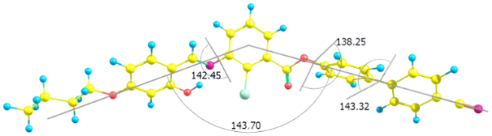
- molecules substantially favour the stabilization of biaxial nematic phases, and (b) the electrostatic interactions between permanent transverse dipoles of bent-core molecules also significantly stabilize the biaxial nematic phases. The introduction of a 2-chloro group in the 1,3-disubstituted phenyl ring of


Cyclodextrin-based nanosponges as drug carriers
Beilstein J. Org. Chem. 2012, 8, 2091–2099, doi:10.3762/bjoc.8.235
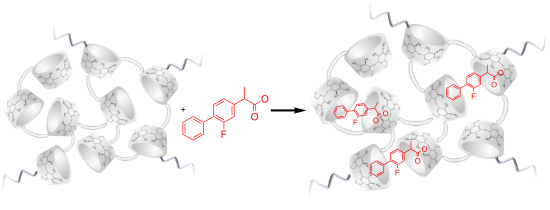
- electrostatic contribution for drug encapsulation, in addition to the cyclodextrin cavities. Electrostatic interactions may occur between the carboxylic groups present in the nanosponge structure and the amino group of acyclovir. In vitro, acyclovir-loaded carboxylated nanosponges [39] showed prolonged release


Self-assembled organic–inorganic magnetic hybrid adsorbent ferrite based on cyclodextrin nanoparticles
Beilstein J. Org. Chem. 2012, 8, 1867–1876, doi:10.3762/bjoc.8.215
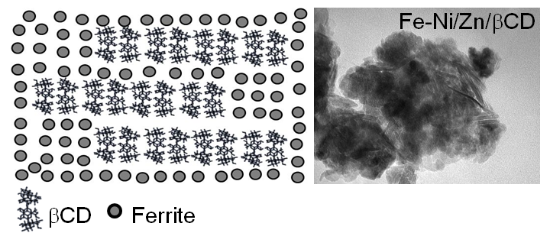
- Horizonte – MG, 31270-901, Brazil 10.3762/bjoc.8.215 Abstract Organic–inorganic magnetic hybrid materials (MHMs) combine a nonmagnetic and a magnetic component by means of electrostatic interactions or covalent bonds, and notable features can be achieved. Herein, we describe an application of a self
- ; Introduction Organic–inorganic hybrid materials (HMs) are often prepared by assembling organic and inorganic molecules based on electrostatic interactions or chemical bonding between them, which will leads to an unpredictable stoichiometry [1]. The structures and properties of HMs depend on the nature of both


Polysiloxane ionic liquids as good solvents for β-cyclodextrin-polydimethylsiloxane polyrotaxane structures
Beilstein J. Org. Chem. 2012, 8, 1610–1618, doi:10.3762/bjoc.8.184
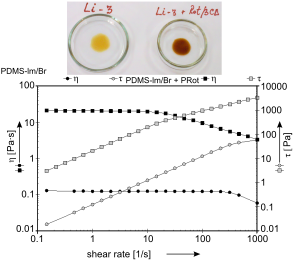
- complex microstructure. For both the ionic liquid alone and its mixture with rotaxane, a kind of liquid-like stable network is characteristic. This may be due to different electrostatic interactions. The shift angle δ has a constant value of 90° (ideal viscous behavior) for the ionic liquid and 89.5° for


Investigation of the network of preferred interactions in an artificial coiled-coil association using the peptide array technique
Beilstein J. Org. Chem. 2012, 8, 640–649, doi:10.3762/bjoc.8.71
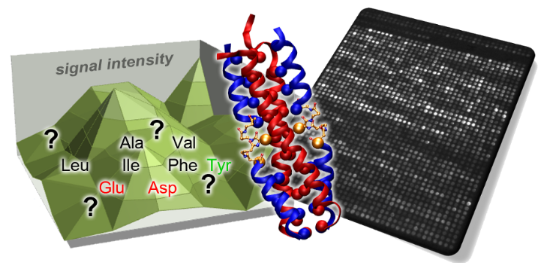
- natural and chimeric sequences with 1:1 stoichiometry [18]. The heterooligomerization is driven by the burial of the hydrophobic surface area and is directed by electrostatic interactions between charged residues that flank the hydrophobic core. However, substituting an α-heptad with a pentad of β- and γ
- results additionally confirm the impact of electrostatic interactions at the e and g positions. The SI values of sequences mutated in these positions show that shortening of the negatively charged side chain in the case of the Glue19Asp exchange, results in a general decline in binding affinity for almost


Enantioselective supramolecular devices in the gas phase. Resorcin[4]arene as a model system
Beilstein J. Org. Chem. 2012, 8, 539–550, doi:10.3762/bjoc.8.62
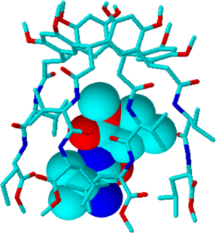
- stabilized by the solvation and torsional energy terms than the skew-boat one is. In contrast, the electrostatic factor may induce a stronger stabilization of the skew-boat minimum, surpassing all the other effects. It can be concluded that in vacuum, electrostatic interactions prevail against the other


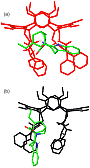


Azobenzene dye-coupled quadruply hydrogen-bonding modules as colorimetric indicators for supramolecular interactions
Beilstein J. Org. Chem. 2012, 8, 486–495, doi:10.3762/bjoc.8.55
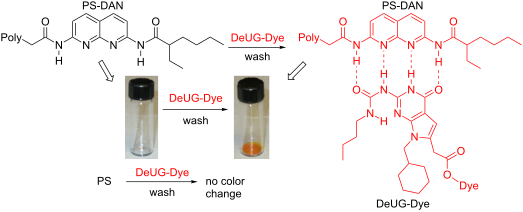
- ]. Noncovalent hydrogen bonding, electrostatic interactions, π–π stacking and metal coordination have been used alone and in concert to assemble a broad range of building blocks, from small molecules [4][5][6][7] to polymers [8][9] including dendrimers [10][11]. Among these noncovalent interactions, hydrogen


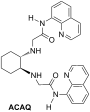
Ratiometric fluorescent probe for enantioselective detection of D-cysteine in aqueous solution
Beilstein J. Org. Chem. 2011, 7, 1508–1515, doi:10.3762/bjoc.7.176
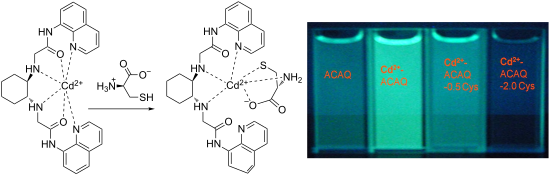
- health [32]. On the basis of multipoint electrostatic interactions and structure complementarity of the host–guest, we have rationally designed and synthesised a bis(spiropyran) as a fluorescence turn-on probe for selective binding of GSH [33]. We have also developed the first spiropyran–metal sensing




Organic gelators and hydrogelators
Beilstein J. Org. Chem. 2010, 6, 846–847, doi:10.3762/bjoc.6.99
- and electrostatic interactions, coordination, and charge transfer. Additional non-covalent interactions lead to physical entanglement of the fibres, which creates a 3D network, the fluid being trapped in the nanoscale interstices. A very large quantity of solvent can be imprisoned in the
Functionalized copolyimide membranes for the separation of gaseous and liquid mixtures
Beilstein J. Org. Chem. 2010, 6, 789–800, doi:10.3762/bjoc.6.86
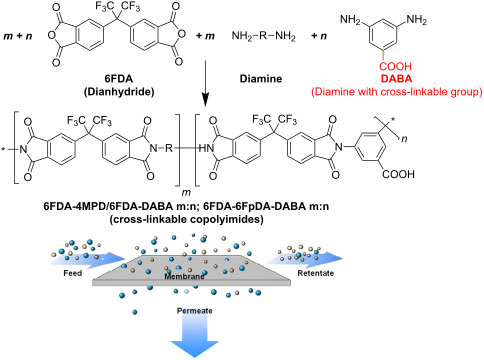
- [40]. It is assumed that ionic cross-linking leads to a much lower plasticization resistance compared to covalent cross-linking because ionic aggregates are formed due to electrostatic interactions, in this case between aluminium cations and carboxylate anions. Thus, heterogeneous regions with ionic


RAFT polymers for protein recognition
Beilstein J. Org. Chem. 2010, 6, No. 66, doi:10.3762/bjoc.6.66
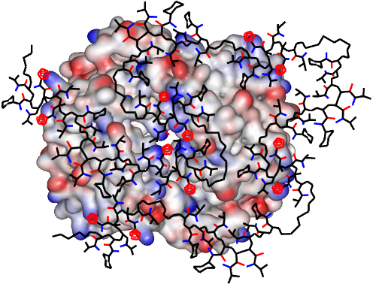
- : electrostatic interactions; hydrophobic effect; isothermal calorimetry; protein recognition; RAFT polymers; Introduction The ability of biological receptors to bind strongly and specifically to a particular molecular target is an essential part of biological machinery. The best example is the immune system




The C–F bond as a conformational tool in organic and biological chemistry
Beilstein J. Org. Chem. 2010, 6, No. 38, doi:10.3762/bjoc.6.38
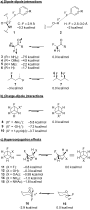
- , Figure 1a) [4][5]. However, it should be emphasised that such intermolecular electrostatic interactions are quite weak: for example, the C–F···H–O interaction (2) is at most one-quarter as strong as a “normal” hydrogen bond [2]. In contrast, electrostatic interactions can also occur within an
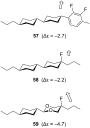
- repulsion effect invokes a steric clash between the fluorine atoms, but since fluorine is a small atom, the dipole repulsion argument is more convincing. Charge–dipole interactions Electrostatic interactions associated with the C–F bond become more pronounced when a neighbouring group bears a formal charge









Molecular recognition of organic ammonium ions in solution using synthetic receptors
Beilstein J. Org. Chem. 2010, 6, No. 32, doi:10.3762/bjoc.6.32
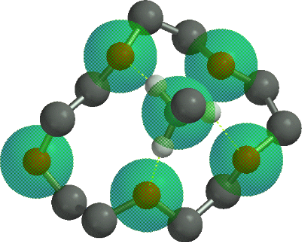
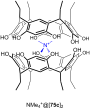
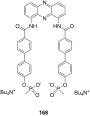
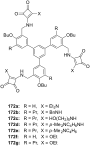
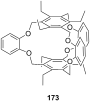
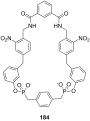
- from Kebarle et al. who showed that binding of potassium ions to benzene and water in the gas phase is of similar energy [9][12]. Ammonium–π-interactions were experimentally investigated in detail as well as by ab initio calculations and are mainly based on electrostatic interactions. The binding
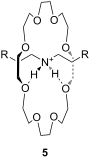
- are used to enhance further the binding and selectivity with a binding mechanism that can be understood on the combined efforts of several non-covalent interactions such as hydrogen bonding, electrostatic interactions, hydrophobic interactions [20][21][22], cation–π interactions, π–π staking












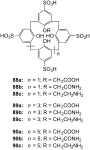


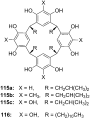
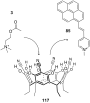


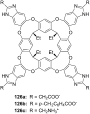




























(Pseudo)amide-linked oligosaccharide mimetics: molecular recognition and supramolecular properties
Beilstein J. Org. Chem. 2010, 6, No. 20, doi:10.3762/bjoc.6.20
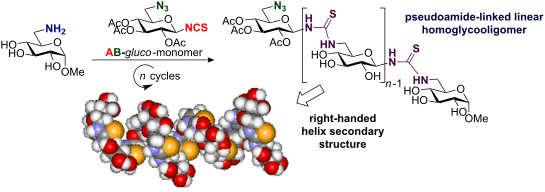
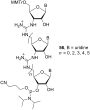
- monosaccharide units in glycooligomers is particularly attractive with regard to molecular recognition processes. Like thioureas and ureas, guanidines can also form bidentate hydrogen bonds. In addition, because of their positively charged character, guanidines can exert strong electrostatic interactions with



Synthesis and enzymatic evaluation of 2- and 4-aminothiazole- based inhibitors of neuronal nitric oxide synthase
Beilstein J. Org. Chem. 2009, 5, No. 28, doi:10.3762/bjoc.5.28

- partially charged in biological systems. Crystal structures of 2 bound to the active site of nNOS show that the aminopyridine group interacts with a glutamate residue (Glu592, rat nNOS), presumably via hydrogen bonding and electrostatic interactions [8][12]. The aminopyridine ring nitrogen must be





