


Search results
Search for "green" in Full Text gives 1075 result(s) in Beilstein Journal of Organic Chemistry. Showing first 200.
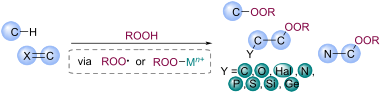
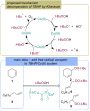
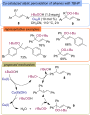
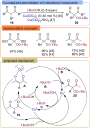
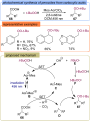
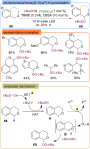
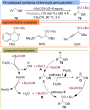
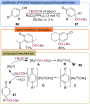
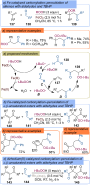
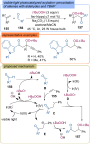
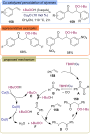
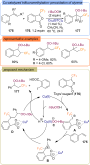
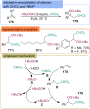
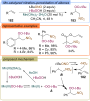
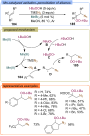
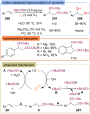
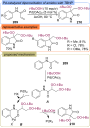
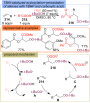
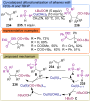
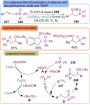
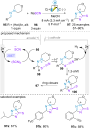
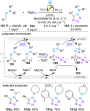
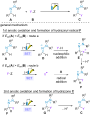
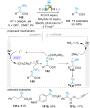
Advances in radical peroxidation with hydroperoxides
Beilstein J. Org. Chem. 2024, 20, 2959–3006, doi:10.3762/bjoc.20.249































Investigation of a bimetallic terbium(III)/copper(II) chemosensor for the detection of aqueous hydrogen sulfide
Beilstein J. Org. Chem. 2024, 20, 2818–2826, doi:10.3762/bjoc.20.237

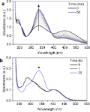
- emission (green line, λex = 250 nm) spectra of 5 µM Tb.1 in 10 mM Tris-HCl buffer, pH 7.4, containing 5% DMSO. (a) Changes in the luminescence emission spectrum of 5 µM [Tb.1·3Cu]3+ upon the addition of Na2S (0–15 µM); spectra measured in 10 mM HEPES buffer (pH 7.4) with λex = 250 nm. (b) Change in
- the presence of various anions/sulfur compounds; spectra measured in 10 mM Tris HCl buffer (pH 7.4) with λex = 250 nm. Green bar: [Tb.1·3Cu]3+ alone (5 µM). Blue bar: [Tb.1·3Cu]3+ (5 µM) and Na2S (15 µM). Grey bars: [Tb.1·3Cu]3+ (5 µM) and anion/sulfur compound (50 µM). Black bars: [Tb.1·3Cu]3+ (5 µM


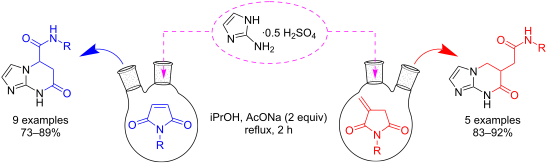
Synthesis and antimycotic activity of new derivatives of imidazo[1,2-a]pyrimidines
Beilstein J. Org. Chem. 2024, 20, 2806–2817, doi:10.3762/bjoc.20.236
- ) Superposition of docked compounds 4a–e and 5e in a CYP51 ACb. aThe amino acid residues of the protein are colored green, compound 4e is colored gold and the haem is colored grey. The heterocyclic nitrogen of compound 5e appears to be orientated towards iron and is located 2.8 Å away from it, which may indicate


Interaction of a pyrene derivative with cationic [60]fullerene in phospholipid membranes and its effects on photodynamic actions
Beilstein J. Org. Chem. 2024, 20, 2732–2738, doi:10.3762/bjoc.20.231

- (–) and DMSO under irradiation for 30 min by blue LED lamp. In the ESR spectra, signals corresponding to the adducts are indicated with red (4-oxo-TEMPO in a), blue (DMPO-OH in b), and green (DEPMPO-CH3 in c) arrows. Acknowledgements The authors thank Dr. Ebert from ETH Zurich for his support on ESR


Photoluminescence color-tuning with polymer-dispersed fluorescent films containing two fluorinated diphenylacetylene-type fluorophores
Beilstein J. Org. Chem. 2024, 20, 2682–2690, doi:10.3762/bjoc.20.225
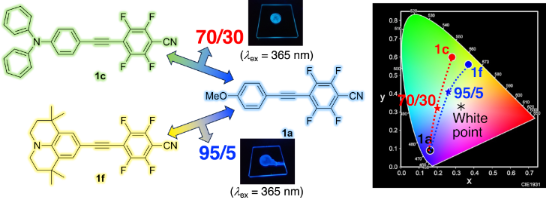
- if blue and green–yellow or yellow fluorophores are blended in appropriate ratios, a binary blend with color coordinates (0.20, 0.32) can be achieved, which approaches the white point of pure white emission. These findings contribute to the development of effective lighting and display devices as new
- has been severely delayed [4][5][6]. However, since Tang et al. first reported the aggregation-induced emission phenomenon in 2001 [7], the development of solid-state light-emitting materials has accelerated significantly [8][9][10]. Many photoluminescent materials that emit blue, green, and yellow
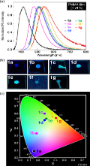
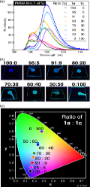
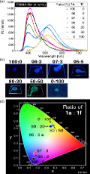
- yellow-fluorescent molecules from the viewpoint of their ΦPL. Therefore, we investigated the PL behavior of PMMA dispersion films containing blue-fluorescent 1a, green–yellow fluorescent 1c, and yellow-fluorescent 1f. Photoluminescence behavior of PMMA dispersion films containing a mixture of blue


Computational design for enantioselective CO2 capture: asymmetric frustrated Lewis pairs in epoxide transformations
Beilstein J. Org. Chem. 2024, 20, 2668–2681, doi:10.3762/bjoc.20.224
- than the catalysts at the top show lower catalytic activity due to insufficient activation of the substrate (Figure 1A, green points). Conversely, catalysts that bind too strongly impede the detachment of the catalyst–reactant complex, thereby reducing the catalyst turnover (Figure 1A, pink points) [26
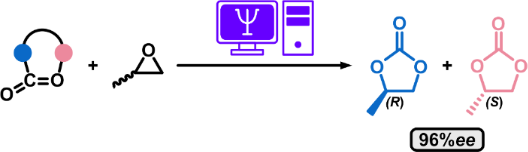
- remarkable 96%ee yielded by the catalyst. Schematic representation of an (A) 2D and a (B) 3D volcano plot. The abbreviation “cat.” stands for catalyst. (A) Structure of PO annotated with the C–O bond distances and electron densities at the BCPs. BCPs are indicated by green spheres and the ring critical point


Applications of microscopy and small angle scattering techniques for the characterisation of supramolecular gels
Beilstein J. Org. Chem. 2024, 20, 2608–2634, doi:10.3762/bjoc.20.220


Anion-dependent ion-pairing assemblies of triazatriangulenium cation that interferes with stacking structures
Beilstein J. Org. Chem. 2024, 20, 2567–2576, doi:10.3762/bjoc.20.215
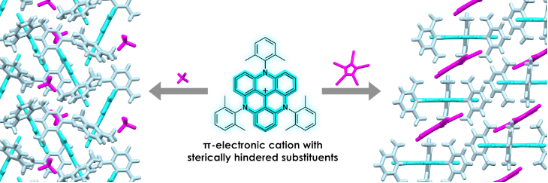
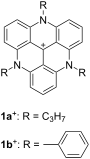
- ) packing structures and (ii) enlarged views for the columnar structures. In (i), cation and anion are represented in cyan and magenta colors, respectively. In (ii), brown, pink, yellow, blue, yellow green, orange, and green (spherical) refer to carbon, hydrogen, boron, nitrogen, fluorine, phosphorus, and
- +-Cl−, (b) 2+-BF4−, and (c) 2+-PF6−. Atom color code: yellow, green, orange, and green (spherical) refer to boron, fluorine, phosphorus, and chlorine, respectively. (i) Single-crystal X-ray structures and (ii) interaction energies for the pairs (a) 2+-Cl−, (b) 2+-BF4−, and (c) 2+-PF6−. In (i), the
- cation and the anion are represented in cyan and magenta colors, respectively. Hirshfeld surface analysis mapped with dnorm of closely contacted ion pairs: (a) 2+-B(C6F5)4− and (b) 2+-PCCp−. Atom color code: brown, yellow, blue, and green refer to carbon, boron, nitrogen, and fluorine, respectively. (i



Visible-light-mediated flow protocol for Achmatowicz rearrangement
Beilstein J. Org. Chem. 2024, 20, 2493–2499, doi:10.3762/bjoc.20.213
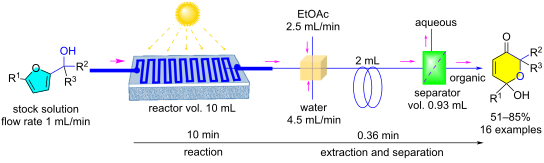
- and development of a visible light-assisted modular photo-flow reactor with a seamlessly integrated post-synthetic work-up procedure enabling the efficient synthesis of dihydropyranones from furfuryl alcohols. The reaction uses sun light as green energy source, and the novel photo-flow reactor
- ], spirulina [16], Ti(OiPr)4/t-BuOOH [17], VO(acac)2)/t-BuOOH [18], and enzymatic oxidation [19] etc., which may compromise the environmental benefits (Scheme 1a,b) and take longer reaction times. Alternatively, a new green pathway is necessary for the Achmatowicz reaction to be performed in a faster and safer
- manner. Towards this direction, few research groups have already reported the Achmatowicz reaction utilizing greener approaches, yet they suffered due to some limitations. Sun et al. [20] have successfully demonstrated an Achmatowicz rearrangement using electricity as a green oxidant (Scheme 1c) in a



Synthesis and conformational analysis of pyran inter-halide analogues of ᴅ-talose
Beilstein J. Org. Chem. 2024, 20, 2442–2454, doi:10.3762/bjoc.20.208
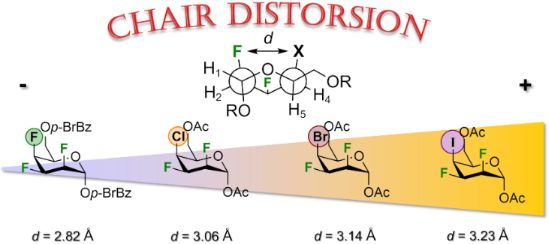
- , 17, and α-ᴅ-talose 18. ORTEP diagram showing 50% thermal ellipsoid probability (except for 18): carbon (gray), oxygen (red), fluorine (green), chlorine (orange), bromine (dark red), iodine (purple), and hydrogen (white). Packing arrangement of compound compound 15; a) View down the b axis; b
- ) proposed intermolecular interactions involving halogens. ORTEP diagram showing 50% thermal ellipsoid probability: carbon (gray), oxygen (red), fluorine (green), iodine (purple), and hydrogen (white). Synthesis of halogenated talopyranose analogues 13–15, and 17 that include a 2,3-cis, 3,4-cis relationship


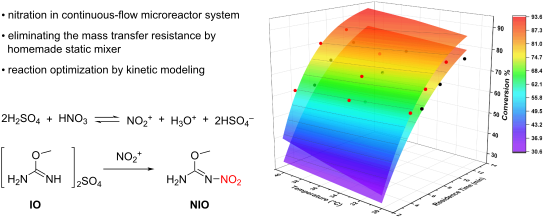
Homogeneous continuous flow nitration of O-methylisouronium sulfate and its optimization by kinetic modeling
Beilstein J. Org. Chem. 2024, 20, 2408–2420, doi:10.3762/bjoc.20.205
- Jiapeng Guo Weike Su An Su Key Laboratory of Pharmaceutical Engineering of Zhejiang Province, Key Laboratory for Green Pharmaceutical Technologies and Related Equipment of Ministry of Education, Collaborative Innovation Center of Yangtze River Delta Region Green Pharmaceuticals, Zhejiang
- University of Technology, Hangzhou, 310014, P. R. China State Key Laboratory Breeding Base of Green Chemistry-Synthesis Technology, Key Laboratory of Green Chemistry-Synthesis Technology of Zhejiang Province, College of Chemical Engineering, Zhejiang University of Technology, Hangzhou, Zhejiang 310014, China


![[Graphic 1]](/bjoc/content/inline/1860-5397-20-205-i17.svg?max-width=637&scale=1.18182)


Efficient one-step synthesis of diarylacetic acids by electrochemical direct carboxylation of diarylmethanol compounds in DMSO
Beilstein J. Org. Chem. 2024, 20, 2392–2400, doi:10.3762/bjoc.20.203
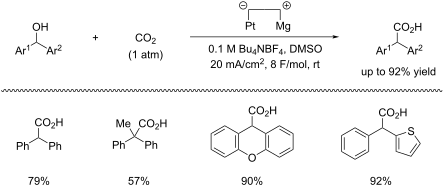
- a novel, efficient, facile, and green organic method. Experimental General information 1H (400 MHz) and 13C (100 MHz) NMR spectra were recorded in CDCl3 or DMSO-d6 with a JEOL JNM-ECS400 FT NMR spectrometer. The chemical shifts δ are given in ppm with tetramethylsilane (δ 0 ppm) or DMSO (δ 2.50 ppm


Hydrogen-bond activation enables aziridination of unactivated olefins with simple iminoiodinanes
Beilstein J. Org. Chem. 2024, 20, 2305–2312, doi:10.3762/bjoc.20.197
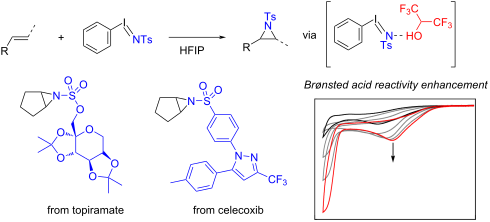
- (denoted by asterisk *) of HFIP in the presence of iminoiodinane 2c suggesting hydrogen bonding observed in 1H NMR spectra (CD3CN) of: 8.0 mM 2c with no HFIP (blue line), 8.0 mM 2c with 32 mM HFIP (green line), 4.0 mM of 4-(trifluoromethyl)benzenesulfonamide with 32 mM HFIP (purple line), only 32 mM HFIP


Selective hydrolysis of α-oxo ketene N,S-acetals in water: switchable aqueous synthesis of β-keto thioesters and β-keto amides
Beilstein J. Org. Chem. 2024, 20, 2225–2233, doi:10.3762/bjoc.20.190

- hydrolysis reactions were carried out in the presence of 3.0 equiv of NaOH. The green approach to β-keto thioesters and β-keto amides avoids the use of harmful organic solvents, thiols and thiolacetates as well as amines, which could result in serious environmental and safety issues. Keywords: α-oxo ketene
- synthetic method for the preparation of β-keto thioesters and β-keto amides remains imperative. Organic reactions in water are an important and exciting research topic of green chemistry because water as a solvent exhibits fascinating features, such as low cost, good environmental compatibility, nontoxicity
- , such as nontoxicity, inexpensiveness, nonflammability, low volatility and good water solubility, which are consistent with the concept of green chemistry [74][75]. Therefore, we tested the reaction in the presence of PEG-400 (Table 1, entries 7–9). It was found that the reaction uniquely produced 3a in



Finding the most potent compounds using active learning on molecular pairs
Beilstein J. Org. Chem. 2024, 20, 2152–2162, doi:10.3762/bjoc.20.185

- shown in the inlet with a green bar while the times it ‘stays’ in the same cluster is shown with a light blue bar. Arrow gradient towards darker grey indicates increasing iteration number. Tree-based model navigation of chemical space. T-SNE of a representative dataset (CHEMBL232-1, Alpha-1b adrenergic
- another is shown in the inlet with a green bar while the times it ‘stays’ in the same cluster is shown with a light blue bar. Arrow gradient towards darker grey indicates increasing iteration number. Supporting Information Supporting Information File 54: Supplementary figures and tables


O,S,Se-containing Biginelli products based on cyclic β-ketosulfone and their postfunctionalization
Beilstein J. Org. Chem. 2024, 20, 2143–2151, doi:10.3762/bjoc.20.184
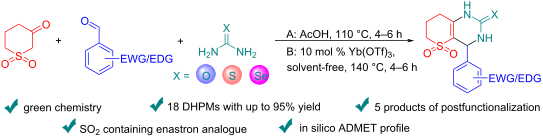
- gossypii, Tripomastigote Chagas, Tcruzi amastigota, Tcruzi epimastigota, Leishmania amazonensis, and Dengue larvicida. Keywords: dihydropyrimidinone/thione/selenone; green chemistry; in silico biological profile; multicomponent reaction (MCR); thiopyrandioxide; Introduction Multicomponent reactions (MCRs
- of other sulfones of both synthetic and biological importance can be obtained by using the in this work reported efficient, multicomponent and green protocol. We postfunctionalized the typical Biginelli product using Hantzsch-type thiazole chemistry and desulfurization. Assessing drug-likeness, we

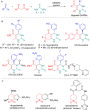


Efficacy of radical reactions of isocyanides with heteroatom radicals in organic synthesis
Beilstein J. Org. Chem. 2024, 20, 2114–2128, doi:10.3762/bjoc.20.182
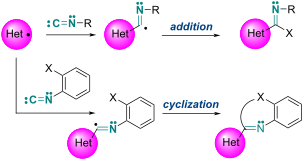
- understand the conditions for the generation of heteroatom radicals. In addition, from the perspective of recent green chemistry, the development of environmentally friendly synthetic methods is strongly demanded. In other words, a new synthetic method should have excellent atom economy, produce no waste, be


Understanding X-ray-induced isomerisation in photoswitchable surfactant assemblies
Beilstein J. Org. Chem. 2024, 20, 2005–2015, doi:10.3762/bjoc.20.176
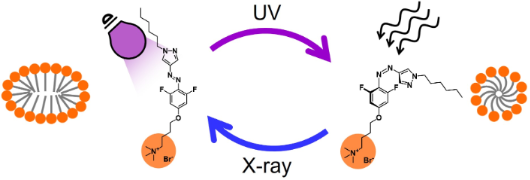
- , Oxfordshire, OX11 0DE, United Kingdom School of Chemistry, Trinity College Dublin, University of Dublin, College Green, Dublin 2, Ireland Department of Chemistry, Molecular Sciences Research Hub, White City Campus, Imperial College London, 82 Wood Lane, London, W12 7SL, United Kingdom Institut für Organische
- (365 nm, irradiance = 6.00 mW⋅cm−2), blue (455 nm, 5.16 mW⋅cm−2) or green (525 nm, 0.06 mW⋅cm−2) light. For the SAXS studies at high concentration, samples were irradiated in a custom-build LED light box with UV (365 nm) light at an irradiance of 1.24 mW⋅cm−2 for 3.5 h. This resulted in 98 ± 2 and 71



Harnessing the versatility of hydrazones through electrosynthetic oxidative transformations
Beilstein J. Org. Chem. 2024, 20, 1988–2004, doi:10.3762/bjoc.20.175
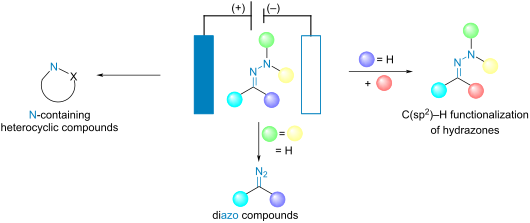
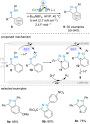
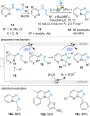
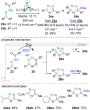
- -diphenylethylene proceeded with similar efficiency, thereby excluding any radical pathway. As such, it was proposed that the catalytic electrooxidation of iodide (ENH4I = 0.41 V and 0.75 V vs Ag/AgCl in dimethylacetamide for I−/I3− and I3−/I2 redox couples) into iodine provided a green and mild tool to in situ



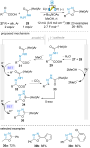
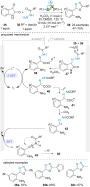
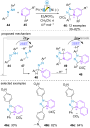
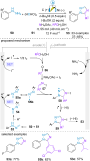
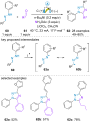


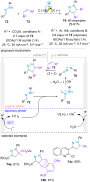
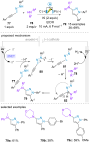

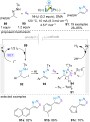



Development of a flow photochemical process for a π-Lewis acidic metal-catalyzed cyclization/radical addition sequence: in situ-generated 2-benzopyrylium as photoredox catalyst and reactive intermediate
Beilstein J. Org. Chem. 2024, 20, 1973–1980, doi:10.3762/bjoc.20.173
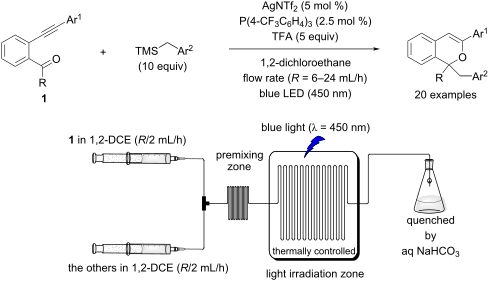
- Transformative Research Areas (A) “Green Catalysis Science for Renovating Transformation of Carbon-Based Resources” (JP23H04908) from MEXT, Japan and a Grant-in-Aid for Young Scientists (JP19K15552) from JSPS.


Negishi-coupling-enabled synthesis of α-heteroaryl-α-amino acid building blocks for DNA-encoded chemical library applications
Beilstein J. Org. Chem. 2024, 20, 1922–1932, doi:10.3762/bjoc.20.168
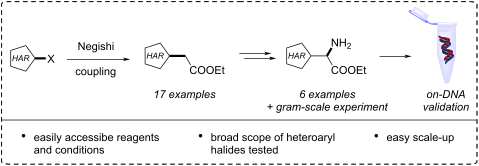
- , no reaction was observed with indazoles and furans using the first two conditions, requiring the formation of the ketoesters 4j and 4r first, followed by the functional group interconversion (FGI) with NH2OH·HCl (Scheme 6, blue and green sections). The Riley oxidation of the furanyl derivative 2j


Novel oxidative routes to N-arylpyridoindazolium salts
Beilstein J. Org. Chem. 2024, 20, 1906–1913, doi:10.3762/bjoc.20.166
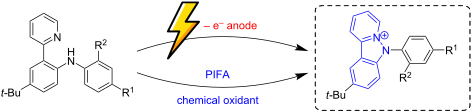
- in line with the green chemistry requirements [24]. To test the assumption, the preparative oxidation of amine A1 was performed in the potentiostatic mode at 1.6 V (vs Ag/AgCl, KCl(sat.)) in a two-compartment cell in DMF; sodium tosylate was used as a supporting electrolyte. After a charge


The Groebke–Blackburn–Bienaymé reaction in its maturity: innovation and improvements since its 21st birthday (2019–2023)
Beilstein J. Org. Chem. 2024, 20, 1839–1879, doi:10.3762/bjoc.20.162
- discussed in more details in chapter 2). Another recent article on the use of Brønsted acids has been reported by Vilapara et al., who employed for the first time etidronic acid (1-hydroxyethane-1,1-diphosphonic acid, HEDP) as a green catalyst. Reactions were efficient at room temperature [11]; although the
- adducts. An intriguing study is reported by Porcal et al. [35] in which they evaluate the use of 5-hydroxymethylfurfural (5-HMF, 23). Nowadays, the need to move towards more sustainable protocols is impending and the emphasis on green chemistry and on the use of renewable carbon sources is huge. Indeed
- reaction conditions. The authors performed the optimization study using 5-HMF (23), 2-aminothiazole (24) and tert-butyl isocyanide (5, Scheme 10). Inspired by a procedure reported by Demjén et al. [37], they found the best conditions using EtOH as a green solvent, trifluoroacetic acid (TFA, 20 mol %) or Yb




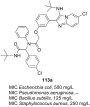


A facile three-component route to powerful 5-aryldeazaalloxazine photocatalysts
Beilstein J. Org. Chem. 2024, 20, 1831–1838, doi:10.3762/bjoc.20.161
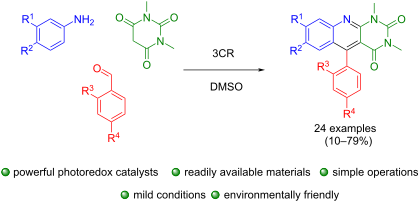
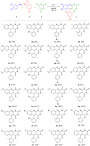
- mechanism, see Supporting Information File 1). Such results with previous reports on DMSO acting as a methine source in the synthesis of heterocyclic compounds [35][36] are opening a new avenue for the green synthesis of non-substituted 5-deazaalloxazines in a pseudo MCR fashion. Conclusion In summary, we




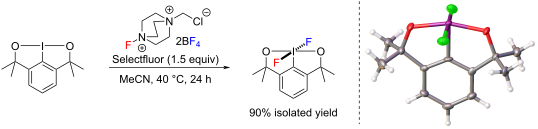
Oxidative fluorination with Selectfluor: A convenient procedure for preparing hypervalent iodine(V) fluorides
Beilstein J. Org. Chem. 2024, 20, 1785–1793, doi:10.3762/bjoc.20.157
- rate of decomposition was reduced significantly (green line in Figure 3). The hydrolysis of the four hypervalent iodine(V) fluorides was also investigated in acetonitrile-d3 by adding 5 equivalents of water. All four compounds decomposed to their corresponding iodosyl compounds and the order of
- (blue line), dry CDCl3 with 2.4 equivalents of dry pyridine (green line), and dry CDCl3 (red line). Order of hydrolytic stability for the four hypervalent iodine(V) fluorides. Examples of fluorination using hypervalent iodine(III) reagents 1 and 2. Preparations and reactions of hypervalent iodine(V





