


Search results
Search for "molecular dynamics" in Full Text gives 109 result(s) in Beilstein Journal of Organic Chemistry.
Synthesis in the glycosciences II
Beilstein J. Org. Chem. 2012, 8, 411–412, doi:10.3762/bjoc.8.45
- biology in living systems. For this endeavour, chemical, biological and physical concepts and experiments have been equally important and equally challenging. In addition computer-aided methods, such as molecular dynamics studies of carbohydrates and glycoconjugates, have added valuable information about
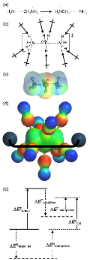
On the mechanism of action of gated molecular baskets: The synchronicity of the revolving motion of gates and in/out trafficking of guests
Beilstein J. Org. Chem. 2012, 8, 90–99, doi:10.3762/bjoc.8.9
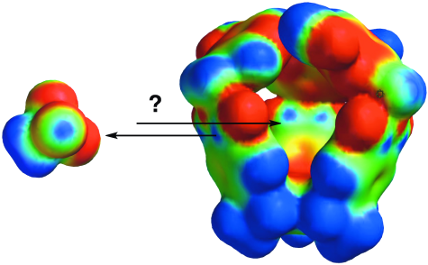
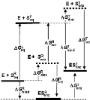
- ΔG‡rac (i.e., opening and closing, see below in Figure 6) reveals a systematic disparity (ΔG° + ΔG‡rac + ΔG‡sterics ≠ ΔG‡out, see below in Figure 7). In order to address this conundrum, we have employed methods of experimental (dynamic NMR) and computational chemistry (steered molecular dynamics, SMD
- mechanism [4]. Notably, a molecule of solvent CD2Cl2 and not another CH3CCl3 (interchange mechanism) displaces the encapsulated guest. In fact, the inspection of CPK models as well as molecular dynamics studies (see below) revealed that the departure of CH3CCl3 (93 Å3) demands (a) “opening” of at least two
- steered molecular dynamics (SMD) simulations using the AMBER 10.0 suite of programs [29][30][31][32]. Without applying any external force on the entrapped CH3CCl3, we first found that this guest would, within 10 ns, adopt many positions inside host 1, although the one depicted in Figure 6A is obtained


(How) does 1,3,5-triethylbenzene scaffolding work? Analyzing the abilities of 1,3,5-triethylbenzene- and 1,3,5-trimethylbenzene-based scaffolds to preorganize the binding elements of supramolecular hosts and to improve binding of targets
Beilstein J. Org. Chem. 2012, 8, 1–10, doi:10.3762/bjoc.8.1
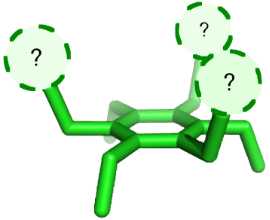
- rotational barriers Although kinetics has no bearing on binding thermodynamics, we sought also to understand computationally the dynamics of these different hosts. Molecular-dynamics simulations carried out at 300 K showed little or no dynamic exchange of conformations. Simulations carried out at the


Dependency of the regio- and stereoselectivity of intramolecular, ring-closing glycosylations upon the ring size
Beilstein J. Org. Chem. 2011, 7, 1609–1619, doi:10.3762/bjoc.7.189
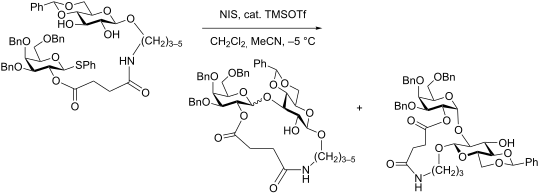
- , justifying a more profound conformational analysis of this product (Figure 6). Conformational molecular dynamics runs (MD) were performed on both anomers of the two regioisomers of 8d to simulate the behavior of the molecule during more than 5000 ps of molecular motion. Thereby, it was found that for the
- size spacer n = 2 (constitutions 6d, 7d, 8d, and further the isomer β(1→2), were not observed). The various regio- and stereoisomers were modeled and subjected to molecular dynamics (MD) runs of at least 5000 ps, wherefrom the observed major diastereomer 8d emerged with a lowest free energy by more
- subjected to molecular dynamics (MD) runs of at least 5000 ps, wherefrom the observed major diastereomer 8c, α(1→2), in its lowest conformation was again obtained with a free energy that was 2.3 kcal/mol lower than that for the next highest diastereomer 7c, α(1→3). Most-stable product conformations for the


Impact of the level of complexity in self-sorting: Fabrication of a supramolecular scalene triangle
Beilstein J. Org. Chem. 2011, 7, 1555–1561, doi:10.3762/bjoc.7.183
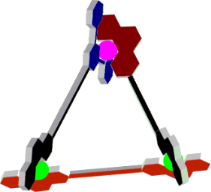
- starting materials, homometallic cases). As all attempts to obtain a crystal structure of T were unsuccessful, MM+ force-field computations and molecular dynamics on T (Hyperchem 7.52®, Hypercube, Inc.) provided some insight to their structure as scalene triangles. Taking the metal–metal distance as a


Catalysis: transition-state molecular recognition?
Beilstein J. Org. Chem. 2010, 6, 1026–1034, doi:10.3762/bjoc.6.117
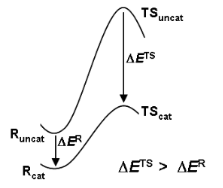
- transferase are described and compared with those for a model reaction in water, as computed by hybrid quantum-mechanical/molecular-mechanical molecular dynamics simulations. The case is discussed of molecular recognition in a xylanase enzyme that stabilises its sugar substrate in a (normally unfavourable





Chromo- and fluorophoric water-soluble polymers and silica particles by nucleophilic substitution reaction of poly(vinyl amine)
Beilstein J. Org. Chem. 2010, 6, No. 79, doi:10.3762/bjoc.6.79
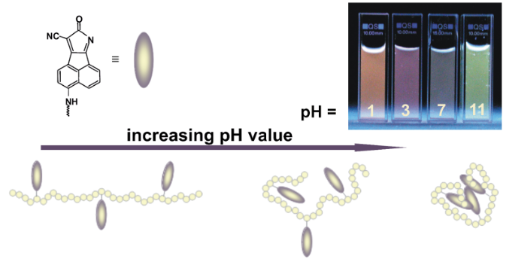
- ; poly(vinyl amine); Introduction Fluorescent polymers are an important tool for the study of molecular dynamics and also find use as sensor probes for biologically active compounds [1]. In recent years, there has been great interest in the synthesis, characterization and applications of fluorescent




(Pseudo)amide-linked oligosaccharide mimetics: molecular recognition and supramolecular properties
Beilstein J. Org. Chem. 2010, 6, No. 20, doi:10.3762/bjoc.6.20
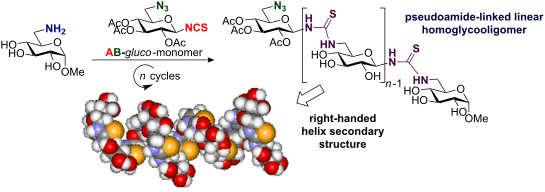
- combination with molecular dynamics calculations [57]. The results showed that the furanoid and the pyranoid SAA trimers adopt well-defined structures, although the trimer composed of pyranoid SAAs is less flexible than its furanoid counterpart. Chakraborty and co-workers have also synthesised cyclic homo



Chiral amplification in a cyanobiphenyl nematic liquid crystal doped with helicene-like derivatives
Beilstein J. Org. Chem. 2009, 5, No. 50, doi:10.3762/bjoc.5.50
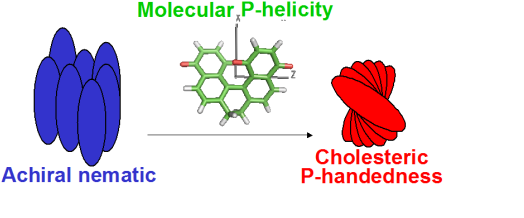
- intermolecular interactions and opposes director distortions [24]. Different theories [25][26][27] have contributed to elucidate the molecular mechanism behind cholesteric induction, as well as Molecular Dynamics simulations [28][29][30]; for the connection between structure of the chiral dopant and cholesteric




Other Beilstein-Institut Open Science Activities



