Search results
Search for "room temperature" in Full Text gives 2200 result(s) in Beilstein Journal of Organic Chemistry. Showing first 200.
Selective monoformylation of naphthalene-fused propellanes for methylene-alternating copolymers
Beilstein J. Org. Chem. 2025, 21, 1183–1191, doi:10.3762/bjoc.21.95
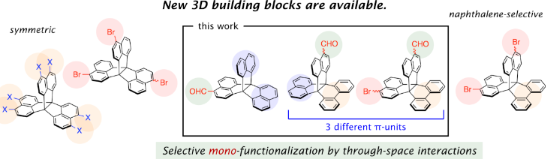
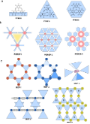
- ) [55][56][63][64][65][66] yielded the monoformyl product [4.3.3]_CHO, in a selective manner (Table 1, entry 1). To suppress decomposition in the overnight reaction at room temperature, the reaction time was reduced to 1.5 h, which afforded [4.3.3]_CHO in an isolated yield of 80% (Table 1, entry 2). The
- electrophilic functionalization. a) Synthesis of methylene-alternating copolymers of fully π-fused propellanes. DCE, 1,2-dichloroethane. b) 1H NMR (500 MHz, top) and 13C (126 MHz, bottom) NMR spectra of [4.3.3]_CH2OH and [4.3.3]_linear in CDCl3 at room temperature. Gas adsorption (filled circles) and desorption


A multicomponent reaction-initiated synthesis of imidazopyridine-fused isoquinolinones
Beilstein J. Org. Chem. 2025, 21, 1161–1169, doi:10.3762/bjoc.21.92
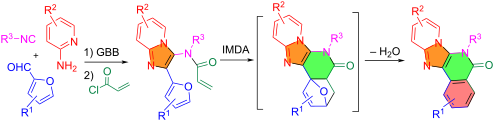
- in 89–98% yields. Reactions of 4 with acryloyl chloride (5, 1.5 equiv) in the presence of Et3N (2 equiv) at room temperature in anhydrous CH2Cl2 for 6 h afforded 19 N-acylated compounds 6 in 80–90% yields [19]. With N-acylated GBB adducts 6 in hand, the synthesis of imidazopyridine-fused
- irradiation at 100 °C for 1 h (Scheme 2, Table S1 in Supporting Information File 1). Nineteen distinct adducts 4 were obtained in 89–98% yields. The reactions of GBB adducts 4 with acryloyl chloride (5, 1.5 equiv) in the presence of Et3N (2 equiv) at room temperature in anhydrous CH2Cl2 for 6 h afforded 19 N


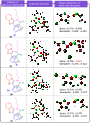


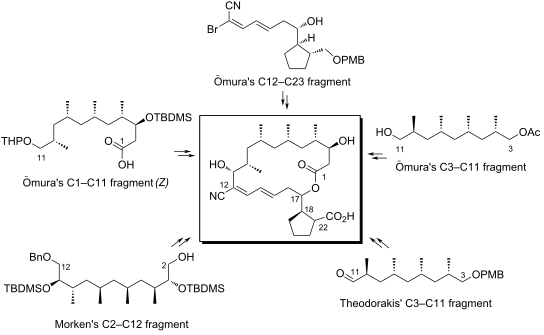
Synthetic approach to borrelidin fragments: focus on key intermediates
Beilstein J. Org. Chem. 2025, 21, 1135–1160, doi:10.3762/bjoc.21.91
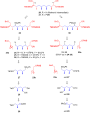
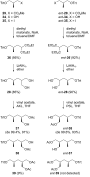
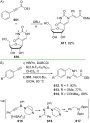
- presence of DCC and DMAP. The reaction was allowed to proceed for 6 h at room temperature, after which the temperature was reduced to −10 °C, and sodium borohydride was added. The mixture was left to react for 12 hours, yielding compound 53 in 96%. This intermediate was then converted to acrylic acid 54 by








Investigations of amination reactions on an antimalarial 1,2,4-triazolo[4,3-a]pyrazine scaffold
Beilstein J. Org. Chem. 2025, 21, 1126–1134, doi:10.3762/bjoc.21.90
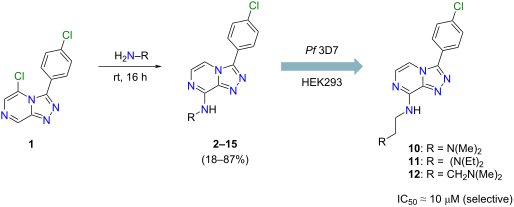
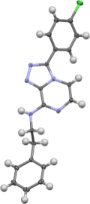
- scaffold for aminations with 14 commercially available primary amines. Reacting scaffold 1 with excess primary amine at room temperature for 16 h generated the desired amine analogues in respectable yields (18–87%) and high purity (≥95%) following chromatography workup. The structures of the 14 previously
- ]triazolo[4,3-a]pyrazine (compound 1; Scheme 1) according to the approach previously described by Korsik et al. [10] was performed, but without reflux, in order to compare the yield obtained for the aminated product under our further modified conditions (neat phenethylamine only, room temperature; Scheme 1
- column chromatography (and additionally by HPLC for the toluene reaction), the reactions also gave comparable yields of compound 2 (70% for toluene/silica and 82% for only phenethylamine at room temperature). Only the tele-substituted product was observed in either reaction mixture, consistent with




A versatile route towards 6-arylpipecolic acids
Beilstein J. Org. Chem. 2025, 21, 1104–1115, doi:10.3762/bjoc.21.88
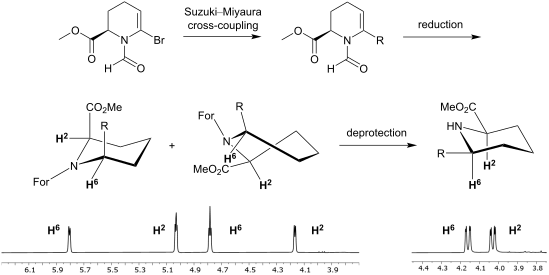
- amount of water was added to activate the boronic species and to dissolve the inorganic base under otherwise inert conditions. The reaction mixture was then stirred at room temperature overnight. Under these conditions, a variety of boronic acids with different steric and electronic properties was





Salen–scandium(III) complex-catalyzed asymmetric (3 + 2) annulation of aziridines and aldehydes
Beilstein J. Org. Chem. 2025, 21, 1087–1094, doi:10.3762/bjoc.21.86
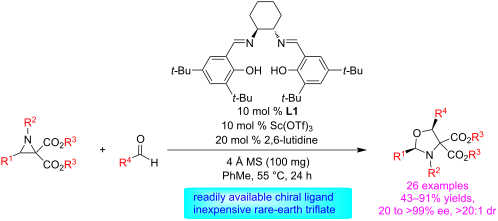
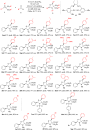
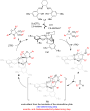
- procedure [16]. General procedure for the synthesis of ethyl 2-(oxazol-2-yl)alkanoates 3 Sc(OTf)3 (9.8 mg, 0.02 mmol) was added in a dried 10 mL reaction tube, then it was heated to 220 °C and dried at 220 °C for 2 h under oil pump vacuum. After gradually cooling to room temperature, the chiral salen ligand
- with a syringe and the mixture was stirred at 55 °C for 24 h. After gradually cooling to room temperature and removal of the solvent under reduced pressure, the crude residue was purified by basic aluminum oxide column chromatography with petroleum ether/ethyl acetate 1:10 to 3:7 (v/v) as eluent to



Recent advances in synthetic approaches for bioactive cinnamic acid derivatives
Beilstein J. Org. Chem. 2025, 21, 1031–1086, doi:10.3762/bjoc.21.85
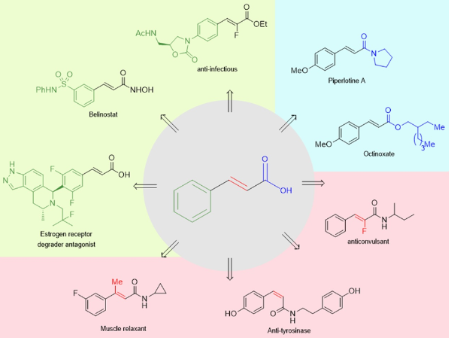
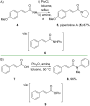
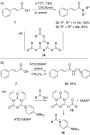
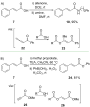
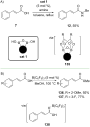
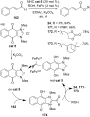
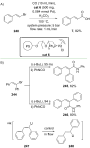
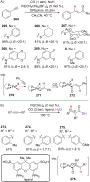
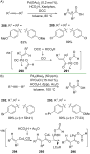
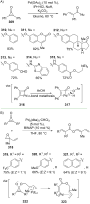
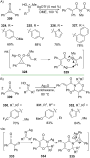
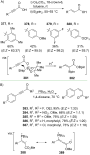
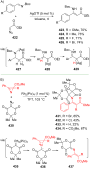
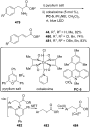
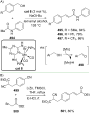
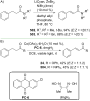
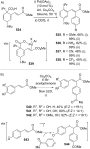
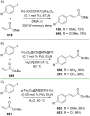
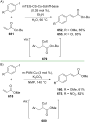
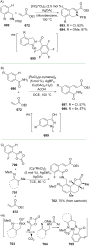
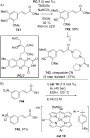
- excellent yield (Scheme 2) [32]. The formed anhydride 3 was smoothly converted to the amide at room temperature. This method provides a green approach by allowing cinnamic acid derivatization in water as a benign solvent. Similarly, Rajendran and Rajan (2023) reported a one-pot transamidation of cinnamamide








































On the photoluminescence in triarylmethyl-centered mono-, di-, and multiradicals
Beilstein J. Org. Chem. 2025, 21, 964–998, doi:10.3762/bjoc.21.80
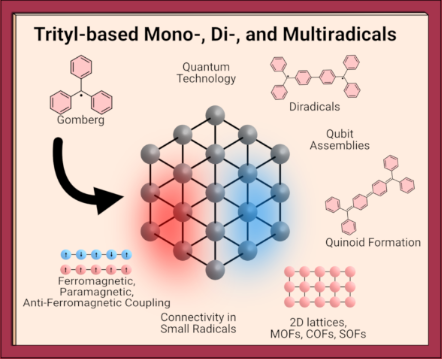
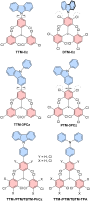
- problems in the future and prepare organic radicals for the challenges in emerging quantum technological applications. Review Triarylmethyl monoradicals The importance of symmetry in triarylmethyl radicals Gomberg’s radical is unstable at room temperature and dimerizes quickly to a closed-shell molecule
- mixture of right- and left-handed propellers can be resolved by chiral high pressure liquid chromatography (HPLC) into the P- and M-enantiomers, respectively [40][41]. However, due to the low racemization barrier of only about 22 kcal mol−1, the enantiomers racemize within minutes at room temperature. TTM
- )methyl (TTBrM) radical exhibits λem = 593 nm and ϕ of 0.8% (in dichloromethane-solution, at room temperature) [50][51]. Functionalization of TTM in the para-position has also been achieved with a pseudo-halide, namely a nitrile group. While the absorption and emission spectra are slightly









Harnessing tethered nitreniums for diastereoselective amino-sulfonoxylation of alkenes
Beilstein J. Org. Chem. 2025, 21, 947–954, doi:10.3762/bjoc.21.78

- equivalent of commercial iodomesitylene diacetate (CAS [33035-41-5]) and 1 equivalent of MsOH (Table 1, entry 4). Here, it was necessary to maintain a temperature of 0 °C, as vigorous bubbling and rapid decomposition occurred when the reaction was initiated at room temperature. In all cases (Table 1), only a
- delivering product (Table 2, entries 1 and 3–5). With our standard conditions of stirring substrate with 1.5 equivalents of PhI(OH)(OTs) in CH2Cl2 at room temperature, the yield of product markedly suffered with N-isopropoxy carbamate substrate 3 (Table 2, entry 2). Here, we hypothesize that the increased


Study of tribenzo[b,d,f]azepine as donor in D–A photocatalysts
Beilstein J. Org. Chem. 2025, 21, 935–944, doi:10.3762/bjoc.21.76

- , with values of 16%, 14%, and 14%, respectively. The lowest values were obtained for molecules 5a and 5b (7% and 6%, each). Remarkably, compound 5e demonstrated minimal luminescence in nearly all solvents at room temperature. This behavior has been previously reported and is believed to be due to strong



Silver(I) triflate-catalyzed post-Ugi synthesis of pyrazolodiazepines
Beilstein J. Org. Chem. 2025, 21, 915–925, doi:10.3762/bjoc.21.74
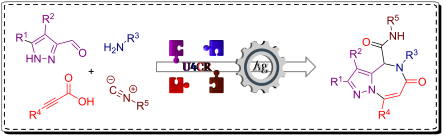
- , when performed at room temperature, proceeded with lower efficiency compared to the reaction at 70 °C, leaving some of the starting 1H-pyrazole-3-carbaldehyde (14a) unreacted. Propargylamide 15a was selected as a model substrate to optimize the reaction conditions for the intramolecular
- pyrazole-tethered propargylamides 15 via U4CR. Conditions: Unless otherwise specified, the reactions were run on a 1.0 mmol scale in methanol (5 mL). The reactions were conducted in screw cap vials at 70 °C for 24 hours and isolated yields are reported. aConducted on a 6.0 mmol scale. bConducted at room
- temperature. cConducted on a 2.0 mmol scale. dConducted on a 1.5 mmol scale. Scope of the silver(I) triflate-catalyzed synthesis of pyrazolo[1,5-a][1,4]diazepines. Conditions: Unless otherwise specified, the reactions were run on 0.2 mmol scale using 20 mol % of AgOTf in dioxane (1 mL). The reactions were




Recent advances in controllable/divergent synthesis
Beilstein J. Org. Chem. 2025, 21, 890–914, doi:10.3762/bjoc.21.73

- (cod)Cl]2 and the Carreira chiral phosphoramidite ligand (S)-L10, along with the addition of 3,5-dichlorobenzoic acid as an additive in MeOH at room temperature, the reaction proceeded smoothly for 10 hours to yield the aminated product 51. Interestingly, when the reaction was quenched after 6 minutes
- and n-BuLi, followed by a reaction with ZnCl2 at room temperature. The product is then hydrolyzed with a NaOH solution of H2O2 to yield amino alcohols. The mechanism involves the formation of borate intermediate Int-79 from substrate 83 under the action of CH2BrLi. This is followed by an N-1,2




Regioselective formal hydrocyanation of allenes: synthesis of β,γ-unsaturated nitriles with α-all-carbon quaternary centers
Beilstein J. Org. Chem. 2025, 21, 800–806, doi:10.3762/bjoc.21.63
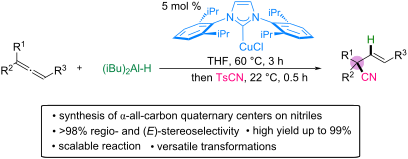
- , the hydride addition of DIBAL-H to allene 1a catalyzed by 5 mol % IPrCuCl as the optimal catalyst selectively generated the allylaluminum intermediate 2a with >98% conversion [30]. Subsequent addition of one equivalent of TsCN to 2a in a single vessel at room temperature proceeded regioselectively
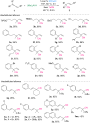
- scope for the formal hydrocyanation with 1,1-disubstituted and 1,1,3-trisubstituted allenes was examined (Scheme 3). All reactions were performed in the presence of 5 mol % IPrCuCl to generate the allylaluminum reagents in situ, followed by cyanation at room temperature for 30 min. This method




Recent advances in the electrochemical synthesis of organophosphorus compounds
Beilstein J. Org. Chem. 2025, 21, 770–797, doi:10.3762/bjoc.21.61
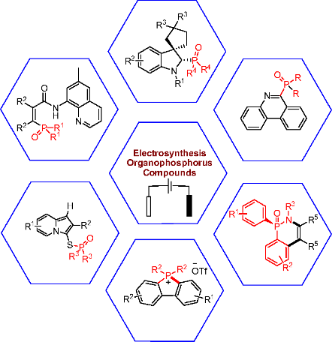
- undivided cell at room temperature, and three different electrodes, graphite, platinum, and glassy carbon (GC), were examined during the reaction. The best result was obtained when platinum electrodes were used as the anode and cathode. Although the reaction was less efficient in undivided cells, increasing
- electrochemical method. They have synthesized 30 different thiazole phosphine oxides with up to 91% yield at room temperature without using an external metal or oxidant. The reaction was carried out in an undivided cell using glassy carbon as the anode and foamed copper as the cathode electrodes at a constant
- et al. [59] reported an electrochemical method for the synthesis of phosphorylation of oxindoles and indolo[2,1-a]isoquinoline-6(5H)-ones using Cp2Fe through a radical addition/cyclization reaction at room temperature under argon gas. This research shows that this method is effective with various


Development and mechanistic studies of calcium–BINOL phosphate-catalyzed hydrocyanation of hydrazones
Beilstein J. Org. Chem. 2025, 21, 755–765, doi:10.3762/bjoc.21.59
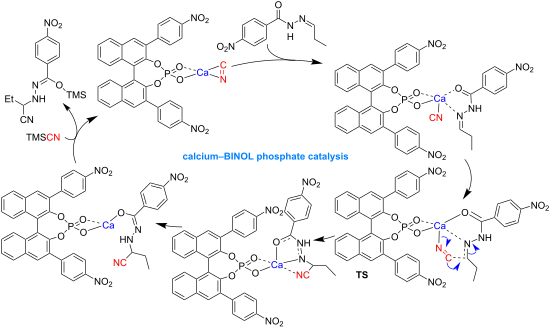
- BINOL phosphate/Ca(OiPr)2. In the presence of two equivalents of TMSCN, complex 4 gave a quantitative conversion to the product 2, whereby the phosphoric acid BIPO4-H ligand 3 did not catalyze this hydrocyanation. At room temperature, a nearly full conversion can already be achieved within 2–12 hours


Copper-catalyzed domino cyclization of anilines and cyclobutanone oxime: a scalable and versatile route to spirotetrahydroquinoline derivatives
Beilstein J. Org. Chem. 2025, 21, 749–754, doi:10.3762/bjoc.21.58
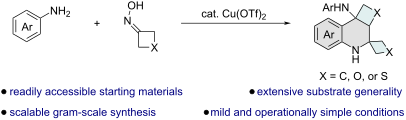
- moderate yield (Table 1, entry 6). Conducting the reaction at room temperature (rt) instead of the optimal elevated temperature resulted in a lower yield (Table 1, entry 7). Increasing the reaction temperature to 100 °C did not improve the yield (Table 1, entry 8). Having established the optimal reaction


Synthesis of HBC fluorophores with an electrophilic handle for covalent attachment to Pepper RNA
Beilstein J. Org. Chem. 2025, 21, 727–735, doi:10.3762/bjoc.21.56
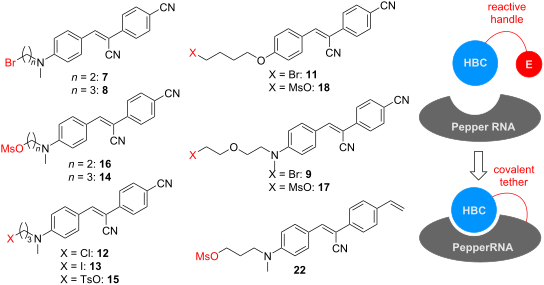
- obtained in general procedure B was dissolved in dichloromethane and cooled to 0 °C under argon atmosphere. Then, triphenylphosphine and carbon tetrabromide were added and stirred at room temperature for two hours. Afterwards, the entire mixture was loaded on a silica gel column and eluted with 100
- % dichloromethane. General procedure D. In a manner similar to [11], the product obtained in general procedure B, methanesulfonyl chloride, and triethylamine were dissolved in dichloromethane and stirred overnight at room temperature. After reaction control and 100% consumption of the starting material, the entire

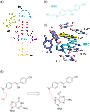


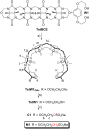
Acyclic cucurbit[n]uril bearing alkyl sulfate ionic groups
Beilstein J. Org. Chem. 2025, 21, 717–726, doi:10.3762/bjoc.21.55
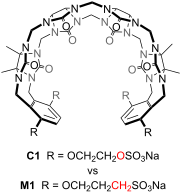
- shows an ion at m/z = 751.13 which corresponds to [C1 − 2Na]2−. Inherent aqueous solubility of C1 After having firmly established the structure of C1 we decided to determine its inherent aqueous solubility. For this purpose, we added an excess of solid C1 to D2O and stirred the solution at room
- temperature overnight. Afterwards, the mixture was centrifuged (4400 rpm, 10 min) to pellet excess insoluble C1. An aliquot of the supernatant and a solution of dimethyl malonic acid as a non-binding internal standard of known concentration were transferred to an NMR tube followed by collection of a 1H NMR




Asymmetric synthesis of fluorinated derivatives of aromatic and γ-branched amino acids via a chiral Ni(II) complex
Beilstein J. Org. Chem. 2025, 21, 659–669, doi:10.3762/bjoc.21.52
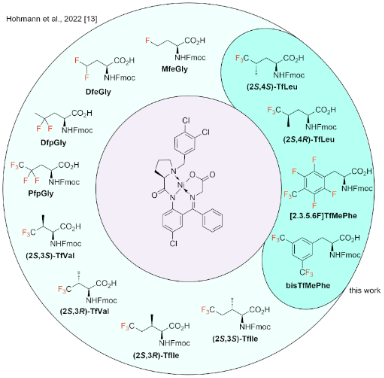
- identified as optimal delivering a yield of alkylated complex of 60% (Table 1, entry 4). With DBU as base different solvents differing in polarity have been tested. At room temperature, acetonitrile proved best and increased the yield to 88% (Table 1, entry 11). Lowering the temperature to 0 °C led to a
- (II) complex of bisTfMePhe have differed significantly. Here, sodium hydride (NaH) was identified as optimal base leading to a yield of 85% when using DMF as solvent at 0 °C to room temperature (Table 2, entry 4). Testing different base equivalents, solvents, solvent mixtures and temperatures didn’t
- lead to any yield improvement (Table 2, entries 7–13). Herein, using dimethylformamide (DMF), different equiv of alkyl bromide were further screened resulting in a yield of 93%. Thus, 1.5 equiv NaH with 1.5 equiv alkyl bromide in DMF at 0 °C to room temperature have been identified as optimal


Recent advances in allylation of chiral secondary alkylcopper species
Beilstein J. Org. Chem. 2025, 21, 639–658, doi:10.3762/bjoc.21.51
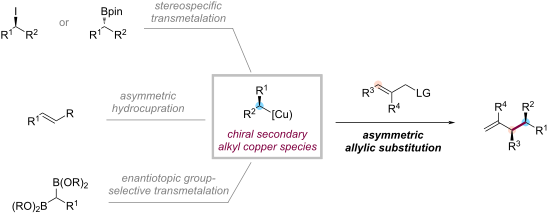
- optimization revealed LiOt-Bu and diphenyl phosphate as the optimal metal alkoxide and leaving group, delivering the desired product 32 in high yield and high enantioselectivity at room temperature with only 2 mol % catalyst loading. The scope of this transformation proved to be remarkably broad. In addition




Entry to 2-aminoprolines via electrochemical decarboxylative amidation of N‑acetylamino malonic acid monoesters
Beilstein J. Org. Chem. 2025, 21, 630–638, doi:10.3762/bjoc.21.50
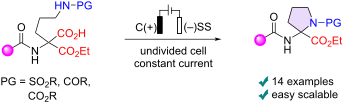
- conditions at room temperature, and 2.0 F charge (if not otherwise noticed) with current density of 12 mA/cm2 was passed through the colorless reaction solution. The resulting clear, colorless (sometimes pale yellow) solution was concentrated under reduced pressure and the crude product was purified by



Photocatalyzed elaboration of antibody-based bioconjugates
Beilstein J. Org. Chem. 2025, 21, 616–629, doi:10.3762/bjoc.21.49
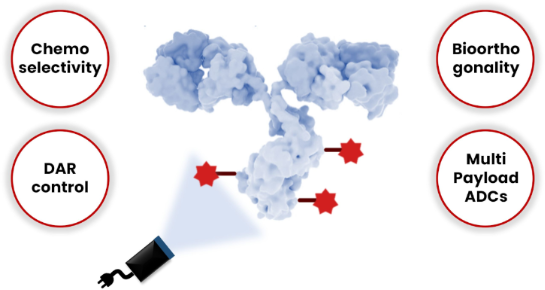
- for the types of reactions that can be used for the elaboration of ADCs. Among the signature features of photochemical, single-electron transformations is their ability to be conducted in dilute aqueous media at room temperature and at neutral pH [47]. Additionally, the distinctive mechanistic


Semisynthetic derivatives of massarilactone D with cytotoxic and nematicidal activities
Beilstein J. Org. Chem. 2025, 21, 607–615, doi:10.3762/bjoc.21.48
- ), solvent A: H2O + 0.1% formic acid; solvent B: acetonitrile (ACN) + 0.1% formic acid, gradient: 5% B for 0.5 min, increasing to 100% B in 20 min, maintaining isocratic conditions at 100% B for 10 min, flow = 0.6 mL/min, UV–vis detection 190–600 nm]. Preparative HPLC was achieved at room temperature on an
- mixture was stirred at room temperature overnight. The reaction mixture was suspended in water (25 mL) and extracted with CH2Cl2 (2 × 25 mL). The combined organic layer was evaporated to dryness to give a residue, which was dissolved in methanol (300 μL) and purified by preparative HPLC [ChemStation
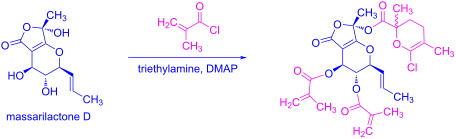
- , 0.062 mmol) was dissolved in CH2Cl2 (10 mL). Triethylamine (20 μL) and cinnamoyl chloride (50 mg, 0.30 mmol) were added to the solution. After adding a catalytic amount of 4-dimethylaminopyridine, the reaction mixture was stirred at room temperature overnight. The reaction mixture was suspended in water


Formaldehyde surrogates in multicomponent reactions
Beilstein J. Org. Chem. 2025, 21, 564–595, doi:10.3762/bjoc.21.45
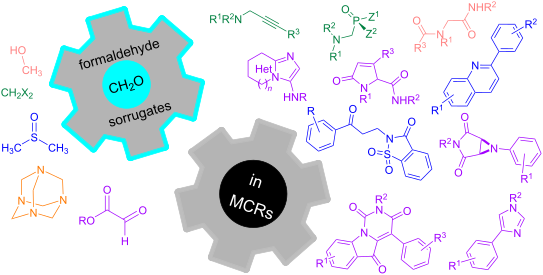
- occurred at room temperature. The mild reaction conditions for both strategies (“free” or immobilized glyoxylic acid) allows for a broad scope in terms of 2-aminoazines and isocyanide components (some examples are shown in Scheme 34). It is important to note that these imidazo heterocycles have been


Vinylogous functionalization of 4-alkylidene-5-aminopyrazoles with methyl trifluoropyruvates
Beilstein J. Org. Chem. 2025, 21, 533–540, doi:10.3762/bjoc.21.41
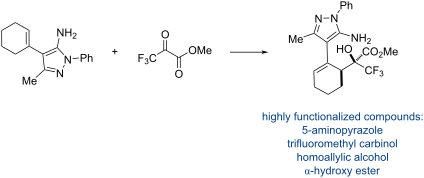
- (Table 1). First, we tried several solvents (dichloromethane, toluene and dichloroethane, entries 1–3 in Table 1) at room temperature, obtaining product 5aaa in yields around 50% with high diastereoselectivity (up to 6:1) after several days. Increasing the temperature to 50 °C (Table 1, entries 4 and 5