


Search results
Search for "solvent effects" in Full Text gives 106 result(s) in Beilstein Journal of Organic Chemistry.
Anion–π interactions influence pKa values
Beilstein J. Org. Chem. 2011, 7, 320–328, doi:10.3762/bjoc.7.42
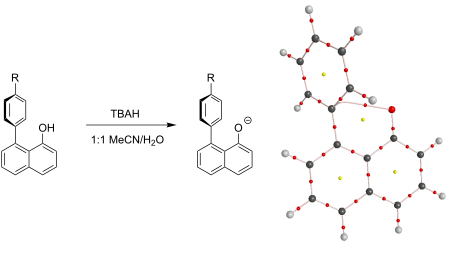
- Supporting Information File 1. Discussion Intermolecular effects on molecules are widely recognised as being important in both binding and reactions, with solvent effects being the classic example of the latter. The effects of solvation on reactive intermediates can change the outcome of a reaction
- in this solvent mixture. Solvent effects will nevertheless impact upon the pKa calculated, therefore pKa values derived from compounds in binary solvent systems are represented with a prime symbol (') indicating the pKa values are not measured in pure water. Solvents can affect the properties of


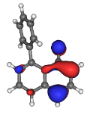
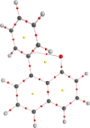
The intriguing modeling of cis–trans selectivity in ruthenium-catalyzed olefin metathesis
Beilstein J. Org. Chem. 2011, 7, 40–45, doi:10.3762/bjoc.7.7
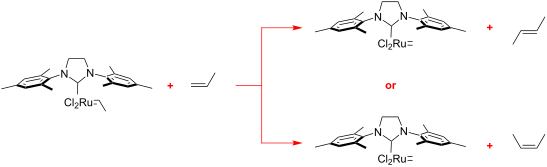
- is reasonably favored over TS2-trans also with the M06 functional. It is the inclusion of the vibrational/entropic part that makes the M06 cis- and trans transition states of similar energy, (compare the ΔE≠cis–trans and ΔG≠cis–trans values in the gas-phase in Table 1). Inclusion of solvent effects


The catalytic performance of Ru–NHC alkylidene complexes: PCy3 versus pyridine as the dissociating ligand
Beilstein J. Org. Chem. 2010, 6, 1188–1198, doi:10.3762/bjoc.6.136
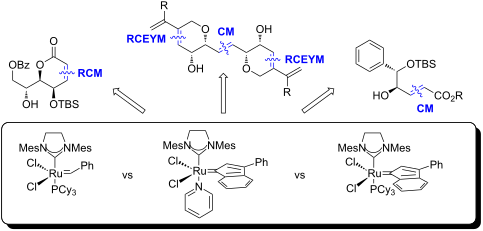
- ligand is protonated under these conditions which would result in a higher amount of the catalytically active 14-electron species. This interpretation is corroborated by the kinetic data obtained by Adjiman, Taylor et al. in their original investigation on solvent effects [49]. Next, we were interested


Intramolecular hydroxycarbene C–H-insertion: The curious case of (o-methoxyphenyl)hydroxycarbene
Beilstein J. Org. Chem. 2010, 6, 1061–1069, doi:10.3762/bjoc.6.121
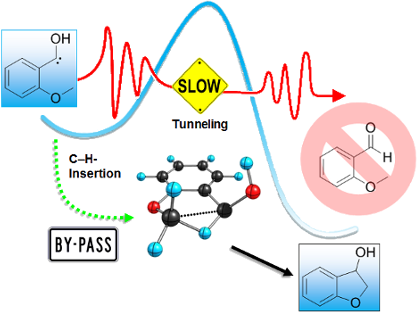
- singles and doubles as well as perturbative triples and taking into account both valence and core electrons [32][33][34]. Again, cc-pVDZ was used as the basis set (AE-CCSD(T)/cc-pVDZ). For the elucidation of solvent effects, M06-2X/cc-pVDZ-computations with the Polarization Continuum Model [35] (PCM) were


Donor-acceptor substituted phenylethynyltriphenylenes – excited state intramolecular charge transfer, solvatochromic absorption and fluorescence emission
Beilstein J. Org. Chem. 2010, 6, 992–1001, doi:10.3762/bjoc.6.112
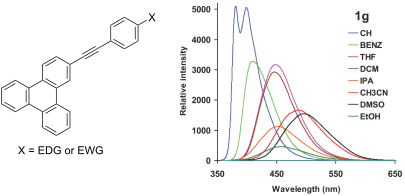
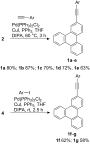
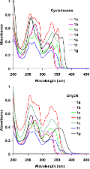
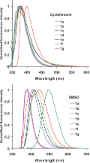
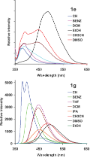
- these molecules is relatively non-polar and devoid of significant solvent and substituent effects. By contrast, the fluorescence emission bands of 1a–g showed significant substituent and solvent effects. The fluorescence emission spectra of 1a–g in cyclohexane, and DMSO are shown in Figure 2. In




Recognition properties of receptors consisting of imidazole and indole recognition units towards carbohydrates
Beilstein J. Org. Chem. 2010, 6, No. 9, doi:10.3762/bjoc.6.9
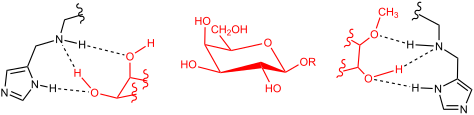
- change of the binding model; for a discussion on solvent effects in carbohydrate binding by synthetic receptors, see ref. [56]). The interactions between the β-glucoside 6a and the indole-based receptor 5 in CDCl3 were shown to be strong but less favorable than those with the receptor 4. The best fit of




Other Beilstein-Institut Open Science Activities



