


Search results
Search for "catalyst" in Full Text gives 1886 result(s) in Beilstein Journal of Organic Chemistry. Showing first 200.
Organocatalytic kinetic resolution of 1,5-dicarbonyl compounds through a retro-Michael reaction
Beilstein J. Org. Chem. 2025, 21, 473–482, doi:10.3762/bjoc.21.34
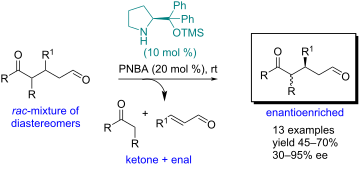
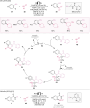
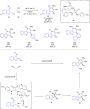
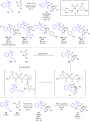
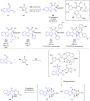
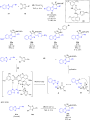
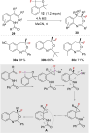
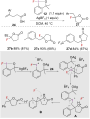
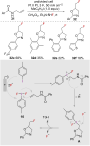
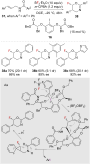
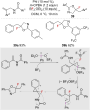
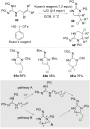
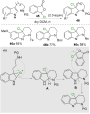
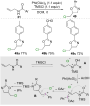
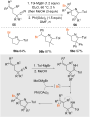
- low catalyst loadings and mild reaction conditions. This research focuses on the kinetic resolution of 1,5-dicarbonyl compounds using a retro-Michael reaction, co-catalyzed at room temperature with 20 mol % of the Jørgensen–Hayashi catalyst and PNBA. The study highlights the importance of conducting
- chromatography [1]. Sometime later, kinetic resolution (KR) emerged. This method is based on the different reaction rates of each enantiomer in a racemic mixture when they are reacted with a reagent, a chiral catalyst, or an enzyme. This process results in obtaining the less reactive enantioenriched enantiomer
- processes with low catalyst loading. It involves the kinetic resolution of alcohols, amines, and esters using chiral phosphoric acids [6][7][8][9][10][11][12][13] and sulfoximines with enals using chiral N-heterocyclic carbene (NHC) catalysts [14]. Additionally, these processes have been conducted using


Beyond symmetric self-assembly and effective molarity: unlocking functional enzyme mimics with robust organic cages
Beilstein J. Org. Chem. 2025, 21, 421–443, doi:10.3762/bjoc.21.30
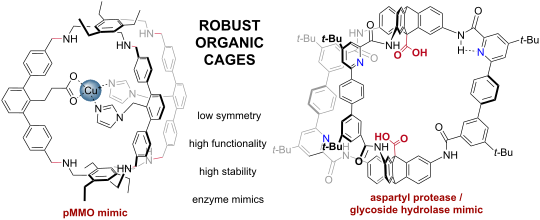
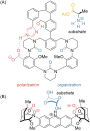
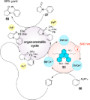
- polarization (enthalpic) (Figure 1). Organization, the control of the position(s) and orientation(s) of reacting molecules, has been achieved historically in supramolecular chemistry using “pre-organized” catalyst designs (vide infra). More recently, organization has been mooted by List as a unifying concept
- across many fields of selective catalysis under the term confinement [3], a term borrowed from heterogeneous catalysis. Polarization can be understood as the catalyst providing an electrostatic environment that works to stabilize electron redistribution. Since all reactions redistribute electrons, and
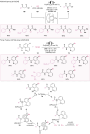
- work simply by bringing substrates arbitrarily close to a potentially reactive group [99][100]. One rare but important exception is Breslow’s use of two tethered cyclodextrins to locate hydrophobic ester substrates next to a metal ion. Breslow’s catalyst accelerates the hydrolysis of esters and




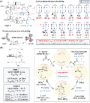
The effect of neighbouring group participation and possible long range remote group participation in O-glycosylation
Beilstein J. Org. Chem. 2025, 21, 369–406, doi:10.3762/bjoc.21.27
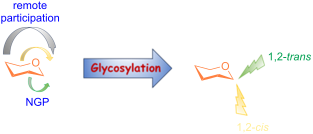
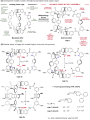
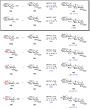
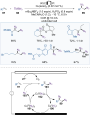
- sections. Similarly, Pertel and co-workers also demonstrated the use of 2-(2,2,2-trichloroethoxy)-2-oxazoline glycosyl donor 22 (Scheme 4) which could be used for stereo- and regioselective glycosylations using extremely mild conditions [94] and requiring low concentrations of the catalyst. In this case




Synthesis of new condensed naphthoquinone, pyran and pyrimidine furancarboxylates
Beilstein J. Org. Chem. 2025, 21, 340–347, doi:10.3762/bjoc.21.24
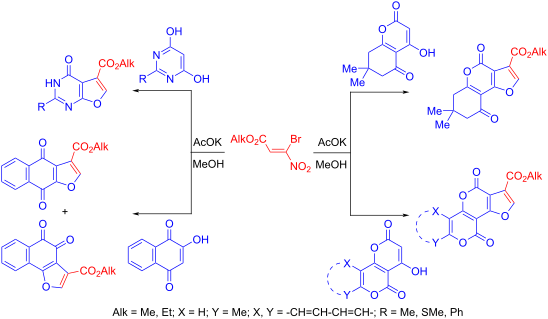
- ]. In addition, we have previously demonstrated the effective use of alkyl 3-bromo-3-nitroacrylates in the preparation of condensed furancarboxylates using potassium acetate as a catalyst [28][29][30]. The present study is aimed at developing methods for the synthesis of a wide range of condensed


Red light excitation: illuminating photocatalysis in a new spectrum
Beilstein J. Org. Chem. 2025, 21, 296–326, doi:10.3762/bjoc.21.22

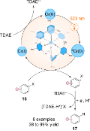
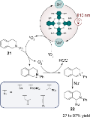
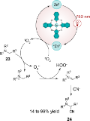
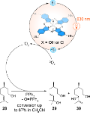
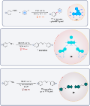
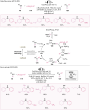
- diverse catalyst types and applications. The first section is dedicated to metal-based photocatalysts. Complexes involving metals such as osmium and ruthenium, have dominated red-light photoredox catalysis because of their ability to absorb low-energy photons and sustain redox cycles via stable excited
- of side reactions. This latter advantage has been notably exploited in the case of ring-closing olefin metathesis reactions, where Weizmann et al. utilized the photothermal response of plasmons from gold nanoparticles to activate the catalyst [17]. This approach contrasts with the work of Rovis et al
- in continuous-flow conditions. This performance is particularly notable given that the reaction was carried out using sub-part-per-million loadings of the catalyst (0.003 mol %), a stark contrast to traditional systems, which often require higher concentrations of heavy metals. Unlike classical















Three-component reactions of conjugated dienes, CH acids and formaldehyde under diffusion mixing conditions
Beilstein J. Org. Chem. 2025, 21, 262–269, doi:10.3762/bjoc.21.18
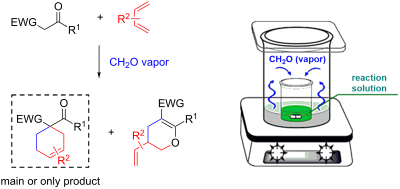
- characteristic triplets at 5.76 and 2.77 ppm (J = 7.0 Hz). Compound 3 was also formed in almost quantitative yield in acetonitrile within one day in the presence of ʟ-proline (Table 1, entry 10), which is an effective catalyst for crotonic condensation [22]. Since the reaction of diketone 1 in the presence and
- an important role; the presence of the condensation catalyst ʟ-proline accelerated the absorption of formaldehyde vapors by the reaction mixture. Carrying out the same reaction in the absence of a catalyst in CDCl3 and subsequent 1H NMR spectroscopy analysis showed that the mixture contained 42% of
- adducts of the Diels–Alder (i.e., I) and the hetero-Diels–Alder reaction (i.e., II), or adducts resulting from the addition of a second equivalent of CH acid to the crotonic condensation product (i.e., III). Apparently ʟ-proline played an essential role as catalyst in this three-component reaction. Using


Synthesis of disulfides and 3-sulfenylchromones from sodium sulfinates catalyzed by TBAI
Beilstein J. Org. Chem. 2025, 21, 253–261, doi:10.3762/bjoc.21.17
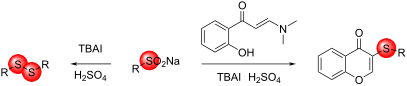
- -toluenesulfinate as the model substrate and tetrabutylammonium iodide (TBAI) as the catalyst, the results are listed in Table 1. Various acids were tested to assess their effect on the reaction (Table 1, entries 1–5). From the results, it could be concluded that, in the presence of strong acids, all afforded the
- been further decreased, in the end, 0.5 mL of DMF was used because of the solubility of the reagents. Increasing the amount of catalyst to 20 mol % resulted in a significant increase in the yield, but further increases did not significantly change the yield (Table 1, entries 14 and 15). A decrease in
- reaction temperature resulted in a significant decrease in the yield (Table 1, entry 16) and at 80 °C no desired product, but only thiosulfonate was formed (Table 1, entry 17). The reaction did not proceed in the absence of acid or catalyst (Table 1, entries 18 and 19). Compared to TBAI, other iodized




Visible-light-promoted radical cyclisation of unactivated alkenes in benzimidazoles: synthesis of difluoromethyl- and aryldifluoromethyl-substituted polycyclic imidazoles
Beilstein J. Org. Chem. 2025, 21, 234–241, doi:10.3762/bjoc.21.15
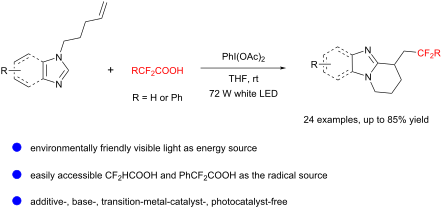
- CF2HCO2H or PhCF2COOH, along with benzimidazoles bearing unactivated alkenes and PhI(OAc)2 as substrates, and proceeded without the need of any base, metal catalyst, photocatalyst or additive. In total, 24 examples were examined, and all of them successfully underwent cyclization reaction to produce the
- with CF2HCOOH or PhCF2COOH, and PIDA under additive-, base-, and metal catalyst-free conditions (Scheme 1b). Results and Discussion Initially, 1-(pent-4-en-1-yl)-1H-benzo[d]imidazole (1a), CF2HCOOH, and PIDA were chosen as the template substrates for this radical difluoromethylation and cyclization
- tricyclic and bicyclic imidazoles under additive-, base-, and metal catalyst-free conditions utilizing difluoroacetic acid and α,α-difluorobenzeneacetic acid as the readily available fluorine sources. The significant advantages of this approach, including its environmental friendliness and cost


Dioxazolones as electrophilic amide sources in copper-catalyzed and -mediated transformations
Beilstein J. Org. Chem. 2025, 21, 200–216, doi:10.3762/bjoc.21.12
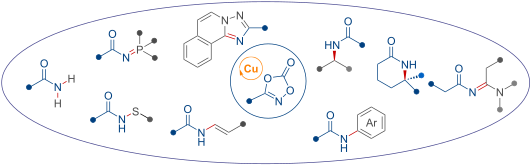
- , the Chang group elegantly unveiled a protocol for an enantioselective C–N bond formation, introducing δ-lactams from dioxazolones using a copper(I) catalyst and a chiral BOX ligand [74]. As shown in Scheme 2, dioxazolones containing aryl and heteroaryl groups were converted into the corresponding
- ) nitrenoid intermediate INT-7. Subsequent nitrene insertion, protodemetalation, and intramolecular cyclization furnish the desired 1,2,4-triazole. 1.3 Three-component formation of N-acyl amidines In 2019, N-acyl amidines were prepared from dioxazolones using a copper catalyst with terminal alkynes and
- dioxazolone bearing a phenyl group showed no reactivity toward benzoyl amidine under the optimized reaction conditions. Instead, the authors employed a less bulky copper iodide catalyst in the absence of phosphine, successfully affording aryloyl amidine 10f. Furthermore, the electron-rich ethynylanisole


Recent advances in electrochemical copper catalysis for modern organic synthesis
Beilstein J. Org. Chem. 2025, 21, 155–178, doi:10.3762/bjoc.21.9

- through oxidative addition, followed by transmetalation and reductive elimination, to obtain the desired product. Throughout the catalytic cycle, the catalyst undergoes conversion between [M]n and [M]n+2 (Figure 1) [11]. However, using alkyl electrophiles as coupling partners in cross-coupling reactions
- ][22][23][24]. Moreover, copper-catalyzed asymmetric radical cross-coupling has advanced significantly over the past decade [25][26][27], with notable examples including Liu and Stahl’s enantioselective cyanation of benzylic C–H bonds using a Cu/chiral bisoxazoline catalyst [28], along with the Peters
- electron transfer to the metal catalyst without the need for chemical redox agents, thus providing milder and more sustainable reaction conditions (Figure 2) [32]. Electrochemical reactions can be performed at low potentials, thereby suppressing side reactions, and chemoselectivity and reactivity can be








Nickel-catalyzed cross-coupling of 2-fluorobenzofurans with arylboronic acids via aromatic C–F bond activation
Beilstein J. Org. Chem. 2025, 21, 146–154, doi:10.3762/bjoc.21.8
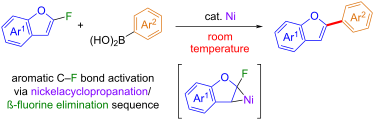
- catalyst, PCy3 (20 mol %) as a ligand, and K2CO3 (2.0 equiv) as a base, the desired arylated naphthofuran 3bb was obtained in 75% yield (Table 1, entry 1). Reducing the reaction temperature improved the yield of 3bb, reaching a quantitative yield when the reaction was performed at room temperature (Table 1
- , entry 3). Reducing the catalyst loading to 5 mol % slightly affected the yield of 3bb, which was 90% (Table 1, entry 4). Next, we evaluated various additives with 5 mol % of Ni(cod)2 to stabilize regenerated zero-valent nickel species (Table 1, entries 5–8). While phosphine ligands such as triphenyl
- optimized the coupling reaction using potassium phosphate as a base and increasing the nickel catalyst loading to 20 mol %, achieving a yield of 78% for the desired product 3bg. When 2-naphthylboronic acid (2i) was employed, its solubility was enhanced using a mixed solvent system of toluene, methanol, and



Cu(OTf)2-catalyzed multicomponent reactions
Beilstein J. Org. Chem. 2025, 21, 122–145, doi:10.3762/bjoc.21.7

- dual activity as a metal catalyst as well as a Lewis acid [8][9][10][11]. However, in many cases, the role of copper is not clear and both activities often work synergistically. In all other cases, copper’s activity is due to the coordination/complexation with unsaturated systems, but it is rarely
- possible to exclude its action also as Lewis acid. Confirming this dual activity, it should be noted that copper triflate can rarely be replaced by other copper salts or complexes to obtain the same results. In general, catalyst switching does not work with copper triflate, thus supporting its unique
- behavior or reactivity properties. The ambiguity related to the role of Cu(OTf)2 is particularly relevant for cycloaddition reactions, where it is even more difficult to justify the activation of the copper species as a Lewis acid or metal catalyst [12][13][14]. The reaction mechanism involved can be ionic






Recent advances in organocatalytic atroposelective reactions
Beilstein J. Org. Chem. 2025, 21, 55–121, doi:10.3762/bjoc.21.6
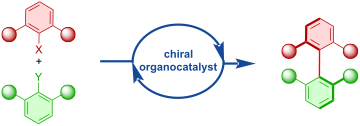
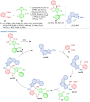
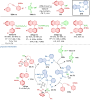
- organocatalytic reactions are discussed according to the dominant catalyst activation mode. For covalent organocatalysis, the typical enamine and iminium modes are presented, followed by N-heterocyclic carbene-catalyzed reactions. The bulk of the review is devoted to non-covalent activation, where chiral Brønsted
- acids feature as the most prolific catalytic structure. The last part of the article discusses hydrogen-bond-donating catalysts and other catalyst motifs such as phase-transfer catalysts. Keywords: asymmetric organocatalysis; atropoisomers; atroposelective synthesis; axial chirality; stereogenic axis
- privileged catalyst frameworks [2]. Axially chiral biaryls have also been found to be useful in materials [3]. Although much less widely occurring than centrochiral compounds, there are also naturally occurring axially chiral compounds. Axially chiral compounds are becoming increasingly relevant also in drug






Facile one-pot reduction of β-nitrostyrenes to phenethylamines using sodium borohydride and copper(II) chloride
Beilstein J. Org. Chem. 2025, 21, 39–46, doi:10.3762/bjoc.21.4
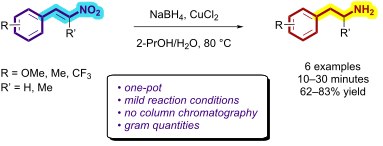
- ), and appetite suppressants (e.g., phentermine) [6]. Phenethylamines can be produced via numerous different procedures [7]. One of the oldest methods involves the reduction of benzyl cyanide with H2 in liquid ammonia with Raney-Nickel catalyst at 130 °C, and high pressure [8]. Another known method is
- limited, since a NaBH4/transition metal salt system is mostly used to reduce nitroarenes [23][24][25][26]. One of the reported methods takes advantage of titanium(IV) isopropoxide as a catalyst to prepare varied β-phenethylamine analogues. Despite its simplicity, the reaction time is quite prolonged (from
- ]. Consistently, once the chloride is added, the reduction to free Cu(0) is visually indicated by the immediate disappearance of the blue color of the copper(II) solution, and the formation of a fine suspended black powder. The latter, as metallic copper particles, acts as the actual catalyst. Time plays a


Emerging trends in the optimization of organic synthesis through high-throughput tools and machine learning
Beilstein J. Org. Chem. 2025, 21, 10–38, doi:10.3762/bjoc.21.3
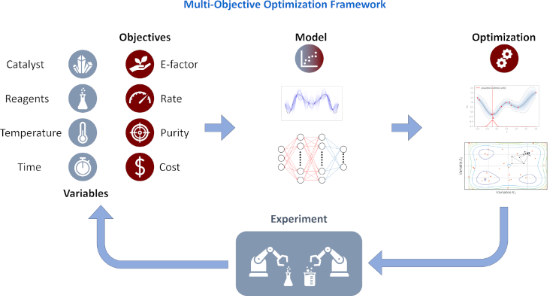
- literature in other areas relevant to the application of ML to chemical synthesis that are not covered by our review, such as small molecule discovery [8], drug discovery [9][10], retrosynthesis [11][12], and catalyst selection and design [13][14]. Review HTE platforms HTE platforms were designed to
- light [40]. The design allows the screening to be more material- and time-efficient in the optimization of both continuous variables (e.g., temperature and residence time) and discrete variables (e.g., catalyst, base). Pieber et al. [46] reported the application of a segmental flow reactor for
- -flow pattern using a Y-shaped mixer, followed by the suspension of the catalyst via a T-mixer. This technology was utilized to develop selective and efficient decarboxylative fluorination reactions. Recently, a slug flow platform was developed (Figure 3a) by injecting segments of gas as a separating


Chemical glycobiology
Beilstein J. Org. Chem. 2025, 21, 8–9, doi:10.3762/bjoc.21.2
- of chemistry as being a catalyst to more than a century of glycobiology, with a profound and exciting vision for the future. Elisa Fadda, Rachel Hevey, Benjamin Schumann and Ulrika Westerlind Southampton, Basel, London, Umeå, November 2024
Synthesis, characterization, and photophysical properties of novel 9‑phenyl-9-phosphafluorene oxide derivatives
Beilstein J. Org. Chem. 2024, 20, 3299–3305, doi:10.3762/bjoc.20.274
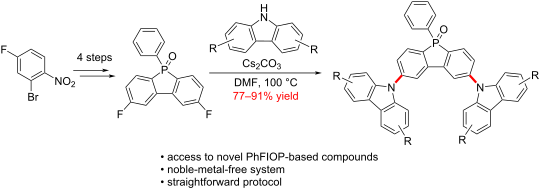
- , TADF emitters containing the PhFlOP unit as an electron acceptor are still scarce. Meanwhile, the syntheses of the TADF emitters by the groups of Nishida and Wu both utilized palladium noble metal as a catalyst [31][32][33]. Therefore, it is of great significance to develop cost-effective synthetic




Synthesis of acenaphthylene-fused heteroarenes and polyoxygenated benzo[j]fluoranthenes via a Pd-catalyzed Suzuki–Miyaura/C–H arylation cascade
Beilstein J. Org. Chem. 2024, 20, 3290–3298, doi:10.3762/bjoc.20.273
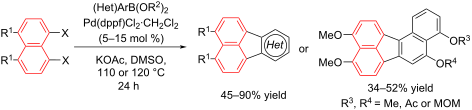
- )Cl2·CH2Cl2 was used with 5 mol % catalyst loading (Table 1, entry 1). Next, we examined whether different thiophene-3-ylboronic esters could also be used under the same reaction conditions. A variety of borylation methods are capable of providing different boronic esters, such as pinacol [44][45][46


Intramolecular C–H arylation of pyridine derivatives with a palladium catalyst for the synthesis of multiply fused heteroaromatic compounds
Beilstein J. Org. Chem. 2024, 20, 3256–3262, doi:10.3762/bjoc.20.269
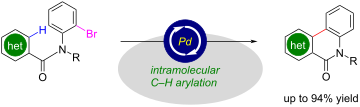
- Abstract The C–H arylation of 2-quinolinecarboxyamide bearing a C–Br bond at the N-aryl moiety is carried out with a palladium catalyst. The reaction proceeds at the C–H bond on the pyridine ring adjacent to the amide group in the presence of 10 mol % Pd(OAc)2 at 110 °C to afford the cyclized product in 42
- conditions. We carried out the palladium-catalyzed intramolecular coupling reaction of precursor 1a under similar conditions [23], which afforded smooth reaction with phenanthroline bisamide, with 10 mol % of palladium acetate as a catalyst in the presence of potassium carbonate and tetra-n-butylammonium
- resulted in a decreased yield (27%) (Table 1, entries 4 and 5). It was found that increasing the amount of potassium carbonate to a three-fold excess improved the yield of 2a to 59% in the reaction at 110 °C shown in entry 6 of Table 1. Next, the effect of the ligand of the palladium catalyst was examined


Non-covalent organocatalyzed enantioselective cyclization reactions of α,β-unsaturated imines
Beilstein J. Org. Chem. 2024, 20, 3221–3255, doi:10.3762/bjoc.20.268
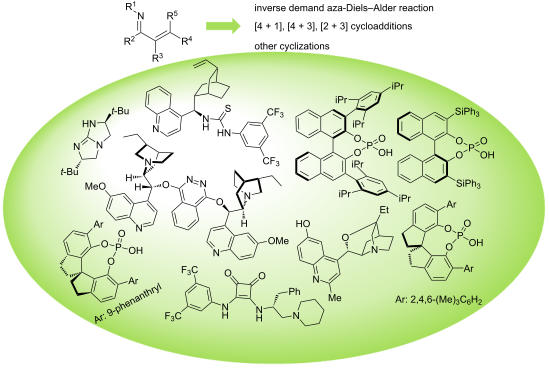
- Michael addition product was obtained with low diastereoselectivity. The mechanism is described in Scheme 4: the bifunctional squaramide activates the azadiene through hydrogen bonding while the malononitrile is deprotonated by the tertiary amine present in the backbone of the catalyst, establishing
- the α-position led to the desired products albeit with unsatisfactory results. The bifunctional squaramide catalyst V has two functions; firstly it deprotonates the enolic form of the azlactone through the Brønsted-base moiety, and secondly it activates the 1-azadiene and enolate form of the
- % ee) when using thiourea VIII with a relatively low catalyst loading (Scheme 9). The authors also attempted to perform the reaction using acyclic azadienes and indene-derived azadiene instead of benzofuran-derived azadienes 11. However, in these cases, the reactions did not take place. The authors



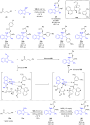


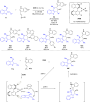


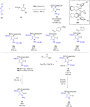


Germanyl triazoles as a platform for CuAAC diversification and chemoselective orthogonal cross-coupling
Beilstein J. Org. Chem. 2024, 20, 3198–3204, doi:10.3762/bjoc.20.265
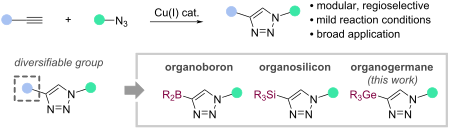
- ]. As such, the reaction has been used extensively throughout drug discovery [20][21], chemical biology [22][23], and materials science [24][25][26][27]. Orthogonal alkyne reactivity can also be observed under certain systems [28][29][30]. The reaction typically uses a Cu(II) pre-catalyst, which is



Synthesis of 2H-azirine-2,2-dicarboxylic acids and their derivatives
Beilstein J. Org. Chem. 2024, 20, 3191–3197, doi:10.3762/bjoc.20.264
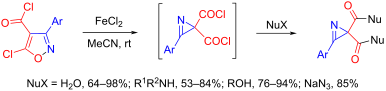
- -5-chloroisoxazoles [25][26][27] using anhydrous FeCl2 as a catalyst and carrying out the reaction in acetonitrile at rt for 2 h. After TLC showed the disappearance of the starting isoxazoles 1, the reaction mixture was treated with water and acids 6a–i were isolated in 64–98% yield. Isoxazole 1j did




Hypervalent iodine-mediated intramolecular alkene halocyclisation
Beilstein J. Org. Chem. 2024, 20, 3113–3133, doi:10.3762/bjoc.20.258
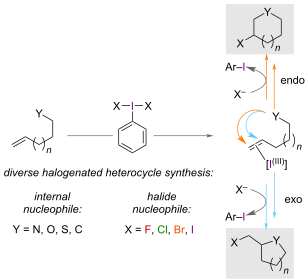
- aza-heterocycles were synthesised in good yields. The authors proposed a mechanism for the fluorocyclisation reactions (Scheme 6), which relies on the activation of the fluoro-iodane reagent 12 with the zinc catalyst. The activation enables better orbital overlap to occur with the π bond of the alkene
- from the styrenyl starting materials is stereoselective, giving the syn-diasteroisomer in high yields. A chiral iodoarene catalyst 16 was employed, along with a stoichiometric sacrificial oxidant, to give good to excellent levels of enantioselectivity. This elegant strategy led to a variety of β
- the oxyfluorination of alkenes in 2015 [31]. Under identical conditions to the aminofluorination using 1-fluoro-3,3-dimethylbenziodoxole (12) with Zn(BF4)2 catalyst, unsaturated alcohols were cyclised to fluorinated tetrahydropyrans 26 and oxepanes 28 (Scheme 12) in 1–2 hours in good yields. Gulder



















Advances in the use of metal-free tetrapyrrolic macrocycles as catalysts
Beilstein J. Org. Chem. 2024, 20, 3085–3112, doi:10.3762/bjoc.20.257
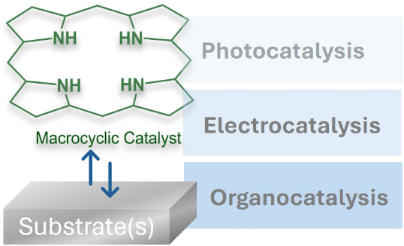
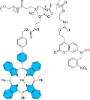
- interactions and accelerating aldol reactions. In the absence of a catalyst, no reaction between 2-(trimethylsilyloxy)furan (TMSOF, 13) and benzaldehyde (14) was observed, whereas all the tested macrocyclic compounds were found catalytically active, with 11 being the most efficient providing erythro/threo (15
- , with TBAI as a co-catalyst, up to 74% yields (Table 1). The inactivity of porphyrin 18 was attributed to the inaccessibility of the inner core imine due to its planar structure. The mechanism of the epoxide ring-opening reaction was elucidated by DFT calculations, which suggested that the macrocycle
- activates the Cu–Cl bond via chloride···calixpyrrole (N–H···Cl) hydrogen-bonding interactions toward the formation of the nitrene intermediate from chloramine-T (NaCl=NTs). Additionally, calix[4]pyrrole served as a phase-transfer catalyst in this reaction. Since chloramine-T had low solubility in


Enantioselective regiospecific addition of propargyltrichlorosilane to aldehydes catalyzed by biisoquinoline N,N’-dioxide
Beilstein J. Org. Chem. 2024, 20, 3069–3076, doi:10.3762/bjoc.20.255
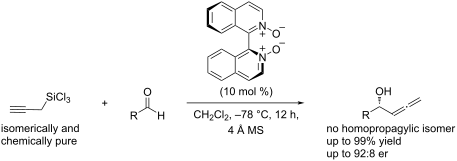
- systematic catalyst structure–reactivity and selectivity relationship study. The observed catalyst structure–enantioselectivity relationship of the present allenylation reaction was found exactly opposite to that of the analogous allylation reaction. The method provided eleven α-allenic alcohols in 22–99
- enantioenriched form [11][12]. However, such metal/metalloid reagents and the corresponding metal catalyst-bound intermediates often equilibrate between possible regioisomeric forms and can undergo both, SE2 and SE2’ addition reactions, resulting in a mixture of homopropargylic alcohols and α-allenic alcohols [14
- stable allenyltrichlorosilane that affords undesired homopropargylic alcohols [35][36] (Scheme 2b). Furthermore, Iseki [35] and Nakajima [36] evaluated only one chiral catalyst in their independent studies (i.e., no catalyst structure–reactivity and selectivity relationship study). In this context, we





