Search results
Search for "catalyzed" in Full Text gives 1870 result(s) in Beilstein Journal of Organic Chemistry. Showing first 200.
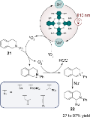
Copper-catalyzed domino cyclization of anilines and cyclobutanone oxime: a scalable and versatile route to spirotetrahydroquinoline derivatives
Beilstein J. Org. Chem. 2025, 21, 749–754, doi:10.3762/bjoc.21.58
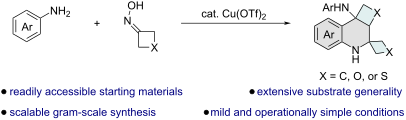
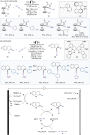
- report the copper-catalyzed synthesis of tetrahydroquinoline derivatives via a domino reaction of aniline with cyclobutanone oxime. This method demonstrates a selective approach for generating bioactive tetrahydroquinoline scaffolds, which have broad applications in pharmaceutical chemistry. The reaction
- remains a formidable challenge, primarily due to the inherent ring strain and the difficulties associated with achieving high diastereoselectivity during cyclization [4]. Recently, Chen and co-workers developed a chiral phosphoric acid (CPA)-catalyzed multicomponent reaction of anilines, aldehydes, and
- stereocontrol (Scheme 1b) [24]. In 2023, Zeng et al. reported the first example of a chromium-catalyzed spirocyclization between anilines and cyclobutanones, providing direct access to medicinally relevant cyclobutane-annulated and structurally constrained spirotetrahydroquinoline (STHQ) scaffolds [25]. Given


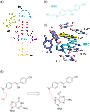
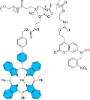
Synthesis of HBC fluorophores with an electrophilic handle for covalent attachment to Pepper RNA
Beilstein J. Org. Chem. 2025, 21, 727–735, doi:10.3762/bjoc.21.56
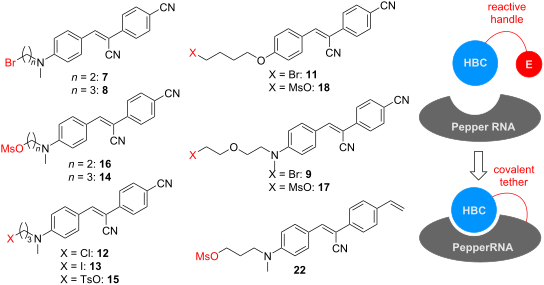
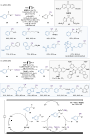
- provide fluorophore 19. Subsequent palladium-catalyzed cross-coupling with tributyl(vinyl)tin resulted in the installation of the vinyl group (compound 20). Finally, cleavage of the silyl ether gave the free alcohol 21, which was converted into the corresponding mesyloxypropyl HBC ligand 22. The



Recent advances in allylation of chiral secondary alkylcopper species
Beilstein J. Org. Chem. 2025, 21, 639–658, doi:10.3762/bjoc.21.51
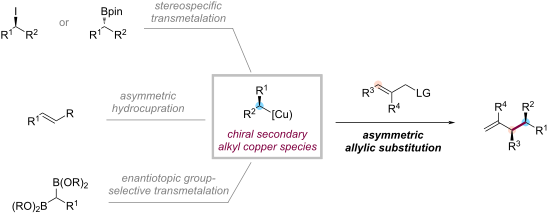
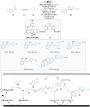
- Abstract The transition-metal-catalyzed asymmetric allylic substitution represents a pivotal methodology in organic synthesis, providing remarkable versatility for complex molecule construction. Particularly, the generation and utilization of chiral secondary alkylcopper species have received considerable
- attention due to their unique properties in stereoselective allylic substitution. This review highlights recent advances in copper-catalyzed asymmetric allylic substitution reactions with chiral secondary alkylcopper species, encompassing several key strategies for their generation: stereospecific
- secondary organocopper; copper-mediated reaction; stereoselectivity; Introduction The transition-metal-catalyzed regio- and enantioselective allylic substitution represents a pivotal methodology in organic synthesis, providing remarkable versatility for complex molecule construction [1][2][3][4]. The




Entry to 2-aminoprolines via electrochemical decarboxylative amidation of N‑acetylamino malonic acid monoesters
Beilstein J. Org. Chem. 2025, 21, 630–638, doi:10.3762/bjoc.21.50
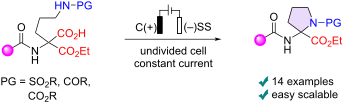
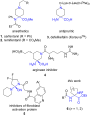
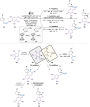
- under Pd-catalyzed hydrogenolysis afforded diamino acid ester 14 (75% yield) that was likely formed by ring-opening of the unstable N-unprotected 2-aminoproline followed by the reduction of the open-chain imine tautomer. Likewise, the open-chain amino alcohol 15 was formed also upon the reduction of the



Photocatalyzed elaboration of antibody-based bioconjugates
Beilstein J. Org. Chem. 2025, 21, 616–629, doi:10.3762/bjoc.21.49
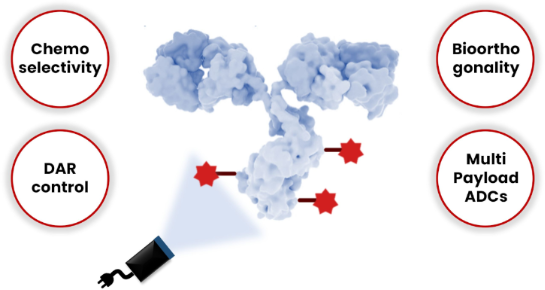
- disulfide bridges. More recently, Lang et al. developed an approach using dual photoredox/nickel-catalyzed antibody functionalization [45], demonstrating the selective modification of Cys residues through photocatalytic methods (Figure 7). A key advantage of this strategy lies in the use of readily
- procedure developed by Bräse et al. on photoinduced disulfide rebridging method. Schematic procedure developed by Lang et al. on a photoinduced dual nickel photoredox-catalyzed approach. The antibody shown in this figure is from https://www.gettyimages.de/detail/illustration/monoclonal-antibody-igg2a


Total synthesis of (±)-simonsol C using dearomatization as key reaction under acidic conditions
Beilstein J. Org. Chem. 2025, 21, 601–606, doi:10.3762/bjoc.21.47
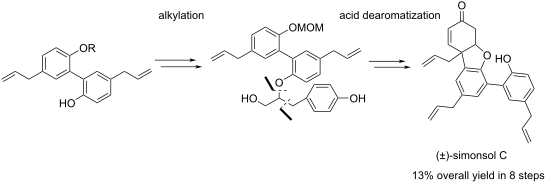
- alcohol 19 was isolated in 89% yield. The copper-catalyzed replacement of the bromine substituent in 19 with a hydroxy group was achieved in the presence of a catalytic amount of oxalamide ligand I [13]. This transformation is critical for enabling further functionalization and the reaction conditions


Sequential two-step, one-pot microwave-assisted Urech synthesis of 5-monosubstituted hydantoins from L-amino acids in water
Beilstein J. Org. Chem. 2025, 21, 596–600, doi:10.3762/bjoc.21.46
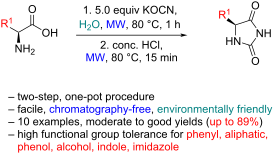
- copper(I)-catalyzed reactions (48–71%) [13] and the four-component Ugi reaction [14] yields 48–71% and 27–67%, respectively. In addition, pyroglutamates with isocyanates, which provide exceptionally high yields (97–99%) [15], and dipeptides have been utilized in triflate-activated Mumm’s rearrangement


Formaldehyde surrogates in multicomponent reactions
Beilstein J. Org. Chem. 2025, 21, 564–595, doi:10.3762/bjoc.21.45
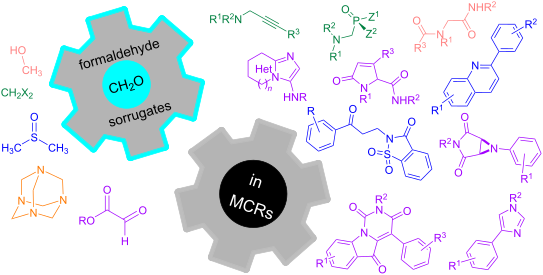
- , in a recent work, Pan et al. could chemoselectively oxidize methanol using a TEMPO-catalyzed electro-oxidation process, even in the presence of oxidizable amines, such as benzylamine, paving the way for the use of methanol as a formaldehyde surrogate in these isocyanide-based MCRs (Scheme 3) and
- compound and MMS, undergoes an aza-Diels–Alder cyclization with the alkyne, and after oxidation and aromatization steps generates quinoline II. Unfortunately, under these gentle and greener conditions, aliphatic alkynes remain unreacted, compared to the metal-catalyzed version developed by Xu et al. [37
- compound as no reaction is observed with aliphatic alkynes. Furthermore, the yields are between 50–80%, which are slightly lower than those under metal-catalyzed conditions. Nevertheless, these results open the door to further studies aimed at developing more efficient, non-catalyzed synthetic procedures


Study of the interaction of 2H-furo[3,2-b]pyran-2-ones with nitrogen-containing nucleophiles
Beilstein J. Org. Chem. 2025, 21, 556–563, doi:10.3762/bjoc.21.44
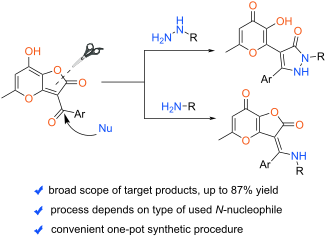
- established by X-ray analysis. The proposed mechanism of the considered processes is outlined at Scheme 8. Initially, the free nitrogen nucleophile is reversibly generated from the corresponding hydrochloride or acetate. Next, acid-catalyzed addition of the amine component to the carbon atom of the aroyl


Asymmetric synthesis of β-amino cyanoesters with contiguous tetrasubstituted carbon centers by halogen-bonding catalysis with chiral halonium salt
Beilstein J. Org. Chem. 2025, 21, 547–555, doi:10.3762/bjoc.21.43
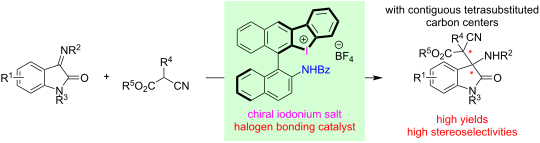
- -workers developed chiral amine 1 with an electron-deficient iodine atom, which catalyzed the Mannich reaction in excellent yields and enantioselectivities [17]. In 2020, Huber and co-workers reported the bis(iodoimidazolium) 2-catalyzed Mukaiyama–aldol reaction of carbonyl compounds with enol silyl ethers
- , which provided the products in high yields with up to 33% ee [19]. In 2023, García Mancheño and co-workers reported the tetrakis(iodotriazole) 3-catalyzed dearomatization of halogen-substituted pyridines 4, which formed the corresponding products 5 in high yields with up to 90% ee (Figure 1b) [20
- enantio- and diastereoselective Mannich reaction of α-cyanoesters with aldimines catalyzed by chiral amines, which provided β-amino cyanoesters in excellent yield and diastereoselectivities with up to 98% ee (Figure 2a) [41]. The Mannich reaction has been also applied in the construction of contiguous


Synthesis of the aggregation pheromone of Tribolium castaneum
Beilstein J. Org. Chem. 2025, 21, 510–514, doi:10.3762/bjoc.21.38
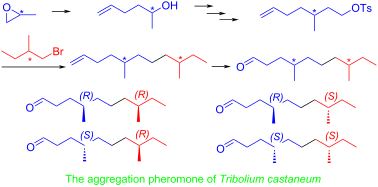
- is a destructive stored product pest. The aggregation pheromone of this pest was prepared via a new and effective strategy. The key steps include the ring-opening reaction of chiral 2-methyloxirane, the stereospecific inversion of chiral secondary tosylate, Li2CuCl4-catalyzed coupling of tosylate
- (R)-citronellic acid [18], methyl (S)-3-hydroxy-2-methylpropanoate, (S)-2-methyl-1-butanol [19], (R)-2,3-O-isopropylideneglyceraldehyde [20], (R)- and (S)-citronellol [21], (R)-4-methyl-δ-valerolactone [22], porcine pancreatic lipase (PPL)-catalyzed acetylation of racemic citronellol [23], and Evan′s
- inductive methylation [24]. To research further the bioactivity of the pheromone, herein, we report an effective synthesis of the aggregation pheromone of T. castaneum, which uses the cheap (R)- and (S)-2-methyloxirane as chiral sources, connects two chiral building blocks through Li2CuCl4-catalyzed


Synthesis of N-acetyl diazocine derivatives via cross-coupling reaction
Beilstein J. Org. Chem. 2025, 21, 490–499, doi:10.3762/bjoc.21.36
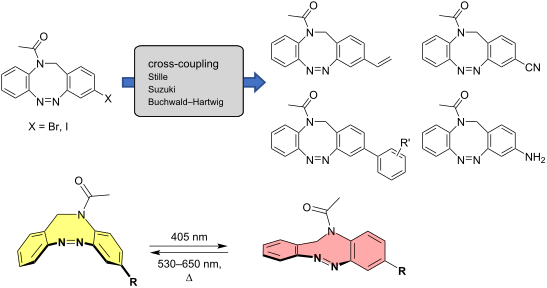
- provides good yields of 65% and 71%, respectively, for the vinyl N-acetyl diazocine 8 (Table 3). An alternative way of vinylating N-acetyl diazocines is the Pd-catalyzed vinylation with polyvinylsiloxanes and TBAF as activating agent following the method by Denmark et al. giving rise to even higher yields
- provided the corresponding amino-substituted N-acetyl diazocine 21 (Scheme 1). Another option for carbon–heteroatom bond formation reactions are copper-catalyzed Ullmann-type reactions, which have already been applied to the parent diazocine [36][37]. The attempted synthesis of azide-functionalized N
- -acetyl diazocine 22 under the conditions described by Hugenbusch et al. [37] showed no product formation and only starting material was isolated (Scheme 2). The palladium-catalyzed introduction of cyano groups under mild conditions in analogy to Iqbal et al. [38] gave the cyano-substituted N-acetyl


Organocatalytic kinetic resolution of 1,5-dicarbonyl compounds through a retro-Michael reaction
Beilstein J. Org. Chem. 2025, 21, 473–482, doi:10.3762/bjoc.21.34
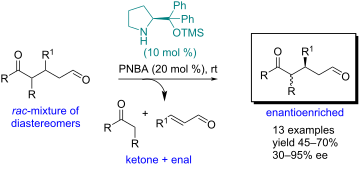
- low catalyst loadings and mild reaction conditions. This research focuses on the kinetic resolution of 1,5-dicarbonyl compounds using a retro-Michael reaction, co-catalyzed at room temperature with 20 mol % of the Jørgensen–Hayashi catalyst and PNBA. The study highlights the importance of conducting
- the literature, we found that 1,5-diketones and 1,5-ketoaldehydes have been utilized in retro-Michael reactions catalyzed by NaOH or KOH at extremely high reaction temperatures [26]. Some examples are also described under milder conditions, where the starting compounds are obtained with good chemical


Photomechanochemistry: harnessing mechanical forces to enhance photochemical reactions
Beilstein J. Org. Chem. 2025, 21, 458–472, doi:10.3762/bjoc.21.33
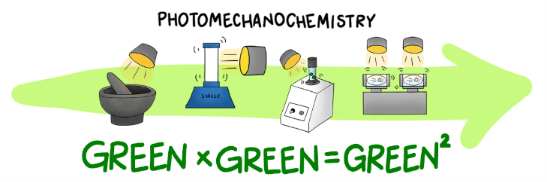
- exposing fresh material to light. In 2016, König and co-workers exploited rod milling to develop a photomechanochemical approach for the riboflavin tetraacetate (RFTA)-catalyzed photocatalytic oxidation of alcohols to the corresponding carbonyl compounds upon irradiation with five LEDs (λ = 455 nm) [69
- ]. Photo-thermo-mechanosynthesis of quinolines [65]. Study of the mechanically assisted [2 + 2] photodimerization of chalcone [66]. Liquid-assisted vortex grinding (LAVG) for the synthesis of [2.2]paracyclophane [68]. Photomechanochemical approach for the riboflavin tetraacetate-catalyzed photocatalytic




Beyond symmetric self-assembly and effective molarity: unlocking functional enzyme mimics with robust organic cages
Beilstein J. Org. Chem. 2025, 21, 421–443, doi:10.3762/bjoc.21.30
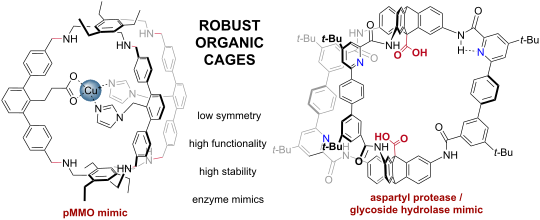
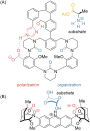
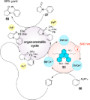
- a molecular “cavity”. The activities of different cavities vary with the subset of features available to a particular cavity type. Unsurprisingly, without synthetic access to mimics able to encompass more/all of the functional features of enzyme active sites, examples of cavity-catalyzed processes
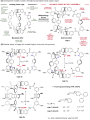
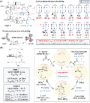
- active site (binding a substrate in an orientation that directs internally catalyzed reactivity) [347][348]. The examples of cavities with functionality discussed above, from Cram’s “full serine protease model” [87], to MOCs with flexible peripheral groups [349], to frameworks with internal proline




Synthesis, structure, ionochromic and cytotoxic properties of new 2-(indolin-2-yl)-1,3-tropolones
Beilstein J. Org. Chem. 2025, 21, 358–368, doi:10.3762/bjoc.21.26
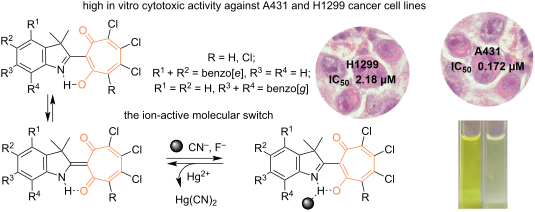
- Comprehensive Cancer Center at University of Alabama at Birmingham, Department of Medicine, Section of Hematology/Oncology, Heersink School of Medicine, Birmingham, AL 35233, USA 10.3762/bjoc.21.26 Abstract The acid-catalyzed reaction of benzo[e(g)] derivatives of 2,3,3-trimethylindolenines with o-chloranil
- is to obtain heterocyclic indole compounds conjugated with a 1,3-tropolone moiety. The variability of the products of acid-catalyzed reactions in the series of 2,3,3-trimethylindolenine with 1,2-benzoquinone derivatives depends on the nature of the substituents in the 1,2-benzoquinone. Thus, the
- 2-(indolin-2-yl)-1,3-tropolones [5]. Unlike the cross-aldol reaction of o-chloranil with methyl ketones [13][14][15], which is always accompanied by the removal of one of the chlorine atoms from the seven-membered ring, the acid-catalyzed reaction between methylene-active heterocyclic compounds and




Red light excitation: illuminating photocatalysis in a new spectrum
Beilstein J. Org. Chem. 2025, 21, 296–326, doi:10.3762/bjoc.21.22

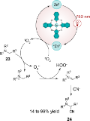
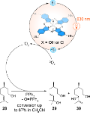
- + and 660 nm for [Os(phen)3]2+ [15]. In a same way, spin–orbit coupling, stemming from the relativistic effects, can be exploited in photoredox-catalyzed reaction [16]. Spin–orbit coupling promotes intersystem crossing (ISC) between the singlet and triplet excited states, and even allows for direct
- efficiency of photoredox-catalyzed reactions. Absorption in the red region opens up innovative opportunities for photochemical transformations. First, the employed photon has the lowest energy in the electromagnetic spectrum of visible light, which allows for safer laboratory conditions in terms of
- . While transition metals such as copper, palladium, cobalt, and nickel are well-established in catalyzed cross-coupling reactions, J. Cornella et al. have highlighted the reactivity of main-group elements like bismuth, which can mimic transition-metal behavior through oxidative addition. In their recent















Molecular diversity of the reactions of MBH carbonates of isatins and various nucleophiles
Beilstein J. Org. Chem. 2025, 21, 286–295, doi:10.3762/bjoc.21.21
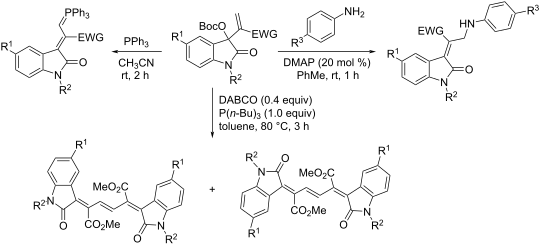
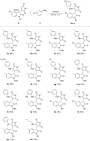
- have been obtained by DABCO-catalyzed dimerization of MBH carbonates of isatin in ODCB at high temperature (150 °C), which could be converted to bisspirooxindole derivatives via the isomerization of the double bond and a sequential thermal 6π-electrocyclic ring-closure process [30]. Here, the novel




Synthesis of disulfides and 3-sulfenylchromones from sodium sulfinates catalyzed by TBAI
Beilstein J. Org. Chem. 2025, 21, 253–261, doi:10.3762/bjoc.21.17
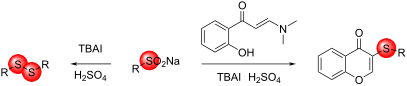
- presented above, the substrate range of the TBAl-catalyzed sulfenylation/annulation reaction between different arylated enaminones and sodium p-tolylsulfinate was subsequently investigated, and the corresponding results are shown in Scheme 3. From the results, both electron-withdrawing and electron-donating
- produce oxygen and HI. Conclusion In summary, we have developed a new TBAI-catalyzed method for the synthesis of symmetrical disulfides using sodium sulfinates as starting materials. The method requires no additional redox reagents and is broadly applicable to both sodium arylsulfinates and sodium




Streamlined modular synthesis of saframycin substructure via copper-catalyzed three-component assembly and gold-promoted 6-endo cyclization
Beilstein J. Org. Chem. 2025, 21, 226–233, doi:10.3762/bjoc.21.14
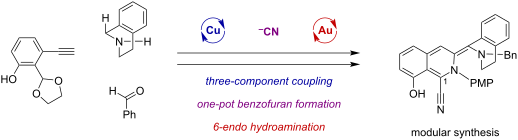
- Japan Synchrotron Radiation Research Institute, 1-1-1 Kouto, Sayo, Hyogo, 679-5198, Japan Institute of Multidisciplinary Research for Advanced Materials, Tohoku University, 2-1-1 Katahira, Aoba-ku, Sendai 980-8577, Japan 10.3762/bjoc.21.14 Abstract The integration of copper(I)-catalyzed three-component
- involvement of a fluorescent intermediate in the cascade synthetic process. Keywords: cascade reactions; copper-catalyzed three-component coupling; gold-mediated 6-endo hydroamination; tandem cyclizations; tetrahydroisoquinoline alkaloids; Introduction The bis-tetrahydroisoquinoline (THIQ) alkaloid family
- modular synthetic strategy involving the cascading assembly of the left THIQ segment. A concise modular synthetic process was developed to construct the substructure 14 of saframycin A (1), featuring copper(I)-catalyzed three-component coupling, and subsequent tandem 2,3-diaminobenzofuran formation


Dioxazolones as electrophilic amide sources in copper-catalyzed and -mediated transformations
Beilstein J. Org. Chem. 2025, 21, 200–216, doi:10.3762/bjoc.21.12
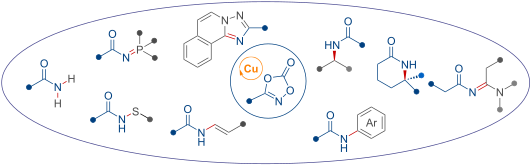
- potential bioactivity [70][71][72][73]. Despite the development of synthetic approaches for six-membered lactams, including transition-metal-catalyzed transformations, several limitations remain, particularly with regard to regioselectivity and asymmetric C–N bond formation, which are still limited. In 2023
- amidation Recently, Cao and co-workers reported the copper-catalyzed synthesis of 1,2,4-triazole derivatives via an N-acyl nitrene intermediate [76]. As illustrated in Scheme 3, dioxazolones 4 and N-iminoquinolinium ylides 5 served as reactive substrates, leading to the formation of various polycyclic 1,2,4
- -triazole analogues 6. Both dioxazolones 4 and N-iminoquinolinium ylides 5 demonstrated excellent tolerance in this transformation. Notably, electron-rich dioxazolones exhibited slightly higher reactivity. The proposed catalytic cycle for the copper-catalyzed synthesis of 1,2,4-triazole derivatives is


Recent advances in electrochemical copper catalysis for modern organic synthesis
Beilstein J. Org. Chem. 2025, 21, 155–178, doi:10.3762/bjoc.21.9

- electrochemistry and copper catalysis for various organic transformations. Keywords: copper; electrochemistry; radical chemistry; single-electron transfer; sustainable catalysis; Introduction Transition-metal-catalyzed cross-coupling has emerged as an effective method for forming carbon–carbon (C–C) and carbon
- stoichiometric quantities of a copper reagent [3]. This pioneering work, known as the “classical Ullmann reaction”, was extended by Ullmann and Goldberg to enable the C–N and C–O bond formation [4][5][6]. Subsequently, key developments in Cu-catalyzed cross-coupling reactions were achieved, including the
- ][22][23][24]. Moreover, copper-catalyzed asymmetric radical cross-coupling has advanced significantly over the past decade [25][26][27], with notable examples including Liu and Stahl’s enantioselective cyanation of benzylic C–H bonds using a Cu/chiral bisoxazoline catalyst [28], along with the Peters








Nickel-catalyzed cross-coupling of 2-fluorobenzofurans with arylboronic acids via aromatic C–F bond activation
Beilstein J. Org. Chem. 2025, 21, 146–154, doi:10.3762/bjoc.21.8
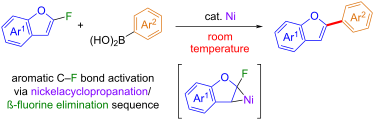
- , Ibaraki 305-8571, Japan Sagami Chemical Research Institute, 2743-1 Hayakawa, Ayase, Kanagawa 252-1193, Japan 10.3762/bjoc.21.8 Abstract 2-Fluorobenzofurans underwent efficient nickel-catalyzed coupling with arylboronic acids through the activation of aromatic C–F bonds. This method allowed us to
- coupling reactions of aromatic C–F and C–Br bonds with arylboronic acids. Keywords: arylboronic acid; benzofuran; C–F bond activation; cross-coupling; nickel; Introduction The metal-catalyzed activation of aromatic carbon–fluorine (C–F) bonds is widely recognized as a challenging task in synthetic
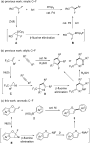
- are generated by treating 1,1-difluoroethylenes with a zirconocene equivalent (ZrCp2, Scheme 1a) [8]. The resulting 1-fluorovinylzirconocenes B then undergo palladium-catalyzed coupling with aryl iodides to produce arylated fluoroethylenes. Additionally, (ii) we observed that electron-deficient 2



Cu(OTf)2-catalyzed multicomponent reactions
Beilstein J. Org. Chem. 2025, 21, 122–145, doi:10.3762/bjoc.21.7

- Venezian 21, 20133, Milano, Italy 10.3762/bjoc.21.7 Abstract This review reports the achievements in copper(II) triflate-catalyzed processes concerning the multicomponent reactions, applied to the synthesis of acyclic and cyclic compounds. In particular, for the heteropolycyclic systems mechanistic
- ]. Three-component coupling of amines, aldehydes or ketones, and terminal alkynes catalyzed by Cu(OTf)2 is a fruitful tool for the production of α-substituted propargylamines 10 (Scheme 7) [20]. The reaction involves the alkynylation of the corresponding imines formed in situ and provides higher yields
- Pd-catalyzed cross-coupling reactions, allowing the formation of C–C and C–N bonds in the o-position of the aryl chalcogen compounds. α-Aminophosphonates 14 were the result of a one-pot condensation of an aldehyde, a primary amine and phosphite P(OMe)3 with copper triflate acting as Lewis acid






Recent advances in organocatalytic atroposelective reactions
Beilstein J. Org. Chem. 2025, 21, 55–121, doi:10.3762/bjoc.21.6
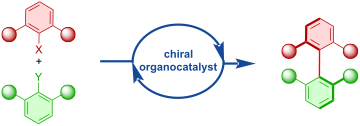
- organocatalytic reactions are discussed according to the dominant catalyst activation mode. For covalent organocatalysis, the typical enamine and iminium modes are presented, followed by N-heterocyclic carbene-catalyzed reactions. The bulk of the review is devoted to non-covalent activation, where chiral Brønsted
- to NHC-catalyzed reactions. The major part is devoted to chiral Brønsted acid catalysis as it seems so far the most widely used activation principle for the generation of axially chiral compounds. Hydrogen-bond-donating catalysts and various other activation modes complete the discussion of recent
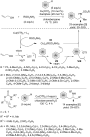
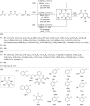
- ]. Hayashi realized an organocatalytic domino sequence that afforded axially chiral biaryls [24]. The transformation relied on an organocatalytic Michael/Henry cascade. The enamine-type Michael addition was catalyzed by the Hayashi–Jørgensen organocatalyst C7 (Scheme 6). Then, a series of one-pot reactions