Search results
Search for "intermediate" in Full Text gives 2228 result(s) in Beilstein Journal of Organic Chemistry. Showing first 200.
A multicomponent reaction-initiated synthesis of imidazopyridine-fused isoquinolinones
Beilstein J. Org. Chem. 2025, 21, 1161–1169, doi:10.3762/bjoc.21.92
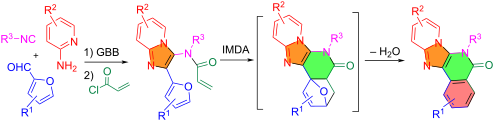
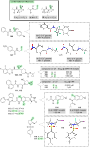
- reaction followed by the cleavage of the alkyl group to give intermediate II as a free amine. Annulation of II with CDI gave product B which is an HIV reverse transcriptase inhibitor (Scheme 1B) [17]. We have reported a three-component [3 + 2] cycloaddition followed by IMDA reaction for making heterocyclic
- compounds [18]. Presented in this paper is a new synthetic route involving GBB, N-acylation and IMDA reactions for making intermediate III followed by dehydrative re-aromatization to give imidazopyridine-fused isoquinolinones C (Scheme 1C). Results and Discussion Following the reported procedures [10], the
- intermediate 7, the carbonyl oxygen interacts with AlCl₃, enhancing the electrophilicity and promoting the rearrangement to form stable oxonium ions. The removal of water from 7 is facilitated by protonation, producing reactive carbocations which undergo dehydrative aromatization to produce products 8




Synthetic approach to borrelidin fragments: focus on key intermediates
Beilstein J. Org. Chem. 2025, 21, 1135–1160, doi:10.3762/bjoc.21.91
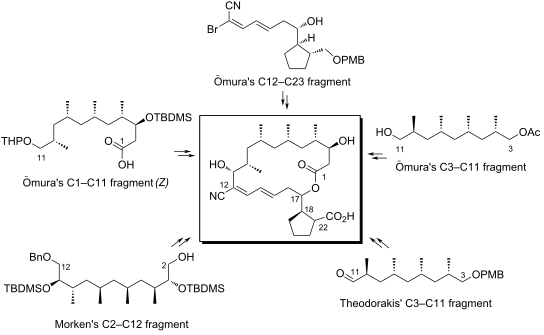
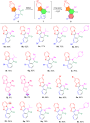
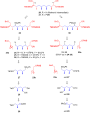
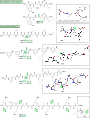
- approach for constructing Morken’s C2–C12 fragment In 2019, Uguen and co-workers introduced a strategy to assemble Morken’s C2–C12 intermediate 20 [41]. Their approach utilized iterative base-catalyzed condensation of sulfone compounds with epoxides. As illustrated in Scheme 1, the monoalcohol 20 was
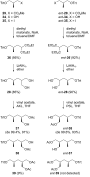
- . Intermediate 25 was prepared through TBDMS protection and desulfonylation of 24, itself derived from the condensation of epoxide 23b and sulfone 27. The precursor 27 was synthesized from Roche ester 29 via a sequence of steps, including reduction, three-carbon homologation, and enzymatic desymmetrization. An
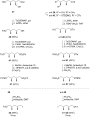
- 94% yield. Like 40, iodination of ent-40 gave crystalline product ent-42, and its structure was confirmed by XRD crystallography. The intermediate ent-40 was then subjected to the same tosylation/thiolation/oxidation sequence used for the 40 to 41 conversion, yielding ent-41 in comparable yield (82








A versatile route towards 6-arylpipecolic acids
Beilstein J. Org. Chem. 2025, 21, 1104–1115, doi:10.3762/bjoc.21.88
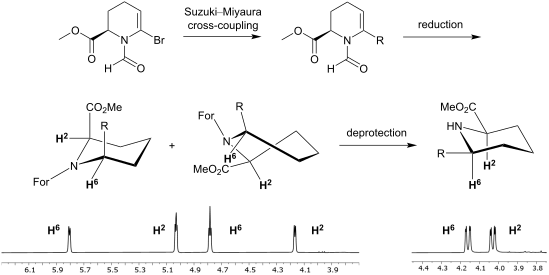
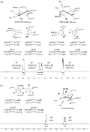
- aryl modifications in C6 position by utilising the chiral pool of a non-proteinogenic amino acid in combination with transition metal-catalysed cross-coupling reactions. Moreover, we present an in-depth NMR analysis of the key intermediate steps, which illustrates the conformational constraints in
- a key intermediate product. This late-stage approach was previously described by us while utilising Suzuki–Miyaura or Sonogashira–Hagihara cross-coupling reactions to generate pipecolic acid derivatives with alkynyl substituents in the C6 position [35]. Here, we present a robust synthetic route to
- to investigate how the configuration of the stereocenter in C2 position influences diastereoselectivity. In the first approach, NaBH3CN was used under acidic conditions to reduce the acyliminium intermediate formed from the N-acyl enamine upon protonation at C5, while in the second approach





Recent advances in synthetic approaches for bioactive cinnamic acid derivatives
Beilstein J. Org. Chem. 2025, 21, 1031–1086, doi:10.3762/bjoc.21.85
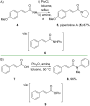
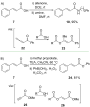
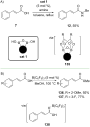
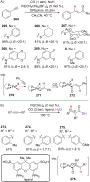
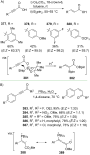
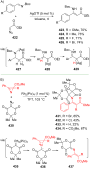
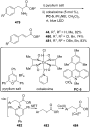
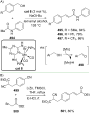
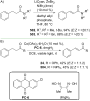
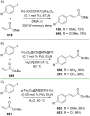
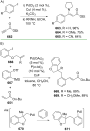
- amidation in 5 min reaction time via the formation of the isolable enol ester intermediate 23 (Scheme 8A). Similarly, Feng and co-workers (2019) studied one-pot two-step esterification of cinnamic acid (7) by applying electrophilic sp carbon center of methyl propiolate (25) as the coupling reagent via in
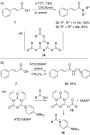
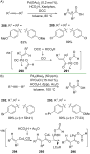
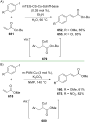
- it with a triflate surrogate, 4-acetamidophenyl triflimide (AITF), to generate the intermediate reactive acyl triflic anhydride 28 which afforded the corresponding amide 27 in good yield (Scheme 9) [41]. On the other hand, Braddock and co-workers (2022) employed methyltrimethoxysilane (MTM) to
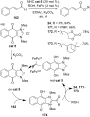
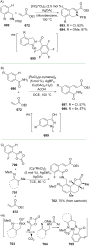
- acid (7) by using trichloroisocyanuric acid/triphenylphosphine (TCCA/PPh3) assisted by ultrasound to give the corresponding amide 34 in good yield (Scheme 12) [44]. Herein, PPh3 attacks chloride atoms in TCCA to subsequently generate phosphonium intermediate 35, followed by the formation of reactive








































Recent total synthesis of natural products leveraging a strategy of enamide cyclization
Beilstein J. Org. Chem. 2025, 21, 999–1009, doi:10.3762/bjoc.21.81
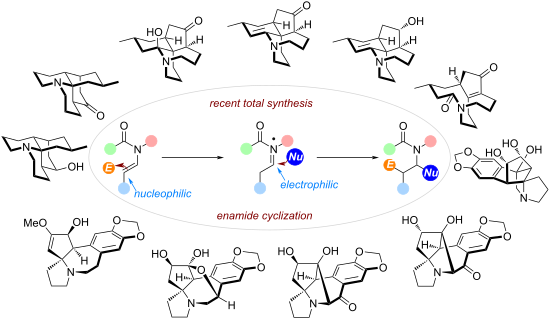
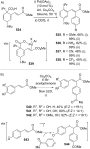
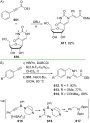
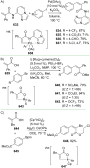
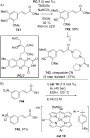
- acetylcholinesterase (AChE) inhibitory activities [18]. In the presence of a catalytic amount of PPh3AuCl and AgSbF6, the enamide–alkyne cycloisomerization of bromo-substituted alkyne 8 proceeded via a 5-endo-dig cyclization to afford tricyclic compound 10 through the formation of iminium intermediate 9. The azepane
- cyclopentane ring, dihydroxylation, and oxidation of the diol to a diketone, produced intermediate 25 in its enol form. From this common intermediate, regioselective etherification at the less hindered position formed an enol ether. Final reduction of both the amide and the ketone using alane completed the
- 0.4% amount of cat. 1 provided adduct 30 in 72% yield with 92% enantioselectivity, and the reaction could be scaled up to decagrams. Subsequent decarboxylation and recrystallization of the resulting ketone 31 yielded an enantiopure product (99% ee), which serves as a versatile intermediate for the




Studies on the syntheses of β-carboline alkaloids brevicarine and brevicolline
Beilstein J. Org. Chem. 2025, 21, 955–963, doi:10.3762/bjoc.21.79

- , Semmelweis University, Üllői út 26, H-1085 Budapest, Hungary 10.3762/bjoc.21.79 Abstract A new total synthesis of the β-carboline alkaloid brevicarine is disclosed. The synthesis was carried out starting from an aromatic triflate key intermediate, allowing the introduction of various substituents into
- salt for further confirming their structures. A new synthesis of the related alkaloid brevicolline was also attempted from the same intermediate. However, after successful coupling of β-carboline with N-methylpyrrole, the trials to saturate the pyrrole ring under various conditions led to unexpected
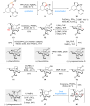
- , versatile key triflate intermediate 3, which allowed the introduction of substituents attached by a C–C bond to position 4 of the β-carboline scaffold by cross-coupling reactions. Sonogashira reaction of compound 3 with N-(3-butynyl)phthalimide (4) led to coupled compound 5. Cleavage of the phthalimide


Harnessing tethered nitreniums for diastereoselective amino-sulfonoxylation of alkenes
Beilstein J. Org. Chem. 2025, 21, 947–954, doi:10.3762/bjoc.21.78

- -trifluoroacetoxylation of alkenes [4]. In this protocol, an unusual N-alkoxy carbamate tether served as a precursor to a transient nitrenium ion [5][6][7][8][9][10][11][12][13][14][15][16][17][18][19][20][21][22][23][24], which subsequently attacked a pendant alkene to form an aziridinium intermediate. This aziridinium
- regioselective, diastereoselective, and metal-free protocol for alkene amino-hydroxylation, which compared favorably to prior art in this area [25][26][27][28][29][30][31][32]. Naturally, we wondered if other O-nucleophiles were competent in the ring-opening of the aziridinium intermediate. Indeed, almost all


A convergent synthetic approach to the tetracyclic core framework of khayanolide-type limonoids
Beilstein J. Org. Chem. 2025, 21, 926–934, doi:10.3762/bjoc.21.75
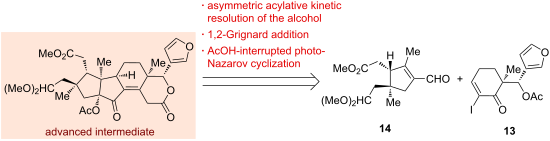
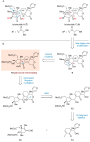
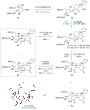
- , Hangzhou 310018, Zhejiang, China 10.3762/bjoc.21.75 Abstract A convergent approach for the enantioselective construction of an advanced intermediate containing the [5,5,6,6]-tetracyclic core framework of the khayanolide-type limonoids was described. The strategy features an acylative kinetic resolution of
- simultaneously installing the hydroxy group at C30. The latter intermediate could in turn be derived from dienone 11 by an AcOH-interrupted Nazarov cyclization [32][33][34], thereby establishing the B ring with the desired all-cis stereochemical configuration, including the quaternary carbon at C10 and the
- ]). Conclusion In conclusion, we have developed a convergent approach for the enantioselective assembly of an advanced intermediate en route to krishnolides A and C. Key steps of our strategy entail an acylative kinetic resolution of the alcohol, a 1,2-Grignard addition and an AcOH-interrupted Nazarov




Silver(I) triflate-catalyzed post-Ugi synthesis of pyrazolodiazepines
Beilstein J. Org. Chem. 2025, 21, 915–925, doi:10.3762/bjoc.21.74
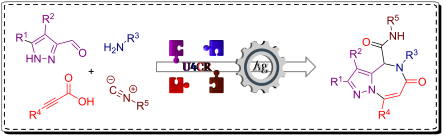
- studied silver(I)-catalyzed intramolecular heteroannulation reaction is depicted in Scheme 5. The process begins with the π-coordination of the silver catalyst to the triple bond in the Ugi-adduct 15a generating intermediate A. This is followed by a nucleophilic attack by the pyrazole nitrogen on the
- activated alkyne in an endo-dig fashion, forming a 7-membered ring. The resulting intermediate B undergoes proton transfer from the second pyrazole nitrogen to the vinyl silver moiety yielding pyrazolo[1,5-a][1,4]diazepine 16a and regenerating the silver catalyst. Methylation of either pyrazole nitrogen




Recent advances in controllable/divergent synthesis
Beilstein J. Org. Chem. 2025, 21, 890–914, doi:10.3762/bjoc.21.73

- weakly coordinating OTf− anion synergistically enhanced the electrophilicity of the gold center, enabling coordination with the amide group to form a three-coordinate Au(I)–π-alkyne intermediate Int-12. The umbrella-shaped steric shielding provided by the ligand-stabilized intermediate Int-9, followed by
- enhanced electrophilicity of palladium facilitates preferential coordination with the amino group and activates the alkyne to form the intermediate Int-14 instead of Int-14'. Subsequent nucleophilic cyclization generates intermediate Int-15. Following CO insertion, complex Int-16 is formed, and reductive
- to substrate 11, followed by oxidative addition and release of carbon dioxide to form the zwitterionic π-allylpalladium intermediate Int-21. Under the reaction conditions, silyl triflate 12 undergoes a fluoride-mediated 1,2-elimination to generate the cyclic allene intermediate Int-22. Through a




Dicarboxylate recognition based on ultracycle hosts through cooperative hydrogen bonding and anion–π interactions
Beilstein J. Org. Chem. 2025, 21, 884–889, doi:10.3762/bjoc.21.72
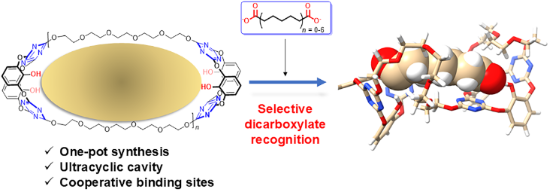
- obtained using either 1:1 or 1:2 binding models. This is likely due to their intermediate size of chain lengths, which are neither long enough for 1:1 binding nor capable of squeezing a dimer for 1:2 complexation. Notably, the unsubstituted ultracycle B4 [31] without the pendant OH groups on the lower rim


Cu–Bpin-mediated dimerization of 4,4-dichloro-2-butenoic acid derivatives enables the synthesis of densely functionalized cyclopropanes
Beilstein J. Org. Chem. 2025, 21, 877–883, doi:10.3762/bjoc.21.71
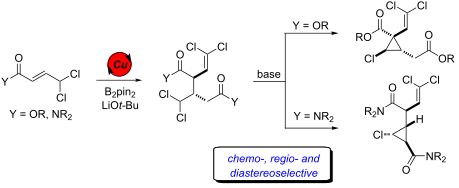
- reaction in the presence of MeOH in order to trap the potential copper intermediate by protonation. When 2 equiv of MeOH were used, we still obtained the dimerization product 2. Nevertheless, when a catalytic amount of base was used, we only observed the formation of β-borylation product 12 (Scheme 3b
- species A which is in equilibrium with the Cu–O enolate B [11]. In the presence of excess of LiOt-Bu, a salt metathesis reaction between this base and intermediate B generates lithium enolate C and LCuOt-Bu to close the copper catalytic cycle. The formation of a lithium enolate is consistent with the
- . Finally, the new enolate E evolves through intramolecular proton abstraction and elimination of boryllithium [20][21]. The formation of side product 3 observed when dichloromethane was used as a solvent could be explained by protonation of intermediate A, followed by transmetalation of the resulting


Light-enabled intramolecular [2 + 2] cycloaddition via photoactivation of simple alkenylboronic esters
Beilstein J. Org. Chem. 2025, 21, 854–863, doi:10.3762/bjoc.21.69
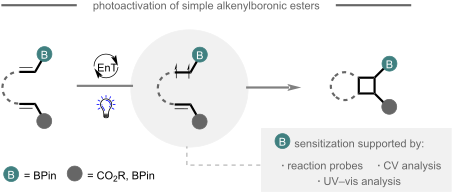
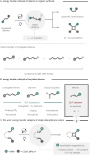
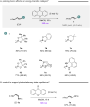
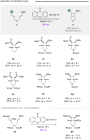
- ). Pioneering studies have leveraged this platform with great effect, typically invoking π→π* transitions of conjugated alkenes to lower the bond order and generate a triplet diradical, primed for further reactivity. This key intermediate is pivotal in a plenum of synthetic transformations including geometric
- differences in stereoelectronic stabilization of the transient 1,4-biradical intermediate on changing substituent (CO2R→BPin) [63][64][65]. It is pertinent to note that increased catalyst loading and reaction times were necessary for efficient reactivity with alkenylboronic esters, suggesting acrylates are



Chitosan-supported CuI-catalyzed cascade reaction of 2-halobenzoic acids and amidines for the synthesis of quinazolinones
Beilstein J. Org. Chem. 2025, 21, 839–844, doi:10.3762/bjoc.21.67
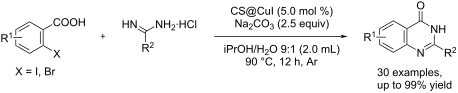
- higher reactivity than 2-bromobenzoic acid derivatives. Based on previously reported literature [7][13], a mechanism for the copper-catalyzed formation of quinazolinones is proposed in Scheme 3. Initially, the 2-halobenzoic acid 1 coordinates with CS@CuI to form intermediate I in the presence of Na2CO3
- , which acts as a base. Subsequently, I undergoes oxidative addition and complexation with the amidine 2 to generate intermediate II. This intermediate then undergoes reductive elimination to form intermediate III, releasing CS@CuI back into the system. Finally, the coupling reaction between the carboxyl


Substituent effects in N-acetylated phenylazopyrazole photoswitches
Beilstein J. Org. Chem. 2025, 21, 830–838, doi:10.3762/bjoc.21.66

- . First, a diazotization of a given aniline 1 and reaction with 2,4-pentanedione gave intermediate 2, with yields which strongly depended on the residue in the para-position. Specifically, the residues bearing an electron-donating group (EDG) such as -OMe or -OH showed low yields because of the poor


4-(1-Methylamino)ethylidene-1,5-disubstituted pyrrolidine-2,3-diones: synthesis, anti-inflammatory effect and in silico approaches
Beilstein J. Org. Chem. 2025, 21, 817–829, doi:10.3762/bjoc.21.65

- forms 3a’–e’ will be attacked by methylamine (4) to yield the tetrahedral intermediate 6 and then, the intramolecular proton transfer will lead to intermediate 7. It has been proven that Schiff’ bases show normally higher reactivity than the corresponding carbonyl compounds towards nitrogen-containing
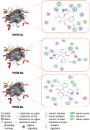
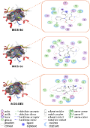
- log (mL/min/kg) exceeds 0.7, intermediate when that value ranges from 0.3 to 0.7, and low when it is below 0.3 [33]. The total clearance of the studied compounds was observed to range from −0.077 to 0.322 mL/min/kg, indicating low to moderate clearance rates. Additionally, renal excretion via the


Synthesis and photoinduced switching properties of C7-heteroatom containing push–pull norbornadiene derivatives
Beilstein J. Org. Chem. 2025, 21, 807–816, doi:10.3762/bjoc.21.64
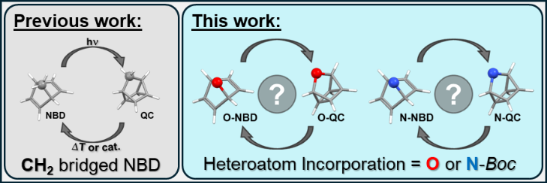
- -NBD2 (Supporting Information File 1), demonstrating the intermediate availability of O-QC2. In a similar manner, the aza analogue N-NBD2 was investigated. The UV–vis experiments (Figure 4) yielded results comparable to those obtained for N-NBD1. Initially, the conversion to N-QC2 is anticipated at


Regioselective formal hydrocyanation of allenes: synthesis of β,γ-unsaturated nitriles with α-all-carbon quaternary centers
Beilstein J. Org. Chem. 2025, 21, 800–806, doi:10.3762/bjoc.21.63
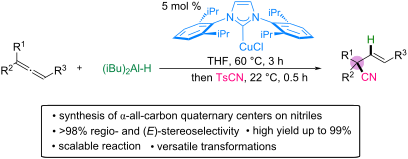
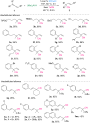
- , the hydride addition of DIBAL-H to allene 1a catalyzed by 5 mol % IPrCuCl as the optimal catalyst selectively generated the allylaluminum intermediate 2a with >98% conversion [30]. Subsequent addition of one equivalent of TsCN to 2a in a single vessel at room temperature proceeded regioselectively
- hydride complex A through the reaction of IPrCuCl with DIBAL-H [35]. Copper hydride species A reacts regioselectively with allene 1 to form the allylcopper intermediate B. Subsequent transmetalation between allyl-Cu B and DIBAL-H generates allylaluminum species C and regenerates IPrCuH (A). The final step




Recent advances in the electrochemical synthesis of organophosphorus compounds
Beilstein J. Org. Chem. 2025, 21, 770–797, doi:10.3762/bjoc.21.61
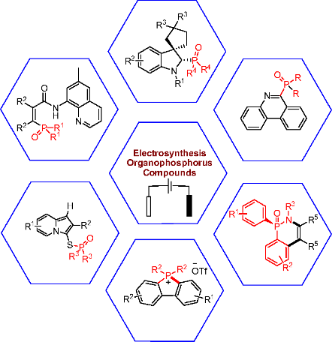
- (O)(OR)2 is derived from the compound P(OR)3, not from HP(O)(OR)2. Although the exact role of HP(O)(OR)2 remains unclear, it has been established that its presence is essential for the C–H phosphorylation. In this case, a radical cation intermediate was suggested for this conversion. Heteroaromatic
- experiments, a radical process was proposed for this coupling reaction via an Mn(III)–P intermediate (Scheme 9). The method was also applied to scale up to gram-scale synthesis. In 2023, Wu et al. [54] also reported another heteroaromatic C–P coupling of benzothiazole with diarylphosphine oxides by an
- reaction proceeded via anodic indole oxidation, followed by a reaction with trialkyl phosphite to give the corresponding indole phosphonate (Scheme 11). Cyclic voltammetry experiments confirmed that free indole can oxidize at the anode and generate a radical-cation intermediate. Also, no product was


Copper-catalyzed domino cyclization of anilines and cyclobutanone oxime: a scalable and versatile route to spirotetrahydroquinoline derivatives
Beilstein J. Org. Chem. 2025, 21, 749–754, doi:10.3762/bjoc.21.58
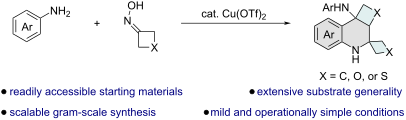
- , we conducted a 5.0 mmol scale reaction and obtained the target product 3aa in 82% yield (Scheme 3). Based on previous reports, a plausible mechanism was proposed. In the presence of a copper catalyst, aniline reacts with cyclobutanone oxime to form an imine intermediate, which undergoes isomerization
- to generate an enamine intermediate. Subsequently, an intermolecular cyclization occurs between the enamine and imine intermediates, ultimately yielding the final target product through an aromatization process (Scheme 4). Conclusion In summary, we have developed an efficient and practical copper


Acyclic cucurbit[n]uril bearing alkyl sulfate ionic groups
Beilstein J. Org. Chem. 2025, 21, 717–726, doi:10.3762/bjoc.21.55
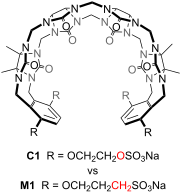
- the intermediate exchange regime on the chemical shift timescale for the complexes of C1 with CHDA, Me6CHDA, AdA, Me3AdA (Supporting Information File 1, Figures S10–S13) which is typical of weaker complexes. Third, we observe changes in the chemical shift for the Ha resonance of C1 upon formation of




Origami with small molecules: exploiting the C–F bond as a conformational tool
Beilstein J. Org. Chem. 2025, 21, 680–716, doi:10.3762/bjoc.21.54
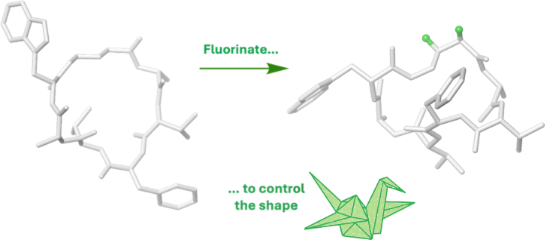
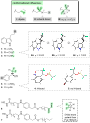
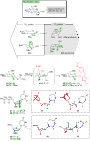
- attached to every carbon of an alkyl chain (e.g., II, Figure 4), then a structure results that is conceptually intermediate between alkanes and perfluoroalkanes. Such structures, dubbed “multivicinal fluoroalkanes”, have interesting conformational properties that are dependent upon the stereochemistry [39
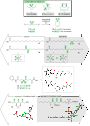
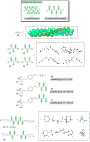
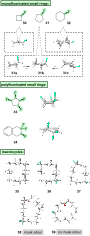
- , most recently, an intermediate twist conformation (31b) [48]. Multiple fluorines can sometimes provide better control. For example, all-syn-1,2,3,4-tetrafluorocyclopentane (33) appears to prefer an envelope conformation with fluorine in the axial position [49]. Another example of conformational control
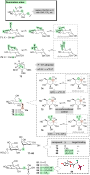
- ]. Glycosylation reactions (e.g., 63 → 65 and 64 → 66, Figure 9) proceed via an oxocarbenium intermediate. If fluorine is located at C-2, an electrostatic attraction might be expected between the partially negative fluorine and the positively charged C=O+ moiety, and this interaction would favour one of the half








Photochemically assisted synthesis of phenacenes fluorinated at the terminal benzene rings and their electronic spectra
Beilstein J. Org. Chem. 2025, 21, 670–679, doi:10.3762/bjoc.21.53

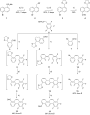
- was obtained by a Migita–Kosugi–Stille coupling between bromophenanthrene 15 and (E)-1,2-bis(tributylstannyl)ethene to afford diarylethene 18 followed by Mallory photoreaction. The obtained intermediate 18 contained residual palladium and isolation was not successful due to its poor solubility in





Asymmetric synthesis of fluorinated derivatives of aromatic and γ-branched amino acids via a chiral Ni(II) complex
Beilstein J. Org. Chem. 2025, 21, 659–669, doi:10.3762/bjoc.21.52
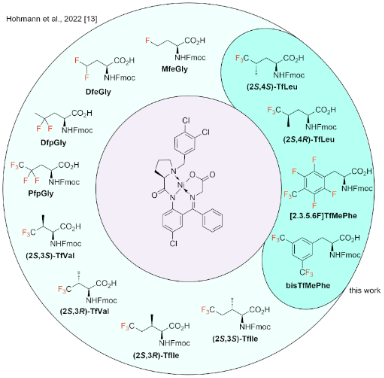
- iodides can be efficiently synthesized in gram-scale from the respective fluorinated alcohols using alkyl nonaflates as a key intermediate [13]. Based on these results, 3,3,3-trifluoro-2-methylpropan-1-ol (8) was selected as the starting material. We started our efforts by screening the reaction


Recent advances in allylation of chiral secondary alkylcopper species
Beilstein J. Org. Chem. 2025, 21, 639–658, doi:10.3762/bjoc.21.51
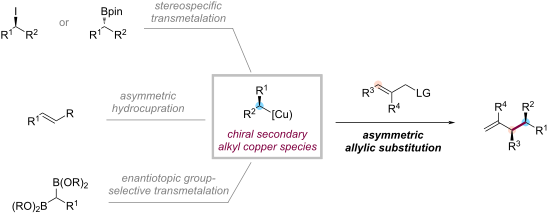
- the Li/I exchange is essential for preventing racemization of the configurationally labile organolithium intermediate. The subsequent transmetalation with CuBr·P(OEt)3 introduces P(OEt)3 as a supporting ligand, which plays a vital role in stabilizing the resulting chiral organocopper species 14. A key
- electronegativity, reaching 1.648 Å in the reactive alkoxytrialkyl complex D and 1.659 Å in the tetraalkyl "ate" complex E. The B–C bond lengths in amido- and alkyl-substituted boronic ester complexes B and C fell between these extremes, suggesting an intermediate level of activation. These findings prompted
- -trifluoromethylalkenes 38 with hydrosilanes and allylic chlorides 40 (Scheme 14b) [55]. In their work, a chiral α-CF3 alkylcopper intermediate 39 was formed through the regio- and enantioselective hydrocupration of electron-deficient alkenes 38 with an in situ-generated CuH species. Subsequent electrophilic trapping of