


Search results
Search for "selective" in Full Text gives 1583 result(s) in Beilstein Journal of Organic Chemistry. Showing first 200.
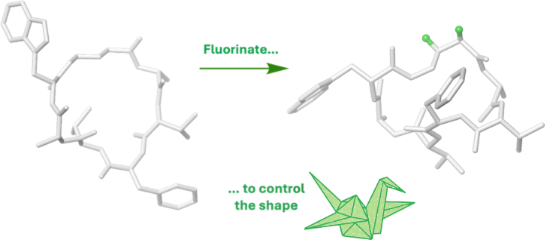
Origami with small molecules: exploiting the C–F bond as a conformational tool
Beilstein J. Org. Chem. 2025, 21, 680–716, doi:10.3762/bjoc.21.54
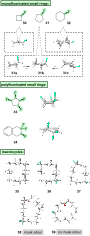
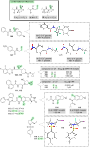
- that it is not selective towards injured tissue: it also binds to μ-opioid receptors in healthy tissue, causing side-effects. To overcome this drawback, a fluorinated analogue of fentanyl ((±)-105) was developed [177]. The electron-withdrawing fluorine substituent of 105 lowers the pKaH of the








Recent advances in allylation of chiral secondary alkylcopper species
Beilstein J. Org. Chem. 2025, 21, 639–658, doi:10.3762/bjoc.21.51
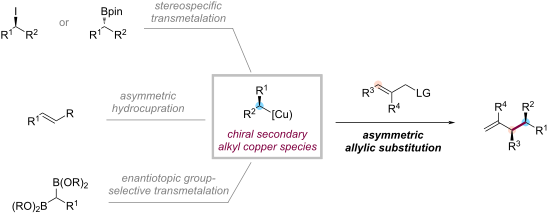
- transmetalation of organolithium and organoboron compounds, copper hydride catalysis, and enantiotopic-group-selective transformations of 1,1-diborylalkanes. Detailed mechanistic insights into stereochemical control and current challenges in this field are also discussed. Keywords: allylic substitution; chiral
- generating configurationally unstable organocopper species with secondary carbon–metal bonds, their unique properties, and related mechanistic insights. This review also aims to outline future research directions and prospects, contributing to the development of more efficient and selective copper-catalyzed
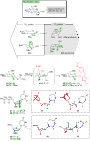
- (+)-lasiol was achieved through a highly selective SN2 substitution (SN2/SN2' = >99:1, dr = 98:2, 99% ee), while the preparation of (+)-13-norfaranal and (+)-faranal showcased the versatility of the methodology in constructing more complex terpene frameworks. These successful applications in natural product




Photocatalyzed elaboration of antibody-based bioconjugates
Beilstein J. Org. Chem. 2025, 21, 616–629, doi:10.3762/bjoc.21.49
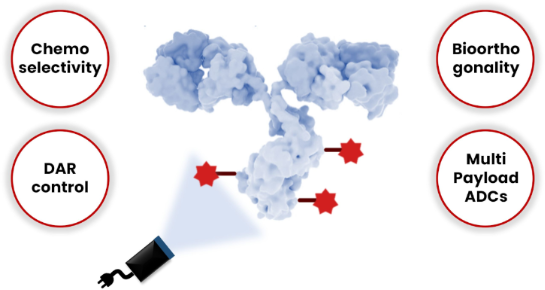
- conjugation methods often face challenges related to site-selectivity and heterogeneous product mixtures, highlighting the need to develop new, innovative chemical strategies. Photoredox chemistry emerges as a powerful tool in this context, enabling precise, mild, and selective modifications of peptides and
- selective chemical reactions, often for bioconjugation, by utilizing photoaffinity reagents. These reagents are typically photoreactive molecules that can be activated by light to form covalent bonds with nearby molecules [31][32][33]. PAL involves using a light-activated group (often a photo-crosslinker
- ) that can form covalent bonds when exposed to UV or visible light. These photoaffinity tags or crosslinkers are designed to bind to specific biomolecules, such as proteins, nucleic acids, or lipids, in a highly selective manner. The light irradiation triggers a chemical reaction, such as a bond


Semisynthetic derivatives of massarilactone D with cytotoxic and nematicidal activities
Beilstein J. Org. Chem. 2025, 21, 607–615, doi:10.3762/bjoc.21.48
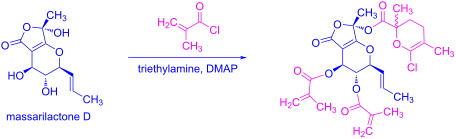
- , epidermoid carcinoma A431, ovarian carcinoma SKOV-3, and breast cancer MCF-7 cell lines. Compounds 2 and 3 exhibited significant cytotoxicity against all the tested cells. Some of the semisynthetic derivatives were also tested for their nematicidal activity and compound 4 displayed significant and selective
- compound 2. This suggests that the presence of the exo-methylene group is a critical structural feature that influences the cytotoxic activity, as outlined earlier [15]. These data also demonstrate possible selective effects of acylated massarilactone D in biological systems. Massarilactone D 3,4,7-tri-O
- -bromobenzoyl (4) also showed significant and selective nematicidal activity with LD90 and LD50 of 100 and 12.5 µg/mL, respectively. In the case of compound 5, the LD90 was not obtained but the LD50 was determined to be 100 µg/mL. Compounds 1, 6, 7, and 8 showed some mortality at concentrations of 50 and 100 μg


Total synthesis of (±)-simonsol C using dearomatization as key reaction under acidic conditions
Beilstein J. Org. Chem. 2025, 21, 601–606, doi:10.3762/bjoc.21.47
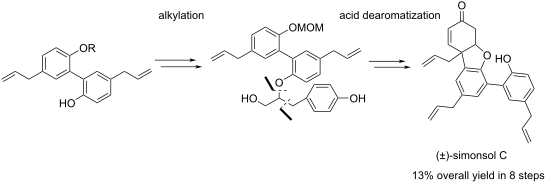
- scaffold of simonsol C, utilizing an alkaline dearomatization as the key reaction, followed by a functional-group-selective Wittig reaction and concurrent oxy-Michael addition [6]. A bromophenol acetal was used in the intramolecular alkylative dearomatization, which was first reported by Magnus et al. [8


Formaldehyde surrogates in multicomponent reactions
Beilstein J. Org. Chem. 2025, 21, 564–595, doi:10.3762/bjoc.21.45
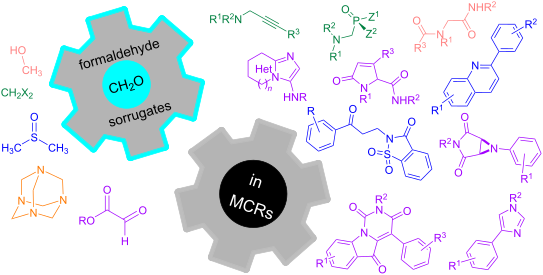
- byproducts (Scheme 26b) [76][78]. Because of the tendency of formaldehyde to generate these byproducts, several efforts have been made to optimize the chemoselectivity of the Kabachnik–Fields reaction. In this context, Zhao et al. proposed a more selective strategy for the synthesis of α-amino phosphorus
- amine with two methyl groups and a benzyl or allyl group, the cleavage of the N–CH2Ph and N–allyl bond takes place more selective (by 85% and 67%, respectively), instead of the cleavage of an N–Me bond. This explains the high selectivity observed for some examples in Scheme 27. Finally, this methodology


Binding of tryptophan and tryptophan-containing peptides in water by a glucose naphtho crown ether
Beilstein J. Org. Chem. 2025, 21, 541–546, doi:10.3762/bjoc.21.42
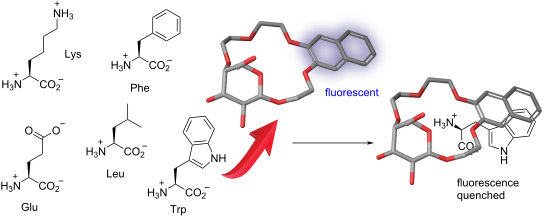
- Gianpaolo Gallo Bartosz Lewandowski Laboratory of Organic Chemistry, ETH Zürich, Vladimir-Prelog-Weg 3, 8093 Zürich, Switzerland 10.3762/bjoc.21.42 Abstract Tryptophan fulfills a plethora of important functions in nature both in its free form and as a component of peptides and proteins. Selective
- peptides [4][5]. Tryptophan also serves as a substrate to produce hormones such as serotonin or melatonin [6][7]. Due to the biological relevance of tryptophan synthetic receptors for this amino acid are highly sought after [8]. From a biological perspective it is especially desirable to achieve selective
- binding of tryptophan in water [9]. However, the development of selective amino acid receptors in aqueous environments is challenging since it requires a combination of hydrophobic and polar interactions for binding [10][11][12]. As a result, the number of reported selective receptors for tryptophan in


Vinylogous functionalization of 4-alkylidene-5-aminopyrazoles with methyl trifluoropyruvates
Beilstein J. Org. Chem. 2025, 21, 533–540, doi:10.3762/bjoc.21.41
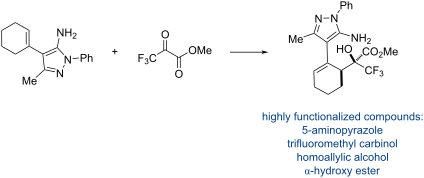
- compounds is a significant and important reaction for the selective synthesis of homoallylic alcohols in an efficient and sustainable way [2][3]. As carbonyl compounds, alkyl trifluoropyruvates [4][5] are an interesting class of compounds that have been used in addition reactions of different nucleophiles



Cryptophycin unit B analogues
Beilstein J. Org. Chem. 2025, 21, 526–532, doi:10.3762/bjoc.21.40
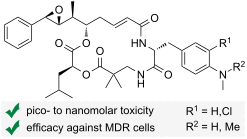
- University, Universitätsstraße 25, 33615 Bielefeld, Germany 10.3762/bjoc.21.40 Abstract Drug conjugates using toxic payloads are a promising approach for selectively combating cancer while sparing healthy tissue. The lack of highly cytotoxic and at the same time selective therapeutics against cancer is an
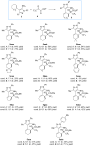
- 8 was obtained in good yield of 61% through reductive amination with excess formaldehyde and NaBH3CN as reductant, the selective installation of only one methyl group, providing monomethyl aniline 7, proved to be more troublesome. Either reductive amination using the same protocol, but under strict
- deaths in cancer patients and MDR-selective therapeutics are lacking [36], we expect that cryptophycins 1 and 2 will be considered as viable cytotoxins for the use in targeted tumour therapy, especially against MDR cancers. A: Structure of cryptophycin-52. B: Cryptophycin-52 derivatives modified with


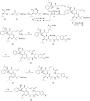

Synthesis of the aggregation pheromone of Tribolium castaneum
Beilstein J. Org. Chem. 2025, 21, 510–514, doi:10.3762/bjoc.21.38
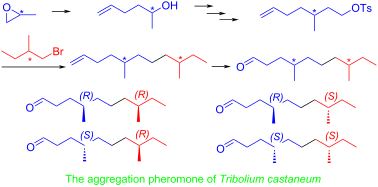
- of (R)-2-methyloxirane ((R)-2) with allylmagnesium bromide (3) catalyzed by CuI produced a mixture of (R)-hex-5-en-2-ol ((R)-4) and (S)-2-methylpent-4-en-1-ol ((S)-4’) (ratio 8:1, determined by 1H NMR spectroscopy) [25][26]. The primary alcohol (S)-4’ could be easily removed by a selective TEMPO


Synthesis of electrophile-tethered preQ1 analogs for covalent attachment to preQ1 RNA
Beilstein J. Org. Chem. 2025, 21, 483–489, doi:10.3762/bjoc.21.35
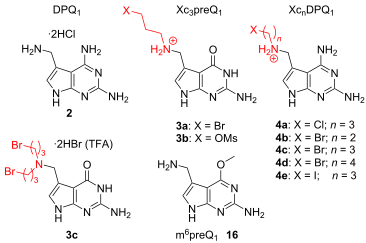
- were required to obtain the corresponding mesylate 3b. Similar to 11, compound 12 was isolated as its trifluoroacetate salt. Selective Boc protection of the aliphatic amine gave 13, which was selectively O-mesylated to give compound 14. Compound 14 was found to slowly undergo intramolecular cyclization


Photomechanochemistry: harnessing mechanical forces to enhance photochemical reactions
Beilstein J. Org. Chem. 2025, 21, 458–472, doi:10.3762/bjoc.21.33
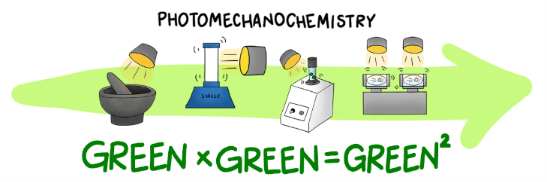
- photons and forces, streamlining the combination of mechanochemical and photochemical processes and paving the way for more efficient, sustainable, and selective transformations in organic synthesis. An unexplored opportunity is offered by resonant acoustic mixing (RAM) [82], a technology that leverages


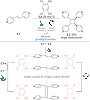


Electrochemical synthesis of cyclic biaryl λ3-bromanes from 2,2’-dibromobiphenyls
Beilstein J. Org. Chem. 2025, 21, 451–457, doi:10.3762/bjoc.21.32
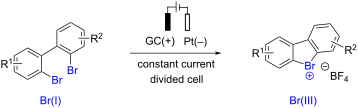
- diaryl λ3-bromanes under remarkably mild conditions with subsequent applications of the in situ-generated arynes in cycloaddition reactions [3], meta-selective reactions with oxygen and nitrogen nucleophiles [4][5], regiodivergent meta or ortho-alkynylations [6], and regioselective (di)halogenation [7


Beyond symmetric self-assembly and effective molarity: unlocking functional enzyme mimics with robust organic cages
Beilstein J. Org. Chem. 2025, 21, 421–443, doi:10.3762/bjoc.21.30
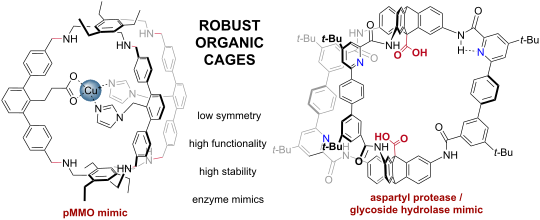
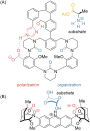
- across many fields of selective catalysis under the term confinement [3], a term borrowed from heterogeneous catalysis. Polarization can be understood as the catalyst providing an electrostatic environment that works to stabilize electron redistribution. Since all reactions redistribute electrons, and
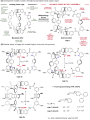
- a size-selective space [105][126][129][130][132][134]. A key advantage is that these capsules have been made on multi-hundred-gram scales and can be recycled [132]. Additionally, control of structural or bound water by the capsule [105] and properties such as a lowered pKa inside [125] demonstrate a
- selective substrate and transition-state binding, and for which extensive synthetic development is known [350][351][352][353][354][355]; (iii) they are the lowest possible symmetry polymacrocyclic structure (removing one edge piece will result in a macrocycle) [356][357], meaning ordered asymmetric




Identification and removal of a cryptic impurity in pomalidomide-PEG based PROTAC
Beilstein J. Org. Chem. 2025, 21, 407–411, doi:10.3762/bjoc.21.28
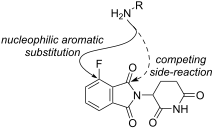
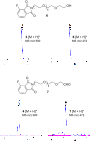
- chimera (PROTAC) has made it a popular starting point to develop selective small-molecule degraders [2]. Currently, leveraging ubiquitination by the von Hippel–Lindau (VHL) protein or cereblon (CRBN) is the most successful method to achieve targeted protein degradation [3][4]. For initial studies, a short




The effect of neighbouring group participation and possible long range remote group participation in O-glycosylation
Beilstein J. Org. Chem. 2025, 21, 369–406, doi:10.3762/bjoc.21.27
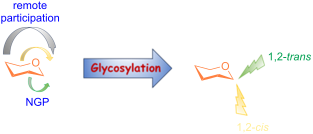
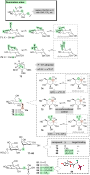
- . Levulinoyl protection: Levulinic acid (Lev, 27) as protecting group which can be cleaved using hydrazine hydrate in AcOH, also yields highly selective 1,2-trans glycosides [95][96] and was implemented as a substitute for acetyl or benzoyl protection [97][98]. van Boom et al. also showed the use of a masked
- levulinoyl protecting group, the 4,4-(ethylenedithio)pentanoyl group 28 [99]. Wong and co-workers illustrated the selective activation (Scheme 5) of C-2 levulinoyl-protected thiotolyl glycopyranosyl donor 29 for the synthesis of the disaccharide fragment 31 of fucosyl ganglioside GM1 [100]. Pivalate
- themselves from the other ester-type protecting groups, thereby enabling selective orthogonal deprotection strategies. Such protecting group showing orthogonality with acetyl protection is the chloroacetyl protecting group [109][110][111]. It renders similar neighbouring group participation by employing the




Synthesis, characterization, antimicrobial, cytotoxic and carbonic anhydrase inhibition activities of multifunctional pyrazolo-1,2-benzothiazine acetamides
Beilstein J. Org. Chem. 2025, 21, 348–357, doi:10.3762/bjoc.21.25
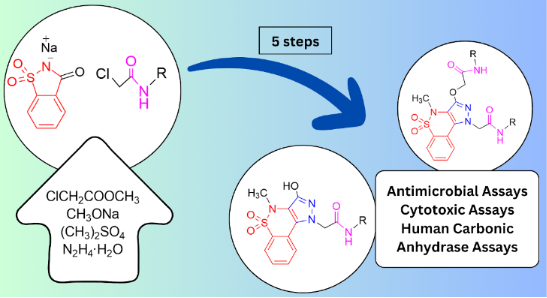
- prepared scaffolds are valuable additions to the class of pyrazolo-1,2-benzothiazine antibiotics with selective antistaphylococcal activity. Keywords: acetamides; antibiotics; antimicrobial; benzothiazines; Staphylococcus aureus; Introduction The global crisis of antibiotic resistance has been
- /cancer and other CAs (I, II). Non-selective inhibitors may have certain adverse effects so selective CAIs are worthier and more valuable [57]. Results of hCA inhibition assays are listed in Table 3. It was observed that the dialkylated pyrazolobenzothiazines 7i–n failed to inhibit any of the four
- CA II, 7c for CA IX, 7d for CA II, CA IX and CA XII, and 7f for XII. However, compound 7e appeared to show low but selective inhibition against the two transmembrane and tumor-associated forms (CA IX and CA XII) with Ki values of 82.6 and 88.4 µM, respectively and no inhibition against CA I and CA II


Red light excitation: illuminating photocatalysis in a new spectrum
Beilstein J. Org. Chem. 2025, 21, 296–326, doi:10.3762/bjoc.21.22

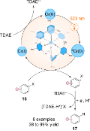
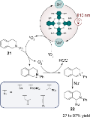
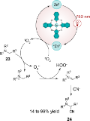
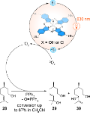
- , making it particularly suited for large-scale applications. Recent advances highlight the unique advantages of both metal-based and metal-free catalysts under red-light irradiation, broadening the range of possible reactions, from selective oxidations to complex polymerizations. In biological contexts
- sustainable photocatalysis, with applications ranging from selective oxidation to cross-dehydrogenative coupling. These organic systems are valued for their reduced environmental impact, their wide availability, and tunability, making them viable alternatives to traditional metal-based catalysts for red-light















Synthesis and characterizations of highly luminescent 5-isopropoxybenzo[rst]pentaphene
Beilstein J. Org. Chem. 2025, 21, 270–276, doi:10.3762/bjoc.21.19
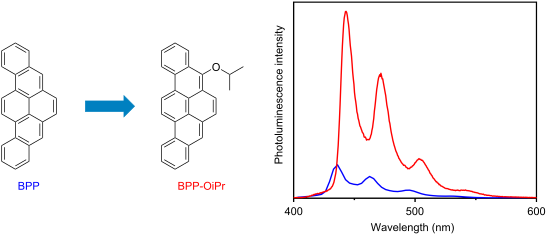
- -donating bis(methoxyphenyl)amino groups further improved the PLQY to 73%, displaying a mixed excitonic and charge-transfer character [22]. Additionally, the functionalization of BPP with two methyl benzoate groups enabled the development of hole-selective contact, which was applicable in significantly




Three-component reactions of conjugated dienes, CH acids and formaldehyde under diffusion mixing conditions
Beilstein J. Org. Chem. 2025, 21, 262–269, doi:10.3762/bjoc.21.18
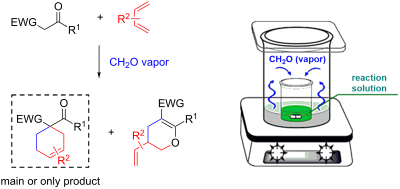
- participation of the C=C bond. Apparently, the ratio of the adducts of the Diels–Alder (i.e., I) and the hetero-Diels–Alder reaction (i.e., II) was strongly influenced by steric factors; a decreased steric hindrance in the initial CH acid derivatives led to a more selective formation of the structures I. This
- [27]. The three-component reaction with acetoacetic ester was highly selective, and the formation of a minor [4 + 2]-cycloaddition product was not observed (according to 1H NMR spectroscopy), but the yield of the products 15 did not exceed 9%. For acetylacetone, the reaction was the least selective


Streamlined modular synthesis of saframycin substructure via copper-catalyzed three-component assembly and gold-promoted 6-endo cyclization
Beilstein J. Org. Chem. 2025, 21, 226–233, doi:10.3762/bjoc.21.14
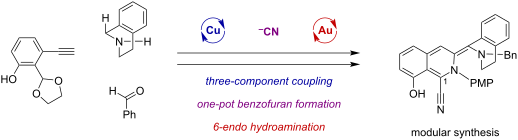
- measurements (Figures S20 to S25, Supporting Information File 1). A notable feature of this cascade process is the temporary protection of the C≡N triple bond, nitrile in the key intermediate 11, by the 2,3-diaminobenzofuran group. This facilitates the site-selective activation of the alkyne triple bond by the


Recent advances in electrochemical copper catalysis for modern organic synthesis
Beilstein J. Org. Chem. 2025, 21, 155–178, doi:10.3762/bjoc.21.9

- olefin addition reactions [20] conducted by various research groups, contributed to this area of research. Recently, the coupling reactions of C(sp3)-based electrophiles were explored using dual photoredox and copper catalysis, achieving selective radical coupling reactions involving alkyl halides [21




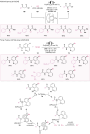


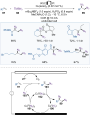


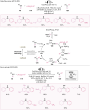
Recent advances in organocatalytic atroposelective reactions
Beilstein J. Org. Chem. 2025, 21, 55–121, doi:10.3762/bjoc.21.6
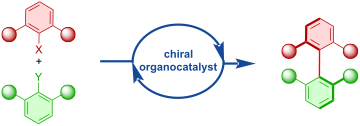
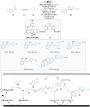
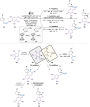
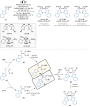
- activation of propargylic aldehydes with catalyst Int-1. Another critical feature was the ability of the organocatalyst to promote the Z-selective isomerization of Int-2 to Int-3. In a related fashion, Wang and co-workers developed an atroposelective heterocycloaddition [19]. The iminium-activated alkynals 4
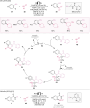
- acylazolium intermediate Int-16 followed by E-selective protonation of Int-17 (Scheme 9). NHC-catalysis also proved useful in the atroposelective construction of triaryl derivatives with two stereogenic axes. Wei, Du, and co-workers developed a synthesis of 1,2-diaxially chiral triarylpyranones 29 via an NHC






Emerging trends in the optimization of organic synthesis through high-throughput tools and machine learning
Beilstein J. Org. Chem. 2025, 21, 10–38, doi:10.3762/bjoc.21.3
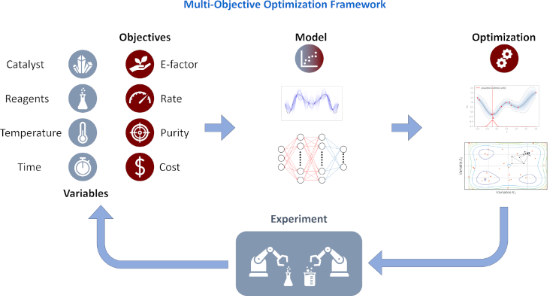
- -flow pattern using a Y-shaped mixer, followed by the suspension of the catalyst via a T-mixer. This technology was utilized to develop selective and efficient decarboxylative fluorination reactions. Recently, a slug flow platform was developed (Figure 3a) by injecting segments of gas as a separating


Synthesis of acenaphthylene-fused heteroarenes and polyoxygenated benzo[j]fluoranthenes via a Pd-catalyzed Suzuki–Miyaura/C–H arylation cascade
Beilstein J. Org. Chem. 2024, 20, 3290–3298, doi:10.3762/bjoc.20.273
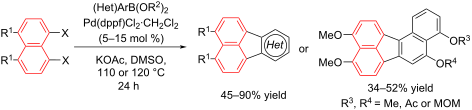
- challenging, if not impossible. In order to overcome this problem, we opted to synthesize benzo[j]fluoranthene analogues with differentially protected oxygens so that specific positions can be functionalized further if needed after selective deprotection. To this end, first we accomplished an efficient
- synthesis of benzo[j]fluoranthene 23 in six steps (Scheme 3). In this sequence, 1,8-DHN (19) was first converted to 1-acetoxy-8-methoxynaphthalene (24) via a selective mono-methylation of 19 followed by acetylation by acetyl chloride in 88% yield over two steps. The more electron-rich ring of naphthalene 24





