Search results
Search for "substitution" in Full Text gives 1510 result(s) in Beilstein Journal of Organic Chemistry. Showing first 200.
Semisynthetic derivatives of massarilactone D with cytotoxic and nematicidal activities
Beilstein J. Org. Chem. 2025, 21, 607–615, doi:10.3762/bjoc.21.48
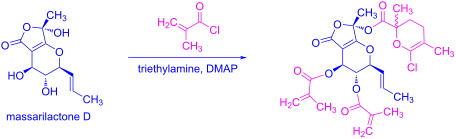
- groups, including an additional substitution on C-7, showed potent activity against nematodes. These acyl substituents, particularly the third cinnamoyl group on C-7, may significantly enhance the biological activity. This modification likely represents a key structural feature influencing its activity


Formaldehyde surrogates in multicomponent reactions
Beilstein J. Org. Chem. 2025, 21, 564–595, doi:10.3762/bjoc.21.45
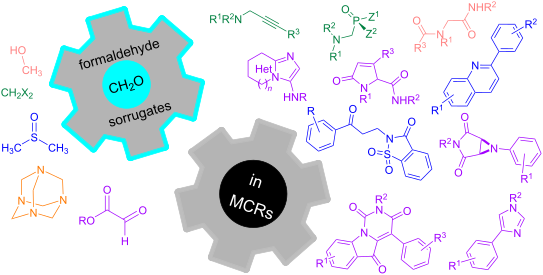
- decompose into DMS (dimethyl sulfide), which then can act as a nucleophile in several MCRs (Scheme 4) [19][20][21][22]. In this context, DMSO can be used as a source of the methylsulfanyl (-SCH3) group after DMS follows a nucleophilic addition or substitution, allowing one to obtain different types of
- various substitution patterns in the aromatic ring, allowing a high variety of quinolines of general structure I and II. In a related work, quinolines of structure I (Scheme 8) could be obtained by similar reaction pathways. Jadhav et al. proposed a three-component cascade reaction between anilines
- reaction works very well for a wide variety of functional groups and substitution patterns in the aryl methyl ketone substrate, affording the desired heterocycle with good yields. Even heteroaryl methyl ketone and 1,3-dicarbonyl compounds work very well under these reaction conditions, leading to more


Deep-blue emitting 9,10-bis(perfluorobenzyl)anthracene
Beilstein J. Org. Chem. 2025, 21, 515–525, doi:10.3762/bjoc.21.39
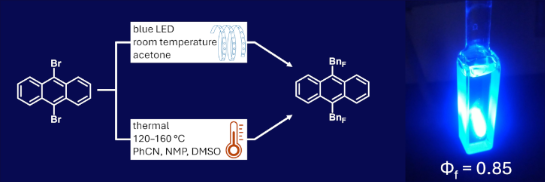
- higher selectivity with milder reaction temperatures. The weaker C(sp2)–Br bond is easier to cleave than a C(sp2)–H bond, resulting in a higher likelihood of radical substitution at those positions. To the best of our knowledge, there are no previous examples of perfluorobenzyl substitution of any PAH(Br
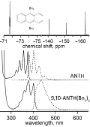
- ratio was found to be 1.74 (theoretical = 1.75), confirming the composition to be ANTH(BnF)2. Slow evaporation of a CH2Cl2 solution of 9,10-ANTH(BnF)2 at 2 °C afforded off-white plates suitable for X-ray diffraction. The structure shown in Figure 2 (top panel) confirmed the 9,10-substitution pattern





Unprecedented visible light-initiated topochemical [2 + 2] cycloaddition in a functionalized bimane dye
Beilstein J. Org. Chem. 2025, 21, 500–509, doi:10.3762/bjoc.21.37
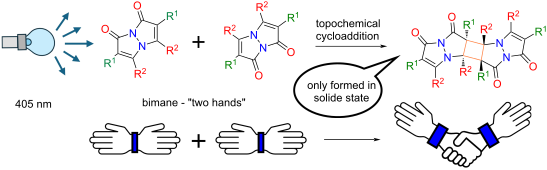
- with the Schmidt criteria for topochemical cycloaddition. Additionally, two other bimane derivatives with different substitution patterns were synthesized and investigated. Our findings suggest that functionalizing bimanes to redshift their absorption maxima into the visible-light spectrum provides a


Synthesis of N-acetyl diazocine derivatives via cross-coupling reaction
Beilstein J. Org. Chem. 2025, 21, 490–499, doi:10.3762/bjoc.21.36
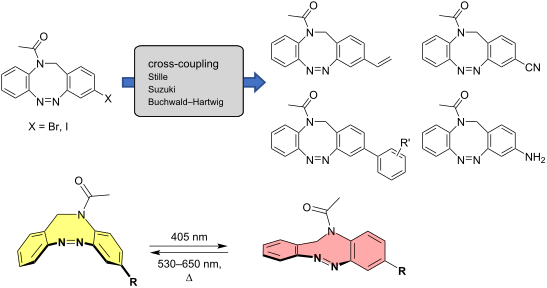
- ]. Moreover, the parent diazocine is insoluble in water (precipitation in water/DMSO > 9:1). Substitution with polar substituents such as CH2NH2 provides water solubility, however, it does not restore the high Z → E conversion rates of the parent system in organic solvents, which is a disadvantage, since
- biochemical reactions usually take place in aqueous environments [13]. The substitution of one CH2 group in the CH2CH2 bridge by N–C(=O)–CH3 leads to an intrinsic water solubility of the N-acetyl diazocine 1 (Figure 1) [3]. Furthermore the photoconversion of 1 shows no significant drop in pure water in
- substitution. Substituents such as halogen atoms must be introduced into the N-acetyl diazocine structure during the synthesis of the building blocks. In the present work we start from mono- and dihalogenated N-acetyl diazocine 2–4 (Figure 2) and focus on the further derivatization via cross-coupling reactions


Electrochemical synthesis of cyclic biaryl λ3-bromanes from 2,2’-dibromobiphenyls
Beilstein J. Org. Chem. 2025, 21, 451–457, doi:10.3762/bjoc.21.32
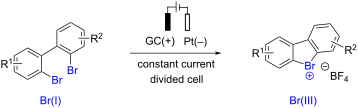
- Br(II) followed by subsequent deprotonation to generate radical B. A following disproportionation of radical B would lead to the formation of Br(III) species C (anodic oxidation cannot be fully excluded), which undergoes intramolecular SNAr-type substitution to form cyclic λ3-bromane 1a and


Beyond symmetric self-assembly and effective molarity: unlocking functional enzyme mimics with robust organic cages
Beilstein J. Org. Chem. 2025, 21, 421–443, doi:10.3762/bjoc.21.30
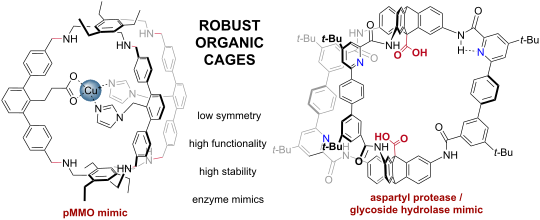
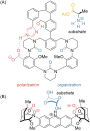
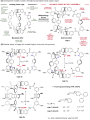
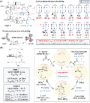
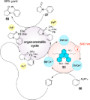
- generated large electrostatic effects by functionalizing the capsule exteriors with charged groups (Figure 4D) [136][137]. Observed rate accelerations for capsule-promoted nucleophilic substitution reactions demonstrate significant enthalpic stabilization of the transition state attributable due to the
- nucleophile and electrophile in a glycosylation reaction [105]. (D) An externally charged cavitand promotes charge-stabilized nucleophilic substitution reactions of hydrophobically encapsulated substrates [136][137]. (A) Metal-organic cages and key modes in catalysis. (B) Charged metals or ligands can result




Identification and removal of a cryptic impurity in pomalidomide-PEG based PROTAC
Beilstein J. Org. Chem. 2025, 21, 407–411, doi:10.3762/bjoc.21.28
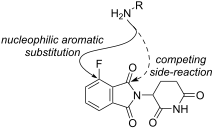
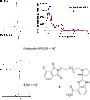
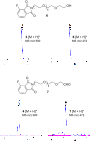
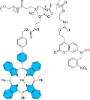
- drug”) class of PROTAC molecules with a PEG linker is frequently used to promote targeted protein degradation. The standard protocol for their synthesis involves nucleophilic aromatic substitution of 4-fluorothalidomide with a PEG-amine. We report herein the identification of a commonly ignored
- impurity generated in this process. Nucleophilic acyl substitution competes with aromatic substitution to displace glutarimide and gives a byproduct that can co-elute with the desired product on HPLC throughout the remainder of the synthesis. Scavenging with taurine is a convenient way to minimize this
- contamination. Keywords: glutarimide; IMiD; impurity; nucleophilic acyl substitution; PROTAC; Introduction Targeted protein degradation capitalizing on the concept of chemically induced dimerization has emerged as a new therapeutic approach recently [1]. In particular, the modularity of proteolysis targeting




The effect of neighbouring group participation and possible long range remote group participation in O-glycosylation
Beilstein J. Org. Chem. 2025, 21, 369–406, doi:10.3762/bjoc.21.27
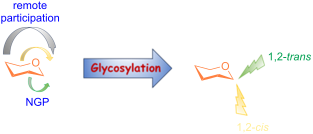
- glycosylation. Conventional glycosylation involves the ‘nucleophilic substitution’ of the leaving group at the sp3 anomeric centre of the donor moiety with a suitable carbohydrate or non-carbohydrate-based aglycon with the help of an electrophilic promoter to form the equatorial glycoside 7 or the axial
- pairs in glycosylation mechanisms was first reported by Rhind-Tutt and Vernon [44], and later reiterated by various authors, including the seminal graphical analysis of Lemieux and co-workers [45][46][47]. Thus, complete categorisation of the reaction in either of the subdomains of substitution reaction
- glycosylation reaction between the two extremes of substitution reactions enables the synthetic chemists to manoeuvre and design the coupling reactions according to the regio- and stereochemical demand. In chemical glycosylation, the role of protecting groups in directing the attack of the incoming nucleophile




Red light excitation: illuminating photocatalysis in a new spectrum
Beilstein J. Org. Chem. 2025, 21, 296–326, doi:10.3762/bjoc.21.22

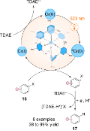
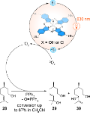
- , which includes various aryl- and alkylboronates, showcasing its applicability across a range of chemical transformations. For example, phenylboronic acids with diverse substitution patterns (such as electron-donating and electron-withdrawing groups) were smoothly converted to the corresponding alcohols
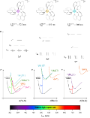
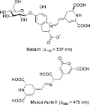
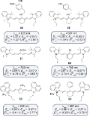
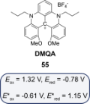
- , making them more oxidizing. Extended conjugation in cyanins (e.g., 53 and 54) further increases their oxidizing nature at the ground state. Overall, both central substitution and extended conjugation play crucial roles in determining the redox behavior of these dyes. Cyanins with an amino group on the















Molecular diversity of the reactions of MBH carbonates of isatins and various nucleophiles
Beilstein J. Org. Chem. 2025, 21, 286–295, doi:10.3762/bjoc.21.21
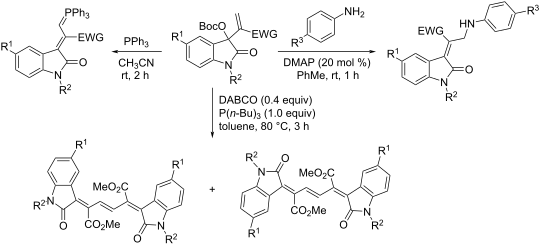
- Zi-Ying Xiao Jing Sun Chao-Guo Yan College of Chemistry & Chemical Engineering, Yangzhou University, Yangzhou 225002, China 10.3762/bjoc.21.21 Abstract In this paper, the nucleophilic substitution reactions of various N- and P-containing nucleophiles to MBH carbonates of isatins were investigated
- ]. In the presence of a Lewis base, MBH carbonates of isatins can be easily converted to activated allylic ylides, which in turn can undergo allylic substitution and annulation reactions to give diverse 3-substituted and spirooxindole derivatives [36][37][38][39][40][41]. Inspired by these elegant
- synthetic methodologies and in continuation of our aim to develop domino reactions based on MBH carbonates of isatins for efficient construction of diverse polycyclic spiroindolinones [42][43][44][45][46][47][48][49][50][51][52], herein, we wish to report the nucleophilic substitution reactions of various N




Synthesis and characterizations of highly luminescent 5-isopropoxybenzo[rst]pentaphene
Beilstein J. Org. Chem. 2025, 21, 270–276, doi:10.3762/bjoc.21.19
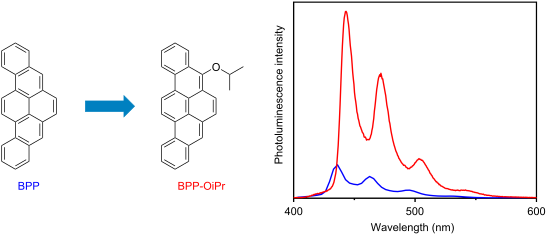
- singlet (S1) state [21]. Notably, a dimer of BPP, 5,5'-bibenzo[rst]pentaphene (BBPP), exhibited an enhanced PLQY of 44% through intensity borrowing from its bright S2 state as well as intriguing symmetry-breaking charge transfer between two BPP units. Moreover, the substitution of BPP with two electron




Effect of substitution position of aryl groups on the thermal back reactivity of aza-diarylethene photoswitches and prediction by density functional theory
Beilstein J. Org. Chem. 2025, 21, 242–252, doi:10.3762/bjoc.21.16
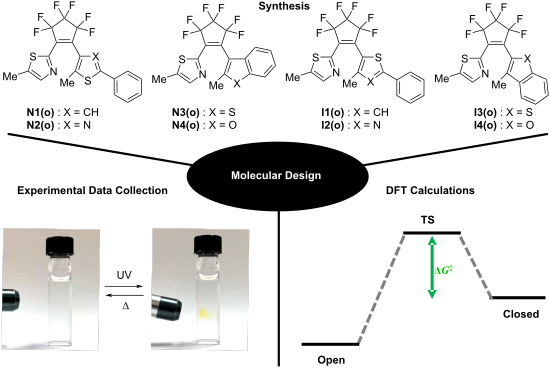
- analysis of the thermal back reaction revealed activation parameters, highlighting how the substitution position of the aryl group affects the thermal stability. Additionally, density functional theory calculations identified M06 and MPW1PW91 as the most accurate functionals for predicting the thermal back
- calculations can be a powerful tool for molecular design. In this work, we newly synthesize various aza-diarylethene derivatives N3, N4, and I1–I4 with different substitution positions of the aryl group, and investigate their photochromic behaviors and thermal back reactivities as the data set for the
- ‡ and ΔS‡ values from the viewpoint of substitution position, when the aryl group is phenylthiophene (N1 and I1) or phenylthiazole (N2 and I2), both the ΔH‡ and the ΔS‡ values decreased by the change of the substitution position of the aryl group from N to I. In contrast, when the aryl group is


Heteroannulations of cyanoacetamide-based MCR scaffolds utilizing formamide
Beilstein J. Org. Chem. 2025, 21, 217–225, doi:10.3762/bjoc.21.13
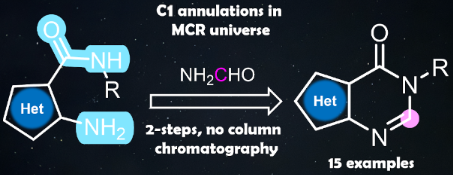
- (hetero)aromatic, bulky and linear amines with different substitution patterns. The compounds 2–4 were purified by recrystallization and employed as such (Scheme 2). To our great delight, the heterocycles 2–4 could successfully be subjected to refluxing formamide under neat conditions, instantly yielding




Recent advances in organocatalytic atroposelective reactions
Beilstein J. Org. Chem. 2025, 21, 55–121, doi:10.3762/bjoc.21.6
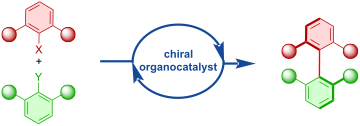
- transformation relies on the catalysis with azolium precatalyst C12 (Scheme 11a). The reaction also allowed the synthesis of indol-derived bridged biaryls 35 (Scheme 11b). The proposed mechanism, supported by DFT calculations, comprises propargylic substitution towards Int-20 with NHC-derived enolate Int-19
- the azodicarboxylate as crucial to forming hydrogen bonds with the organocatalyst. Benzylation of this nitrogen or substitution of just one of the carboxylate groups led to no product being observed. A series of naphthylindoles 71 was tested for potential biological activity and showed promising
- importance of hydrogen on the amino or hydroxy groups, supposedly through the bonding with the catalyst. Substitution of these groups or their hydrogens led to either halted reaction or significantly reduced enantiopurity of the products. Expanding the scope of available azodicarboxylates 77 and aromatic






Emerging trends in the optimization of organic synthesis through high-throughput tools and machine learning
Beilstein J. Org. Chem. 2025, 21, 10–38, doi:10.3762/bjoc.21.3
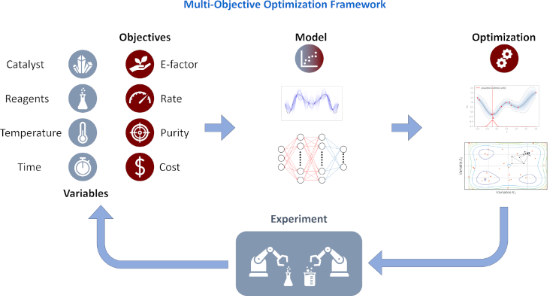
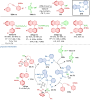
- , photoredox-catalytic, and nucleophilic aromatic substitution reactions, as well as in the two-step synthesis of cyclobutanone. The molecules synthesized under the optimal conditions are presented in Figure 6b, employing the stable noisy optimization by branch and fit (SNOBFIT) algorithm. SNOBFIT offers a


Synthesis, characterization, and photophysical properties of novel 9‑phenyl-9-phosphafluorene oxide derivatives
Beilstein J. Org. Chem. 2024, 20, 3299–3305, doi:10.3762/bjoc.20.274
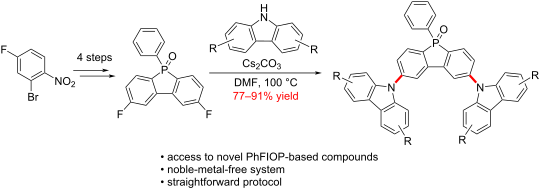
- available 2-bromo-4-fluoro-1-nitrobenzene, featuring a noble-metal-free system, mild reaction conditions, and a good yield, especially for the final Cs2CO3-facilitated nucleophilic substitution (77–91% yield). The characterization data obtained from IR and NMR spectroscopy (1H, 13C, 19F, and 31P) as well as
- hand, we turned our attention to the synthesis of PhFlOP-based compounds through a Cs2CO3-facilitated nucleophilic substitution with substituted carbazoles as the nucleophiles (Scheme 2). For example, tert-butyl, bromo, carbazolyl, or phenyl substituents were introduced into the carbazoles. To our




Efficient synthesis of fluorinated triphenylenes with enhanced arene–perfluoroarene interactions in columnar mesophases
Beilstein J. Org. Chem. 2024, 20, 3263–3273, doi:10.3762/bjoc.20.270
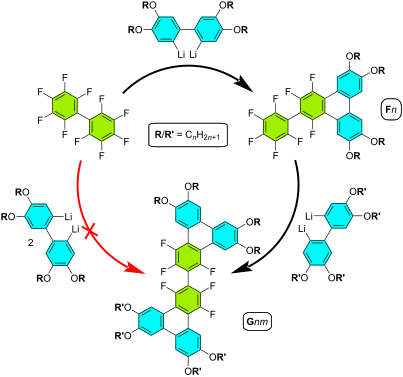
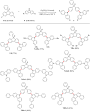
- chains and derived from the classical triphenylene core self-assembling in columnar mesophases based on this paradigm. These mesogenic compounds were simply obtained in good yields by the nucleophilic substitution (SNFAr) of various types of commercially available fluoroarenes with the electrophilic
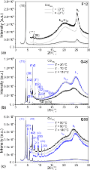
- substitution of the terminal phenyl ring with a pentafluorophenyl ring. Thus, as expected, they display a Colhex mesophase over large temperature ranges, with only small differences in the mesophase stability and transition temperatures. Furthermore, the presence of the terminal fluorophenyl group enables a
- subsequent second annulation, yielding a new series of extended polyaromatic mesomorphic compounds, i.e., 1,1',3,3',4,4'-hexafluoro-6,6',7,7',10,10',11,11'-octaalkoxy-2,2'-bitriphenylene (Gnm) which were found to display a Colrec mesophase. The specific nucleophilic substitution patterns of the Fn




Non-covalent organocatalyzed enantioselective cyclization reactions of α,β-unsaturated imines
Beilstein J. Org. Chem. 2024, 20, 3221–3255, doi:10.3762/bjoc.20.268
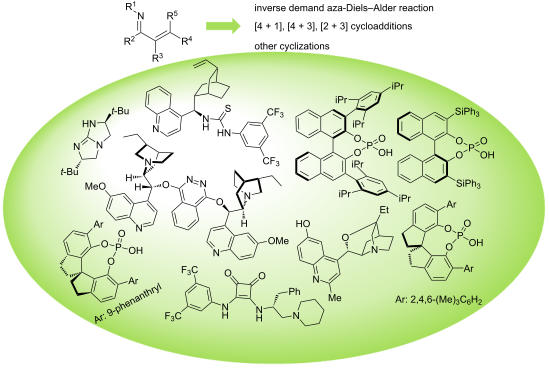
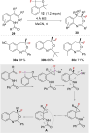
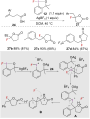
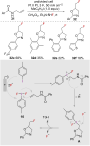
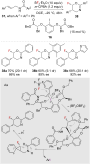
- -derived azadiene by H-bonding. This dual activation promotes a stereoselective addition of 3-chlorooxindole to the azadiene leading to intermediate A. The latter is also activated by the chiral guanidine and undergoes an intramolecular nucleophilic substitution which delivers the product 19b with the
- ketones 42 [37]. With this transformation polysubstituted cyclohexanes 43 bearing four consecutive stereocenters are afforded through efficient one-pot cyclization with good yields (43–95%) and with high enantioselectivities (80–97% ee) (Scheme 15). In general, 1-azadienes 14 with different substitution









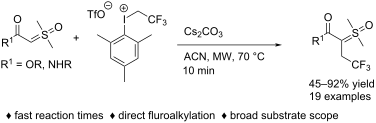
Direct trifluoroethylation of carbonyl sulfoxonium ylides using hypervalent iodine compounds
Beilstein J. Org. Chem. 2024, 20, 3182–3190, doi:10.3762/bjoc.20.263
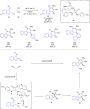
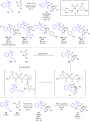
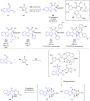
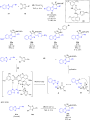
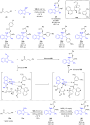
- arene moieties. These observations confirmed the LUMO as an appropriate lobe for nucleophilic attack via the SN2 pathway (path 2), and confirmed the LUMO+1 as an appropriate lobe for substitution via reductive elimination (path 1). As such, neither mechanism could be immediately discarded, and we were


Hypervalent iodine-mediated intramolecular alkene halocyclisation
Beilstein J. Org. Chem. 2024, 20, 3113–3133, doi:10.3762/bjoc.20.258
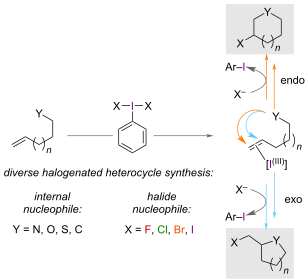
- firstly through the coordination of an alkene by the HVI reagent, which activates it toward intramolecular attack by an internal nucleophile. Following this, substitution of the iodane(III) can occur from the nucleophilic halide in solution to reveal the halo-cyclised product (Figure 2). In this review
- of the alkene were successfully cyclised in similarly good yields. However, increased substitution on the alkene resulted in an increased reaction time, with 9 hours required for disubstituted alkenes compared to 3 hours for non-substituted alkenes. With extended chain lengths, 5-, 6- and 7-membered
- enough to displace the iodane to form the oxonium species A. When the carboxylic acid is used, the oxygen in the lactone intermediate is less reactive and so substitution of the iodane by fluoride is more favourable and the branched product is formed. In addition to aminofluorination, Szabó also reported



















Extension of the π-system of monoaryl-substituted norbornadienes with acetylene bridges: influence on the photochemical conversion and storage of light energy
Beilstein J. Org. Chem. 2024, 20, 3061–3068, doi:10.3762/bjoc.20.254
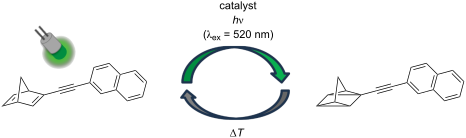
- substitution patterns, the compounds 1h–l,n showed the characteristic long-wavelength bands with maxima between 310 nm (1k) and 345 nm (1n) and low-energy zero onsets from 345 nm (1k) to 420 nm (1n). Hence, the red shift of the absorption bands correlates with the size of the respective π-system of the
- and the analogues 1c and 1e without an alkyne linker [29][30][34]. As the only exception, the m-substituted derivative 1k has a higher quantum yield than its analog 1b, which is, however, still lower than the one of the cyano-substituted norbornadiene 1c [30][34]. In addition, substitution at the 2
- is no obvious correlation between the quantum yields of the photoreactions and substitution pattern of the norbornadiene in this series, except for a rough trend that naphthyl-linked derivatives, in particular the ones substituted in the 2-position, have lower quantum yields than the phenyl-linked


Cyclodextrin-based rotaxanes for polymer materials: challenge on simultaneous realization of inexpensive production and defined structures
Beilstein J. Org. Chem. 2024, 20, 3026–3049, doi:10.3762/bjoc.20.252
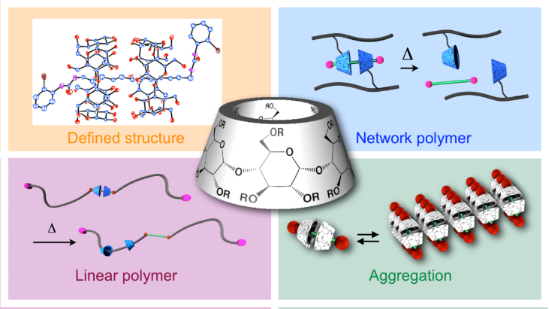
- structure in the early days. Rotaxane bearing a dumbbell comprising only covalent bonds was first reported by Harada and co-workers in 1997 (Scheme 1B) [38]. In this system, the end-capping reaction was based on the nucleophilic substitution of the amino groups on the axle ends. Afterward, such nucleophilic
- substitution/addition reactions became the standard for end-capping reactions, although a transition metal–catalyzed cross-coupling reaction has also been used to synthesize CD-based rotaxane. Typically, water-soluble components are prepared, after which the Suzuki coupling reaction in water is used to
- synthesis, Harada and co-workers reported the end-capping reaction based on nucleophilic substitution by the amino groups on axle ends (Scheme 2) [43]. Similarly, other highly efficient reactions have been performed as end-capping reactions to produce polyrotaxane [13][14][15]. In addition to the simple






Advances in radical peroxidation with hydroperoxides
Beilstein J. Org. Chem. 2024, 20, 2959–3006, doi:10.3762/bjoc.20.249
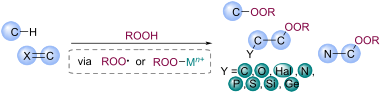
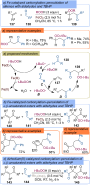
- mainly include: nucleophilic addition or nucleophilic substitution with H2O2 or ROOH [17][18], autoxidation with O2, pericyclic reactions of unsaturated bonds with O3 or O2, and metal-catalyzed peroxidation (Isayama–Mukaiyama hydrosilylperoxidation [19][20], for example) [21][22][23]. As the topic is
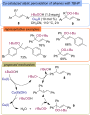
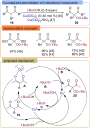
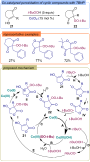
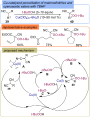
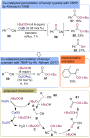
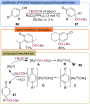
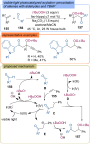
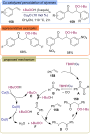
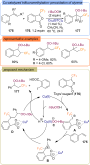
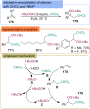
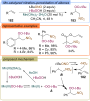
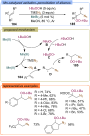
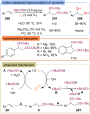
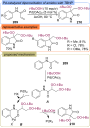
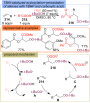
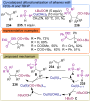
- styrenes 217, oxygen sources (water or alcohol), and TBHP mediated by ammonium iodine has been developed (Scheme 68) [137]. Addition of the tert-butylperoxy radical to alkene 217 followed by SN2 nucleophilic substitution with O-source was considered as a possible pathway to the formation of products 218































gem-Difluorovinyl and trifluorovinyl Michael acceptors in the synthesis of α,β-unsaturated fluorinated and nonfluorinated amides
Beilstein J. Org. Chem. 2024, 20, 2946–2953, doi:10.3762/bjoc.20.247
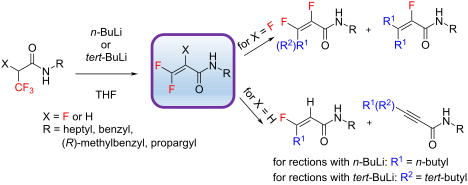
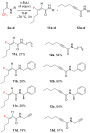
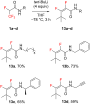
- was to be evidenced by a substitution reaction at the alpha position. We started testing the different bases with lithium bis(trimethylsilyl)amide [39]. The reactions did not take place in the presence of LiHMDS (Table 1, entries 1 and 2), using either benzyl bromide or methyl iodide as electrophiles
- also tried to perform a substitution reaction by treating compounds 1a and 2a with tert-BuLi, employing methyl iodide as the electrophile. However, similar to previous reactions, this did not yield substitution products at the alpha position, but to the addition–elimination reaction products. More