Search results
Search for "addition" in Full Text gives 3385 result(s) in Beilstein Journal of Organic Chemistry. Showing first 200.
Transition-state aromaticity and its relationship with reactivity in pericyclic reactions
Beilstein J. Org. Chem. 2025, 21, 1613–1626, doi:10.3762/bjoc.21.125
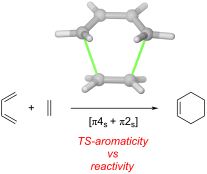
- accelerate Diels–Alder cycloaddition reactions [30][31]. In addition, these LA-catalyzed cycloadditions not only exhibit higher reaction rates but also become, in many cases, more regio- and stereoselective than the corresponding uncatalyzed reactions. For these reasons, LAs have been (and still are) widely
- , which is translated into high reaction temperatures that severely limit the scope of the process. Nevertheless, as Diels–Alder cycloadditions, Alder–ene reactions can be efficiently accelerated (i.e., having lower barriers) upon the addition of catalytic amounts of a Lewis acid [62], which again
- LAs [66] (Table 2). As expected, we found that the reduction of the activation barrier (up to ca. 25 kcal/mol) directly correlates with the relative Lewis acidity of the catalyst. In addition, the process becomes more and more asynchronous as the acidity of the catalyst increases, which strongly


Synthesis of optically active folded cyclic dimers and trimers
Beilstein J. Org. Chem. 2025, 21, 1603–1612, doi:10.3762/bjoc.21.124

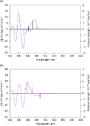
- simple SiO2 column chromatography. In addition, they were purified using a recyclable high-performance liquid chromatography (HPLC) to remove unidentified impurities to obtain (Sp)-6 and (Sp)-7 in 16% and 3% isolated yields, respectively. The ultraviolet–visible (UV–vis) absorption spectra and normalized
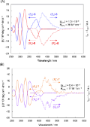
- Information File 1), which reproduced the experimental CD spectrum of (Sp)-6. In addition, the signs of the experimental CD spectrum of (Sp)-7, negative and positive from the long wavelength to the short wavelength, were reproduced using the simulated CD spectrum (Figure S19B, Supporting Information File 1
- ): [M + H]+ calcd. for C56H62Si2, 791.4463; found, 791.4442; [α]D25 = +199.73 (c 0.04, CHCH3). Synthesis of (Sp)-4 (Sp)-3 (43.0 mg, 0.054 mmol) was dissolved in THF (2 mL), followed by the addition of Bu4NF (1.0 M in THF solution, 0.11 mL). The reaction was carried out at room temperature for 30 min



3-Aryl-2H-azirines as annulation reagents in the Ni(II)-catalyzed synthesis of 1H-benzo[4,5]thieno[3,2-b]pyrroles
Beilstein J. Org. Chem. 2025, 21, 1595–1602, doi:10.3762/bjoc.21.123
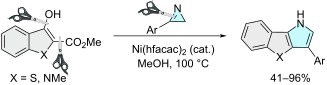
- an ortho-substituent into the benzene ring also has no effect on the synthesis efficiency (compound 3f). A slight decrease in yield was observed only for the naphthyl-substituted annulation product 3k. The plausible mechanism of the reaction involves the nucleophilic addition of the Ni-enolate of 1



Thermodynamic equilibrium between locally excited and charge transfer states in perylene–phenothiazine dyads
Beilstein J. Org. Chem. 2025, 21, 1577–1586, doi:10.3762/bjoc.21.121
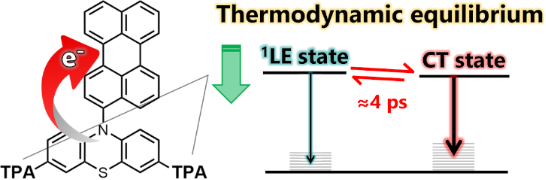
- LE band of the Pe moiety. This result suggests that a stronger CT character leads to a lower overall fluorescence quantum yield. The Φf in other solvents are shown in Table S1 (Supporting Information File 1). In addition, a gradual increase in the emission intensity around 500–520 nm is observed with
- an increasing number of TPA substituents. This observation suggests the presence of an additional emission band originating from the PTA-substituted PTZ unit, in addition to the emissions from the LE state of the Pe moiety and the CT state. The assignment of this band will be discussed in detail


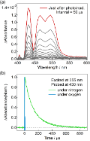

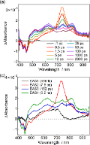

pH-Controlled isomerization kinetics of ortho-disubstituted benzamidines: E/Z isomerism and axial chirality
Beilstein J. Org. Chem. 2025, 21, 1568–1576, doi:10.3762/bjoc.21.120
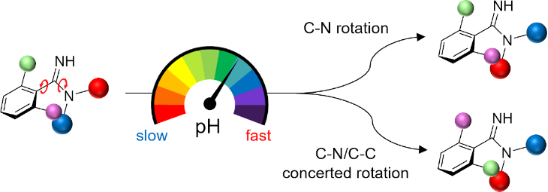
- 3–7, with different electron-donating or electron-withdrawing substituents at the para-position of the phenyl ring conjugated with the amidine moiety. The same kinetic analysis was performed for compounds 3–7 at pH 4.0, 4.5, 5.0, and 5.5, and the results are summarized in Table 1. In addition, the

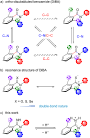


Synthesis of an aza[5]helicene-incorporated macrocyclic heteroarene via oxidation of an o-phenylene-pyrrole-thiophene icosamer
Beilstein J. Org. Chem. 2025, 21, 1561–1567, doi:10.3762/bjoc.21.119
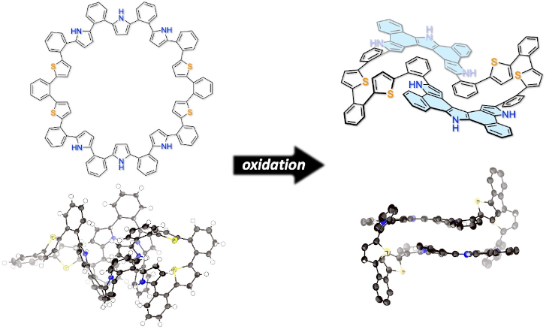
- ][2][3][4][5]. In addition to these promising functionalities, their cyclic polyaromatic frameworks can be further transformed into fused structures. To this end, belt-like polyaromatic architectures can be developed, inspiring ongoing efforts toward the construction of carbon nanotube analogs (Figure


Facile synthesis of hydantoin/1,2,4-oxadiazoline spiro-compounds via 1,3-dipolar cycloaddition of nitrile oxides to 5-iminohydantoins
Beilstein J. Org. Chem. 2025, 21, 1552–1560, doi:10.3762/bjoc.21.118

- -dipoles. These techniques differed in the method of introducing the base necessary for generating the 1,3-dipole into the reaction medium, and included the base addition “drop by drop” or using a diffusion mixing procedure [21]. We found that the formation of spiro-compounds occurs chemo- and
- benzonitrile oxides, in this case the dropwise addition method of triethylamine resulted in complete inactivity of the dipole towards the dipolarophile 2f, which was quantitatively recovered from the reaction mixture. The low reactivity of CEFNO can be explained by considering nitrile oxides in terms of
- known that nitrile oxides are capable of reacting with various multiple carbon–heteroatom bonds [28]. In contrast to the products of nitrile oxide cycloaddition to imino groups, 1,4,2-oxathiazoles, formed by addition to C=S bonds, are unstable and undergo decomposition into isothiocyanate and a carbonyl



Azide–alkyne cycloaddition (click) reaction in biomass-derived solvent CyreneTM under one-pot conditions
Beilstein J. Org. Chem. 2025, 21, 1544–1551, doi:10.3762/bjoc.21.117
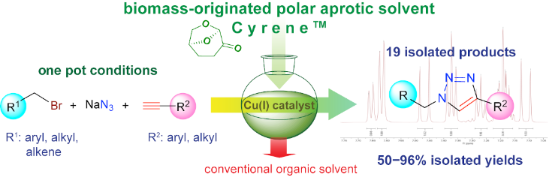
- important transformation exhibiting higher chemical and environmental safety. Keywords: alternative solvent; click chemistry; cycloaddition; CyreneTM; 1,2,3-triazoles; Introduction In the past few decades, transition-metal-catalyzed coupling and addition reactions have represented one of the most powerful
- –carbon double bond in a certain molecular structure could allow for efficient subsequent functionalization via, for example, an addition reaction, opening possibilities for building even more complex molecular skeletons involving 1,2,3-triazole units. Using allyl bromide in the reaction sequence results


General method for the synthesis of enaminones via photocatalysis
Beilstein J. Org. Chem. 2025, 21, 1535–1543, doi:10.3762/bjoc.21.116
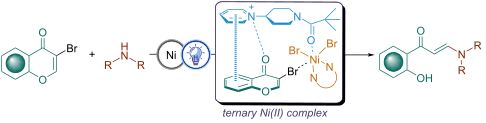
- indicate that the key to the success of this process is the formation of an unexplored ternary Ni-complex with 3-bromochromone and a pyridinium salt, which is crucial for the effective activation of the α,β-unsaturated system towards the nucleophilic addition. Keywords: chromones; dehalogenation
- enaminones. This transformation is simple, straightforward, and proceeds under mild conditions. Results and Discussion The initial challenge in achieving the desired reactivity was the activation of the unsaturated system towards the nucleophilic addition of the amine. The most common strategy to increase
- the reactivity of unsaturated esters towards an aza-Michael addition is the use of transition metal complexes as catalysts/promoters [40][41][42]. Considering this background, we reasoned that Ni(II) could be a suitable catalyst for the amination of unsaturated systems. Initial investigations were




Azobenzene protonation as a tool for temperature sensing
Beilstein J. Org. Chem. 2025, 21, 1528–1534, doi:10.3762/bjoc.21.115
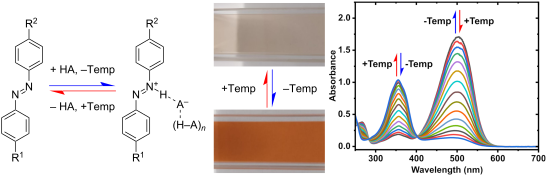
- +MSA−. Because the azo group contains two nitrogens with lone pairs and an excess of MSA was used in the experiments, geometry optimizations were also performed for complexes with two MSA molecules (1H+MSA−MSA, 2H+MSA−MSA and 3H+MSA−MSA). In addition to protonation, we also considered hydrogen-bonded
- propensity (∆G° = −5.81, −5.25, and −2.55 kcal/mol for 3, 2, and 1, respectively). The protonation is more favorable in DCE (∆G° between −2.55 and −5.81 kcal/mol) than in MeCN (∆G° between −1.74 and −4.74 kcal/mol), highlighting solvent effects on reactivity. For 3 in DCE, the addition of a second MSA


Ambident reactivity of enolizable 5-mercapto-1H-tetrazoles in trapping reactions with in situ-generated thiocarbonyl S-methanides derived from sterically crowded cycloaliphatic thioketones
Beilstein J. Org. Chem. 2025, 21, 1508–1519, doi:10.3762/bjoc.21.113
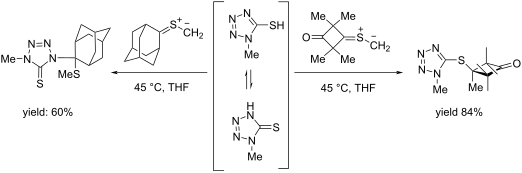
- protonate this basic fragment, undergo 1,3-addition leading to corresponding products of S,S-, O,S-, or N,S-acetal type. For example, trapping of the in situ-generated adamantanethione S-methanide (1a) with tert-butylthiol or benzyl alcohol leads to the corresponding S,S-dithioacetal and O,S-thioacetal
- , the signal located at 162.9 ppm was attributed to the C=S unit (thiourea type) and the chemical shift corresponded in this case very well with the respective data found for the N-insertion products of the reaction of 4a with dimethyl 2-phenylcyclopropane-1,1-dicarboxylate [11]. In addition, elemental
- terminal S‒CH2 position, leading to the formation of the sulfonium cation 11 and the delocalized heterocyclic anion 12 (Scheme 6). In the next step, competitive addition of both intermediate species yields either thioaminals 9 or dithioacetals 10. However, a slow isomerization of the thermodynamically less


Highly distinguishable isomeric states of a tripodal arylazopyrazole derivative on graphite through electron/hole-induced switching at ambient conditions
Beilstein J. Org. Chem. 2025, 21, 1496–1507, doi:10.3762/bjoc.21.112
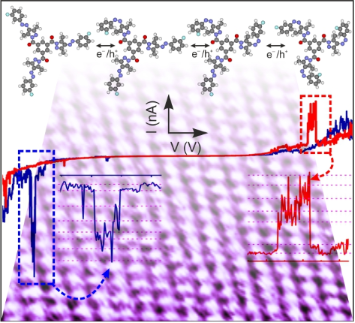
- an incommensurate lattice with respect to the graphite lattice and leading to a super-lattice. In addition to the 1D phase, we also observed a two-dimensional (2D) phase, named due to the 2D nature of the growth. We noted that the surface is covered by ≈88% of the 1D phase, and the remaining is



Photoredox-catalyzed arylation of isonitriles by diaryliodonium salts towards benzamides
Beilstein J. Org. Chem. 2025, 21, 1480–1488, doi:10.3762/bjoc.21.110
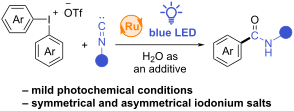
- DIPEA as an organic base but the yield of 2aa was very low and we observed a range of byproducts, mainly amine addition instead of water (see Supporting Information File 1, 2.2 Preliminary and Additional Experiments, Figures S5 and S6). Afterwards, we evaluated the other crucial parameters for
- dependence on the molar ratio of iodonium salt to isonitrile (Table 1, entries 14–21). In case of excess of the isonitrile we observed multiple addition and formation of oligomerized products which hindered the isolation of the product 2aa (Supporting Information File 1, 2.2 Preliminary and Additional
- that bulky isonitriles effectively shield the radical or cationic centers in intermediates X1 or X2, thereby preventing multiple additions of isonitrile to give the highest yields for benzamides 2be and 2ge among the scope of isonitriles. In the final step of the reaction, the addition of a water


Copper catalysis: a constantly evolving field
Beilstein J. Org. Chem. 2025, 21, 1477–1479, doi:10.3762/bjoc.21.109

- reactions, are separately debated. In addition, mechanistic insights into the reaction of heteropolycyclic systems, cycloadditions, and aza-Diels–Alder reactions are provided. This is important because multicomponent, one-pot reactions have gained interest as potentially more economic, efficient, and
- harness their Lewis-acidic and weakly oxidizing properties, respectively. In addition, microwave irradiation increases the reaction rate considerably. Furthermore, the use of a solid Cu(I) catalyst immobilized on an aminated silica support allows for a heterogeneous and cost-effective process, featuring
Microwave-enhanced additive-free C–H amination of benzoxazoles catalysed by supported copper
Beilstein J. Org. Chem. 2025, 21, 1462–1476, doi:10.3762/bjoc.21.108
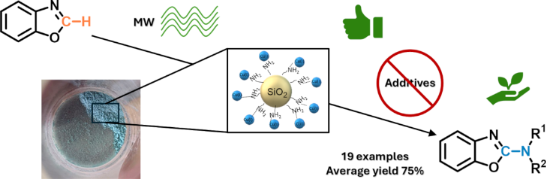
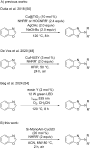
- advantages of heterogeneous catalysis, but compared to other approaches, we aimed at eliminating the presence of bimetallic catalysts, the addition of a base [50], and the use of costly perfluorinated protic solvents [48]. In addition, this approach offers improved performance compared to photochemical C–H
- efficiently, affording good-to-excellent yields. The Boc-protecting group proved to be stable under the reaction conditions, underlining the importance of avoiding the addition of acidic additives. Steric hindrance exerted a moderate influence on the reaction, and branched aliphatic amines yielded the
- optimisation, we observed that the amount of CuCl required for regeneration was lower than in the preparation step; the addition of only 50% of the CuCl amount used for the preparation of the fresh catalyst was required to achieve comparable performance. The regenerated catalyst was then used in the optimised



Wittig reaction of cyclobisbiphenylenecarbonyl
Beilstein J. Org. Chem. 2025, 21, 1454–1461, doi:10.3762/bjoc.21.107
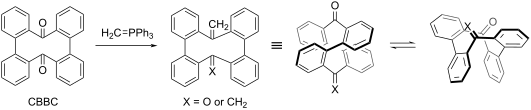
- yield of 50%. In addition, the reaction furnished bis-olefin 5 in 2% isolated yield which is lower than the estimated yield by 1H NMR measurement of the crude mixture (11%). This is due to the partial loss of the product during purification to remove a trace amount of DBC 2, which was generated as a



Advances in nitrogen-containing helicenes: synthesis, chiroptical properties, and optoelectronic applications
Beilstein J. Org. Chem. 2025, 21, 1422–1453, doi:10.3762/bjoc.21.106
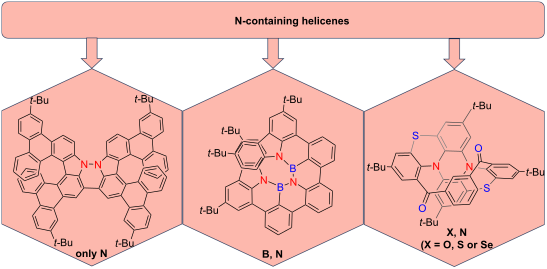
- | value of 1.6 × 10⁻³. In addition, both 29a and 29b demonstrate redox activity, undergoing reversible formation of radical anions, dianions, and radical cations. The radical cation 29b•+, in particular, exhibits a broad near-infrared (NIR) absorption band extending to 3000 nm, highlighting its potential
- -containing hetero[7]helicene 36a containing a boron–nitrogen coordination site [50]. Its chiroptical properties could be modulated through the addition of tetrabutylammonium (TBA) salts, which transformed the boron center from a trigonal planar to a tetrahedral geometry, thereby enhancing the |glum| from 4.7

Tautomerism and switching in 7-hydroxy-8-(azophenyl)quinoline and similar compounds
Beilstein J. Org. Chem. 2025, 21, 1404–1421, doi:10.3762/bjoc.21.105
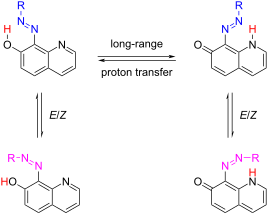
- resistance [1][2][3][4]. In addition to their conventional use, azodyes have unique optical properties, defined by the E/Z isomerization [5][6] and by the tautomeric proton exchange [3][7][8][9][10][11], when a OH or NH group is present on a suitable position in the molecule. Both processes are strongly
- addition of water to acetonitrile (Figure 3) lead to increase of the content of the keto tautomers, but the enol form is still present. As suggested by the theoretically predicted chemical shifts of the tautomeric proton (Table 1), the use of NMR could shed more light on the tautomeric composition in
- equilibrium towards C=O-group-containing structures. In addition, the spectra in the remaining solvents show a single band around 500 nm independent on the nature of the solvent. Obviously, these data cannot be interpreted in the frame of the concept for a tautomeric equilibrium. The rotor in 2 contains a OH




Reactions of acryl thioamides with iminoiodinanes as a one-step synthesis of N-sulfonyl-2,3-dihydro-1,2-thiazoles
Beilstein J. Org. Chem. 2025, 21, 1397–1403, doi:10.3762/bjoc.21.104
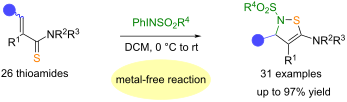
- analogy with an aza-Michael reaction first with the addition of iminoiodinane accompanied with reorganization of double bonds including attack of the negatively charged sulfur atom on nitrogen with subsequent elimination of iodobenzene as good leaving group. The diversity of the structure of the target



N-Salicyl-amino acid derivatives with antiparasitic activity from Pseudomonas sp. UIAU-6B
Beilstein J. Org. Chem. 2025, 21, 1388–1396, doi:10.3762/bjoc.21.103
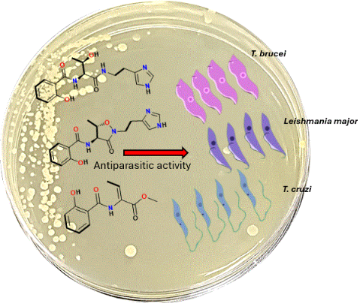
- extract. The chemical dereplication of the crude extract by high-resolution electrospray ionisation mass spectrometry (HRMS) analysis and online natural product databases (Reaxys [19], AntiBase 2017 [20] and Natural Product Atlas [21]) revealed the presence of unknown molecular ions in addition to the


High-pressure activation for the solvent- and catalyst-free syntheses of heterocycles, pharmaceuticals and esters
Beilstein J. Org. Chem. 2025, 21, 1374–1387, doi:10.3762/bjoc.21.102
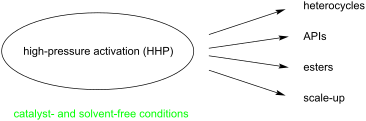
- the phenomena [17]. In addition, due to the availability of commercially accessible instruments, the applications of HHP in synthetic chemistry have expanded in the past decades. The studied reactions include hydrogenation [18], the addition of enamines to Michael acceptors [19], enantioselective
- still offered a reasonable increase in rates and thus, in yields. In addition to the synthetic advantages, the benefits HHP offers can also translate to green chemistry. The use of HHP extends the scope of solvent-, reagent- and catalyst-free reactions that significantly reduce workup and waste
- imidazole-based N-heterocyclic carbene (NHC)–CuCl complexes [40]. However, their synthesis is often tainted by the use of toxic reagents and solvents. In addition, when o-phenylenediamine reacts with ketones, the common catalytic methods yield benzodiazepine products [41]. In our case the reaction of o


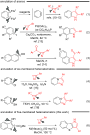
Oxetanes: formation, reactivity and total syntheses of natural products
Beilstein J. Org. Chem. 2025, 21, 1324–1373, doi:10.3762/bjoc.21.101
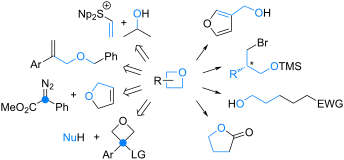
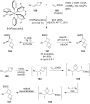
- (Figure 2) [10][11][12]. As for the analogy to carbonyls, oxetanes display comparable polarity, spatial arrangement of the oxygen lone pairs and hydrogen-bond-accepting ability. In addition, they possess one major advantage and that is greater metabolic stability: while carbonyl groups are susceptible to
- of the resulting alkene [36]. In addition, this intramolecular etherification corresponds to the 4-exo-tet cyclisation which, in terms of kinetics, is the least favoured n-exo-tet cyclisation mode where n ≤ 7 [37]. Nevertheless, the Williamson etherification still remains one of the most common
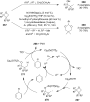
- and colleagues published a one-step synthesis of spirooxindole 2,2-disubstituted oxetanes 11 via an unprecedented addition/substitution cascade (Scheme 4) [39]. The protocol reacts readily available 3-hydroxyindolinones 9 with phenyl vinyl selenone (10) in aqueous KOH at room temperature and gives








Recent advances in amidyl radical-mediated photocatalytic direct intermolecular hydrogen atom transfer
Beilstein J. Org. Chem. 2025, 21, 1306–1323, doi:10.3762/bjoc.21.100
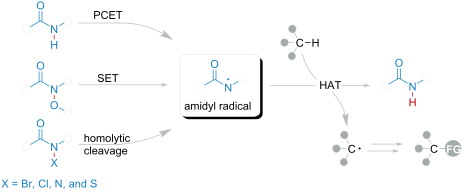
- abstracted a hydrogen atom from substrate 1. This HAT process returned the amidyl radical 5 to HRP-1, enabling the continuation of the HAT cycle in synchronization with the photocatalytic cycle. The resulting radical 4 then underwent Giese addition with activated alkenes, leading to the formation of products
- (Scheme 2) [70]. Through a similar oxidative pathway, amidyl radical 13 was generated directly from the amide HRP-2, facilitating a smooth HAT process with substrate 1 while simultaneously regenerating HRP-2. The resulting radical 4 then participated in an addition reaction with radical anion 15. The
- PCET process, involving the oxidation of excited 4CzIPN* and deprotonation by a base. The resulting amidyl radical 20 smoothly abstracted a hydrogen atom from the substrate via a HAT process, generating a radical 4. This C-centered radical subsequently underwent Giese addition with activated alkenes






Recent advances and future challenges in the bottom-up synthesis of azulene-embedded nanographenes
Beilstein J. Org. Chem. 2025, 21, 1272–1305, doi:10.3762/bjoc.21.99
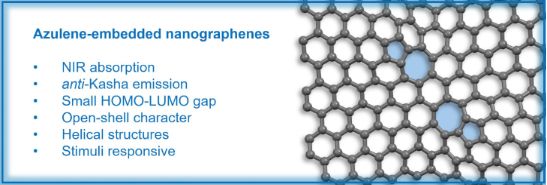
- in 1,2-dichloroethane giving PAHs 134–137 in high yields (71–85%). All the new PAHs exhibit characteristics typical for “true” π-extended azulenes, such as azulene-like optical absorption and narrow HOMO–LUMO gaps. In addition, compounds 134–137 show reversible stimuli-responsiveness against the acid
- constructed by condensation of dialdehyde 160 with compounds 161–163 yielding diketones 164–166. Next, diketones 164–166 were subjected to nucleophilic addition reaction by lithiated triisopropylsilyl (TIPS) acetylene, followed by SnCl2-mediated reduction of the intermediate diols. Finally, azulene-embedded
- unexpected deboronization reaction upon the addition of TFA. On-surface synthesis Recently, the field of on-surface chemistry has made significant progress, with the successful development of complex metal-catalyzed on-surface reactions that are not accessible through classical solution-based organic




Recent advances in oxidative radical difunctionalization of N-arylacrylamides enabled by carbon radical reagents
Beilstein J. Org. Chem. 2025, 21, 1207–1271, doi:10.3762/bjoc.21.98
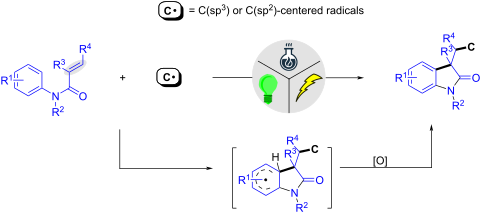
- mechanism, control experiments were conducted. The addition of radical scavengers such as BHT and TEMPO significantly inhibited the reaction, confirming the involvement of a radical intermediate. Kinetic isotope effect (KIE) studies showed a KIE of 1.0, suggesting that C–H-bond cleavage was not the rate
- the starting material 28 to yield an alkyl radical intermediate 31. This radical undergoes C=C-bond addition, cyclization, and deprotonation, ultimately leading to the formation of the desired products. Simultaneously, MeOH is reduced at the cathode to release H2, maintaining the electronic balance of
- undergoes a tandem sequence of addition to the C=C bond, cyclization, oxidation, and hydrogen abstraction to yield the final product. In the second pathway, a σ-arylpalladium(II) intermediate I is formed, initiated by the active [PdIIX2Ln] species. This intermediate then undergoes a carbopalladation process