


Search results
Search for "aromatic compounds" in Full Text gives 159 result(s) in Beilstein Journal of Organic Chemistry.
Molecular rearrangements of superelectrophiles
- Douglas A. Klumpp
Beilstein J. Org. Chem. 2011, 7, 346–363, doi:10.3762/bjoc.7.45
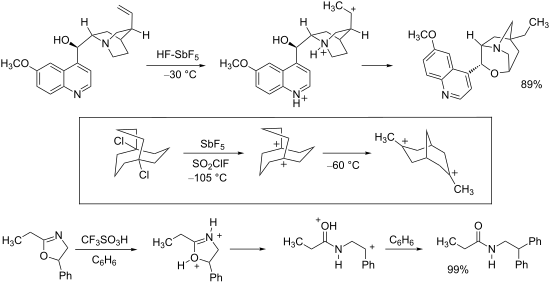
- -polycyclic aromatic compounds has been developed utilizing charge migration [42][45]. For example, alcohol 155 reacts in superacid to give 5-methylbenzo[f]isoquinoline (158, Scheme 31) in good yield. This conversion involves formation of the 1,4-dication 156, which then undergoes charge migration to the 1,5

Graphical Abstract

Scheme 1: Superelectrophilic activation of the acetyl cation.

Scheme 2: Ring opening of diprotonated 2-oxazolines.

Scheme 3: AlCl3-promoted ring opening of isoxaolidine 16.

Scheme 4: Ring-opening reactions of cyclopropyl derivatives.

Scheme 5: Condensations of ninhydrin (28) with benzene.

Scheme 6: Rearrangement of 29 to 30.

Scheme 7: Superacid promoted ring opening of succinic anhydride (33).

Scheme 8: Reaction of phthalic acid (36) in FSO3H-SbF5.

Scheme 9: Ring expansion of superelectrophile 42.

Scheme 10: Reaction of camphor (44) in superacid.

Scheme 11: Isomerization of 2-cyclohexen-1-one (48).

Scheme 12: Isomerization of 2-decalone (51).

Scheme 13: Rearrangement of the acyl-dication 58.

Scheme 14: Reaction of dialkylketone 64.

Scheme 15: Ozonolysis in superacid.

Scheme 16: Rearrangement of 1-hydroxy-2-methylcyclohexane carboxylic acid (79) in superacid.

Scheme 17: Isomerization of the 1,5-manxyl dication 87.

Scheme 18: Energetics of isomerization.

Scheme 19: Rearrangement of dication 90.

Scheme 20: Superacid promoted rearrangement of pivaldehyde (92).

Scheme 21: Rearrangement of a superelectrophilic carboxonium ion 100.

Scheme 22: Proposed mechanism for the Wallach rearrangement.

Scheme 23: Wallach rearrangement of azoxypyridines 108 and 109.

Scheme 24: Proposed mechanism of the benzidine rearrangement.

Scheme 25: Superacid-promoted reaction of quinine (122).

Scheme 26: Superacid-promoted reaction of vindoline derivative 130.

Scheme 27: Charge migration by hydride shift and acid–base chemistry.

Scheme 28: Reactions of 1-hydroxycyclohexanecarboxylic acid (137).

Scheme 29: Reaction of alcohol 143 with benzene in superacid.

Scheme 30: Reaction of alcohol 148 in superacid with benzene.

Scheme 31: Mechanism of aza-polycyclic aromatic compound formation.

Scheme 32: Superacid-promoted reaction of ethylene glycol (159).

Scheme 33: Reactions of 1,3-propanediol (165) and 2-methoxyethanol (169).

Scheme 34: Rearrangement of superelelctrophilic acyl dication 173.
Formation of epoxide-amine oligo-adducts as OH-functionalized initiators for the ring-opening polymerization of ε-caprolactone
- Julia Theis and
- Helmut Ritter
Beilstein J. Org. Chem. 2010, 6, 938–944, doi:10.3762/bjoc.6.105
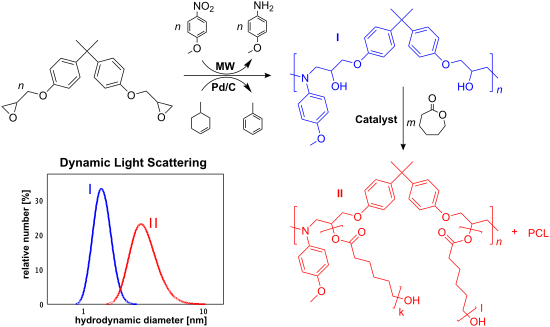
- absorption (continuous line) and by RI (dashed line). The UV absorption of 6 in the GPC diagram (continuous line) clearly indicates the appearance of the aromatic compounds in a higher molecular weight area in comparison with the original polymer 4. The molecular weights of polymer 6 are about 18000 g mol−1

Graphical Abstract

Scheme 1: One-pot synthesis of epoxide-amine adducts via MW-assisted transfer hydrogenation.

Figure 1: 13C NMR spectra of 4, measured in CDCl3.

Figure 2: MALDI-TOF MS spectra (linear mode) of epoxide-amine product 4.

Figure 3: GPC curve of epoxide-amine product 4 detected by UV absorption.

Figure 4: Number-average hydrodynamic diameters of compound 4 prepared via the one-pot (continuous line) and ...

Scheme 2: Ring-opening polymerization of ε-CL using alcohol units as initiator.

Figure 5: GPC curves of the new formed graft copolymer 6 detected by UV absorption (continuous line) and RI (...

Figure 6: Number-average hydrodynamic diameters of compounds 4 (left) and 6 (right).
Aromatic and heterocyclic perfluoroalkyl sulfides. Methods of preparation
- Vladimir N. Boiko
Beilstein J. Org. Chem. 2010, 6, 880–921, doi:10.3762/bjoc.6.88
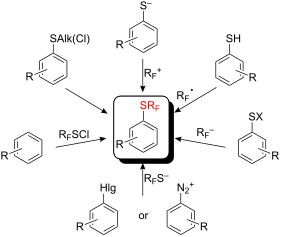
- . The halogenation of SAlk-derivatives with subsequent replacement of the halogen atoms by fluorine. The introduction of SRF-moieties into aromatic compounds by both electrophilic and nucleophilic reagents. Various modes of perfluoroalkylation of organosulfur compounds including cationic, anionic
- aromatic compounds is shown in Scheme 32. The less reactive 2-Cl-5-NO2 benzonitrile forms the CF3S-derivative in only 49% yield after many hours reflux and 2-F-5-NO2 benzonitrile is a by-product despite the use of a 100% excess of thiophosgene. The use of Me4NF in place of KF for the generation of the CF3S
- is used widely to introduce functionality into aromatic compounds. However, early attempts using trifluoromethylthiosilver as the nucleophile were not encouraging [120] with yields below 30% accompanied with deaminated side products (up to 38%). The use of trifluoromethylthiocopper was rather

Graphical Abstract

Figure 1: Examples of industrial fluorine-containing bio-active molecules.

Figure 2: CF3(S)- and CF3(O)-containing pharmacologically active compounds.

Figure 3: Hypotensive candidates with SRF and SO2RF groups – analogues of Losartan and Nifedipin.

Figure 4: The variety of the pharmacological activity of RFS-substituted compounds.

Figure 5: Recent examples of compounds containing RFS(O)n-groups [12-18].

Scheme 1: Fluorination of ArSCCl3 to corresponding ArSCF3 derivatives. For references see: a[38-43]; b[41,42]; c[43]; d[44]; e[38-43,45-47]; f[38-43,48,49]; g...

Scheme 2: Preparation of aryl pentafluoroethyl sulfides.

Scheme 3: Mild fluorination of the aryl SCF2Br derivatives.

Scheme 4: HF fluorinations of aryl α,α,β-trichloroisobutyl sulfide at various conditions.

Scheme 5: Monofluorination of α,α-dichloromethylene group.

Scheme 6: Electrophilic substitution of phenols with CF3SCl [69].

Scheme 7: Introduction of SCF3 groups into activated phenols [71-74].

Scheme 8: Preparation of tetrakis(SCF3)-4-methoxyphenol [72].

Scheme 9: The interactions of resorcinol and phloroglucinol derivatives with RFSCl.

Scheme 10: Reactions of anilines with CF3SCl.

Scheme 11: Trifluoromethylsulfanylation of anilines with electron-donating groups in the meta position [74].

Scheme 12: Reaction of benzene with CF3SCl/CF3SO3H [77].

Scheme 13: Reactions of trifluoromethyl sulfenyl chloride with aryl magnesium and -mercury substrates.

Scheme 14: Reactions of pyrroles with CF3SCl.

Scheme 15: Trifluoromethylsulfanylation of indole and indolizines.

Scheme 16: Reactions of N-methylpyrrole with CF3SCl [80,82].

Scheme 17: Reactions of furan, thiophene and selenophene with CF3SCl.

Scheme 18: Trifluoromethylsulfanylation of imidazole and thiazole derivatives [83].

Scheme 19: Trifluoromethylsulfanylation of pyridine requires initial hydride reduction.

Scheme 20: Introduction of additional RFS-groups into heterocyclic compounds in the presence of CF3SO3H.

Scheme 21: Introduction of additional RFS-groups into pyrroles [82,87].

Scheme 22: By-products in reactions of pyrroles with CF3SCl [82].

Scheme 23: Reaction of aromatic iodides with CuSCF3 [93,95].

Scheme 24: Reaction of aromatic iodides with RFZCu (Z = S, Se), RF = CF3, C6F5 [93,95,96].

Scheme 25: Side reactions during trifluoromethylsulfanylation of aromatic iodides with CF3SCu [98].

Scheme 26: Reactions with in situ generated CuSCF3.

Scheme 27: Perfluoroalkylthiolation of aryl iodides with bulky RFSCu [105].

Scheme 28: In situ formation and reaction of RFZCu with aryl iodides.

Figure 6: Examples of compounds obtained using in situ generated RFZCu methodology [94].

Scheme 29: Introduction of SCF3 group into aromatics via difluorocarbene.

Scheme 30: Tetrakis(dimethylamino)ethylene dication trifluoromethyl thiolate as a stable reagent for substitut...

Scheme 31: The use of CF2=S/CsF or (CF3S)2C=S/CsF for the introduction of CF3S groups into fluorinated heteroc...

Scheme 32: One-pot synthesis of ArSCF3 from ArX, CCl2=S and KF.

Scheme 33: Reaction of aromatics with CF3S− Kat+ [115].

Scheme 34: Reactions of activated aromatic chlorides with AgSCF3/KI.

Scheme 35: Comparative CuSCF3/KI and Hg(SCF3)2/KI reactions.

Scheme 36: Me3SnTeCF3 – a reagent for the introduction of the TeCF3 group.

Scheme 37: Sandmeyer reactions with CuSCF3.

Scheme 38: Reactions of perfluoroalkyl iodides with alkali and organolithium reagents.

Scheme 39: Perfluoroalkylation with preliminary breaking of the disulfide bond.

Scheme 40: Preparation of RFS-substituted anilines from dinitrodiphenyl disulfides.

Scheme 41: Photochemical trifluoromethylation of 2,4,6-trimercaptochlorobenzene [163].

Scheme 42: Putative process for the formation of B, C and D.

Scheme 43: Trifluoromethylation of 2-mercapto-4-hydroxy-6-trifluoromethylyrimidine [145].

Scheme 44: Deactivation of 2-mercapto-4-hydroxypyrimidines S-centered radicals.

Scheme 45: Perfluoroalkylation of thiolates with CF3Br under UV irradiation.

Scheme 46: Catalytic effect of methylviologen for RF• generation.

Scheme 47: SO2−• catalyzed trifluoromethylation.

Scheme 48: Electrochemical reduction of CF3Br in the presence of SO2 [199,200].

Scheme 49: Participation of SO2 in the oxidation of ArSCF3−•.

Scheme 50: Electron transfer cascade involving SO2 and MV.

Scheme 51: Four stages of the SRN1 mechanism for thiol perfluoroalkylation.

Scheme 52: A double role of MV in the catalysis of RFI reactions with aryl thiols.

Scheme 53: Photochemical reaction of pentafluoroiodobenzene with trifluoromethyl disulfide.

Scheme 54: N- Trifluoromethyl-N-nitrosobenzene sulfonamide – a source of CF3• radicals [212,213].

Scheme 55: Radical trifluoromethylation of organic disulfides with ArSO2N=NCF3.

Scheme 56: Barton’s S-perfluoroalkylation reactions [216].

Scheme 57: Decarboxylation of thiohydroxamic esters in the presence of C6F13I.

Scheme 58: Reactions of thioesters of trifluoroacetic and trifluoromethanesulfonic acids in the presence of ar...

Scheme 59: Perfluoroalkylation of polychloropyridine thiols with xenon perfluorocarboxylates or XeF2 [222,223].

Scheme 60: Interaction of Xe(OCORF)2 with nitroaryl disulfide [227].

Scheme 61: Bi(CF3)3/Cu(OCOCH3)2 trifluoromethylation of thiophenolate [230].

Scheme 62: Reaction of fluorinated carbanions with aryl sulfenyl chlorides.

Scheme 63: Reaction of methyl perfluoromethacrylate with PhSCl in the presence of fluoride.

Scheme 64: Reactions of ArSCN with potassium and magnesium perfluorocarbanions [237].

Scheme 65: Reactions of RFI with TDAE and organic disulfides [239,240].

Scheme 66: Decarboxylation of perfluorocarboxylates in the presence of disulfides [245].

Scheme 67: Organization of a stable form of “CF3−” anion in the DMF.

Scheme 68: Silylated amines in the presence of fluoride can deprotonate fluoroform for reaction with disulfide...

Figure 7: Other examples of aminomethanols [264].

Scheme 69: Trifluoromethylation of diphenyl disulfide with PhSO2CF3/t-BuOK.

Scheme 70: Amides of trifluoromethane sulfinic acid are sources of CF3− anion.

Scheme 71: Trifluoromethylation of various thiols using “hyper-valent” iodine (III) reagent [279].

Scheme 72: Trifluoromethylation of p-nitrothiophenolate with diaryl CF3 sulfonium salts [280].

Scheme 73: Trifluoromethyl transfer from dibenzo (CF3)S-, (CF3)Se- and (CF3)Te-phenium salts to thiolates [283].

Scheme 74: Multi-stage paths for synthesis of dibenzo-CF3-thiophenium salts [61].
Functionalized copolyimide membranes for the separation of gaseous and liquid mixtures
- Nadine Schmeling,
- Roman Konietzny,
- Daniel Sieffert,
- Patrick Rölling and
- Claudia Staudt
Beilstein J. Org. Chem. 2010, 6, 789–800, doi:10.3762/bjoc.6.86
- industrial applications. Aromatics/aliphatics separation The separation of aromatics/aliphatics is receiving more and more attention, as the benzene content in gasoline is, by law in Europe, limited to less than 1%. Discussions on the reduction of toluene and polynuclear aromatic compounds in gasoline are

Graphical Abstract

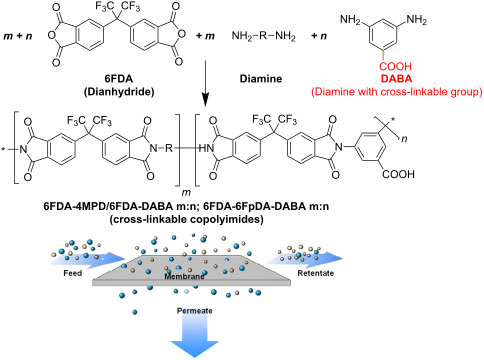
Figure 1: Membrane based separation process.

Figure 2: Chemical structure of the 6FDA (= 4,4′-hexafluoroisopropylidene diphthalic anhydride).

Figure 3: Plasticization phenomenon and resulting effects on separation characteristics.

Figure 4: Synthesis of cross-linkable copolyimide structures.

Figure 5: Investigated cross-linking variations (non cross-linked, covalently and ionically cross-linked).

Figure 6: Hybrid process for the separation of propylene/propane.

Figure 7: Total permeability (left) and selectivity (right) for the 6FDA-4MPD (●) and the 6FDA-4MPD/6FDA-DABA...

Figure 8: Conventional separation process for reformates containing extraction and stripping unit.

Figure 9: Hybrid process for the separation of aromatics/aliphatics.

Figure 10: Pervaporation results for the 6FDA-6FpDA/6FDA-4MPD/6FDA-DABA 3:1:1 copolyimide cross-linked with et...

Figure 11: Pervaporation results for 6FDA-4MPD/6FDA-DABA 4:1 copolyimide (non cross-linked) conditioned in pur...

Figure 12: Pervaporation results for conditioned 6FDA-4MPD/6FDA-DABA 4:1 copolyimide membranes, 100% cross-lin...

Figure 13: Hybrid process for the removal of CO2 in tertiary oil production processes.

Figure 14: Pure CO2 permeabilities at 35 °C for the 6FDA-4MPD (■), the 6FDA-4MPD/6FDA-DABA 4:1 copolyimide ion...

Figure 15: CO2/CH4 separation characteristics for the 6FDA-4MPD/6FDA-DABA 4:1 copolyimide ionically cross-link...
Shelf-stable electrophilic trifluoromethylating reagents: A brief historical perspective
- Norio Shibata,
- Andrej Matsnev and
- Dominique Cahard
Beilstein J. Org. Chem. 2010, 6, No. 65, doi:10.3762/bjoc.6.65
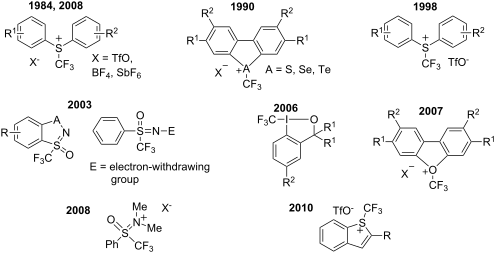
- electrophilic one [27]. This method opens up the possibility for the preparation of various reagents with electron-withdrawing substituents even in the para-position of aromatic compounds. The difluorosulfurane 26, obtained from the corresponding sulfide by treatment with xenon difluoride, was reacted first

Graphical Abstract

Scheme 1: Preparation of the first electrophilic trifluoromethylating reagent and its reaction with a thiophe...

Scheme 2: Synthetic routes to S-CF3 and Se-CF3 dibenzochalcogenium salts.

Scheme 3: Synthesis of (trifluoromethyl)dibenzotellurophenium salts.

Scheme 4: Nitration of (trifluoromethyl)dibenzochalcogenium salts.

Scheme 5: Synthesis of a sulphonium salt with a bridged oxygen.

Scheme 6: Reactivity of (trifluoromethyl)dibenzochalcogenium salts.

Scheme 7: Pd(II)-Catalyzed ortho-trifluoromethylation of heterocycle-substituted arenes by Umemoto’s reagents....

Scheme 8: Mild electrophilic trifluoromethylation of β-ketoesters and silyl enol ethers.

Scheme 9: Enantioselective electrophilic trifluoromethylation of β-ketoesters.

Scheme 10: Preparation of water-soluble S-(trifluoromethyl)dibenzothiophenium salts.

Scheme 11: Method for large-scale preparation of S-(trifluoromethyl)dibenzothiophenium salts.

Scheme 12: Triflic acid catalyzed synthesis of 5-(trifluoromethyl)thiophenium salts.

Scheme 13: Trifluoromethylation of β-ketoesters and dicyanoalkylidenes by S-(trifluoromethyl)benzothiophenium ...

Scheme 14: Synthesis of chiral S-(trifluoromethyl)benzothiophenium salt 18 and attempt of enantioselective tri...

Scheme 15: Synthesis of O-(trifluoromethyl)dibenzofuranium salts.

Scheme 16: Photochemical O- and N-trifluoromethylation by 20b.

Scheme 17: Thermal O-trifluoromethylation of phenol by diazonium salt 19a. Effect of the counteranion.

Scheme 18: Thermal O- and N-trifluoromethylations.

Scheme 19: Method of preparation of S-(trifluoromethyl)diphenylsulfonium triflates.

Scheme 20: Reactivity of some S-(trifluoromethyl)diarylsulfonium triflates.

Scheme 21: One-pot synthesis of S-(trifluoromethyl)diarylsulfonium triflates.

Scheme 22: One-pot synthesis of Umemoto’s type reagents.

Scheme 23: Preparation of sulfonium salts by transformation of CF3− into CF3+.

Scheme 24: Selected reactions with the new Yagupolskii reagents.

Scheme 25: Synthesis of heteroaryl-substituted sulfonium salts.

Scheme 26: First neutral S-CF3 reagents.

Scheme 27: Synthesis of Togni reagents. aYield for the two-step procedure.

Scheme 28: Trifluoromethylation of C-nucleophiles with 37.

Scheme 29: Selected examples of trifluoromethylation of S-nucleophiles with 37.

Scheme 30: Selected examples of trifluoromethylation of P-nucleophiles with 35 and 37.

Scheme 31: Trifluoromethylation of 2,4,6-trimethylphenol with 35.

Scheme 32: Examples of O-trifluoromethylation of alcohols with 35 in the presence of 1 equiv of Zn(NTf2)2.

Scheme 33: Formation of trifluoromethyl sulfonates from sulfonic acids and 35.

Scheme 34: Organocatalytic α-trifluoromethylation of aldehydes with 37.

Scheme 35: Synthesis of reagent 42 and mechanism of trifluoromethylation.

Scheme 36: Trifluoromethylation of β-ketoesters and dicyanoalkylidenes with 42.
Novel loop-like aromatic compounds: a further step on the road to nanobelts and nanotubes
- Venkataramana Rajuri,
- Dariush Ajami,
- Gaston R. Schaller,
- Christian Näther and
- Rainer Herges
Beilstein J. Org. Chem. 2010, 6, No. 30, doi:10.3762/bjoc.6.30
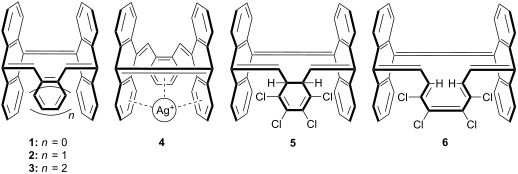
- carbon nanotubes which could eventually be extended in length by chemical vapor deposition [9][10]. This strategy could eventually open a way to prepare monodisperse nanotubes with well defined physical properties. Our approach to synthesize loop-like aromatic compounds is based on the Diels–Alder

Graphical Abstract

Scheme 1: Synthesis of 1 and 3. (a) Pyridazine, toluene, reflux, 20 h; (b) NaI, DMF, 65 °C, 15 h.

Scheme 2: Synthesis of 2 and 4. (a) NaI, DMF, 65 °C, 24 h; (b) AgSbF6, THF.

Figure 1: ORTEP drawing of the crystal structures: a) 2 and b) 3. For additional perspective representations ...

Figure 2: a) ORTEP drawing of the crystal structure of 4. Ag+ and Ag+, describe the two disordered positions ...

Scheme 3: Synthesis of 5 and 6. (a) Toluene, 90 °C, 15 h.

Figure 3: ORTEP drawing of the crystal structures: a) 5b and b) 6. For additional perspective representations...
A review of new developments in the Friedel–Crafts alkylation – From green chemistry to asymmetric catalysis
- Magnus Rueping and
- Boris J. Nachtsheim
Beilstein J. Org. Chem. 2010, 6, No. 6, doi:10.3762/bjoc.6.6
- as well as N,N-dimethylaniline were efficiently utilized as nucleophiles and the corresponding highly valuable optically active propargylated aromatic compounds 122 were isolated in moderate yield but with excellent enantioselectivities of up to 94% ee (Scheme 45) [97]. This milestone in the

Graphical Abstract

Scheme 1: AlCl3-mediated reaction between amyl chloride and benzene as developed by Friedel and Crafts.

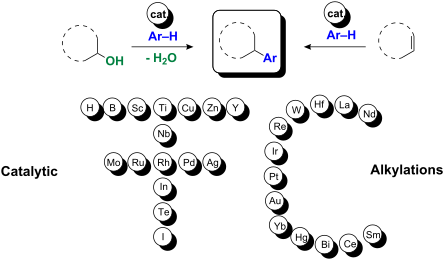
Figure 1: Most often used metal salts for catalytic FC alkylations and hydroarylations of arenes.

Figure 2: 1,1-diarylalkanes with biological activity.

Scheme 2: Alkylating reagents and side products produced.

Scheme 3: Initially reported TeCl4-mediated FC alkylation of 1-penylethanol with toluene.

Scheme 4: Sc(OTf)3-catalyzed FC benzylation of arenes.

Scheme 5: Reductive FC alkylation of arenes with arenecarbaldehydes.

Scheme 6: Iron(III)-catalyzed FC benzylation of arenes and heteroarenes.

Scheme 7: A gold(III)-catalyzed route to beclobrate.

Scheme 8: Catalytic FC-type alkylations of 1,3-dicarbonyl compounds.

Scheme 9: Iron(III)-catalyzed synthesis of phenprocoumon.

Scheme 10: Bi(OTf)3-catalyzed FC alkylation of benzyl alcohols developed by Rueping et al.

Scheme 11: (A) Bi(OTf)3-catalyzed intramolecular FC alkylation as an efficient route to substituted fulvenes. ...

Scheme 12: FC-type glycosylation of 1,2-dimethylindole and trimethoxybenzene.

Scheme 13: FC alkylation with highly reactive ferrocenyl- and benzyl alcohols. The reaction proceeds even with...

Scheme 14: Reductive FC alkylation of arenes with benzaldehyde and acetophenone catalyzed by the Ir-carbene co...

Scheme 15: Formal synthesis of 1,1-diarylalkanes from benzyl alcohols and styrenes.

Scheme 16: (A) Mo-catalyzed hydroarylation of styrenes and cyclohexenes. (B) Hydroalkylation–cyclization casca...

Scheme 17: Bi(III)-catalyzed hydroarylation of styrenes with arenes and heteroarenes.

Scheme 18: BiCl3-catalyzed ene/FC alkylation reaction cascade – A fast access to highly arylated dihydroindene...

Scheme 19: Au(I)/Ag(I)-catalyzed hydroarylation of indoles with styrenes, aliphatic and cyclic alkenes.

Scheme 20: First transition-metal-catalyzed ortho-hydroarylation developed by Beller et al.

Scheme 21: (A) Ti(IV)-mediated rearrangement of an N-benzylated aniline to the corresponding ortho-alkylated a...

Scheme 22: Dibenzylation of aniline gives potentially useful amine-based ligands in a one-step procedure.

Scheme 23: FC-type alkylations with allyl alcohols as alkylating reagents – linear vs. branched product format...

Scheme 24: (A) First catalytic FC allylation and cinnamylation using allyl alcohols and its derivatives. (B) E...

Scheme 25: FC allylation/cyclization reaction yielding substituted chromanes.

Scheme 26: Synthesis of (all-rac)-α-tocopherol utilizing Lewis- and strong Brønsted-acids.

Scheme 27: Au(III)-catalyzed cinnamylation of arenes.

Scheme 28: “Exhaustive” allylation of benzene-1,3,5-triol.

Scheme 29: Palladium-catalyzed allylation of indole.

Scheme 30: Pd-catalyzed synthesis of pyrroloindoles from L-tryptophane.

Scheme 31: Ru(IV)-catalyzed allylation of indole and pyrroles with unique regioselectivity.

Scheme 32: Silver(I)-catalyzed intramolecular FC-type allylation of arenes and heteroarenes.

Scheme 33: FC-type alkylations of arenes using propargyl alcohols.

Scheme 34: (A) Propargylation of arenes with stoichiometric amounts of the Ru-allenylidene complex 86. (B) Fir...

Scheme 35: Diruthenium-catalyzed formation of chromenes and 1H-naphtho[2,1-b]pyrans.

Scheme 36: Rhenium(V)-catalyzed FC propargylations as a first step in the total synthesis of podophyllotoxin, ...

Scheme 37: Scandium-catalyzed arylation of 3-sulfanyl- and 3-selanylpropargyl alcohols.

Scheme 38: Synthesis of 1,3-diarylpropynes via direct coupling of propargyl trichloracetimidates and arenes.

Scheme 39: Diastereoselective substitutions of benzyl alcohols.

Scheme 40: (A) First diastereoselective FC alkylations developed by Bach et al. (B) anti-Selective FC alkylati...

Scheme 41: Diastereoselective AuCl3-catalyzed FC alkylation.

Scheme 42: Bi(OTf)3-catalyzed alkylation of α-chiral benzyl acetates with silyl enol ethers.

Scheme 43: Bi(OTf)3-catalyzed diastereoselective substitution of propargyl acetates.

Scheme 44: Nucelophilic substitution of enantioenriched ferrocenyl alcohols.

Scheme 45: First catalytic enantioselective propargylation of arenes.
Synthesis of 2,3,6,7-tetrabromoanthracene
- Christian Schäfer,
- Friederike Herrmann and
- Jochen Mattay
Beilstein J. Org. Chem. 2008, 4, No. 41, doi:10.3762/bjoc.4.41

- . Keywords: anthracene; arenes; cyclizations; polycycles; ring closure; 2,3,6,7-tetrabromoanthracene; Introduction Anthracene and its derivatives are long known polycyclic aromatic compounds showing a high potential for use in materials science (e.g. fluorescence probing, photochromic systems

Graphical Abstract

Scheme 1: Synthesis of 2,3,6,7-tetrabromoanthracene (4).

Figure 1: UV-spectra of 4 and commercially available anthracene in cyclohexane (9 × 10⁻⁵ mol/L).
Trifluoromethyl ethers – synthesis and properties of an unusual substituent
- Frédéric R. Leroux,
- Baptiste Manteau,
- Jean-Pierre Vors and
- Sergiy Pazenok
Beilstein J. Org. Chem. 2008, 4, No. 13, doi:10.3762/bjoc.4.13

- biggest group of fluorinated pesticides are the compounds containing a trifluoromethyl group (mainly at aromatic rings), followed by aromatic compounds containing an isolated fluorine atom (one and more). However, according to the 12th and 13th edition of the pesticide manual only five pesticides
- groups. Nevertheless, the occurrence of OCF3-substituted organics, the majority of which are aromatic compounds, has significantly increased in the recent years [12]. In the 1950s and 1960s the successful development of α-fluorinated ethers as volatile, non-toxic, non-explosive and fast-acting inhalation

Graphical Abstract

Figure 1: OCF3-bearing pesticides.

Scheme 1: Preparation of trifluoromethyl ethers via a chlorination/fluorination sequence.

Scheme 2: Preparation of trifluoromethyl ethers via an in situ chlorination/fluorination sequence.

Scheme 3: Preparation of trifluoromethyl ethers via chlorothionoformates.

Scheme 4: Preparation of trifluoromethyl ethers via fluoroformates.

Scheme 5: Oxidative desulfurization-fluorination toward trifluoromethyl ethers.

Scheme 6: Mechanism of the oxidative desulfurization-fluorination.

Scheme 7: Umemoto's O-(trifluoromethyl)dibenzofuranium salts 4 as CF3-transfer agents.

Scheme 8: Togni's approach using hypervalent iodine compounds as CF3-transfer agents.

Scheme 9: TAS OCF3 as a nucleophilic OCF3-transfer agent.

Figure 2: Mesomeric structures of the OCF3-group.

Figure 3: Structures of 6 and 7.

Figure 4: Conformational preference of the trifluoromethoxy group on aryl rings.

Scheme 10: Nitration of trifluoromethoxy benzene.

Scheme 11: Synthesis and Nitration of N-Acetyl-(trifluoromethoxy)anilines.

Scheme 12: Bromine/lithium exchange of bromo(trifluoromethoxy)benzenes.

Scheme 13: Metalation of (trifluoromethoxy)benzene.

Scheme 14: Metalation of (trifluoromethoxy)naphthalenes.

Scheme 15: Competition between -CF3- and -OCF3 in Metalation reactions.

Scheme 16: Competition between -F- and -OCF3 in Metalation reactions.
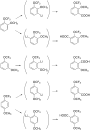
Scheme 17: Metalation of trifluoromethoxyanisoles.

Figure 5: Direction of π-polarization depending on the substituent as described by Schlosser et al. [57].

Scheme 18: Metalation of Bromo(trifluoromethoxy)benzenes.

Scheme 19: Aryne formation from bromo(trifluoromethoxy)phenyllithiums and subsequent Diels-Alder cycloaddition...

Scheme 20: Metalation of (trifluoromethoxy)anilines.



