


Search results
Search for "primary amines" in Full Text gives 161 result(s) in Beilstein Journal of Organic Chemistry.
Microphotochemistry: 4,4'-Dimethoxybenzophenone mediated photodecarboxylation reactions involving phthalimides
- Oksana Shvydkiv,
- Kieran Nolan and
- Michael Oelgemöller
Beilstein J. Org. Chem. 2011, 7, 1055–1063, doi:10.3762/bjoc.7.121
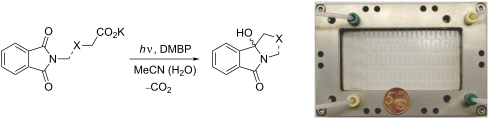
- -Photodecarboxylation of N-phthaloylglycine The photodecarboxylation of phthaloyl amino acids results in a formal exchange of –CO2H by –H and offers a convenient pathway to primary amines [40]. The reaction of N-phthaloylglycine (1) in acetonitrile using 0.1 equivalents of DMBP as a mediator was thus investigated as an

Graphical Abstract

Scheme 1: General photodecarboxylation involving phthalimides (the broken line indicates intra- as well as in...

Figure 1: Microreactor (dwell device, mikroglas chemtech) under a UV exposure panel (Luzchem) and connected t...

Figure 2: UV-spectrum of DMBP (in MeCN) versus emission spectrum of the UVA lamp. The vertical dotted line re...

Figure 3: Light-penetration profile for a 1.5 mM solution of DMBP at 350 nm. The vertical lines represent the...

Scheme 2: DMBP mediated α-photodecarboxylation of N-phthaloylglycine (1).

Scheme 3: Photodecarboxylation of potassium phthaloyl-γ-aminobutyrate (3).

Scheme 4: Photodecarboxylative cyclization of potassium phthalimidomethylsulfanylacetate (6).

Scheme 5: Photodecarboxylative benzylation of 2.

Scheme 6: Photodecarboxylative addition of 11 to 2.

Scheme 7: Photodecarboxylative addition of 11 to DMBP.

Scheme 8: Mechanistic scenario (the broken line indicates intra- and intermolecular reactions).
A practical route to tertiary diarylmethylamides or -carbamates from imines, organozinc reagents and acyl chlorides or chloroformates
- Erwan Le Gall,
- Antoine Pignon and
- Thierry Martens
Beilstein J. Org. Chem. 2011, 7, 997–1002, doi:10.3762/bjoc.7.112
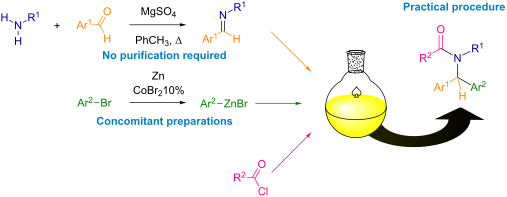
- and aldehydes to furnish tertiary diarylmethylamines [28][29][30][31][32][33]. However, while a large range of starting compounds could be used successfully in the process, we noticed that primary amines are ineffective, probably due to a weaker electrophilicity of the in situ-formed imines compared
- to iminium ions. Consequently, we report herein the use of primary amines in a sequential one-pot process, based on the preliminary activation of an aldimine with an acyl chloride or a chloroformate, and the subsequent trapping of the resulting acyliminium ion with an aromatic organozinc reagent, to
- -substituted aldimines, formed in situ upon reaction of primary amines with aromatic aldehydes, cannot be undertaken under our established conditions. Thus, we intended to activate the C=N double bond by rendering the carbon more electrophilic and we initially envisaged the use of Lewis acid catalysis. Indeed

Graphical Abstract

Scheme 1: Addition of nucleophiles onto activated imines (A) or iminiums (B).

Scheme 2: Activation of the aldimine with MsCl.
Recent advances in the gold-catalyzed additions to C–C multiple bonds
- He Huang,
- Yu Zhou and
- Hong Liu
Beilstein J. Org. Chem. 2011, 7, 897–936, doi:10.3762/bjoc.7.103
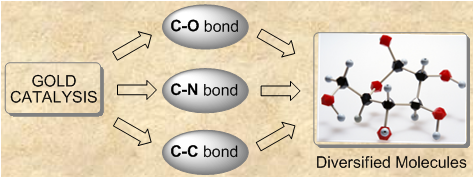
- primary amines is an important reaction in organic synthesis. He et al. developed an efficient gold-catalyzed one-pot selective N-alkylation of amines with alcohols [57]. In their study, gold nanoparticles supported on titania act as an efficient heterogeneous catalyst for the reaction to give the N

Graphical Abstract

Scheme 1: Gold-catalyzed addition of alcohols.
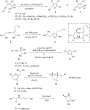
Scheme 2: Gold-catalyzed cycloaddition of alcohols.

Scheme 3: Ionic liquids as the solvent in gold-catalyzed cycloaddition.

Scheme 4: Gold-catalyzed cycloaddition of diynes.

Scheme 5: Gold(I) chloride catalyzed cycloisomerization of 2-alkynyl-1,5-diols.

Scheme 6: Gold-catalyzed cycloaddition of glycols and dihydroxy compounds.

Scheme 7: Gold-catalyzed ring-opening of cyclopropenes.

Scheme 8: Gold-catalyzed intermolecular hydroalkoxylation of alkynes. PR3 = 41–45.

Scheme 9: Gold-catalyzed intramolecular 6-endo-dig cyclization of β-hydroxy-α,α-difluoroynones.

Scheme 10: Gold-catalyzed intermolecular hydroalkoxylation of non-activated olefins.

Scheme 11: Preparation of unsymmetrical ethers from alcohols.

Scheme 12: Expedient synthesis of dihydrofuran-3-ones.

Scheme 13: Catalytic approach to functionalized divinyl ketones.
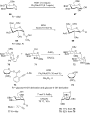
Scheme 14: Gold-catalyzed glycosylation.

Scheme 15: Gold-catalyzed cycloaddition of aldehydes and ketones.

Scheme 16: Gold-catalyzed annulations of 2-(ynol)aryl aldehydes and o-alkynyl benzaldehydes.

Scheme 17: Gold-catalyzed addition of carboxylates.

Scheme 18: Dual-catalyzed rearrangement reaction of allenoates.

Scheme 19: Meyer–Schuster rearrangement of propargylic alcohols.

Scheme 20: Propargylic alcohol rearrangements.

Scheme 21: Gold-catalyzed synthesis of imines and amine alkylation.

Scheme 22: Hydroamination of allenes and allenamides.

Scheme 23: Gold-catalyzed inter- and intramolecular amination of alkynes and alkenes.

Scheme 24: Gold-catalyzed cycloisomerization of O-propioloyl oximes and β-allenylhydrazones.

Scheme 25: Intra- and intermolecular amination with ureas.

Scheme 26: Gold-catalyzed cyclization of ortho-alkynyl-N-sulfonylanilines and but-3-yn-1-amines.

Scheme 27: Gold-catalyzed piperidine ring synthesis.

Scheme 28: Ring expansion of alkylnyl cyclopropanes.

Scheme 29: Gold-catalyzed annulations of N-propargyl-β-enaminones and azomethine imines.
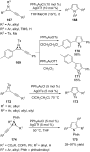
Scheme 30: Gold(I)-catalyzed cycloisomerization of aziridines.

Scheme 31: AuCl3/AgSbF6-catalyzed intramolecular amination of 2-(tosylamino)phenylprop-1-en-3-ols.

Scheme 32: Gold-catalyzed cyclization via a 7-endo-dig pathway.

Scheme 33: Gold-catalyzed synthesis of fused xanthines.

Scheme 34: Gold-catalyzed synthesis of amides and isoquinolines.

Scheme 35: Gold-catalyzed oxidative cross-coupling reactions of propargylic acetates.

Scheme 36: Gold-catalyzed nucleophilic addition to allenamides.

Scheme 37: Gold-catalyzed direct carbon–carbon bond coupling reactions.

Scheme 38: Gold-catalyzed C−H functionalization of indole/pyrrole heterocycles and non-activated arenes.

Scheme 39: Gold-catalyzed cycloisomerization of cyclic compounds.

Scheme 40: Gold-catalyzed cycloaddition of 1-aryl-1-allen-6-enes and propargyl acetates.

Scheme 41: Gold(I)-catalyzed cycloaddition with ligand-controlled regiochemistry.

Scheme 42: Gold(I)-catalyzed cycloaddition of dienes and enynes.

Scheme 43: Gold-catalyzed intramolecular cycloaddition of 3-alkoxy-1,5-enynes and 2,2-dipropargylmalonates.

Scheme 44: Gold-catalyzed intramolecular cycloaddition of 1,5-allenynes.

Scheme 45: Gold(I)-catalyzed cycloaddition of indoles.

Scheme 46: Gold-catalyzed annulation reactions.

Scheme 47: Gold–carbenoid induced cleavage of a sp3-hybridized C−H bond.

Scheme 48: Furan- and indole-based cascade reactions.

Scheme 49: Tandem process using aromatic alkynes.

Scheme 50: Gold-catalyzed cycloaddition of 1,3-dien-5-ynes.

Scheme 51: Gold-catalyzed cascade cyclization of diynes, propargylic esters, and 1,3-enynyl ketones.

Scheme 52: Tandem reaction of β-phenoxyimino ketones and alkynyl oxime ethers.

Scheme 53: Gold-catalyzed tandem cyclization of enynes, 2-(tosylamino)phenylprop-1-yn-3-ols, and allenoates.

Scheme 54: Cyclization of 2,4-dien-6-yne carboxylic acids.

Scheme 55: Gold(I)-catalyzed tandem cyclization approach to tetracyclic indolines.

Scheme 56: Gold-catalyzed tandem reactions of alkynes.

Scheme 57: Aminoarylation and oxyarylation of alkenes.

Scheme 58: Cycloaddition of 2-ethynylnitrobenzene with various alkenes.

Scheme 59: Gold-catalyzed tandem reactions of allenoates and alkynes.

Scheme 60: Gold-catalyzed asymmetric synthesis of 2,3-dihydropyrroles.

Scheme 61: Chiral [NHC–Au(I)]-catalyzed cyclization of enyne.

Scheme 62: Gold-catalyzed hydroaminations and hydroalkoxylations.

Scheme 63: Gold(I)-catalyzed asymmetric hydroalkoxylation of 1,3-dihydroxymethyl-2-alkynylbenzene chromium com...

Scheme 64: Gold-catalyzed synthesis of julolidine derivatives.

Scheme 65: Gold-catalyzed the synthesis of chiral fused heterocycles.

Scheme 66: Gold-catalyzed asymmetric reactions with 3,5-(t-Bu)2-4-MeO-MeOBIPHEP.

Scheme 67: Gold-catalyzed cyclization of o-(alkynyl) styrenes.

Scheme 68: Asymmetric gold(I)-catalyzed redox-neutral domino reactions of enynes.

Scheme 69: Gold(I)-catalyzed enantioselective polyene cyclization reaction.

Scheme 70: Gold(I)-catalyzed enantioselective synthesis of benzopyrans.

Scheme 71: Gold(I)-catalyzed enantioselective ring expansion of allenylcyclopropanols.
Formation of epoxide-amine oligo-adducts as OH-functionalized initiators for the ring-opening polymerization of ε-caprolactone
- Julia Theis and
- Helmut Ritter
Beilstein J. Org. Chem. 2010, 6, 938–944, doi:10.3762/bjoc.6.105
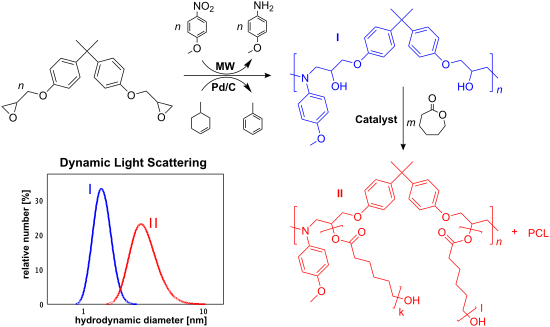
- , the addition polymerization of primary amines with diepoxides forming linear adducts has been intensively studied [21]. Linear epoxide-amine addition polymers can be obtained for instance by the addition reaction of diglycidyl ethers and aromatic primary amines in equimolar amounts. With regard to our

Graphical Abstract

Scheme 1: One-pot synthesis of epoxide-amine adducts via MW-assisted transfer hydrogenation.

Figure 1: 13C NMR spectra of 4, measured in CDCl3.

Figure 2: MALDI-TOF MS spectra (linear mode) of epoxide-amine product 4.

Figure 3: GPC curve of epoxide-amine product 4 detected by UV absorption.

Figure 4: Number-average hydrodynamic diameters of compound 4 prepared via the one-pot (continuous line) and ...

Scheme 2: Ring-opening polymerization of ε-CL using alcohol units as initiator.

Figure 5: GPC curves of the new formed graft copolymer 6 detected by UV absorption (continuous line) and RI (...

Figure 6: Number-average hydrodynamic diameters of compounds 4 (left) and 6 (right).
Development of dynamic kinetic resolution on large scale for (±)-1-phenylethylamine
- Lisa K. Thalén and
- Jan-E. Bäckvall
Beilstein J. Org. Chem. 2010, 6, 823–829, doi:10.3762/bjoc.6.97
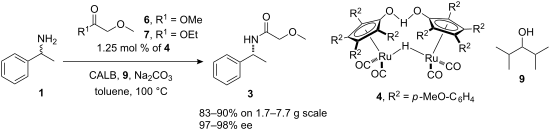
- product mixture. However, by racemizing the slower reacting enantiomer in situ, in a process known as dynamic kinetic resolution (DKR) [11], a theoretical yield of 100% can be achieved. We have previously developed a highly efficient protocol for the DKR of primary amines using Candida antarctica lipase B
- uncatalyzed chemical acylation of the substrate occurs at elevated temperatures when using acyl donors of this type in the DKR of primary amines. This has been overcome by initially adding one equivalent of the acyl donor followed by a later addition of 0.1 equiv of the acyl donor to allow the reaction to go

Graphical Abstract

Scheme 1: Dynamic kinetic resolution of (rac)-1-phenylethylamine.

Figure 1: Acyl donors and hydrogen donor used in DKR.
Molecular recognition of organic ammonium ions in solution using synthetic receptors
- Andreas Späth and
- Burkhard König
Beilstein J. Org. Chem. 2010, 6, No. 32, doi:10.3762/bjoc.6.32
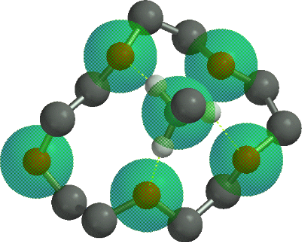

Graphical Abstract

Figure 1: Biologically important amines and quaternary ammonium salts: histamine (1), dopamine (2) and acetyl...

Figure 2: Crown ether 18-crown-6.

Figure 3: Conformations of 18-crown-6 (4) in solvents of different polarity.

Figure 4: Binding topologies of the ammonium ion depending on the crown ring size.
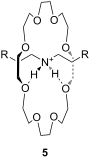
Figure 5: A “pseudorotaxane” structure consisting of 24-crown-8 and a secondary ammonium ion (5); R = Ph.

Figure 6: Typical examples of azacrown ethers, cryptands and related aza macrocycles.

Figure 7: Binding of ammonium to azacrown ethers and cryptands [111-113].

Figure 8: A 19-crown-6-ether with decalino blocking groups (11) and a thiazole-dibenzo-18-crown-6-ether (12).

Figure 9: 1,3-Bis(6-oxopyridazin-1-yl)propane derivatives 13 and 14 by Campayo et al.

Figure 10: Fluorescent azacrown-PET-sensors based on coumarin.

Figure 11: Two different pyridino-cryptands (17 and 18) compared to a pyridino-crown (19); chiral ammonium ion...

Figure 12: Pyridino-18-crown-6 ligand (21), a similar acridino-18-crown-6 ligand (22) and a structurally relat...

Figure 13: Ciral pyridine-azacrown ether receptors 24.

Figure 14: Chiral 15-crown-5 receptors 26 and an analogue 18-crown-6 ligand 27 derived from amino alcohols.

Figure 15: C2-symmetric chiral 18-crown-6 amino alcohol derivatives 28 and related macrocycles.

Figure 16: Macrocycles with diamide-diester groups (30).

Figure 17: C2-symmetric chiral aza-18-crown-6 ethers (31) with phenethylamine residues.

Figure 18: Chiral C-pivot p-methoxy-phenoxy-lariat ethers.

Figure 19: Chiral lariat crown ether 34.

Figure 20: Sucrose-based chiral crown ether receptors 36.
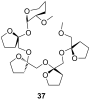
Figure 21: Permethylated fructooligosaccharide 37 showing induced-fit chiral recognition.

Figure 22: Biphenanthryl-18-crown-6 derivative 38.

Figure 23: Chiral lariat crown ethers derived from binol by Fuji et al.

Figure 24: Chiral phenolic crown ether 41 with “aryl chiral barriers” and guest amines.
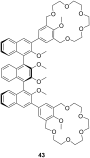
Figure 25: Chiral bis-crown receptor 43 with a meso-ternaphthalene backbone.

Figure 26: Chromogenic pH-dependent bis-crown chemosensor 44 for diamines.

Figure 27: Triamine guests for binding to receptor 44.

Figure 28: Chiral bis-crown phenolphthalein chemosensors 46.

Figure 29: Crown ether amino acid 47.

Figure 30: Luminescent receptor 48 for bis-alkylammonium guests.

Figure 31: Luminescent CEAA (49a), a bis-CEAA receptor for amino acids (49b) and the structure of lysine bindi...

Figure 32: Luminescent CEAA tripeptide for binding small peptides.

Figure 33: Bis crown ether 51a self assembles co-operatively with C60-ammonium ion 51b.

Figure 34: Triptycene-based macrotricyclic dibenzo-[24]-crown-8 ether host 52 and guests.

Figure 35: Copper imido diacetic acid azacrown receptor 53a and the suggested His-Lys binding motif; a copper ...

Figure 36: Urea (54) and thiourea (55) benzo crown receptor for transport and extraction of amino acids.

Figure 37: Crown pyryliums ion receptors 56 for amino acids.

Figure 38: Ditopic sulfonamide bridged crown ether receptor 57.

Figure 39: Luminescent peptide receptor 58.

Figure 40: Luminescent receptor 59 for the detection of D-glucosamine hydrochloride in water/ethanol and lumin...

Figure 41: Guanidinium azacrown receptor 61 for simple amino acids and ditopic receptor 62 with crown ether an...

Figure 42: Chiral bicyclic guanidinium azacrown receptor 63 and similar receptor 64 for the enantioselective t...

Figure 43: Receptors for zwitterionic species based on luminescent CEAAs.

Figure 44: 1,10-Azacrown ethers with sugar podand arms and the anticancer agent busulfan.

Figure 45: Benzo-18-crown-6 modified β-cyclodextrin 69 and β-cyclodextrin functionalized with diaza-18-crown-6...

Figure 46: Receptors for colorimetric detection of primary and secondary ammonium ions.

Figure 47: Porphyrine-crown-receptors 72.

Figure 48: Porphyrin-crown ether conjugate 73 and fullerene-ammonium ion guest 74.

Figure 49: Calix[4]arene (75a), homooxocalix[4]arene (75b) and resorcin[4]arene (75c) compared (R = H, alkyl c...

Figure 50: Calix[4]arene and ammonium ion guest (R = H, alkyl, OAcyl etc.), possible binding sites; A: co-ordi...

Figure 51: Typical guests for studies with calixarenes and related molecules.
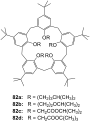
Figure 52: Lower rim modified p-tert-butylcalix[5]arenes 82.

Figure 53: The first example of a water soluble calixarene.

Figure 54: Sulfonated water soluble calix[n]arenes that bind ammonium ions.
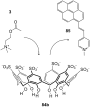
Figure 55: Displacement assay for acetylcholine (3) with a sulfonato-calix[6]arene (84b).

Figure 56: Amino acid inclusion in p-sulfonatocalix[4]arene (84a).

Figure 57: Calixarene receptor family 86 with upper and lower rim functionalization.

Figure 58: Calix[6]arenes 87 with one carboxylic acid functionality.
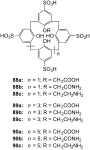
Figure 59: Sulfonated calix[n]arenes with mono-substitution at the lower rim systematically studied on their r...

Figure 60: Cyclotetrachromotropylene host (91) and its binding to lysine (81c).

Figure 61: Calixarenes 92 and 93 with phosphonic acids groups.

Figure 62: Calix[4]arene tetraphosphonic acid (94a) and a double bridged analogue (94b).

Figure 63: Calix[4]arene tetraphosphonic acid ester (92c) for surface recognition experiments.

Figure 64: Calixarene receptors 95 with α-aminophosphonate groups.

Figure 65: A bridged homocalix[3]arene 95 and a distally bridged homocalix[4]crown 96.

Figure 66: Homocalix[3]arene ammonium ion receptor 97a and the Reichardt’s dye (97b) for colorimetric assays.

Figure 67: Chromogenic diazo-bridged calix[4]arene 98.

Figure 68: Calixarene receptor 99 by Huang et al.

Figure 69: Calixarenes 100 reported by Parisi et al.

Figure 70: Guest molecules for inclusion in calixarenes 100: DAP × 2 HCl (101a), APA (101b) and Lys-OMe × 2 HC...

Figure 71: Different N-linked peptido-calixarenes open and with glycol chain bridges.

Figure 72: (S)-1,1′-Bi-2-naphthol calixarene derivative 104 published by Kubo et al.

Figure 73: A chiral ammonium-ion receptor 105 based on the calix[4]arene skeleton.

Figure 74: R-/S-phenylalaninol functionalized calix[6]arenes 106a and 106b.

Figure 75: Capped homocalix[3]arene ammonium ion receptor 107.

Figure 76: Two C3 symmetric capped calix[6]arenes 108 and 109.

Figure 77: Phosphorous-containing rigidified calix[6]arene 110.

Figure 78: Calix[6]azacryptand 111.

Figure 79: Further substituted calix[6]azacryptands 112.

Figure 80: Resorcin[4]arene (75c) and the cavitands (113).

Figure 81: Tetrasulfonatomethylcalix[4]resorcinarene (114).
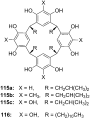
Figure 82: Resorcin[4]arenes (115a/b) and pyrogallo[4]arenes (115c, 116).
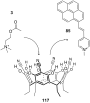
Figure 83: Displacement assay for acetylcholine (3) with tetracyanoresorcin[4]arene (117).

Figure 84: Tetramethoxy resorcinarene mono-crown-5 (118).

Figure 85: Components of a resorcinarene based displacement assay for ammonium ions.

Figure 86: Chiral basket resorcin[4]arenas 121.

Figure 87: Resorcinarenes with deeper cavitand structure (122).

Figure 88: Resorcinarene with partially open deeper cavitand structure (123).

Figure 89: Water-stabilized deep cavitands with partially structure (124, 125).
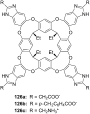
Figure 90: Charged cavitands 126 for tetralkylammonium ions.

Figure 91: Ditopic calix[4]arene receptor 127 capped with glycol chains.

Figure 92: A calix[5]arene dimer for diammonium salt recognition.

Figure 93: Calixarene parts 92c and 129 for the formation molecular capsules.
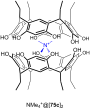
Figure 94: Encapsulation of a quaternary ammonium cation by two resorcin[4]arene molecules (NMe4+@[75c]2 × Cl−...

Figure 95: Encapsulation of a quaternary ammonium cation by six resorcin[4]arene molecules (NMe3D+@[130]6 × Cl−...

Figure 96: Structure and schematic of cucurbit[6]uril (CB[6], 131a).
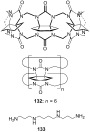
Figure 97: Cyclohexanocucurbit[6]uril (CB′[6], 132) and the guest molecule spermine (133).

Figure 98: α,α,δ,δ-Tetramethylcucurbit[6]uril (134).

Figure 99: Structure of the cucurbituril-phthalhydrazide analogue 135.

Figure 100: Organic cavities for the displacement assay for amine differentiation.

Figure 101: Displacement assay methodology for diammonium- and related guests involving cucurbiturils and some ...

Figure 102: Nor-seco-Cucurbituril (±)-bis-ns-CB[6] (140) and guest molecules.

Figure 103: The cucurbit[6]uril based complexes 141 for chiral discrimination.
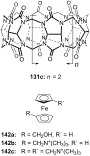
Figure 104: Cucurbit[7]uril (131c) and its ferrocene guests (142) opposed.

Figure 105: Cucurbit[7]uril (131c) guest inclusion and representative guests.

Figure 106: Cucurbit[7]uril (131c) binding to succinylcholine (145) and different bis-ammonium and bis-phosphon...

Figure 107: Paraquat-cucurbit[8]uril complex 149.
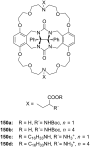
Figure 108: Gluconuril-based ammonium receptors 150.
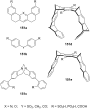
Figure 109: Examples of clefts (151a), tweezers (151b, 151c, 151d) and clips (151e).

Figure 110: Kemp’s triacid (152a), on example of Rebek’s receptors (152b) and guests.

Figure 111: Amino acid receptor (154) by Rebek et al.

Figure 112: Hexagonal lattice designed hosts by Bell et al.

Figure 113: Bell’s amidinium receptor (156) and the amidinium ion (157).
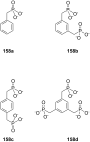
Figure 114: Aromatic phosphonic acids.

Figure 115: Xylene phosphonates 159 and 160a/b for recognition of amines and amino alcohols.
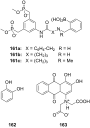
Figure 116: Bisphosphonate recognition motif 161 for a colorimetric assay with alizarin complexone (163) for ca...

Figure 117: Bisphosphonate/phosphate clip 164 and bisphosphonate cleft 165.

Figure 118: N-Methylpyrazine 166a, N-methylnicotinamide iodide (166b) and NAD+ (166c).

Figure 119: Bisphosphate cavitands.
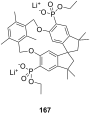
Figure 120: Bisphosphonate 167 of Schrader and Finocchiaro.
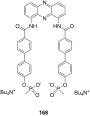
Figure 121: Tweezer 168 for noradrenaline (80b).

Figure 122: Different tripods and heparin (170).
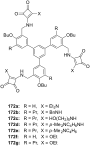
Figure 123: Squaramide based receptors 172.
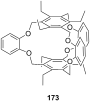
Figure 124: Cage like NH4+ receptor 173 of Kim et al.

Figure 125: Ammonium receptors 174 of Chin et al.

Figure 126: 2-Oxazolin-based ammonium receptors 175a–d and 176 by Ahn et al.

Figure 127: Racemic guest molecules 177.

Figure 128: Tripods based on a imidazole containing macrocycle (178) and the guest molecules employed in the st...

Figure 129: Ammonium ion receptor 180.

Figure 130: Tetraoxa[3.3.3.3]paracyclophanes 181 and a cyclophanic tetraester (182).

Figure 131: Peptidic bridged paraquat-cyclophane.
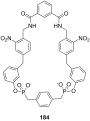
Figure 132: Shape-selective noradrenaline host.

Figure 133: Receptor 185 for binding of noradrenaline on surface layers from Schrader et al.

Figure 134: Tetraphosphonate receptor for binding of noradrenaline.

Figure 135: Tetraphosphonate 187 of Schrader and Finocchiaro.

Figure 136: Zinc-Porphyrin ammonium-ion receptors 188 and 189 of Mizutani et al.
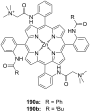
Figure 137: Zinc porphyrin receptor 190.

Figure 138: Zinc porphyrin receptors 191 capable of amino acid binding.

Figure 139: Zinc-porphyrins with amino acid side chains for stereoinduction.

Figure 140: Bis-zinc-bis-porphyrin based on Tröger’s base 193.

Figure 141: BINAP-zinc-prophyrin derivative 194 and it’s guests.

Figure 142: Bisaryl-linked-zinc-porphyrin receptors.
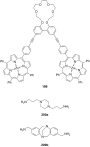
Figure 143: Bis-zinc-porphyrin 199 for diamine recognition and guests.

Figure 144: Bis-zinc-porphyrin crown ether 201.

Figure 145: Bis-zinc-porphyrin 202 for stereodiscrimination (L = large substituent; S = small substituent).

Figure 146: Bis-zinc-porphyrin[3]rotaxane and its copper complex and guests.

Figure 147: Dien-bipyridyl ligand 206 for co-ordination of two metal atoms.

Figure 148: The ligand and corresponding tetradentate co-complex 207 serving as enantioselective receptor for a...

Figure 149: Bis(oxazoline)–copper(II) complex 208 for the recognition of amino acids in aqueous solution.

Figure 150: Zinc-salen-complexes 209 for the recognition tertiary amines.

Figure 151: Bis(oxazoline)–copper(II) 211 for the recognition of amino acids in aqueous solution.

Figure 152: Zn(II)-complex of a C2 terpyridine crown ether.

Figure 153: Displacement assay and receptor for aspartate over glutamate.

Figure 154: Chiral complex 214 for a colorimetric displacement assay for amino acids.

Figure 155: Metal complex receptor 215 with tripeptide side arms.

Figure 156: A sandwich complex 216 and its displaceable dye 217.

Figure 157: Lanthanide complexes 218–220 for amino acid recognition.
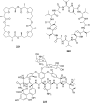
Figure 158: Nonactin (221), valinomycin (222) and vancomycin (223).

Figure 159: Monesin (224a) and a chiral analogue for enantiodiscrimination of ammonium guests (224b).

Figure 160: Chiral podands (226) compared to pentaglyme-dimethylether (225) and 18-crown-6 (4).

Figure 161: Lasalocid A (228).

Figure 162: Lasalocid derivatives (230) of Sessler et al.

Figure 163: The Coporphyrin I tetraanion (231).

Figure 164: Linear and cyclic peptides for ammonium ion recognition.

Figure 165: Cyclic and bicyclic depsipeptides for ammonium ion recognition.
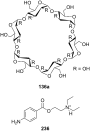
Figure 166: α-Cyclodextrin (136a) and novocaine (236).
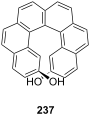
Figure 167: Helical diol receptor 237 by Reetz and Sostmann.

Figure 168: Ammonium binding spherand by Cram et al. (238a) and the cyclic[6]metaphenylacetylene 238b in compar...

Figure 169: Receptor for peptide backbone and ammonium binding (239).

Figure 170: Anion sensor principle with 3-hydroxy-2-naphthanilide of Jiang et al.

Figure 171: 7-bromo-3-hydroxy-N-(2-hydroxyphenyl)naphthalene 2-carboxamide (241) and its amine binding.

Figure 172: Naturally occurring catechins with affinity to quaternary ammonium ions.

Figure 173: Spiropyran (244) and merocyanine form (244a) of the amino acid receptors of Fuji et al.

Figure 174: Coumarin aldehyde (245) and its iminium species with amino acid bound (245a) by Glass et al.
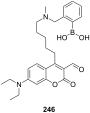
Figure 175: Coumarin aldehyde appended with boronic acid.

Figure 176: Quinolone aldehyde dimers by Glass et al.

Figure 177: Chromogenic ammonium ion receptors with trifluoroacetophenone recognition motifs.

Figure 178: Chromogenic ammonium ion receptor with trifluoroacetophenone recognition motif bound on different m...
Synthesis of 3-(phenylazo)-1,2,4-triazoles by a nucleophilic reaction of primary amines with 5-chloro- 2,3-diphenyltetrazolium salt via mesoionic 2,3-diphenyltetrazolium- 5-aminides
- Shuki Araki,
- Satoshi Hirose,
- Yoshikazu Konishi,
- Masatoshi Nogura and
- Tsunehisa Hirashita
Beilstein J. Org. Chem. 2009, 5, No. 8, doi:10.3762/bjoc.5.8

- amines have been examined. In the presence of an inorganic base such as NaHCO3, primary and secondary amines undergo a nucleophilic substitution to give the corresponding 5-aminotetrazolium salts. When triethylamine is used as a base, primary amines give 3-phenylazo-1,2,4-triazoles. A plausible dual-path
- hydrogencarbonate, 4a was obtained exclusively (Scheme 1). The results with other amines are summarized in Table 1. The reaction of butylamine showed a similar tendency: with the triethylamine base triazole 3b was obtained, whereas with sodium hydrogencarbonate 5-aminotetrazolium 4b was formed. Other primary amines
- , such as ethanolamine and ethyl glycinate gave the corresponding triazoles 3c and 3d. Interestingly, sterically bulky primary amines as well as secondary amines gave the respective 5-aminotetrazolium salts 4d–h. It is worthy to note that the reaction of isopropylamine/triethylamine gave 3

Graphical Abstract

Scheme 1: Reaction of chlorotetrazolium 2 with benzylamine.

Scheme 2: Reaction of chlorotetrazolium 2 with triethylamine.

Scheme 3: Conversion of benzylaminotetrazolium 4a to 1,2,4-triazole 3a.

Scheme 4: Synthesis of chloroformazan 6 and its reaction with benzylamine and butylamine.

Scheme 5: Plausible reaction mechanism for the formation of 1,2,4-triazole 3.
One-pot preparation of substituted pyrroles from α-diazocarbonyl compounds
- Fernando de C. da Silva,
- Mauricio G. Fonseca,
- Renata de S. Rianelli,
- Anna C. Cunha,
- Maria C. B. V. de Souza and
- Vitor F. Ferreira
Beilstein J. Org. Chem. 2008, 4, No. 45, doi:10.3762/bjoc.4.45
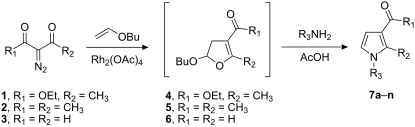
- -carbaldehyde (6) followed by reaction with primary amines. Keywords: diazocarbonyl; dihydrofuran; one-pot synthesis; pyrrole; Introduction The pyrrole unit [1] occurs in many interesting classes of compounds such as pharmaceutical agents [2][3][4][5], conducting polymers [6][7], molecular optics [8][9][10
- hexane-2,5-dione and primary amines under microwave irradiation. Other processes including several clay-mediated synthetic variations of these classical methods also have been reported for preparing pyrroles in equal or better yields [21]. In 2001 [22] and 2004 [23], Banik and co-workers, by using the
- variations in the reaction times (see Table 1). The reaction of the dihydrofuran intermediates 4, 5 and 6 with excess of primary amines in the presence of glacial acetic acid afforded the corresponding substituted pyrroles 7a–n in moderate to good yields (Table 1). Slightly different reactivity between 4, 5


The role of an aromatic group in remote chiral induction during conjugate addition of α-sulfonylallylic carbanions to ethyl crotonate
- Shlomo Levinger,
- Ranjeet Nair and
- Alfred Hassner
Beilstein J. Org. Chem. 2008, 4, No. 32, doi:10.3762/bjoc.4.32
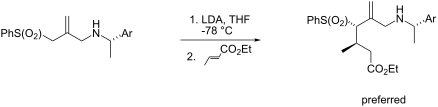
- series of α-sulfonylallylic donor precursors 1, bearing a remote stereogenic center, were prepared by condensing a chiral aryl- or heteroarylalkylamine 6 with the bromo-substituted allyl sulfone 5 [2] (Scheme 2 and Table 1). Of the primary amines 6 used for generation of amino-substituted sulfones 1, 1
- -carbonitrile was indicated by formation of a 10-tert-butyl derivative on reaction with tert-butylmagnesium chloride [9]. However, since iminium ion intermediates are much more reactive than ketones [7], imines 8h and 8j were successfully reduced to the primary amines 6 upon treatment with sodium

Graphical Abstract

Scheme 1: Transmission of asymmetry in the conjugate addition of allyl sulfones to ethyl crotonate depending ...

Scheme 2: Preparation of donor precursors for conjugate addition (1), bearing a remote stereogenic center.

Scheme 3: Borch reductive amination of acetophenones.

Scheme 4: Preparation of [(9-anthryl)alkyl]- and (mesitylalkyl)amines 6h and 6j from nitriles via imines 8.

Figure 1: Calculated minimum energy conformation of lithiated amino-substituted sulfone 1a showing π-interact...
Variations in product in reactions of naphthoquinone with primary amines
- Marjit W. Singh,
- Anirban Karmakar,
- Nilotpal Barooah and
- Jubaraj B. Baruah
Beilstein J. Org. Chem. 2007, 3, No. 10, doi:10.1186/1860-5397-3-10
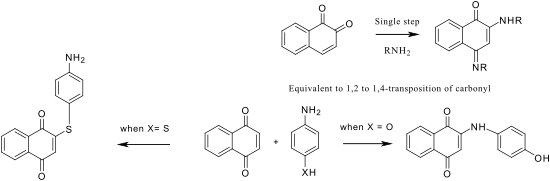
- Marjit W. Singh Anirban Karmakar Nilotpal Barooah Jubaraj B. Baruah Department of Chemistry, Indian Institute of Technology Guwahati, Guwahati 781 039 Assam, India 10.1186/1860-5397-3-10 Abstract Reaction of 1,2-naphthoquinone with primary amines gives a 2-amino-1,4-naphthoquinone derivative
- -benzoquinone reacts with primary amines to give 2,5-diamino 1,4-benzoquinones; similar reaction of 1,4-naphthoquinone with primary amines results in the formation of 2-amino 1,4-naphthoquinones. [13] However, the product formed from such simple reaction of amine with various quinones has much scope for
- exploration, especially in terms of synthesis of electro/photoactive supramolecular assemblies or polymers. In this communication we describe preliminary account of results obtained on the equivalence of reaction of 1,2-naphthoquinone and 1,4-naphthoquinone with primary amines. Results and discussion It is

Graphical Abstract

Scheme 1: Reaction of 1,2-naphthoquinone with primary amines.
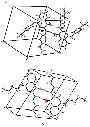
Figure 1: The solid state structure of (a) 1 and (b) 2 (drawn with 20% thermal ellipsoids).

Scheme 2: Equivalence of reactivity between 1,2 and 1,4-naphthoquinone.

Scheme 3: The reaction of picolylamine with 1,4-naphthoquinone.
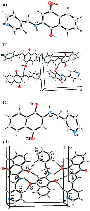
Figure 2: (a) The crystal structure of 3 and (b) weak interactions in 3 leading to self-assembly, (c) Structu...

Scheme 4: The reaction of 1,4-naphthoquinone with 4-aminothiophenol and 4-aminophenol.

Figure 3: The 1HNMR spectra (400 MHz) of the reaction mixture of 1,4-naphthoquinone with 4-amino thiophenol (...

Figure 4: The structure of the products from the reaction of 1,4-naphthoquinone with (a) 4-aminothiophenol (b...
Synthesis and glycosidase inhibitory activity of new hexa- substituted C8-glycomimetics
- Olivia Andriuzzi,
- Christine Gravier-Pelletier,
- Gildas Bertho,
- Thierry Prangé and
- Yves Le Merrer
Beilstein J. Org. Chem. 2005, 1, No. 12, doi:10.1186/1860-5397-1-12

- side of the bulky TBDMS group in β-position. However, it has to be pointed out that more hindered nucleophiles, such as primary amines, revealed unable to open the cyclic sulfate 9 or 10. The absolute configurations of 11 and 12 were established by NMR studies. 1H signals were assigned (Table 1) using

Graphical Abstract

Figure 1: Sugars, iminosugars and carbasugars.

Figure 2: Retrosynthetic analysis.

Scheme 1: Reagents and conditions: (a) OsO4, NMO, tBuOH, rt; (b) TFA, H2O, rt.

Scheme 2: Reagents and conditions: (a) mCPBA, CH2Cl2, NaHCO3, rt; (b) see text.

Scheme 3: Reagents and conditions: (a) i : SOCl2, Et3N, CH2Cl2, 0°C; ii : RuCl3, NaIO4, CCl4, CH3CN, 0°C to r...
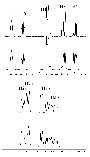
Figure 3: 1D proton NMR spectra of the C8 ring in compound 11 (upper) and the simulated signals (down) on the...

Figure 4: Schematic representation of the NOEs (indicated with arrows) found to deduce the structure of 11. B...

Figure 5: X-ray structure of epoxide 7 (upper) and sulfate 9 (down) solved using SHELXS and anisotropically r...



