Search results
Search for "responsive" in Full Text gives 164 result(s) in Beilstein Journal of Organic Chemistry.
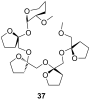
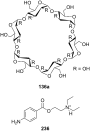
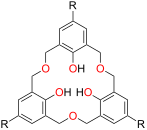
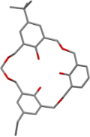
Fifty years of oxacalix[3]arenes: A review
Beilstein J. Org. Chem. 2012, 8, 201–226, doi:10.3762/bjoc.8.22




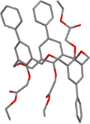








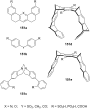
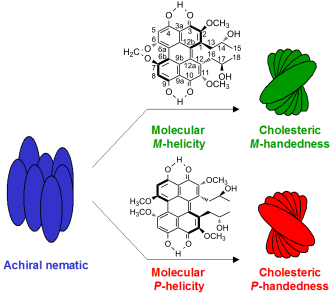
The interplay of configuration and conformation in helical perylenequinones: Insights from chirality induction in liquid crystals and calculations
Beilstein J. Org. Chem. 2012, 8, 155–163, doi:10.3762/bjoc.8.16
- Programme (PRIN 2009, grant 2009N5JH4F_002 “Stimuli responsive liquid crystalline phases and supramolecular systems”). Computational resources and assistance were provided by the “Laboratorio Interdipartimentale di Chimica Computazionale” (LICC) at the Dipartimento di Scienze Chimiche of the University of


Chiral recognition of ephedrine: Hydrophilic polymers bearing β-cyclodextrin moieties as chiral sensitive host molecules
Beilstein J. Org. Chem. 2011, 7, 1516–1519, doi:10.3762/bjoc.7.177
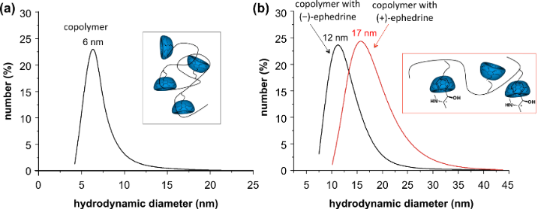
- ; stimuli-responsive polymer; Findings Chiral recognition is an important topic in medical and pharmaceutical applications. The sheer number of publications dealing with chiral and molecular recognition systems underlines the importance of finding reliable recognition systems [1][2][3][4][5]. Particularly


Ratiometric fluorescent probe for enantioselective detection of D-cysteine in aqueous solution
Beilstein J. Org. Chem. 2011, 7, 1508–1515, doi:10.3762/bjoc.7.176
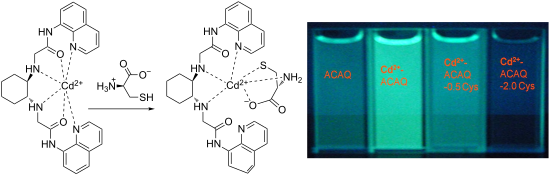
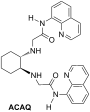
- solutions. Interestingly, the probe is only slightly responsive to Hcy and GSH. Results and Discussion N-Alkylation of trans-1,2-diaminocyclohexane with a pair of 9-carboxamidoquinoline moieties through methylene linkers afforded multifunctionalized ACAQ (Figure 2). Bearing six metal ligating sites, ACAQ
- enantioselective detection of D-Cys was described. Among all amino acids that were investigated, only Cys and Hcy were responsive to the probe. Significantly, the probe not only demonstrated its outstanding discriminative power on Cys over Hcy and GSH in 99% aqueous buffered solution, but it also exhibited modest




Hyperbranched polyethylenimine bearing cyclodextrin moieties showing temperature and pH controlled dye release
Beilstein J. Org. Chem. 2011, 7, 1130–1134, doi:10.3762/bjoc.7.130
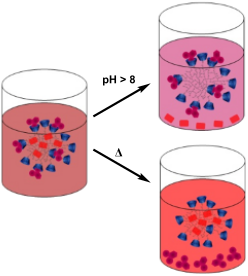
- : anthraquinone; cyclodextrin; drug delivery; polyethylenimine; release; Introduction The development of novel materials and their use as drug delivery systems has gained increased interest in the last few decades [1][2][3]. In this context, certain stimuli responsive behaviors are required [4][5]. Hence, the


Synthesis and self-assembly of 1-deoxyglucose derivatives as low molecular weight organogelators
Beilstein J. Org. Chem. 2011, 7, 234–242, doi:10.3762/bjoc.7.31
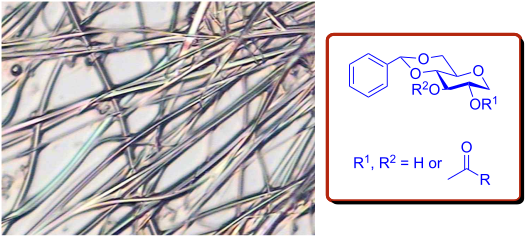
- polymerized diacetylene gels were dark blue with long wavelengths absorptions, these compounds may be useful as advanced stimuli responsive materials. Experimental General methods and materials Materials and instrumentation. General chemicals and reagents were purchased from Aldrich, or VWR. The diacetylene





pH-Responsive chromogenic-sensing molecule based on bis(indolyl)methene for the highly selective recognition of aspartate and glutamate
Beilstein J. Org. Chem. 2011, 7, 218–221, doi:10.3762/bjoc.7.29
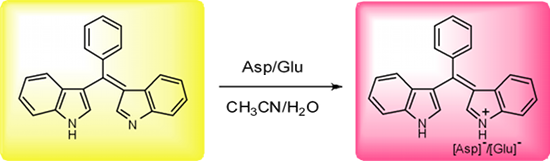
- receptor and guest. However, the basic H-bond acceptor moiety of 1 is very sensitive to changes of pH. Herein, we report a pH-responsive chromogenic-sensing molecule 1 that shows high selectivity for Asp and Glu in a mixed acetonitrile/water medium. Results and Discussion The synthesis of 1 was according
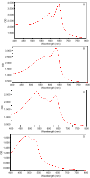
- pH-responsive colorimetric sensor for amino acids, the receptor shows high selectivity and sensitivity for Asp and Glu. Structure of sensor 1. Changes in UV–vis spectra of 1 (5.0 × 10⁻⁵ M) after addition of: (a) 0–0.10 mL H2O; (b) various ratios of the CH3CN/H2O (fixed volume is 4 mL). pH-dependent


Chiral recognition of macromolecules with cyclodextrins: pH- and thermosensitive copolymers from N-isopropylacrylamide and N-acryloyl-D/L-phenylalanine and their inclusion complexes with cyclodextrins
Beilstein J. Org. Chem. 2011, 7, 204–209, doi:10.3762/bjoc.7.27
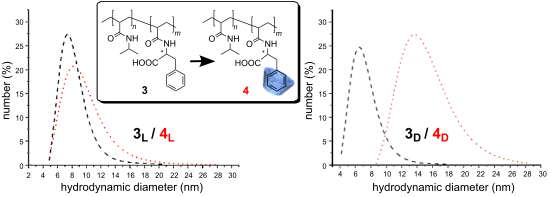
- soluble stimuli-responsive polymers bearing phenylalanine moieties via host-guest interaction with β-cyclodextrin and randomly-methylated-β-cyclodextrin (RAMEB-CD). We synthesised N-acryloyl-D/L-phenylalanine monomers (2D, 2L) which were then copolymerised under free radical conditions with N
- of the side groups of copolymers 3D and 3L and their solubility behaviour were investigated by dynamic light scattering and 2D NMR spectroscopy, respectively. Keywords: amino acid; chiral recognition; cyclodextrins; LCST; stimuli-responsive polymers; Introduction Chiral recognition has attracted


Miniemulsion polymerization as a versatile tool for the synthesis of functionalized polymers
Beilstein J. Org. Chem. 2010, 6, 1132–1148, doi:10.3762/bjoc.6.130
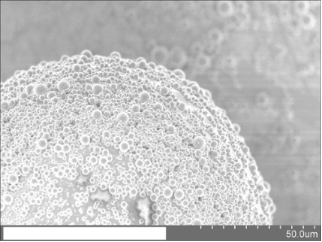
- inverse minemulsion [23]. The non-reacted vinyl groups, detected by NMR spectroscopy, could be subsequently further crosslinked. The syntheses of temperature-responsive microgels in inverse miniemulsion have also been reported [24]. N-isopropylacrylamide and methacrylic acid were polymerized in the





Towards racemizable chiral organogelators
Beilstein J. Org. Chem. 2010, 6, 960–965, doi:10.3762/bjoc.6.107
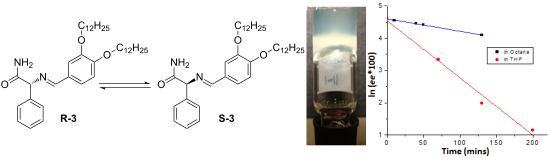
- building blocks with co-added organizational information can make these gels responsive. In recent years, much effort has been devoted to the design and characterization of chiral self-assembled fibrillar networks that form organogels [1][2]. In such systems the chirality within a molecular building block
- macroscopic behavior. Most of the earliest stimuli-responsive gels undergo a UV-induced transformation, which can be reversed by visible light. For example, Shinkai and coworkers demonstrated that trans-cis isomerization of gelator compounds by UV/visible light could induce a gel-sol transition [6]. Feringa
- organogelators. Remarkably, our pure enantiomeric gelator could not be racemized in the gel phase, while racemization takes place in the self-assembled fiber state. We are currently studying this class of organogelator for the creation of responsive gels and attrition-enhanced solid-phase enantioenrichment


Hybrid biofunctional nanostructures as stimuli-responsive catalytic systems
Beilstein J. Org. Chem. 2010, 6, 922–931, doi:10.3762/bjoc.6.98
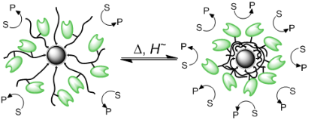
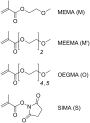
- and magnetic fields. Such dual responsive materials are of interest for a variety of applications ranging from magnetic separation or drug release systems to sensors and actuation [6][7][8][9][10][11][12][13]. We, and other groups, have demonstrated that magnetite nanoparticles decorated with a




![[Graphic 1]](/bjoc/content/inline/1860-5397-6-98-i6.png?max-width=637&scale=0.1536366) ).
).


Novel multi-responsive P2VP-block-PNIPAAm block copolymers via nitroxide-mediated radical polymerization
Beilstein J. Org. Chem. 2010, 6, 756–765, doi:10.3762/bjoc.6.89
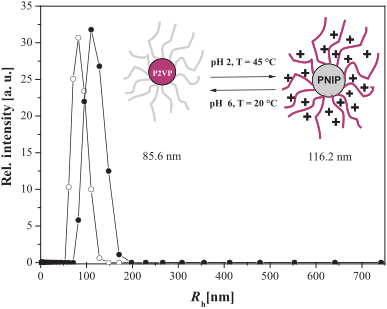
- Cathrin Corten Katja Kretschmer Dirk Kuckling Fachrichtung Chemie und Lebensmittelchemie, Technische Universität Dresden, D-01062 Dresden, Germany Department Chemie, Universität Paderborn, Warburger Str. 100, D-33098 Paderborn, Germany 10.3762/bjoc.6.89 Abstract Linear soluble multi-responsive
- calorimetry (DSC). Block copolymers showed pH- and temperature-responsive solubility in aqueous media. By increasing the P2VP content, the phase transition temperature shifted to lower temperatures (e.g. 26 °C for P2VP114-block-PNIPAAm180). Depending on the resulting block length, temperature and pH value of
- delivery systems. Keywords: block copolymers; N-isopropylacrylamide; nitroxide-mediated radical polymerization; stimuli-responsive polymers; 2-vinylpyridine; Introduction Functional polymers have attracted much attention because of their technological and scientific importance. Polymers, which respond


Functionalized polymers: synthesis and properties
Beilstein J. Org. Chem. 2010, 6, No. 55, doi:10.3762/bjoc.6.55
- fillings, wound dressings, bone cements or hollow fibers for dialysis. Typical examples of such materials include hydrogels and stimulus-responsive polymers which are also the basis of ophthalmic surgery. Thus, our aim in this Thematic Series is to bring together a broad spectrum of reports in the field of
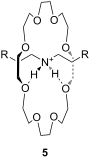
Molecular recognition of organic ammonium ions in solution using synthetic receptors
Beilstein J. Org. Chem. 2010, 6, No. 32, doi:10.3762/bjoc.6.32
- bonds [5]. Once it has bound to these particular peptides, they are no longer available for construction of the bacteria’s cell wall causing their cell death. Malfunction of dopamine-responsive neurons has been implicated in a number of disease conditions including Parkinson’s disease [6]. The