Search results
Search for "control" in Full Text gives 1627 result(s) in Beilstein Journal of Organic Chemistry. Showing first 200.
Facile preparation of fluorine-containing 2,3-epoxypropanoates and their epoxy ring-opening reactions with various nucleophiles
Beilstein J. Org. Chem. 2024, 20, 2421–2433, doi:10.3762/bjoc.20.206
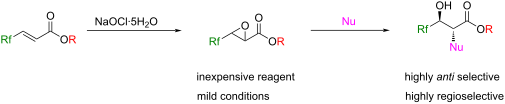
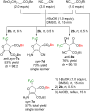
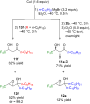
- of the stereoisomers when compared with the case of the compounds 3 [47][48]. Because control of the amount of PhCH2SH to 1.0 equiv did not give a positive effect, the conditions in entry 4 (Table 3) were eventually determined as the best. The different epoxyesters 2c–e were also applied for this





Homogeneous continuous flow nitration of O-methylisouronium sulfate and its optimization by kinetic modeling
Beilstein J. Org. Chem. 2024, 20, 2408–2420, doi:10.3762/bjoc.20.205
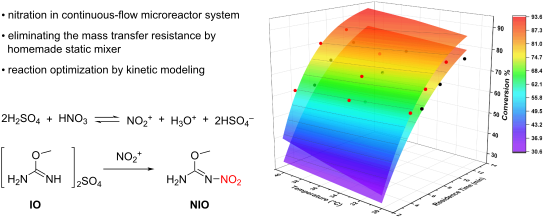
- its control difficult and risky. In this paper, a homogeneous continuous flow microreactor system was developed for the nitration of O-methylisouronium sulfate under high concentrations of mixed acids, with a homemade static mixer eliminating the mass transfer resistance. In addition, the kinetic
- reaction process of O-methylisouronium sulfate to improve the reaction efficiency and intrinsic safety. In recent years, continuous flow microreactors have been recognized due to their excellent mass and heat transfer performance, precise control over reaction parameters, and intrinsic safety [5][6][7][8
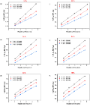
- systems, and has a promising application. In this work, we constructed a continuous flow microreactor system to determine the kinetic parameters of IO nitration, which allows precise control of temperature and residence time (Figure 1). Due to the high viscosity of the reaction system, a simple and


![[Graphic 1]](/bjoc/content/inline/1860-5397-20-205-i17.svg?max-width=637&scale=1.18182)


Evaluating the halogen bonding strength of a iodoloisoxazolium(III) salt
Beilstein J. Org. Chem. 2024, 20, 2401–2407, doi:10.3762/bjoc.20.204
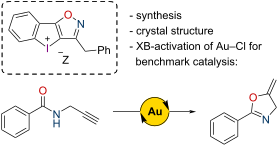
- , several control experiments were also performed, even though the benchmark reaction has already been established in halogen-bonding activation. In the presence of 2 mol % of either the unactivated gold complex (PPh3)AuCl or the XB donors 1BArF–4BArF + 7BArF, 1H NMR showed no conversion within 18 h




Synthesis, electrochemical properties, and antioxidant activity of sterically hindered catechols with 1,3,4-oxadiazole, 1,2,4-triazole, thiazole or pyridine fragments
Beilstein J. Org. Chem. 2024, 20, 2378–2391, doi:10.3762/bjoc.20.202
- containing a pyridine substituent in the 1,3,4-oxadiazole-2-thione cycle has the greatest inhibitory effect (36%) on the LP process compared to the control sample. For compounds 2, 4–7, and 9, a less pronounced antioxidant effect (13–19%) is observed comparable to the inhibitory activity of Trolox. Initially
- (3 h), catechols 1 and 3 exhibit a weak inhibitory effect (7–8%). An increase in the incubation time to 24 hours leads to a rise in antioxidant activity for all compounds. A decrease in TBARS content by 41–52% was noted compared to the control experiment. All the studied compounds exhibit more
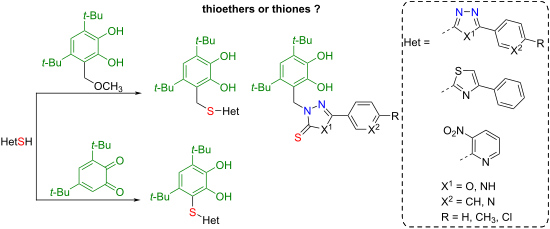
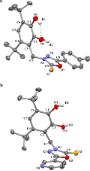
- (control) during the incubation for 3, 24, and 48 hours (concentration of compounds in the reaction medium is 0.1 mM). The results are expressed as mean ± standard deviation (* p < 0.001; ** p < 0.01; ***p < 0.05). Synthesis of catechol-containing compounds 1–9. Electrochemical transformations of compounds




Asymmetric organocatalytic synthesis of chiral homoallylic amines
Beilstein J. Org. Chem. 2024, 20, 2349–2377, doi:10.3762/bjoc.20.201
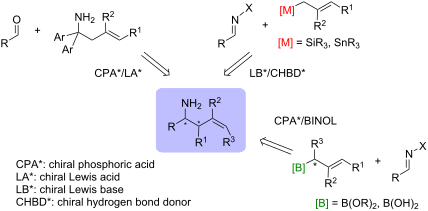
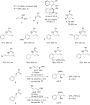
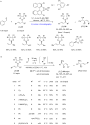
- –Sakurai reaction of allyltrimethylsilane with N-Fmoc aldimines. The pyrrolidine unit gem-methyl group conformational control in the squaramide-based catalyst [34]. The energetic difference between the transition states of the two proposed modes of the reaction (SN1 and SN2 mechanisms). The concerted SN2






Tandem diazotization/cyclization approach for the synthesis of a fused 1,2,3-triazinone-furazan/furoxan heterocyclic system
Beilstein J. Org. Chem. 2024, 20, 2342–2348, doi:10.3762/bjoc.20.200

- ). NO release data. Tandem diazotization/azo coupling reactions of (1,2,5-oxadiazolyl)carboxamides containing an amino functionality. Synthesis of target furoxanotriazinones 1a–h. The synthesis of furazanotriazinones 7a–h. Control experiment with Na15NO2. Optimization of the diazotization of amide 2aa


Improved deconvolution of natural products’ protein targets using diagnostic ions from chemical proteomics linkers
Beilstein J. Org. Chem. 2024, 20, 2323–2341, doi:10.3762/bjoc.20.199
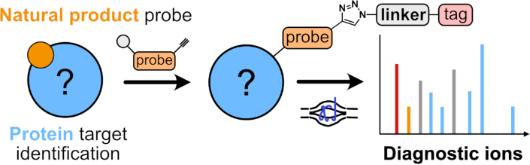
- using orthogonal fragmentation techniques [75][76]. Because of the often low number of identified peptides bearing a desired modification, it is difficult to control the false-discovery rate (FDR) of the hits, and thus, the introduction of proper negative controls is of the upmost importance. Thus far
- occurring already at sub-stoichiometric ratios. However, by in-gel analysis, it is not possible to quantify the extent of labeled proteins. To ensure the fidelity of the bioorthogonal reaction a control experiment in which the probe treatment is replaced by a plain solvent used to prepare the stock solution
- of the probe is necessary to identify any unspecific bands stemming from side reactivity of the azide–protein conjugate. In case a photo-crosslinker is used, another control experiment needs to be included, in which the cells/lysate are treated with the probe but not UV-irradiated. The non-covalent




Cell-free protein synthesis with technical additives – expanding the parameter space of in vitro gene expression
Beilstein J. Org. Chem. 2024, 20, 2242–2253, doi:10.3762/bjoc.20.192
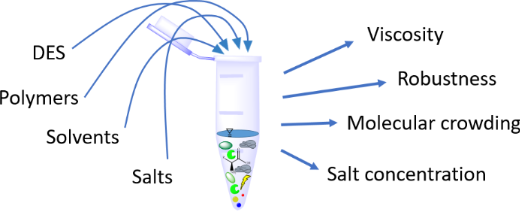
- set the final concentration in the reaction to 0.5, 0.75, 1 and 2% w/v. All reactions were prepared in triplicates with an additional negative control without the addition of DNA. For all reactions with additives a triplicate of the standard composition was run at the same time and with the same cell



Electrochemical allylations in a deep eutectic solvent
Beilstein J. Org. Chem. 2024, 20, 2217–2224, doi:10.3762/bjoc.20.189
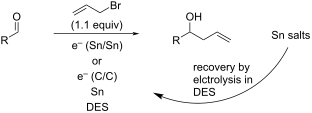
- there are many reasons for this renewed interest, two major motivations are the unmatched control of oxidation or reduction potential that can be achieved and the environmentally friendly aspect of having electrons as the only consumed reagent. This latter reason is certainly an advantage in many cases

Heterocycle-guided synthesis of m-hetarylanilines via three-component benzannulation
Beilstein J. Org. Chem. 2024, 20, 2208–2216, doi:10.3762/bjoc.20.188
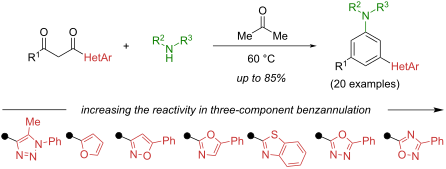
- latter conditions to the reaction with benzylamine, the target substituted aniline 3aa was formed in a good 73% yield. However, the reaction with less nucleophilic aniline was sluggish, requiring almost 15 days to achieve full conversion of the 1,3-diketone 1a (TLC control). In this case, performing the
- reaction of 1,3-diketones 1e and 1f with aliphatic amines was expected. Indeed, the reaction of 1,3-diketones 1e or 1f with benzylamine was sluggish, and a number of undefined side-products were formed (LC control). m-Isoxazole arylamine 3ea was isolated in low yield (21%) after heating for 6 days (Scheme


Factors influencing the performance of organocatalysts immobilised on solid supports: A review
Beilstein J. Org. Chem. 2024, 20, 2129–2142, doi:10.3762/bjoc.20.183
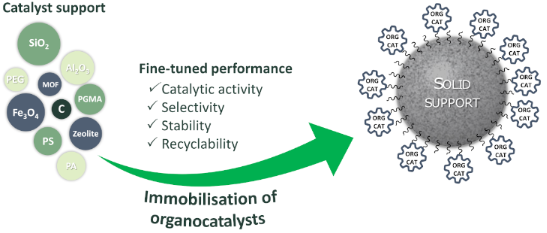
- the catalyst enhanced the mass transport of organic reactants in water [122]. Based on similar mesoporous catalysts [123][124], it can be concluded that with a properly designed pore size resulting in a high density of active catalytic sites, diffusion control could be diminished. Furthermore, the


Efficacy of radical reactions of isocyanides with heteroatom radicals in organic synthesis
Beilstein J. Org. Chem. 2024, 20, 2114–2128, doi:10.3762/bjoc.20.182
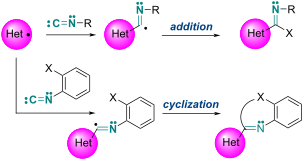
- ] because isocyanide is susceptible to multiple imidoylation [9][10][11], whereas carbon monoxide is less susceptible to multiple carbonylation. Therefore, precise control of the reaction is required for selective formation of the monoimidoylation product. Regarding the radical reaction of isocyanides, the


Cage-like microstructures via sequential Ugi reactions in aqueous emulsions
Beilstein J. Org. Chem. 2024, 20, 2078–2083, doi:10.3762/bjoc.20.179
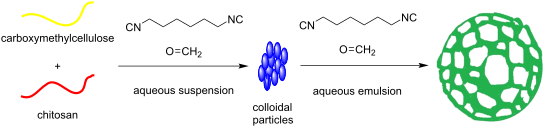
- obtaining cage-like structures are characterized by technical complexity, a multi-stage nature, and low yield of target structures. To develop a one-step method for the synthesis of cage-like structures, it is necessary to control the deposition process of colloidal particles on the surface of emulsion
- a narrow pH value range. This allowed to control the process of cage-like-structure formation. Changing the conditions of the Ugi reaction made it possible to obtain various structures, including cage- and cap-like structures, as well as hollow microspheres. Due to the developed surface, these


Understanding X-ray-induced isomerisation in photoswitchable surfactant assemblies
Beilstein J. Org. Chem. 2024, 20, 2005–2015, doi:10.3762/bjoc.20.176
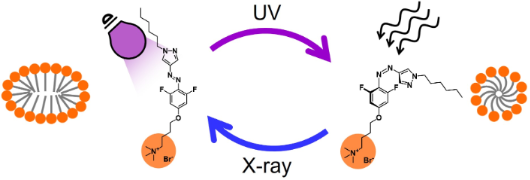
- spatiotemporal control. To build responsive materials, surfactants are particularly attractive due to their ability to self-assemble into different morphologies depending on their molecular structure and chemical environment. To that end, photoswitchable chromophores can be incorporated into amphiphilic
- is only with this additional care that there can be confidence in the structural determination of photoswitchable materials using X-ray radiation. This understanding is vital as the field advances to harness the improved properties of new photoswitches with greater isomerisation control, such as



Harnessing the versatility of hydrazones through electrosynthetic oxidative transformations
Beilstein J. Org. Chem. 2024, 20, 1988–2004, doi:10.3762/bjoc.20.175
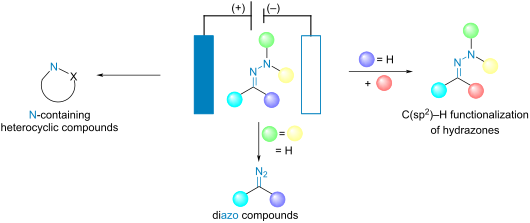
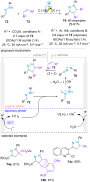
- 30. Importantly, a control experiment using benzaldehyde-derived N-benzoylhydrazone delivered the corresponding 1,3,4-oxadiazole in only 25% yield. This result indicates that benzaldehyde-derived hydrazone is a less probable reaction intermediate, thereby supporting the proposed mechanism (Scheme 7
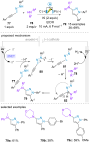
- 38. As such, the iodide electrolyte served as an electromediator to both promote the decarboxylation process and protect the aniline product from overoxidation. Importantly, a control experiment without electricity but in the presence of molecular iodine instead proceeded smoothly, thereby confirming
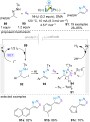
- situ cathodic generation of the base was supported by a control experiment in a divided cell, where no conversion was achieved. Final formal (3 + 2)-cycloaddition with the dipolarophiles 73 delivered the pyrazolines 74. It is interesting to note that a complementary (3 + 2)-cycloaddition between


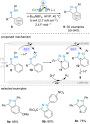
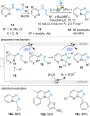

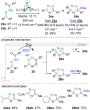
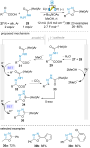






Allostreptopyrroles A–E, β-alkylpyrrole derivatives from an actinomycete Allostreptomyces sp. RD068384
Beilstein J. Org. Chem. 2024, 20, 1981–1987, doi:10.3762/bjoc.20.174
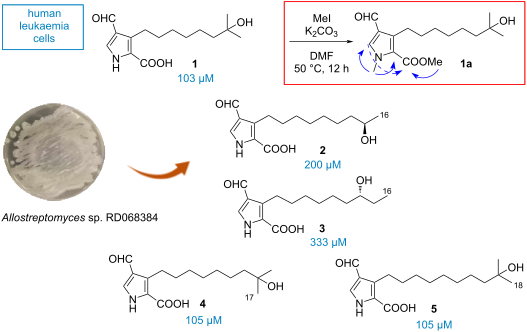
- cytotoxicity against Kasumi-1 human acute myeloblastic leukemia cells with IC50 values of 103, 105, and 105 while 2 and 3 were less active with IC50 values of 200 and 333 μM, respectively. Under the same experimental conditions, cisplatin, a positive control, inhibited the cell growth with an IC50 value of 70
- μM. Compounds 1–5 were merely inhibitory against tyrosinase, showing 19, 13, 9.6, 18, and 15% inhibition at 200 μM, respectively, while a positive control, kojic acid, inhibited the same enzyme by 95%. Conclusion In summary, five new alkylpyrroles, allostreptopyrroles A–E (1–5), were discovered from


Development of a flow photochemical process for a π-Lewis acidic metal-catalyzed cyclization/radical addition sequence: in situ-generated 2-benzopyrylium as photoredox catalyst and reactive intermediate
Beilstein J. Org. Chem. 2024, 20, 1973–1980, doi:10.3762/bjoc.20.173
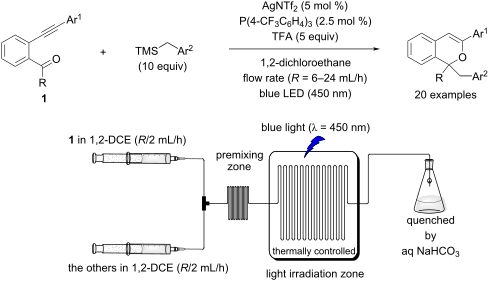
- scale-up, are the advantages of using a flow system. In addition, reproducibility in a liquid–liquid flow system is improved because the flow velocity and temperature can be precisely controlled by using a syringe pump and a temperature control unit, respectively. Moreover, as the reaction mixture


Regioselective alkylation of a versatile indazole: Electrophile scope and mechanistic insights from density functional theory calculations
Beilstein J. Org. Chem. 2024, 20, 1940–1954, doi:10.3762/bjoc.20.170
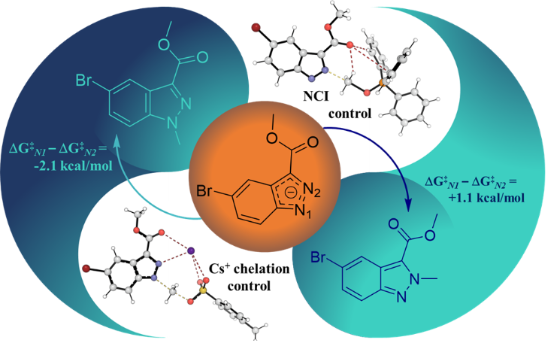
- the presence of Cs2CO3. To explore the possibility of N2-selectivity, we hypothesized that the phosphine intermediate of a Mitsunobu reaction could provide chelation control, directing alkylation to the indazole N2-atom while using identical alcohols as described above. Thus, we subjected 6 to simple
- yields from the same carbon sources through reagent control. Experimental General methods All materials were obtained from commercial suppliers and used without further purification unless otherwise noted. Anhydrous solvents were obtained from Sigma-Aldrich and used directly. Reactions involving air- or


Negishi-coupling-enabled synthesis of α-heteroaryl-α-amino acid building blocks for DNA-encoded chemical library applications
Beilstein J. Org. Chem. 2024, 20, 1922–1932, doi:10.3762/bjoc.20.168
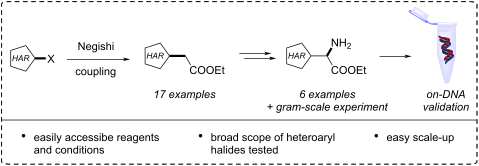
- with the Negishi cross-coupling step in a continuous flow manner [41][42][43]. Continuous flow chemistry offers superior control over reaction parameters compared to traditional batch methods. This approach leads to reproducible reactions, improved safety features, and it can facilitate high-throughput


Solvent-dependent chemoselective synthesis of different isoquinolinones mediated by the hypervalent iodine(III) reagent PISA
Beilstein J. Org. Chem. 2024, 20, 1914–1921, doi:10.3762/bjoc.20.167
- control plant diseases but also have some herbicidal activity. Compound I showed good inhibitory activity against Sclerotinia sclerotiorum on detached oilseed rape leaves [8], and compound II has excellent herbicidal activity against dicot weeds, such as Zinnia elegans Jacq. and Abutilon theophrasti
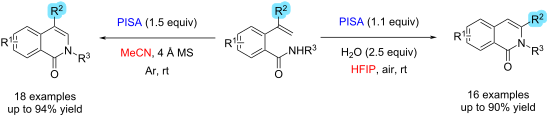
- - or 4-substituted isoquinolinone derivatives with excellent chemoselectivity. These interesting findings led us to investigate the reaction mechanism. To gain insight into the mechanism and chemoselectivity of the reactions above, we performed a control experiment. With acetonitrile as the solvent, a
- aforementioned control experiment and literature precedents, we proposed a mechanism for the formation of 4-substituted isoquinolinone derivatives, including 2a. The reaction begins by tautomerization of 1a, and PISA undergoes an electrophilic reaction with 1a' to form the iodane intermediate A. The iodane A




Electrochemical radical cation aza-Wacker cyclizations
Beilstein J. Org. Chem. 2024, 20, 1900–1905, doi:10.3762/bjoc.20.165
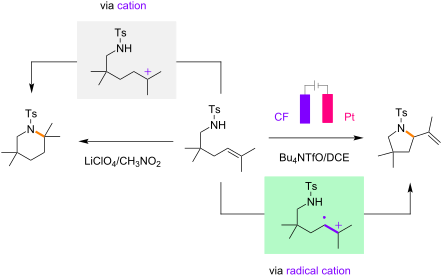
- representative radical cation precursors that are widely used to realize the formation of unique bonds. The respective radical cations are trapped by various nucleophiles under radical and/or ion control, where kinetic and/or thermodynamic effects are expected to be dominant. Typical examples that clearly show
- mmol), Bu4NOTf (0.1 M), TFA (1 equiv), CH3CN (0.4 mL), and 1,2-DCE (3.6 mL). Yields reported here are isolated yields. Mechanistic studies of aza-Wacker cyclization. A: Electrochemical (Bu4NOTf in CH3CN/1,2-DCE), B: non-electrochemical (LiClO4 in CH3NO2). Control studies for electrochemical aza-Wacker




The Groebke–Blackburn–Bienaymé reaction in its maturity: innovation and improvements since its 21st birthday (2019–2023)
Beilstein J. Org. Chem. 2024, 20, 1839–1879, doi:10.3762/bjoc.20.162
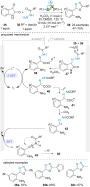
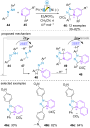
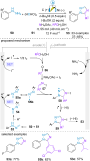
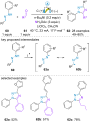
- -substituted products 60 underwent TFA-promoted deprotection which triggered the intramolecular cyclization to furnish the indole moiety in the desired products 61. A control experiment showed that the GBB product 60 was obtained as the sole product in the absence of acid catalyst. Another group developed the






A facile three-component route to powerful 5-aryldeazaalloxazine photocatalysts
Beilstein J. Org. Chem. 2024, 20, 1831–1838, doi:10.3762/bjoc.20.161
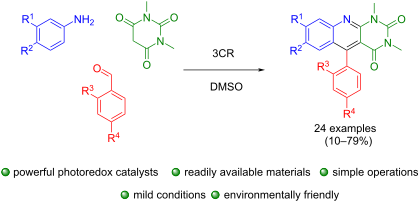
- the benzene ring of the 5-deazaalloxazine core at 7.64 and 7.71 ppm. To support this theory, we conducted a control experiment between 3,4-dimethoxyaniline (3b) and N,N-dimethylbarbituric acid (5) in DMSO. To our delight, 5-deazaalloxazine 6 was formed (Scheme 2B). To prove that DMSO was the methylene
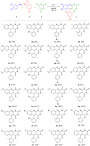
- . aReaction was done in DMF/AlCl3. bIsolation requires precipitation with 2-propanol. c2 days. Control experiments related to bulky substituted aldehydes. Optimization of the reaction conditions for the synthesis of 2a. Supporting Information Supporting Information File 28: Spectroscopic and analytical data




Discovery of antimicrobial peptides clostrisin and cellulosin from Clostridium: insights into their structures, co-localized biosynthetic gene clusters, and antibiotic activity
Beilstein J. Org. Chem. 2024, 20, 1800–1816, doi:10.3762/bjoc.20.159

- producing strains were not distinct from the control ones, transformed with the empty vector. As a result, it was not surprising that there was no effect on the E. coli test strains, which confirmed previous observations. For S. epidermidis MIQ43, P. aeruginosa ATCC PA14, and MIQPA25, both clostrisin and
- cellulosin samples displayed robust bacteriostatic activity at the highest estimated concentration of 5.6 µg/mL and 4.8 µg/mL, respectively, compared to the bacteria grown in LB media (control), and lower but statistically significant effects at lower concentrations (Figure 5). The immature peptides CloA1




Synthesis of polycyclic aromatic quinones by continuous flow electrochemical oxidation: anodic methoxylation of polycyclic aromatic phenols (PAPs)
Beilstein J. Org. Chem. 2024, 20, 1746–1757, doi:10.3762/bjoc.20.153
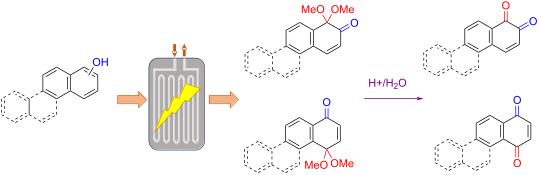
- control of the current [32][33][34]. Early studies on the electrochemical oxidation of phenols revealed that the oxidation passes through a phenoxonium ion and forms acetals in methanol but quinones in the presence of water [35][36][37]. However, the reaction is sometimes accompanied by the formation of