


Search results
Search for "Michael reaction" in Full Text gives 92 result(s) in Beilstein Journal of Organic Chemistry.
One-pot four-component sequential synthesis of S-alkyl dithiocarbamates using lipase as a biocatalyst
Beilstein J. Org. Chem. 2026, 22, 1048–1056, doi:10.3762/bjoc.22.83
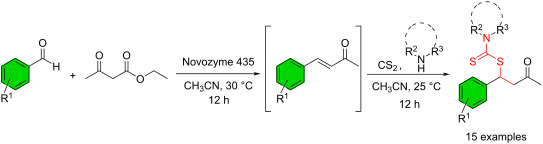
- efficiency in the absence of the enzyme. This result highlights the crucial catalytic role of lipase in the second step (Scheme 5a). Additionally, for the thia-Michael reaction step, the dithiocarbamate anion 7 was prepared separately and added to the reaction vessel. However, this did not affect the


Synthesis and optical resolution of 4,5-diaminohomoadamantane: a promising scaffold for chiral ligands and bioactive compounds
Beilstein J. Org. Chem. 2026, 22, 1013–1022, doi:10.3762/bjoc.22.80
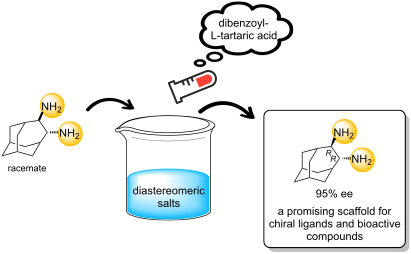
- suggest that further molecular design of homoadamantane-based chiral N,N-ligands is promising. Keywords: asymmetric Henry reaction; asymmetric Michael reaction; diaminohomoadamantane; enantiodivergent effect; resolution of racemate; Introduction The chemistry of organic polycyclic cage compounds has
- configurations when using ligands of similar structure indicates an enantiodivergent effect [105]. The ligand 19′ was studied in a model Michael reaction. The reaction of nitrostyrene with diethyl malonate was conducted in chloroform in the presence of ligand 19′, NiBr2, and NEt3 (2 mol % each). This reaction
- Michael reaction using the complex (4R,5R)-19′−NiBr2. Predicted and experimental specific rotations for (4R,5R)-8a′. Supporting Information Supporting Information File 6: Experimental section. Funding The authors gratefully acknowledge the support of this work by the Russian Science Foundation (project


Recent advances in copper-catalyzed direct hydroamination of alkenes with (hetero)aromatic amines
Beilstein J. Org. Chem. 2026, 22, 925–947, doi:10.3762/bjoc.22.73
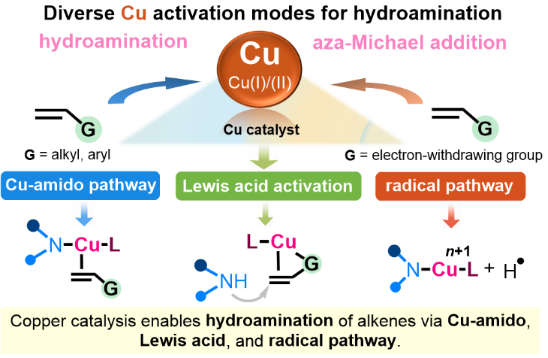
- )-catalyzed tandem oxidative amidation/aza-Michael reaction for the efficient synthesis of 3-substituted N-pyridinylisoindolinones 28 from 2-aminopyridines 25 and alkyl (E)-3-(2-formylphenyl)acrylates 26 (Scheme 9b) [47]. Under open-flask conditions at 80 °C in DMF, the reaction proceeded efficiently in the







Chiral cyclopropenimine-catalyzed enantioselective Michael reactions of phenol and benzofuran-derived α,β-unsaturated pyrazolamides with benzophenone-imine of glycine esters
Beilstein J. Org. Chem. 2026, 22, 888–896, doi:10.3762/bjoc.22.69
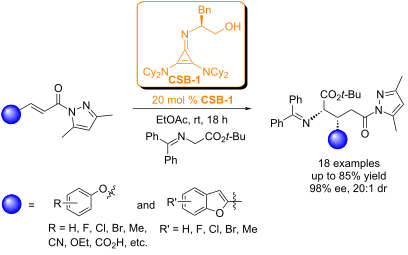
- benzofuran-derived pyrazolamides 5m–q were synthesized through DBU-mediated cyclocondensation of 2-hydroxybenzaldehydes with 4-bromocrotonates to afford (E)-2-benzofuranyl-3-acrylates followed hydrolysis and coupling with 3,5-dimethyl-1H-pyrazole (Scheme 2b) [12]. Initially, the Michael reaction between α,β
- for the high diastereoselectivity for this Michael reaction is shown in Figure 4. By attack according to mode A, the anti-form of 6a should be obtained, however, the steric repulsion between benzophenone-imine 2a and the 3,5-dimethylpyrazolyl group in 5a may inhibit this attack pathway to afford the
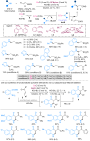
- benzophenone-imine esters. The catalysts used in the screening of Michael reaction conditions. The proposed attack modes of Michael addition of 2a and 5a. A proposed reaction mechanism of CSB-1 catalyzed Michael reaction between 2a and 5a. Configuration of 7d’ determined by X-ray diffraction analysis. Chiral






Unsymmetrical sulfoxides with sterically hindered catechol fragment: synthesis, structure, electrochemical properties, and antiradical activity
Beilstein J. Org. Chem. 2026, 22, 828–837, doi:10.3762/bjoc.22.65
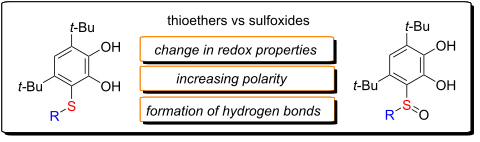
- ]. However, despite significant progress in the study of catechols with sulfide linkers, the chemistry of sulfoxides and sulfones is still a relatively unexplored area. Polyfunctional catechol thioethers are most commonly synthesized via the Michael reaction between o- or p-benzoquinone and the corresponding
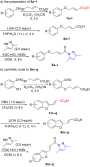
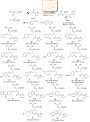
- electrochemical properties, and to establish how the hydrocarbon substituent influences antiradical activity upon conversion from thioethers to sulfoxides. Results and Discussion Synthesis The starting unsymmetrical thioethers 1–7 were obtained according to a previously described procedure based on the Michael
- reaction (Scheme 1) [23][42]. When converting these thioethers into sulfoxides using hydrogen peroxide as the oxidant, there is a risk of concurrent oxidation of the catechol moiety. The oxidation of 3,5-di-tert-butylcatechol (3,5-DTBC) by hydrogen peroxide is a classic reaction in bioinorganic chemistry


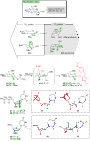
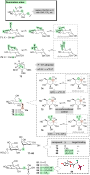
Modern synthetic pathways towards eribulin and its subunits
Beilstein J. Org. Chem. 2026, 22, 495–526, doi:10.3762/bjoc.22.37
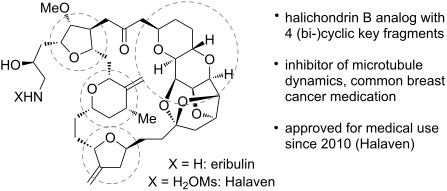
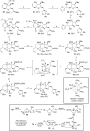
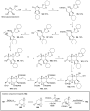
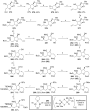
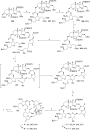
- metathesis with ethyl acrylate, acidic cleavage of the diol protecting group and addition of NaH induced the oxy-Michael reaction towards 18 in 4:1 dr. Reduction of the ester moiety, subsequent protection with TBDPSCl and methylation of the secondary alcohol furnished 19. After Bn-deprotection, iodination
- . Protection of the free alcohol unit enabled the transformation towards 55, which involved the reduction of lactone to lactole, protection of the alcohol as acetate, BF3·Et2O-mediated C-allylation of the aldehyde (via oxocarbenium intermediate) and cyclization (oxy-Michael reaction). Hydroboration–oxidation
- protected with TESCl, then regioselective oxidation of the primary TES ether and addition of vinyl grignard led to 87. Another oxidation afforded α,β-unsaturated carbonyl 88 and acidic treatment with BnOH triggered the oxa-Michael reaction and transketalization towards tetracyclic 90. Following Kishi








Symmetrical D–π–A–π–D indanone dyes: a new design for nonlinear optics and cyanide detection
Beilstein J. Org. Chem. 2026, 22, 131–142, doi:10.3762/bjoc.22.6
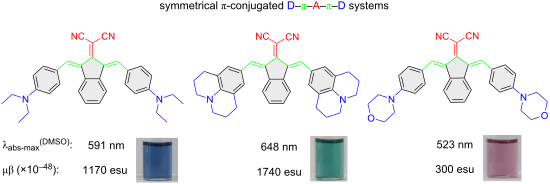
- interaction mechanism is determined as mono-cyanide addition to the vinyl group via Michael reaction. These results show that symmetrical indanone-based D–π–A–π–D dyes can be used in future optoelectronic devices and environmental monitoring. Design of the functional dyes. Normalized absorption spectra of


Recent advancements in the synthesis of Veratrum alkaloids
Beilstein J. Org. Chem. 2025, 21, 2657–2693, doi:10.3762/bjoc.21.206
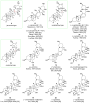
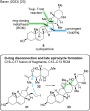
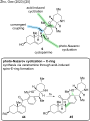
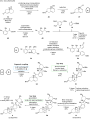
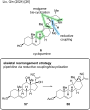
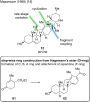
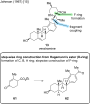
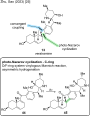
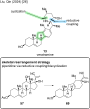
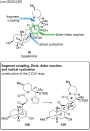
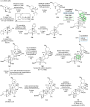
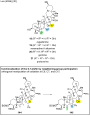
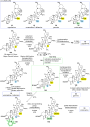
- -methylene group and an ester reduction/Appel reaction sequence to convert the ester moiety to an iodide leaving group. The right-hand fragment (E/F-ring) was synthesized from tert-butylsiloxyfuran 39. Commencing via an asymmetric allylic alkylation and an aza-Michael reaction, butanolide 40 was obtained in










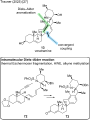

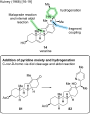


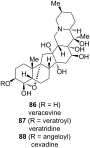


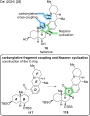

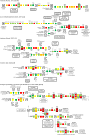
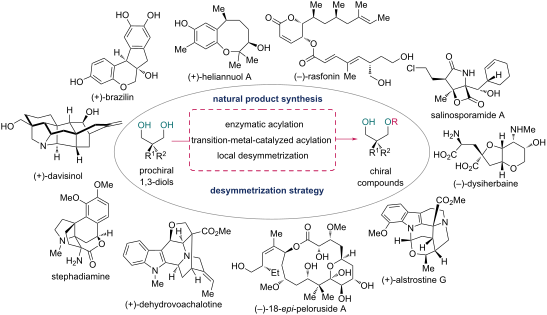
Enantioselective desymmetrization strategy of prochiral 1,3-diols in natural product synthesis
Beilstein J. Org. Chem. 2025, 21, 1932–1963, doi:10.3762/bjoc.21.151
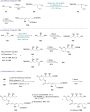
- between 80 and 81 gave diester 82. Through a ten-step sequence including an aza-Michael reaction, diester 82 was converted into diketone 83, which was further transformed into (−)-petrosin (84) via RCM reaction and hydrogenation. For the synthesis of (+)-petrosin (86) (Scheme 13b), a similar strategy was
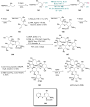
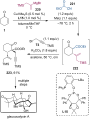
- 226. Regioselective hydrolysis of 226 with TFA yielded a dihydropyran intermediate, which was benzylated to deliver 227. Desilylation of 227 gave diol 228, which underwent intramolecular Michael reaction to form bicyclic compound 230 as a single stereoisomer (87% yield over two steps). This scaffold










General method for the synthesis of enaminones via photocatalysis
Beilstein J. Org. Chem. 2025, 21, 1535–1543, doi:10.3762/bjoc.21.116
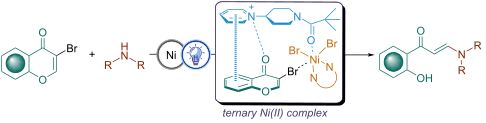
- -bromochromones via a Michael reaction of an amine with an electron-deficient alkene moiety and subsequent photocatalyzed debromination. With this dual catalytic system, a range of structurally diverse enaminone derivatives have been achieved in good yields with total trans selectivity. Mechanistic studies


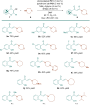


Reactions of acryl thioamides with iminoiodinanes as a one-step synthesis of N-sulfonyl-2,3-dihydro-1,2-thiazoles
Beilstein J. Org. Chem. 2025, 21, 1397–1403, doi:10.3762/bjoc.21.104
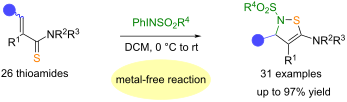
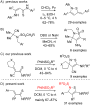
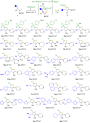
- analogy with an aza-Michael reaction first with the addition of iminoiodinane accompanied with reorganization of double bonds including attack of the negatively charged sulfur atom on nitrogen with subsequent elimination of iodobenzene as good leaving group. The diversity of the structure of the target



Correction: Diastereoselective synthesis of highly substituted cyclohexanones and tetrahydrochromene-4-ones via conjugate addition of curcumins to arylidenemalonates
Beilstein J. Org. Chem. 2025, 21, 1170–1170, doi:10.3762/bjoc.21.93
- Deepa Nair Abhishek Tiwari Banamali Laha Lakshminarayana Satham Irishi N. N. Namboothiri Department of Chemistry, Indian Institute of Technology Bombay, Mumbai, 400 076, India 10.3762/bjoc.21.93 Keywords: arylidenemalonates; curcumins; cyclohexanones; diastereoselective synthesis; Michael
- reaction; tetrahydrochromenones; Lakshminarayana Satham is acknowledged as additional co-author of our original publication. It was subsequently determined that Lakshminarayana Satham made significant contributions to the published research. The Funding section is updated as follows: DN thanks UGC India
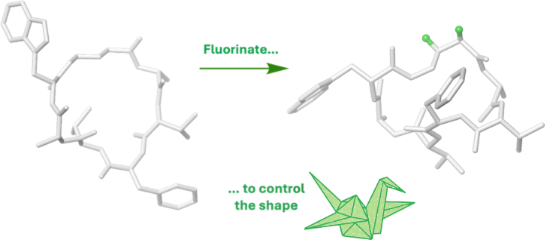
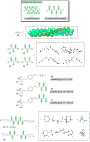
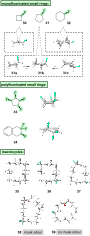
Origami with small molecules: exploiting the C–F bond as a conformational tool
Beilstein J. Org. Chem. 2025, 21, 680–716, doi:10.3762/bjoc.21.54








Organocatalytic kinetic resolution of 1,5-dicarbonyl compounds through a retro-Michael reaction
Beilstein J. Org. Chem. 2025, 21, 473–482, doi:10.3762/bjoc.21.34
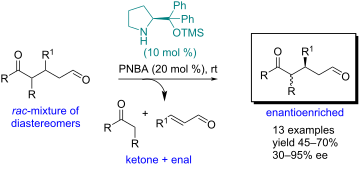
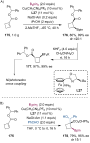
- low catalyst loadings and mild reaction conditions. This research focuses on the kinetic resolution of 1,5-dicarbonyl compounds using a retro-Michael reaction, co-catalyzed at room temperature with 20 mol % of the Jørgensen–Hayashi catalyst and PNBA. The study highlights the importance of conducting
- racemization when treated with inorganic bases [25], which had led us to check the equilibrium between Michael and the retro-Michael reaction (Scheme 1). These observations have prompted us to conduct further research into this reaction for potential applications in the kinetic resolution of these adducts. In
- catalyst or the bistrifluoromethyl-substituted analog B could enable the retro-Michael reaction of only one enantiomer of the racemic mixture, potentially leading to a kinetic resolution of the 1,5-dicarbonyl compounds (Scheme 2). Results and Discussion An initial attempt was made to determine if the retro


Non-covalent organocatalyzed enantioselective cyclization reactions of α,β-unsaturated imines
Beilstein J. Org. Chem. 2024, 20, 3221–3255, doi:10.3762/bjoc.20.268
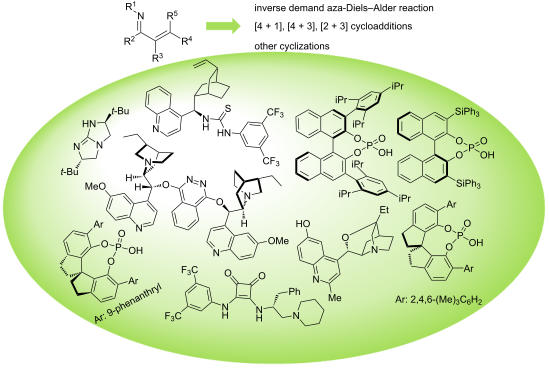
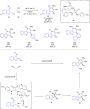
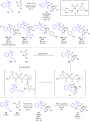
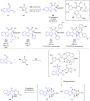
- azadiene in a stepwise mechanism: firstly, the vinylogous Michael addition of the dienolate to the double bond of the α,β-unsaturated N-sulfonylimine occurs in a stereoselective fashion. Subsequently, cyclization due to an intramolecular aza-Michael reaction and protonation leads to the enantioenriched









gem-Difluorovinyl and trifluorovinyl Michael acceptors in the synthesis of α,β-unsaturated fluorinated and nonfluorinated amides
Beilstein J. Org. Chem. 2024, 20, 2946–2953, doi:10.3762/bjoc.20.247
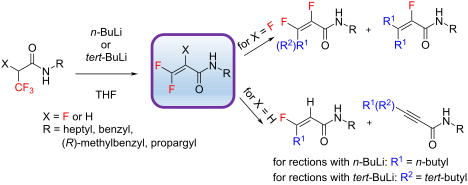
- series of new α,β-unsaturated amides, both fluorinated and nonfluorinated, were synthesized. Keywords: gem-difluorovinyl Michael acceptors; Michael addition; trifluorovinyl Michael acceptors; α,β-unsaturated amides; Introduction The Michael reaction, characterized by the addition of stable carbon
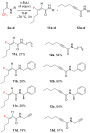
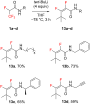
- scope, we observed that gem-difluoroalkenes produced β-fluoro-unsaturated amides 11a–d (Scheme 3). In these reactions, we used conditions previously optimised for derivatives 1a–d (n-BuLi 4 equiv, THF, −78 °C, 3 h). The amides 11a–d preferred HF elimination over engaging in another Michael reaction




Recent advances in transition-metal-free arylation reactions involving hypervalent iodine salts
Beilstein J. Org. Chem. 2024, 20, 2891–2920, doi:10.3762/bjoc.20.243

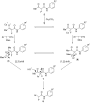
- base-mediated deprotonation of substrates 86 produces the corresponding ester enolate. This enolate undergoes a retro-Michael reaction, generating sulfenate anion A. The sulfenate anion A then nucleophilically attacks the diaryliodonium salts 16, forming hypervalent iodine intermediates B. Finally




Synthesis, electrochemical properties, and antioxidant activity of sterically hindered catechols with 1,3,4-oxadiazole, 1,2,4-triazole, thiazole or pyridine fragments
Beilstein J. Org. Chem. 2024, 20, 2378–2391, doi:10.3762/bjoc.20.202
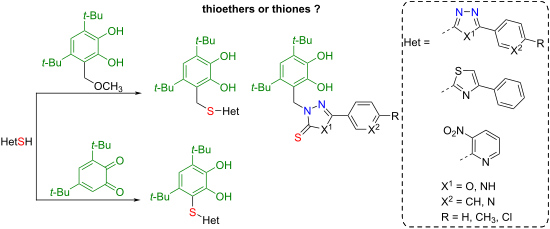
- -triazole, thiazole, or pyridine were synthesized by the reaction of 3,5-di-tert-butyl-o-benzoquinone or 3,5-di-tert-butyl-6-methoxymethylcatechol with different heterocyclic thiols. The S-functionalized catechols were prepared by the Michael reaction from 3,5-di-tert-butyl-o-benzoquinone and the
- derivatives are used as ligands in the synthesis of metal complexes (Ni(II), Pd(II), Pt(II), Cu(I), Ag(I) etc.) exhibiting antibacterial and antitumor activity [34]. In most cases, polyfunctional catechol thioethers were obtained by Michael reaction via the interaction of o-, p-benzoquinone and the




Diastereoselective synthesis of highly substituted cyclohexanones and tetrahydrochromene-4-ones via conjugate addition of curcumins to arylidenemalonates
Beilstein J. Org. Chem. 2024, 20, 2016–2023, doi:10.3762/bjoc.20.177
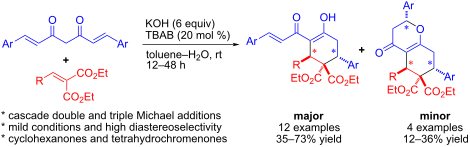
- in most cases. A triple Michael adduct, tetrahydrochromen-4-one, is also formed as a side product in a few cases with excellent diastereoselectivity. Keywords: arylidenemalonates; curcumins; cyclohexanones; diastereoselective synthesis; Michael reaction; tetrahydrochromenones; Introduction There is
- cascade triple-Michael (Michael/Michael/oxa-Michael) reaction between curcumins and isatylidene malononitriles, giving spiro-oxindoles in excellent yields and diastereoselectivities [36]. Sahu et al. introduced a one-pot multicomponent reaction of curcumin, arylaldehyde and 2-aminobenzothiazole to
- synthesize functionalized pyrimidobenzothiazoles [37]. An in situ generated conjugated α-cyanoester/malononitrile has been successfully employed as substrate in the double Michael reaction with curcumins by Lalitha et al. [38]. An organocatalytic cascade double Michael reaction between curcumins and 2


Chemo-enzymatic total synthesis: current approaches toward the integration of chemical and enzymatic transformations
Beilstein J. Org. Chem. 2024, 20, 1693–1712, doi:10.3762/bjoc.20.151
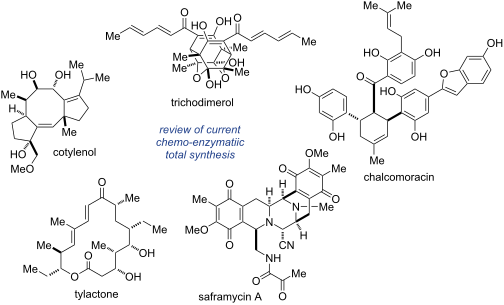
- , (2) a second intramolecular Michael reaction forming a head to tail formal [4 + 4] cycloadduct, and (3) sequential hemiketal formations to furnish the densely-functionalized and complicated pentacyclic scaffold of trichodimerol (2). Alternatively, the 2,4-cyclohexadienone moiety of 34 undergoes




pKalculator: A pKa predictor for C–H bonds
Beilstein J. Org. Chem. 2024, 20, 1614–1622, doi:10.3762/bjoc.20.144
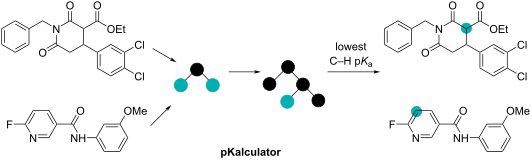
- come into play when synthesizing compounds. Last, we have an example of the Michael reaction in Scheme 1c. Here, both the experimental site of reaction and the ML-predicted site of reaction match. Our ML model predicts the lowest pKa value to be 12.5, whereas the second lowest ML-predicted pKa value is
- , Reaxys reaction ID: 9947221 [42]; (b) Claisen reaction, Reaxys reaction ID: 3402137 [43]; (c) Michael reaction, Reaxys reaction ID: 29819768 [44]. Arrow: experimental site; teal filled circle: ML-predicted lowest pKa. Comparing different ML models for predicting pKa values. Mean absolute error (MAE) and


![[Graphic 9]](/bjoc/content/inline/1860-5397-20-144-i12.svg?max-width=637&scale=1.3000021)


Domino reactions of chromones with activated carbonyl compounds
Beilstein J. Org. Chem. 2024, 20, 1256–1269, doi:10.3762/bjoc.20.108
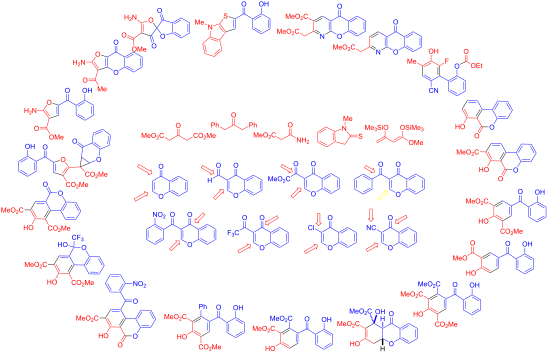
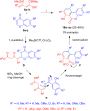
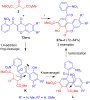
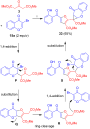
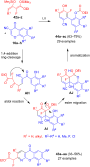
- ) [32]. The formation of the products can be explained by Michael reaction (1,4-addition) of 3 to the chromone and ring cleavage to give intermediate G. Subsequent Knoevenagel reaction by attack of the methylene carbon to the aldehyde resulted in the formation of the final products. The regioselective
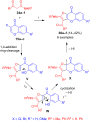
- The reaction of dimethyl acetone-1,3-dicarboxylate (3) with 3-(methoxalyl)chromones 11a–g, a new type of chromone developed in our group, afforded benzophenones 21a–g in moderate to very good yields (Scheme 7) [38]. The formation of the products can be explained by Michael reaction (1,4-addition) of 3









Using the phospha-Michael reaction for making phosphonium phenolate zwitterions
Beilstein J. Org. Chem. 2024, 20, 41–51, doi:10.3762/bjoc.20.6
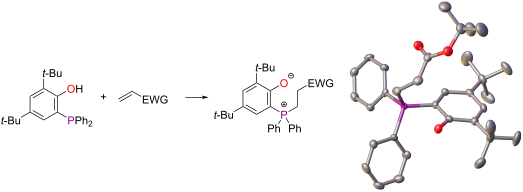
- reactive in chloroform solution, while in methanol the corresponding phosphonium phenolate is formed. Keywords: Lewis-base catalysis; Michael acceptor reactivity; phospha-Michael reaction; phosphonium phenolate zwitterion; Introduction Organocatalysis has emerged in recent years as a valuable and
- -carbonyl-based Michael acceptors. Results and Discussion Synthesis During our endeavors to identify potent Lewis-base catalysts for the oxa-Michael reaction [13][14], the triarylphosphine 1 was tested in a model reaction (2 equiv allyl alcohol, 1 equiv acrylonitrile, 0.05 equiv 1). However, no conversion
- 3.09 ppm, respectively, and two novel signals for tertiary butyl groups. Accordingly, we reasoned that the phosphine has reacted presumably with acrylonitrile forming a stable species not suited to catalyze the oxa-Michael reaction. In order to identify this compound, we reacted 1 with acrylonitrile or


Enolates ambushed – asymmetric tandem conjugate addition and subsequent enolate trapping with conventional and less traditional electrophiles
Beilstein J. Org. Chem. 2023, 19, 593–634, doi:10.3762/bjoc.19.44
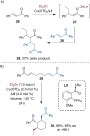
- ) [34]. Encouraged by this, they have also attempted an intramolecular tandem conjugate addition/Michael reaction sequence, which has resulted in the expected cyclization product 30 in a diastereopure form (Scheme 7B). Zinc enolates readily react with allyl iodides 31 or the structurally similar Stork








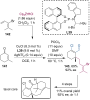
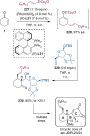
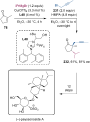
Strategies to access the [5-8] bicyclic core encountered in the sesquiterpene, diterpene and sesterterpene series
Beilstein J. Org. Chem. 2023, 19, 245–281, doi:10.3762/bjoc.19.23
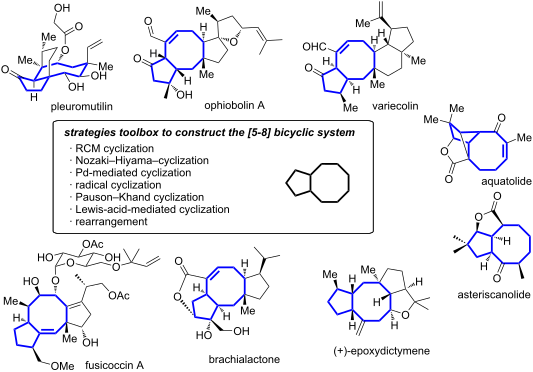
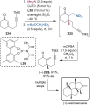
- steps from accessible methylcyclopentenone 16 (Scheme 2). The sequence included a Mukaiyama–Michael reaction with silyl enol 15 followed by a Tsuji alkylation. With diene 17 in hands, the RCM reaction was performed by addition of G-II catalyst and furnished the expected C5-C8 bicyclic framework 18 in 95





