Search results
Search for "cyclohexane" in Full Text gives 295 result(s) in Beilstein Journal of Organic Chemistry. Showing first 200.
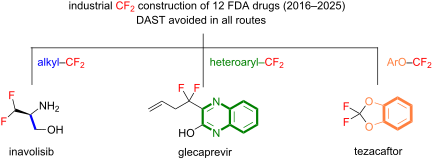
Construction of CF2 moieties in FDA-approved drugs (2016–2025): industrial routes, mechanisms, and scale-up considerations
Beilstein J. Org. Chem. 2026, 22, 1122–1150, doi:10.3762/bjoc.22.91
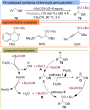
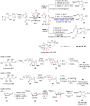
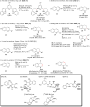
- small and the cost of (Me3Si)3SiH is relatively high. In route b (reported in 2010) [34], using C6F13Br (70) as the starting material under the same conditions as route a gives compound 11 in only 21% yield. However, when 1,1'-azobis(cyclohexane-1-carbonitrile) (ACCN) is used as the radical initiator






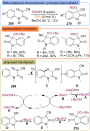
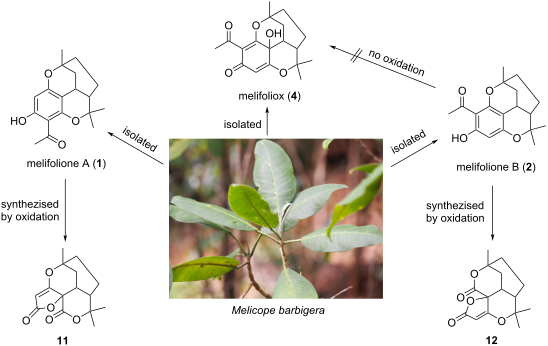
Melifoliox B, a novel phloroglucin derivative isolated from Melicope barbigera (Rutaceae) and synthesis of new oxidation products from melifoliones A and B
Beilstein J. Org. Chem. 2026, 22, 535–546, doi:10.3762/bjoc.22.39
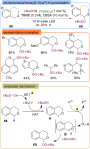
- cyclohexane ring to deviate from a chair to a twisted boat conformation by rotating around the C-7/C-8-axis. As a result, the orientation of the geminal protons at these positions can change more easily between a pseudo-axial (ax) and a pseudo-equatorial (eq) position, and the difference in chemical shift
- -7 and C-10. While the protons at C-7 in 2 are strongly shielded by the aromatic ring current effect and therefore appear at the highest field, this effect is absent in 4. The protons at C-10 of 4 come to resonance at the highest field. With the greater flexibility of the cyclohexane ring of 4, the
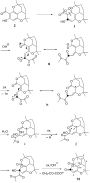
- rigid chair conformation of the cyclohexane ring. The 13C NMR spectrum of 11 (Table 3) shows 15 signals that could be clearly assigned after evaluating the HSQC and HMBC spectra. In the HMBC spectrum, cross peaks occur for C-3 with H-4’ and with the protons of both geminal CH3 groups at C-1. Furthermore



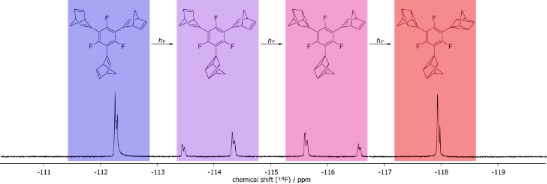
Get a better glimpse on sequential photoreactions of trisnorbornadienes with 19F NMR spectroscopy
Beilstein J. Org. Chem. 2026, 22, 527–534, doi:10.3762/bjoc.22.38
- , and elemental analysis. Norbornadiene 1f is well soluble in alkanes, chlorinated and aromatic solvents, whereas it is hardly soluble in polar protic solvents and MeCN and insoluble in water. The absorption spectra of 1f were recorded in MeCN, cyclohexane, MeOH, ethyl acetate, THF, CH2Cl2, CHCl3, and


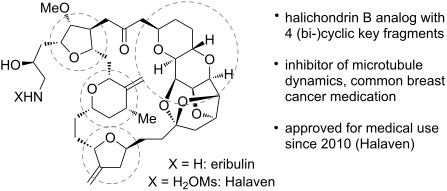
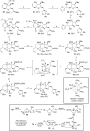
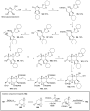
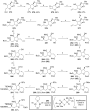
Modern synthetic pathways towards eribulin and its subunits
Beilstein J. Org. Chem. 2026, 22, 495–526, doi:10.3762/bjoc.22.37







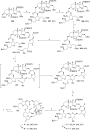

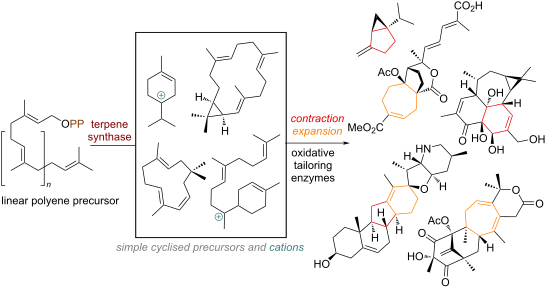
Ring contraction and ring expansion reactions in terpenoid biosynthesis and their application to total synthesis
Beilstein J. Org. Chem. 2026, 22, 289–343, doi:10.3762/bjoc.22.21
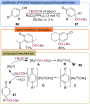
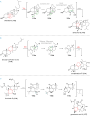
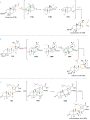
- 29d (presilphiperfolan-8-yl cation), a precursor which was invoked to be involved in the biosynthesis of various sesquiterpenes. Two noteworthy examples are given here: either of the two 1,2-alkyl shifts of the cyclohexane accomplishes ring contraction. Following the blue arrow in the structure of 29d






Spirobarbiturates with a pyrrolizidine moiety: synthesis, structure and biological evaluation
Beilstein J. Org. Chem. 2026, 22, 274–288, doi:10.3762/bjoc.22.20
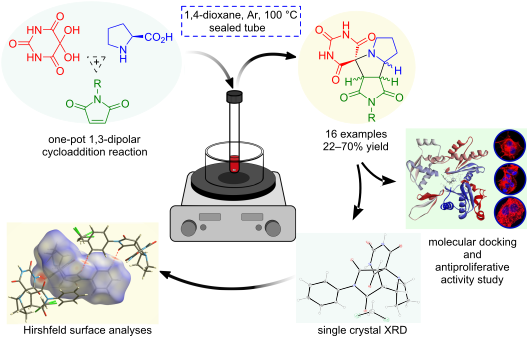
- ]. Advances in this area of organic synthesis include the preparation of barbiturates containing spiro-fused cyclohexane, cyclopentane, tetrahydrooxepine, and tetrahydroquinoline moieties via [3 + 2], [4 + 2], and [5 + 2] annulation reactions involving arylidene and alkylidene barbiturates [20][21][22][23




Total synthesis of natural products based on hydrogenation of aromatic rings
Beilstein J. Org. Chem. 2026, 22, 88–122, doi:10.3762/bjoc.22.4
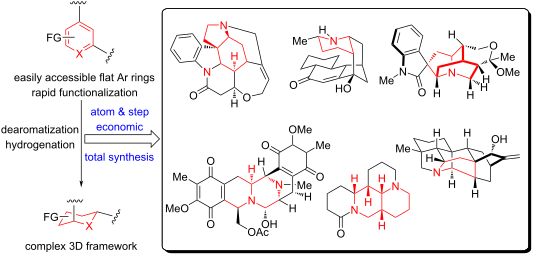
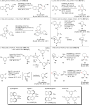
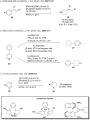
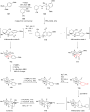
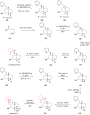
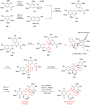
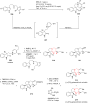
- fragment-based screening across a broad substrate set, their method efficiently provides cyclohexane and piperidine frameworks commonly found in bioactive molecules and pharmaceutical intermediates. In the same year, Yu and co-worker described another mild and convenient approach to reduce monocyclic











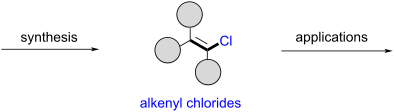
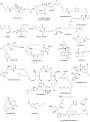
Synthesis and applications of alkenyl chlorides (vinyl chlorides): a review
Beilstein J. Org. Chem. 2026, 22, 1–63, doi:10.3762/bjoc.22.1
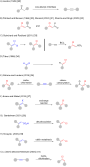
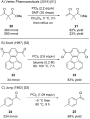
- vary widely across the literature, with solvents ranging from neat conditions to cyclohexane, hexanes, toluene, benzene, carbon tetrachloride, dichloromethane, and diethyl ether. Reaction temperatures span from −10 °C to 100 °C. The first detailed investigation of this transformation was reported by























Synthesis of the tetracyclic skeleton of Aspidosperma alkaloids via PET-initiated cationic radical-derived interrupted [2 + 2]/retro-Mannich reaction
Beilstein J. Org. Chem. 2025, 21, 2470–2478, doi:10.3762/bjoc.21.189
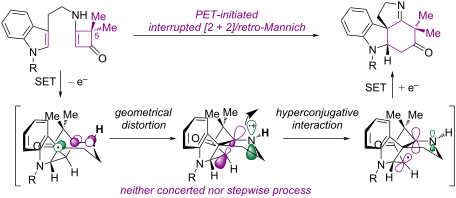
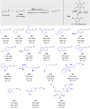
- synthesis; d) naturally occurring Aspidosperma alkaloids; e) ring strain energy of cyclopentene, bicyclo[3.2.0]heptane, cycloheptane, cyclobutene, bicyclo[2.2.0]hexane and cyclohexane. Computational study. a) Energy profiles from IN1 to IN3 and spin density of TS2 (isovalue = 0.004), solvated (SMD) Gibbs

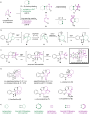

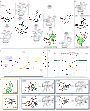
Transformation of the cyclohexane ring to the cyclopentane fragment of biologically active compounds
Beilstein J. Org. Chem. 2025, 21, 2416–2446, doi:10.3762/bjoc.21.185
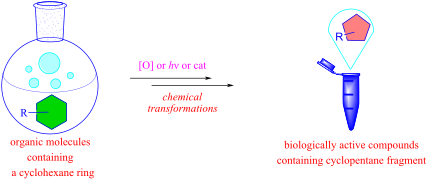
- of practical approaches to the synthesis of known compounds and the synthesis of new biologically active functionalized compounds containing a cyclopentane/enone fragment through transformation of a cyclohexane/ene ring is an urgent task for synthetic chemists. This review summarizes information on
- cyclohexane/ene ring contraction. The structure of the review includes examples of simple transformations (ozonolysis–aldol condensation, ozonolysis–Dieckmann reaction, and Baeyer–Villiger cleavage–Dieckmann reaction) and rearrangements (photochemical, benzil, semi-pinacol, Wolff, Meinwald, Wagner–Meerwein
- obtaining medically interesting dactylicapnosine-like analogues for detailed study of their biological activity. Matoba et al. [45] reported the first enantioselective synthesis of the hasubanane alkaloid (−)-metaphanine (70) and the norhasubanane alkaloid (+)-stephadiamine (71) using a cyclohexane ring


Synthesis of chiral cyclohexane-linked bisimidazolines
Beilstein J. Org. Chem. 2025, 21, 1786–1790, doi:10.3762/bjoc.21.140
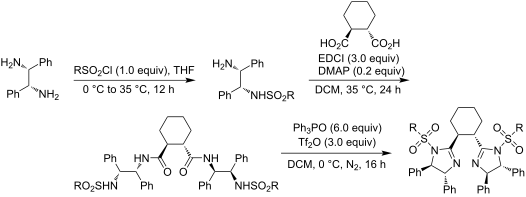
- bisimidazolines are efficient chiral ligands in metal-catalyzed asymmetric organic transformations. Chiral cyclohexane-linked bisimidazolines were prepared from optically active cyclohexane-1,2-dicarboxylic acid and 1,2-diphenylethane-1,2-diamines via the monosulfonylation of 1,2-diphenylethane-1,2-diamines
- , condensation of N-sulfonylated 1,2-diphenylethane-1,2-diamines and cyclohexane-1,2-dicarboxylic acid, and the final cyclization with the in situ generated Hendrickson reagent. Keywords: bisimidazoline; cyclohexane; cyclohexane-1,2-dicarboxylic acid; 1,2-diphenylethane-1,2-diamine; Introduction Chiral
- the substrate scope due to their complete rigidity. Cyclohexane-1,2-linked bisoxazolines (cHBOX) are a class of bisoxazoline ligands with the more flexible cyclohexane as linker [21][22]. Chiral cyclohexane-1,2-linked bisoxazolines fix transition states in catalytic asymmetric reactions, in whch the


3,3'-Linked BINOL macrocycles: optimized synthesis of crown ethers featuring one or two BINOL units
Beilstein J. Org. Chem. 2025, 21, 1719–1729, doi:10.3762/bjoc.21.134
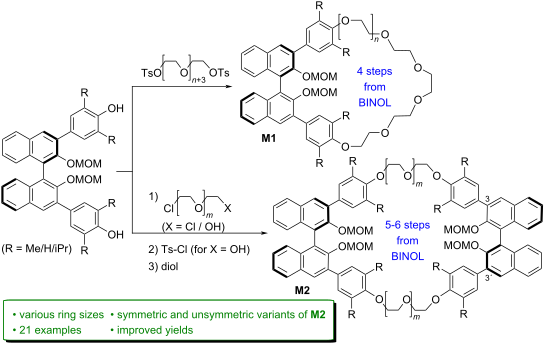
- enantioselective molecular recognition. Different chiral backbones were used for the construction of such chiral crown ethers, especially chiral 1,2-diols such as tartaric acid [5][6][7][8], propane-1,2-diol [9][10][11][12][13], cyclohexane-1,2-diol [14], carbohydrates [15], 1,1'-binapthyl-2,2'-diol (BINOL) [16


Tautomerism and switching in 7-hydroxy-8-(azophenyl)quinoline and similar compounds
Beilstein J. Org. Chem. 2025, 21, 1404–1421, doi:10.3762/bjoc.21.105
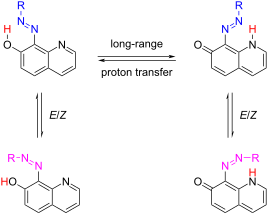
- number of industrially used azo dyes [1][3] and therefore its tautomerism is studied in details. The existing experimental data for low polar solvents (cyclohexane and tetrachloromethane) indicate a ΔG value of around 0.4 kcal/mol [53] at room temperature, which gives a prevalence of the E-tautomer (a




A versatile route towards 6-arylpipecolic acids
Beilstein J. Org. Chem. 2025, 21, 1104–1115, doi:10.3762/bjoc.21.88
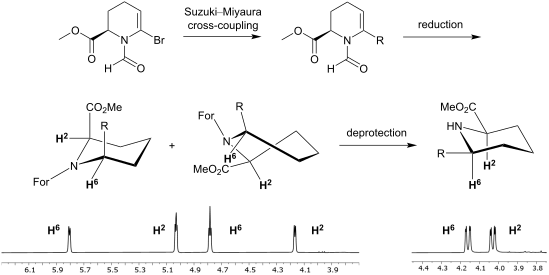
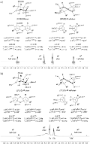
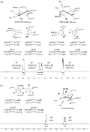
- slightly distorted gauche couplings with torsion angles of approximately 60° and −60°, respectively. By analogy to a cyclohexane ring, the carboxylate of (2R,6R)-9 would be expected to adopt an equatorial position rather than an axial one. However, it is known from N-acyl pipecolic acid derivatives, that
- being intermediate conformations in six-membered rings with dihedral angles ϕ near 90° (a front and side view of cyclohexane is shown in Figure S1, Supporting Information File 1). In case of a twist-boat conformation all dihedral angles for H2 would ultimately result in double-doublets for 3J(H2,H3,pro





Salen–scandium(III) complex-catalyzed asymmetric (3 + 2) annulation of aziridines and aldehydes
Beilstein J. Org. Chem. 2025, 21, 1087–1094, doi:10.3762/bjoc.21.86
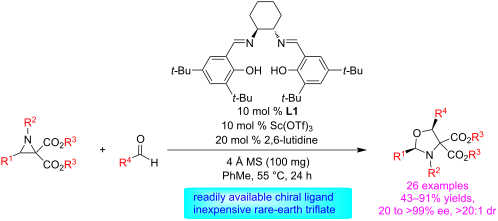
- -dicarboxylates from aldehydes and dialkyl 2-aryl-1-sulfonylaziridine-2,2-dicarboxylates under the catalysis of the readily available salen–Sc(OTf)3 complex (Scheme 1d). The salen ligand can be prepared in one step from enantiopure cyclohexane-1,2-diamines and substituted salicylaldehydes. Results and Discussion



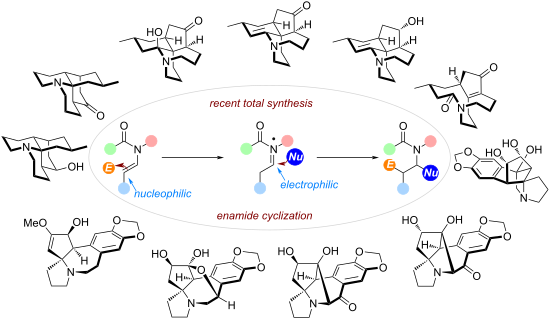
Recent total synthesis of natural products leveraging a strategy of enamide cyclization
Beilstein J. Org. Chem. 2025, 21, 999–1009, doi:10.3762/bjoc.21.81
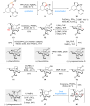
- alkaloids, though it features a truncated cyclopentane rather than the characteristic cyclohexane or cyclohexene. In their optimization studies, the authors found the sequential catalysis of a chiral binol–Ti complex and BF3·Et2O to be the most efficient, providing products 39 in high yields with excellent




On the photoluminescence in triarylmethyl-centered mono-, di-, and multiradicals
Beilstein J. Org. Chem. 2025, 21, 964–998, doi:10.3762/bjoc.21.80
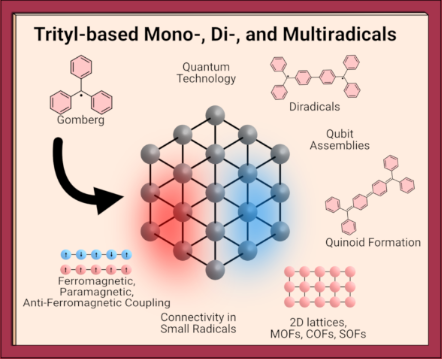
- improved photostability (see Figure 1a). While the triaryl oxyether-TTM does not enhance the ϕ, triaryl thioether-TTM exhibits a ϕ of up to 37.5% (in cyclohexane). Due to the stronger electron donating effect of the chalcogens compared to halogens, the emission is shifted to lower energies with λem = 625
- functionalization with a much broader variety of donors (and even acceptors) than is possible through a radical-mediated nucleophilic aromatic substitution (SRN1, see also below) [3][46][47]. The I-TTM has a maximum emission at λem = 578 nm and a ϕ of 3% (in cyclohexane), indicating that the symmetry does not seem
- bathochromically shifted for mono- and bis-para-nitrile TTM radicals, successive nitrilation increases the ϕ to 4.6% and 7.4% (in cyclohexane) [53]. This improvement is most likely induced by symmetry breaking, resulting in excited states with some charge-transfer character. Moreover, the photostability of such









Synthesis of HBC fluorophores with an electrophilic handle for covalent attachment to Pepper RNA
Beilstein J. Org. Chem. 2025, 21, 727–735, doi:10.3762/bjoc.21.56
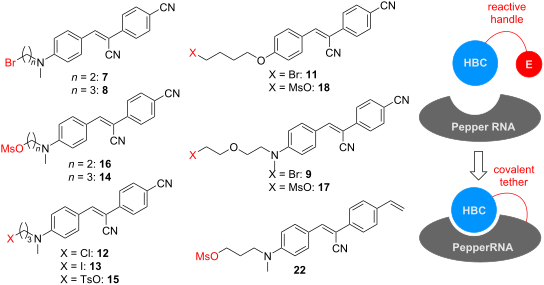
- Na2SO4 and concentrated to dryness. Finally, the crude compound was purified via silica gel chromatography using 50–70% ethyl acetate in cyclohexane as gradient. General procedure B. The product obtained in general procedure A was dissolved in ethanol mixed with 4-cyanophenylacetonitrile and 8 drops of



Acyclic cucurbit[n]uril bearing alkyl sulfate ionic groups
Beilstein J. Org. Chem. 2025, 21, 717–726, doi:10.3762/bjoc.21.55
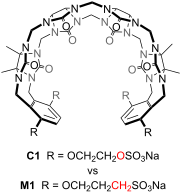
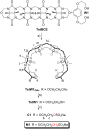
- chemical shift (Δδ) for C1·guest. As the central hydrophobic binding domain of the guests we selected alkylene, p-xylylene, cyclohexane, and adamantane moieties that are known to bind well to (acyclic) CB[n] receptors [71][72][73]. The cross-sectional area of this hydrophobic moiety increases as follows
- contributions to binding is likely due to stronger electrostatic interactions between the guest and the sulfate ionic groups. For both C1 and M1, the Me6HDA and Me6PXDA are the strongest binding guests whereas the cyclohexane and adamantane-based guests with a larger cross-sectional area bind 10–100-fold more




Photochemically assisted synthesis of phenacenes fluorinated at the terminal benzene rings and their electronic spectra
Beilstein J. Org. Chem. 2025, 21, 670–679, doi:10.3762/bjoc.21.53

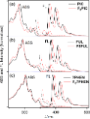
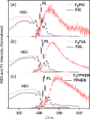
- , toluene, reflux; e) tert-BuLi, DMF, THF, −78 °C; f) KOH, 18-crown-6, CH2Cl2, reflux (rt for 8); g) hν, I2, cyclohexane (toluene/THF mixture for 11); h) p-TsOH, acetone, reflux. Synthesis of F8PIC, F8FUL, and F87PHEN. Reagents and conditions: a) KOH, 18-crown-6, CH2Cl2, reflux; b) hν, I2, toluene, rt





Deep-blue emitting 9,10-bis(perfluorobenzyl)anthracene
Beilstein J. Org. Chem. 2025, 21, 515–525, doi:10.3762/bjoc.21.39
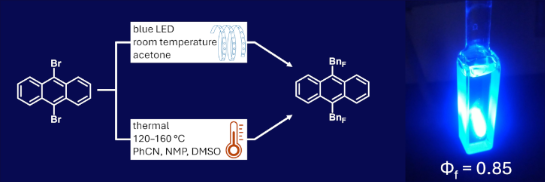
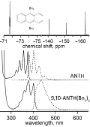
- -emitting device. The photophysical data of ANTH and 9,10-disubstituted anthracene derivatives are summarized in Table 1. The measured photoluminescence quantum yield, PLQY (Φf) of ANTH in cyclohexane is in agreement with the literature values of 0.28–0.36 [32][33][34][35]. An increase in Φf was previously
- . Experimental Solvents and reagents The following reagents and solvents were used as received unless otherwise indicated: anthracene (TCI America, 94%); 9,10-dibromoanthracene (Thermo Scientific Chemicals, 98%); heptafluorobenzyl iodide (C6F5CF2I, SynQuest, 90%); cyclohexane (Mallinckrodt); 1,4‐bis
- = 13.63 Hz, 2F), −140.67 (m, 2F), −151.7 (t, J = 21.8 Hz, 1F), −162.68 (m, 2F); 1H NMR (δ/ppm): 8.23 (m, 4H), 7.45 (m, 4H); EIMS (m/z): [M]+ calcd for 610.0402; found, 610.100. Absorption and emission spectroscopy Absorption spectra were collected under aerobic conditions in cyclohexane. Measurements were





Photomechanochemistry: harnessing mechanical forces to enhance photochemical reactions
Beilstein J. Org. Chem. 2025, 21, 458–472, doi:10.3762/bjoc.21.33

- irradiation. The authors claim that toluene acts as a photosensitizer since cyclohexane, which has similar solubilizing power, did not serve well as a LAG agent. The authors demonstrated that nanographenes could be obtained via cyclodehydrochlorination of 10.3 under photomechanochemical conditions as well




Synthesis, structure and π-expansion of tris(4,5-dehydro-2,3:6,7-dibenzotropone)
Beilstein J. Org. Chem. 2025, 21, 1–7, doi:10.3762/bjoc.21.1
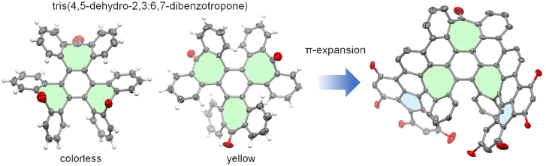
- orange solution in common organic solvents, and its solution in cyclohexane exhibits very weak orange photoluminescence with a quantum yield as low as 3.9 × 10⁻⁴ upon excitation at 400 nm. Such a low photoluminescence quantum yield may be attributed to the conformational motions of the helicene moieties
- in 3, which consume the energy of the excited state. Figure 4 shows the UV–vis absorption spectrum of 3 in cyclohexane with the absorption edge at 561 nm and its emission spectrum with a peak at 580 nm. In the test windows of cyclic voltammetry (Supporting Information File 1, Figure S1), 3 exhibits
- nm) of compound 3 in cyclohexane (1 × 10⁻⁵ mol/L). a) Synthesis of 1; b) reactions of 1; c) synthesis of 3. Supporting Information Supporting Information File 63: Experimental details, characterization data, and spectra. Supporting Information File 64: CIF-files of compounds 1 and 3


Extension of the π-system of monoaryl-substituted norbornadienes with acetylene bridges: influence on the photochemical conversion and storage of light energy
Beilstein J. Org. Chem. 2024, 20, 3061–3068, doi:10.3762/bjoc.20.254
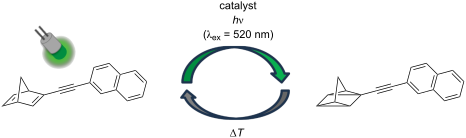
- acetylenes at ca. 85 ppm and 95 ppm were observed. The norbornadienes 1h–l,n exhibit very good solubility in organic solvents, like ethyl acetate, chloroform, or benzene, whereas they have poor solubility in cyclohexane, acetonitrile, or ethanol. In polar protic solvents, like methanol or water, they are
- cyclohexane (20 µM, Figure 2), because the norbornadienes and the corresponding quadricyclanes are sufficiently soluble in this solvent and because it allows direct comparison with literature data [30][34]. As a general trend, the long-wavelength absorption maximum of each substrate decreased for all
- be investigated in the presence of the photosensitizer because these substrates have no sufficient solubility in acetonitrile. To assess the efficiency of the photoreactions, photoisomerization quantum yields were determined in cyclohexane by actinometry (λex = 310 nm or 340 nm) [41][42]. The quantum


Advances in radical peroxidation with hydroperoxides
Beilstein J. Org. Chem. 2024, 20, 2959–3006, doi:10.3762/bjoc.20.249
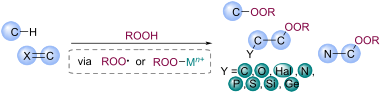
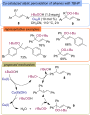
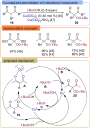
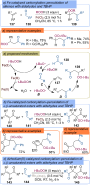
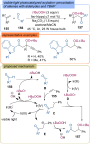
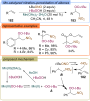
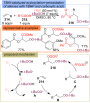
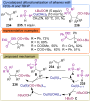
- of allylic peroxidation 2, 4 and 5 were observed (Scheme 4) [24]. Similar transformations were reported later using CuCl as the catalyst [39]. Later, Gade with coauthors demonstrated the allylic peroxidation of cyclohexane with TBHP using the alkylperoxocobalt(III) complexes [Co(BPI)(OAc)(OO-t-Bu
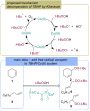
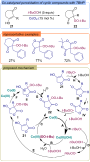
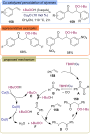
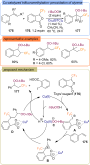
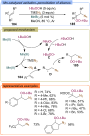
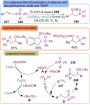
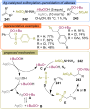
- oxidation of cyclohexane 83 with TBHP using mononuclear [77][78][79] and dinuclear [80] non-porphyrin iron complexes (Scheme 30). Besides the oxygen atom transfer products, cyclohexanol (85) and cyclohexanone (15), the formation of peroxide 84 was observed. Oxidation of cyclohexane (83) was also carried out
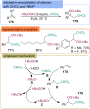
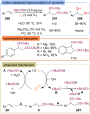
- directly by the Co(lll) complexes with TBHP (Scheme 30) [82]. The key step in the Fe-catalyzed peroxidation mechanism is the generation of the set of tert-butoxy and tert-butylperoxy radicals from TBHP via Fe(II)/Fe(III) cycle. HAT from cyclohexane by tert-butoxy radical and the recombination of the