


Search results
Search for "homologous protein" in Full Text gives 4 result(s) in Beilstein Journal of Organic Chemistry.
Advantages of PROTACs in achieving selective degradation of homologous protein families
Beilstein J. Org. Chem. 2026, 22, 628–661, doi:10.3762/bjoc.22.49
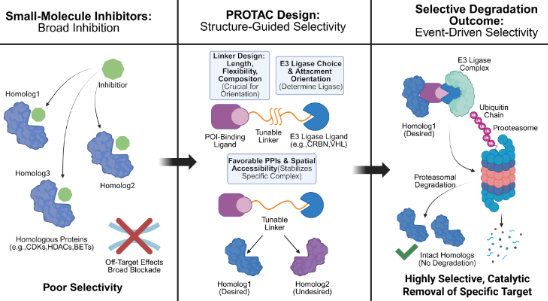
- summarize the advantages of PROTACs in conferring selectivity toward highly homologous proteins. This focus will provide a feasible strategy for developing PROTACs that selectively target highly homologous proteins and will ultimately support future therapeutic applications. Keywords: homologous protein
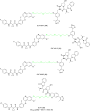
- Influence of linkers on the selectivity of PROTACs in highly homologous protein families As previously established [37], a PROTAC molecule comprises three essential components: a POI ligand, a linker, and an E3 ligand. In drug design, POI ligands are typically derived from FDA-approved small-molecule
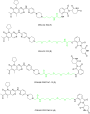
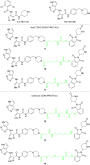
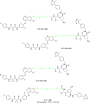
- different subtypes. This discovery shows that the PROTAC technology offers substantial advantages in terms of selectivity and that the design of suitable linkers for the application of this technology to the selective degradation of highly homologous protein families is of great significance. In 2024, Ding









Discovery of antimicrobial peptides clostrisin and cellulosin from Clostridium: insights into their structures, co-localized biosynthetic gene clusters, and antibiotic activity
Beilstein J. Org. Chem. 2024, 20, 1800–1816, doi:10.3762/bjoc.20.159

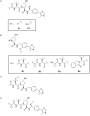
- S5B and S5C in Supporting Information File 1) and compared to the protein PCAT1 [22] (the closest homologous protein with a structure resolved by crystallography, here presented in complex with its peptide ligand (PDB 6V9Z). The amino acid sequence identity between CloPt1 and PCAT1 was 29%, while for




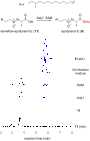
New azodyrecins identified by a genome mining-directed reactivity-based screening
Beilstein J. Org. Chem. 2022, 18, 1017–1025, doi:10.3762/bjoc.18.102
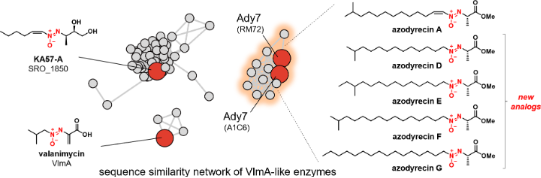
- Supporting Information File 1). They encode five genes that are also present in the biosynthetic gene clusters of valanimycin [19] and KA57-A [20]: the putative two-component flavin-dependent monooxygenase similar to VlmH/VlmR, the homologous protein of VlmA, and two additional hypothetical proteins similar




Computational methods in drug discovery
Beilstein J. Org. Chem. 2016, 12, 2694–2718, doi:10.3762/bjoc.12.267
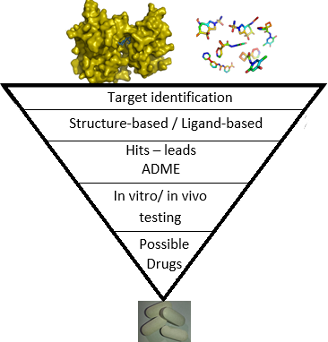
- where the three-dimensional structures are known [35]. NCBI Basic Local Alignment Search Tool (BLAST) is one of the most popular bioinformatics sequence alignment tools used with sequence similarity searches [36]. Once a homologous protein structure for the sequence has been identified, building the



Other Beilstein-Institut Open Science Activities



