


Search results
Search for "solvent selection" in Full Text gives 9 result(s) in Beilstein Journal of Organic Chemistry.
Photoorganocatalytic trifluoromethylation of (het)arenes in green conditions
Beilstein J. Org. Chem. 2026, 22, 662–671, doi:10.3762/bjoc.22.50
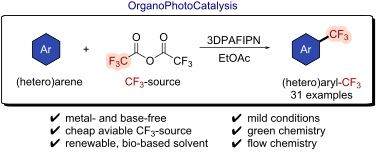
- transformations, acetonitrile is most commonly employed owing to its aprotic nature, compatibility with a wide range of photocatalysts, and transparency to visible light. However, solvent selection guides from Pfizer, GSK, and Sanofi rate acetonitrile as “Usable,” “Major issues,” and “Recommended,” respectively




The high potential of methyl laurate as a recyclable competitor to conventional toxic solvents in [3 + 2] cycloaddition reactions
Beilstein J. Org. Chem. 2025, 21, 2389–2415, doi:10.3762/bjoc.21.184
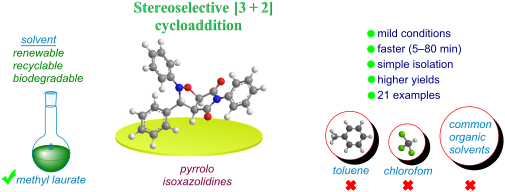
- (h), and DMSO (p) according to the guidelines outlined in the CHEM21 solvent selection guide [92]. A series of risk assessments was conducted, including ecological and environmental risk assessments, as well as pesticide similarity and biodegradability assessments of methyl laurate in comparison with
- solute in the Hansen space. The “Green Solvent Selection Tool“ was utilized to ascertain these three parameters [95]. For the purpose of this study, a series of solvents in which C,N-diphenylnitrone dissolves was determined through experimental means (at 22 °C) in our laboratory (Figure 8c). An


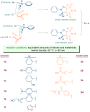


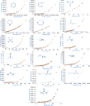


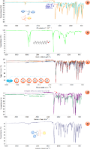
Pathway economy in cyclization of 1,n-enynes
Beilstein J. Org. Chem. 2025, 21, 2260–2282, doi:10.3762/bjoc.21.173
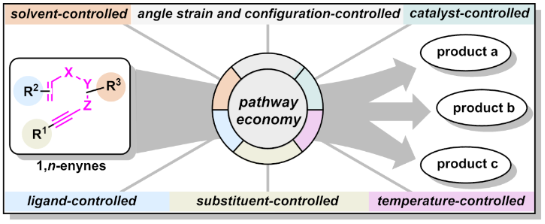
- radical initiated intramolecular cascade cyclization of 1,n-enynes to provide structurally diverse heterocycles (Scheme 4) [11]. Solvent selection dictated divergent reaction pathways under I2/TBHP oxidation. When an acetonitrile/water mixed solvent was used, iodine radical addition to the alkyne


Fe-catalyzed efficient synthesis of 2,4- and 4-substituted quinolines via C(sp2)–C(sp2) bond scission of styrenes
Beilstein J. Org. Chem. 2025, 21, 1799–1807, doi:10.3762/bjoc.21.142
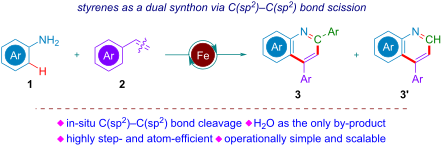
- hypothesis, we commenced our investigation by employing arylamine 1a and styrene (2a) as model substrates. The optimized reaction conditions are presented in Table 1. Building upon our previous studies, where we investigated how solvent selection can influence the selective formation of quinoline scaffolds




Solvent-dependent chemoselective synthesis of different isoquinolinones mediated by the hypervalent iodine(III) reagent PISA
Beilstein J. Org. Chem. 2024, 20, 1914–1921, doi:10.3762/bjoc.20.167
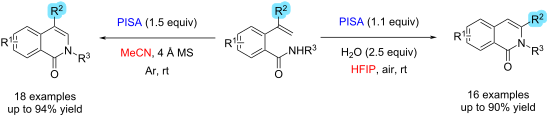
- considerable progress has been made in the synthesis of isoquinolinone derivatives, there is still the need to develop chemoselective strategies based on easily adjustable factors, such as solvent selection to obtain 3- or 4-substituted isoquinolinone derivatives. In 2018, our group has reported the


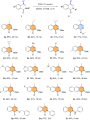


A novel recyclable organocatalyst for the gram-scale enantioselective synthesis of (S)-baclofen
Beilstein J. Org. Chem. 2023, 19, 1811–1824, doi:10.3762/bjoc.19.133

- slightly lower because the catalyst was not completely dissolved in acetylacetone, which resulted in a heterogeneous reaction mixture (Table 2, entry 4). The importance of correct solvent selection is illustrated by the case of butyl acetate, in which only a low yield was observed (Table 2, entry 5
- ). During solvent selection, both the catalytic performance and green chemistry aspects were addressed. For this purpose, we followed GSK’s solvent sustainability guide [34], which ranks solvents according to their properties, such as waste generation, environmental and health impacts, and boiling point


Suzuki–Miyaura cross coupling is not an informative reaction to demonstrate the performance of new solvents
Beilstein J. Org. Chem. 2020, 16, 1001–1005, doi:10.3762/bjoc.16.89
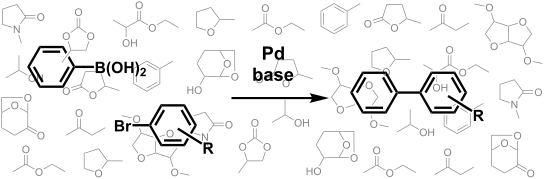
- coupling is often unaffected by the choice of solvent, and therefore the Suzuki–Miyaura reaction provides limited information regarding the usefulness of any particular solvent for organic synthesis. Keywords: cross coupling; green solvents; palladium; solvent selection; Suzuki reaction; Findings The
- objective of this work was to reveal if there is a relationship between the productivity of Suzuki–Miyaura cross couplings and the properties of the solvent, and whether this could be used to justify solvent selection. The choice of solvent is one variable that dictates reaction rate, selectivity
- , and the choice and quantity of catalyst and base. Given the broad choice of solvents available, what is left to decide is the most benign solvent that should be preferred for conducting Suzuki–Miyaura reactions. Table 1 lists the greenness rating from the CHEM21 solvent selection guide (except for


Scope and limitations of a DMF bio-alternative within Sonogashira cross-coupling and Cacchi-type annulation
Beilstein J. Org. Chem. 2016, 12, 2005–2011, doi:10.3762/bjoc.12.187

- , solvent replacement has been designated a key research area with numerous pharmaceutical companies detailing their efforts towards a more sustainable solvent selection as part of their overall sustainability programmes [6][7][8][9][10][11][12][13][14][15][16][17][18][19][20][21][22][23]. Based on its



Thiazole formation through a modified Gewald reaction
Beilstein J. Org. Chem. 2015, 11, 875–883, doi:10.3762/bjoc.11.98
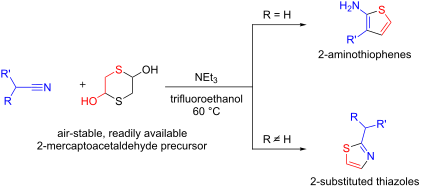
- ., 0.5 equiv of the dimer) as it would simplify the purification later on. All reactions were assessed for conversion using 1H NMR analysis of a crude sample followed by work-up and purification via column chromatography to determine the yields. With regard to solvent selection, trifluroethanol showed by


Other Beilstein-Institut Open Science Activities



