


Search results
Search for "supramolecular" in Full Text gives 559 result(s) in Beilstein Journal of Organic Chemistry. Showing first 200.
Controlled supramolecular assemblies of luminescent tridentate cyclometalated alkynylgold(III) amphiphiles in aqueous media
Beilstein J. Org. Chem. 2026, 22, 1097–1106, doi:10.3762/bjoc.22.88
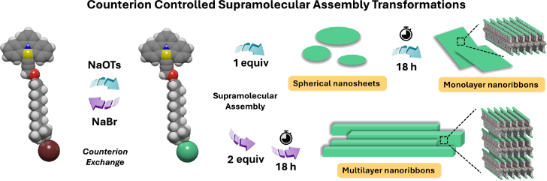
- .22.88 Abstract Gold(III) complexes and amphiphiles have been extensively investigated over a decade. Supramolecular assemblies of gold(III) amphiphiles in aqueous media exhibit high sensitivities to external stimulations for soft functional materials. Herein, we introduce a new molecular design of a
- tridentate cyclometalated gold(III) amphiphile (GA) with flexible molecular structure modifications. Counterion exchange with sodium tosylate induces notable luminescent enhancement and enables control over supramolecular assembly processes. This approach drives a supramolecular assembly transformation of GA
- from disordered nanosheets to well-ordered nanoribbons upon the additions of multiple equivalents of counterion, enabling a tunable pathway for controlled supramolecular transformation. Keywords: amphiphiles; gold(III) complex; luminescence; self-assembly; supramolecular chemistry; Introduction


Amino acid-based surfactants: sustainable synthesis and antimicrobial mechanisms
Beilstein J. Org. Chem. 2026, 22, 1067–1085, doi:10.3762/bjoc.22.85
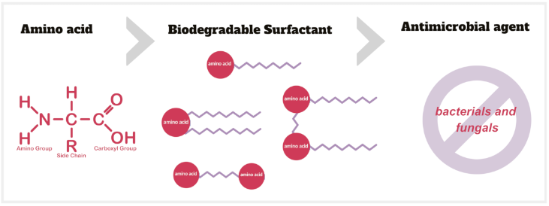
- values of 4–128 μg/mL against S. aureus and E. coli. These physicochemical characteristics favor membrane interaction, self-assembly, and the formation of stable supramolecular systems, supporting their potential for pharmaceutical and biomedical applications [23][54]. Among double-chain arginine


The role of spacer length and flexibility in peptide self-assembly
Beilstein J. Org. Chem. 2026, 22, 986–996, doi:10.3762/bjoc.22.77
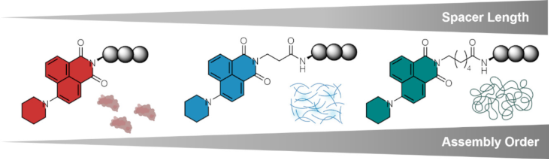
- -assembly; spacer length; Introduction Short self-assembling peptides are an eminent class of materials used in supramolecular chemistry due to their advantageous properties such as facile synthesis, programmable molecular information [1][2][3][4], structural diversity [5][6], biocompatibility [7][8][9
- [13][14][15], and β-turns [16], to the assembly into distinct supramolecular morphologies, for instance nanosheets [17][18], droplets [19], nanotubes [1][20], nanofibrils [21][22], and coiled coils [23][24]. The information of the secondary structures and supramolecular morphologies are encoded within
- ) spectroscopy. The results of this work emphasize the importance of π-block flexibility on supramolecular assembly as improved assembly characteristics are observed with increasing spacer length. Therefore, we hypothesize that the spacer length influences assembling properties of amphiphilic peptides directly


Novel macrocycles: from synthesis to supramolecular function
Beilstein J. Org. Chem. 2026, 22, 982–985, doi:10.3762/bjoc.22.76

- ), Passeig Lluís Companys 23, 08010 Barcelona, Spain 10.3762/bjoc.22.76 Keywords: macrocycles; supramolecular chemistry, supramolecular function; In supramolecular chemistry [1], macrocycles have long occupied a central position because of their ability to emulate the fundamental characteristics of
- distinctive structural features and supramolecular behavior stimulated the development of numerous related macrocycles, including biphenarenes [10], oxatubarenes [11], saucerarenes [12], pagodarenes [13], calix[2]naphth[2]arenes [14], naphthotubes [15], and finally prismarenes [16], all of which are
- major driving force in the field is the effort to combine synthetic versatility of macrocycles with practical supramolecular performance. This expanding structural diversity has, in turn, enabled increasingly sophisticated supramolecular functions. Precise functionalization strategies allow researchers
Site-specific labelling of native peptides and proteins: chemical and enzymatic strategies
Beilstein J. Org. Chem. 2026, 22, 857–881, doi:10.3762/bjoc.22.67
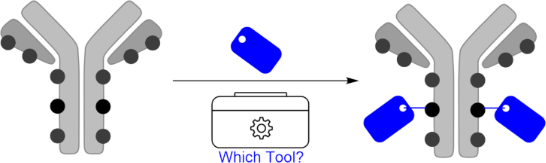
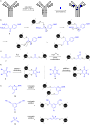
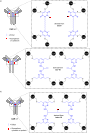
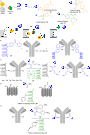
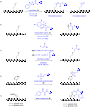
- discussions of rebridging technologies, see references [34][43][44][45]. Affinity-guided protein modifications Affinity-guided protein labelling, also known as affinity-directed conjugation, is a native-sequence modification strategy founded on supramolecular recognition. It employs a bifunctional probe









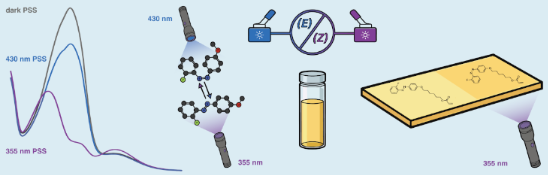
Halogenated azobenzene acrylates: from efficient solution photoswitching to stable solid-state photochromic materials
Beilstein J. Org. Chem. 2026, 22, 782–794, doi:10.3762/bjoc.22.60
- phase within the liquid crystalline copolymer enables modulation of the proton conductivity, as demonstrated by Nagano et al. [13]. Lin et al. reported on azobenzene-containing peptoids forming hollow spherical supramolecular aggregates (E-configuration) that transform into helical arrangement (Z
- normal conditions (20 °C, 101.325 kPa) with a Tg = −49 °C, monochloro analogue 1c is a crystalline solid with Tm = 33 °C. From this perspective, the chlorine atom is at the size boundary, thus the number of appended chlorine atoms most likely determines the degree of supramolecular organization, as


Harnessing light energy with molecules
Beilstein J. Org. Chem. 2026, 22, 680–682, doi:10.3762/bjoc.22.52
- another publication, Leung and co-workers [11] describe how amphiphilic donor–acceptor Stenhouse adducts can be employed in supramolecular nanostructures controlled by visible light, which is of particular interest for the development of biomedical materials. Jones, Evans, and co-workers [12] studied X
Molecular tweezer–peptide conjugates disrupt the protein–protein interaction between survivin and histone H3 essential in mitosis
Beilstein J. Org. Chem. 2026, 22, 557–567, doi:10.3762/bjoc.22.41
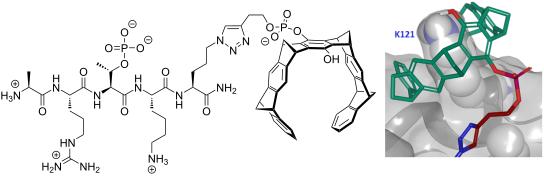
- , Otto-Hahn-Straße 11, 44227 Dortmund, Germany 10.3762/bjoc.22.41 Abstract Peptide-modified supramolecular tweezers, a promising new class of chemical tools, were designed and employed to inhibit the interaction of the BIR domain of human survivin, a member of the chromosomal passenger complex (CPC
- crystallization experiments, competitive fluorescence titrations, and cell division assays. Conclusion This report introduces a new supramolecular attempt to interfere with the critical interaction between kinetochore and CPC during mitosis in cells. The concept builds on the discovery that a specific protein
- , IV and TS gratefully acknowledge financial support by the Deutsche Forschungsgemeinschaft DFG to the Collaborative Research Centre CRC 1093 (Supramolecular Chemistry on Proteins).




Synthesis and uranyl(VI) extraction performance of a calix[4]pyrrole–tetrahydroxamic acid receptor
Beilstein J. Org. Chem. 2026, 22, 486–494, doi:10.3762/bjoc.22.36
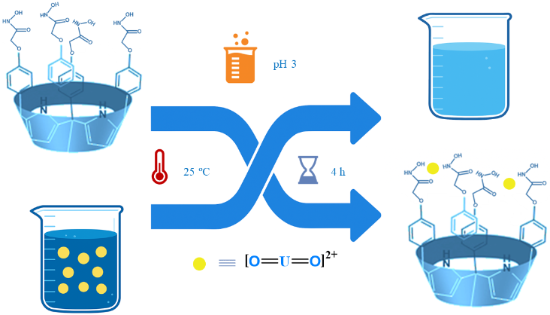
- selective remediation strategies. Supramolecular materials, with their pre-organized structures, offer a promising route for uranium removal. Phenoxycalix[4]pyrroles (PCP) are well-known supramolecular scaffolds capable of selective metal binding, making them attractive candidates for designing uranium
- supramolecular material for the removal of uranyl from aqueous media. Keywords: gamma spectroscopy; hydroxamic acid; phenoxycalix[4]pyrrole; solid–liquid extraction; uranyl(VI) extraction; Introduction Over the past few decades, supramolecular chemistry has advanced intensively establishing itself as a central
- discipline in modern chemistry [1][2][3]. This tremendous growth allowed the field to transcend the traditional chemistry boundaries and move toward real-life applications [4]. In this context, supramolecular materials with pre-organized structures have been designed and exploited for diverse environmental


Cone p-aminocalix[4]arenes enriched with ‘clickable’ alkyne or azide functionalities
Beilstein J. Org. Chem. 2026, 22, 399–415, doi:10.3762/bjoc.22.28
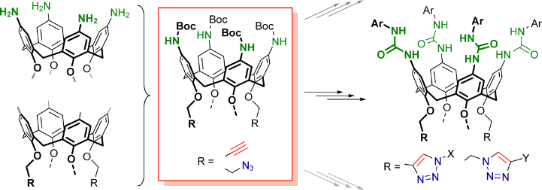
- -aminocalix[4]arenes enriched with alkyne or azide functionalities can be readily used as multifunctional platforms to obtain even higher functionalized macrocycles. As an example, they can be used for the preparation of sophisticated supramolecular assemblies with homo- or heterodimeric calixarene cores and
- these cyclic tetramers may be regarded as virtually universal molecular platforms for the construction of unique multifunctional structures capable of diverse supramolecular interactions [1][2][3][4]. Amino groups attached directly to all four positions of the wide rim of the cores are among the most
- /receptor units, thus drastically improving their supramolecular interaction capabilities. This property of p-aminocalix[4]arenes has been widely utilized in constructing f-element-targeted extractants for nuclear waste treatment, having four carbamoylmethylphosphine oxide groups introduced to the




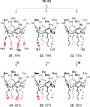


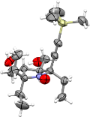
Synthesis of tricyclic fused pyrrolidine nitroxides from 2-alkynylpyrrolidine-1-oxyls
Beilstein J. Org. Chem. 2026, 22, 344–351, doi:10.3762/bjoc.22.22

- nitroxides are incorporated into macromolecular or nanosized supramolecular structures, which modulate nitroxide properties. For example, the efficiency of ORCA (relaxivity) directly depends on the rotational correlation time of the radicals attached to the scaffold [13][14][15]. Large structures in which




Screwing the helical chirality through terminal peri-functionalization
Beilstein J. Org. Chem. 2026, 22, 205–212, doi:10.3762/bjoc.22.14
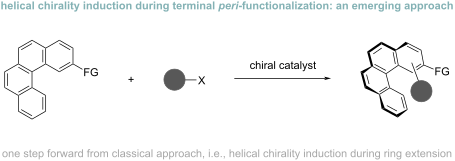
- components in organic field effect transistors (OFETs), molecular wires, and chiral conductive materials [19][20][21]. Furthermore, helicenes are widely explored in chiroptical sensing, molecular recognition, and supramolecular self-assembly, enabling the construction of next generation responsive materials


Silica gel with covalently attached bambusuril macrocycle for dicyanoaurate sorption from water
Beilstein J. Org. Chem. 2025, 21, 2604–2611, doi:10.3762/bjoc.21.201
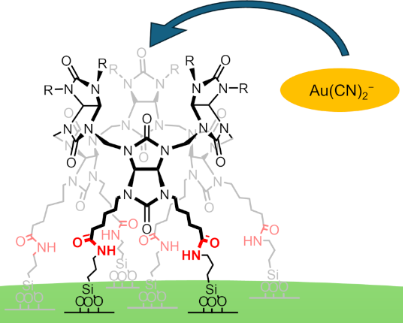
- ]. In the field of anion extraction, there is growing interest in solid-phase substrates functionalized with synthetic macrocyclic receptors. These materials employ a supramolecular approach based on specific host–guest interactions between the immobilized macrocycle and the guest in solution, often
- [10]. Although synthetic anion receptors have attracted increasing attention in the field of supramolecular chemistry, there are still relatively few reports of materials that employ macrocyclic receptors to recognize and selectively bind anionic species specifically in aqueous environments. For


Conformational effects on iodide binding: a comparative study of flexible and rigid carbazole macrocyclic analogs
Beilstein J. Org. Chem. 2025, 21, 2369–2375, doi:10.3762/bjoc.21.181
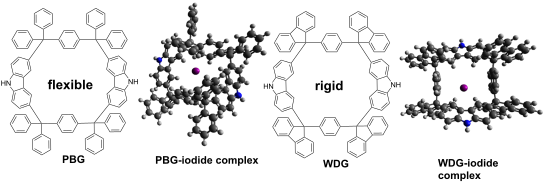
- fluorescence quenching efficiency upon iodide binding compared to the rigid WDG (KPBG/KWDG = 22.78), demonstrating its potential as a highly sensitive optical probe and offering a novel strategy for engineering dynamic supramolecular receptors. Two carbazole-based macrocyclic probes, PBG (flexible benzene ring
- interplay between conformational dynamics and localized structural adaptations governing anion recognition. The findings advance the rational design of tunable, high-affinity anion receptors and deepen the understanding of conformational regulation in supramolecular systems. Keywords: anion recognition
- ; carbazole macrocycles; conformational selection; induced-fit; supramolecular chemistry; Introduction Macrocyclic compounds have garnered significant attention in supramolecular chemistry and anion recognition owing to their tunable cavity geometries and binding capabilities [1][2][3][4][5][6][7][8



Rotaxanes with integrated photoswitches: design principles, functional behavior, and emerging applications
Beilstein J. Org. Chem. 2025, 21, 2345–2366, doi:10.3762/bjoc.21.179

- three decades, photoswitches have been successfully integrated into a variety of supramolecular architectures, including mechanically interlocked molecules (MIMs) such as rotaxanes, enabling new dynamic functions [6][7]. Rotaxanes are molecules composed of a macrocycle threaded onto a linear axle, with


Insoluble methylene-bridged glycoluril dimers as sequestrants for dyes
Beilstein J. Org. Chem. 2025, 21, 2302–2314, doi:10.3762/bjoc.21.176
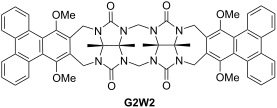
- ], and non-conventional adsorbents [14]. Although activated carbon is widely used, its ability to capture polar compounds is limited and the regeneration process is complex and energy-intensive [15]. In work that stimulated supramolecular chemists to enter the game, Dichtel and co-workers demonstrated



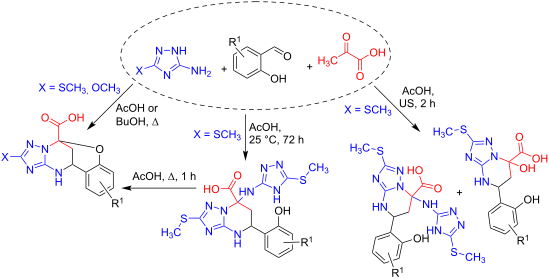
Switchable pathways of multicomponent heterocyclizations of 5-amino-1,2,4-triazoles with salicylaldehydes and pyruvic acid
Beilstein J. Org. Chem. 2025, 21, 2030–2035, doi:10.3762/bjoc.21.158
- materials based on supramolecular systems for biomedical and veterinary applications’ (2023.05/0003).


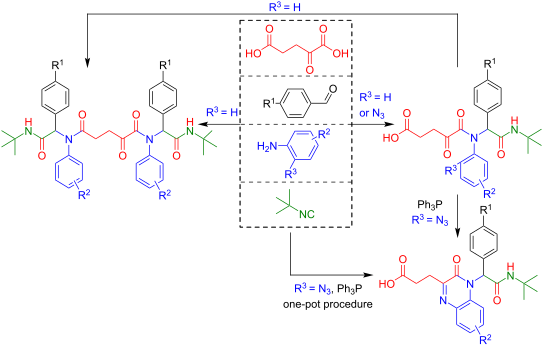
α-Ketoglutaric acid in Ugi reactions and Ugi/aza-Wittig tandem reactions
Beilstein J. Org. Chem. 2025, 21, 2021–2029, doi:10.3762/bjoc.21.157
- materials based on supramolecular systems for biomedical and veterinary applications’ (2023.05/0003).


Systematic pore lipophilization to enhance the efficiency of an amine-based MOF catalyst in the solvent-free Knoevenagel reaction
Beilstein J. Org. Chem. 2025, 21, 1854–1863, doi:10.3762/bjoc.21.144
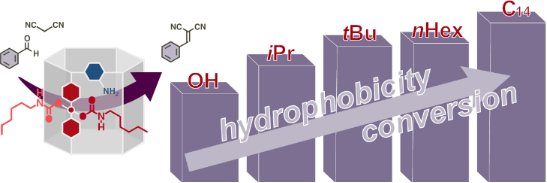
- efficiency. Keywords: metal-organic frameworks; post-synthesis modification; supramolecular catalysis; Introduction Most enzymatic reactions take place in multifunctional cavities in which multiple amino acid residues work cooperatively to orient and activate reactants [1][2][3]. These residues may also


Photoswitches beyond azobenzene: a beginner’s guide
Beilstein J. Org. Chem. 2025, 21, 1808–1853, doi:10.3762/bjoc.21.143
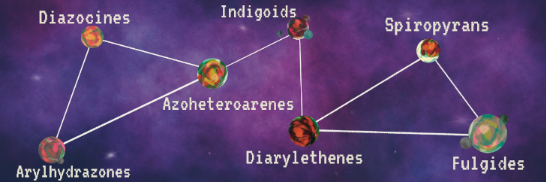
- introduction of intramolecular interactions [123]; other solutions are the incorporation in polymers [124] or the confinement in supramolecular cages [125][126]. The thermal stability was found to depend primarily on the nature of the aryl rings: the high aromatic stabilisation energy of phenyl is correlated




Research progress on calixarene/pillararene-based controlled drug release systems
Beilstein J. Org. Chem. 2025, 21, 1757–1785, doi:10.3762/bjoc.21.139
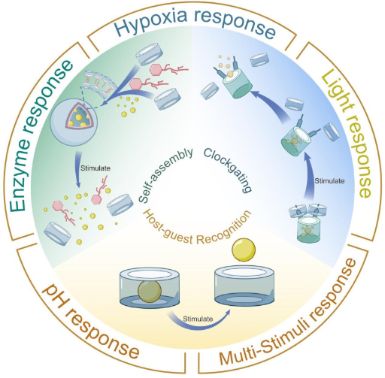
- stimuli have garnered significant interest from researchers and have broad applications in the biomedical field. Aromatic macrocycles, including calixarenes and pillararenes, are considered ideal candidates for the construction of supramolecular drug delivery systems because of their simple synthesis
- , ease of modification, electron-rich and hydrophobic cavities, and highly selective molecular recognition. In recent years, numerous supramolecular drug delivery systems utilizing aromatic macrocycles have been developed. This review article provides an overview of the advancements of controlled drug
- of controlled-release technologies, with the aim of offering a reference for the utilization of aromatic macrocycles in drug-controlled release applications. Keywords: aromatic macrocycle; controlled-release drug delivery systems; stimulus response; supramolecular chemistry; Introduction Drugs are






Unique halogen–π association detected in single crystals of C–N atropisomeric N-(2-halophenyl)quinolin-2-one derivatives and the thione analogue
Beilstein J. Org. Chem. 2025, 21, 1748–1756, doi:10.3762/bjoc.21.138
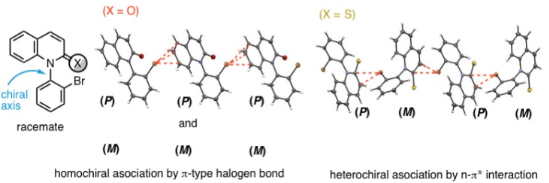
- interaction as an alternative to hydrogen bonding and has been widely used as an important supramolecular tool in broad fields such as materials science, crystal engineering, liquid crystals, synthetic organic chemistry and medicinal chemistry [22][23][24][25][26]. Typically, halogen bonding has been


3,3'-Linked BINOL macrocycles: optimized synthesis of crown ethers featuring one or two BINOL units
Beilstein J. Org. Chem. 2025, 21, 1719–1729, doi:10.3762/bjoc.21.134
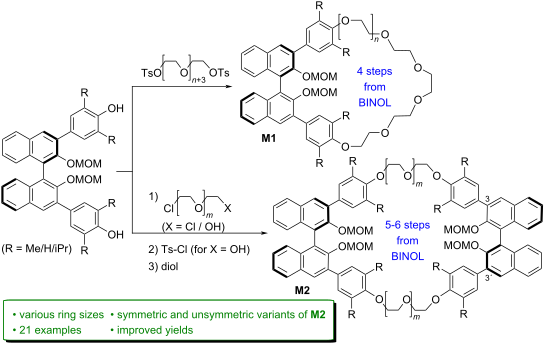
- ). Keywords: BINOL; chirality; crown ethers; macrocycles; supramolecular chemistry; Introduction Crown ethers are at the heart of supramolecular chemistry [1]. Ever since their discovery in 1960, a vast number of different crown ethers has been synthesized and their interactions with guest molecules have
- been studied. The pioneering works in this area by Cram, Lehn and Pedersen marked the beginning of modern supramolecular chemistry and were honoured with the Nobel Prize in Chemistry in 1987 [2][3][4]. Soon, it was realized that chiral crown ethers are highly promising host molecules for


On the aromaticity and photophysics of 1-arylbenzo[a]imidazo[5,1,2-cd]indolizines as bicolor fluorescent molecules for barium tagging in the study of double-beta decay of 136Xe
Beilstein J. Org. Chem. 2025, 21, 1627–1638, doi:10.3762/bjoc.21.126
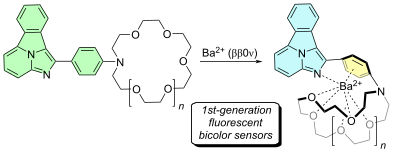
- behavior in the emission spectra. Indeed, initial experiments were successful. However, we observed that translation of the behavior of these FBIs from supramolecular chemistry to solid–gas interfaces raises important issues in terms of both discrimination between free and chelated states and photophysical


Advances in nitrogen-containing helicenes: synthesis, chiroptical properties, and optoelectronic applications
Beilstein J. Org. Chem. 2025, 21, 1422–1453, doi:10.3762/bjoc.21.106
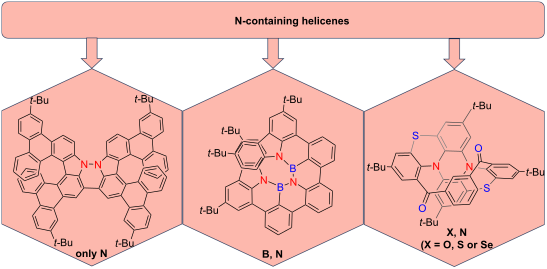
- spectra, underscoring the capability of helicene-based frameworks for anion-responsive chiroptical modulation. These findings highlight how precise structural design and supramolecular engineering can facilitate the development of high-performance, stimuli-responsive chiral luminophores. In 2022, Zhang




