


Search results
Search for "alignment" in Full Text gives 356 result(s) in Beilstein Journal of Nanotechnology. Showing first 200.
Synthesis and characterization of RF-sputtered ZnTe/Cu2−xTe thin films for solar cell applications
Beilstein J. Nanotechnol. 2026, 17, 1016–1027, doi:10.3762/bjnano.17.69
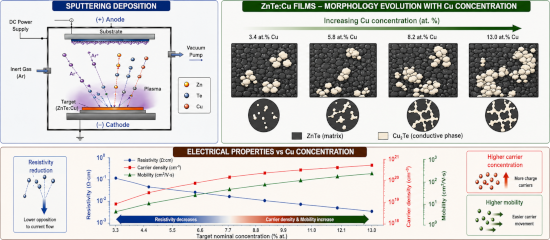
- only as a photovoltaic material but also as a contact and buffer layer in thin-film solar cells due to its favorable band alignment with CdTe and its chemical compatibility [9][10][11][12][13][14][15][16]. However, improving its electrical properties without inducing excessive Cu diffusion continues to



He+ FIBID-fabricated 3D AFM tip architectures: an exploratory study of hollow pillars, helices, and spirals
Beilstein J. Nanotechnol. 2026, 17, 863–871, doi:10.3762/bjnano.17.62
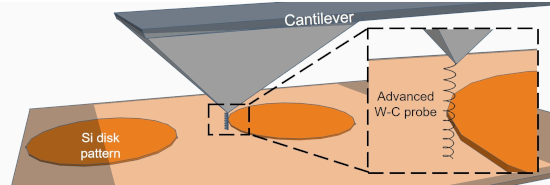
- AFM tips The 3D-printed nanoarchitectures investigated as functional AFM tips included nanohelices, hollow nanopillars, and nanospirals. These nanoarchitectures were directly fabricated onto tips attached to commercial AFM cantilevers bearing a commercial tip for practical reasons related to alignment
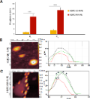
- of 0.5 Hz. The AFM topographs were processed with Gwyddion v2.65 using a consistent workflow that included mean-plane levelling, row alignment, and tilt correction. Representative profiles for the selected structures H2, P5, and S7 are shown in Figure 4. For the three structures that completed the


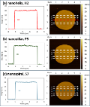
Glycerol photoelectrochemical oxidation reaction at carbon nitrides/BiVO4 materials
Beilstein J. Nanotechnol. 2026, 17, 806–817, doi:10.3762/bjnano.17.57
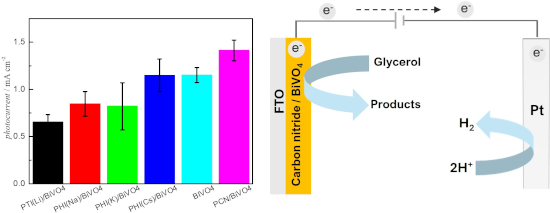
- film could be explained by the high Eg of PTI-Li, which likely hinders proper band alignment with BiVO4. Both PHI-Na and PHI-Cs exhibited similar Eg values to that of PCN; however, the higher photoactivity of PCN/BiVO4 likely arises from its superior thermal stability or more favorable band position





Environmental applications of silver nanoparticles: state-of-the-art review and emerging trends
Beilstein J. Nanotechnol. 2026, 17, 697–736, doi:10.3762/bjnano.17.49
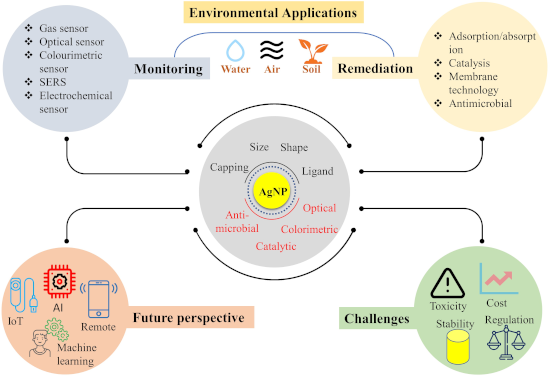
- junction formation at the Ag/semiconductor interface creates an internal electric field that suppresses electron–hole recombination, extending carrier lifetime and enabling band-alignment-dependent redox reactions [127]. Reactive oxygen species, primarily •OH, •O2−, h+, and 1O2, drive oxidative pollutant


Recent progress in enhancing built-in electric fields of perovskite solar cells via junction engineering
Beilstein J. Nanotechnol. 2026, 17, 602–621, doi:10.3762/bjnano.17.42
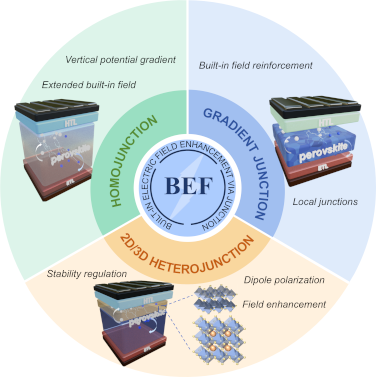
- transport. By contrast, 2D/3D heterojunctions exploit interfacial dipole formation, intrinsic polarization, and phase-penetration effects to amplify and homogenize the BEF, while simultaneously improving energy-level alignment and defect passivation. We systematically compare these strategies within a
- , optimizing the BEF provides a powerful lever for advancing power conversion efficiency, open-circuit voltage, and long-term operational stability in state-of-the-art PSCs, while avoiding the introduction of parasitic energy barriers. Keywords: band alignment; built-in electric field; carrier dynamics
- [19]. The resulting BEFs, extending across both bulk and surface regions, facilitate the efficient separation of photogenerated carriers and promote their directional transport to the electrodes. Furthermore, optimized interfacial energy-level alignment enhances carrier extraction and suppresses



Probing internal continua and atomic ultrafast charge transfer within size-controlled nanoparticles by post-collision interaction in core-hole clock spectroscopy
Beilstein J. Nanotechnol. 2026, 17, 505–514, doi:10.3762/bjnano.17.33
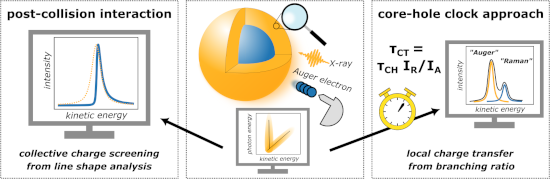
- layers of ZnS. This acceleration of charge transfer is attributed to the presence of an additional, faster electron delocalization channel toward the CdSe core. Based on the band alignment in the core–shell system and the theory of quantum confinement, we argue that the CdSe core possesses an increased



Upcycling agroindustrial waste into graphene oxide supports for gold nanoparticles: toward sustainable nanomaterials
Beilstein J. Nanotechnol. 2026, 17, 489–504, doi:10.3762/bjnano.17.32
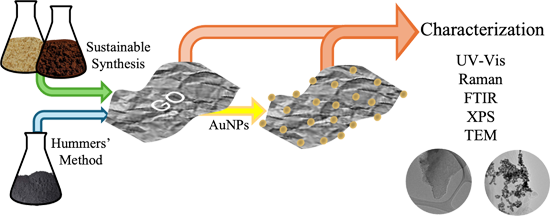
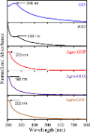
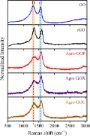
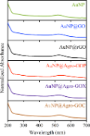
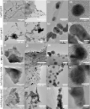
- precursor and the processing conditions. This tunability provides a powerful means to tailor the structural and optical properties of AuNP@GO hybrids. Beyond its alignment with environmental sustainability goals, this approach provides a versatile, customizable platform for precisely modulating nanomaterial



Defects and defect-mediated engineering of two-dimensional materials: challenges and open questions
Beilstein J. Nanotechnol. 2026, 17, 454–488, doi:10.3762/bjnano.17.31
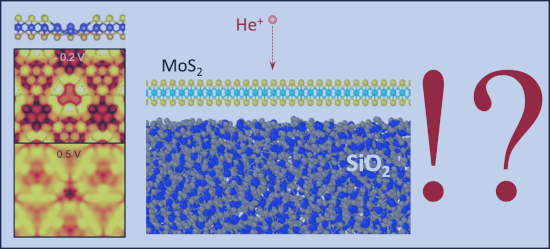
- has been found on S vacancies in a monolayer of MoS2 on Au(111) [146]. However, in this case, the metallic Au substrate provided not only the electron bath for screening the magnetic moment, but also enabled the electron transfer to the vacancy due to the favorable alignment of the work functions [147





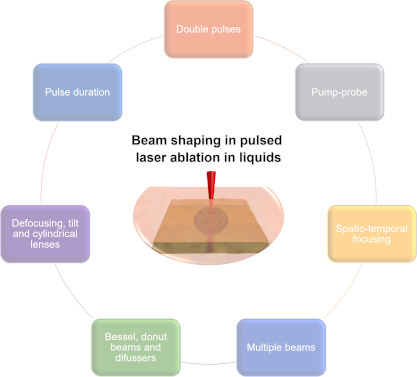
Beam shaping techniques for pulsed laser ablation in liquids: Unlocking tunable control of nanoparticle synthesis in liquids
Beilstein J. Nanotechnol. 2026, 17, 309–342, doi:10.3762/bjnano.17.22
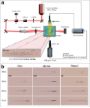
- laser beam has been shown to allow for better control of NP size and to offer an advantage in terms of alignment and reproducibility due to the long length of the central lobe of the Bessel beam [142]. A narrow size distribution of Ag NPs obtained by femtosecond Bessel beam irradiation of a silver







Gold nanoparticle-decorated reduced graphene oxide as a highly effective catalyst for the selective α,β-dehydrogenation of N-alkyl-4-piperidones
Beilstein J. Nanotechnol. 2026, 17, 218–238, doi:10.3762/bjnano.17.15
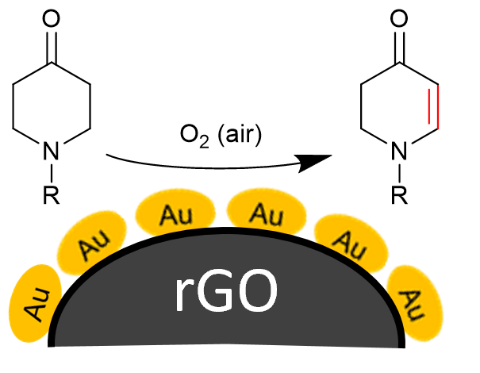
- Fermi-level alignment enables rGO to inject electrons into Au even without permanent O-bridging, rendering the interfacial Au more electron-rich (Figure 14). XPS analysis supports this electronic interaction, showing a negative shift of the Au 4f binding energy (Figure 11a). Upon O2 adsorption, electron


Structure-dependent thermochromism of PAZO thin films: theory and experiment
Beilstein J. Nanotechnol. 2026, 17, 186–199, doi:10.3762/bjnano.17.12
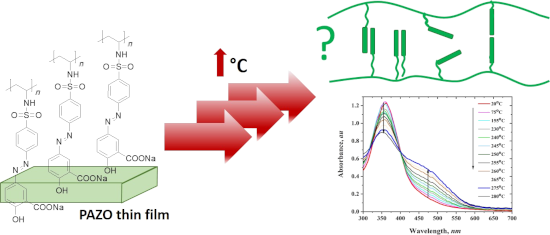
- , optoelectronics, memory devices, and sensors [12]. The birefringence phenomenon results from multiple cycles of trans–cis–trans (E–Z–E) photoisomerization stimulated by the polarized light impact [13][14][15][16]. The E–Z–E transitions lead to an alignment of the photoreactive azo chromophores perpendicularly


Safe and sustainable by design with ML/AI: A transformative approach to advancing nanotechnology
Beilstein J. Nanotechnol. 2026, 17, 176–185, doi:10.3762/bjnano.17.11
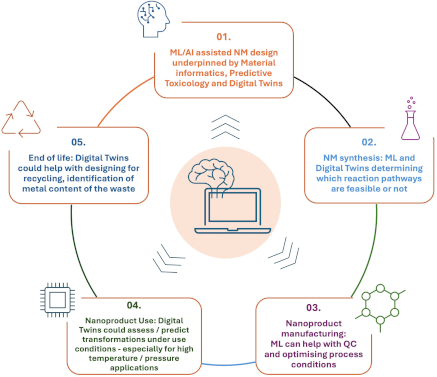
- , and safety concerns. Bringing together toxicologists, materials scientists, engineers, and policymakers would support the alignment of SSbD strategies with evolving legislative requirements, including classification and labelling regulations for chemical substances, including facilitating the


Development and in vitro evaluation of liposomes and immunoliposomes containing 5-fluorouracil and R-phycoerythrin as a potential phototheranostic system for colorectal cancer
Beilstein J. Nanotechnol. 2026, 17, 97–121, doi:10.3762/bjnano.17.7
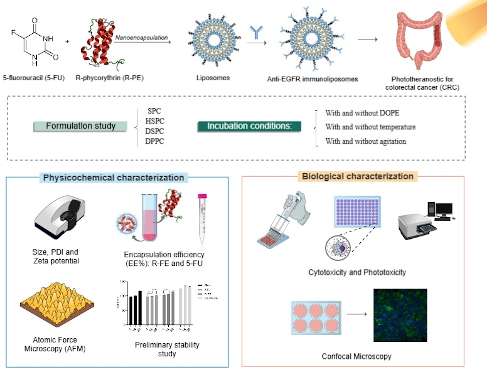
- analyses were done by using the Gwyddion software. Each z-axis (height) of the image was previously processed to level it, which included shifting the minimum data value to zero, mean plane subtraction, and row alignment using the median of the differences function. After these steps, the statistical



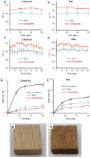
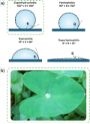
Functional surface engineering for cultural heritage protection: the role of superhydrophobic and superoleophobic coatings – a comprehensive review
Beilstein J. Nanotechnol. 2026, 17, 63–96, doi:10.3762/bjnano.17.6





Subdigital integumentary microstructure in Cyrtodactylus (Squamata: Gekkota): do those lineages with incipiently expressed toepads exclusively exhibit adhesive setae?
Beilstein J. Nanotechnol. 2026, 17, 38–56, doi:10.3762/bjnano.17.4
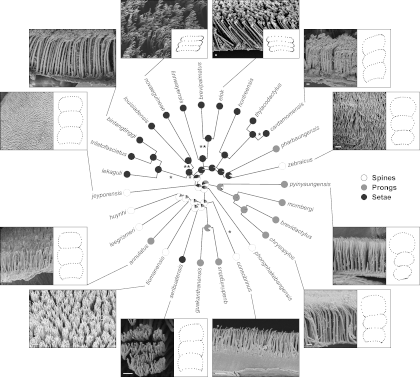
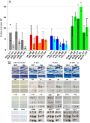
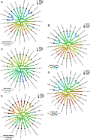
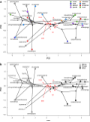
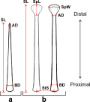
- ]), and the seta-bearing C. seribuatensis, in accord with the reconstructed evolution of the microstructure types. There is, however, also considerable variation in effective bending stiffness in the spine/prong-group, such that there is neither good alignment with microstructure type nor with ecotype or


Quantitative estimation of nanoparticle/substrate adhesion by atomic force microscopy
Beilstein J. Nanotechnol. 2026, 17, 1–14, doi:10.3762/bjnano.17.1

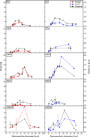
- cantilever deflection as well as torsional spring constant [39]. However, errors can arise due to the sensitivity of the PSPD to laser alignment and a few micrometers offset from the tip shear center, leading to erroneous determination of the cantilever torsion loop offset. As a result, there is very low



Improving magnetic properties of Mn- and Zn-doped core–shell iron oxide nanoparticles by tuning their size
Beilstein J. Nanotechnol. 2025, 16, 2285–2295, doi:10.3762/bjnano.16.157
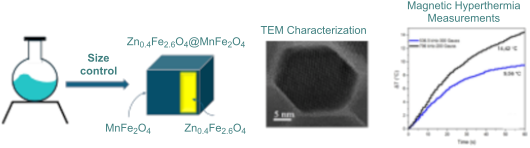
- ± 1.7, and 45.0 ± 1.2 nm exhibited Ms values of 0.012, 0.031, 0.12, and 7 A·m2·kg−1, respectively (Table 3). Similar trends have been reported in the literature, where larger particle sizes lead to higher Ms values due to the reduction of surface spin canting and the improved alignment of magnetic



Optical bio/chemical sensors for vitamin B12 analysis in food and pharmaceuticals: state of the art, challenges, and future outlooks
Beilstein J. Nanotechnol. 2025, 16, 2207–2244, doi:10.3762/bjnano.16.153


Quality by design optimization of microemulsions for topical delivery of Passiflora setacea seed oil
Beilstein J. Nanotechnol. 2025, 16, 2116–2131, doi:10.3762/bjnano.16.146
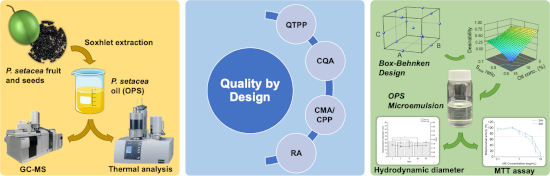
- at similar concentrations (13.2% of PEG-30 castor oil and 1.8% of Span® 80), for curcumin delivery in a Miglyol® 812N (medium chain triglycerides) oil phase. These findings support the feasibility of developing microemulsions with reduced surfactant content, in alignment with safety considerations
- microemulsion, was produced and characterized to confirm its quality and alignment with the CQAs. On the first day post-production, the formulation exhibited a hydrodynamic diameter of approximately 22.0 nm and a PdI of 0.14, both of which fall within the acceptable CQA criteria. The stability of the system was


Rapid synthesis of highly monodisperse AgSbS2 nanocrystals: unveiling multifaceted activities in cancer therapy, antibacterial strategies, and antioxidant defense
Beilstein J. Nanotechnol. 2025, 16, 2105–2115, doi:10.3762/bjnano.16.145
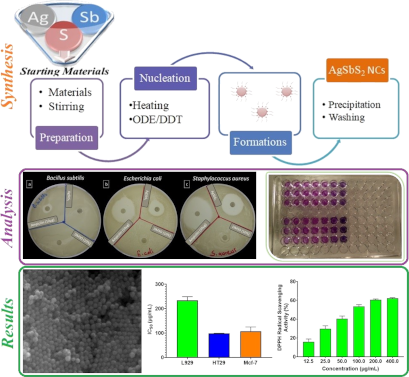
- , indicating robust crystallization. Moreover, the presence of prominent peaks aligning with (220), (311), (420), and (511) planes confirmed alignment with XRD results. Furthermore, utilizing particle size distribution analysis, the crystallite size of average particles was estimated, as illustrated in the


Toward clinical translation of carbon nanomaterials in anticancer drug delivery: the need for standardisation
Beilstein J. Nanotechnol. 2025, 16, 2092–2104, doi:10.3762/bjnano.16.144

- to ensure alignment. Ensuring patient safety demands comprehensive preclinical studies evaluating toxicity and pharmacological profiles. Demonstrating efficacy similarly requires well-designed animal studies to assess therapeutic outcomes. Scalable and reproducible manufacturing is essential for




Calibration of piezo actuators and systems by dynamic interferometry
Beilstein J. Nanotechnol. 2025, 16, 2086–2091, doi:10.3762/bjnano.16.143
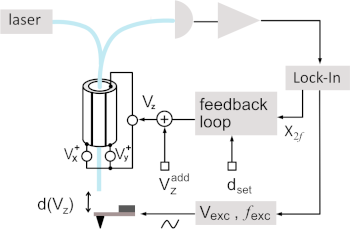
- context of NC-AFM using the interferometric concepts of Michelson and Fabry–Perot interferometers [14][15]. Both interferometers rely on the precise alignment of a single-mode optical fiber delivering the light and receiving the optical signal generated in the optical cavity formed by the cantilever and
- long as the respective stabilization loop of interferometer alignment is active [16], this adjustment is maintained even in the presence of drift or piezo creep by the automatic adjustment of the voltage applied between the fiber tube piezo inner electrode and the common potential of the tube piezo
- interferometer is forced back to the initial condition of perfect alignment before each run of amplitude calibration. To allow for piezo relaxation after significant extension or retraction, a waiting time of 10 min has been applied between the change in and the following calibration measurement. The amplitude


The cement of the tube-dwelling polychaete Sabellaria alveolata: a complex composite adhesive material
Beilstein J. Nanotechnol. 2025, 16, 1998–2014, doi:10.3762/bjnano.16.138
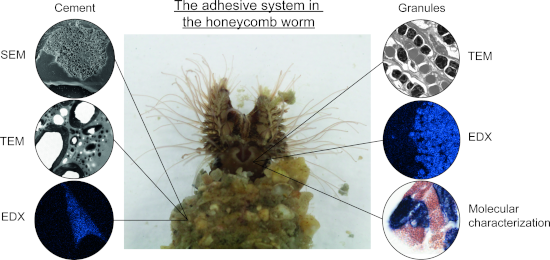
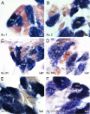
- transmission electron microscope. Identification and characterization of new adhesive protein and kinase candidates Local basic local alignment search tool (BLAST) searches were performed in the transcriptome of the anterior part of S. alveolata [26] using the adhesive protein sequences of P. californica from
- sequences from P. californica proteins were used as queries for BLAST searches in the transcriptome of S. alveolata to identify new adhesive proteins. However, as previous studies have shown, limited percentages of identity in the alignment of these proteins made it difficult to find homologues [7][31
- in the European species as there are limited percentages of identity in the alignment of their adhesive proteins with those of P. californica. Sa-5 is overexpressed in the worm’s parathoracic region but it could not be localized by in situ hybridization. Its involvement in the cement therefore




Low-temperature AFM with a microwave cavity optomechanical transducer
Beilstein J. Nanotechnol. 2025, 16, 1873–1882, doi:10.3762/bjnano.16.130
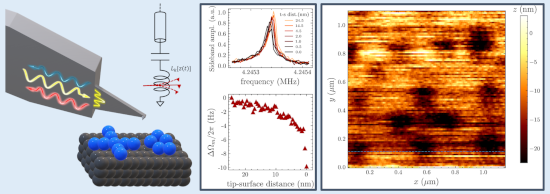
- causing significant wideband mechanical vibrations, which can propagate through the cold stages down to the measurement apparatus. However, force sensors with integrated position detectors, as the one presented in this work, do not require free-space optical alignment with a long optical path length. They


On the road to sustainability – application of metallic nanoparticles obtained by green synthesis in dentistry: a scoping review
Beilstein J. Nanotechnol. 2025, 16, 1851–1862, doi:10.3762/bjnano.16.128
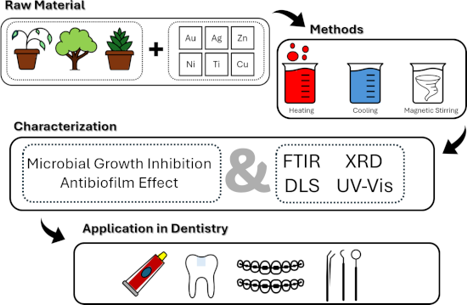
- stringent regulatory oversight. The prominent use of silver and zinc oxide nanoparticles, produced through environmentally sustainable phytochemical-mediated synthesis, underscores a convergence of advanced antimicrobial functionality, enhanced biocompatibility, and alignment with global sustainability





