


Search results
Search for "carbon" in Full Text gives 1261 result(s) in Beilstein Journal of Nanotechnology. Showing first 200.
He+ FIBID-fabricated 3D AFM tip architectures: an exploratory study of hollow pillars, helices, and spirals
Beilstein J. Nanotechnol. 2026, 17, 863–871, doi:10.3762/bjnano.17.62
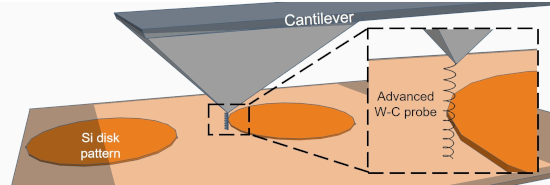
- , Germany 10.3762/bjnano.17.62 Abstract Atomic force microscopy (AFM) relies strongly on tip geometry and mechanical integrity for stable and reproducible surface measurements. Here, we present an exploratory study of tungsten–carbon (W–C) AFM tips with complex three-dimensional (3D) architectures
- the vacuum system. Such methods have enabled the direct fabrication of functional nanostructures on a range of substrates, including AFM cantilevers. FEBID and FIBID have already been used to fabricate AFM nanopillar-type tips, most commonly from carbon- [12], cobalt- [13], iron- [14], platinum- [15
- . In contrast, the platinum–carbon deposits produced via FEBID exhibit a high carbon content and contain embedded platinum grains measuring approximately 3–5 nm in diameter [24]. This high carbon content results in elevated electrical resistivity [15], yet such deposits have demonstrated utility in


Light-driven ammonia electrooxidation via carbon nitride–ruthenium molecular interfaces
Beilstein J. Nanotechnol. 2026, 17, 854–862, doi:10.3762/bjnano.17.61
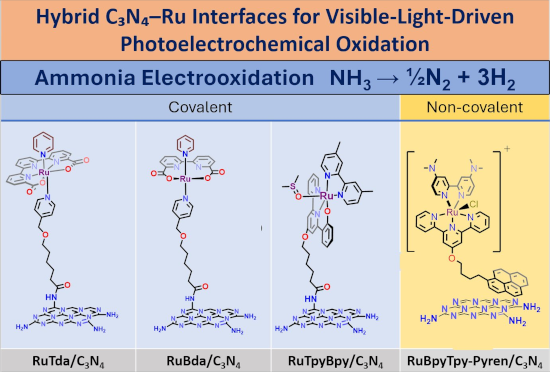
- semiconductors provide scalable light harvesting but lack precisely defined active sites. Anchoring molecular ruthenium (Ru) catalysts onto heterogeneous semiconductors, like carbon nitride (C3N4), offers a chemically rational strategy to bridge this gap, yielding hybrid photoelectrodes capable of driving
- available materials, precedent reactions, and compelling mechanistic rationale, no study to date has reported photoelectrocatalytic ammonia oxidation at a C3N4–Ru hybrid photoelectrode, this gap is the motivation and the central argument of this perspective. Keywords: ammonia oxidation; carbon nitride
- , nanoparticles, and carbon supports) are manufactured into electrodes or serve as the electrode itself, industrially scalable, but with poorly understood active sites and inactive bulk material [1][2][3][4][5]. In practice, however, bridging these two families is not straightforward. A homogeneous catalyst


Glycerol photoelectrochemical oxidation reaction at carbon nitrides/BiVO4 materials
Beilstein J. Nanotechnol. 2026, 17, 806–817, doi:10.3762/bjnano.17.57
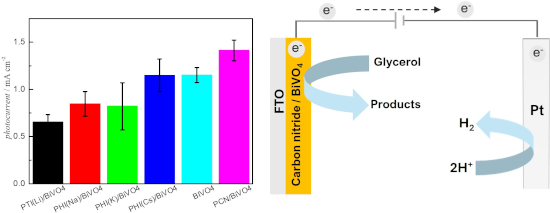
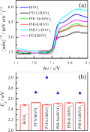
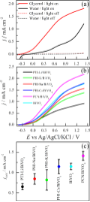
- added-value products through biomass oxidation. In this study, we investigate the photoelectrochemical oxidation of glycerol using visible-light-responsive carbon nitride /bismuth vanadate (CN/BiVO4) heterojunction photoelectrocatalysts. Different CN materials were explored, including polymeric carbon
- ], it is possible to combine BiVO4 with other materials, such as carbon nitrides materials [12]. Carbon nitrides (CNs) can be classified into two main groups: polymeric carbon nitride (PCN) and crystalline carbon nitrides – poly(heptazine imide) (PHI) and poly(triazine imide) (PTI). While both share a
- performance in various applications [13][14]. In contrast, crystalline carbon nitrides, namely PHI and PTI, exhibit superior molecular organization, greater stability, and enhanced functional properties. PHI is composed of heptazine units linked through nitrogen bridges, resulting in a pseudohexagonal 2D





Tuning the electronic properties of defect-rich MoS2
Beilstein J. Nanotechnol. 2026, 17, 796–805, doi:10.3762/bjnano.17.56
- eV, were acquired. Synthetic molybdenum disulfide crystals (2D Semiconductors, Phoenix, AZ, USA) were attached to the sample holders using silver conductive paint. To ensure cleanliness, the crystals were cleaved in situ by scotch tape. By the absence of carbon and oxygen signals in the XPS, a
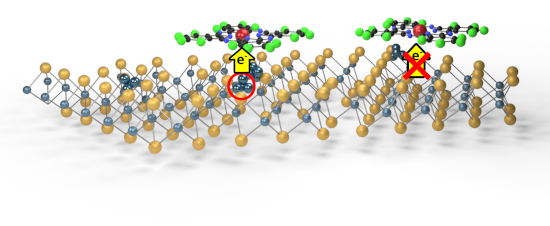
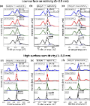
- , namely, that of the carbon- and nitrogen-rich macrocycle. In summary, the C 1s (Figure 4a–c) and N 1s spectra (Figure 4d-f) following the deposition of CoPcF16 of varying thicknesses onto MoS2 substrates, sputtered with Ne+ or Ar+ and varying durations up to 4 min, exhibit no signs of strong interactions


Substrate-dependent pore formation in molybdenum disulfide monolayers under ion irradiation
Beilstein J. Nanotechnol. 2026, 17, 769–780, doi:10.3762/bjnano.17.54
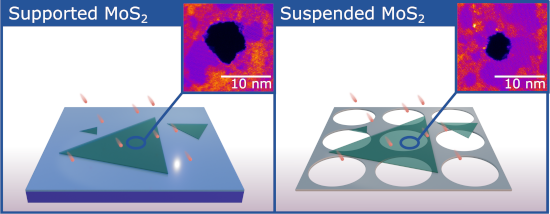
- , the furnace is opened to allow for rapid cooling. The freshly grown MoS2 flakes are irradiated on the SiO2/Si substrate and subsequently transferred to a QUANTIFOIL® holey carbon grid with 1.2 µm holes. The transfer is performed by placing the TEM grid onto the sample with the mesh facing the MoS2. By
- placing a droplet of water near the grid, the water can intercalate between the flakes and the substrate, lifting off the MoS2 in the process and pressing it against the QUANTIFOIL® holey carbon mesh. Sample preparation and characterization are schematically shown in Figure 6. To investigate the


Tailoring Ag–Pt nanoalloys through solid-state dewetting: structural and optical insights
Beilstein J. Nanotechnol. 2026, 17, 748–759, doi:10.3762/bjnano.17.52

- shown in Figure 5. The survey spectra confirm the high chemical purity of all samples. Apart from Ag and Pt, only silicon originating from the substrate, as well as oxygen and carbon adsorbed from the atmosphere, were detected. The quantitative composition was determined from the survey spectra and is
- focused ion beam (FIB) lift-out technique. For this purpose, a dual-beam Thermo Fisher Scientific Helios 5 UX scanning electron microscope equipped with a Phoenix Ga+ ion column was used. Prior to sample preparation, the particles were coated with a protective carbon layer using a gas injection system




Oxidative atmosphere-driven formation of single-phase spinel CuRh2O4 nanofibers for alkaline water oxidation
Beilstein J. Nanotechnol. 2026, 17, 737–743, doi:10.3762/bjnano.17.50
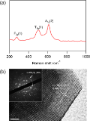
- corresponding to metallic Rh (Rh0) are observed at around 305 eV, indicating that the oxidative environment is insufficient to fully form the spinel CuRh2O4 phase [15]. Note that in the C 1s region (Supporting Information File 1, Figure S2), the residual carbon content in the annealed samples is negligible
- , suggesting that PVP is almost completely decomposed and removed under oxidative conditions at 850 °C [16]. These findings confirm that the resulting materials predominantly exist as fully oxidized metal oxides, with minimal contribution from carbon species derived from PVP. As shown in Figure 4a, Raman
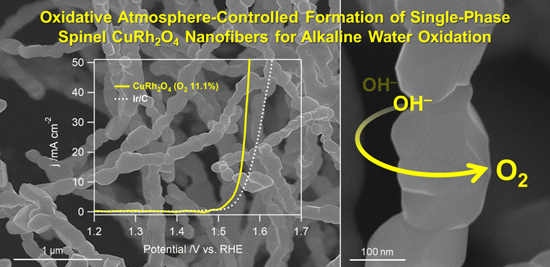
- The as-prepared nanofibers and commercial Ir/C catalyst were separately dispersed in deionized water to obtain catalyst inks with a concentration of 2 mg·mL−1. An aliquot (6 μL) of each well-dispersed ink was drop-cast onto a glassy carbon (GC) disk electrode (3 mm diameter) and dried in an oven at 60




Environmental applications of silver nanoparticles: state-of-the-art review and emerging trends
Beilstein J. Nanotechnol. 2026, 17, 697–736, doi:10.3762/bjnano.17.49
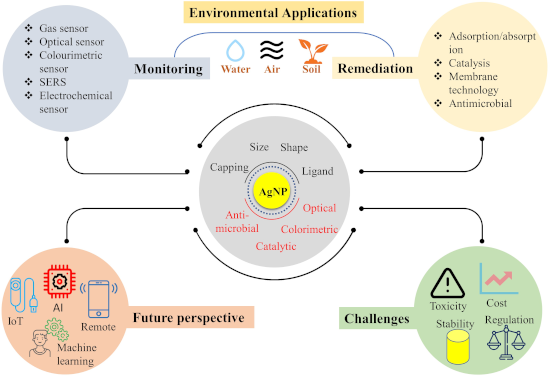
- of PFAS was achieved by formulating nanosilver with activated carbon, where perfluorooctanesulfonate (PFOS) and perfluorooctanoate (PFOA) were adsorbed at concentrations of, respectively, 454.1 and 321.2 mg/g, respectively [29]. Echinochloa pyramidalis-stabilized AgNPs were synthesized for the
- X-ray analysis [49]. TEM analysis is performed on copper grids with varying mesh sizes and coatings, with carbon/formvar-coated copper grids commonly preferred. Scanning electron microscopy (SEM) provides information on the silver nanoparticles’ surface properties and the aggregation state of dried
- nanoparticles using carbon or silicon wafers as the primary substrate [49]. The X-ray diffraction pattern reveal that AgNP crystal growth occurs at different facets depending on the NPs [49]. The most common facets include 111, 200, 220, and 311, corresponding to 2θ angles of 38.2°, 44.4°, 64.6°, and 77.5


Decontamination from water pollutants and pathogens by electrospun nanofibers doped with heavy-atom-free borafluorene-BODIPY photosensitizers
Beilstein J. Nanotechnol. 2026, 17, 668–682, doi:10.3762/bjnano.17.46
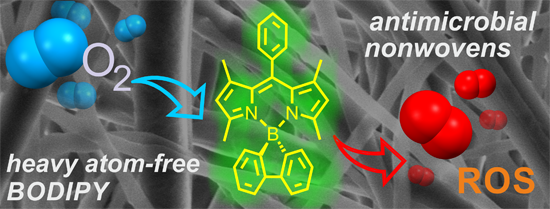
- of surface polarity with BODIPY incorporation is consistent with the observed decrease in WCA and may promote pollutant adsorption [58]. The survey XPS spectrum recorded for 1(1.00 wt %)@PCL (Figure 6a) confirms the presence of oxygen (O 1s at 530 eV, OKLL at 970 eV), carbon (C 1s at 285 eV), and
- . While all components can be associated with PCL [59] modified with BODIPY [60], adventitious carbon contamination may also contribute to C−C, C−O, and C=O signals. The analysis of the O 1s high-resolution spectrum (Figure 6c) reveals the presence of two components, that is, C−O at 533.5 eV and C=O at



Cellulose as a photocatalyst support material: extraction, structural features, and environmental applications
Beilstein J. Nanotechnol. 2026, 17, 635–652, doi:10.3762/bjnano.17.44
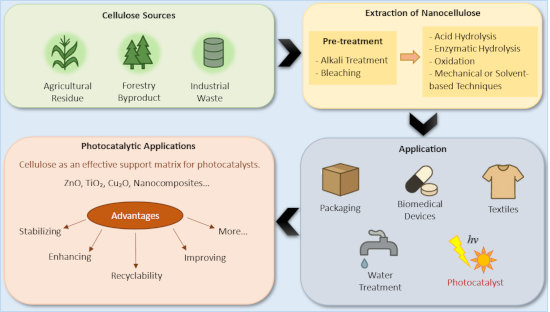
- operation steps, advantages, and disadvantages of each extraction/isolation method. Uses of extracted cellulose As the world’s economy continuously depends heavily on fossil fuels, the need to reduce carbon emissions has pushed renewable biomass into the spotlight as a promising alternative for producing
- [82]. In this context, nanocellulose has emerged as a promising renewable nanomaterial because it is a sustainable, carbon-neutral biopolymer that combines wide availability, low cost, excellent flexibility, large surface area, ease of modification, and high biocompatibility, making it particularly
- the need for additional additives, and their high carbon content and small size make them particularly suitable for producing porous carbon-based electrodes through high-temperature pyrolysis. Beyond enhancing conductivity, the use of CNCs as template materials provides multiple advantages, since they


Two-step laser synthesis of Ag@TiO2 nanomaterials for the photocatalytic degradation of rhodamine B
Beilstein J. Nanotechnol. 2026, 17, 622–634, doi:10.3762/bjnano.17.43
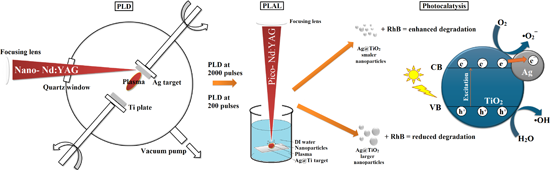
- photocatalyst (Ag@TiO2 200p or Ag@TiO2 2000p) was deposited onto a carbon-coated copper grid and left to dry under ambient conditions. ImageJ software, version 1.54 g, was used for image analysis and interplanar distance computations. Measurements of particle size distribution, zeta potential, and


Recent progress in enhancing built-in electric fields of perovskite solar cells via junction engineering
Beilstein J. Nanotechnol. 2026, 17, 602–621, doi:10.3762/bjnano.17.42
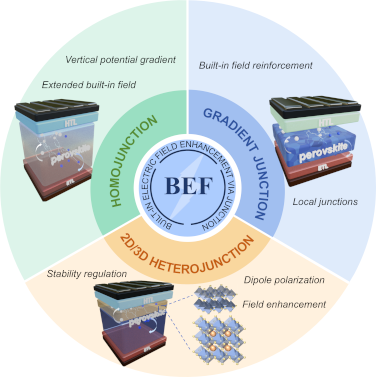
- ; junction; perovskite solar cells; Introduction Driven by the global push for carbon neutrality, next-generation high-efficiency and low-cost photovoltaic technologies have gained increasing attention. Due to their high absorption coefficients, long carrier diffusion lengths, tunable bandgaps, and solution
- -surface post-treatments can form a homojunction at the top of the perovskite layer. In particular, HTL-free systems, such as those employing porous carbon electrodes, similar control can be achieved near the electrode–perovskite interface through interfacial modification. Chen et al. [36] employed a
- cyclopentylmethylamine (CMA) post-treatment to induce homojunction formation at the lateral microinterfaces between the carbon electrode and the perovskite. After crystallization, the perovskite within the mesoscopic framework forms numerous microcontacts with the carbon electrode. CMA infiltration from the carbon side




Impacts of annealing on structural and photophysical properties of zinc phthalocyanine adsorbed on graphene
Beilstein J. Nanotechnol. 2026, 17, 576–585, doi:10.3762/bjnano.17.39
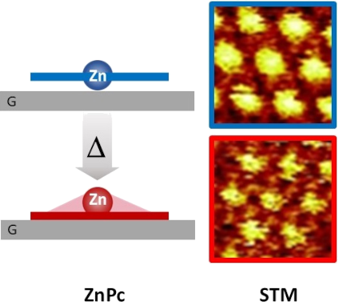
- characteristic of a ZnPc response [43]. However, the highest energy peak is strongly shifted from its value of 1506 cm−1 in the bulk to 1543 cm−1 in this assembly. The same shift has been reported for the ZnPc embedded inside carbon nanotubes or adsorbed on their surface [44]. This is considered as a signature
- coating (Graphenea) on a 170 µm thick transparent microscope glass cover plate. The nanoporous 2D host network was formed by self-assembly of 1,3,5-tristyrylbenzene substituted in positions 3 and 5 by alkoxy peripheral chains presenting 12 carbon atoms (TSB35-C12) [39] and the guest molecule was


Laser–material interactions in liquids for the synthesis of nanomaterials: current status and perspectives
Beilstein J. Nanotechnol. 2026, 17, 571–575, doi:10.3762/bjnano.17.38

- ]. Alternatively, employing organic solvents instead of water provides opportunities to produce carbon-encapsulated core−shell nanostructures [49] and enables control over oxidation [50], surface chemistry [51], and transferability between solvents [52]. The versatility of LSPC in terms of materials, solvents, and
Synthesis of Cu–Mo/TiO2 and Co–Mo/TiO2 photocatalysts for the efficient degradation of organic pollutants in water
Beilstein J. Nanotechnol. 2026, 17, 559–570, doi:10.3762/bjnano.17.37
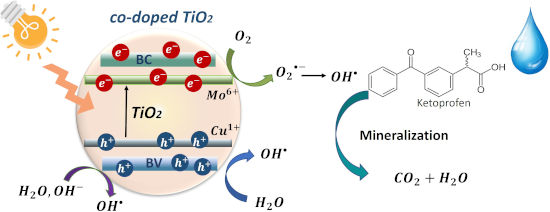
- catalytic efficiency towards different organic contaminant molecules [5]. The photochemical degradation of ketoprofen was previously reported [23] to result in a small decrease in the total organic carbon (TOC) content. TOC content remained almost constant for several hours, and only 12% of mineralization
- 60 min of reaction, and 90% of the total carbon was mineralized. In addition, it was determined that hydroxyl radicals play an important role in the photocatalytic reaction mechanism. Experimental Material synthesis The synthesis of co-doped TiO2 was carried out through the sol–gel method. The
- microscope JEOL 6490LV equipped with an energy dispersive X-ray (EDX) spectroscopy analyzer for chemical microanalysis using 20 kV of voltage. The samples were placed on a carbon slab and covered with gold to improve the conductivity. The surface area was measured by N2 physisorption through the BET method



Electrochemical determination of ciprofloxacin using a MIL-101/reduced graphene oxide-modified electrode
Beilstein J. Nanotechnol. 2026, 17, 541–554, doi:10.3762/bjnano.17.35
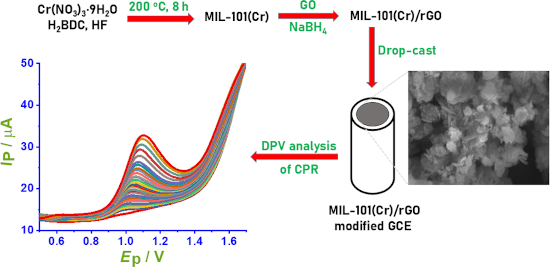
- ciprofloxacin (CPR) was developed using a glassy carbon electrode modified with MIL-101/reduced graphene oxide (MIL-101/rGO). MIL-101/rGO was synthesized via a facile ultrasonic-assisted method and characterized by various physicochemical techniques. The synergistic combination of MIL-101 with rGO significantly
- extraction based on carbon quantum dots/zeolite imidazolate framework-90/polyvinyl pyrrolidone/iron(II,III) oxide with high-performance liquid chromatography [6][7] or chromatography–tandem mass spectrometry [8] offer high accuracy and reliability. However, these techniques often need expensive equipment
- direct use in electrochemical sensing. To address this limitation, hybridizing MOFs with conductive carbon materials has been extensively studied. Reduced graphene oxide (rGO) is especially appealing due to its high electrical conductivity [12], large specific surface area, mechanical stability [13], and


Fractional shot noise of an SU(N) Kondo system
Beilstein J. Nanotechnol. 2026, 17, 515–540, doi:10.3762/bjnano.17.34
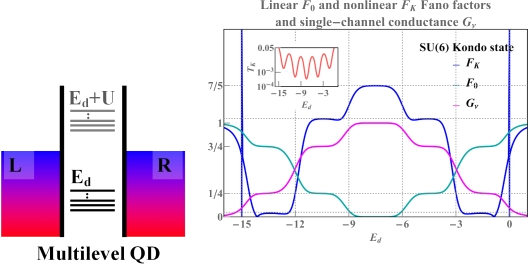
- the tunability of QDs by external fields, voltages, and strains, strong correlations can be tested also in regimes not accessible in solid-state physics. The paramagnetic SU(2) Kondo effect has been observed in semiconductor-based QDs [5][6], in carbon nanotubes (CNTs) [7][8][9][10][11], and in
- ] and for cold atoms in [40]. There are also reports on Kondo effects for N > 6, for example, the SU(12) Kondo effect in carbon nanotubes has been analyzed in [41]. In the SU(N) case, the system has N flavors instead of spin-up and spin-down, and the three Pauli matrices are generalized to (N2 − 1
- systems. We address our calculations to multilevel two-dimensional electron gas (2DEG) quantum dots [49] and to single-walled and multiwalled carbon nanotube QDs [50][51]. It is worth mentioning that these symmetries are of a fundamental nature and concern systems from various, sometimes very distant


![[Graphic 127]](/bjnano/content/inline/2190-4286-17-34-i187.svg?max-width=637&scale=1.18182)

Upcycling agroindustrial waste into graphene oxide supports for gold nanoparticles: toward sustainable nanomaterials
Beilstein J. Nanotechnol. 2026, 17, 489–504, doi:10.3762/bjnano.17.32
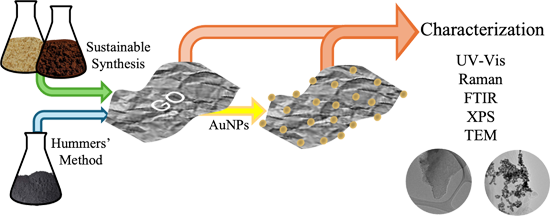
- of transforming agroindustrial waste into high-value graphene-based nanomaterials and highlight the potential of sustainable synthesis routes for advancing environmentally responsible carbon-based technologies. Keywords: agroindustrial waste; gold nanoparticles; graphene oxide; green synthesis
- routes compared to conventional harsh chemical methods [11][12][13][14]. In parallel, the increasing demand for eco-friendly, low-cost substitutes has driven the use of biomass-derived carbon precursors, particularly agricultural and food waste, as replacements for graphite [15][16][17]. These types of
- waste are abundant, renewable, and often underutilized. Biomass has a high carbon content and aromatic structures, making it suitable for carbonization. This approach not only contributes to waste minimization but also promotes environmental sustainability by converting abundant biowaste into valuable

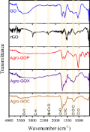
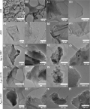
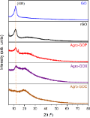

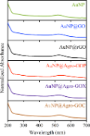

Defects and defect-mediated engineering of two-dimensional materials: challenges and open questions
Beilstein J. Nanotechnol. 2026, 17, 454–488, doi:10.3762/bjnano.17.31
- measured at the atomic scale and correlated with the local atomic and electronic structure? The ability to measure the optical spectra of individual defects at the atomic scale and to correlate them directly with their local atomic and electronic structure, as performed for 1D carbon nanotubes [111], would
- /quantification using STM/STS? STS and orbital imaging provides unique fingerprints of point defects in TMDs including common impurities found in synthetically grown TMDs, such as oxygen substitutions (OX) [51][120] and carbon–hydrogen complexes () [121][122] at chalcogen sites, molybednum (MoM) [120], chromium





Nanoinformatics: spanning scales, systems and solutions
Beilstein J. Nanotechnol. 2026, 17, 423–427, doi:10.3762/bjnano.17.28
- classical molecular dynamics and ab initio calculations revealed that TA preferentially binds to the most reactive sites on GO surfaces via oxygen-containing groups or the carbon matrix. The binding energy was dominated by van der Waals interaction forces. A dose-dependent mitigating effect of TA on the

Biomimetic nanoparticles in cancer photodynamic therapy: a review of targeted delivery systems and therapeutic outcomes
Beilstein J. Nanotechnol. 2026, 17, 396–422, doi:10.3762/bjnano.17.27

- to cancer cells; this resulted in a threefold increase in the accumulation of PLGA nanoparticles within the tumor [106]. A notable study aimed to evaluate the translational potential of biomimetic delivery systems for precise tumor therapy. Gold@carbon nanoparticles were coated with proteins derived


Eco-efficient materials for agricultural crops based on a mineral rich in MOR- and HEU-type zeolites
Beilstein J. Nanotechnol. 2026, 17, 381–395, doi:10.3762/bjnano.17.26
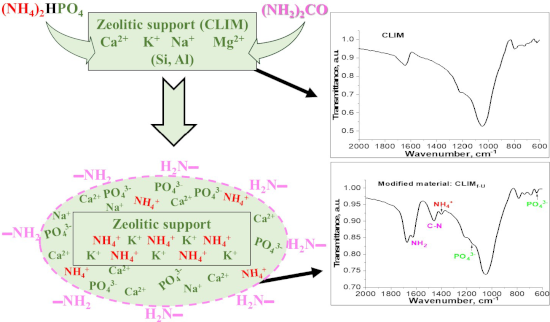
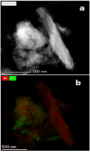
- electron microscope was used; prior to measurements, samples were adhered to supports to coat them with a gold layer. For TEM analysis, samples were deposited on a 200-mesh copper grid with carbon membrane. Images were observed on a Talos F200X ThermoScientific microscope at 44000× magnification in S-MET




Interconnection morphology effects on the radio frequency response of carbon nanotube sponges
Beilstein J. Nanotechnol. 2026, 17, 343–351, doi:10.3762/bjnano.17.23
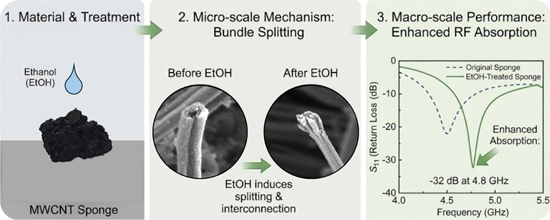
- , Italy 10.3762/bjnano.17.23 Abstract In this work, the high-frequency response of a multiwalled carbon nanotube (MWCNT) film grown on a silicon substrate is compared with that of MWCNT sponges (CNSs). Different from the CNT film, CNSs are a self-standing material that can operate in the absence of a
- applied for these tests, and an increase in the response up to 45% was found for the two studied positions. Keywords: carbon nanotube film; carbon nanotube sponge; chemical vapour deposition; monopole RF antenna; Introduction Most radio frequency (RF) applications rely on the use of conductors with low
- conditions [1][2]. Novel alternative materials including conducting polymers [3], nanocarbon-based materials like carbon fibres [4], carbon nanotubes (CNTs), their composites [5][6][7], and more recently graphene [8][9] have been the focus of extensive research. Above materials fulfil the requirements of




Advancing nanolithography: a comprehensive review of materials for local anodic oxidation with AFM
Beilstein J. Nanotechnol. 2026, 17, 275–291, doi:10.3762/bjnano.17.19
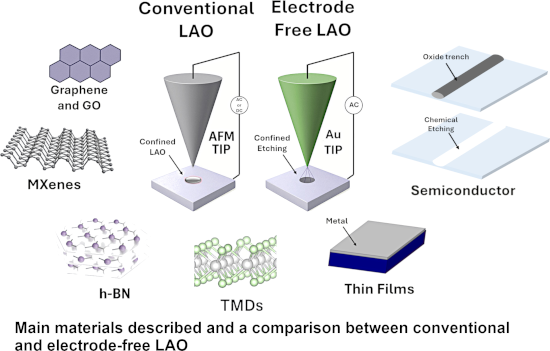
- grown oxide. Specifically, on Si, LAO-derived oxide exhibits a density of 2.05 g·cm−3, lower than the 2.27 g·cm−3 density of thermally oxidized silicon [43]. In the case of Si surfaces the chemical reaction leading to SiO2 formation is: In the case of SiC, carbon atoms are eliminated in the form of
- carbon dioxide: The oxides fabricated on MoX2 materials (MoS2, MoSe2, and MoTe2) are instead soluble in water, indicating that the product of the reaction is MoO3 [21]: Similarly, LAO on WSe2 produces WO3 features that have been etched in water [24]. If we consider semiconductors and metals, most
- experiments aimed to fabricate narrow oxide lines on Si. In one case (Figure 2b), the aspect ratio was enhanced by using a carbon nanofiber (CNF)-functionalized AFM tip [51]; Figure 2c illustrates the scale of a multilevel SiNW transistor, serving as proof that LAO is compatible with performing multiple


Gold nanoparticle-decorated reduced graphene oxide as a highly effective catalyst for the selective α,β-dehydrogenation of N-alkyl-4-piperidones
Beilstein J. Nanotechnol. 2026, 17, 218–238, doi:10.3762/bjnano.17.15
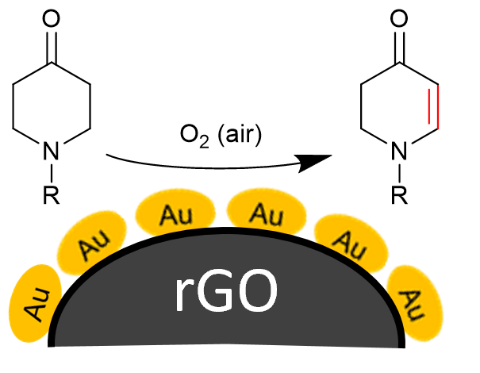
- its reaction product N-methyl-2,3-dihydropyridin-4(1H)-one is highly valuable (>1000 €·g−1) in contrast to the inexpensive starting material (0.15 €·g−1). Various synthesis methods were employed to prepare AuNPs supported on different carbon materials, including reduced graphene oxide (rGO), activated
- carbon (AC), and carbon black (CB), to investigate the influence of the carbon support on the catalyst performance. As stabilizing agents for the AuNPs, citrate (Cit) and the polyoxometallate [SiW9O34]10− (SiW9) were used. Among the tested catalysts, the rGO-supported ones, Au-Cit/rGO, Au-SiW9/rGO, and
- filtration and where the NPs are further stabilized against coalescence, aggregation, sintering, or Ostwald ripening under the catalytic reaction conditions. By anchoring AuNPs onto a solid support, such as metal oxides, polymers, or carbon-based materials, their stability is significantly enhanced





