Search results
Search for "conductivity" in Full Text gives 675 result(s) in Beilstein Journal of Nanotechnology. Showing first 200.
Enhanced erosion resistance and radiation stability of WC–WO3 nanocomposite films under 100 keV Kr+ ion irradiation
Beilstein J. Nanotechnol. 2026, 17, 922–934, doi:10.3762/bjnano.17.65
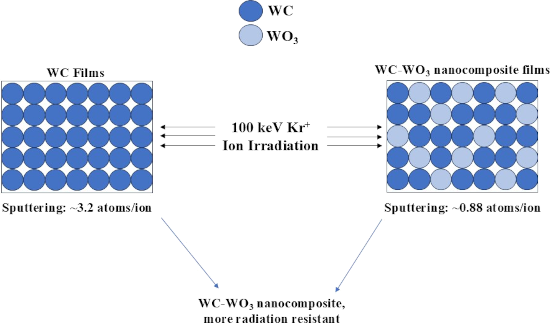
- application as a material for plasma-facing walls [10][11] in fusion reactors due to its extraordinary properties including its high thermal conductivity and mechanical strength [7][12]. The ceramic nature of WC contributes to its stability under such conditions, and recent studies have confirmed its
- performance with large centre radiation losses leading to several limitations on plasma operations [47][48][49]. Researchers then started exploring tungsten as a promising PFC material due to its exceptional qualities such as high melting point, high thermal conductivity, and high sputtering threshold energy



Supramolecular one-dimensional conducting nanofibers from a C3-symmetric tetrathiafulvalene derivative
Beilstein J. Nanotechnol. 2026, 17, 872–881, doi:10.3762/bjnano.17.63
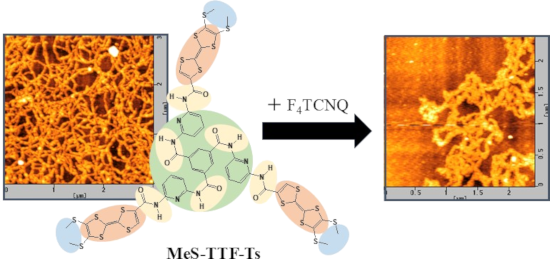
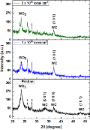
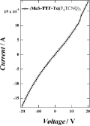
- to F4TCNQ through the formation of F4TCNQ− and TTF+ species. These results indicate the formation of a highly charge-transferred donor–acceptor assembly in the nanofibers. Electrical conductivity measurements revealed that the (MeS-TTF-Ts)(F4TCNQ)3 nanofibers exhibit a conductivity of 1.24 × 10⁻²
- (TTF) derivatives are representative redox-active molecules capable of forming charge-transfer complexes, and their charge-transfer salts have long been known to exhibit high electrical conductivity [11][12][13][14]. In recent years, TTF derivatives functionalized with amide groups or long alkyl chains
- method or from cast films deposited on quartz substrates, depending on the sample form. Conductivity measurements Electrical conductivity was measured by a direct current (DC) two-probe method. Gold electrodes with a thickness of 100 nm were deposited on mica substrates by vacuum evaporation. Electrical


Sustainable fabrication of 2D-based devices through reuse of substrates with microfabricated electrodes
Beilstein J. Nanotechnol. 2026, 17, 818–827, doi:10.3762/bjnano.17.58
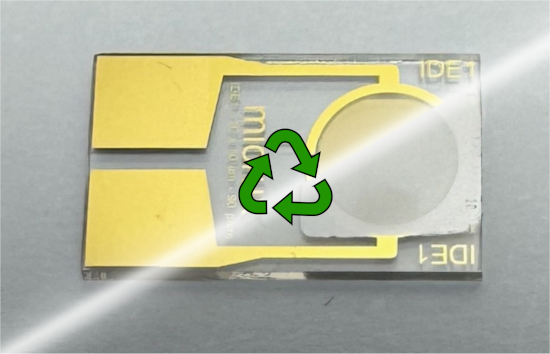
- were tested to verify the absence of any electrical connections between the electrodes. The insets in Figure 3a–c show the electrical characterization after each cleaning process, confirming the absence of residual conductivity between the electrodes, indicating effective removal of the conductive


Glycerol photoelectrochemical oxidation reaction at carbon nitrides/BiVO4 materials
Beilstein J. Nanotechnol. 2026, 17, 806–817, doi:10.3762/bjnano.17.57
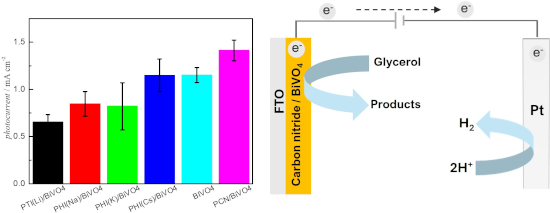
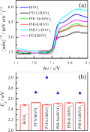
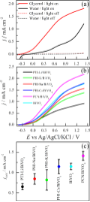
- been pointed out as a promising material, as it presents high chemical stability and a wide absorption range of solar radiation [8][9][10]. To overcome the limitations associated with the low electrical conductivity of BiVO4, sluggish surface kinetics and the recombination of electron–hole pairs [11




Cellulose as a photocatalyst support material: extraction, structural features, and environmental applications
Beilstein J. Nanotechnol. 2026, 17, 635–652, doi:10.3762/bjnano.17.44
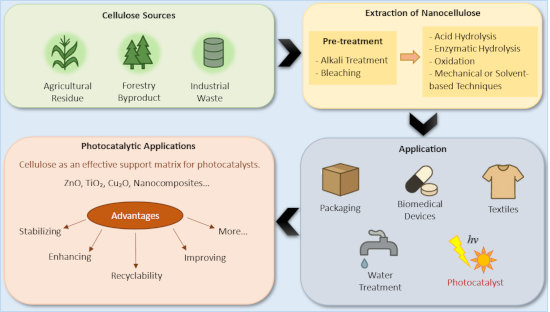
- the need for additional additives, and their high carbon content and small size make them particularly suitable for producing porous carbon-based electrodes through high-temperature pyrolysis. Beyond enhancing conductivity, the use of CNCs as template materials provides multiple advantages, since they
- not only improve the strength of the resulting composites but also allow for water-based processing thanks to their excellent dispersibility in water and the presence of reactive hydroxy groups on their surface. To achieve conductivity, four main strategies are commonly applied, which are coating CNCs


Recent progress in enhancing built-in electric fields of perovskite solar cells via junction engineering
Beilstein J. Nanotechnol. 2026, 17, 602–621, doi:10.3762/bjnano.17.42



Impacts of annealing on structural and photophysical properties of zinc phthalocyanine adsorbed on graphene
Beilstein J. Nanotechnol. 2026, 17, 576–585, doi:10.3762/bjnano.17.39
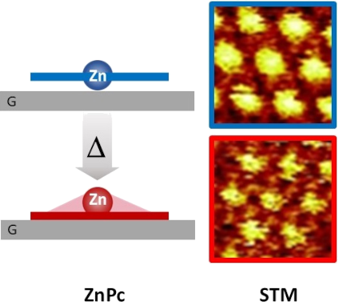
- molecular media, and are strongly influenced by various structural parameters at the molecular scale [13]. For example, face-on or edge-on orientation of π-conjugated molecules on graphene turns on or off π-stacking interactions with large consequences on hole conductivity and rectifying properties [14]. It


Synthesis of Cu–Mo/TiO2 and Co–Mo/TiO2 photocatalysts for the efficient degradation of organic pollutants in water
Beilstein J. Nanotechnol. 2026, 17, 559–570, doi:10.3762/bjnano.17.37
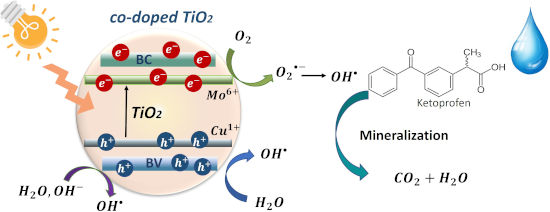
- microscope JEOL 6490LV equipped with an energy dispersive X-ray (EDX) spectroscopy analyzer for chemical microanalysis using 20 kV of voltage. The samples were placed on a carbon slab and covered with gold to improve the conductivity. The surface area was measured by N2 physisorption through the BET method



Electrochemical determination of ciprofloxacin using a MIL-101/reduced graphene oxide-modified electrode
Beilstein J. Nanotechnol. 2026, 17, 541–554, doi:10.3762/bjnano.17.35
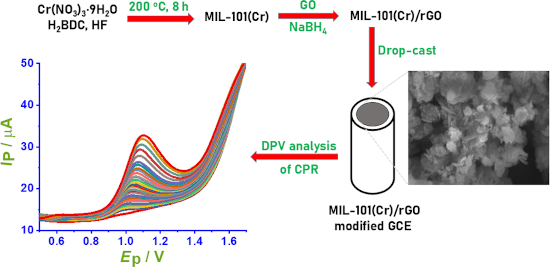
- surface areas, tunable pore sizes, and numerous active sites. Among these, MIL-101, a chromium-based MOF, is notable for its large pore volume, excellent chemical stability, and strong ability to adsorb organic molecules [9][10][11]. However, the poor electrical conductivity inherent to MIL-101 limits its
- direct use in electrochemical sensing. To address this limitation, hybridizing MOFs with conductive carbon materials has been extensively studied. Reduced graphene oxide (rGO) is especially appealing due to its high electrical conductivity [12], large specific surface area, mechanical stability [13], and
- strong π–π interactions with aromatic compounds like ciprofloxacin [14][15]. Integrating MIL-101 with rGO aims to combine the high surface area and adsorption capacity of MIL-101 with the excellent electrical conductivity and electron-transfer ability of rGO, creating a synergistic effect that boosts the


Upcycling agroindustrial waste into graphene oxide supports for gold nanoparticles: toward sustainable nanomaterials
Beilstein J. Nanotechnol. 2026, 17, 489–504, doi:10.3762/bjnano.17.32
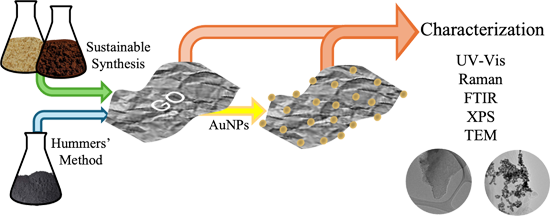
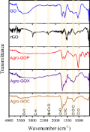
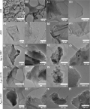
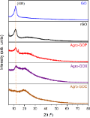
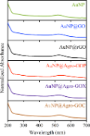
- becomes essential to investigate the functionalization potential of Agro-GO materials as viable alternatives to conventionally produced GO [29]. The integration of gold nanoparticles (AuNPs) onto GO yields hybrid materials with synergistic enhancements, such as improved conductivity, plasmonic activity



Interconnection morphology effects on the radio frequency response of carbon nanotube sponges
Beilstein J. Nanotechnol. 2026, 17, 343–351, doi:10.3762/bjnano.17.23
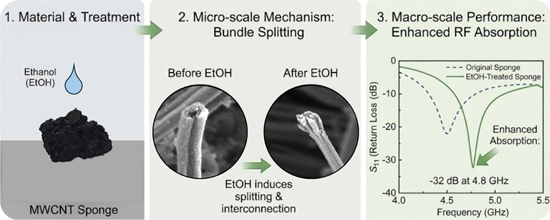
- cellular networks (4G/5G) for mobile and satellite communication. This vast number of applications often requires that the active materials possess additional properties beyond good electrical conductivity, such as flexibility, lightness, and resistance to thermal and mechanical stress or chemically harsh
- being lighter and more resistant to a broad range of environmental and harsh operating conditions, while maintaining sufficient electrical conductivity. Among them, CNTs [10][11] proved to be well-performing materials in electronics and optoelectronic applications. CNT-based antennas have been realized
- from single-walled CNTs (SWCNTs) [12][13] as well as multiwalled CNTs (MWCNTs) [14][15][16][17]. CNTs are characterized by slow wave propagation and high characteristic impedance, and their conductivity can vary as a function of dimensions (length and diameter), chirality, and purity [16]. This enables



Fast vortex dynamics and relaxation times in NbRe-based heterostructures
Beilstein J. Nanotechnol. 2026, 17, 292–302, doi:10.3762/bjnano.17.20
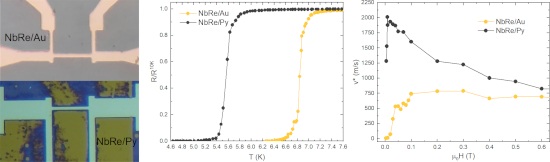
- /N [26][27][28][29][30] or S/F [31][32][33][34] systems, different mechanisms can influence the vortex dynamics depending on the thickness and conductivity of the capping layer. In particular, a sufficiently thick metallic overlayer may lead to a damping of vortex motion due to eddy currents induced
- Figure 2 that, as the current further increases, a nonlinear conductivity regime appears until I* is reached. When the magnetic field increases, the critical voltage at which the jump occurs also increases, while the values of I* decrease. The I–V curves allow one to determine the so-called saturation
- different ways when considering thermal dissipation and phonon-mediated quasiparticle recombination. In fact, Au is a non-magnetic metal with high electronic and thermal conductivity, providing a more effective heat removal. This is confirmed from the analysis performed in the framework of Bezuglyj and


Advancing nanolithography: a comprehensive review of materials for local anodic oxidation with AFM
Beilstein J. Nanotechnol. 2026, 17, 275–291, doi:10.3762/bjnano.17.19
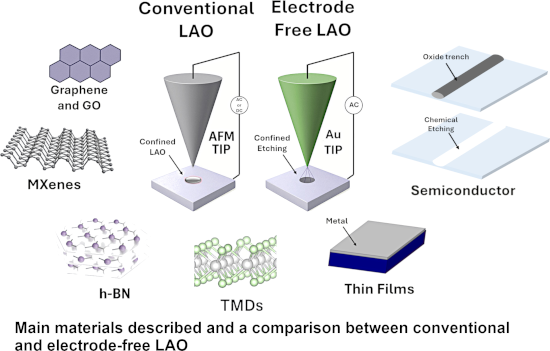
- minimum feature size. Carbon nanotube (CNT)-functionalized AFM tips have been explored for LAO [49][60][61] because their high aspect ratio and good conductivity can, in principle, enable sharper and more controlled oxidation. However, their practical performance is limited by mechanical fragility and
- notably GaAs and related heterostructures, where the patterned oxide lines were used as templates for nanoscale device fabrication [90]. Silicon carbide (SiC) is an interesting material for LAO, offering unique advantages over silicon due to its high thermal conductivity, chemical inertness, and
- for the fabrication of graphene nanoribbons, quantum point contacts, and TMD nanotransistors by locally modulating conductivity or selectively removing material. 2.5.4 Graphene and graphene oxide. Interest in graphene peaked in the last decades, with several attempts to couple LAO with single/few


Gold nanoparticle-decorated reduced graphene oxide as a highly effective catalyst for the selective α,β-dehydrogenation of N-alkyl-4-piperidones
Beilstein J. Nanotechnol. 2026, 17, 218–238, doi:10.3762/bjnano.17.15
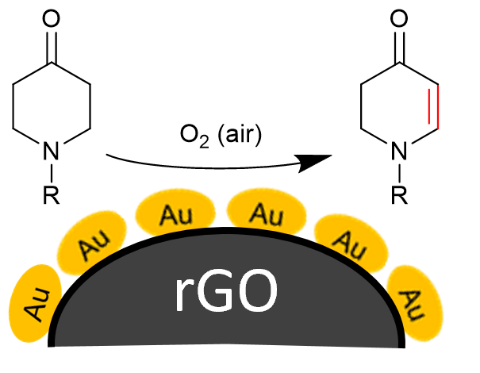
- environments, their tunable surface area and surface chemistry, and electrical conductivity [18][19]. To deposit metal NPs onto a carbon support, procedures such as adsorption or reduction–deposition (RD), co-precipitation, impregnation, and deposition precipitation (DP) are commonly employed [6][19]. Carbon


Time of flight secondary ion mass spectrometry imaging of contaminant species in chemical vapour deposited graphene on copper
Beilstein J. Nanotechnol. 2026, 17, 200–213, doi:10.3762/bjnano.17.13
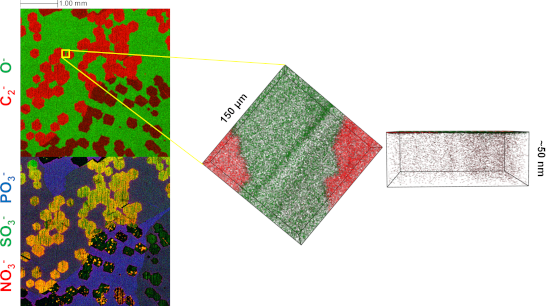
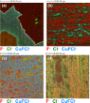
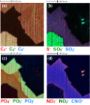
- trade-off in terms of reduced conductivity [58]; while typically not intentionally added to copper used for CVD purposes, it can still be present as a contaminant from the copper production process. The 4 mm × 4 mm ToF-SIMS image of the BO sample in Figure 4b also reveals the presence of sulphite





Structure-dependent thermochromism of PAZO thin films: theory and experiment
Beilstein J. Nanotechnol. 2026, 17, 186–199, doi:10.3762/bjnano.17.12
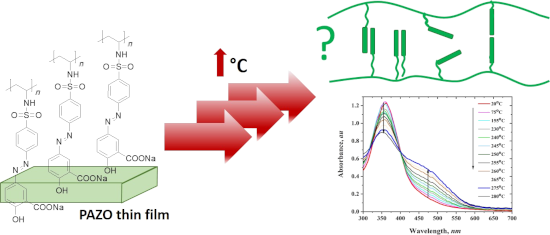
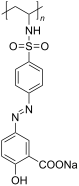
- physicochemical, optoelectronic, and even biophysical properties creates myriad opportunities for their application, especially as polymer thin films [1][2]. These films are widely used in modern life as they can be easily tailored to have specific properties like high conductivity, optical transparency, or


Functional surface engineering for cultural heritage protection: the role of superhydrophobic and superoleophobic coatings – a comprehensive review
Beilstein J. Nanotechnol. 2026, 17, 63–96, doi:10.3762/bjnano.17.6
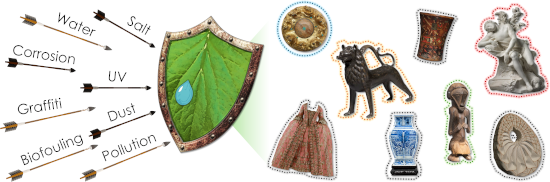
- ) layer. Subsequently, the authors incorporated the PCA-coated VCMs into a polydimethylsiloxane (PDMS) matrix, significantly reducing the thermal conductivity of the coatings and improving their surface hydrophobicity. The coating provided robust protection for concrete, enhancing abrasion resistance and




Reduced graphene oxide paper electrode for lithium-ion cells – towards optimized thermal reduction
Beilstein J. Nanotechnol. 2026, 17, 24–37, doi:10.3762/bjnano.17.3
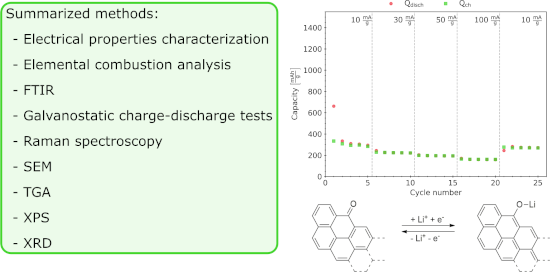
- and thickness were determined with scanning electron microscopy imaging. This paper also reveals electrical and electrochemical properties of the material. The conductivity of the material obtained at 800 °C reached ≈70 S/cm, and the discharge capacity reached ≈160 mAh/g at 100 mA/g current density
- between 2020 and 2024 in the ScienceDirect database only [1]. Market forecasts predict the growth of the overall rGO market at a compound annual growth rate of 36.5% between 2024 and 2031 [2]. This material owes its popularity in particular to such properties as sufficient electrical conductivity and
- carbonaceous base material was chosen due to its high conductivity. The relevance of rGO is not limited to only one electrode; Kiran et al. revealed performance enhancement of both cathode and anode materials for hybrid supercapacitors as a result of rGO application as core structure [11]. A similar approach



Competitive helical bands and highly efficient diode effect in F/S/TI/S/F hybrid structures
Beilstein J. Nanotechnol. 2026, 17, 15–23, doi:10.3762/bjnano.17.2
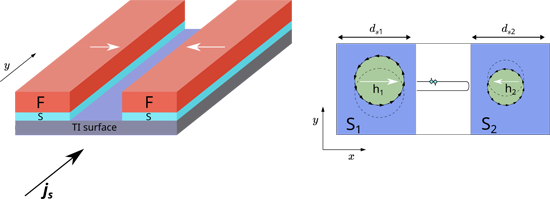
- , we supplement the above equations with two pairs of the boundary conditions (two for each S/N interface) of the following type: Here, γB = RBσl/ξl, γ = ξrσl/ξlσr where σl(r) is the conductivity of the material on the left (right) side of the interface. The parameter γ controls the slope of the


![[Graphic 16]](/bjnano/content/inline/2190-4286-17-2-i31.svg?max-width=637&scale=1.18182)
![[Graphic 17]](/bjnano/content/inline/2190-4286-17-2-i32.svg?max-width=637&scale=1.18182)


Geometry-controlled engineering of the low-temperature proximity effect in normal metal–superconductor junctions
Beilstein J. Nanotechnol. 2025, 16, 2265–2273, doi:10.3762/bjnano.16.155
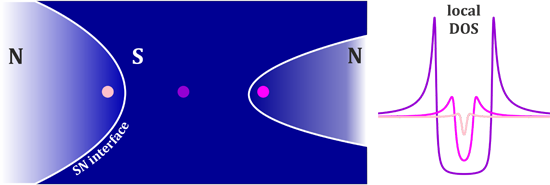
- a conventional superconductor [63] (Tc is the critical temperature, Δs(0) is the gap at T = 0). The parameter γNS ≡ σn/(GIξn) describes transparency of the interface (its resistance). Here σn and ξn denote, respectively, the normal-metal conductivity and coherence length, while GI is the interface


Chiral plasmonic nanostructures fabricated with circularly polarized light
Beilstein J. Nanotechnol. 2025, 16, 2245–2264, doi:10.3762/bjnano.16.154
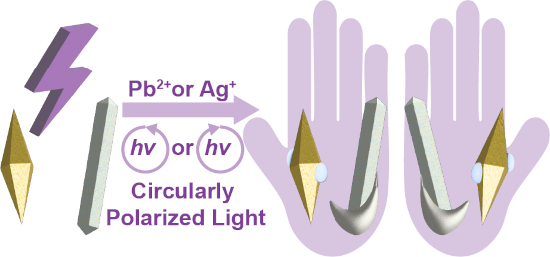
- with large g-factors. Section 2.3 will address this issue with the strategy of modifying the surface ligands on PNSs to create chiral PNSs. The non-radiative decay of hot carriers can heat the PNSs. Due to the high thermal conductivity of metals, isolated PNSs usually feature uniform temperature





Optical bio/chemical sensors for vitamin B12 analysis in food and pharmaceuticals: state of the art, challenges, and future outlooks
Beilstein J. Nanotechnol. 2025, 16, 2207–2244, doi:10.3762/bjnano.16.153


Electron transport through nanoscale multilayer graphene and hexagonal boron nitride junctions
Beilstein J. Nanotechnol. 2025, 16, 2132–2143, doi:10.3762/bjnano.16.147
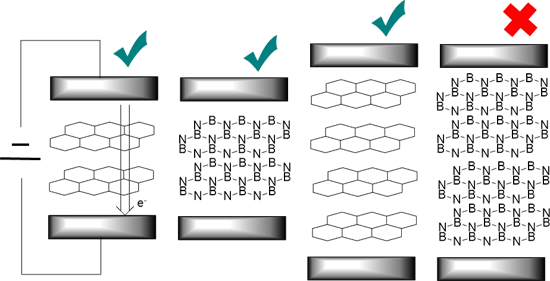
- [2], nanoscale electronics and electronic components [3], thermoelectric devices [4], and transparent films [5]. Graphene is a two-dimensional zero-bandgap semiconductor with excellent bulk conductivity. Its in-plane electron transport strongly depends on lattice order, lattice defects, and three
- graphene has focused on in-plane conductivity, and only very few studies have reported data on the electron transport properties between the adjacent planes [9][10][11][12][13]. Defects in graphene can alter its electronic states and lead to deviations from its intrinsic properties. We look at two common
- graphene-based electronics and as a dielectric material in nanoelectronics devices. It finds application regarding corrosion resistance and antioxidation protective coatings [19]. Due to its high thermal conductivity and electrical insulation, h-BN is used in thermal management applications. h-BN is used


Beyond the shell: exploring polymer–lipid interfaces in core–shell nanofibers to carry hyaluronic acid and β-caryophyllene
Beilstein J. Nanotechnol. 2025, 16, 2015–2033, doi:10.3762/bjnano.16.139
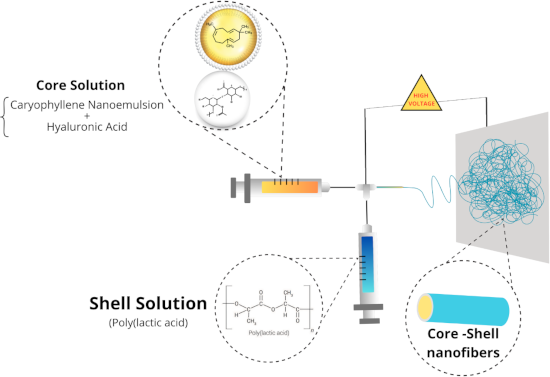
- concentration, surface tension, conductivity, and solvent volatility, alongside careful consideration of electrospinning conditions, such as temperature and humidity [18][19]. The polymer selection of nanofibers intended for biomedical applications must prioritize not only mechanical strength, controlled




Laser ablation in liquids for shape-tailored synthesis of nanomaterials: status and challenges
Beilstein J. Nanotechnol. 2025, 16, 1963–1997, doi:10.3762/bjnano.16.137
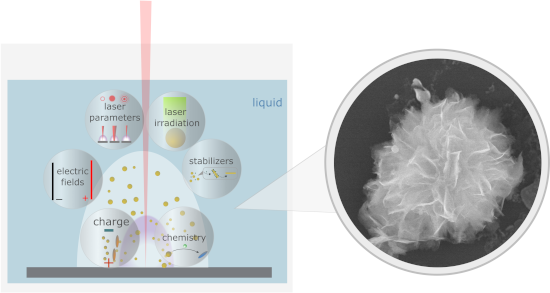
- heat transfer coefficient, Nu is the Nusselt number, k is thermal conductivity of the surrounding liquid, L is the characteristic length, and Tbl is the surrounding liquid boiling temperature. In order to analyse the reached temperatures and occurring thermal processes, the dissipated heat fluxes