


Search results
Search for "data collection" in Full Text gives 50 result(s) in Beilstein Journal of Nanotechnology.
Defects and defect-mediated engineering of two-dimensional materials: challenges and open questions
Beilstein J. Nanotechnol. 2026, 17, 454–488, doi:10.3762/bjnano.17.31





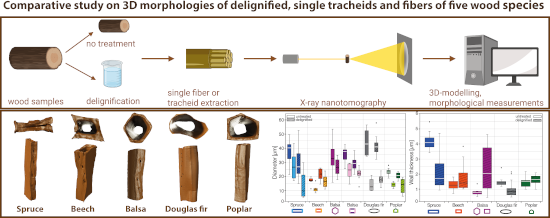
Comparative study on 3D morphologies of delignified, single tracheids and fibers of five wood species
Beilstein J. Nanotechnol. 2026, 17, 239–250, doi:10.3762/bjnano.17.16
- . N. G. by the grant GO 995/43-1 and to C. Z. by the grant ZO 113/32-1 from the German Science Foundation (DFG) is acknowledged. The funders took no part in the study design, data collection and analysis, decision of publishing or any preparation of the manuscript. We acknowledge Hereon (Geesthacht


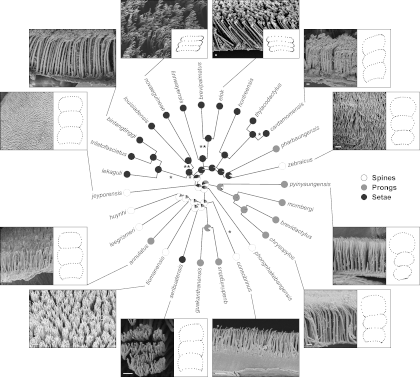
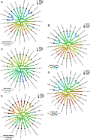
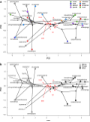
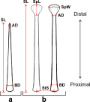
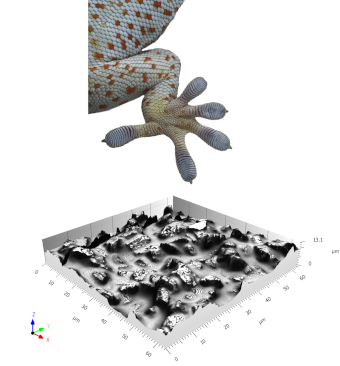
Subdigital integumentary microstructure in Cyrtodactylus (Squamata: Gekkota): do those lineages with incipiently expressed toepads exclusively exhibit adhesive setae?
Beilstein J. Nanotechnol. 2026, 17, 38–56, doi:10.3762/bjnano.17.4


Microplastic pollution in Himalayan lakes: assessment, risks, and sustainable remediation strategies
Beilstein J. Nanotechnol. 2025, 16, 2144–2167, doi:10.3762/bjnano.16.148
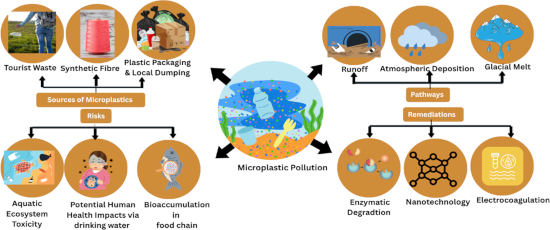
- been accepted as highly effective to trace the origins of MPs and compositions [131]. Public engagement in monitoring programs, such as citizen science initiatives, plays a crucial role in data collection and raising awareness [132]. Regulatory systems play a key part in managing MPs pollution. Bans of
- research gaps regarding fate, impact, and mitigation of MPs. One such challenge is the absence of a standardized monitoring system, which causes variability in data collection between studies. More advanced spectroscopic and AI-based detection systems need to be investigated for enhanced accuracy and


Nanotechnology-based approaches for the removal of microplastics from wastewater: a comprehensive review
Beilstein J. Nanotechnol. 2025, 16, 1607–1632, doi:10.3762/bjnano.16.114
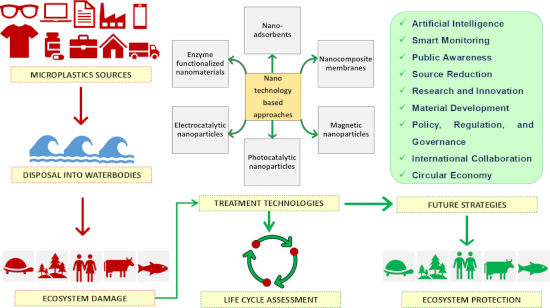
- systems represent a futuristic and highly adaptable approach to addressing micro/nanoplastic contamination [127]. In general, the future of MP detection depends on developing, with the help of AI, a standardized framework that integrates all stages, starting from data collection, to the analysis and risk


The role of biochar in combating microplastic pollution: a bibliometric analysis in environmental contexts
Beilstein J. Nanotechnol. 2025, 16, 1401–1416, doi:10.3762/bjnano.16.102
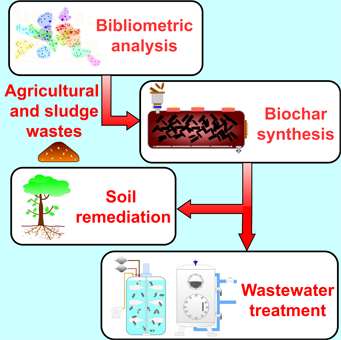
- provide critical insights into the current state and future directions of biochar's application in addressing MP pollution. Review Research methodology and analytical framework Data collection and processing The study employed bibliometric analysis using CiteSpace to examine publication trends and
- evolution of research fields [27]. Bibliometric data were collected from the “Web of Science” (WOS) database to ensure comprehensive coverage and avoid the omission of relevant articles indexed in only one source. The data collection spanned January 2017 to December 2024, with the search process initiated



Automated collection and categorisation of STM images and STS spectra with and without machine learning
Beilstein J. Nanotechnol. 2025, 16, 1367–1379, doi:10.3762/bjnano.16.99
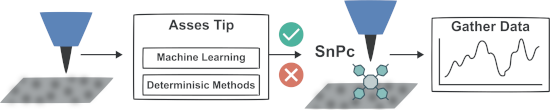
- extremely time-consuming. However, with the entire process being automated, this can be carried out very simply, and without any need for constant monitoring. We note that while we collected data using both types of tip in order to highlight the differences in quality, in a real use case data collection
- different adsorbate/substrate systems without the need for extensive data collection to train ML models. This methodology can aid in the rapid characterisation of new materials via automated probing of different features in a system, taking numerous measurements over different areas, only requiring an




Towards a quantitative theory for transmission X-ray microscopy
Beilstein J. Nanotechnol. 2025, 16, 1113–1128, doi:10.3762/bjnano.16.82
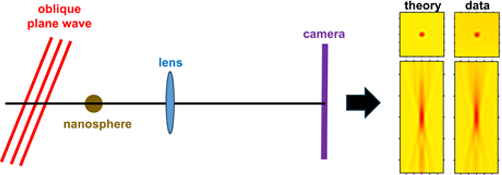
- reproducibility of the image data, we initially collected nine different 3D datasets under similar imaging conditions, but under different adjustments of the beamline due to fluctuations of the beam. The detailed data collection and pre-processing workflow is summarized in the Experimental section, and includes

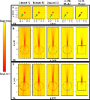


Characterization of ion track-etched conical nanopores in thermal and PECVD SiO2 using small angle X-ray scattering
Beilstein J. Nanotechnol. 2025, 16, 899–909, doi:10.3762/bjnano.16.68
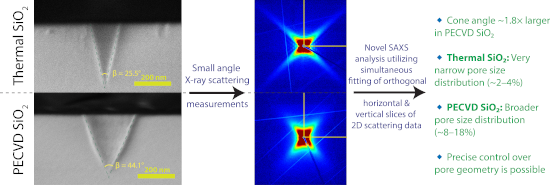
- as is, and the Si substrate was not removed before SAXS measurements. The sample-to-detector distances ranged between 7.2 and 7.6 m. Data collection was performed using Pilatus 1M and Pilatus 2M detectors during different measurement cycles. A silver behenate (AgBeh) standard was used to calibrate


Quantification of lead through rod-shaped silver-doped zinc oxide nanoparticles using an electrochemical approach
Beilstein J. Nanotechnol. 2025, 16, 422–434, doi:10.3762/bjnano.16.33
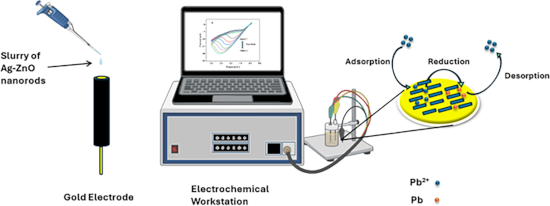
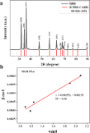
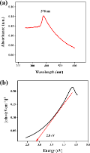
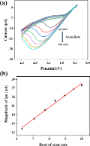
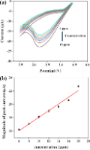
- lead sensor had a high sensitivity of 16 µA·ppm−1·cm−2, along with a detection limit of 3 ppm. Additionally, it demonstrated a response time of less than 2 s. This sensor is most suitable for applications that necessitate cost-effectiveness, rapid readings, and data collection in the field or at the





Development of a mucoadhesive drug delivery system and its interaction with gastric cells
Beilstein J. Nanotechnol. 2025, 16, 371–384, doi:10.3762/bjnano.16.28

- . Acknowledgements The authors acknowledge Konya Food and Agriculture University for the use of the laboratory facilities. The authors also acknowledge Evonik Industries for providing the Eudragit RS30D polymer. The authors also acknowledge Ayça Eroğlu for her contributions on data collection and assistance with


Instance maps as an organising concept for complex experimental workflows as demonstrated for (nano)material safety research
Beilstein J. Nanotechnol. 2025, 16, 57–77, doi:10.3762/bjnano.16.7

- approach and the tool are highlighted. Keywords: data collection and quality control; data provenance; experimental workflow visualisation; FAIR; nanomaterial life cycle stages; study design; Introduction The manipulation of matter at the nanoscale and the emergence of nanoscale materials, whose
- be linked to the corresponding resources documenting the steps in the form of text documents, protocol repository entries, or ELN pages. For data produced in the study, a strong linkage between protocols and data using a workflow with stages for sample preparation, measurement, raw data (collection
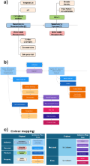
- , instance maps visualise the flow of data collection and methodologies, including the biological culture information and chemical pre- and post-exposure data (Figure 4A). The instances in the example in Figure 4 follow the timeline of exposure; at each instance, the nodes depict the data pertaining to that


Natural nanofibers embedded in the seed mucilage envelope: composite hydrogels with specific adhesive and frictional properties
Beilstein J. Nanotechnol. 2024, 15, 1603–1618, doi:10.3762/bjnano.15.126
- program under the Marie Skłodowska-Curie grant No 702293 – MuCellWall to A.K., and the grant GO 995/43-1 from German Science Foundation (DFG) to S.N.G. The funders did not take part in study design, data collection and analysis, decision of publishing, or any preparation of the manuscript.


Integrating high-performance computing, machine learning, data management workflows, and infrastructures for multiscale simulations and nanomaterials technologies
Beilstein J. Nanotechnol. 2024, 15, 1498–1521, doi:10.3762/bjnano.15.119


On the additive artificial intelligence-based discovery of nanoparticle neurodegenerative disease drug delivery systems
Beilstein J. Nanotechnol. 2024, 15, 535–555, doi:10.3762/bjnano.15.47
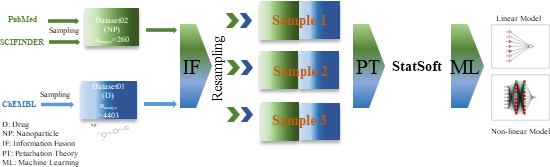
- on testing all possible combinations. Detailed information processing workflow of the IFPTML models. Steps 2.1 and 2.2: data collection (ChEMBL dataset of NDDs and NP cytotoxicity dataset); step 2.3: data pre-processing and information fusion (NP and NDD assays); step 2.4: definition of objective and



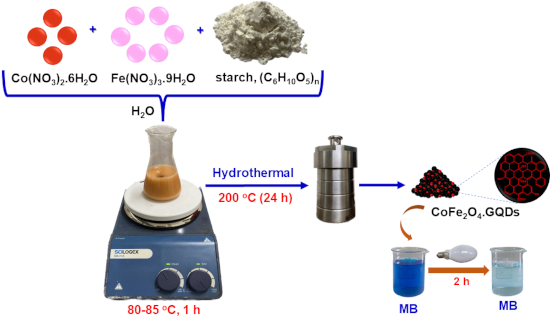
Photocatalytic degradation of methylene blue under visible light by cobalt ferrite nanoparticles/graphene quantum dots
Beilstein J. Nanotechnol. 2024, 15, 475–489, doi:10.3762/bjnano.15.43
- Interests The authors have no relevant financial or non-financial interests to disclose. Author Contributions All authors contributed to the study conception and design. Material preparation, data collection and analysis were performed by V.C.N.A., L.T.T.N., L.T.K.D., D.T.N.H., N.T.S., N.T.T.U., N.N.U.T




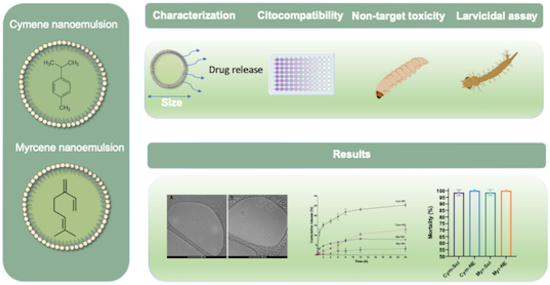
Development and characterization of potential larvicidal nanoemulsions against Aedes aegypti
Beilstein J. Nanotechnol. 2024, 15, 104–114, doi:10.3762/bjnano.15.10
- (REA). Neither the European Union nor the REA can be held responsible for them. The funders had no role in study design, data collection and analysis, decision to publish, or preparation of the manuscript.


Growing up in a rough world: scaling of frictional adhesion and morphology of the Tokay gecko (Gekko gecko)
Beilstein J. Nanotechnol. 2022, 13, 1292–1302, doi:10.3762/bjnano.13.107
- : Morphology data. Acknowledgements We thank E. R. Naylor for help with experimental design and data collection, and the Higham Lab members for help with animal care. We thank R. E. Espinoza and L. L. Grismer for their help obtaining live and preserved specimens used in this study. We thank the Central


Polarity in cuticular ridge development and insect attachment on leaf surfaces of Schismatoglottis calyptrata (Araceae)
Beilstein J. Nanotechnol. 2021, 12, 1326–1338, doi:10.3762/bjnano.12.98
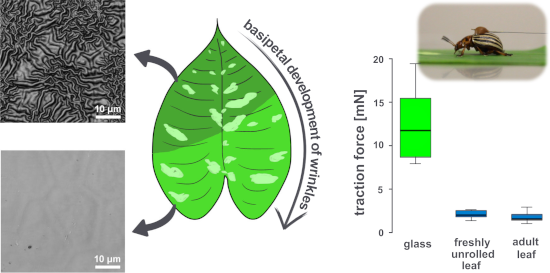
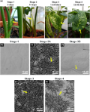
- program. T.S. and V.A.S. acknowledge additional funding by the Deutsche Forschungsgemeinschaft (DFG, German Research Foundation) under Germany’s Excellence Strategy – EXC-2193/1 – 390951807. Author Contributions M.T. and T.S. designed and supervised the study. Data collection, data assessment, and




Nanogenerator-based self-powered sensors for data collection
Beilstein J. Nanotechnol. 2021, 12, 680–693, doi:10.3762/bjnano.12.54
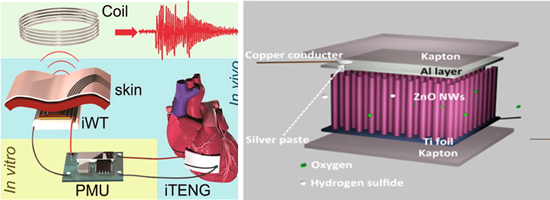
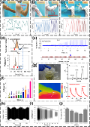
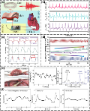
- . Keywords: data collection; Internet of Things; nanogenerator; self-powered sensor; wearable device; Introduction Self-powered sensor systems can harvest and convert environmental energy to electricity, which enables sensor operation without external power source [1][2]. Nanogenerators (NGs) can
- effectively harvest energy various low-frequency mechanical motions from the environment. NG-based self-powered sensors act as data collection units for traffic [3][4][5][6][7][8][9][10][11], meteorological environment [12][13][14][15][16][17][18][19][20][21], human movement [22][23][24][25][26][27], viscera
- -powered sensors in data-driven intelligent systems are proposed. Review Human physiological data collection based on self-powered sensors Self-powered wearable sensors and electronic skin Self-powered wearable sensors to collect human motion data can provide a data set for medical diagnosis and



Selective detection of complex gas mixtures using point contacts: concept, method and tools
Beilstein J. Nanotechnol. 2020, 11, 1631–1643, doi:10.3762/bjnano.11.146
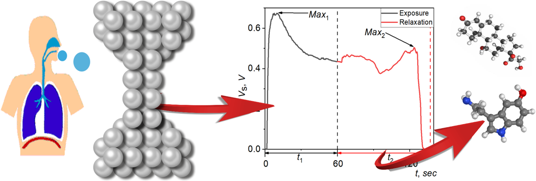
- quantum properties of objects and the usage of quantum tools and methods provide new unlimited opportunities for the development of technologies based on the principles of data collection and analysis of energy. Earlier, we proposed to use the information about energy processes occurring in the breath for


![[Graphic 4]](/bjnano/content/inline/2190-4286-11-146-i8.svg?max-width=637&scale=1.18182) in th...
in th...

![[Graphic 7]](/bjnano/content/inline/2190-4286-11-146-i11.svg?max-width=637&scale=1.18182) in the...
in the...
Electrokinetic characterization of synthetic protein nanoparticles
Beilstein J. Nanotechnol. 2020, 11, 1556–1567, doi:10.3762/bjnano.11.138
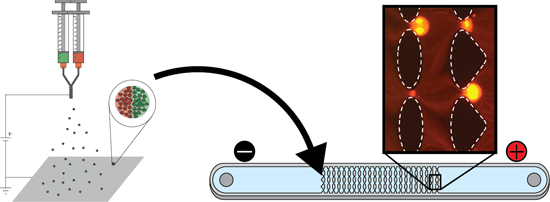
- a device for further data collection and analysis [19]. Both AC and DC electric potentials can be used to exploit differences in specific biological particle properties, such as electrical charge, size, shape, and polarizability [20][21]. An important fraction of miniaturized EK devices employ a



Mechanism of silica–lysozyme composite formation unravelled by in situ fast SAXS
Beilstein J. Nanotechnol. 2019, 10, 182–197, doi:10.3762/bjnano.10.17
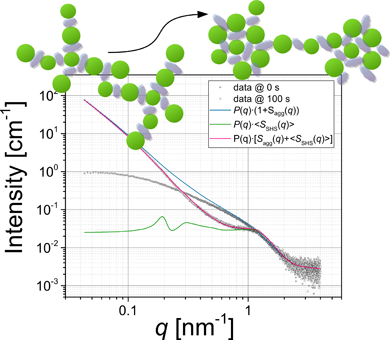
- backgrounds and reference samples including an empty capillary and a capillary filled with water, silica stock solution, LZM solutions at different concentrations. The initial SAXS data processing and reduction included a series of automatic post-data-collection steps including masking of undesired pixels



Accurate control of the covalent functionalization of single-walled carbon nanotubes for the electro-enzymatically controlled oxidation of biomolecules
Beilstein J. Nanotechnol. 2018, 9, 2750–2762, doi:10.3762/bjnano.9.257
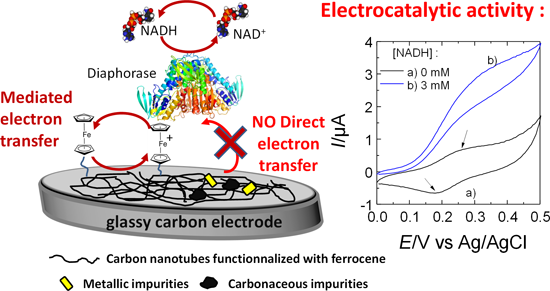
- electrochemical data. Supporting Information File 164: Additional experimental data. Acknowledgements This work has been supported by the French National Research Agency (ANR), project ANR-10-BLAN-0819-01-SPRINT. Aurélien Renard is acknowledged for XPS data collection. We thank Maxime Noël for help in acquiring






Optimization of Mo/Cr bilayer back contacts for thin-film solar cells
Beilstein J. Nanotechnol. 2018, 9, 2700–2707, doi:10.3762/bjnano.9.252
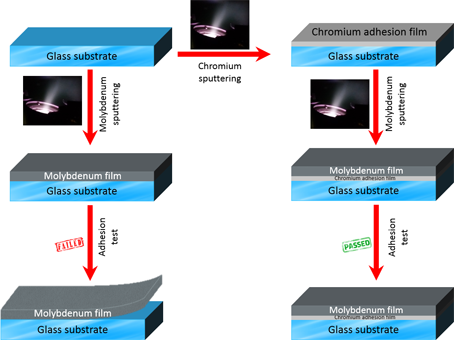
- source operating in parallel beam mode with a Hypix 3000 detector (0D mode). The incidence angle (α) was fixed to 1° during data collection. The incident optics were a 5° Soller slit, 10 mm incident slit and a 0.137 mm divergence slit. Receiving optics were a 0.114° collimator and 20 mm receiving slits





