


Search results
Search for "electronic properties" in Full Text gives 303 result(s) in Beilstein Journal of Nanotechnology. Showing first 200.
Vibration-induced dynamic structural superlubricity on MoS2/Au(111) under ultrahigh vacuum
Beilstein J. Nanotechnol. 2026, 17, 1039–1046, doi:10.3762/bjnano.17.71

- electrostatic interactions at the interface, offering high flexibility and fast response times. Despite these promising results, electrically driven friction control presents several inherent limitations. It is highly dependent on the interfacial electronic properties [8]. Furthermore, the degree of friction


Materials challenges in solid-state sensors for continuous monitoring of ions in water
Beilstein J. Nanotechnol. 2026, 17, 935–973, doi:10.3762/bjnano.17.66
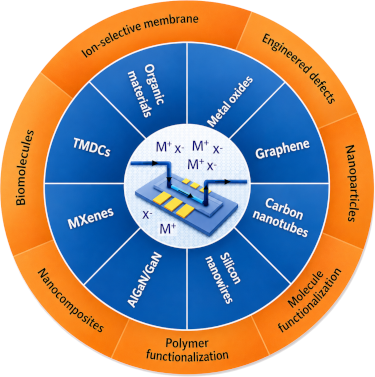
- noise and hysteresis through clean and defect-controlled interfaces, and must maintain stable electronic properties over time so that any electrical signal change reflects only the analyte concentration, not material instability. Third, the material’s surface must allow for functionalization, enabling



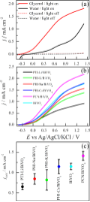
Glycerol photoelectrochemical oxidation reaction at carbon nitrides/BiVO4 materials
Beilstein J. Nanotechnol. 2026, 17, 806–817, doi:10.3762/bjnano.17.57
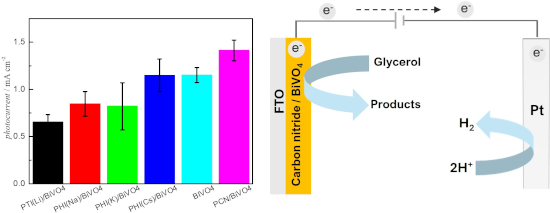
- intrinsic electronic properties, factors such as the nature of the alkali cations, synthesis method, and post-synthesis thermal treatments significantly influence the structural integrity and interfacial behavior of CN materials. Therefore, the design of efficient CN-based heterojunctions must consider not




Tuning the electronic properties of defect-rich MoS2
Beilstein J. Nanotechnol. 2026, 17, 796–805, doi:10.3762/bjnano.17.56
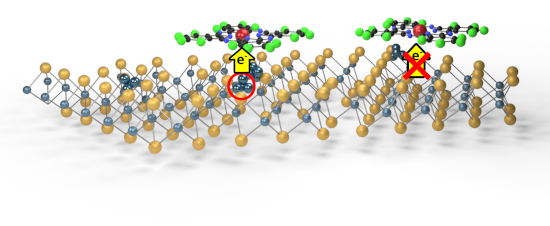
- structural defects significantly affect the electronic properties of the material. The present study utilizes angle-resolved photoelectron spectroscopy (ARPES) and surface-sensitive core-level spectroscopy (SXPS, XAS) with synchrotron radiation to investigate the interfaces between defect-rich MoS2 and
- techniques, heterostructuring with (fluorinated) transition metal phthalocyanines (TMPcs) has been shown to modify the interfacial electronic properties of pristine TMDCs [8][9][10]. For the interface between CoPcF16 and defect-free MoS2, a slight doping in the TMDC was recently observed, however without
- heterostructure is determined. It is proposed that the electronic properties at the interface of defect-rich surfaces can be tuned by the interaction with the deposited molecule. Experimental All experiments were conducted either at our home laboratory setup or at the LowDosePES endstation of the PM4 beamline


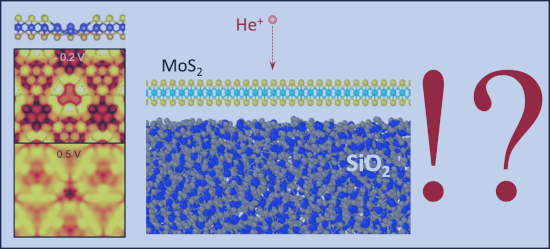
Substrate-dependent pore formation in molybdenum disulfide monolayers under ion irradiation
Beilstein J. Nanotechnol. 2026, 17, 769–780, doi:10.3762/bjnano.17.54
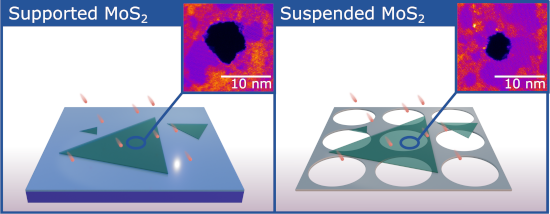
- of the target 2D material, independent of the materials electronic properties. In the case of this study, we therefore expect to deliver potential energy in the range of ≈12–36 keV to the monolayer. Linking the charge exchange to pore formation, Grossek et al. [44] introduced a model for nanopore


Tailoring Ag–Pt nanoalloys through solid-state dewetting: structural and optical insights
Beilstein J. Nanotechnol. 2026, 17, 748–759, doi:10.3762/bjnano.17.52

- from the intrinsic electronic properties of platinum, whose Fermi level lies close to partially filled d-states. These d-electron transitions strongly enhance interband absorption, leading to damping of interband sp excitations and broadening of the resonance band. In consequence, it causes an increase




Recent progress in enhancing built-in electric fields of perovskite solar cells via junction engineering
Beilstein J. Nanotechnol. 2026, 17, 602–621, doi:10.3762/bjnano.17.42
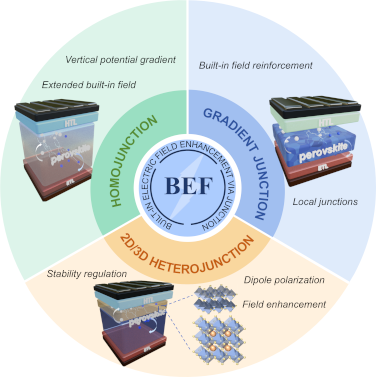
- precise control over electronic properties and band alignment. However, conventional large-molecule incorporation methods often result in disordered vertical distribution of the 2D/3D phases and interfacial disorder, thereby weakening the formation of the BEF [75][76]. Long et al. [77] proposed a pre




Probing internal continua and atomic ultrafast charge transfer within size-controlled nanoparticles by post-collision interaction in core-hole clock spectroscopy
Beilstein J. Nanotechnol. 2026, 17, 505–514, doi:10.3762/bjnano.17.33
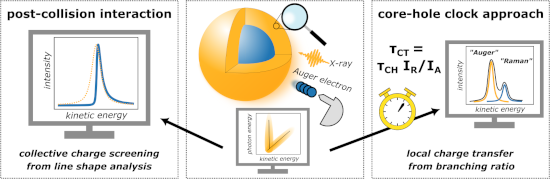
- experimental approach enables the simultaneous observation of collective electronic properties and atom-specific dynamics within in a single measurement under identical sample conditions, an advance particularly valuable for complex, sensitive materials. Keywords: core-hole clock; nanoparticles; post



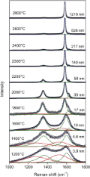
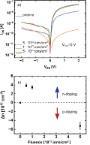
Defects and defect-mediated engineering of two-dimensional materials: challenges and open questions
Beilstein J. Nanotechnol. 2026, 17, 454–488, doi:10.3762/bjnano.17.31
- spectra is still to be developed. How can defect engineering be used to tune electronic properties of 2D materials? Do shallow defect states exist in 2D semiconductor materials? What is the origin of n-type doping in MoS2 and p-type doping in WSe2? Shallow dopants have energy levels close to the band
- the context of the fundamental science. For instance, a defect lattice creates a superpotential for electrons in the 2D material; thus, a mini-Brillouin zone and, consequently, a modified band structure with new electronic properties appears. The following three examples will illuminate the limits of





First-principles study on elastic properties of Cu, (Cu1−x,Nix)3Sn and interfacial mechanical properties of (Cu1−x,Nix)3Sn/Cu in the lead-free solder joint
Beilstein J. Nanotechnol. 2026, 17, 428–439, doi:10.3762/bjnano.17.29
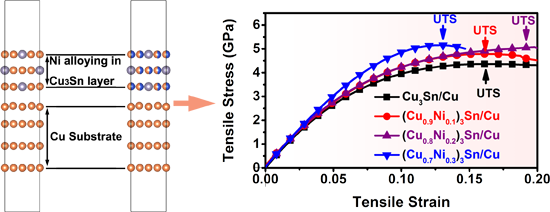
- . Therefore, high-lead solder remains the preferred choice for high-temperature applications at present [1]. In view of the fact that Ni and Pb belong to the same group in the periodic table of elements and have similar chemical and electronic properties [10], researchers have been intrigued to enhance the



Fast vortex dynamics and relaxation times in NbRe-based heterostructures
Beilstein J. Nanotechnol. 2026, 17, 292–302, doi:10.3762/bjnano.17.20
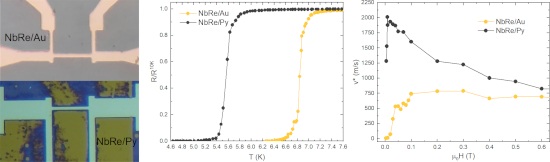
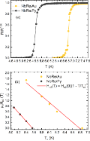
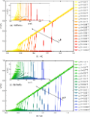
- derived for single-layer superconducting films, whereas, in the present study, the microbridges are bilayer structures. As a result, the calculated parameters do not fully account for proximity-induced modifications of the electronic properties. Current–voltage characteristics and critical currents Figure


Advancing nanolithography: a comprehensive review of materials for local anodic oxidation with AFM
Beilstein J. Nanotechnol. 2026, 17, 275–291, doi:10.3762/bjnano.17.19
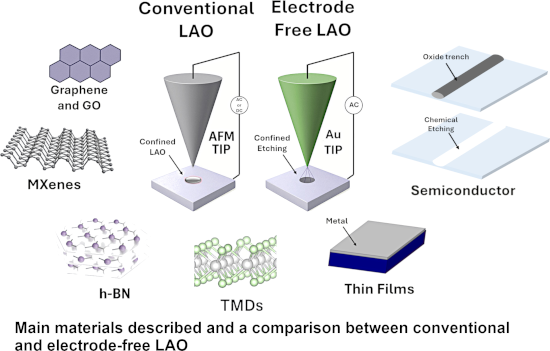
- exceptional structural and electronic properties, and have undoubtedly become a major focus for experts in scanning probe lithography. They exhibit oxidation behaviors that differ fundamentally from those of bulk semiconductors and metals. Graphene, TMDs, and their heterostructures each follow distinct


Optical bio/chemical sensors for vitamin B12 analysis in food and pharmaceuticals: state of the art, challenges, and future outlooks
Beilstein J. Nanotechnol. 2025, 16, 2207–2244, doi:10.3762/bjnano.16.153


Electron transport through nanoscale multilayer graphene and hexagonal boron nitride junctions
Beilstein J. Nanotechnol. 2025, 16, 2132–2143, doi:10.3762/bjnano.16.147
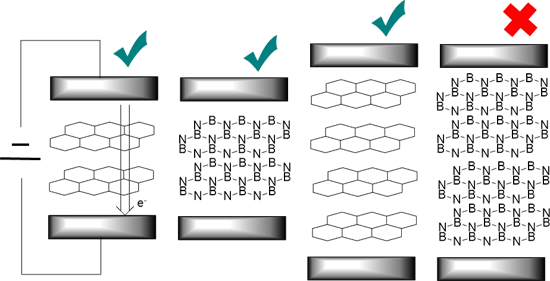
- enabled us to extrapolate trends for electron transport in thicker multilayer carbon and h-BN materials. Keywords: NEGF; DFT; nano-junction; Introduction Multilayer graphene nanomaterials exhibit interesting electronic properties and find application in battery electrode materials [1], electrocatalysis
- ) is a material that shares many structural and electronic properties with graphite. It is isoelectronic to graphene with N contributing two electrons to the π-conjugated bond and B contributing zero electrons, as opposed to graphene, where each C atom contributes one electron. The h-BN structure is
- . When the current is calculated for different applied biases, the current/voltage (I/V) curve is obtained. Results and Discussion We start our calculations with a comparison of the electronic properties of graphite, bulk h-BN, graphite with Stone–Wales defect, graphitic nitrogen-doped graphite, and bulk


Electrical, photocatalytic, and sensory properties of graphene oxide and polyimide implanted with low- and medium-energy silver ions
Beilstein J. Nanotechnol. 2025, 16, 1794–1811, doi:10.3762/bjnano.16.123
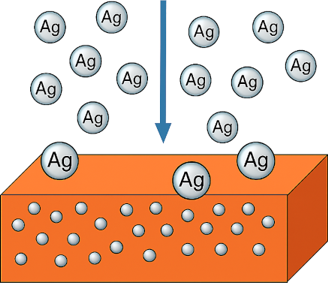
- unaltered state, contains certain conductive regions and functional groups that affect its electronic properties. The lowest values of surface resistivity were achieved at an ionic fluence of 1 × 1016 cm−2, when the surface resistivity decreases to 1 × 10⁸ Ω·sq−1. A similar trend is seen in the case of GO
- for the precise introduction of implanted atoms into the surface layers without the need for subsequent chemical modification, thus opening new possibilities in the development of functional thin films. In this study, Ag ions were used to modify polymer matrices to improve chemical and electronic
- properties of the modified materials. In our previous studies, light ions such as Cu [1][2] and C [3] were implanted into GO, PI, and other polymers. In contrast, the implantation of heavier ions like Ag interacts with the target material through different mechanisms. Owing to its higher mass, Ag has a


Influence of laser beam profile on morphology and optical properties of silicon nanoparticles formed by laser ablation in liquid
Beilstein J. Nanotechnol. 2025, 16, 1533–1544, doi:10.3762/bjnano.16.108
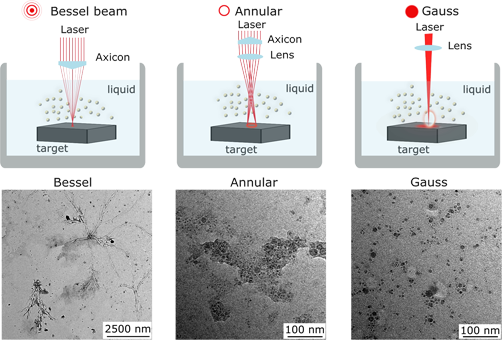
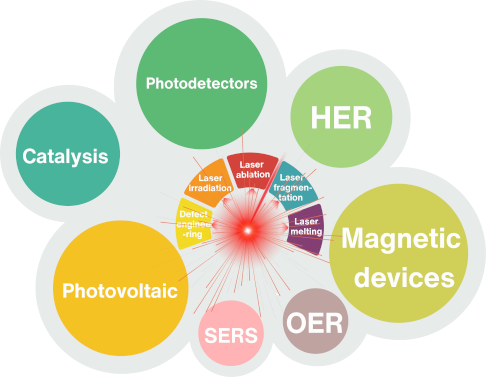
- its prominent optical and electronic properties, is the most widely used semiconductor material in many fields of microelectronics, optics, photovoltaics, and molecular sensing. Nevertheless, even despite its widespread application, the interest in silicon-based structures, especially having sizes in
- -infrared regions has been detected. However, as can be concluded from Figure 6a, the absorption cutoff wavelength differs for each studied sample, indicating different optical and electronic properties of the formed nanostructures. The variation of the optical properties can be caused by structural


Laser processing in liquids: insights into nanocolloid generation and thin film integration for energy, photonic, and sensing applications
Beilstein J. Nanotechnol. 2025, 16, 1428–1498, doi:10.3762/bjnano.16.104






Automated collection and categorisation of STM images and STS spectra with and without machine learning
Beilstein J. Nanotechnol. 2025, 16, 1367–1379, doi:10.3762/bjnano.16.99
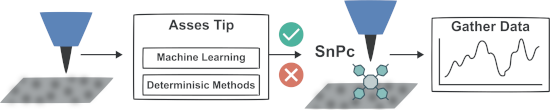
- learning; spectroscopy; scanning tunnelling microscopy (STM); scanning tunnelling spectroscopy (STS); Introduction Scanning tunnelling spectroscopy (STS) extends the capability of scanning tunnelling microscopy (STM) beyond topographic imaging, allowing for the direct measurement of the electronic
- properties of surfaces and molecules with atomic precision. This opens up the ability to map the local density of states (LDOS) of a sample with high spatial resolution [1][2][3]. Peaks within a map of the LDOS correspond to increases in conductance at specific bias values, revealing the energy levels of key





Enhancing the photoelectrochemical performance of BiOI-derived BiVO4 films by controlled-intensity current electrodeposition
Beilstein J. Nanotechnol. 2025, 16, 1289–1301, doi:10.3762/bjnano.16.94
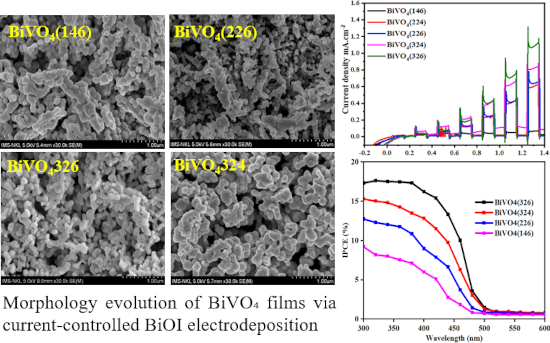
- optimize the crystallinity, surface morphology, and electronic properties of the films. Subsequently, an electrochemical deposition method was developed to facilitate the uniform distribution of V2O5 among Bi–O–I flakes to homogeneously enhance the conversion reaction. The XRD pattern confirms the
- , 712, and 830 cm−1 [27]. These bands correspond to the vibrational modes associated with the VO4− tetrahedral structure, which directly affects the electronic properties of the material [28]. The band at 830 cm−1, assigned to the symmetric stretching of the V–O bond [29], appears in samples prepared at
- synergistic effects of an improved crystalline structure, optimized morphology, and enhanced electronic properties. This study provides a comprehensive understanding of the interplay between fabrication parameters and PEC performance, paving the way for efficient BiVO-based photoanodes for solar-driven water



Electronic and optical properties of chloropicrin adsorbed ZnS nanotubes: first principle analysis
Beilstein J. Nanotechnol. 2025, 16, 1184–1196, doi:10.3762/bjnano.16.87
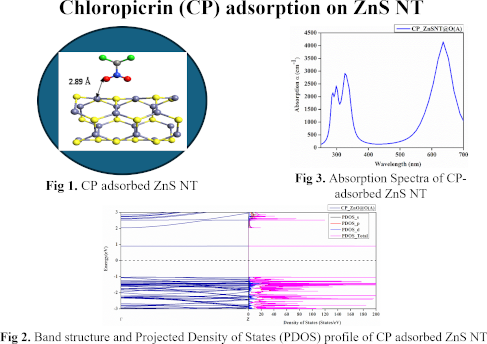
- correspond to the maximum structural deformation caused by CP physisorption. These results are consistent with the adsorption energy trends. Band structures and density of states analysis The electronic properties of ZnS NT in the presence of CP molecules are analyzed with the help of band structure, total
- configurations, charge transfer, band structure, density of states, optical absorption, and optical conductivity have been systematically analyzed. The adsorption of CP induces substantial modifications in the optical and electronic properties of the NT, including a remarkable 40% reduction in the energy bandgap


Time-resolved probing of laser-induced nanostructuring processes in liquids
Beilstein J. Nanotechnol. 2025, 16, 968–1002, doi:10.3762/bjnano.16.74
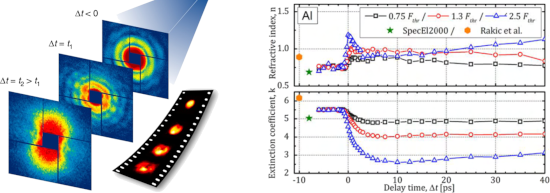
- laser-excited NPs. While the TAS technique provides insight into the electronic properties of the NPs, it is, however, unable to reveal the response of the surrounding liquid to the excitation. To this end, the time-resolved scattering techniques based on X-rays and electrons are more appropriate


Insights into the electronic and atomic structures of cerium oxide-based ultrathin films and nanostructures using high-brilliance light sources
Beilstein J. Nanotechnol. 2025, 16, 860–871, doi:10.3762/bjnano.16.65

- , complementary information on the electronic properties and on the local atomic structure can be obtained from the analysis of XAS data. X-ray absorption near-edge spectroscopy (XANES), analyzing the signal within the first few tens of electronvolts above the absorption edge, provides information mainly on the
- shown as dashed lines. Reprinted from [49] with permission of the Royal Society of Chemistry (“Electronic properties of epitaxial cerium oxide films during controlled reduction and oxidation studied by resonant inelastic X-ray scattering” by G. Gasperi et al., Phys. Chem. Chem. Phys. vol. 18, issue 30


Thickness dependent oxidation in CrCl3: a scanning X-ray photoemission and Kelvin probe microscopies study
Beilstein J. Nanotechnol. 2025, 16, 749–761, doi:10.3762/bjnano.16.58
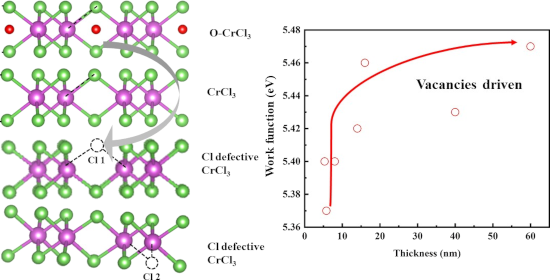
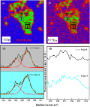
- , Faculty of Applied Physics and Mathematics, 80-233 Gdansk, Poland 10.3762/bjnano.16.58 Abstract The modifications in the electronic properties induced by the thickness and size of an individual flake of transition-metal halides on different substrates (silicon oxide or In-doped tin oxide) are of
- content of defects such as adatoms, the length of grain boundaries, vacancies, and substitution impurities influence the electrical, magnetic, and electronic properties of the final device [14][15][4]. To name one, the formation of chalcogenide vacancies is often related to the enhanced dissociation of
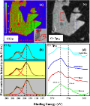
- electronic properties of a material. Neal et al. [34] reported the effect of chemisorption of oxygen as a kind of p-type doping, which shows consistency with our results. We expect the surface potential to show the same behavior depending on the chemical composition found by spatially resolved photoemission






Colloidal few layered graphene–tannic acid preserves the biocompatibility of periodontal ligament cells
Beilstein J. Nanotechnol. 2025, 16, 664–677, doi:10.3762/bjnano.16.51
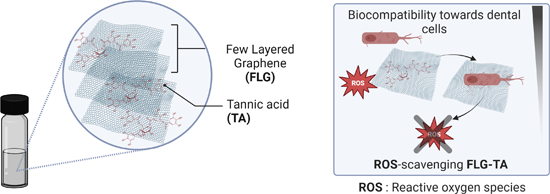
- multiple sources including metal impurities (such as Fe, Ni, or Cu) present in the graphene structure, as well as from the intrinsic electronic properties of graphene itself. Indeed, graphene’s sp2 hybridization and delocalized π electrons can participate in electron transfer reactions, potentially leading
- . The cellular response on different graphene surfaces was previously studied, and it was demonstrated that substrate characteristics such as surface roughness, surface chemistry, and electronic properties can influence cell response [38]. The implications of these results are particularly significant





ReactorAFM/STM – dynamic reactions on surfaces at elevated temperature and atmospheric pressure
Beilstein J. Nanotechnol. 2025, 16, 397–406, doi:10.3762/bjnano.16.30
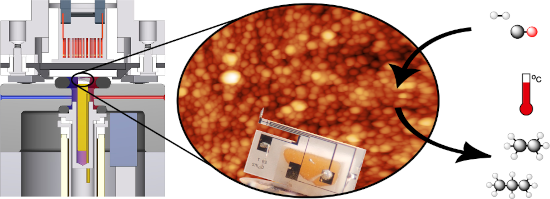
- AFM/STM reactor is the possibility to observe the structural and electronic properties of the surface at high gas pressures and temperatures, independent of its conductivity. The extension from STM-only and AFM-only to the combined AFM/STM reactor is an ongoing development of the existing ReactorSTM





