


Search results
Search for "environment" in Full Text gives 1023 result(s) in Beilstein Journal of Nanotechnology. Showing first 200.
Nanoglasses: a trail towards uncharted regions of vitreous materials and their properties?
Beilstein J. Nanotechnol. 2026, 17, 1047–1062, doi:10.3762/bjnano.17.72



Influence of an external electric field on the catalytic CO oxidation of nanoscaled CeO2 and its La3+ and Gd3+ congeners
Beilstein J. Nanotechnol. 2026, 17, 1028–1038, doi:10.3762/bjnano.17.70
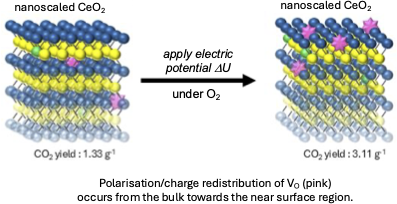
- example, Ce1−xMxO2−δ (M = metal) [3][16]. Under these conditions oxygen vacancies (VO) are formed. The incorporated dopant elements thus allow one to modify the coordination environment in the CeO2 lattice by creating oxygen vacancies, decreasing the energy of VO formation, and improving charge migration
- behaviour with and without electrical bias suggests that local changes in oxygen-vacancy distribution and associated Ce3+/Ce4+ redox states may modify the near-surface ionic and electronic environment. The pronounced response of nCeO2 and 5%Gd3+–nCeO2 to the applied potential is consistent with possible
- Information File 1, Table S3. Before gas dosing, the sample chamber was heated to approximately 120 °C under vacuum for 15 h to remove weakly adsorbed species, including adsorbed gases, water, and possible residual ammonia, from the sample surface and the cell environment. After this pre-treatment, the system


Ultrasonic irradiation in the synthesis of nanohydroxyapatite: a chemically friendly technique for improving hemocompatibility and antibiofilm applications
Beilstein J. Nanotechnol. 2026, 17, 991–1015, doi:10.3762/bjnano.17.68
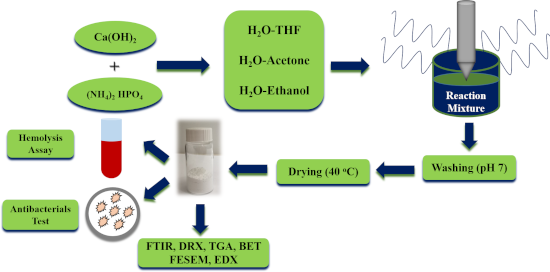
- sonochemical theory calculations and experimental evidence, this process can generate local temperatures as high as 3000 K and local pressures as high as 1000 atm, heating and cooling the medium at rates as high as 109 K/s [16]. In this harsh reaction environment, ions, free radicals, and other highly reactive
- . However, the appearance of calcite as a secondary phase suggests a competitive nucleation process. The high-energy environment generated by high-frequency ultrasound, coupled with the reduced dielectric constant of the W/ETOH mixture, promotes high local supersaturation levels. Under these extreme
- Section III of Supporting Information File 1. The adsorption of a substrate onto the nanoparticle surface within a biological environment is governed by factors such as hydrophobicity, chemical structure, and particle size. In this study, this parameter is of critical importance as it directly influences




Development of Protium heptaphyllum essential oil-loaded nanocapsules: experimental design and biological activity
Beilstein J. Nanotechnol. 2026, 17, 974–990, doi:10.3762/bjnano.17.67
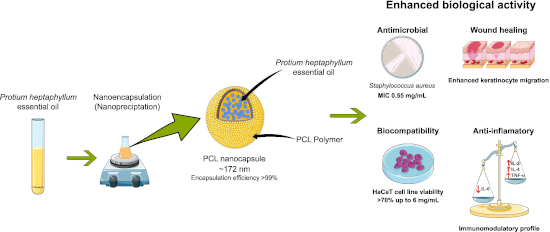
- , Botany Coordination, Museu Paraense Emílio Goeldi, Belém, PA, Brazil Environmental Health Laboratory, Environment Section, Evandro Chagas Institute, PA, Brazil Laboratory of Cytogenomics and Environmental Mutagenesis, Environment Section, Evandro Chagas Institute, PA, Brazil 10.3762/bjnano.17.67




Materials challenges in solid-state sensors for continuous monitoring of ions in water
Beilstein J. Nanotechnol. 2026, 17, 935–973, doi:10.3762/bjnano.17.66
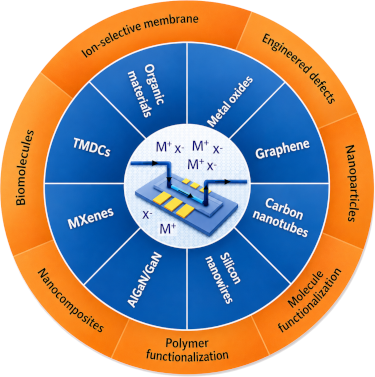
- , influencing both their detectability and their appearance or operational impacts in water systems. These distinctions are critical for sensor design because the target oxidation state determines the required detection chemistry and redox environment. Their online monitoring is essential in drinking water
- and can be tuned or swept. Interactions between the analyte and the channel modify the electrostatic environment of the channel. This modification alters the channel conductance and changes its dependence on the applied gate voltage. Consequently, variations in the device transfer characteristics can
- physically separated from the MOSFET, and the potential generated at the external electrode modulates the transistor. A key advantage of the EG-FET architecture is its ability to compensate for environment-induced signal drift. With the EG-FET geometry, the MOSFET is protected from corrosion, and the metal



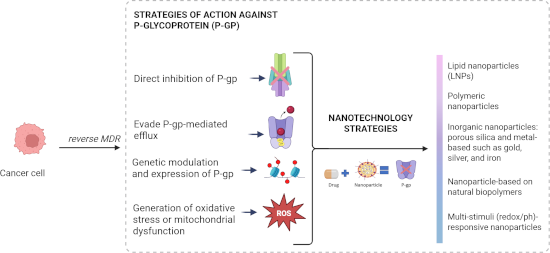
Nanocarrier strategies to overcome P-glycoprotein-mediated drug resistance in cancer therapy
Beilstein J. Nanotechnol. 2026, 17, 882–921, doi:10.3762/bjnano.17.64


Light-driven ammonia electrooxidation via carbon nitride–ruthenium molecular interfaces
Beilstein J. Nanotechnol. 2026, 17, 854–862, doi:10.3762/bjnano.17.61
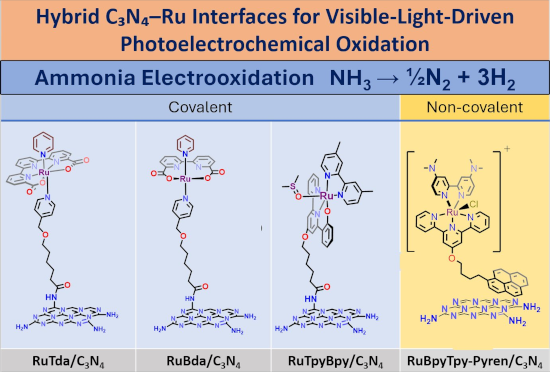
- without releasing oxidized intermediates such as hydrazine or hydroxylamine. Second, ammonia is a strong σ-donor that coordinates readily to Ru(II), positioning the substrate in the inner coordination sphere for successive proton-coupled electron-transfer steps. Third, the ligand environment around Ru can
- , illustrating that product selectivity in ammonia oxidation (N2 vs NO3− vs N2H4) is tunable through catalyst structure and the reaction environment [28][29]. The mechanistic basis for this selectivity lies in two competing reaction pathways [21][22][30][31]. The unimolecular water/ammonia nucleophilic attack


Nanoparticle delivery systems for HIV pre-exposure prophylaxis (PrEP): advances and challenges
Beilstein J. Nanotechnol. 2026, 17, 839–853, doi:10.3762/bjnano.17.60
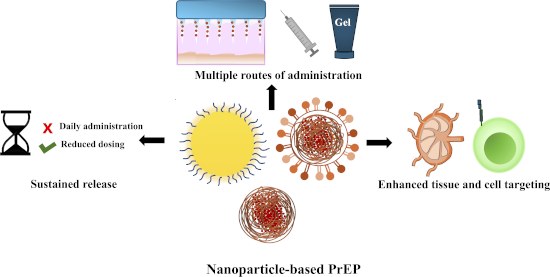
- acidic pH (4.2), representative of vaginal environment, and significantly enhanced drug release at neutral pH (7.4), simulating semen exposure. The in vitro studies also showed cellular uptake of CAP nanoparticles into vaginal epithelial cells and sustained intracellular presence over 7 days. The CAP-DTG


Restorative potential of laser-synthesized silver nanoparticles with Salvia officinalis for periodontal disease treatment: an in vitro study
Beilstein J. Nanotechnol. 2026, 17, 781–795, doi:10.3762/bjnano.17.55
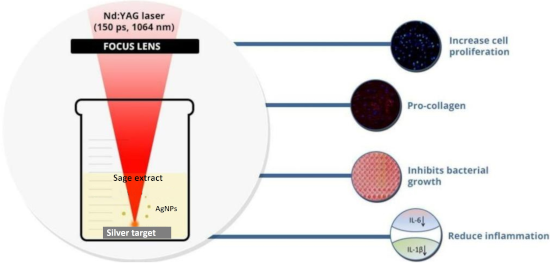
- activity and can modulate cell viability and oxidative stress in a size- and concentration-dependent manner [14]. Based on these findings, we hypothesize that AgNPs produced by PLAL in an aqueous sage extract environment could maintain the bioactive properties of both AgNPs and sage extract, leading to
- energies and sage liquid environment synergistically increased nanoparticle concentration while reducing particle size. The simultaneous reduction in particle size with higher laser energy is in line with our previous results for citrate-stabilized AgNPs [14], highlighting the influence of laser operating
- parameters on size and concentration of the nanoparticles. A shorter pulse time, 150 ps pulses in our experimental setup, leads to quick evaporation, minimum heating of the target area, and very low absorbed energy, thereby enhancing ablation efficiency. The aqueous liquid sage extract environment



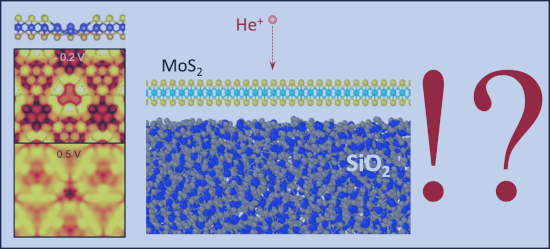
Substrate-dependent pore formation in molybdenum disulfide monolayers under ion irradiation
Beilstein J. Nanotechnol. 2026, 17, 769–780, doi:10.3762/bjnano.17.54
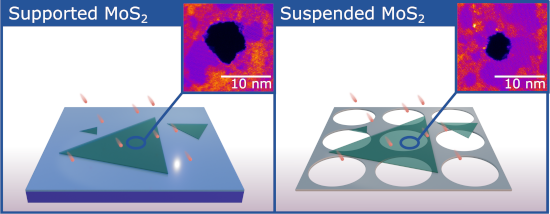
- analogue of out-of-plane dissipation into a semiconducting environment. To test the role of out-of-plane electronic energy dissipation, we exploit regions of different thickness in MoS2 grown via chemical vapor deposition (CVD) on SiO2 (Figure 2a). Compared to monolayer regions (1L), bilayer MoS2 (2L


Interface-engineered Caco-2 cell culture on a collagen-coated liquid–liquid interface in a microfluidic device
Beilstein J. Nanotechnol. 2026, 17, 760–768, doi:10.3762/bjnano.17.53
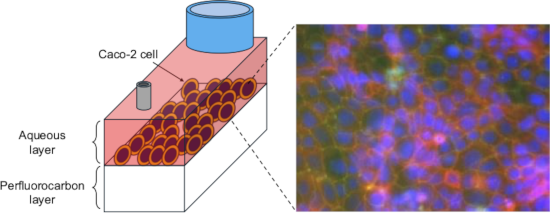
- tissues [2][3][4]. The microfluidic culture system known as gut-on-a-chip enables the cultivation of Caco-2 cells under conditions that more closely recapitulate the in vivo intestinal environment. By precisely controlling fluid flow and inducing mechanical stimuli, this platform provides physiologically
- reconfigurable environment that more closely mimics native cellular microenvironments than rigid solid substrates. Unlike conventional solid culture surfaces, liquid–liquid interfaces offer a distinct platform for cell culture, enabling a scaffold-free and mechanically tunable environment that eliminates the


Tailoring Ag–Pt nanoalloys through solid-state dewetting: structural and optical insights
Beilstein J. Nanotechnol. 2026, 17, 748–759, doi:10.3762/bjnano.17.52

- were employed for optical investigations. Both types of substrates were cleaned with acetylacetone, subsequently rinsed with ethanol, and dried. Thin Pt and Ag thin films were sputtered using a table-top DC magnetron sputtering coater (EM SCD 500, Leica) in a pure Ar plasma environment (Argon, Air




Oxidative atmosphere-driven formation of single-phase spinel CuRh2O4 nanofibers for alkaline water oxidation
Beilstein J. Nanotechnol. 2026, 17, 737–743, doi:10.3762/bjnano.17.50
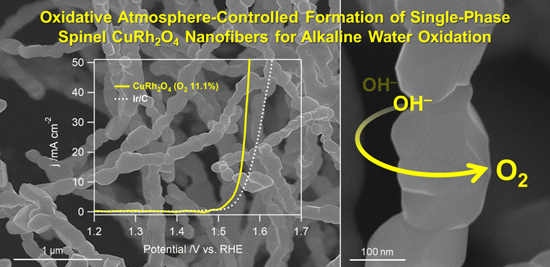
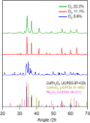
- particularly sensitive to the synthetic environment because Cu readily changes its oxidation state (Cu0/Cu+/Cu2+) depending on the oxidative atmosphere during annealing [9][10]. As a result, slight variations in oxygen partial pressure can significantly alter phase evolution and often lead to undesired
- corresponding to metallic Rh (Rh0) are observed at around 305 eV, indicating that the oxidative environment is insufficient to fully form the spinel CuRh2O4 phase [15]. Note that in the C 1s region (Supporting Information File 1, Figure S2), the residual carbon content in the annealed samples is negligible
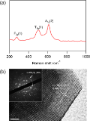
- affects the topology and growth behavior of the oxide nanocrystals [20]. This observation indicates that the oxidative environment influences not only phase formation but also fiber integrity and surface texture. The OER electrocatalytic activity of the prepared nanofibers was evaluated in N2-saturated




Environmental applications of silver nanoparticles: state-of-the-art review and emerging trends
Beilstein J. Nanotechnol. 2026, 17, 697–736, doi:10.3762/bjnano.17.49
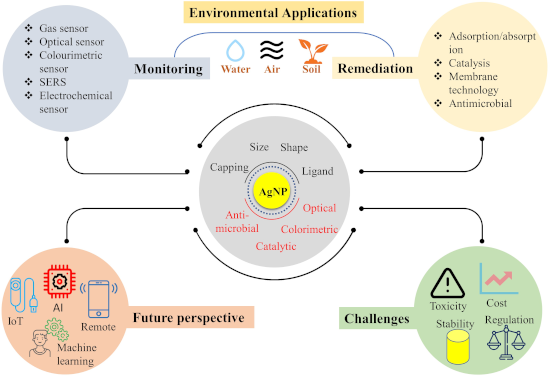
- , copper), particulate matter (PM2.5 and PM10), pesticides (organochlorines and phosphates), micro- and nanoplastics, antibiotics, gases, organic compounds (e.g., dyes or nitrophenols), and microorganisms [2][3][4][5]. The concentration of these pollutants in the environment is proportional to the world
- population and their demand for advanced technology, healthcare, and household products. Therefore, monitoring and remediation of these contaminants from the environment is the need of the hour, with cost-effective, sensitive, and selective strategies or systems foremost. Indeed, various high-throughput
- of the environment (i.e., water, air, and soil). Among the broad family of engineered nanomaterials evaluated for environmental applications, silver nanoparticles (AgNPs) have attracted exceptional attention owing to their unique combination of properties that directly address the requirements of


Molecular engineering of individual dye-based nanoparticle photostability for ultrabright two-photon fluorescence
Beilstein J. Nanotechnol. 2026, 17, 688–696, doi:10.3762/bjnano.17.48
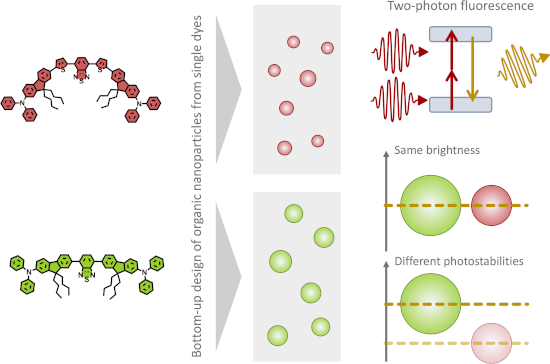
- collected data or disrupt the biological environment under study. A more promising alternative is to seek to limit photobleaching through molecular engineering. Indeed, the photobleaching of organic molecules has been found to vary widely depending on their structure [28]. In the case of dFONs, a common
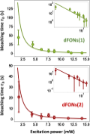
- by the aqueous environment. Furthermore, the 2P absorption cross sections of dFONs(1) and dFONs(2) differ vastly around λ0 = 1000 nm, with σ2(λ0)(1) ≈ 60 GM per dye molecule in dFONs(1) and σ2(λ0)(2) ≈ 930 GM per dye molecule in dFONs(2) [11]. For dFONs(2), the appearance of this second absorption
- ], and even up to 3 near an absorption resonance [35], α is between 2 and 13. We point out the fact that local fields exist also in the measurements of σ2 and Φ from Table 1. The corrections change, however, depending on the dFONs environment. As a result, the values of α measured in the paper cannot be


Protein-based custom-designed molecular nanotraps for biomedical applications
Beilstein J. Nanotechnol. 2026, 17, 683–687, doi:10.3762/bjnano.17.47
- ). The whole process occurred in an aqueous environment, providing sustainable conditions. The surface response method [20][21] enabled the modeling of the optimal conditions for the synthesis of uniform bioMIPs, yielding nanoparticulates with a low polydispersity (PDI < 0.3). Investigations to elucidate

afspm: A framework for manufacturer-agnostic automation in scanning probe microscopy
Beilstein J. Nanotechnol. 2026, 17, 653–667, doi:10.3762/bjnano.17.45
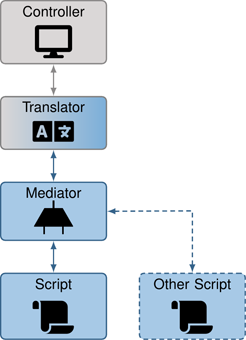
- interfaces can be implemented in one of two ways: the translator logic may reside directly in the scripting environment (Figure 4f), or it may reside in a separate process (Figure 4g). In the former case, the translator-controller communication is embedded in the scripting environment. In the latter case
- , the translator-controller communication involves manufacturer-specific instructions over IPC, where an interfacing script is run in the scripting environment. By following the translator implementations of Figure 4d–g and utilizing generic commands and data structures, we can decouple manufacturer
- controller was a soft dB Signal Ranger MK2-810, connected to a custom non-commercial SPM system. The GXSM controller provides a Python-based internal scripting interface. In order to integrate with our framework, we designed the translator to run within the scripting environment, communicating with other




Recent progress in enhancing built-in electric fields of perovskite solar cells via junction engineering
Beilstein J. Nanotechnol. 2026, 17, 602–621, doi:10.3762/bjnano.17.42
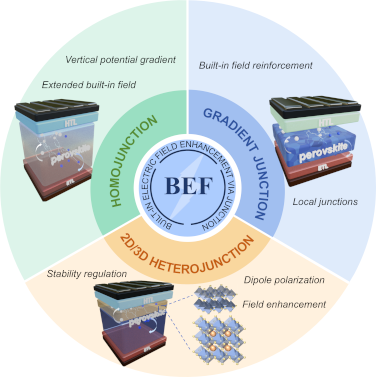
- , which promoted exciton dissociation and carrier transport. This method is compatible with low-temperature processing and maintains stability for over 1000 h. The device retained about 90% of its initial PCE after 1000 h in an unpackaged room-temperature environment with 25% humidity. The Sn/Pb gradient
- . ToF-SIMS results show pronounced K+ enrichment at the film bottom. This template and slow-release coupling effect produce a continuous potential descent from the bottom toward the top and a cleaner interfacial environment within the film, thereby driving directional carrier transport and suppressing




Laser–material interactions in liquids for the synthesis of nanomaterials: current status and perspectives
Beilstein J. Nanotechnol. 2026, 17, 571–575, doi:10.3762/bjnano.17.38
- synthesis productivity [21]. This complexity has driven major efforts within the LSPC community toward elucidating the roles of the solvent environment [6][22], target geometry [23], and irradiation conditions [24] in nanoparticle formation. Advancing these efforts requires a fundamental understanding of
- techniques capable of probing the initial stages of nanoparticle synthesis with high temporal and/or spatial resolution [32][33]. In particular, accessing the picosecond time window needed to capture the initial interaction of the ablation plume with the liquid environment, which defines the subsequent
Electrochemical determination of ciprofloxacin using a MIL-101/reduced graphene oxide-modified electrode
Beilstein J. Nanotechnol. 2026, 17, 541–554, doi:10.3762/bjnano.17.35
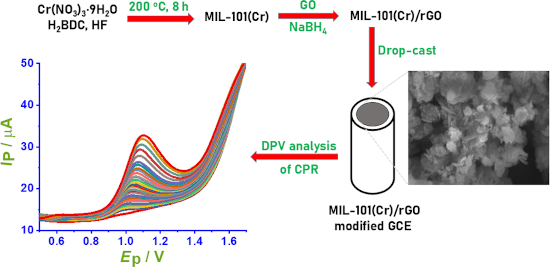
- in the trivalent oxidation state. This indicates that the Cr environment in MIL-101 stays intact after integration with rGO. The C 1s spectrum (Figure 3c) can be decomposed into several components representing different carbon bonding environments. The primary peak at about 285.6 eV corresponds to C
- integration of MIL-101(Cr) and rGO, while preserving the Cr3+ oxidation state and the characteristic coordination environment of the MIL-101 framework. The SEM images of rGO, MIL-101, and the MIL-101/rGO composite are shown in Figure 4. The rGO sample (Figure 4a) displays a typical wrinkled, sheet-like


Fractional shot noise of an SU(N) Kondo system
Beilstein J. Nanotechnol. 2026, 17, 515–540, doi:10.3762/bjnano.17.34
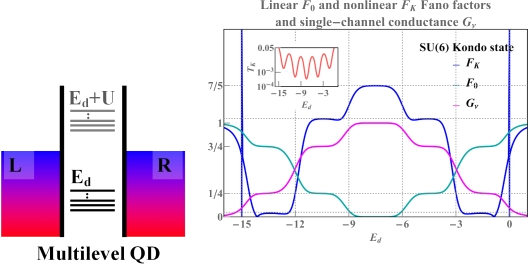
- need of separating shot noise from background 1/f noise caused by fluctuations in the physical environment [66]. The shot noise is a purely nonequilibrium property that results from the fact that current is not a continuous flow but a sum of discrete pulses in time. Shot noise is a zero-frequency


![[Graphic 127]](/bjnano/content/inline/2190-4286-17-34-i187.svg?max-width=637&scale=1.18182)

Upcycling agroindustrial waste into graphene oxide supports for gold nanoparticles: toward sustainable nanomaterials
Beilstein J. Nanotechnol. 2026, 17, 489–504, doi:10.3762/bjnano.17.32
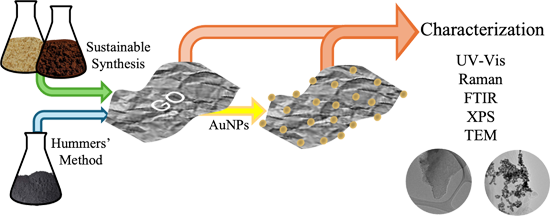
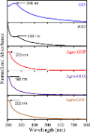
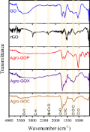
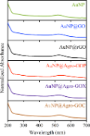
- oxygen-containing functional groups on the GO surface, which influence the local dielectric environment and stabilize the AuNPs. The most pronounced redshifts and spectral broadening were observed for the AuNP@Agro-GOX and AuNP@Agro-GOC hybrids, suggesting stronger interfacial interactions and higher


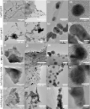

Defects and defect-mediated engineering of two-dimensional materials: challenges and open questions
Beilstein J. Nanotechnol. 2026, 17, 454–488, doi:10.3762/bjnano.17.31
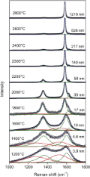
- Abstract Compared to bulk solids, defects in low-dimensional materials and, specifically, 2D systems are expected to have a stronger effect, detrimental or beneficial, on their properties. Owing to their geometry, defects in 2D materials can easily be formed due to the interaction with the environment or
- to the interaction with the environment, for example, because of oxidation. The imperfections have a strong influence on the electronic, optical, thermal, and mechanical properties of 2D materials [2][3]. They normally deteriorate the characteristics; but they can also be beneficial, for example, in
- integration of radiofrequency control, ESR-STM could resolve the spin fingerprints of individual defects in TMDs and h-BN, correlating atomic structure with spin states. Such measurements would establish direct correlations between atomic structure, local electronic environment, and spin properties, laying



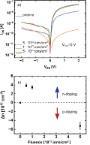


Nanocarrier-integrated multilayer films produced by 3D printing for improved skin adhesion and curcumin photostability
Beilstein J. Nanotechnol. 2026, 17, 440–453, doi:10.3762/bjnano.17.30
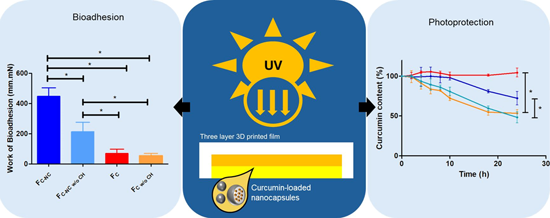
- concentrated to 10 mL. The experiment was carried out in a dark environment, protected from light. Blank formulations (B-NC) were prepared under the same conditions, without addition of curcumin in the organic phases. All formulations were prepared and characterised in triplicate. Particle size, pH and zeta
- forced degradation photostability challenge, in line with accelerated conditions commonly employed to quantify intrinsic photolability of highly photosensitive compounds such as curcumin. This approach provides an exaggerated but controlled environment to compare the relative protective effects of the
- strain of 1.0% was applied for 100 s to simulate the steady-state conditions within the syringe barrel prior to printing, followed by a shear strain of 100% for 100 s to reproduce the high-shear environment within the nozzle during extrusion. Finally, to simulate the post-printing condition, the initial


Biomimetic nanoparticles in cancer photodynamic therapy: a review of targeted delivery systems and therapeutic outcomes
Beilstein J. Nanotechnol. 2026, 17, 396–422, doi:10.3762/bjnano.17.27
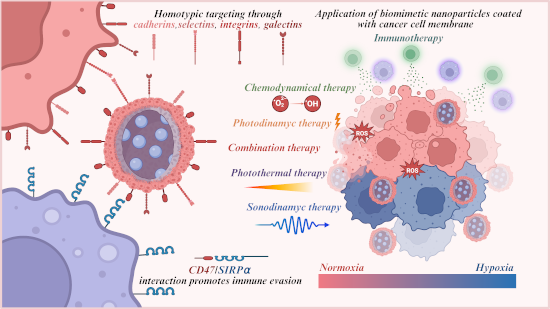
- stealth properties during circulation but exposed their homophilic binding sites specifically within the acidic tumor environment, resulting in a 2.5-fold increase in tumor-specific uptake compared to conventional membrane-coated systems. Main classes of biomimetic nanoplatforms for photosensitizer





