


Search results
Search for "graphene" in Full Text gives 563 result(s) in Beilstein Journal of Nanotechnology. Showing first 200.
Materials challenges in solid-state sensors for continuous monitoring of ions in water
Beilstein J. Nanotechnol. 2026, 17, 935–973, doi:10.3762/bjnano.17.66
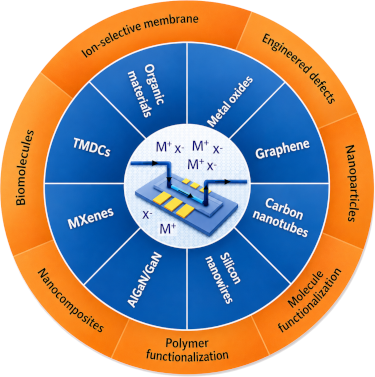
- of active materials have been investigated, including metal oxides, graphene, carbon nanotubes, silicon nanowires, AlGaN/GaN, MXenes, transition metal dichalcogenides, and organic polymers all of which can be tailored for sensor development. Sensor selectivity and functionality can be enhanced
- contamination and drift as well as its sensitivity to ionic strength fluctuations of the solution (Debye screening) [93][94]. This interfacial gating enables fast, reversible responses and good stability, especially with materials like graphene or CNT networks, but the signal amplification is generally lower
- film composed of materials such as graphene, reduced graphene oxide, CNTs or conducting polymers (Figure 1j) [11][98][99][100][101][102]. Adsorption or complexation of ions alters the film’s resistance, producing a measurable signal. Selectivity arises from the chemical modification of the sensing



Tuning the electronic properties of defect-rich MoS2
Beilstein J. Nanotechnol. 2026, 17, 796–805, doi:10.3762/bjnano.17.56
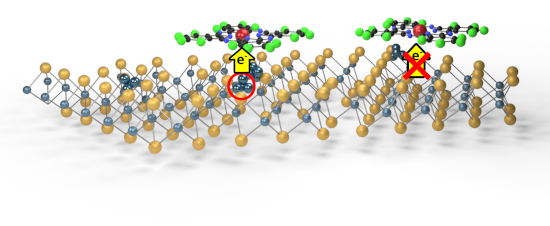
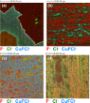
- previously documented interactions of CoPcF16 with relatively inert metals including oxygen-terminated copper or graphene-covered Ni [11][33][34]. Based on these similarities, we suggest that charge transfer and/or electron redistribution at the Co atom in the vicinity of such defect-rich MoS2 is responsible


Substrate-dependent pore formation in molybdenum disulfide monolayers under ion irradiation
Beilstein J. Nanotechnol. 2026, 17, 769–780, doi:10.3762/bjnano.17.54
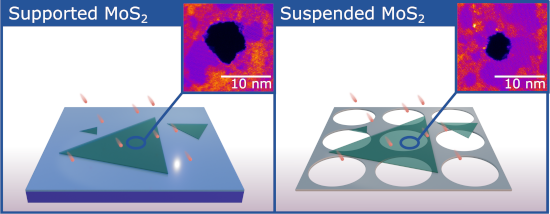
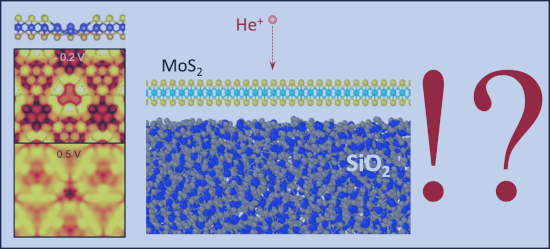
- formation in graphene that centers around the target’s charge carrier mobility. They argue that the high electron mobility of graphene leads to a fast charge dissipation in the 2D material, effectively suppressing pore formation. As a consequence, HCI irradiation does not create pores in graphene (with a
- typical mobility of μ ≥ 60000 cm2·V−1·s−1 for suspended graphene [45]), but is very likely to do so in MoS2, which has a significantly lower electron mobility (typically μ ≈ 1–10 cm2·V−1·s−1 for suspended MoS2 [46][47]). Building on the model introduced by Grossek et al., in which charge carrier mobility
- on Au (η ≈ 0.28) stands apart from this trend and will be discussed further below. A remaining question is whether pore formation can be mitigated by the right choice of substrate. Schwestka et al. [28] demonstrated that graphene/MoS2 heterostructures can be resistant to HCI-induced pore formation


Environmental applications of silver nanoparticles: state-of-the-art review and emerging trends
Beilstein J. Nanotechnol. 2026, 17, 697–736, doi:10.3762/bjnano.17.49
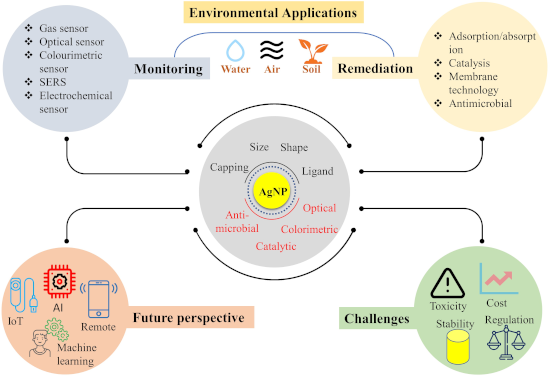
- pseudo-first-order reaction kinetics [25]. The addition of AgNPs to a matrix may improve their efficiency in removing various contaminants via adsorption mechanisms, which can be ionic or covalent, depending on the nanocomposite surface chemistry [26]. In a study, Ag-decorated reduced graphene oxide was
- capacity, which was increased by adding other materials. This includes carbon-based nanocomposites (activated carbon, graphene, and nanotubes), polymer-based nanocomposites (chitosan and alginate), and metal oxide-based nanocomposites (iron, zinc, and titanium) [26]. A recent study confirmed the removal of
- achieve antifouling. Dye degradation of 99% and 90% was achieved after the first and fifth cycles, respectively, indicating the efficiency of the engineered membrane [114]. Another study developed a photocatalytic membrane using AgNPs, graphene oxide, carbon nitride, and mixed cellulose ester as substrate


Impacts of annealing on structural and photophysical properties of zinc phthalocyanine adsorbed on graphene
Beilstein J. Nanotechnol. 2026, 17, 576–585, doi:10.3762/bjnano.17.39
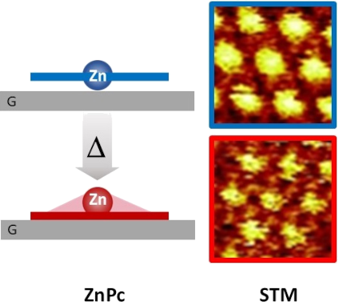
- -tunneling-microscopy and optical microspectroscopy of a 2D phase change experienced by a self-assembled zinc phthalocyanine (ZnPc) monolayer adsorbed on graphene. To probe the intrinsic properties of individual ZnPc molecules, they are spatially confined within the pores of a self-assembled 2D matrix. This
- formation towards 3D self-assembly. Keywords: graphene; optical spectroscopy; organic semiconductors; phthalocyanine; scanning tunneling microscopy; self-assembly; Introduction Combining the properties of graphene and molecular semiconductors in a given material organized at the molecular scale appears as
- a promising route to design original and innovative electronic devices [1] such as diodes [2][3], transistors [4][5][6], photodetectors [7][8], solar cells [9][10][11], or light-emitting devices [12]. In such heterostructures most electronic processes take place at the interface between graphene and


Electrochemical determination of ciprofloxacin using a MIL-101/reduced graphene oxide-modified electrode
Beilstein J. Nanotechnol. 2026, 17, 541–554, doi:10.3762/bjnano.17.35
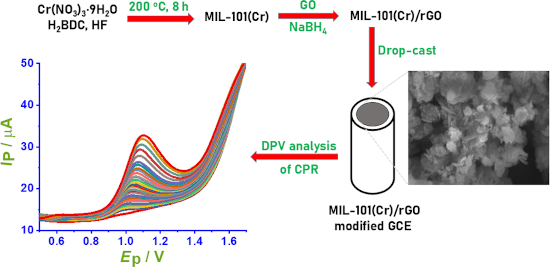
- ciprofloxacin (CPR) was developed using a glassy carbon electrode modified with MIL-101/reduced graphene oxide (MIL-101/rGO). MIL-101/rGO was synthesized via a facile ultrasonic-assisted method and characterized by various physicochemical techniques. The synergistic combination of MIL-101 with rGO significantly
- , yielding acceptable recoveries. These results indicate that the MIL-101/rGO-modified electrode provides a promising and efficient platform for the electrochemical sensing of CPR in pharmaceutical and environmental analysis. Keywords: ciprofloxacin; electrochemical analysis; MIL-101; reduced graphene oxide
- direct use in electrochemical sensing. To address this limitation, hybridizing MOFs with conductive carbon materials has been extensively studied. Reduced graphene oxide (rGO) is especially appealing due to its high electrical conductivity [12], large specific surface area, mechanical stability [13], and


Upcycling agroindustrial waste into graphene oxide supports for gold nanoparticles: toward sustainable nanomaterials
Beilstein J. Nanotechnol. 2026, 17, 489–504, doi:10.3762/bjnano.17.32
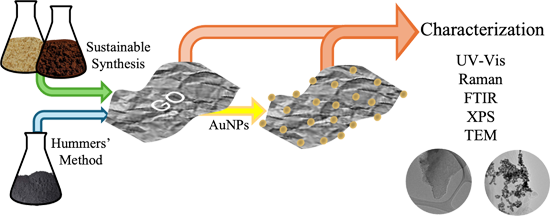
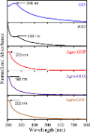
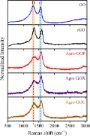
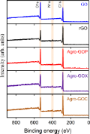
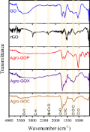
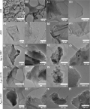
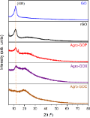
- develop a sustainable route for producing graphene oxide-based materials from agroindustrial waste and to evaluate their structural and chemical properties in comparison with conventional graphene oxide (GO) and reduced graphene oxide (rGO). Agroindustrial waste-derived graphene oxide (Agro-GO) was
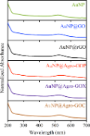
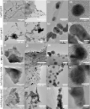
- of transforming agroindustrial waste into high-value graphene-based nanomaterials and highlight the potential of sustainable synthesis routes for advancing environmentally responsible carbon-based technologies. Keywords: agroindustrial waste; gold nanoparticles; graphene oxide; green synthesis
- ; hybrid nanocomposites; plasmonic nanomaterials; surface functionalization; Introduction Graphene oxide (GO), due to its unique physicochemical properties, is widely explored regarding a range of applications, including sensors, water purification, and energy storage and conversion [1][2][3][4][5]. GO is



Defects and defect-mediated engineering of two-dimensional materials: challenges and open questions
Beilstein J. Nanotechnol. 2026, 17, 454–488, doi:10.3762/bjnano.17.31
- graphene or h-BN) defect formation energies prevent low defect concentrations in monolayer sheets? How can synthesis methods for monolayer materials be modified to control defect species and concentration? We note that, in TMDs, not only chalcogen vacancies, but also transition metal vacancies and
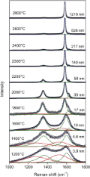
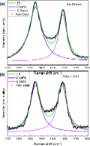
- spectroscopy has led to metrological procedures to access defect concentration in graphene. Well-established formulae are available to determine defect quantity based on the D/G ratio and the linewidth of the G band (see Figure 2) [86][87][88][89]. In a wider context, while Raman-active local vibrational modes
- depending on the relative dimension between the TERS probe (rtip is the tip apex radius) and the distance among defects (LD) [97]. Raman spectroscopy has been used to estimate defect concentrations in graphene. How does it work for other 2D materials? Several authors have been addressing the use of Raman





Nanoinformatics: spanning scales, systems and solutions
Beilstein J. Nanotechnol. 2026, 17, 423–427, doi:10.3762/bjnano.17.28

- to treat neurodegenerative disease [10]. Moving into the realm of mixture toxicity and environmental impacts of nanomaterials, Petry et al. investigated the interaction of graphene oxide (GO) with tannic acid (TA) and its consequences for GO toxicity to the earthworm Caenorhabditis elegans. Reactive

Biomimetic nanoparticles in cancer photodynamic therapy: a review of targeted delivery systems and therapeutic outcomes
Beilstein J. Nanotechnol. 2026, 17, 396–422, doi:10.3762/bjnano.17.27


Polycatecholamine nanocoatings on stainless steel: the effect on attachment of human fibroblasts and platelets
Beilstein J. Nanotechnol. 2026, 17, 365–380, doi:10.3762/bjnano.17.25
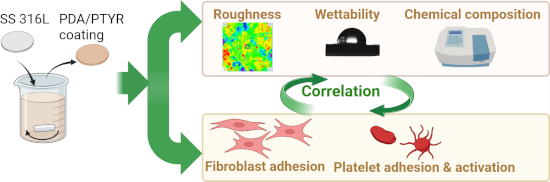
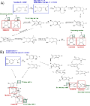
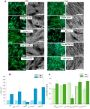
- stability. Consequently, a variety of surface modifications have been developed to improve cell–material interactions, including anodized nanopit arrays, hydroxyapatite–collagen layers on polydopamine-modified steel, nanoporous coatings influencing integrin/ERK signaling, and bilayers comprising graphene




Interconnection morphology effects on the radio frequency response of carbon nanotube sponges
Beilstein J. Nanotechnol. 2026, 17, 343–351, doi:10.3762/bjnano.17.23
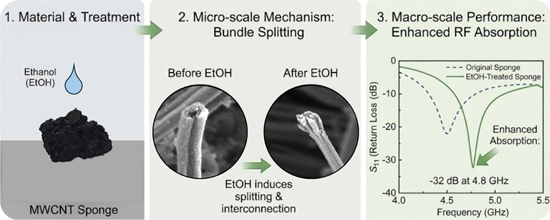
- conditions [1][2]. Novel alternative materials including conducting polymers [3], nanocarbon-based materials like carbon fibres [4], carbon nanotubes (CNTs), their composites [5][6][7], and more recently graphene [8][9] have been the focus of extensive research. Above materials fulfil the requirements of




Advancing nanolithography: a comprehensive review of materials for local anodic oxidation with AFM
Beilstein J. Nanotechnol. 2026, 17, 275–291, doi:10.3762/bjnano.17.19
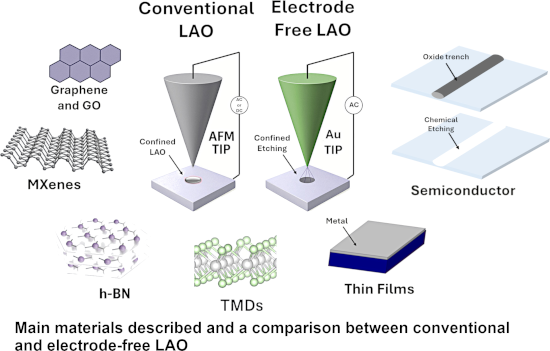
- heterostructures. Semiconductors such as silicon and silicon carbide remain foundational due to their controllable oxidation kinetics, while metals like titanium and aluminum offer opportunities for plasmonic and optical applications. 2D materials, including graphene, graphene oxide, and transition metal
- aims to highlight the capability of LAO to pattern two-dimensional (2D) materials such as graphene [20][21][22], hexagonal boron nitride [23] (hBN), transition metal dichalcogenides (TMDs) [21][24][25][26][27], metals [18][28][29], as well as traditional semiconductors such as silicon (Si) [6][10][30
- graphene or boron nitride, authors of [23] have shown how reaction by-products are efficiently removed, escaping as gas (i.e., CO2 in the case of graphene). The resulting patterns exhibit excellent quality with minimal defects (Figure 3e,f). However, a potential drawback is the use of Au-coated tips under


Multilayered hyperbolic Au/TiO2 nanostructures for enhancing the nonlinear response around the epsilon-near-zero point
Beilstein J. Nanotechnol. 2026, 17, 251–261, doi:10.3762/bjnano.17.17
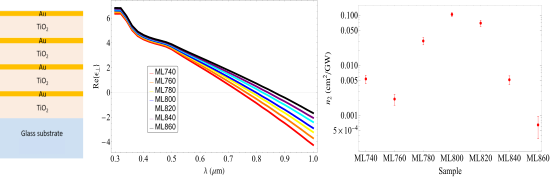
- available materials in nature that present hyperbolic dispersion, such as bismuth and 2D graphene sheets [2], indium tin oxide (ITO) [3], and aluminum-doped zinc oxide (AZO) [4]. HMMs are highly anisotropic and exhibit some interesting properties, including strong enhancement of spontaneous emission


Gold nanoparticle-decorated reduced graphene oxide as a highly effective catalyst for the selective α,β-dehydrogenation of N-alkyl-4-piperidones
Beilstein J. Nanotechnol. 2026, 17, 218–238, doi:10.3762/bjnano.17.15
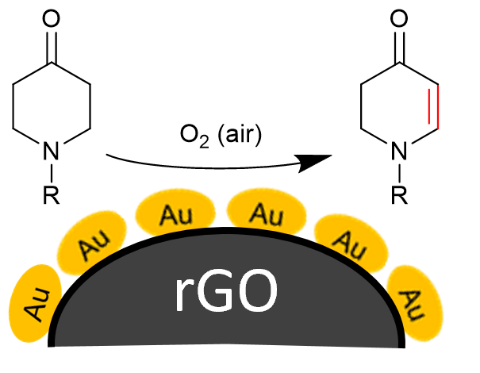
- reduced graphene oxide (AuNPs/rGO) were demonstrated to be a highly reactive catalyst for the selective α,β-oxidative dehydrogenation (ODH) of N-alkyl-4-piperidones, using N-methyl-, N-ethyl- and N-benzyl-4-piperidone. The substrate N-methyl-4-piperidone represents a pharmaceutically relevant system as
- its reaction product N-methyl-2,3-dihydropyridin-4(1H)-one is highly valuable (>1000 €·g−1) in contrast to the inexpensive starting material (0.15 €·g−1). Various synthesis methods were employed to prepare AuNPs supported on different carbon materials, including reduced graphene oxide (rGO), activated
- the dehydrogenation of β-N-substituted saturated ketones and other fine chemical applications. Keywords: oxidative dehydrogenation; reduced graphene oxide; supported gold nanoparticles; β-N-substituted ketones; Introduction The properties related to the high surface area of matter at the nanometric


Time of flight secondary ion mass spectrometry imaging of contaminant species in chemical vapour deposited graphene on copper
Beilstein J. Nanotechnol. 2026, 17, 200–213, doi:10.3762/bjnano.17.13
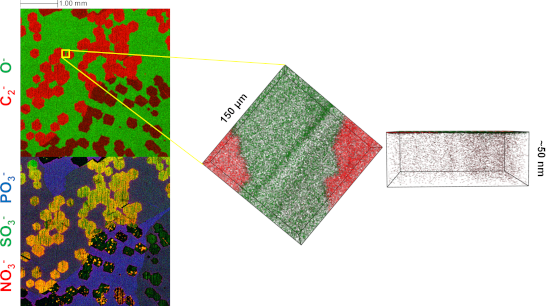
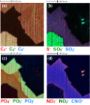
- Cambridge, Cambridge CB3 0FA, United Kingdom 10.3762/bjnano.17.13 Abstract Time of flight secondary ion mass spectrometry (ToF-SIMS) was used to probe the chemistry of graphene grown on copper foil substrates by chemical vapour deposition (CVD) under various growth conditions. The surface sensitivity, mass
- resolving power, and imaging capability of ToF-SIMS allow us to explore variations in the chemical species present on the graphene surface, as well as in three dimensions under the graphene. In this way, we can observe the impact that variations in the chemical composition of the copper foil have on the
- growth of the graphene; in particular, the accumulation of contaminations present in the copper foil, which has implications for the potential electrical properties of the graphene. We also observe variations in the permeation of oxygen underneath the graphene layers, resulting in oxidation of the copper





From shield to spear: Charge-reversible nanocarriers in overcoming cancer therapy barriers
Beilstein J. Nanotechnol. 2026, 17, 159–175, doi:10.3762/bjnano.17.10
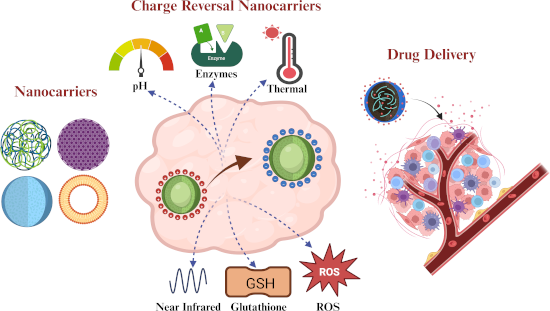
- materials such as graphene, azobenzene, and gold nanorods [54]. Upon exposure to UV–vis or near-infrared (NIR) light, these materials undergo structural changes or generate ROS, triggering controlled release of their therapeutic cargo. This precise spatiotemporal control over drug release and therapeutic
- exposure, azobenzene undergoes reversible trans–cis isomerisation, inducing structural changes that regulate cargo release [55]. Additionally, Choi et al. demonstrated that nanocarriers incorporating graphene oxide (GO) loaded with photosensitizers generate ROS upon NIR irradiation, enabling effective


Reduced graphene oxide paper electrode for lithium-ion cells – towards optimized thermal reduction
Beilstein J. Nanotechnol. 2026, 17, 24–37, doi:10.3762/bjnano.17.3
- Agata Pawlowska Magdalena Baran Stefan Marynowicz Aleksandra Izabela Banasiak Adrian Racki Adrian Chlanda Tymoteusz Ciuk Marta Wolczko Andrzej Budziak Flake Graphene Research Group, Łukasiewicz Research Network – Institute of Microelectronics and Photonics, al. Lotników 32/46, 02-668, Warsaw
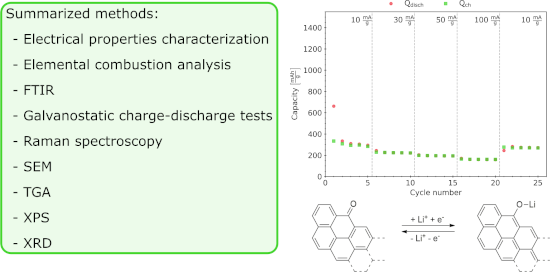
- Technologies Research Group, Łukasiewicz Research Network – Institute of Microelectronics and Photonics, al. Lotników 32/46, 02-668, Warsaw, Poland 10.3762/bjnano.17.3 Abstract This work introduces the results of characterizing free-standing reduced graphene oxide paper, given its potential use as an
- electrode material in lithium-ion cells. Mildly reduced graphene oxide paper underwent further thermal reduction steps. The structural and chemical properties of the obtained materials were determined using Raman and Fourier-transform infrared spectroscopies and elemental combustion analysis. The morphology



Optical bio/chemical sensors for vitamin B12 analysis in food and pharmaceuticals: state of the art, challenges, and future outlooks
Beilstein J. Nanotechnol. 2025, 16, 2207–2244, doi:10.3762/bjnano.16.153
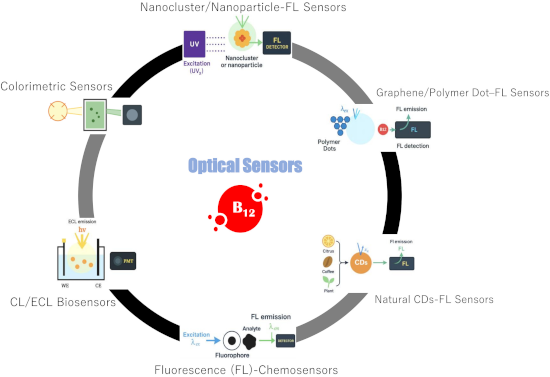
- remarkably excellent selectivity, reproducibility, and storage stability for the SPR sensor recorded, but a strong association between the SPR sensor and LC-MS/MS findings was found [95]. Recently, Bareza et al. have reported that graphene nanostructures, which can confine mid-infrared plasmons at the
- leveraging mid-IR plasmon resonance in graphene nanostructures to detect VB12, where functionalized graphene nanoribbons provided the recognition sites, the nanostructured graphene surface acted as the plasmonic indicator, and the sensing signal was a mid-IR resonance shift. This approach achieved an LOD of
- 53.5 ng/mL using graphene nanoribbons modified with specific recognition elements [96]. Moreover, Bareza et al. demonstrated the scalability and industrial applicability of this bioassay through the use of large-area nanostructured graphene films, proving the promising future of graphene-based mid-IR


Missing links in nanomaterials research impacting productivity and perceptions
Beilstein J. Nanotechnol. 2025, 16, 2168–2176, doi:10.3762/bjnano.16.149
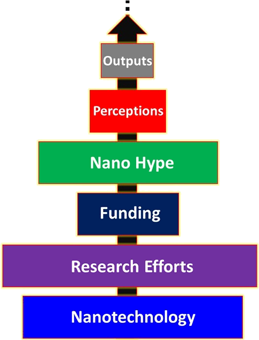
- acceleration after the discovery of fullerene by Kroto and co-workers in 1985 and witnessed an even more rapid surge following the discovery of graphene and the award of the Physics Nobel Prize in 2010 [6][7]. Graphene is often referred to as a “wonder material” due to its seemingly infinite potential in
- nanotubes, graphene, metal oxides, quantum dots, and MXenes are among the most extensively studied and explored nanomaterials. These materials have been researched in nearly every discipline, leading to the establishment of numerous startups and companies focused on their production, processing, and
- , though nanomaterials research has made impressive scientific advances, its translation into mass-market products remains partial. Therefore, it raises a vital and valid question: Why are heavily researched nanomaterials such as carbon nanotubes, graphene, metal oxides, quantum dots, and MXenes still so
Microplastic pollution in Himalayan lakes: assessment, risks, and sustainable remediation strategies
Beilstein J. Nanotechnol. 2025, 16, 2144–2167, doi:10.3762/bjnano.16.148
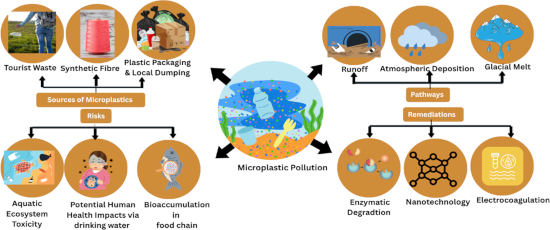
- , attack the polymer chains of MPs. They either break the chains into smaller pieces or mineralize them into CO2 and water. A lot of research is being done on the photocatalytic properties of nanomaterials like TiO2, graphene oxide (GO), and ZnO. An excellent material for breaking down MPs in water systems
- is TiO2, which is known for being stable, effective, and able to produce ROS when exposed to UV light [43]. The effectiveness of TiO2 has been improved recently by doping it with nonmetals like sulfur and nitrogen or combining it with carbon-based compounds like graphene. According to Xiao et al


Electron transport through nanoscale multilayer graphene and hexagonal boron nitride junctions
Beilstein J. Nanotechnol. 2025, 16, 2132–2143, doi:10.3762/bjnano.16.147
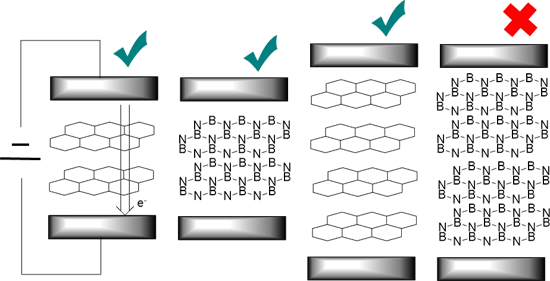
- ) method combined with density functional theory (DFT) to compare electron transport through several layers of nanoscale graphene and hexagonal boron nitride (h-BN). Calculations were performed for one to six layers, corresponding to thicknesses of 0.5–3.0 nm, respectively. Electron transport was computed
- perpendicular to the layers in the stacking direction. We compared the decay of the current with the number of layers and evaluated the ability of h-BN to filter currents as a material coating. To investigate the effect of disorder, we included two major defects in the graphene lattice, namely, nitrogen doping
- and Stone–Wales defects. Nitrogen doping transforms graphene from a zero-bandgap semiconductor to a metal, while Stone–Wales defects open the bandgap. For h-BN, we considered Stone–Wales defects. A detailed comparison of electron transport through five materials, that is, multilayer nanoscale graphene


Toward clinical translation of carbon nanomaterials in anticancer drug delivery: the need for standardisation
Beilstein J. Nanotechnol. 2025, 16, 2092–2104, doi:10.3762/bjnano.16.144
- Michal Bartkowski Francesco Calzaferri Silvia Giordani School of Chemical Sciences, Dublin City University, Glasnevin, Dublin, Ireland Life Science Institute, Dublin City University, Glasnevin, Dublin, Ireland 10.3762/bjnano.16.144 Abstract Carbon nanomaterials (CNMs), including graphene, carbon
- standardisation, and interdisciplinary collaboration. An overview of key production challenges is provided in Table 1. The lack of standardised methods for the synthesis and characterisation of CNMs is a major challenge in the field of nanotechnology. CNMs, such as carbon nanotubes and graphene, have unique
- responses [37]. In contrast, a recent first-in-human investigation of thin, highly purified graphene oxide nanosheets reported that acute inhalation was well tolerated, showing no adverse effects on lung function, cardiovascular health, or systemic inflammatory markers [28]. Even within the same material



Laser ablation in liquids for shape-tailored synthesis of nanomaterials: status and challenges
Beilstein J. Nanotechnol. 2025, 16, 1963–1997, doi:10.3762/bjnano.16.137





Current status of using adsorbent nanomaterials for removing microplastics from water supply systems: a mini review
Beilstein J. Nanotechnol. 2025, 16, 1837–1850, doi:10.3762/bjnano.16.127
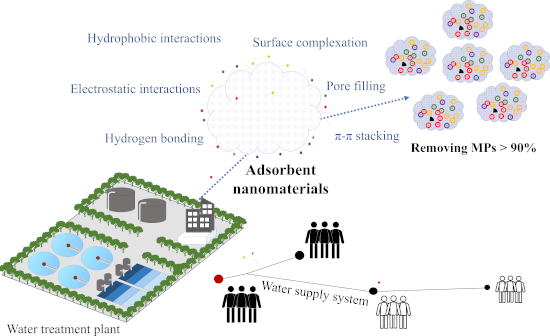
- reaction pathways of these materials. Classification and potential of adsorbent nanomaterials Carbon-based adsorbents. Carbon-based adsorbents, such as graphene oxide (GO), activated carbon, biochar, and carbon nanotubes (CNTs), have been extensively investigated regarding the treatment of pollutants in
- bonding through oxygen-containing groups (oxidized biochar), pore filling, and electrostatic interactions [53]. GO materials, such as a nickel/reduced graphene oxide (Ni/rGO) nanocomposite, also exhibited high adsorption efficiency, achieving 80.3% removal of PS from water containing 100 mg·L−1 PS. The
- ]. Recently, Yan et al. developed a reduced graphene oxide (S-rGO) membrane with small lateral size and a rejection rate of up to 99.9% while maintaining high water permeability (236.2 L·m−2·h−1·bar−1) [56]. As another type of material belonging to carbon-based adsorbents, CNTs have also gained attention





