Search results
Search for "laser ablation" in Full Text gives 90 result(s) in Beilstein Journal of Nanotechnology.
Restorative potential of laser-synthesized silver nanoparticles with Salvia officinalis for periodontal disease treatment: an in vitro study
Beilstein J. Nanotechnol. 2026, 17, 781–795, doi:10.3762/bjnano.17.55
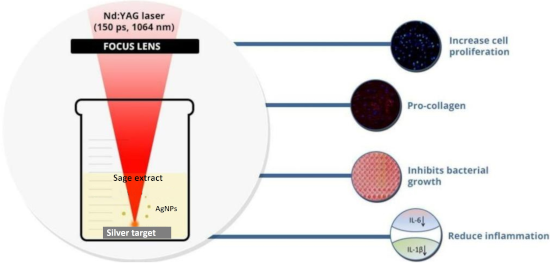
- local damage, systemic associations highlight the urgent need for innovative therapies. Herein, we present an eco-friendly synthesis of silver nanoparticles (AgNPs) by picosecond pulsed laser ablation in liquid (PLAL), using Salvia officinalis aqueous extract (sage extract) as both medium and stabilizer
- inflammation. This dual antibacterial and regenerative action demonstrates the high potential of sage-assisted PLAL-synthesized AgNPs as a safe, sustainable strategy for periodontal disease treatment. Keywords: cell proliferation; periodontal disease; pulsed laser ablation in liquid (PLAL); Salvia officinalis
- employ silver nitrate as a precursor and different reducing agents as a stabilizer, (ii) biological methods, which use natural precursors like bacteria, enzymes, and plant extracts, and (iii) physical methods based on arc discharge, sputtering, physical vapor deposition, or laser ablation [2]. While



Environmental applications of silver nanoparticles: state-of-the-art review and emerging trends
Beilstein J. Nanotechnol. 2026, 17, 697–736, doi:10.3762/bjnano.17.49
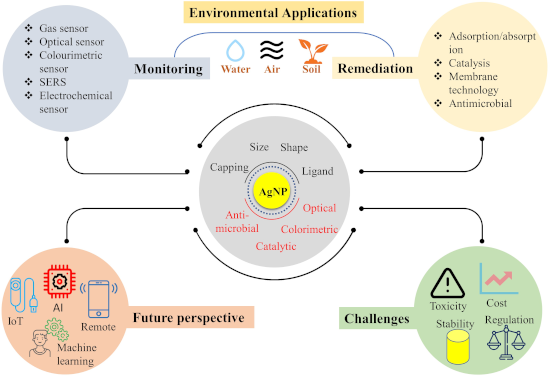
- sensing, allowing for a design tailored to a specific application. For example, PVP-capped AgNPs were used to selectively detect Hg2+ in the presence of methionine as a linker molecule [39]. Laser ablation, evaporation–condensation, and sputtering fall under physical syntheses and offer the advantage of


Two-step laser synthesis of Ag@TiO2 nanomaterials for the photocatalytic degradation of rhodamine B
Beilstein J. Nanotechnol. 2026, 17, 622–634, doi:10.3762/bjnano.17.43
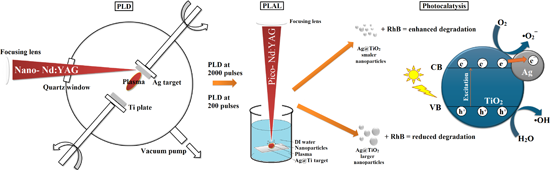
- pulsed laser ablation in liquids (PLAL). Initially, silver was ablated using 200 and 2000 pulses and deposited onto titanium targets via PLD. Subsequently, these modified targets were submerged in water and processed using PLAL to generate the final nanomaterials. Characterization through HRTEM, EDS, and
- provides an efficient and environmentally friendly route for the fabrication of Ag@TiO2 photocatalysts. Keywords: Ag@TiO2 nanomaterials; photocatalytic degradation; pulsed laser ablation in liquids; pulsed laser deposition; rhodamine B; Introduction Titanium dioxide has long been recognized as perhaps
- visible light, such as water treatment and degradation of organic contaminants [10][11][12]. Among various synthesis techniques, laser-based methods, such as pulsed laser ablation in liquids (PLAL) and laser pyrolysis, stand out as clean, efficient, and surfactant-free routes for fabricating Ag@TiO2


Laser–material interactions in liquids for the synthesis of nanomaterials: current status and perspectives
Beilstein J. Nanotechnol. 2026, 17, 571–575, doi:10.3762/bjnano.17.38

- of Wuppertal, 42119 Wuppertal, Germany Department of Materials Science and Engineering, University of Virginia, 395 McCormick Road, Charlottesville, Virginia 22904-4745, USA 10.3762/bjnano.17.38 Keywords: colloidal nanoparticles; green synthesis of nanoparticles; laser ablation in liquids; laser
- . The field of LSPC encompasses several techniques with distinct target configurations and laser irradiation regimes. Irradiation of a solid target submerged in a liquid with intense laser pulses is referred to as laser ablation in liquids (LAL) [16], an established technique for the efficient
- [33]. Representative examples of this approach include the combination of pump–probe measurements with atomistic simulations to reveal spallation and phase explosion regimes during pulsed laser ablation of Fe–Ni alloys [39], the identification and experimental confirmation of two mechanisms of
Beam shaping techniques for pulsed laser ablation in liquids: Unlocking tunable control of nanoparticle synthesis in liquids
Beilstein J. Nanotechnol. 2026, 17, 309–342, doi:10.3762/bjnano.17.22
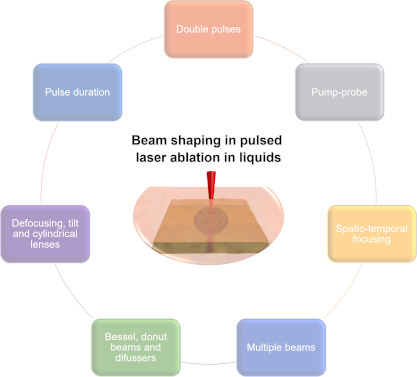
- 10.3762/bjnano.17.22 Abstract Nanoparticle synthesis via pulsed laser ablation in liquids has gained prominence as a versatile and environmentally friendly approach for producing ligand-free colloids with controlled composition, size, and morphology. While pulsed laser ablation in liquids offers
- unparalleled advantages in terms of nanoparticle purity and material versatility, enhancing the size control and productivity require modifications of the standard pulsed laser ablation in liquids technique, such as the incorporation of beam shaping techniques. Recent developments in spatial and temporal beam
- shaping have demonstrated their potential to revolutionise pulsed laser ablation in liquids by enabling more precise energy deposition and modified nanoparticle production dynamics. This review highlights the critical role of beam shaping, encompassing spatial shaping of the beam to influence laser







Toward clinical translation of carbon nanomaterials in anticancer drug delivery: the need for standardisation
Beilstein J. Nanotechnol. 2025, 16, 2092–2104, doi:10.3762/bjnano.16.144
- , laser ablation, or electrochemical techniques, among others. These CNMs must then be thoroughly characterised to confirm their structural and physicochemical properties, including size, shape, charge, surface functionality, stability, and potential toxicity. Following characterisation, anticancer
- main issues is the wide variety of methods that can be used to synthesise CNMs, which can lead to variations in their properties and performance. For example, carbon nanotubes can be synthesised using arc discharge, laser ablation, and chemical vapour deposition, among others [30]. Each method can




Laser ablation in liquids for shape-tailored synthesis of nanomaterials: status and challenges
Beilstein J. Nanotechnol. 2025, 16, 1963–1997, doi:10.3762/bjnano.16.137
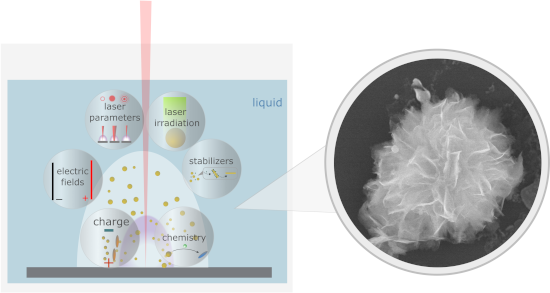
- . Despite many synthesis methods are still mainly focused on the production of near-spherical NPs, a number of emerging applications require nanomaterials of nonspherical shape and developed surface, which determine the functional performance of nanostructured devices. Laser ablation in liquids has been
- demonstrated as a clean, simple, and versatile NP synthesis method. However, the conditions of NP formation and growth are favouring the production of spherical NPs. There are fewer studies of shape control during laser ablation. With that in mind, this perspective article represents a view on the current
- stage of the development of laser ablation in liquids from the perspective of shape control of the forming nanomaterials. The key parameters influencing the NP shape are highlighted, including the composition of a liquid, laser focusing conditions and introduction of external fields, and the mechanism


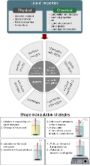


Influence of laser beam profile on morphology and optical properties of silicon nanoparticles formed by laser ablation in liquid
Beilstein J. Nanotechnol. 2025, 16, 1533–1544, doi:10.3762/bjnano.16.108
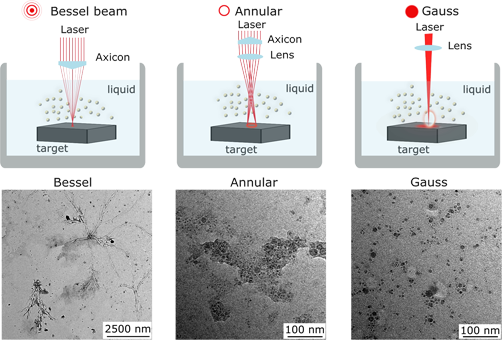
- Abstract In this study, silicon nanoparticles (NPs) were produced by pulsed laser ablation in a liquid, aiming to investigate the influence of a laser beam profile on the properties of the resultant NPs. Morphology, inner structure, and phase composition of the formed NPs were characterized by means of
- morphology. The synthesized colloidal Si NPs are suggested for applications as a component of electrode materials in supercapacitors and batteries. Keywords: laser ablation; laser beams with Bessel, annular, Gaussian profiles; laser-induced modification; silicon nanoparticles; Introduction Silicon, due to
- certain progress in this field, there is still a need for reliable and controlled synthesis methods for silicon-based nanostructures. Nowadays, pulsed laser ablation in liquids (PLAL) has been recognized as a general and important route for the synthesis of nanoparticles (NPs) with tuned optical and


Laser processing in liquids: insights into nanocolloid generation and thin film integration for energy, photonic, and sensing applications
Beilstein J. Nanotechnol. 2025, 16, 1428–1498, doi:10.3762/bjnano.16.104
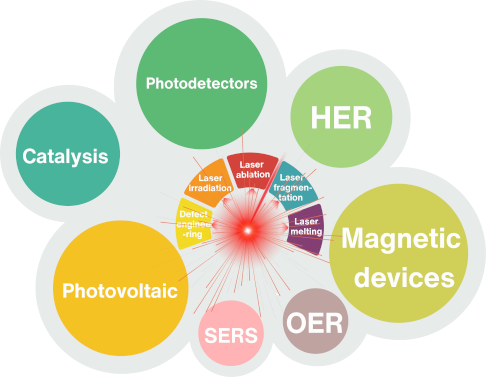
- Nanoparticles in their pure colloidal form synthesized by laser-assisted processes such as laser ablation/fragmentation/irradiation/melting in liquids have attained much interest from the scientific community because of their specialties like facile synthesis, ultra-high purity, biocompatibility, colloidal
- foundational understanding, without investigating the extensive details that other reviews have already explored. The fundamental chemical and physical aspects of pulsed laser ablation (PLA) processes, with a focus on the evolution of material from the target to the deposited film, were explained by Ashfold et
- al. [2] in one of the first reviews on laser ablation published in 2004. Their discussion addresses the physicochemical insights into key stages of these processes, including the behavior of the laser target, the formation of the plume, and the initial laser–target interactions. It offers a






Wavelength-dependent correlation of LIPSS periodicity and laser penetration depth in stainless steel
Beilstein J. Nanotechnol. 2025, 16, 1302–1315, doi:10.3762/bjnano.16.95
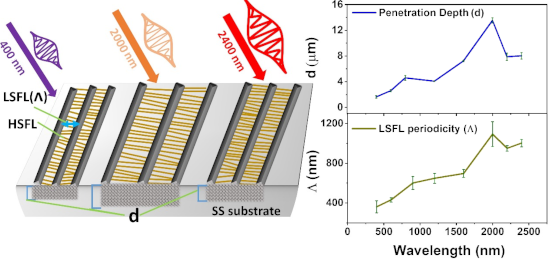
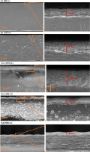
- investigated the penetration depth of the laser with increasing incident power. At higher powers, the depth of laser ablation into the material increases. Delving deeper, Figure 9 offers a cross-sectional view of the large-area patterned surface, providing crucial insights into the observed phenomena. Our
- ); maximum LIPSS; penetration depth; Introduction Nanostructuring on surfaces plays a pivotal role in governing surface properties, and laser-induced periodic surface structures (LIPSS) have emerged as a potent method for achieving nanoscale surface modifications. Over the past decade, LIPSS and laser
- ablation techniques for micro/nanostructuring have garnered significant attention due to their versatile applications. In particular, fabricating subwavelength structures using high-power pulsed lasers offers a flexible, single-step processing approach compatible with industry standards, making it a




Crystalline and amorphous structure selectivity of ignoble high-entropy alloy nanoparticles during laser ablation in organic liquids is set by pulse duration
Beilstein J. Nanotechnol. 2025, 16, 1141–1159, doi:10.3762/bjnano.16.84
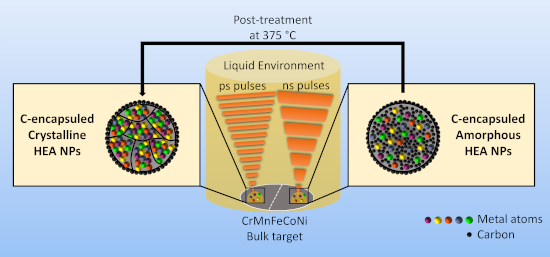
- loss spectroscopy, in situ heating, post-irradiation experiments, and differential scanning calorimetry we demonstrate that a pulse-duration-driven structural difference occurs during laser ablation in liquid is observable to the three utilized solvents. While picosecond-pulsed laser ablation in liquid
- produces polycrystalline HEA NPs, nanosecond-pulsed laser ablation favors a metastable amorphous structure. Particle cores in all cases exhibit a homogeneous distribution of the metals Cr, Mn, Fe, Co, and Ni, while particle shells were found to vary between manganese-enriched oxide layers and thin
- , colloidal nanoparticles can be synthesized and/or processed by laser ablation in liquid (LAL) [51][52][53][54][55], laser fragmentation in liquid (LFL) [56][57], and laser reduction in liquid (LRL) [58][59][60], making LSPC an efficient method for nanoparticle research but also for scale-up, as it has been


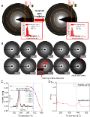


Time-resolved probing of laser-induced nanostructuring processes in liquids
Beilstein J. Nanotechnol. 2025, 16, 968–1002, doi:10.3762/bjnano.16.74
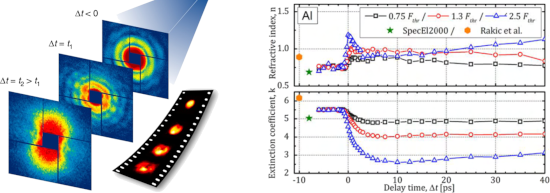
- exchanging energy and material with the excited loci. LSPC commonly encompasses laser ablation in liquid (LAL), which allows for producing NPs from a surface of virtually any solid [6][7][8][9], laser fragmentation in liquid (LFL) to further reduce dimensions of particles down to few-atom clusters [10][11
- surrounding liquid can be resolved in one experiment. And finally, a fourth chapter provides a state-of-the-art overview on the subject “Large-scale optical probing of laser ablation dynamics in liquids”. Here, the relaxation dynamics of a few tens of square micrometer large laser-excited surface, as used in
- many setups designed for NP generation by laser ablation in liquid, is probed with optical methods from the picosecond time domain up to the final state in the millisecond domain. Ultrafast light–matter interaction directly observed via single-pulse, single-particle imaging The interaction of intense


Synthesis and magnetic transitions of rare-earth-free Fe–Mn–Ni–Si-based compositionally complex alloys at bulk and nanoscale
Beilstein J. Nanotechnol. 2025, 16, 823–836, doi:10.3762/bjnano.16.62
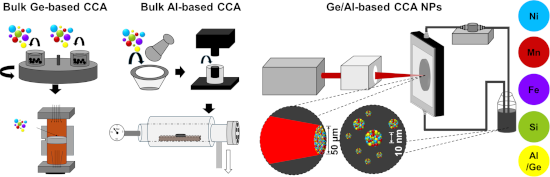
- are prepared by ball milling and spark plasma sintering or powder pressing and sintering. Nanoparticles (NPs) from the bulk materials are synthesized by pulsed laser ablation in liquid. Magnetization measurements confirm a ferromagnetic-to-paramagnetic phase transition in bulk alloys, with Tc = 179 K
- available for producing CCA NPs, pulsed laser ablation in liquids (PLAL) stands out as a particularly promising method [41][42][43]. PLAL is a straightforward and versatile method that does not require expensive precursors, reducing agents, or surfactants [44][45]. The process is based on the laser
- components that can be later in-situ alloyed during PLAL to generate compositionally controlled CCA NPs. CCA NP synthesis and characterization Particle size distribution The NPs synthesized by pulsed laser ablation in ethanol exhibit a log–normal particle size distribution ranging from 2 to 130 nm for both


Morphology and properties of pyrite nanoparticles obtained by pulsed laser ablation in liquid and thin films for photodetection
Beilstein J. Nanotechnol. 2025, 16, 785–805, doi:10.3762/bjnano.16.60
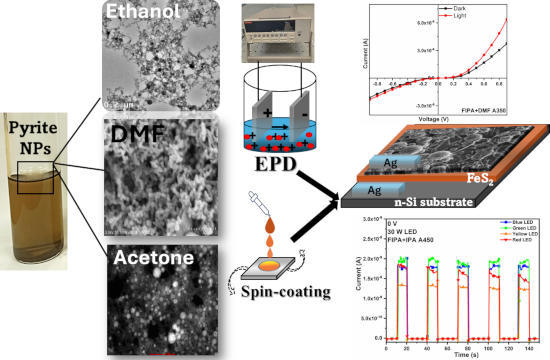
- disulfide (FeS2)) nanoparticles (NPs) of different morphologies using pulsed laser ablation in liquid (PLAL) in different organic solvents. The impact of the solvent on the morphological, compositional, and optical properties of the synthesized NPs is investigated by techniques such as transmission electron
- prepared by PLAL. Keywords: electrophoretic deposition; pulsed laser ablation in liquid; pyrite nanoparticles; self-powered photodetector; spin coating; Introduction Pyrite (FeS2) is one of the earth-abundant and nontoxic semiconductors possessing a promising role in optoelectronic applications. FeS2 has
- Earth, including toxic heavy metals and metalloids, radionuclides, and organic pollutants [5]. In addition to the aforementioned advantages as a semiconductor, it has the potential to be used in various applications through its nanostructures created via pulsed laser ablation in liquid (PLAL) and thin






Efficiency of single-pulse laser fragmentation of organic nutraceutical dispersions in a circular jet flow-through reactor
Beilstein J. Nanotechnol. 2025, 16, 711–727, doi:10.3762/bjnano.16.55
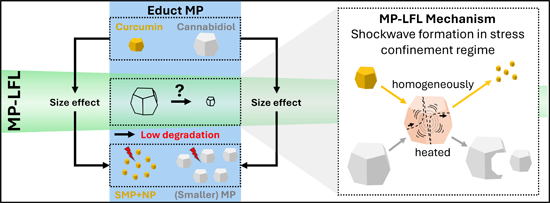
- viability even at high curcumin concentrations. Keywords: antioxidant; cannabidiol; curcumin; drug; food additive; low degradation; nanoparticle; pulsed laser ablation in liquids; solubilization; Introduction Laser synthesis and processing of colloids (LSPC) has become increasingly popular over the last
- few decades, as this relatively new fabrication method can be used to produce stable, additive-free colloids of different material classes under high-purity conditions, which are suitable for a wide range of technical applications [1][2][3][4][5]. Pulsed laser ablation (LAL), laser fragmentation (LFL


High-temperature epitaxial growth of tantalum nitride thin films on MgO: structural evolution and potential for SQUID applications
Beilstein J. Nanotechnol. 2025, 16, 690–699, doi:10.3762/bjnano.16.53
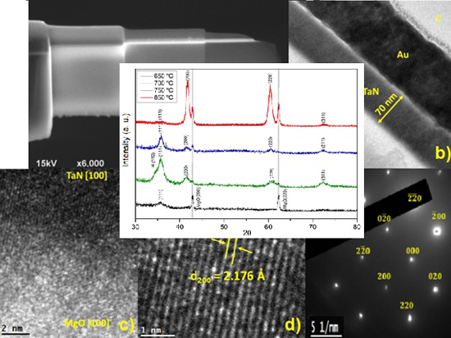
- nitrogen pressure between 10 and 90 mTorr. The experiment was performed in a laser ablation system “RIBER LDM 32”. It consists of three stainless steel ultrahigh-vacuum (UHV) chambers for sample introduction, PLD deposition, and X-ray photoelectron spectroscopy (XPS) analysis, isolated by UHV gate valves


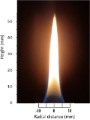
Feasibility analysis of carbon nanofiber synthesis and morphology control using a LPG premixed flame
Beilstein J. Nanotechnol. 2025, 16, 581–590, doi:10.3762/bjnano.16.45
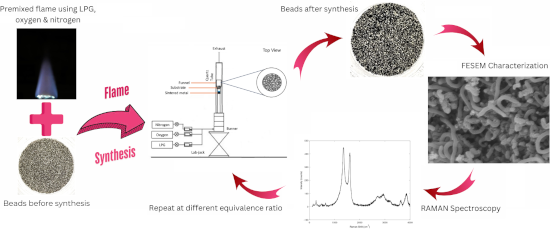
- delivery, tissue engineering, and implants [7]. Methods of CNT/CNF synthesis include (a) chemical vapor deposition, (b) arc discharge, (c) flame synthesis, and (d) laser ablation [1]. Flame-assisted synthesis is a promising method for efficient and continuous one-step production. Various flame



Effect of additives on the synthesis efficiency of nanoparticles by laser-induced reduction
Beilstein J. Nanotechnol. 2025, 16, 464–472, doi:10.3762/bjnano.16.35
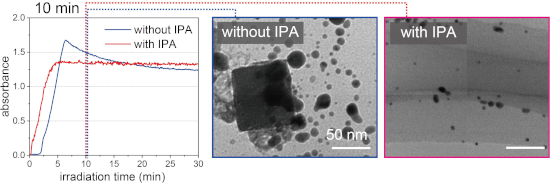
- target source material is a ‘solid’ or a ‘metal ion’. Methods for synthesizing particles using solid materials include laser ablation in liquid (LAL) [13][14][15], laser fragmentation in liquid (LFL) [16], and laser melting in liquid (LML) [17], and many excellent reports have been published on the


Size control of nanoparticles synthesized by pulsed laser ablation in liquids using donut-shaped beams
Beilstein J. Nanotechnol. 2025, 16, 407–417, doi:10.3762/bjnano.16.31
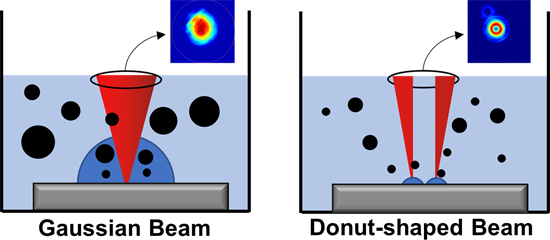
- GROC·UJI, Institute of New Imaging Technologies, Universitat Jaume I, Av. de Vicent Sos Baynat, s/n, 12071 Castellón, Spain 10.3762/bjnano.16.31 Abstract The potential to modify the size distribution of nanoparticles synthesized by pulsed laser ablation in liquids is demonstrated using a donut-shaped
- laser beam. In experiments on pulsed laser ablation in water of gold, yttrium oxide, and high-entropy alloy targets with both Gaussian and donut-shaped beams, we observed a significant reduction in particle size, narrowing of the size distribution width, and an improvement in sphericity when utilizing
- size can cause cellular damage or prevent membrane permeation for drug delivery [10]. Therefore, a fine and reproducible size control during NP synthesis is essential. Pulsed laser ablation in liquids (PLAL) allows for the synthesis of colloidal NPs offering numerous advantages, such as being


Pulsed laser in liquid grafting of gold nanoparticle–carbon support composites
Beilstein J. Nanotechnol. 2025, 16, 349–361, doi:10.3762/bjnano.16.26
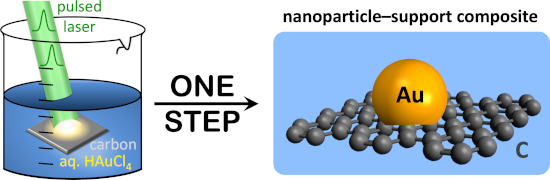
- air [60][61]. Attempts to include an Au+ component with a central binding energy of 85.2 eV [62] did not match the measured data, excluding the presence of Au+ here. The presence of Au+ has been observed in 800 nm femtosecond-reactive laser ablation in aqueous HAuCl4 solution [41]. We did not find


Preferential enrichment and extraction of laser-synthesized nanoparticles in organic phases
Beilstein J. Nanotechnol. 2025, 16, 254–263, doi:10.3762/bjnano.16.20
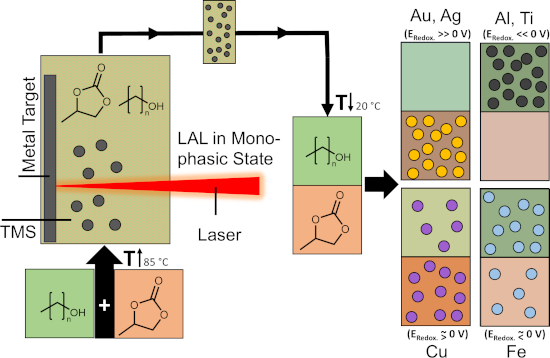
- Chemical Engineering, Laboratory for Industrial Chemistry, TU Dortmund University, Emil-Figge-Str. 66, 44227 Dortmund, Germany 10.3762/bjnano.16.20 Abstract Pulsed laser ablation in liquids (LAL) is an established preparation method of nanoparticles and catalysts, which additionally allows to chemically
- ) was found to direct both the nanoparticles’ phase selectivity and recovery after cycling. The observed correlations provide potential guidelines for nanoparticle extraction and size separation, relevant for phase transfer and cycling during homogeneous catalysis. Keywords: catalysis; laser ablation
- in liquid; laser synthesis and processing of colloids; phase transfer; size separation; thermomorphic multiphase system; Introduction Laser ablation in liquids (LAL) provides nanoparticles without the need of external surfactants while retaining the initial composition of the educt material in the




Fabrication of hafnium-based nanoparticles and nanostructures using picosecond laser ablation
Beilstein J. Nanotechnol. 2024, 15, 1639–1653, doi:10.3762/bjnano.15.129
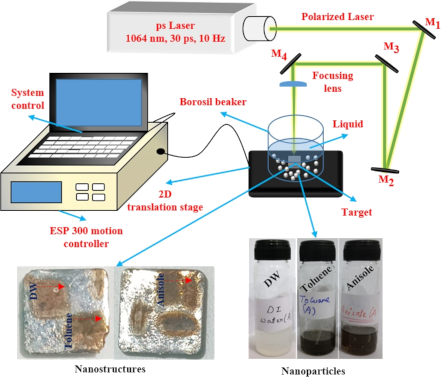
- /bjnano.15.129 Abstract This work presents a unique and straightforward method to synthesise hafnium oxide (HfO2) and hafnium carbide (HfC) nanoparticles (NPs) and to fabricate hafnium nanostructures (NSs) on a Hf surface. Ultrafast picosecond laser ablation of the Hf metal target was performed in three
- insight into their morphological and optical characteristics paving way for their applications in future. Keywords: hafnium; laser ablation in liquids; nanofibres; nanoparticles; nanostructures; Introduction Hafnium (Hf) is a tetravalent transition metal with compounds showing excellent thermal and
- desired morphology is essential for a given application. Generally, practical techniques for obtaining nanomaterials are sol–gel method, chemical and physical vapour deposition, hydrothermal method, ball milling, grinding, lithography, etching, and laser ablation [14][15][16][17][18]. The morphology




Green synthesis of silver nanoparticles derived from algae and their larvicidal properties to control Aedes aegypti
Beilstein J. Nanotechnol. 2024, 15, 1566–1575, doi:10.3762/bjnano.15.123
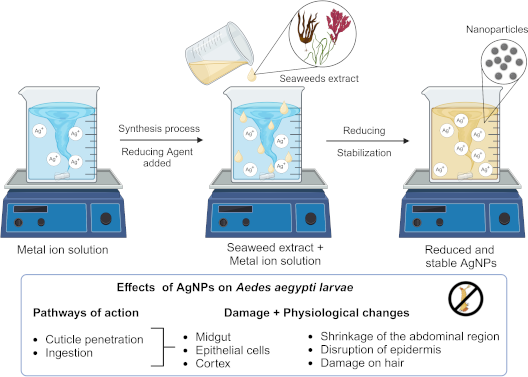
- residues in the environment [30]. Physical methods include laser ablation, UV irradiation, evaporation condensation, aerosol methods, and lithography. High cost, high energy consumption, and expensive equipment make these techniques uneconomical [31]. Because of these disadvantages, synthesis methods based


Various CVD-grown ZnO nanostructures for nanodevices and interdisciplinary applications
Beilstein J. Nanotechnol. 2024, 15, 1390–1399, doi:10.3762/bjnano.15.112
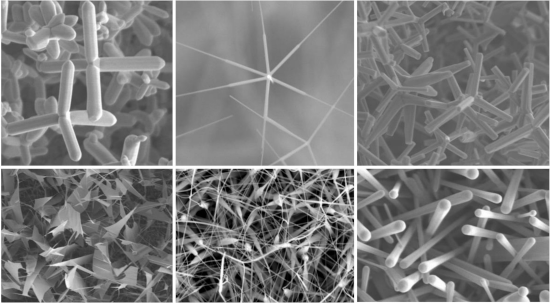
- ], radio-frequency magnetron sputtering [47], pulsed laser ablation [48], and electrodeposition methods [49]. They have many application potentials in dye-sensitized solar cells [46], self-powered energy-harvesting devices [47], photocatalysts [48], and turbid lenses [50]. It has been suggested that the

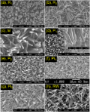


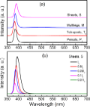
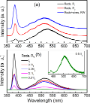
Effect of wavelength and liquid on formation of Ag, Au, Ag/Au nanoparticles via picosecond laser ablation and SERS-based detection of DMMP
Beilstein J. Nanotechnol. 2024, 15, 1054–1069, doi:10.3762/bjnano.15.86

- Abstract The present study investigates the effects of input wavelength (1064, 532, and 355 nm) and surrounding liquid environment (distilled water and aqueous NaCl solution) on the picosecond laser ablation on silver (Ag), gold (Au), and Ag/Au alloy targets. The efficacy of the laser ablation technique
- implications for developing more efficient and stable SERS substrates for chemical detection applications. Keywords: dimethyl methyl phosphonate; laser material interaction; metal nanoparticles; picosecond laser ablation; SERS; thiram; Introduction Metal nanoparticles (NPs) are versatile materials widely
- used across various scientific and technological fields due to their distinctive optical, physical, and chemical properties. Over the past few decades, different methods have been developed for NP synthesis, including chemical reduction, electrochemistry, atomic layer deposition, laser ablation