Search results
Search for "lead" in Full Text gives 1359 result(s) in Beilstein Journal of Nanotechnology. Showing first 200.
Nanoglasses: a trail towards uncharted regions of vitreous materials and their properties?
Beilstein J. Nanotechnol. 2026, 17, 1047–1062, doi:10.3762/bjnano.17.72

- a relatively narrow perspective on property modification, especially when compared to techniques in crystalline materials like grain refinement or work hardening, which can lead to much more significant changes in properties and which are not bound to point defects but to grain boundaries or
- consider the nanoscale structure of nanoglasses that inherently necessitates to take curvature contributions to thermodynamic potentials into account. In the realm of nanocrystalline matter, these curvature (or interface excess) contributions lead to size effects, for example, regarding the melting


Vibration-induced dynamic structural superlubricity on MoS2/Au(111) under ultrahigh vacuum
Beilstein J. Nanotechnol. 2026, 17, 1039–1046, doi:10.3762/bjnano.17.71
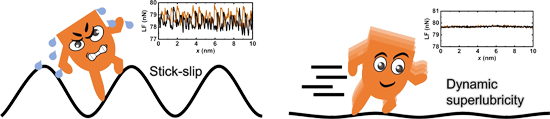
- expected to vanish at infinitely slow relative speeds due to thermal activation [3][7]. It works only within specific low-speed regimes, and elevated temperatures can lead to local material softening or accelerated degradation and oxidation of the sliding interface. By leveraging structural engineering


Influence of an external electric field on the catalytic CO oxidation of nanoscaled CeO2 and its La3+ and Gd3+ congeners
Beilstein J. Nanotechnol. 2026, 17, 1028–1038, doi:10.3762/bjnano.17.70
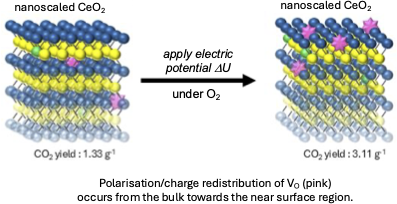
- potential, charge transport within nCeO2 is modulated. Our results show that both dopants Gd3+ and La3+ lead to an increasing VO concentration, whereas the impact of the applied potential on the oxidation behaviour varies with catalyst composition. The applied electric potential markedly improves the
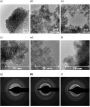


Ultrasonic irradiation in the synthesis of nanohydroxyapatite: a chemically friendly technique for improving hemocompatibility and antibiofilm applications
Beilstein J. Nanotechnol. 2026, 17, 991–1015, doi:10.3762/bjnano.17.68
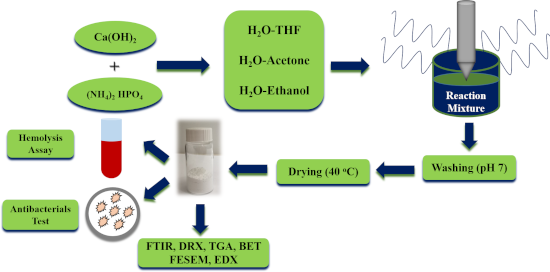
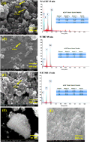
- carbonate into the hydroxyapatite structure creates vacancies and calcium deficiencies, which lead to the formation of a non-stoichiometric hydroxyapatite with a hexagonal structure and space group P63/m [47]. Table 1 shows the Ca/P ratios determined by EDX analysis of nHA samples synthesized using 15 and
- atm and T ≈ 5000 K). These conditions generate highly reactive species that lead to a specific chemical equilibrium in the W/ETOH system during the initial stages of the reaction. Furthermore, the quantification demonstrates that the nHA/calcite ratio does not show significant variations across the
- lead to a “cushioning effect” inside the cavitation bubbles. This dampens the local temperatures and pressures generated during bubble collapse, consequently affecting the reaction kinetics and the ultimate synthesis yield. Additionally, the specific coordinating capacity of THF and acetone toward Ca+2




Development of Protium heptaphyllum essential oil-loaded nanocapsules: experimental design and biological activity
Beilstein J. Nanotechnol. 2026, 17, 974–990, doi:10.3762/bjnano.17.67
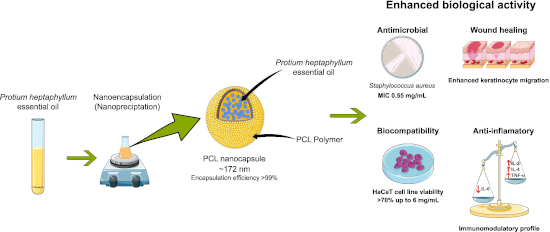
- -inflammatory capacity of fibroblasts. Similarly, the absence of IFN-γ changes suggest no excessive type-1 immune activation under the tested conditions. Nanoencapsulation may enhance the bioavailability and potential sustained release of EO compounds, which in turn could lead to higher concentrations in target




Materials challenges in solid-state sensors for continuous monitoring of ions in water
Beilstein J. Nanotechnol. 2026, 17, 935–973, doi:10.3762/bjnano.17.66
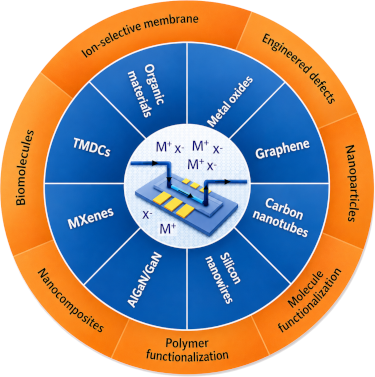
- water sectors. Heavy metals Lead, mercury, arsenic, chromium, cadmium, manganese, iron, nickel, and copper are important heavy metals. Lead, iron, and copper may enter drinking water due to the corrosion of plumbing materials in the distribution system. Mercury can also appear in the form of
- , mining effluents, and domestic and industrial wastewater due to their toxicity and stringent regulatory limits. In drinking water, the EU Drinking Water Directive imposes very low maximum acceptable concentrations (MACs) such as for lead (10 µg/L), arsenic (10 µg/L), mercury (1 µg/L), chromium (50 µg/L
- potential at an electrolyte–gate interface [85]. FET platforms can lead to fast, miniaturized, CMOS-compatible devices (complementary metal-oxide-semiconductor, a common fabrication process for integrated circuit chips) [8][9][10]. Figure 1c–i illustrates the major FET geometries, each differing in how the


Enhanced erosion resistance and radiation stability of WC–WO3 nanocomposite films under 100 keV Kr+ ion irradiation
Beilstein J. Nanotechnol. 2026, 17, 922–934, doi:10.3762/bjnano.17.65
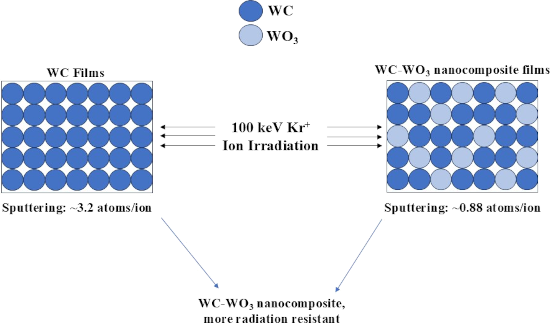
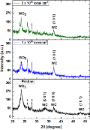
- the presence of heterointerfaces, which are better sinks for radiation-induced interstitials/vacancies than grain boundaries [33]. The transfer of energy from the incident ion(s) results in the displacement of the target atoms from their lattice sites in collison cascades, and may even ultimately lead
- driven by collision cascades initiated by energetic Kr+ ions. As ions penetrate the surface, they transfer energy to lattice atoms, causing atomic displacements that lead to the creation of vacancies, interstitials, and localized disorder. At elevated fluences, the cumulative effect of these



Nanocarrier strategies to overcome P-glycoprotein-mediated drug resistance in cancer therapy
Beilstein J. Nanotechnol. 2026, 17, 882–921, doi:10.3762/bjnano.17.64
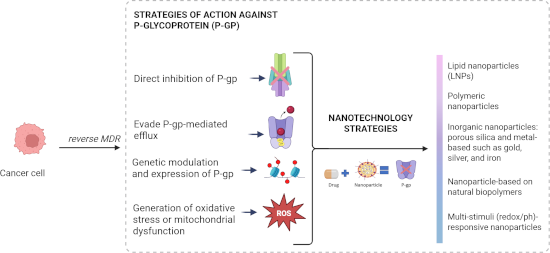
- BCRP are noted as parallel mechanisms that fall outside the scope. 1.1.3 Gastric cancer. Gastric cancer remains one of the most lethal malignancies, particularly prevalent in East Asia and Latin America. Although early-stage detection can lead to curative outcomes, advanced gastric cancer is frequently
- careful control. P-gp plays essential physiological roles in normal tissues, such as blood–brain barrier, liver, and kidneys, where it contributes to detoxification and xenobiotic efflux. Consequently, non-selective silencing could lead to adverse effects such as altered pharmacokinetics or increased


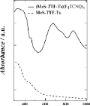
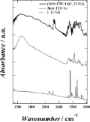
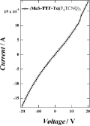
Supramolecular one-dimensional conducting nanofibers from a C3-symmetric tetrathiafulvalene derivative
Beilstein J. Nanotechnol. 2026, 17, 872–881, doi:10.3762/bjnano.17.63
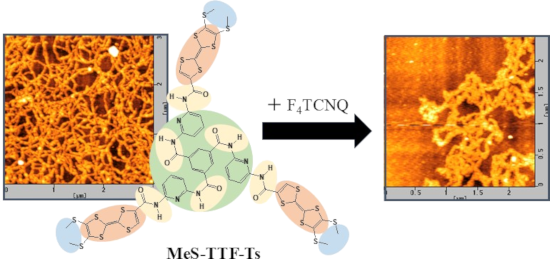
- differences may originate from variations in molecular organization, intermolecular interactions, and molecular packing during the self-assembly process. In other words, variations in solvent conditions lead to a competition between one-dimensional anisotropic growth and disordered aggregation, resulting in


Nanoparticle delivery systems for HIV pre-exposure prophylaxis (PrEP): advances and challenges
Beilstein J. Nanotechnol. 2026, 17, 839–853, doi:10.3762/bjnano.17.60
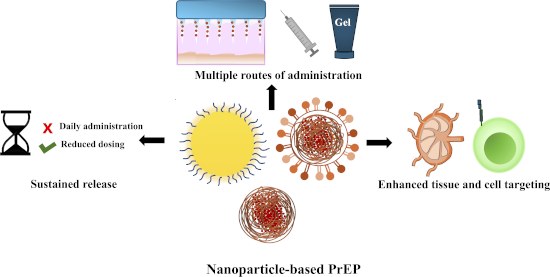
- at least 35 kg [13][14][15]. HPTN 083 and 084 are phase-3 trial studies for injectable CAB as a LA-PrEP compared to daily oral TDF/FTC for HIV prevention [14][16][17][18]. These trials were structured into three phases, an initial “oral-tablet lead-in phase”, followed by an “injection phase”, and
- finally a “tail phase”. In the first lead-in phase, the participants were given oral tablets for five weeks daily. In the injection phase, participants of the CAB received an initial single 3 mL intramuscular (IM) injection of CAB nanosuspension at week 5 of the lead-in phase, a second injection at week 9


Glycerol photoelectrochemical oxidation reaction at carbon nitrides/BiVO4 materials
Beilstein J. Nanotechnol. 2026, 17, 806–817, doi:10.3762/bjnano.17.57
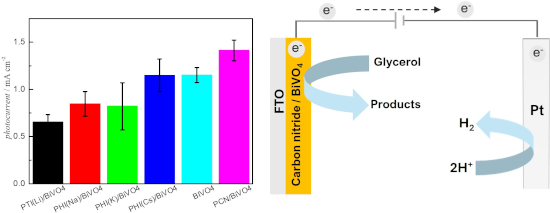
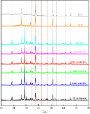
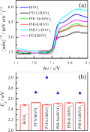
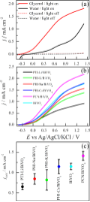
- structural defects [16]. CN materials have been extensively studied as environmentally friendly semiconductors with remarkable photocatalytic properties and facile synthesis [17][18][19][20][21]. Furthermore, it has been demonstrated that incorporating cations during CN synthesis can lead to different




Substrate-dependent pore formation in molybdenum disulfide monolayers under ion irradiation
Beilstein J. Nanotechnol. 2026, 17, 769–780, doi:10.3762/bjnano.17.54
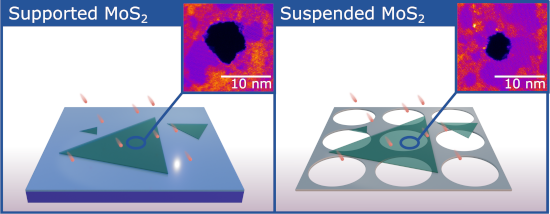
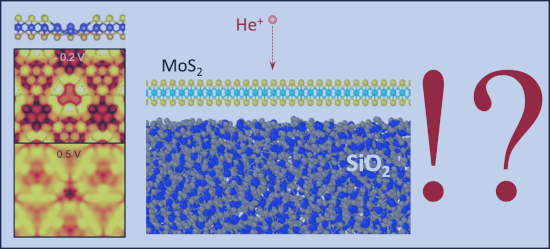
- ][23][24], and HCIs add potential energy that can lead to larger defect complexes [25]. At megaelectronvolt energies, damage is dominated by electronic excitation and can be tuned by the irradiation geometry (e.g., grazing incidence) [26][27]. While fundamental studies of ion irradiation-induced defect


Interface-engineered Caco-2 cell culture on a collagen-coated liquid–liquid interface in a microfluidic device
Beilstein J. Nanotechnol. 2026, 17, 760–768, doi:10.3762/bjnano.17.53
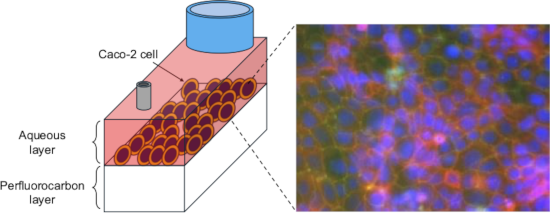
- cell adhesion, while excessively high concentrations lead to gelation, making fluid handling impossible. The microfluidic device was put in the refrigerator (4 °C, 2 h) (Figure S8iii). Thereafter, culture medium was introduced into the channel at a flow rate of 10 μL/min for 10 min to replace the


Superconducting artificial neural networks and quantum circuits
Beilstein J. Nanotechnol. 2026, 17, 744–747, doi:10.3762/bjnano.17.51
- complex topology, such as Fibonacci chains, enhanced spatial oscillations of the superconducting order parameter lead to a pronounced reduction of the critical temperature [26]. These findings are important for the design and optimisation of superconducting circuits, hybrid devices, and superconducting
Oxidative atmosphere-driven formation of single-phase spinel CuRh2O4 nanofibers for alkaline water oxidation
Beilstein J. Nanotechnol. 2026, 17, 737–743, doi:10.3762/bjnano.17.50
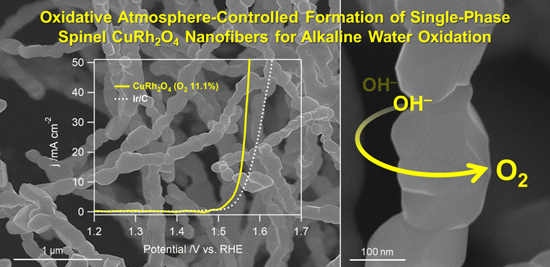
- particularly sensitive to the synthetic environment because Cu readily changes its oxidation state (Cu0/Cu+/Cu2+) depending on the oxidative atmosphere during annealing [9][10]. As a result, slight variations in oxygen partial pressure can significantly alter phase evolution and often lead to undesired




Environmental applications of silver nanoparticles: state-of-the-art review and emerging trends
Beilstein J. Nanotechnol. 2026, 17, 697–736, doi:10.3762/bjnano.17.49
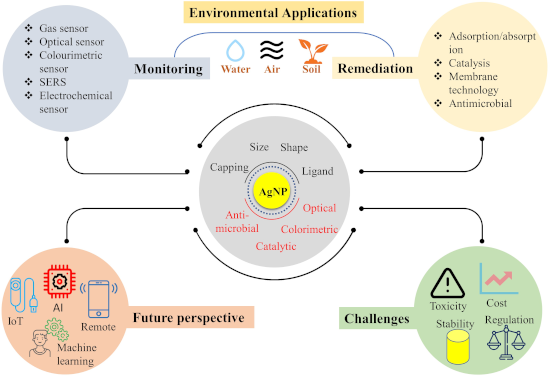
- , medical and research institutions, household waste, and agricultural practices are major contributors [1]. Pollution arises from any chemical, biological, physical, or radiological substance that impacts soil, water, air, or living beings. These include metals (e.g., lead, mercury, arsenic, cadmium
- ]. In addition, CTAB- and ʟ-carnosine-capped AgNPs exhibit catalytic activity in the removal of p-nitrophenol [8][9]. According to the Occupational Safety and Health Administration (OSHA; Permissible Exposure Limits, 29 CFR 1910.1000), arsenic, chromium, cadmium, lead, beryllium, and mercury are the


Molecular engineering of individual dye-based nanoparticle photostability for ultrabright two-photon fluorescence
Beilstein J. Nanotechnol. 2026, 17, 688–696, doi:10.3762/bjnano.17.48
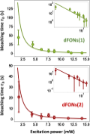
- explained only by a single Lorentz factor, but they fall into the expected order of magnitude. With Γ the radiative decay rate, integrating the rate equations over T lead to a fluorescence signal varying as: In our experiment Γexc ≫ Γ, so that the emission can be just written as: It is straightforward to


Protein-based custom-designed molecular nanotraps for biomedical applications
Beilstein J. Nanotechnol. 2026, 17, 683–687, doi:10.3762/bjnano.17.47
- isoforms. While the intrinsic complexity and variability of protein-based systems may facilitate the achievement of high complementarity with the intended molecular target, thus permitting a fine-tuning of the bioMIP function, it can also lead to substantial challenges in handling and in the
- encoding biological functions (e.g., cell adhesion sequences such as RGD), which could lead to unintended biological interactions and off-target effects. Resulting from these considerations, the route to turn the first evidences on the potential of bioMIPs into consolidated nanomaterials for biomedical

Two-step laser synthesis of Ag@TiO2 nanomaterials for the photocatalytic degradation of rhodamine B
Beilstein J. Nanotechnol. 2026, 17, 622–634, doi:10.3762/bjnano.17.43
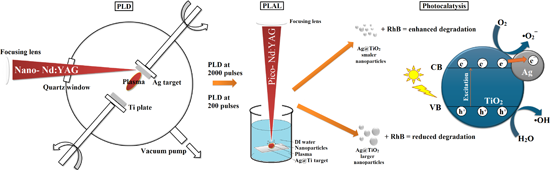
- species [28]. These combined effects lead to faster degradation of rhodamine B compared to pure TiO2. The different kinetic behavior of the samples reflects differences in particle size and Ag surface modification. The kinetic models are used as empirical descriptions of the overall process rather than


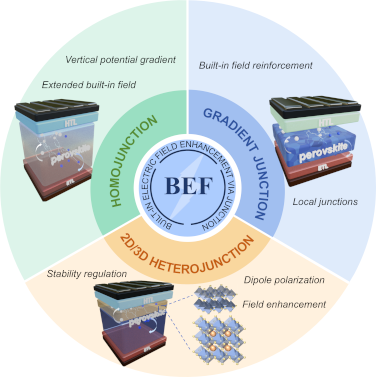
Recent progress in enhancing built-in electric fields of perovskite solar cells via junction engineering
Beilstein J. Nanotechnol. 2026, 17, 602–621, doi:10.3762/bjnano.17.42



Fractional shot noise of an SU(N) Kondo system
Beilstein J. Nanotechnol. 2026, 17, 515–540, doi:10.3762/bjnano.17.34
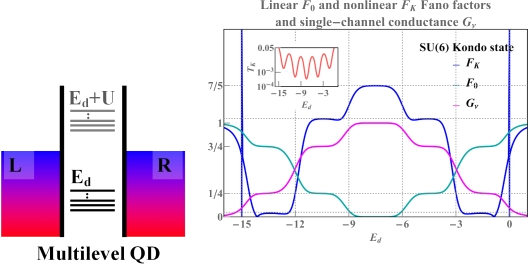
- , orbital, or charge isospin may lead to variants of the high-symmetry Kondo effect involving different degrees of freedom [24][25][26][27][28][29][30][31][32]. Spin and orbital degeneracies can occur simultaneously, leading to a Kondo ground state of SU(4) symmetry with orbital–spin entanglement. The
- addressing questions across various domains of condensed matter and field theory [45][46][47][48]. Using spin or charge Kondo building blocks could eventually lead to quantum simulations of exotic lattice models, including those almost unrealistic in solid-state systems. The motivation for studies of high


![[Graphic 127]](/bjnano/content/inline/2190-4286-17-34-i187.svg?max-width=637&scale=1.18182)

Probing internal continua and atomic ultrafast charge transfer within size-controlled nanoparticles by post-collision interaction in core-hole clock spectroscopy
Beilstein J. Nanotechnol. 2026, 17, 505–514, doi:10.3762/bjnano.17.33
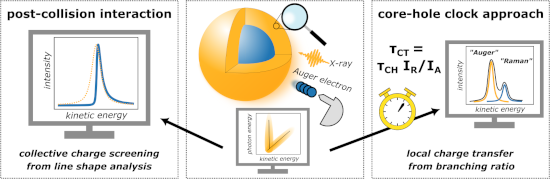
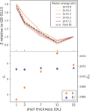
- energy within this internal continuum. By allowing the excited electron to delocalize and leave the excitation site, similar PCI effects as in the vacuum continuum will take place. While discrete energy states would only lead to the observation of particular satellite features, only a continuum provides



Upcycling agroindustrial waste into graphene oxide supports for gold nanoparticles: toward sustainable nanomaterials
Beilstein J. Nanotechnol. 2026, 17, 489–504, doi:10.3762/bjnano.17.32
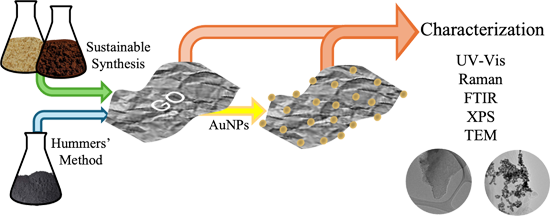
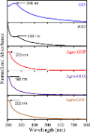
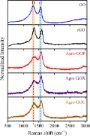
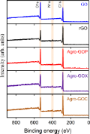
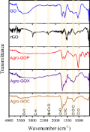
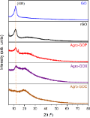
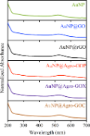
- in Agro-GOP (4.2%), Agro-GOX (2.7%), and Agro-GOC (2.3%) are attributed to nitrogen-containing compounds, such as amino acids, naturally present in the biomass, which lead to the incorporation of nitrogen functionalities into the Agro-GO samples. In contrast, nitrogen observed in rGO is likely due to
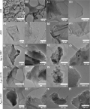
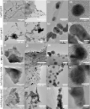
- with a higher content of oxygen functionalities favor the formation of smaller, more uniformly distributed AuNPs, a feature particularly advantageous for applications in catalysis, sensing, and plasmonic enhancement [30]. In contrast, reduced or less functionalized GO supports lead to the growth of



Defects and defect-mediated engineering of two-dimensional materials: challenges and open questions
Beilstein J. Nanotechnol. 2026, 17, 454–488, doi:10.3762/bjnano.17.31
- state lead to additional tunneling channels, which is reflected in symmetric steps of the differential conductance in the dI/dV spectra [144]. In the absence of an external magnetic field, the excitation energies are directly related to the crystal-field split anisotropy of the defect in its atomic
- control over defect positioning, uniformity (only one and the same defect present), and scalability, which ultimately will lead to useful technological applications. What are the limitations of X-ray photoelectron spectroscopy in identifying and quantifying defect concentrations in 2D materials, and how





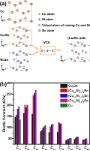
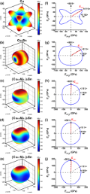
First-principles study on elastic properties of Cu, (Cu1−x,Nix)3Sn and interfacial mechanical properties of (Cu1−x,Nix)3Sn/Cu in the lead-free solder joint
Beilstein J. Nanotechnol. 2026, 17, 428–439, doi:10.3762/bjnano.17.29
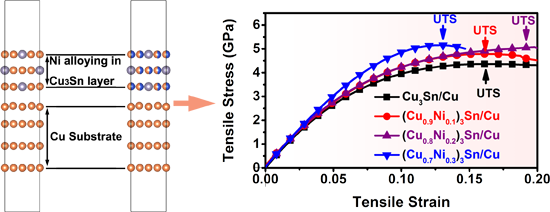
- (CuxNi1−x)3Sn/Cu in lead-free solder joints. The results reveal that, within the thermodynamically stable domain of (CuxNi1−x)3Sn, the increase of Ni content can enhance the interfacial mechanical properties of (CuxNi1−x)3Sn/Cu, and increase the reliability of the lead-free solder joints. The enhancement
- thermodynamic mechanisms and decrease the reliability of the lead-free solder joints. The results presented in this study will not only unveil the effects of Ni alloying on the interfacial properties of lead-free solder joints, but also will provide a guidance for high-performance lead-free solder design by
- alloying strategies to meet the requirements for electronic device miniaturization and harsh environmental applications. Keywords: ductility; elastic modulus; interfacial toughness; lead-free solder; work of adhesion; Introduction Due its toxicity, lead has caused serious problems in human health and