Search results
Search for "morphological characterization" in Full Text gives 39 result(s) in Beilstein Journal of Nanotechnology.
Synthesis of Cu–Mo/TiO2 and Co–Mo/TiO2 photocatalysts for the efficient degradation of organic pollutants in water
Beilstein J. Nanotechnol. 2026, 17, 559–570, doi:10.3762/bjnano.17.37
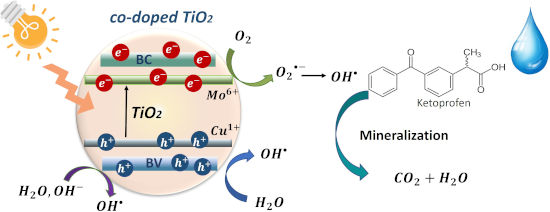
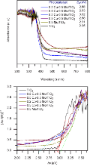
- was evidenced after dopant incorporation into the TiO2 structure. Morphological characterization showed poorly defined spherical particles that decreased in size with increasing Cu and Co concentrations. PL spectra showed an additional signal attributed to the ability of the metal dopants to capture
- previously reported [17][32]. In contrast, with the addition of 0.5 wt % Mo and 0.2 wt % Co into TiO2, the area increases to 80.9 m2/g. These results are consistent with the morphological characterization, which showed a decrease in particle size in the cobalt-containing materials, which may have influenced



Visualizing nanostructures in supramolecular hydrogels: a correlative study using confocal and cryogenic scanning electron microscopy
Beilstein J. Nanotechnol. 2025, 16, 2274–2284, doi:10.3762/bjnano.16.156
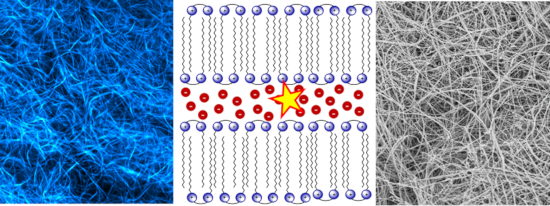
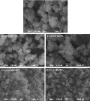
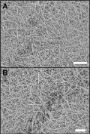
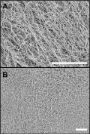
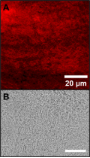
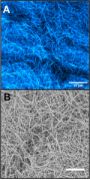
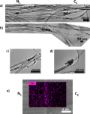
- supramolecular hydrogels present unique challenges in nanoscale morphological characterization because of their fragile fibrous nature and low concentration of the solid component. In this study, imidazolium-based hydrogels containing either diketopyrrolopyrrole (DPP) or zinc(II) phthalocyanine (ZnPc
- ideal for mimicking biological environments, yet these same properties pose major challenges for morphological characterization [6][7]. In particular, conventional electron microscopy often requires dehydration, which risks collapsing the delicate network, while optical methods are typically diffraction



Rapid synthesis of highly monodisperse AgSbS2 nanocrystals: unveiling multifaceted activities in cancer therapy, antibacterial strategies, and antioxidant defense
Beilstein J. Nanotechnol. 2025, 16, 2105–2115, doi:10.3762/bjnano.16.145
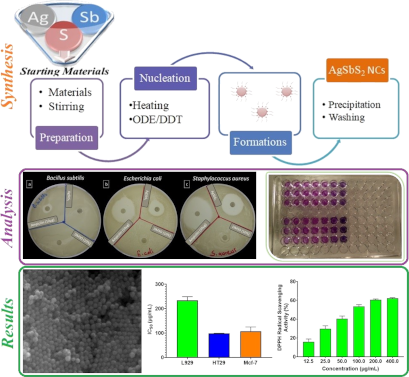
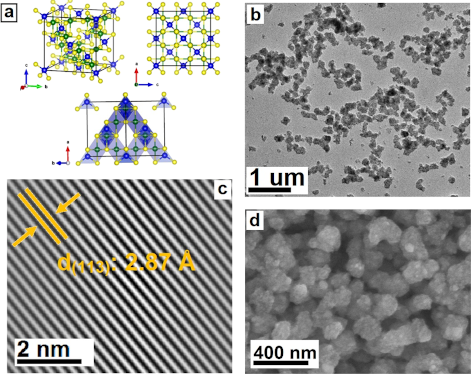
- Structural and morphological characterization of AgSbS2 NCs The crystal structure and phase of AgSbS2 NCs were investigated by XRD analysis. The obtained diffraction pattern and a schematic representation of the crystal structure are given in Figure 1. As can be seen from the XRD pattern, five dominant peaks


Beyond the shell: exploring polymer–lipid interfaces in core–shell nanofibers to carry hyaluronic acid and β-caryophyllene
Beilstein J. Nanotechnol. 2025, 16, 2015–2033, doi:10.3762/bjnano.16.139
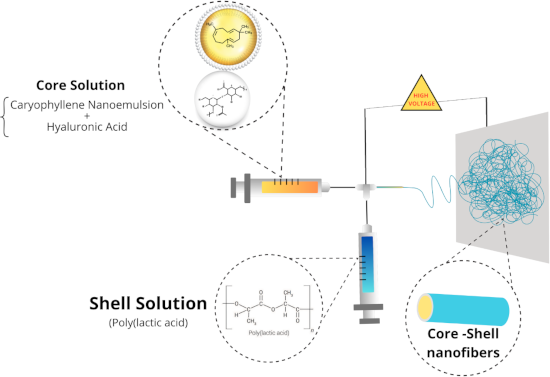
- fibers without the lipid core. Furthermore, maintaining ambient relative humidity below 45% proved essential for processing stability. Comprehensive morphological characterization via scanning electron microscopy confirmed the uniformity of the fibers. At the same time, confocal microscopy, cross




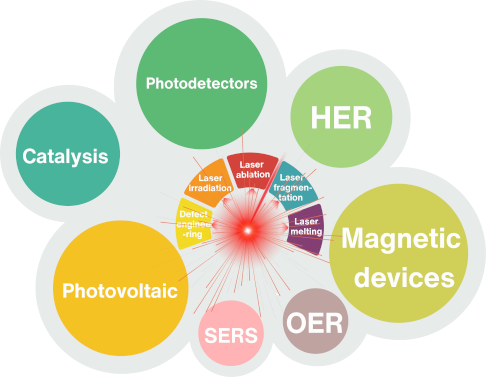
Laser processing in liquids: insights into nanocolloid generation and thin film integration for energy, photonic, and sensing applications
Beilstein J. Nanotechnol. 2025, 16, 1428–1498, doi:10.3762/bjnano.16.104
- megahertz range). The NPs were further analyzed regarding phase, composition, electrical surface charge, and charge modulation mechanisms. EPD of a Au colloidal solution prepared by laser ablation in different solvents has been reported [131]. Figure 14a–d presents the structural and morphological
- characterization of the Au sample fabricated by EPD. However, an example of anodic EPD was demonstrated by depositing Au NPs generated by LAL in deionized water onto graphene on a quartz surface at 30 V for 20 min and 1 h. A fairly uniform distribution of NPs was achieved, with surface densities ranging from






Enhancing the photoelectrochemical performance of BiOI-derived BiVO4 films by controlled-intensity current electrodeposition
Beilstein J. Nanotechnol. 2025, 16, 1289–1301, doi:10.3762/bjnano.16.94
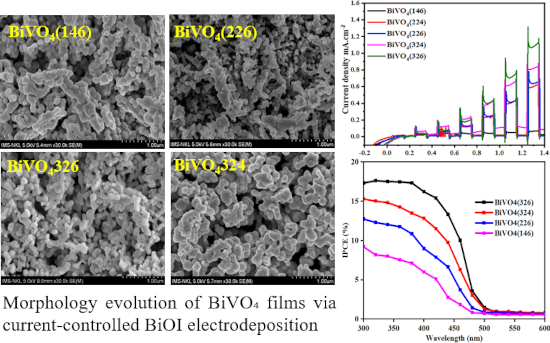
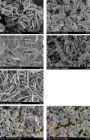
- sizes, indicating an improved crystalline quality. BiVO4(326) exhibited the largest average crystallite size (≈40 nm), consistent with the enhanced PEC performance and reduced lattice strain observed in the Raman analysis. Morphological characterization (FESEM) Field-emission scanning electron



Development of a mucoadhesive drug delivery system and its interaction with gastric cells
Beilstein J. Nanotechnol. 2025, 16, 371–384, doi:10.3762/bjnano.16.28

- . In addition to morphological characterization, the coating of Alg nanoparticles with Eudragit RS100 polymer was studied by using fluorescently tagged polymers during particle synthesis (Supporting Information File 1). For the preparation of fluorescently tagged Alg (F-Alg) nanoparticles, fluorescein
- nanoparticles Morphology of nanoparticles The morphological characterization of nanoparticles was done via scanning electron microscopy (SEM, Zeiss, GeminiSEM500) and scanning transmission electron microscopy (STEM, Ziess, GeminiSEM500). For SEM analysis, nanoparticles were air-dried on SEM stabs and coated


In search of cytotoxic selectivity on cancer cells with biogenically synthesized Ag/AgCl nanoparticles
Beilstein J. Nanotechnol. 2022, 13, 1505–1519, doi:10.3762/bjnano.13.124
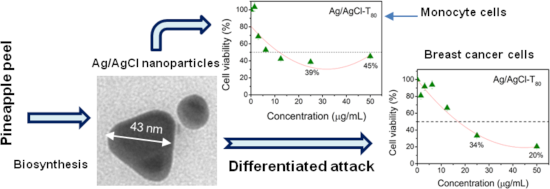
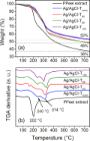
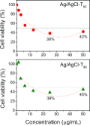
- absorption bands of the reaction products are also a consequence of the capacity of the extract metabolites to act as capping agents for the formation of nanoparticles. Morphological characterization Although the data obtained by XRD and FTIR do not show significant differences in the formation of





Orally administered docetaxel-loaded chitosan-decorated cationic PLGA nanoparticles for intestinal tumors: formulation, comprehensive in vitro characterization, and release kinetics
Beilstein J. Nanotechnol. 2022, 13, 1393–1407, doi:10.3762/bjnano.13.115
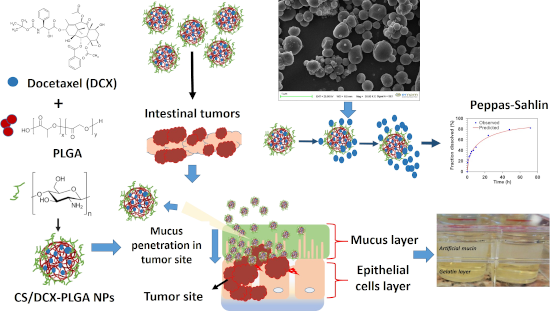
- DCX-loaded nanoparticles Morphological properties of NPs are among the most important factors influencing the efficacy of drugs and determining the fate of NP systems. It has been reported that the NP morphology significantly affects circulation time and cellular uptake of NPs [44]. Morphological
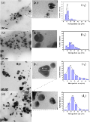
- characterization of both coated and uncoated DCX-PLGA NPs was carried out by scanning electron microscopy (SEM). As it can be seen in Figure 1, both formulations exhibit perfectly round spheres with smooth surfaces. No free DCX crystals were found in the SEM pictures of any formulation, confirming that DCX was


Supramolecular assembly of pentamidine and polymeric cyclodextrin bimetallic core–shell nanoarchitectures
Beilstein J. Nanotechnol. 2022, 13, 1361–1369, doi:10.3762/bjnano.13.112
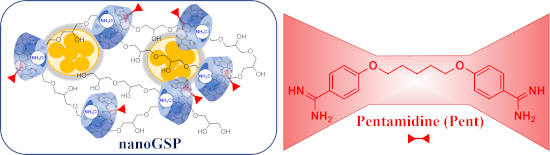
- ultrapure water. The results are reported as the mean of three separate measurements ± the standard deviation (SD). The morphological characterization was performed using a high-resolution TecnaiG2 F20 XTWIN TEM with a 200 kV accelerating voltage. NMR spectra were recorded on a Varian 500 MHz spectrometer


A new method for obtaining the magnetic shape anisotropy directly from electron tomography images
Beilstein J. Nanotechnol. 2022, 13, 590–598, doi:10.3762/bjnano.13.51
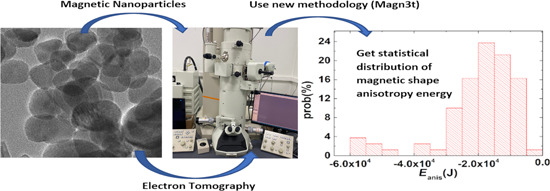
- ]. Projection imaging is still the standard in morphological characterization but provides incomplete information. Although 3D imaging emphasizes the full morphology, most software provide generally volumes and surfaces of the investigated entities. The quantitative description of their morphology is considered
- . Based on the complete morphological characterization of the system via transmission electron tomography and an a priori knowledge of the magnetization, statistical information regarding the orientation of MNPs (Figure 6a) as well as their shape anisotropy (Figure 6b) has been obtained. This kind of


A Au/CuNiCoS4/p-Si photodiode: electrical and morphological characterization
Beilstein J. Nanotechnol. 2021, 12, 984–994, doi:10.3762/bjnano.12.74
- holes. The stoichiometric composition of the CuNiCoS4 nanocrystals was analyzed with EDS, and the results are given in Figure 2e. The chemical composition of the nanocrystals was determined as Cu1.24(NiCo)2.08S4, which is close to the theoretical composition (CuCo2S4). The morphological characterization



Towards 3D self-assembled rolled multiwall carbon nanotube structures by spontaneous peel off
Beilstein J. Nanotechnol. 2020, 11, 1865–1872, doi:10.3762/bjnano.11.168
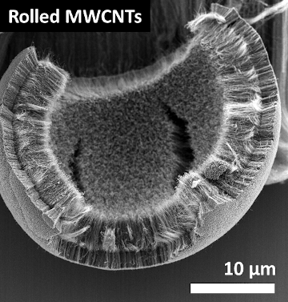
- first observed by the naked eye. Based on a morphological characterization from a previous work [16], four distinct sections are identified along the MWCNT forest. From top to bottom (bottom is marked by the silicon substrate at the bottom of the image), one can see a “wavy”, a “straight”, another “wavy



Cu2O nanoparticles for the degradation of methyl parathion
Beilstein J. Nanotechnol. 2020, 11, 1546–1555, doi:10.3762/bjnano.11.137
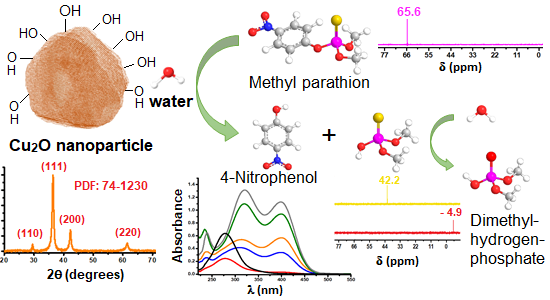
- and a HSA of 50 eV pass energy. Results and Discussion Characterization of Cu2O NPs with powder XRD and HRTEM The structural and morphological characterization of Cu2O NPs was carried out using powder X-ray diffraction and high-resolution transmission electron microscopy. Copper(I) oxide is


Exfoliation in a low boiling point solvent and electrochemical applications of MoO3
Beilstein J. Nanotechnol. 2020, 11, 662–670, doi:10.3762/bjnano.11.52
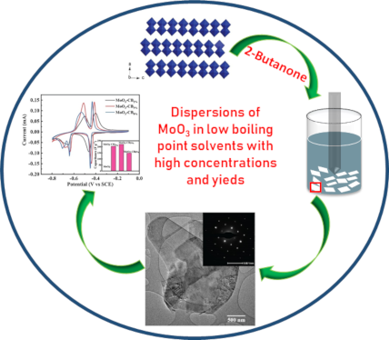
- nanosheets of MoO3, respectively. Along with the morphological characterization it is also important to assess the chemical nature of the exfoliated nanosheets. It was previously observed that the exfoliation of MoO3 in some low boiling point alcohols (IPA, ethanol) and mixed solvent systems based on H2O

Preparation, characterization and photocatalytic performance of heterostructured CuO–ZnO-loaded composite nanofiber membranes
Beilstein J. Nanotechnol. 2020, 11, 631–650, doi:10.3762/bjnano.11.50
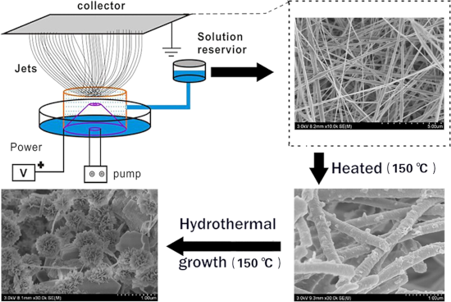
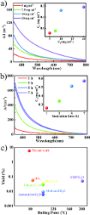
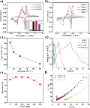
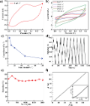
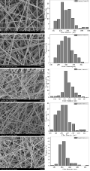
- /Zn(Ac)2]/[PVDF/PAN] = 1:3 were prepared, and the effects of the weight ratio of PVDF to PAN on the CNFMs were examined. Morphological characterization: The morphology of the CNFMs with different weight ratios of PVDF to PAN was characterized by SEM. The SEM images of the electrospun CNFMs and the
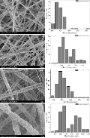
- )2 and Zn(Ac)2 on the CNFMs Electrospun Cu(Ac)2/Zn(Ac)2/PVDF/PAN CNFMs with a weight ratio of PVDF/PAN = 5:5 were fabricated, and the effects of the weight ratio of added Cu(Ac)2 and Zn(Ac)2 were examined. Morphological characterization: SEM images of the CNFMs with different weight ratios between Cu
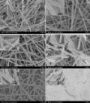
- CNFMs To illustrate the effects of heat-treatment temperature on the morphology of the CNFMs, the temperatures set to 80, 100, 120, 140, 160 and 180 °C. The heat-treatment time was 2 h in all cases. Morphological characterization: Figure 10 shows SEM images of PVDF/PAN CNFMs with CuO and ZnO











Label-free highly sensitive probe detection with novel hierarchical SERS substrates fabricated by nanoindentation and chemical reaction methods
Beilstein J. Nanotechnol. 2019, 10, 2483–2496, doi:10.3762/bjnano.10.239
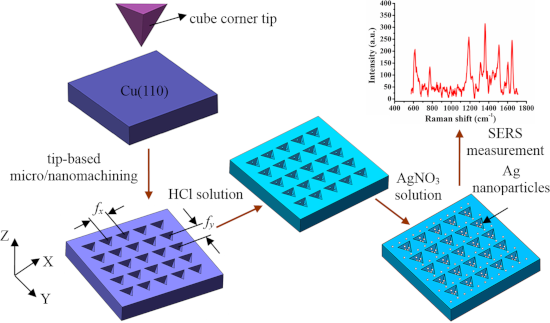
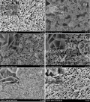
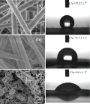
- include not only complex micro/nanostructures, but also Ag nanoparticles are generated on the Cu(110) surface. This method can be successfully applied to discriminate pesticide residues or viruses at very small quantities. Results and Discussion Morphological characterization for various feeds Scanning


Lipid nanostructures for antioxidant delivery: a comparative preformulation study
Beilstein J. Nanotechnol. 2019, 10, 1789–1801, doi:10.3762/bjnano.10.174
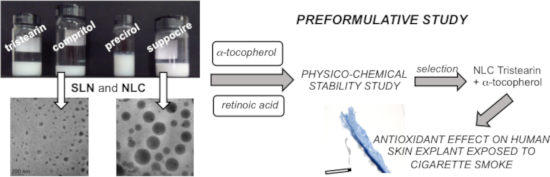
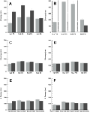
- loaded in NLCs with respect to an unloaded TOC solution. Conclusion This work has underlined the importance of technological screening in the design of a nanoparticulate lipid dosage formulation. Notably, dimensional and morphological characterization of nanoparticles should be performed at different

Study of silica-based intrinsically emitting nanoparticles produced by an excimer laser
Beilstein J. Nanotechnol. 2019, 10, 211–221, doi:10.3762/bjnano.10.19
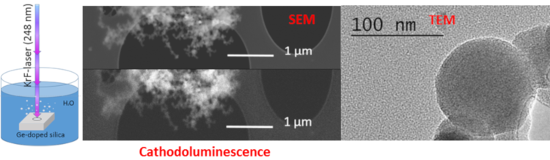
- , changing the spot size or other irradiation parameters) can induce generation as well; ii) the possibility to generate nanoparticles from undoped silica, using higher energy per pulse; and iii) improved structural and morphological characterization of the nanoparticles using TEM and STEM, as well as



Size-selected Fe3O4–Au hybrid nanoparticles for improved magnetism-based theranostics
Beilstein J. Nanotechnol. 2018, 9, 2684–2699, doi:10.3762/bjnano.9.251
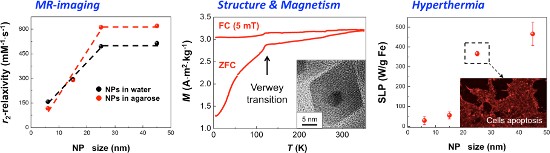
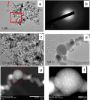
- as the mean ± SD, **p < 0.01, ***p < 0.001 (one-way ANOVA). Results of the structural and morphological characterization by TEM and XRD. The NP size distribution, volume fraction of Fe3O4 and Au, lattice parameter (a), and crystallite size are listed. Mass fraction of Fe3O4 and Au in the samples, as


Enhanced antineoplastic/therapeutic efficacy using 5-fluorouracil-loaded calcium phosphate nanoparticles
Beilstein J. Nanotechnol. 2018, 9, 2499–2515, doi:10.3762/bjnano.9.233
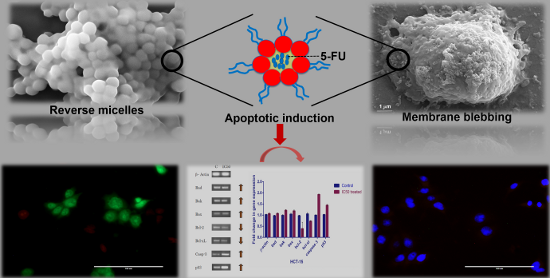
- 1). The absence of fluorine in the EDS analysis confirms the presence of the drug encapsulated inside the aqueous core of the nanoparticles. The size of the as-synthesized CaP@5-FU NPs was thus confirmed by FE-SEM. The morphological characterization was also confirmed with the help of atomic force


Synthesis of a MnO2/Fe3O4/diatomite nanocomposite as an efficient heterogeneous Fenton-like catalyst for methylene blue degradation
Beilstein J. Nanotechnol. 2018, 9, 1940–1950, doi:10.3762/bjnano.9.185
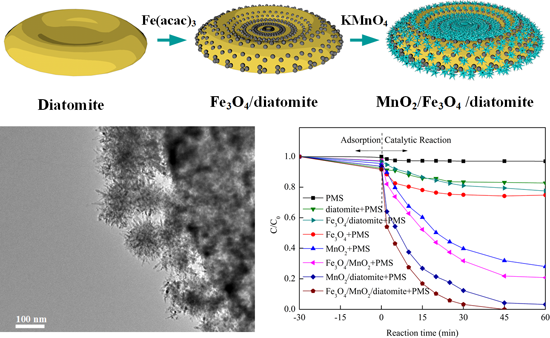
- surface chemical composition results obtained from the XPS analysis ensure the formation of Fe3O4 and MnO2, which further confirms the observation from the previous structural and morphological characterization. Figure 7 shows the N2 adsorption–desorption isotherms and corresponding pore-size


Synthesis of hafnium nanoparticles and hafnium nanoparticle films by gas condensation and energetic deposition
Beilstein J. Nanotechnol. 2018, 9, 1868–1880, doi:10.3762/bjnano.9.179
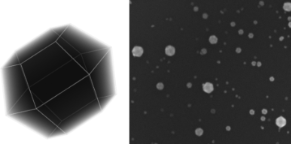
- supported by the system. Thus, D = 100 mm led to the biggest Hf nanoparticle dimensions. No size selection was applied and Hf NPs with a size distribution were fabricated. Soft landing – morphological characterization The dimensions (diameter and height) of the Hf NPs were examined by TEM (Figure 1) and AFM
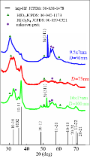
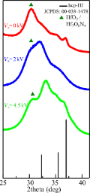
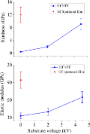
- be below 1 eV/atom, which is still below the cohesive energy of hafnium. Thus, from these energy values we expect mainly the deformation of the NPs [43]. Energetic deposition – morphological characterization TEM images of Hf nanoparticles deposited using substrate bias voltages of Vs = 0, 2 and 4.5






Automated image segmentation-assisted flattening of atomic force microscopy images
Beilstein J. Nanotechnol. 2018, 9, 975–985, doi:10.3762/bjnano.9.91
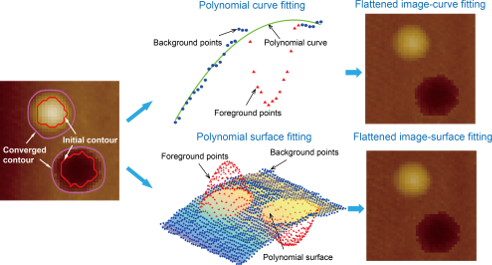
- . Additionally, the role of image flattening on the morphological characterization and segmentation of AFM images were verified with the proposed method. Keywords: atomic force microscopy; contour expansion; image flattening; polynomial fitting; sliding window; Introduction Since its invention, the atomic
- flattening methods will first be conducted. The sliding-window-based MEF is then introduced, followed by an investigation of the influence of sliding-window size and fitting direction on the flattened images. Finally, the role of image flattening on morphological characterization and image segmentation of
- features for image flattening. Additionally, a standard calibration grating (10 µm-pitch grid, Bruker) with a nominal depth of 180 nm was also applied to demonstrate the role of image flattening on morphological characterization of AFM images. All AFM images used in this study were obtained on a commercial


Electro-optical interfacial effects on a graphene/π-conjugated organic semiconductor hybrid system
Beilstein J. Nanotechnol. 2018, 9, 963–974, doi:10.3762/bjnano.9.90
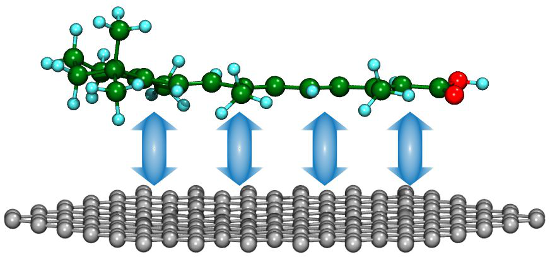
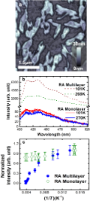
- produced ultrathin 2D-like RA films. Figure 1 summarizes the morphological characterization of retinoic acid self-assembled films on graphite microplates prepared via spin-coating (see Experimental section). Since the adsorbing species interaction with monolayer graphene can be largely influenced by the
- substrates, whereas graphite microplate substrates, used in SPM and PL experiments, were deposited on and electrically connected to Ag-coated metallic substrates. The SPM measurements were performed using a Nanoscope V MultiMode SPM from Bruker and morphological characterization was carried out in either
- fitting analysis are shown in the first line of the table. Supporting Information Supporting Information File 66: Supporting Information File 1 contains morphological characterization of retinoic acid deposited on different substrates; morphological and electrical characterization of graphite microplate