Search results
Search for "nanotechnology" in Full Text gives 706 result(s) in Beilstein Journal of Nanotechnology. Showing first 200.
Breaking barriers: nanosystems to overcome solubility and permeability challenges of second-generation tyrosine kinase inhibitors
Beilstein J. Nanotechnol. 2026, 17, 1063–1086, doi:10.3762/bjnano.17.73
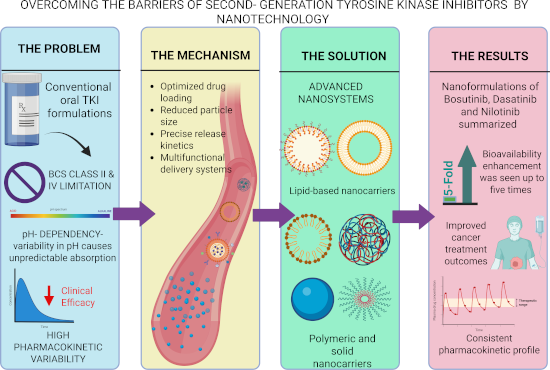
- encounter biopharmaceutical barriers limiting the therapeutic performance of drugs. Hence, this review examines nanotechnology-driven solutions that may improve the second-generation TKIs’ biopharmaceutical properties for better therapeutic performance by enhancing their pharmacokinetic properties. Various
- nanotechnology-enabled formulation strategies that improve solubility at physiological pH, enhance drug absorption and permeation, and protect against an adverse microenvironment, thereby improving drug bioavailability and reducing the dose requirement. The fundamental differences in drug transport and
- absorption between conventional formulations and nanotechnology-enabled systems are illustrated in Figure 1. The second-generation TKIs are substrates for the P-glycoprotein (P-gp)/breast cancer resistance protein (BCRP) efflux transporter at the brush-border and basolateral membranes of the enterocytes


Nanoglasses: a trail towards uncharted regions of vitreous materials and their properties?
Beilstein J. Nanotechnol. 2026, 17, 1047–1062, doi:10.3762/bjnano.17.72

- Way Tucson, AZ 85719, United States Institute of Nanotechnology, Karlsruhe Institute of Technology, Kaiserstr. 12, 76131 Karlsruhe, Germany 10.3762/bjnano.17.72 Abstract Nanoglasses are a class of non-crystalline materials composed of nanoscale glass regions separated by glass–glass interfaces that


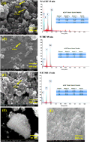
Ultrasonic irradiation in the synthesis of nanohydroxyapatite: a chemically friendly technique for improving hemocompatibility and antibiofilm applications
Beilstein J. Nanotechnol. 2026, 17, 991–1015, doi:10.3762/bjnano.17.68
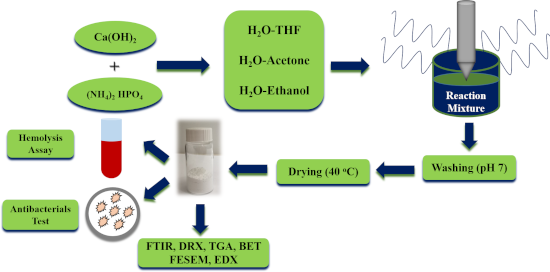
- Nanostructured Materials Laboratory, Center for Materials Engineering and Nanotechnology, Venezuelan Institute for Scientific Research (IVIC). Miranda State, Venezuela Department of Chemistry, B5ida Group, Simón Bolívar University, Caracas, Venezuela Bionanotechnology Laboratory, Center for Materials Engineering
- and Nanotechnology, IVIC. Miranda State, Venezuela Laboratory of Hemostasis and Vascular Genetics, Center for Biophysics and Biochemistry, IVIC. Miranda State, Venezuela Nanomaterials Characterization Laboratory, Center for Materials Engineering and Nanotechnology, IVIC. Miranda State, Venezuela




Development of Protium heptaphyllum essential oil-loaded nanocapsules: experimental design and biological activity
Beilstein J. Nanotechnol. 2026, 17, 974–990, doi:10.3762/bjnano.17.67
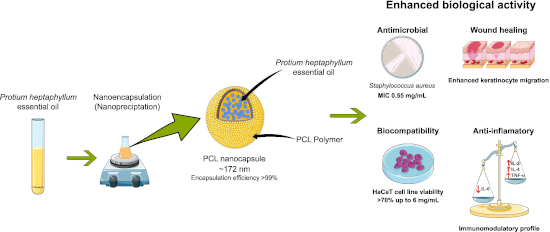
- stabilization and delivery methods that preserve bioactivity and allow for scalability. In this context, nanotechnology provides a promising solution by enabling the encapsulation of bioactive compounds within polymeric systems. Nanoencapsulation of monoterpene-rich essential oils such as oregano, thyme, and
- Granata et al. [49], who observed a decrease in the MIC of oregano oil when formulated in nanocapsules, highlighting the contribution of nanotechnology in improving the antimicrobial potential of natural compounds. This effect is mechanistically linked to the increased surface-to-volume ratio of




Enhanced erosion resistance and radiation stability of WC–WO3 nanocomposite films under 100 keV Kr+ ion irradiation
Beilstein J. Nanotechnol. 2026, 17, 922–934, doi:10.3762/bjnano.17.65
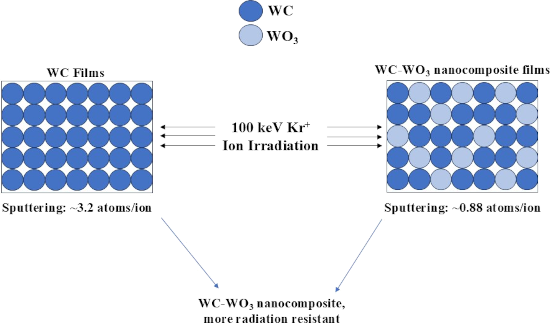
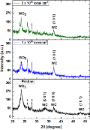
- National Institute (HBNI), Anushaktinagar, Mumbai 400094, India Amity Institute of Nanotechnology, Amity University, Noida 201301, India Inter University Accelerator Centre, New Delhi 110067, India Centre for Interdisciplinary Research and Innovation, UPES, Dehradun 248007, Uttarakhand, India 10.3762



Nanocarrier strategies to overcome P-glycoprotein-mediated drug resistance in cancer therapy
Beilstein J. Nanotechnol. 2026, 17, 882–921, doi:10.3762/bjnano.17.64
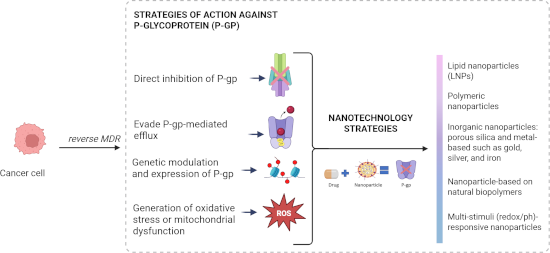
- chemotherapy without nanotechnology. 2.4 Screening and data selection process All retrieved records from the selected databases were combined, and duplicate entries were removed manually and using reference management tools. A two-stage screening process was applied including (i) title and abstract screening
- to exclude studies unrelated to cancer, nanotechnology, or multidrug resistance and (ii) full-text evaluation to confirm relevance to P-glycoprotein-mediated resistance and the presence of experimental or preclinical evidence. Only studies meeting the inclusion criteria were retained for qualitative
- resistance. 3 Nanotechnology strategies against multidrug resistance Multidrug resistance represents a major challenge in cancer therapy, often resulting from the overexpression of efflux transporters such as P-gp, MRP1, MRP2, and BCRP. ATP-binding cassette transporters actively expel chemotherapeutic drugs


Supramolecular one-dimensional conducting nanofibers from a C3-symmetric tetrathiafulvalene derivative
Beilstein J. Nanotechnol. 2026, 17, 872–881, doi:10.3762/bjnano.17.63
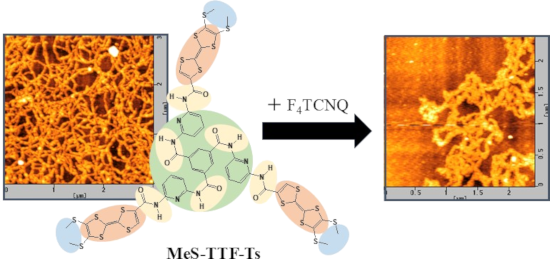
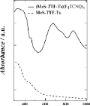
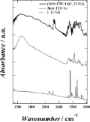
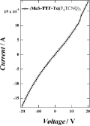
- considerable attention in the fields of materials science and nanotechnology because of their diverse functionalities, including luminescence, sensing, charge transport, and drug delivery [3][4][5][6]. Supramolecular gels are formed through bottom-up self-assembly driven by weak intermolecular interactions


He+ FIBID-fabricated 3D AFM tip architectures: an exploratory study of hollow pillars, helices, and spirals
Beilstein J. Nanotechnol. 2026, 17, 863–871, doi:10.3762/bjnano.17.62
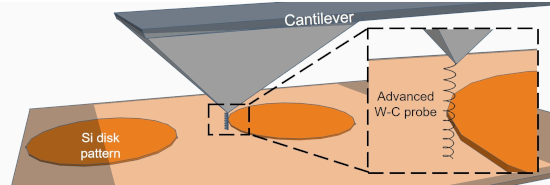
- Waals, electrostatic, and short-range repulsive forces. Owing to its minimal sample preparation requirements and broad operational flexibility, AFM has become a widely used tool across chemistry, physics, materials science, nanotechnology, and the life sciences [2]. The continued diversification of AFM


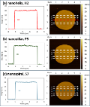
Sustainable fabrication of 2D-based devices through reuse of substrates with microfabricated electrodes
Beilstein J. Nanotechnol. 2026, 17, 818–827, doi:10.3762/bjnano.17.58
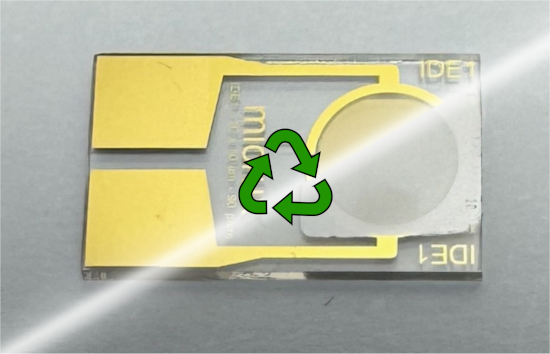
- , Spain Department of Inorganic Chemistry, University of Chemistry and Technology, Prague, Prague, Czech Republic School of Advanced Materials and Nanotechnology, Xidian University, 710071 Xi’an, China 10.3762/bjnano.17.58 Abstract Fabricating microelectronic devices for two-dimensional (2D) materials


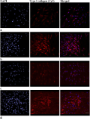
Restorative potential of laser-synthesized silver nanoparticles with Salvia officinalis for periodontal disease treatment: an in vitro study
Beilstein J. Nanotechnol. 2026, 17, 781–795, doi:10.3762/bjnano.17.55
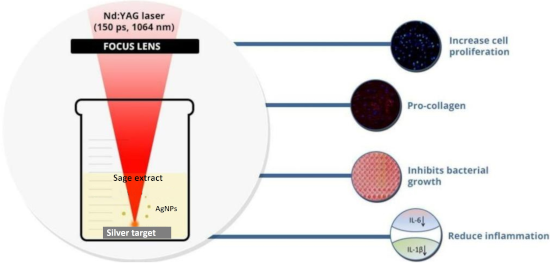
- ; silver nanoparticles (AgNPs); Introduction Synthesis of silver nanoparticles (AgNPs) is a promising nanotechnology with numerous biomedical applications, especially in the field of tissue restoration and regeneration [1]. The most commonly used methods in AgNP synthesis are (i) chemical methods, which
- , contaminant-free strategy that integrates nanotechnology with plant-derived phytochemicals to achieve positive therapeutic effects relevant for periodontal therapy. Future work should be focused on in vivo validation, mechanistic insights, and the development of clinically translatable formulations for



Tailoring Ag–Pt nanoalloys through solid-state dewetting: structural and optical insights
Beilstein J. Nanotechnol. 2026, 17, 748–759, doi:10.3762/bjnano.17.52

- Marcin Lapinski Piotr Okoczuk Blaz Grobisa Ewa Pawlikowska Amelia Rozwadowska Wojciech Sadowski Barbara Koscielska Institute of Nanotechnology and Materials Engineering, Advanced Materials Center, Gdansk University of Technology, ul. G. Narutowicza 11/12, 80-233 Gdańsk, Poland 10.3762/bjnano
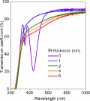
- chemical composition of the nanostructures was confirmed using XPS. Measurements were carried out with a hemispherical XPS spectrometer (Argus, Omicron Nanotechnology) equipped with an Mg Kα X-ray source, operated at 15 keV and 300 W. XPS measurements were performed under ultra-high vacuum at room




Environmental applications of silver nanoparticles: state-of-the-art review and emerging trends
Beilstein J. Nanotechnol. 2026, 17, 697–736, doi:10.3762/bjnano.17.49
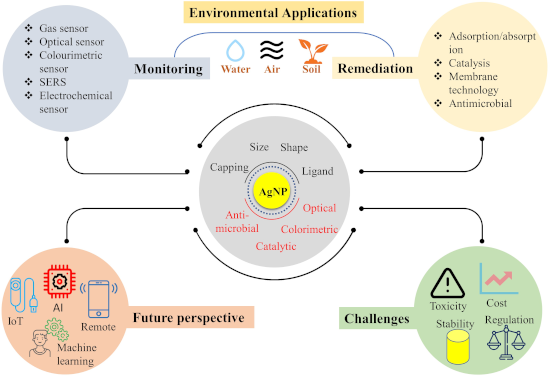
- water is due to AgNPs’ multifunctional properties and colloidal/gel stability. The water treatment approach has undergone a substantial revolution with the emergence of nanotechnology. Furthermore, the application of AgNPs in air and soil pollution must be addressed. 3.2 Air applications Air pollution


Protein-based custom-designed molecular nanotraps for biomedical applications
Beilstein J. Nanotechnol. 2026, 17, 683–687, doi:10.3762/bjnano.17.47
- imprinted polymers; natural polymers silk fibroin; SilMA; Introduction Molecular recognition is a cornerstone in biomedical nanotechnology; it is pivotal to applications ranging from drug delivery to sequestering and to sensing. Where traditional affinity systems, such as antibodies, fall short for

Cellulose as a photocatalyst support material: extraction, structural features, and environmental applications
Beilstein J. Nanotechnol. 2026, 17, 635–652, doi:10.3762/bjnano.17.44
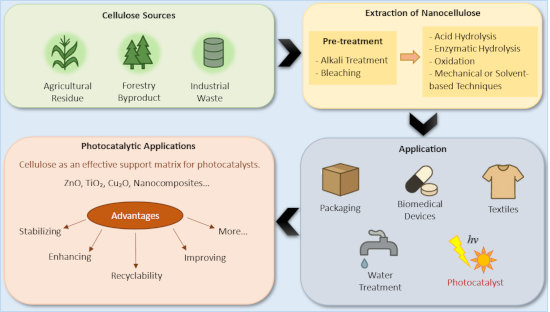
- are already being used across diverse sectors including packaging, construction, and electronics [63][64]. Research continues to focus on extracting cellulose primarily from plants such as wood, cotton, and agricultural residues and processing it through various nanotechnology-based methods to enhance


Towards targeted drugs and next generation of nanomedicines
Beilstein J. Nanotechnol. 2026, 17, 598–601, doi:10.3762/bjnano.17.41
- , Germany 10.3762/bjnano.17.41 Keywords: cellular uptake; drug delivery; intracellular trafficking; nanomedicine; nanoparticles; tumor microenvironment; Nanomedicine is dedicated to the application of nanotechnology in the medical field. Nanosized materials are intended for delivering drugs to their
- used for vaccination are composed of a complex mixture of different lipids, all of which have a particular function. Additionally, inorganic nanoparticles can be made with controlled size and shape out of many different materials. Nanotechnology has also made standardized characterization and quality
- , synthesis and functionalization of nanobiomaterials, nanotechnology applied to therapy and medical diagnostics, and pharmaceutical nanotechnology. The collected articles and contributions provide a broad overview on recent advances in the field within the aforementioned topics. Additionally, it includes
Probing tribological evolution in atomically thin MoS2 at different scales
Beilstein J. Nanotechnol. 2026, 17, 586–597, doi:10.3762/bjnano.17.40
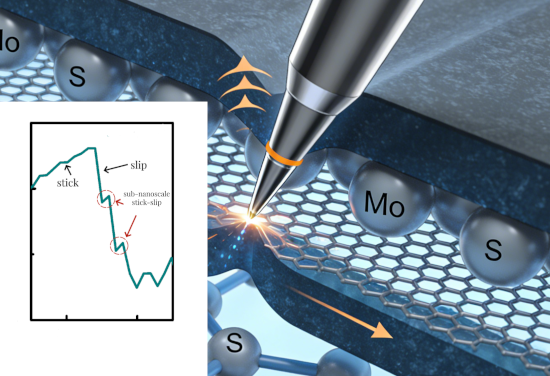
- factor limiting the performance and reliability of nanotechnology-enabled devices, including magnetic storage systems and micro/nanoelectromechanical systems (MEMS/NEMS) [1][2]. Unlike macroscale friction, nanoscale friction of two-dimensional (2D) materials exhibits unique size-dependent and interface


Laser–material interactions in liquids for the synthesis of nanomaterials: current status and perspectives
Beilstein J. Nanotechnol. 2026, 17, 571–575, doi:10.3762/bjnano.17.38
- –matter interactions; laser processing in liquids; In the ever-evolving landscape of materials science and nanotechnology, laser synthesis and processing of colloids (LSPC) has emerged [1] as a powerful and versatile technique for producing high-purity, surfactant-free nanoparticles from a wide range of
Advances in nanotechnology applied to natural products
Beilstein J. Nanotechnol. 2026, 17, 555–558, doi:10.3762/bjnano.17.36
- photochemical instability, (c) rapid metabolic degradation, (d) reduced permeability, (e) volatility, and (f) unpleasant organoleptic characteristics. These attributes have compromised the potential of natural products towards their extensive application in diverse fields [1]. In this context, nanotechnology
- , and enhance functional biological performance, often by improving stability and delivery [1]. Thus, the association between nanotechnology and natural products not only drives therapeutic innovation but also redefines the role of these compounds across multiple contemporary technological domains. In
- contributions in this thematic issue highlight the significant potential of nanotechnology to overcome limitations of natural products, thereby enabling a wide range of effective applications, as noted in this editorial. By covering a broad range of nanostructured systems, this collection reflects the diversity
Upcycling agroindustrial waste into graphene oxide supports for gold nanoparticles: toward sustainable nanomaterials
Beilstein J. Nanotechnol. 2026, 17, 489–504, doi:10.3762/bjnano.17.32
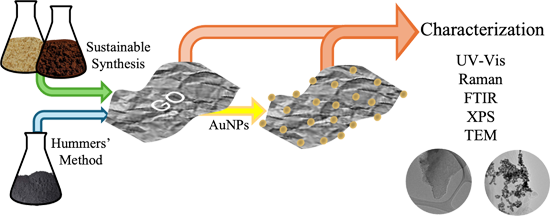
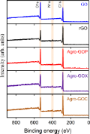
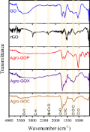
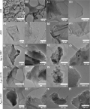
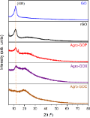
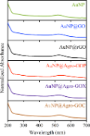
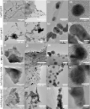
- UV–vis, ATR-FTIR, XPS, XRD, and Raman measurements, complemented by TGA and TEM to assess optical properties, surface chemistry, and structural and morphological features. Additionally, gold nanoparticles (AuNPs) were photochemically deposited onto Agro-GO to evaluate its potential for nanotechnology



Defects and defect-mediated engineering of two-dimensional materials: challenges and open questions
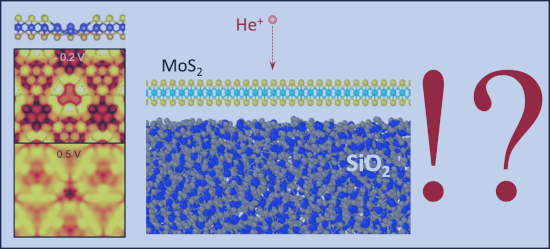
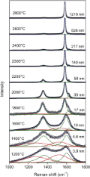
Beilstein J. Nanotechnol. 2026, 17, 454–488, doi:10.3762/bjnano.17.31



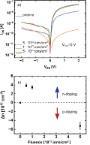


Nanoinformatics: spanning scales, systems and solutions
Beilstein J. Nanotechnol. 2026, 17, 423–427, doi:10.3762/bjnano.17.28
- Iseult Lynch Diego S. T. Martinez Kunal Roy Georgia Melagraki School of Geography, Earth and Environmental Sciences, University of Birmingham, Edgbaston, B15 2TT Birmingham, United Kingdom Brazilian Nanotechnology National Laboratory (LNNano), Brazilian Center for Research in Energy and Materials
- perspectives, and one review paper) that provide a snapshot of recent exciting developments in nanoinformatics, and is an output from the Beilstein Nanotechnology symposium [1] of the same name, held in October 2022. The advances presented are clustered around four key needs, including (i) prediction of
- , systems and solutions) for stimulating discussions. We also thank the editorial team of the Beilstein Journal of Nanotechnology, especially the support from Dr. Barbara Hissa and Dr. Lasma Gailite for the completion of this Thematic Issue. Funding Funding from the Horizon 2020 RISE project CompSafeNano

Biomimetic nanoparticles in cancer photodynamic therapy: a review of targeted delivery systems and therapeutic outcomes
Beilstein J. Nanotechnol. 2026, 17, 396–422, doi:10.3762/bjnano.17.27
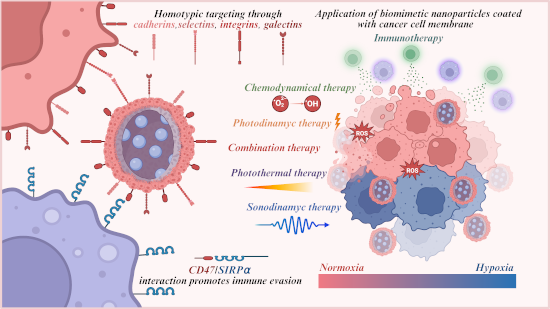
- that combine imaging and therapy, and the challenges that remain for translating these technologies into clinical practice. By merging principles of biomimicry with nanotechnology, BNPs offer a promising new approach to more precise and effective cancer treatments tailored to individual patients
- energy to molecular oxygen or other substrates, generating cytotoxic ROS [17]. Historically, PDT relied on organic molecules, either naturally derived or synthetically produced, but since the early 21th century, advancements in nanotechnology have revealed the photosensitizing capabilities of


Beam shaping techniques for pulsed laser ablation in liquids: Unlocking tunable control of nanoparticle synthesis in liquids
Beilstein J. Nanotechnol. 2026, 17, 309–342, doi:10.3762/bjnano.17.22
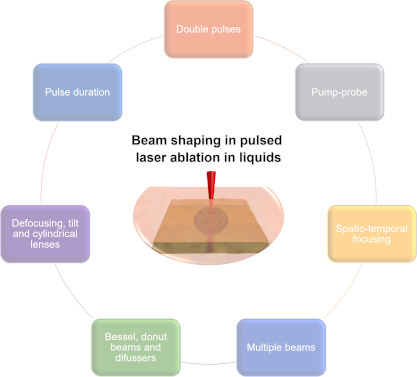
- industrially available picosecond laser sources, still requiring high power sources (100 W) but removing the requirement for high repetition rate and faster scanning speeds [55]. PLAL-produced nanomaterials have broad applications across different nanotechnology fields, including X-ray radiotherapy [62], boron







Advancing nanolithography: a comprehensive review of materials for local anodic oxidation with AFM
Beilstein J. Nanotechnol. 2026, 17, 275–291, doi:10.3762/bjnano.17.19
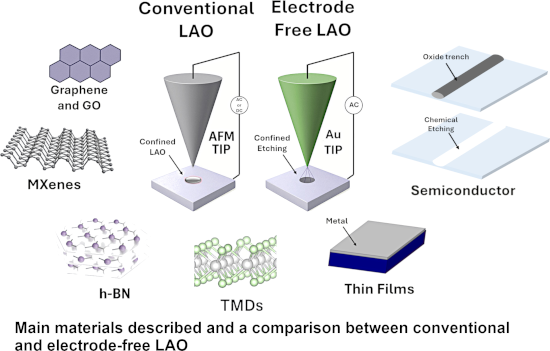
- provide a comprehensive understanding of material selection in LAO and its implications for advancing nanotechnology. Keywords: local anodic oxidation; nanofabrication; scanning probe lithography; Review 1 Introduction Advancements in nanotechnology have led to the development of numerous nanoscale
- implemented through a dual-pass technique or by controlling the electronic and ionic contributions to the total current [17][18]. While dynamic mode LAO does not eliminate tip wear [19], it significantly reduces its impact. As new materials continue to emerge in the field of nanotechnology, this review also


Durable antimicrobial activity of fabrics functionalized with zeolite ion-exchanged nanomaterials against Staphylococcus aureus and Escherichia coli
Beilstein J. Nanotechnol. 2026, 17, 262–274, doi:10.3762/bjnano.17.18
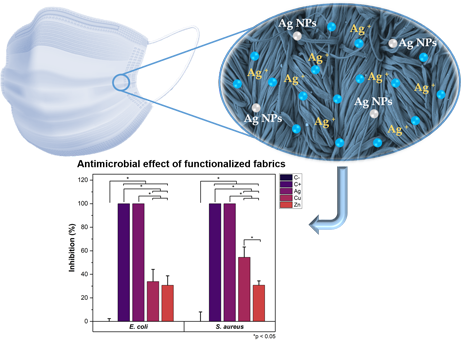
- nanotechnology has expanded into different areas of science, including physics, chemistry, biology, and medicine, over the past few decades [1][2]. Recently, nanoparticles (NPs), nanomaterials, and nanocomposites have been applied in various fields, including medicine and biotechnology, to reduce the recurrence
- of infections [3][4]. In this context, nanotechnology and nanomaterials offer a new alternative to combat pathogens such as viruses and bacteria. Metal NPs have intrinsic manipulatable properties that make them useful in a wide variety of research fields, including biomedicine. Different types of NPs
- that ZnO possesses unique antibacterial, antimicrobial, and antifungal properties, making it effective against both Gram-positive and Gram-negative bacteria [19][20]. Recently, the application of nanotechnology has been extended to textiles. Fabrics functionalized with nanoparticles, also known as