Search results
Search for "photocatalytic" in Full Text gives 213 result(s) in Beilstein Journal of Nanotechnology. Showing first 200.
Light-driven ammonia electrooxidation via carbon nitride–ruthenium molecular interfaces
Beilstein J. Nanotechnol. 2026, 17, 854–862, doi:10.3762/bjnano.17.61
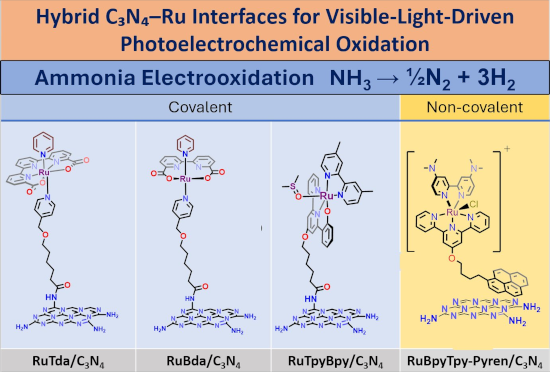
- lies catalysis. For decades, it has been divided into two families, yet their integration is already bearing fruit. In water oxidation catalysis, molecular-semiconductor hybrids have demonstrated performance in electrocatalytic and photocatalytic systems, as proof of concept for bridging homogeneous
- terpyridine backbone, has been covalently anchored onto triazine-based covalent organic frameworks (COFs) by Llobet and co-workers, achieving photocatalytic water oxidation with a turnover number of 220 and demonstrating that molecular Ru catalysts retain their activity upon surface immobilisation in


Glycerol photoelectrochemical oxidation reaction at carbon nitrides/BiVO4 materials
Beilstein J. Nanotechnol. 2026, 17, 806–817, doi:10.3762/bjnano.17.57
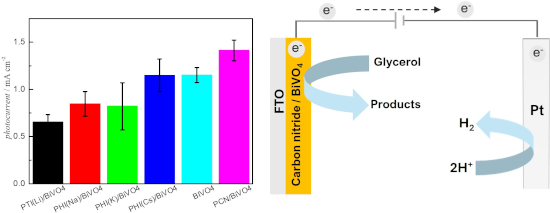
- structural defects [16]. CN materials have been extensively studied as environmentally friendly semiconductors with remarkable photocatalytic properties and facile synthesis [17][18][19][20][21]. Furthermore, it has been demonstrated that incorporating cations during CN synthesis can lead to different
- structural modifications, varying degrees of crystallinity, and consequently, distinct photocatalytic performance [17][18][19][20][21]. Another strategy to bypass the sluggish kinetics of water oxidation involves employing different processes to deliver the electrons necessary for H2 production. In this





Environmental applications of silver nanoparticles: state-of-the-art review and emerging trends
Beilstein J. Nanotechnol. 2026, 17, 697–736, doi:10.3762/bjnano.17.49
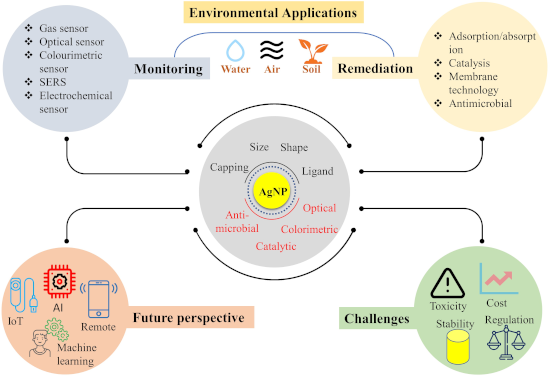
- from synthesis and characterisation to practical deployment and ecotoxicological assessment. The AgNP-based systems are evaluated regarding antimicrobial disinfection, adsorptive and catalytic/photocatalytic removal of persistent organic pollutants, and integration into antifouling nanofiltration and
- ultrafiltration membrane technologies used for management of water pollutants. In addition, AgNPs-assisted nanosystems in fibrous filter membranes and photocatalytic composite coatings for the removal of volatile organic compounds, particulate matter, and gaseous pollutants are reviewed. Furthermore, AgNP
- , and photocatalytic degradation, in isolation. However, no single review has provided an integrated cross-domain treatment spanning sensing, photocatalysis, adsorption, membrane filtration, disinfection, and soil/agricultural applications within a unified mechanistic framework. The present review


Decontamination from water pollutants and pathogens by electrospun nanofibers doped with heavy-atom-free borafluorene-BODIPY photosensitizers
Beilstein J. Nanotechnol. 2026, 17, 668–682, doi:10.3762/bjnano.17.46
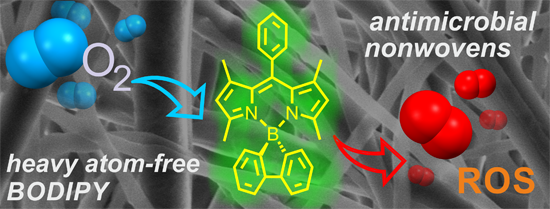
- emission was measured using a thermoelectrically cooled NIR-PMP unit (Hamamatsy, wavelength range 950–1650 nm) integrated in the FS5 spectrofluorometer. Photocatalytic degradation of API Vials containing 1.5 mL of aqueous solutions of APIs (c = 1.05 mg·mL−1), tetrabutylammonium bromide (TBAB, c = 0.64
- step, we tested the photocatalytic activity of the prepared samples with cimetidine as a model water pollutant. Small pieces of materials were placed in 4 mL vials containing a 3.0 mM water solution of cimetidine. The mass of the material was ca. 0.011 g, which roughly corresponds to 0.02 equivalents
- of 1 photocatalyst per one equivalent of cimetidine. The reaction mixtures were vigorously stirred and irradiated with neutral-white LED light (26 W) at T = 25 °C in a photoreactor (irradiance of 40 mW·cm−2). The progress of the photocatalytic reaction was monitored using 1H NMR spectroscopy. The 1H



Cellulose as a photocatalyst support material: extraction, structural features, and environmental applications
Beilstein J. Nanotechnol. 2026, 17, 635–652, doi:10.3762/bjnano.17.44
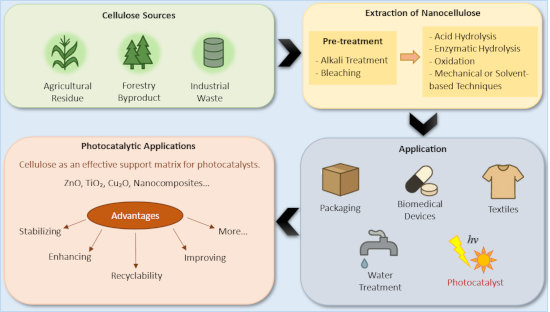
- for cellulose extraction were also explored such as acid hydrolysis, enzymatic hydrolysis, oxidation, and mechanical or solvent-based techniques. Besides that, this review highlights the role of cellulose in photocatalytic applications, where its high surface area, structural porosity, and abundance
- photocatalytic systems, improving its performance under a wide range of light sources. Moreover, cellulose-supported systems often show enhanced recyclability and mechanical durability, making them suitable for repeated use in wastewater treatment and environmental remediation. The relationship between
- cellulose’s structural properties and photocatalytic functionality offers a green and efficient solution to pressing environmental challenges. Overall, this review underscores the importance of cellulose not only as a raw material but also as an active component in next-generation, eco-friendly photocatalytic


Two-step laser synthesis of Ag@TiO2 nanomaterials for the photocatalytic degradation of rhodamine B
Beilstein J. Nanotechnol. 2026, 17, 622–634, doi:10.3762/bjnano.17.43
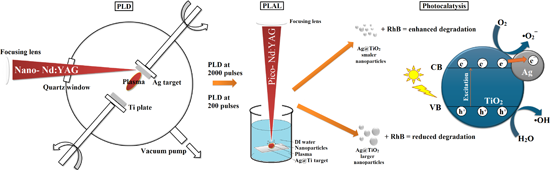
- UV–vis spectroscopy confirmed the formation of nanoparticles with a predominantly anatase TiO2 phase. The synthesized particles exhibited spherical morphology, with average diameters ranging from 97–331 nm for the 200p sample and 86–144 nm for the 2000p sample. The photocatalytic efficiency was
- provides an efficient and environmentally friendly route for the fabrication of Ag@TiO2 photocatalysts. Keywords: Ag@TiO2 nanomaterials; photocatalytic degradation; pulsed laser ablation in liquids; pulsed laser deposition; rhodamine B; Introduction Titanium dioxide has long been recognized as perhaps
- photodegradation. In practice, TiO2 is widely used in photocatalytic systems for pollutant degradation (e.g., dyes, pharmaceuticals, including drugs, supplements and cosmetics, phenols, and poly(alkyl)acrylates), water purification, CO2 reduction, and hydrogen production [2][3][4][5][6][7][8]. However, pristine


Synthesis of Cu–Mo/TiO2 and Co–Mo/TiO2 photocatalysts for the efficient degradation of organic pollutants in water
Beilstein J. Nanotechnol. 2026, 17, 559–570, doi:10.3762/bjnano.17.37
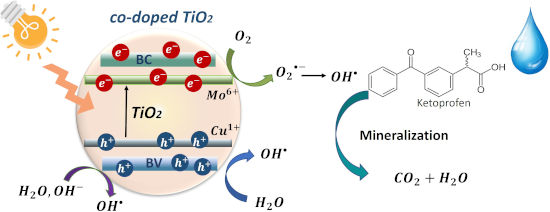
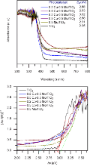
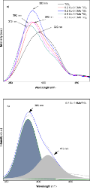
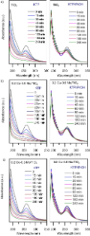
- electrons. The point of zero charge of the photocatalytic systems TiO2, Cu–Mo/TiO2, and Co–Mo/TiO2 was evaluated and reported. Materials with lower concentrations of the co-dopants Cu and Co were more efficient at degrading ketoprofen. The most efficient photocatalyst was 0.2 Cu–0.5 Mo/TiO2, which achieved
- lattice and the effects on photocatalytic performance have been reported in several studies [7][8][9][10]. Crucial factors for successfully co-doping a material are the selection of compatible co-dopants and the synthesis method to introduce the dopants [11]. The main objective of working with metal/metal
- can improve light absorption and photocatalytic activity of the material through the generation of oxygen vacancies, which act as electron traps [12]. The Mo6+ ion has a radius similar to that of Ti4+; thus, it is ideal for introduction into the TiO2 lattice without causing significant disturbances



Nanocarrier-integrated multilayer films produced by 3D printing for improved skin adhesion and curcumin photostability
Beilstein J. Nanotechnol. 2026, 17, 440–453, doi:10.3762/bjnano.17.30
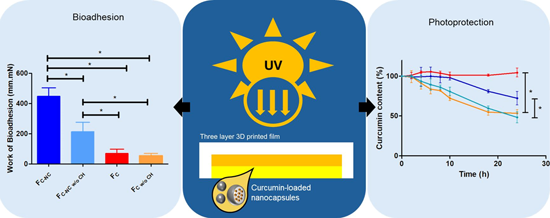
- scatter and reflect ultraviolet radiation while exhibiting lower photocatalytic activity than the anatase form, thereby minimising the risk of ROS generation and contributing to the photostabilisation of curcumin within the multilayer film. Curcumin photodegradation has been associated with loss of


Durable antimicrobial activity of fabrics functionalized with zeolite ion-exchanged nanomaterials against Staphylococcus aureus and Escherichia coli
Beilstein J. Nanotechnol. 2026, 17, 262–274, doi:10.3762/bjnano.17.18
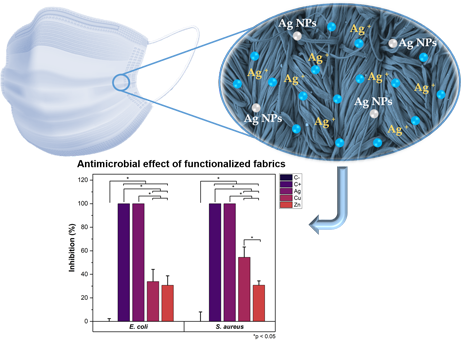
- example, CuO NPs with a size of 4.8 nm demonstrated better antibacterial activity than larger particles (7.8 nm) [16]. The small Cu NPs have a greater capacity to penetrate the cell membrane [17][18]. Zinc oxide NPs are well known for their photocatalytic properties. Also, recent studies have demonstrated
- compared to Cu/CBV-600-bramante fabrics that were not exposed to sunlight, suggesting that the photocatalytic activity of Cu enhances its antibacterial efficacy. For fabrics with Zn/CBV-600-bramante, a minor increase in the inhibition of bacterial growth was also observed for E. coli following sunlight
- if the photocatalytic activity of the materials enhanced antimicrobial activity: group A was not exposed to sunlight (t = 0 min), and group B was exposed to 60 min of UV-A/B radiation of sunlight (t = 60 min), which was measured using an URCERI light meter containing a UV-A/B detector. Afterwards




Functional surface engineering for cultural heritage protection: the role of superhydrophobic and superoleophobic coatings – a comprehensive review
Beilstein J. Nanotechnol. 2026, 17, 63–96, doi:10.3762/bjnano.17.6

- protection. Gryparis et al. [65] investigated self-cleaning photocatalytic coatings to protect cementitious materials from environmental pollutants (i.e., methylene blue (MB) and methyl orange (MO)). Titanium dioxide, known for its photocatalytic properties, was combined with carbon dots (C-dots) to enhance
- degradation of MO dye under simulated solar and natural sunlight, while higher C-dot loadings (TC62.5 and TC75) reduced performance, likely due to surface-masking effects. To fully exploit the photocatalytic activity of the TiO2/C-dot composites on cementitious substrates, they were embedded in a silica-based
- results highlight how tailored C-dot loading and hybrid silica matrices can significantly enhance the photocatalytic protection of cement-based materials. These two papers show materials with clear strengths in terms of stability since both coatings demonstrate long-term durability under relevant






Microplastic pollution in Himalayan lakes: assessment, risks, and sustainable remediation strategies
Beilstein J. Nanotechnol. 2025, 16, 2144–2167, doi:10.3762/bjnano.16.148
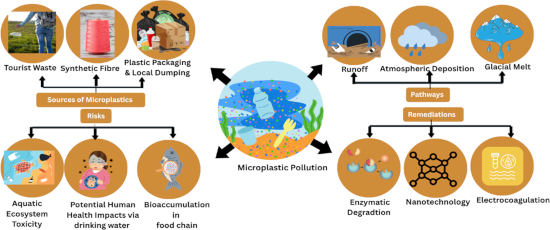
- most promising among them are photocatalytic processes that utilize titanium dioxide nanoparticles under UV radiation. These are very efficient degradation processes for degrading plastics to carbon dioxide (CO2) and water [43]. Fenton reactions, involving a mixture of hydrogen peroxide and iron
- , attack the polymer chains of MPs. They either break the chains into smaller pieces or mineralize them into CO2 and water. A lot of research is being done on the photocatalytic properties of nanomaterials like TiO2, graphene oxide (GO), and ZnO. An excellent material for breaking down MPs in water systems
- more surface area, allowing for better interaction with MPs [76]. The incorporation of GO in composite materials not only improves photocatalytic activity, but it also serves a second purpose by adsorbing MPs prior to degradation. The utilization of photocatalysts that have been engineered with defects


On the road to sustainability – application of metallic nanoparticles obtained by green synthesis in dentistry: a scoping review
Beilstein J. Nanotechnol. 2025, 16, 1851–1862, doi:10.3762/bjnano.16.128
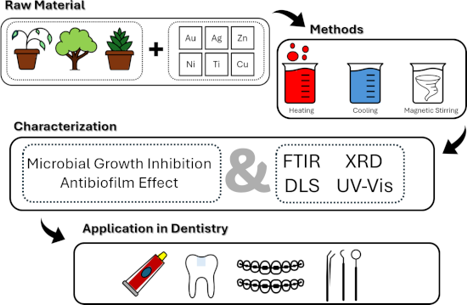
- in optical and photocatalytic applications, particularly in regenerative procedures and dental coatings [48][49]. The sparse use of other metals such as magnesium, iron, selenium, and cerium oxides suggests ongoing exploration of less conventional materials with niche properties, possibly linked to


Piezoelectricity of layered double hydroxides: perspectives regarding piezocatalysis and nanogenerators
Beilstein J. Nanotechnol. 2025, 16, 1812–1817, doi:10.3762/bjnano.16.124

- is still in its infancy and this review explores its recent advances. The discussion encompasses LDH-based piezoelectric nanogenerators, piezocatalytic and piezo-photocatalytic properties of LDHs, and composite material synergies that enhance the overall electroactive performance. Looking to the
- bulk materials with centrosymmetric properties, display piezoelectricity when reduced to a single or few layers due to the loss of their inversion centers. An actively developing area of piezocatalysis is its application to enhance photocatalytic reactions, called piezo-photocatalysis. Zn/Al-LDHs with
- different thicknesses were investigated for the piezo-photocatalytic degradation of carbamazepine [6]. The ultrathin samples achieved an efficiency of 95.8% with a reaction rate constant of 0.148 min−1. This effect was attributed to the higher sensitivity of ultrathin LDH sheets to both light irradiation

Electrical, photocatalytic, and sensory properties of graphene oxide and polyimide implanted with low- and medium-energy silver ions
Beilstein J. Nanotechnol. 2025, 16, 1794–1811, doi:10.3762/bjnano.16.123
- Department of Inorganic Chemistry, University of Chemistry and Technology, Prague 6, 166 28, Czech Republic Ion Beam Center, Helmholtz-Zentrum Dresden Rossendorf, 01328 Dresden, Germany 10.3762/bjnano.16.123 Abstract Precise control of electrical conductivity, humidity sensitivity, and photocatalytic
- activity in polymeric and carbon-based materials is essential for advancing technologies in environmental sensing, flexible electronics, and photocatalytic systems. Conventional chemical modification methods often lack spatial precision, introduce impurities, and risk structural degradation. Ion
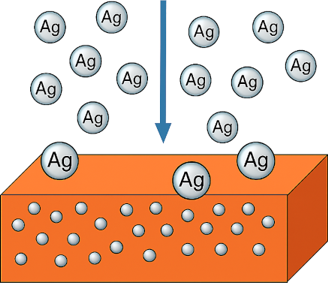
- , sensory, and photocatalytic properties of graphene oxide (GO) and polyimide (PI). Implantations were carried out with fluences ranging from 3.75 × 1012 cm−2 to 1 × 1016 cm−2. Silver ions offer excellent electrical, catalytic, and plasmonic characteristics, making them ideal for multifunctional enhancement


Ambient pressure XPS at MAX IV
Beilstein J. Nanotechnol. 2025, 16, 1677–1694, doi:10.3762/bjnano.16.118
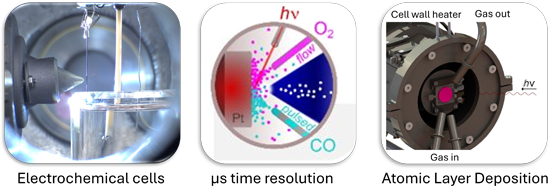
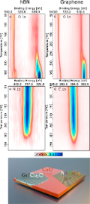
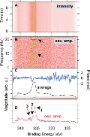
- under operando conditions. Additionally, the kinetics of charge transfer and the role of specific chemical species or components functioning as charge donors or acceptors during photocatalytic reactions can be clarified using APXPS. At MAX IV, external light sources (e.g., UV lamps or solar simulators
- application is photocatalytic water splitting for green hydrogen production. Urpelainen and colleagues clarified the mechanisms of photocatalytic hydrogen evolution reaction (HER) in a new prospective model system, the Ni@NiO/NiCO3 photocatalyst, under dark and illuminated conditions at 1 mbar of H2O [45
- catalyst stabilization and confined 2D reactivity, to time-resolved studies of gas–solid reactions, photocatalytic water splitting, atomic layer deposition, and electrochemical interfaces, demonstrate the breadth of scientific questions that APXPS can now address. MAX IV’s SPECIES and HIPPIE beamlines have






Nanotechnology-based approaches for the removal of microplastics from wastewater: a comprehensive review
Beilstein J. Nanotechnol. 2025, 16, 1607–1632, doi:10.3762/bjnano.16.114
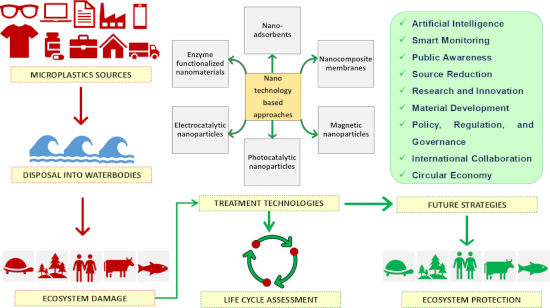
- solution into a gel, enabling precise compositional control and producing homogenous metal oxides suited for photocatalytic applications [74]. Hydrothermal synthesis uses high-temperature, high-pressure aqueous environments to yield well crystalized particles with controlled morphologies, while co
- , including MPs [86]. Figure 7 illustrate the various types of nanoadsorbents used for MP removal, while Table 3 present their operational conditions and corresponding removal efficiencies for different types of MPs. Nanoparticle-based photocatalysis: Catalytic or photocatalytic oxidation, categorized under
- processes [96]. The particle size of photocatalysts plays a very important role in the recombination of electrons and holes. Smaller particles exhibit higher photocatalytic activity due to their increased surface area, which allows for greater adsorption of pollutants and enhanced production of hydroxyl



Photocatalytic degradation of ofloxacin in water assisted by TiO2 nanowires on carbon cloth: contributions of H2O2 addition and substrate absorbability
Beilstein J. Nanotechnol. 2025, 16, 1567–1579, doi:10.3762/bjnano.16.111
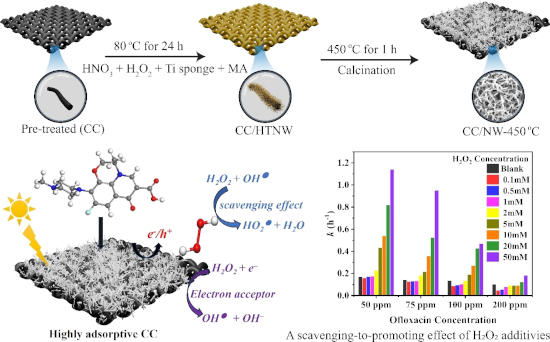
- unsatisfactory interaction with target contaminants diminishes photocatalytic degradation efficiency in water. Here, we present a mild solution method to precipitate anatase TiO2 nanowire arrays, measuring 1.5 μm in thickness, over carbon cloth to ensure substantial interactions with target pollutants and, in
- turn, a superior photoactivity. Compared to TiO2 nanowire arrays grown on metallic Ti substrates, TiO2 nanowires supported on carbon cloth substrates demonstrate markedly superior efficiency in the photocatalytic degradation of ofloxacin (OFL) molecules in water when exposed to UV light. The TiO2
- ; ofloxacin; photocatalytic degradation; TiO2 nanowires; wastewater treatment; Introduction Drug pollution in natural environments has become an increasingly serious issue as a result of the wide applications of drugs in the diagnosis and treatment of human diseases, anti-epidemic disinfection, aquaculture


Laser processing in liquids: insights into nanocolloid generation and thin film integration for energy, photonic, and sensing applications
Beilstein J. Nanotechnol. 2025, 16, 1428–1498, doi:10.3762/bjnano.16.104
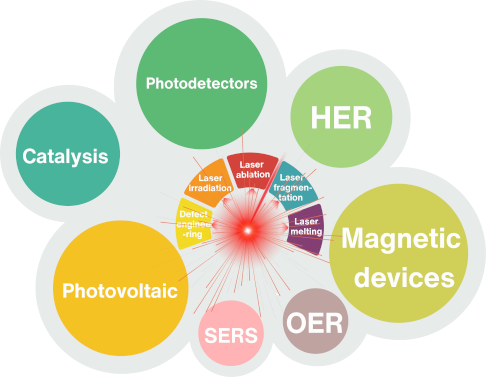
- fabricated using the doctor blade method (Figure 12b), and the effects of annealing on their morphology, compositional homogeneity, and optical properties were investigated for photocatalytic activities [124][125]. The properties of these films are further discussed in the latter section of this article. A




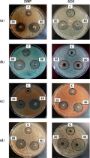


Synthesis and antibacterial properties of nanosilver-modified cellulose triacetate membranes for seawater desalination
Beilstein J. Nanotechnol. 2025, 16, 1380–1391, doi:10.3762/bjnano.16.100
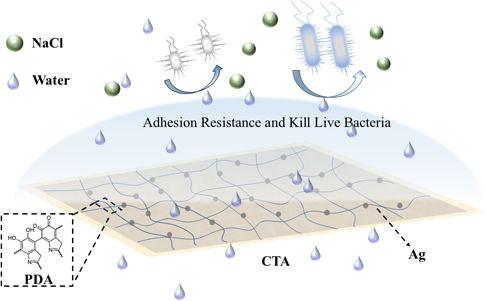
- photocatalytic properties of TiO2, which generate ROS that degrade bacterial membranes [23]. Yang and Wang’s group introduced carbon nanotubes (CNTs) into a mixed cellulose esters (MCE) membrane to create a robust porous bi-layered photothermal membrane (CNT@PEI/MCE) for efficient solar-driven interfacial water


Enhancing the photoelectrochemical performance of BiOI-derived BiVO4 films by controlled-intensity current electrodeposition
Beilstein J. Nanotechnol. 2025, 16, 1289–1301, doi:10.3762/bjnano.16.94
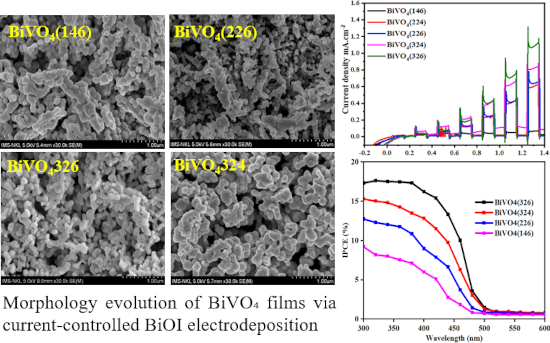
- ) plane exhibited the highest intensity across all samples, which aligns with its high refractive index and superior photocatalytic properties owing to the enhanced adsorption and deionization of water molecules in the structure. Additionally, the (040) peak intensity exhibited a systematic increase at
- efficient charge separation and transport. Previous studies have reported that the (121), (040), and (010) facets of monoclinic BiVO4 contribute to enhanced photocatalytic activity by serving as active sites for oxidation and reduction reactions [32][33]. In particular, the large surface area of the (010
- . Overall, these results demonstrate that the optimized BiVO4(326) configuration provides improved photocatalytic activity by enhancing charge transport, reducing recombination, and maximizing the active surface area for efficient PEC water splitting. The LSV results revealed that the photoanodes fabricated



Electronic and optical properties of chloropicrin adsorbed ZnS nanotubes: first principle analysis
Beilstein J. Nanotechnol. 2025, 16, 1184–1196, doi:10.3762/bjnano.16.87
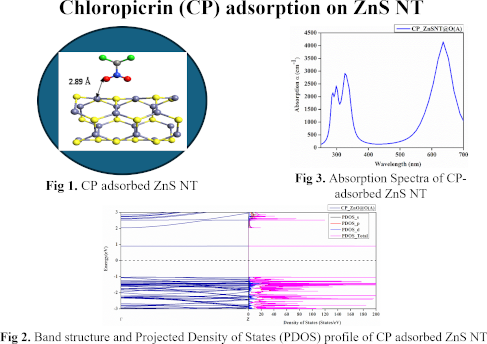
- , which can be tailored through rational design. By precisely controlling their size, shape, synthesis conditions, and functionalization, nanomaterials can achieve extraordinary magnetic, electrical, optical, mechanical, sensing, anticancer, and photocatalytic properties that significantly differ from
- highlighting the suitability of ZnS nanostructures for UV photodetectors, sensors, and photocatalytic applications, where high UV sensitivity is critical [69]. Upon CP molecule adsorption, significant redshifts in the absorption spectra are observed across all orientations, indicative of bandgap narrowing


Influence of ion beam current on the structural, optical, and mechanical properties of TiO2 coatings: ion beam-assisted vs conventional electron beam evaporation
Beilstein J. Nanotechnol. 2025, 16, 1097–1112, doi:10.3762/bjnano.16.81
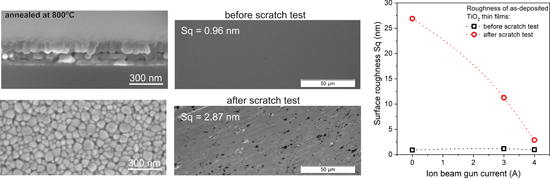
- TiO2 coatings (Figure 1). Therefore, post-deposition annealing becomes one of the key pathways in controlling the structure, morphology, and photocatalytic activity of TiO2 films [3]. After post-process annealing, all thin films exhibited peaks related to the (101) and (004) planes of anatase, for




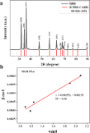
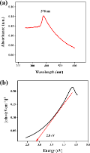
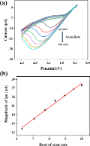
Quantification of lead through rod-shaped silver-doped zinc oxide nanoparticles using an electrochemical approach
Beilstein J. Nanotechnol. 2025, 16, 422–434, doi:10.3762/bjnano.16.33
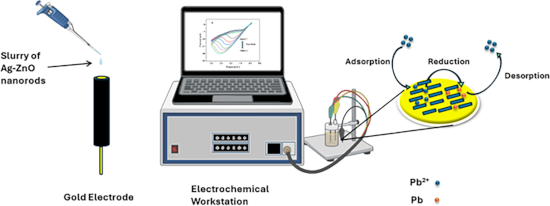
- , India Department of Physics, Punjab Engineering College (Deemed to be University), Chandigarh, 160012, India 10.3762/bjnano.16.33 Abstract Special features of zinc oxide nanoparticles have drawn a lot of interest due to their wide bandgap, high surface area, photocatalytic activity, antimicrobial





Emerging strategies in the sustainable removal of antibiotics using semiconductor-based photocatalysts
Beilstein J. Nanotechnol. 2025, 16, 264–285, doi:10.3762/bjnano.16.21
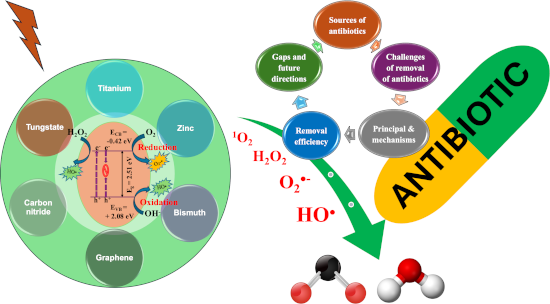
- light exposure. To be specific g-C3N4-based ternary photocatalysts exhibited more than 90% degradation of tetracycline and sulfamethazine antibiotics within one hour of irradiation. This study addresses the antibiotic degradation efficiency during photocatalytic processes and suggests new approaches to
- lack of understanding about these processes and their practical limitations for large-scale commercial wastewater treatment. This review concentrates on semiconductor-based photocatalytic processes and their effectiveness in eliminating antibiotics while also addressing their practical constraints. The
- practices and pollution. Additionally, in many areas, there may be a lack of regulatory regulations for safe antibiotic levels in water [51], making it challenging to establish treatment targets. Principal mechanisms of photocatalytic processes for antibiotic degradation Semiconductor-based photocatalysis




Clays enhanced with niobium: potential in wastewater treatment and reuse as pigment with antibacterial activity
Beilstein J. Nanotechnol. 2025, 16, 141–154, doi:10.3762/bjnano.16.13
- photocatalysis is a cost-effective alternative to biological treatment methods for purifying polluted water [8]. Using semiconductors as heterogeneous catalysts proves to be more efficient than traditional methods, as the photocatalytic process gradually decomposes contaminating molecules without generating
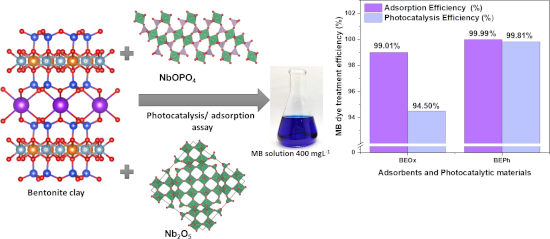
- designate the modification with NbOPO4 and Nb2O5, respectively. Photocatalytic tests were performed using 100 mL of an MB solution at a concentration of 400 mg·L−1. This experiment used 250 mg of the BEPh and BEOx samples as catalysts. The experimental setup system included a thermostatic Pyrex glass
- experiment. The efficiency of MB photodegradation (X%) was determined by Equation 2: where M0 and Mf are the concentrations of MB at the beginning and at the end of the photocatalytic test, respectively. Dispersion of the pigments clay/Nb and clay/Nb/MB in colorless commercial paint The samples A-BEPh, A