Search results
Search for "photocatalytic degradation" in Full Text gives 86 result(s) in Beilstein Journal of Nanotechnology.
Environmental applications of silver nanoparticles: state-of-the-art review and emerging trends
Beilstein J. Nanotechnol. 2026, 17, 697–736, doi:10.3762/bjnano.17.49
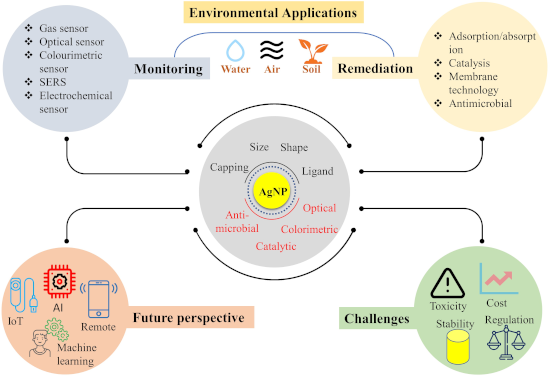
- , and photocatalytic degradation, in isolation. However, no single review has provided an integrated cross-domain treatment spanning sensing, photocatalysis, adsorption, membrane filtration, disinfection, and soil/agricultural applications within a unified mechanistic framework. The present review
- with other products [119]. A study showed ciprofloxacin removal via photocatalysis using a nanocomposite (Ag/silica), achieving 98% degradation at pH 6.7, 180 min, and a 0.12 g of catalyst [120]. Anthracene and benzene photocatalytic degradation were achieved using Ag-, Cu-, and Ni-based nanocomposites


Decontamination from water pollutants and pathogens by electrospun nanofibers doped with heavy-atom-free borafluorene-BODIPY photosensitizers
Beilstein J. Nanotechnol. 2026, 17, 668–682, doi:10.3762/bjnano.17.46
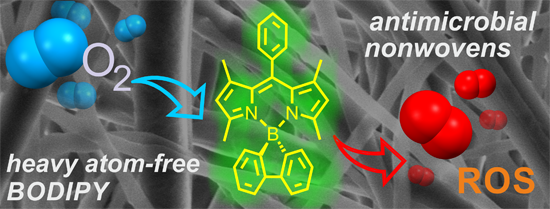
- emission was measured using a thermoelectrically cooled NIR-PMP unit (Hamamatsy, wavelength range 950–1650 nm) integrated in the FS5 spectrofluorometer. Photocatalytic degradation of API Vials containing 1.5 mL of aqueous solutions of APIs (c = 1.05 mg·mL−1), tetrabutylammonium bromide (TBAB, c = 0.64

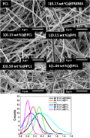


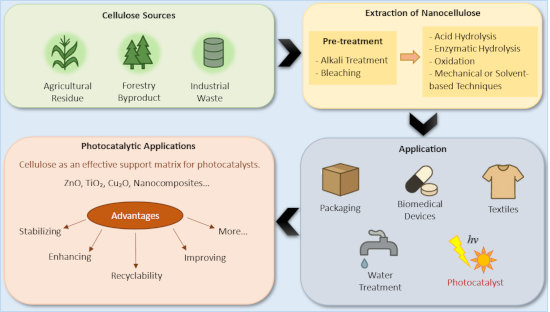
Cellulose as a photocatalyst support material: extraction, structural features, and environmental applications
Beilstein J. Nanotechnol. 2026, 17, 635–652, doi:10.3762/bjnano.17.44
- through leaching while simultaneously expanding the range of practical applications. These combined benefits make photocatalytic polymer membranes highly promising, as they enhance both membrane filtration and photocatalytic degradation, creating a dual-action approach that significantly improves overall
- water treatment performance as shown in Figure 2 [14]. Photocatalytic degradation is an advanced oxidation process (AOP) in which a catalyst is used to accelerate the degradation or breakdown of organic pollutants in water or air using light energy. This AOP relies on the ability of the catalyst to
- absorb photons from light, typically ultraviolet (UV) radiation or visible light, and generate reactive oxygen species (ROS) such as hydroxyl radicals (•OH) or superoxide radicals (O2•−) through photoexcitation [16][17]. In photocatalytic degradation, the catalysts typically used are semiconductor


Two-step laser synthesis of Ag@TiO2 nanomaterials for the photocatalytic degradation of rhodamine B
Beilstein J. Nanotechnol. 2026, 17, 622–634, doi:10.3762/bjnano.17.43
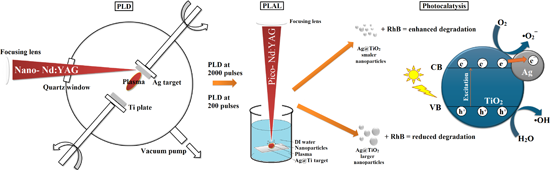
- provides an efficient and environmentally friendly route for the fabrication of Ag@TiO2 photocatalysts. Keywords: Ag@TiO2 nanomaterials; photocatalytic degradation; pulsed laser ablation in liquids; pulsed laser deposition; rhodamine B; Introduction Titanium dioxide has long been recognized as perhaps
- the RhB concentrations at times t = 0 and t, respectively. UV–vis spectroscopy was employed to observe the photocatalytic degradation of RhB, scanned within the range of 300–700 nm. Figure 8a,b presents the UV–visible absorption spectra of RhB in the presence of the synthesized samples as functions of
- ). The photocatalytic degradation of RhB without a photocatalyst was minimal after 300 min of exposure to UV irradiation using a 300 W Osram Ultra-Vitalux lamp. Similar results were obtained for PLAL TiO2 nanoparticles. These results are correlated to the amount of the ablated material in these three


Synthesis of Cu–Mo/TiO2 and Co–Mo/TiO2 photocatalysts for the efficient degradation of organic pollutants in water
Beilstein J. Nanotechnol. 2026, 17, 559–570, doi:10.3762/bjnano.17.37
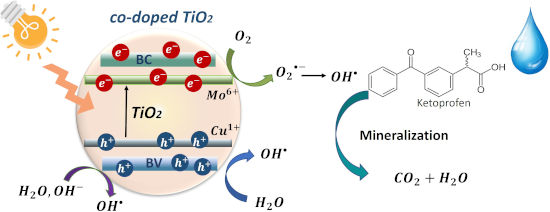
- of the presence of hydroxyl radicals generated by TiO2, Cu–Mo/TiO2, and Co–Mo/TiO2 catalysts was evaluated. Aliphatic alcohols (ROH) can be used as HO· radical scavengers, to determine their effect on a photocatalytic process. The photocatalytic degradation reactions of ketoprofen solutions with an
- lamps (15 W nominal power, Vilbert-Lourmat). The emission spectra extend from 300 to 600 nm, with three UV maxima at 352, 365, and 405 nm, and three additional peaks in the visible region at 436, 546, and 579 nm. This reactor system has previously been used to study the photocatalytic degradation of
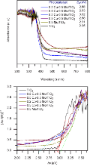
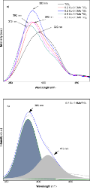
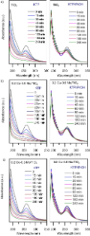
- photoluminescence spectrum of 0.2 Cu–0.5 Mo/TiO2 material. Point of zero charge of TiO2, Cu–Mo/TiO2, and Co–Mo/TiO2 catalysts determined by the acid–base titration method. Photocatalytic degradation of ketoprofen using the co-doped TiO2. (a) Ketoprofen concentration profile, (b) pseudo-first-order plot (KTP initial



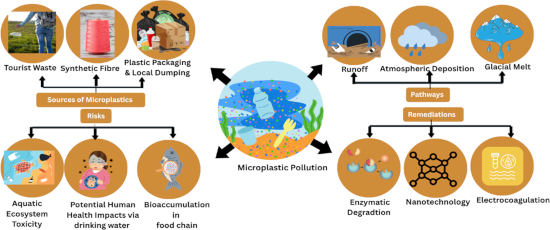
Microplastic pollution in Himalayan lakes: assessment, risks, and sustainable remediation strategies
Beilstein J. Nanotechnol. 2025, 16, 2144–2167, doi:10.3762/bjnano.16.148


Piezoelectricity of layered double hydroxides: perspectives regarding piezocatalysis and nanogenerators
Beilstein J. Nanotechnol. 2025, 16, 1812–1817, doi:10.3762/bjnano.16.124

- different thicknesses were investigated for the piezo-photocatalytic degradation of carbamazepine [6]. The ultrathin samples achieved an efficiency of 95.8% with a reaction rate constant of 0.148 min−1. This effect was attributed to the higher sensitivity of ultrathin LDH sheets to both light irradiation

Electrical, photocatalytic, and sensory properties of graphene oxide and polyimide implanted with low- and medium-energy silver ions
Beilstein J. Nanotechnol. 2025, 16, 1794–1811, doi:10.3762/bjnano.16.123
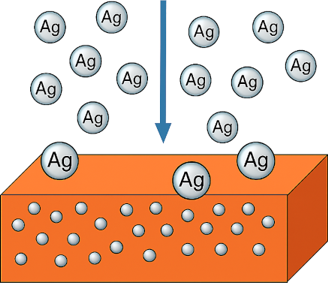
- consequently enhance the photocatalytic power [34]. Another process that may influence the photocatalytic degradation of rhodamine B is the presence of free radicals. Free radicals are generated during ion implantation in which the implanted ion significantly ionizes its surroundings, resulting in the
- nm. During the absorption measurements, the degradation constant was determined by assessing the ratio of the rhodamine B concentration in the analyte to that of the initial rhodamine B solution over time. The degradation constant associated with photocatalytic degradation was derived using the first


Photocatalytic degradation of ofloxacin in water assisted by TiO2 nanowires on carbon cloth: contributions of H2O2 addition and substrate absorbability
Beilstein J. Nanotechnol. 2025, 16, 1567–1579, doi:10.3762/bjnano.16.111
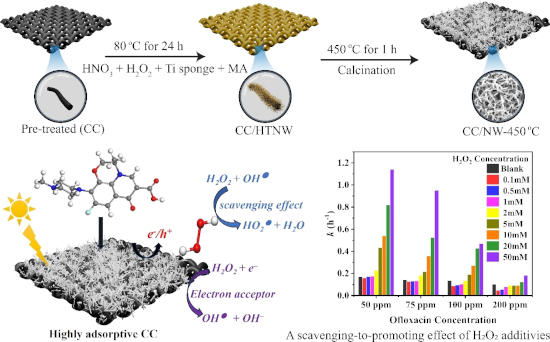
- unsatisfactory interaction with target contaminants diminishes photocatalytic degradation efficiency in water. Here, we present a mild solution method to precipitate anatase TiO2 nanowire arrays, measuring 1.5 μm in thickness, over carbon cloth to ensure substantial interactions with target pollutants and, in
- turn, a superior photoactivity. Compared to TiO2 nanowire arrays grown on metallic Ti substrates, TiO2 nanowires supported on carbon cloth substrates demonstrate markedly superior efficiency in the photocatalytic degradation of ofloxacin (OFL) molecules in water when exposed to UV light. The TiO2
- ; ofloxacin; photocatalytic degradation; TiO2 nanowires; wastewater treatment; Introduction Drug pollution in natural environments has become an increasingly serious issue as a result of the wide applications of drugs in the diagnosis and treatment of human diseases, anti-epidemic disinfection, aquaculture


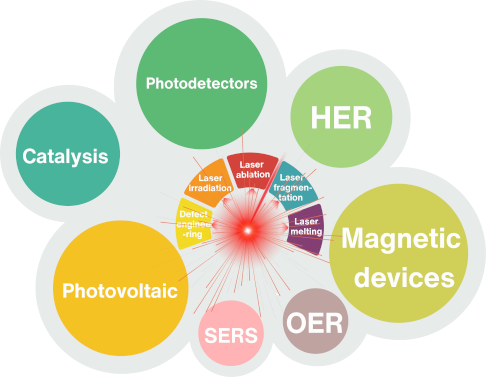
Laser processing in liquids: insights into nanocolloid generation and thin film integration for energy, photonic, and sensing applications
Beilstein J. Nanotechnol. 2025, 16, 1428–1498, doi:10.3762/bjnano.16.104


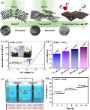


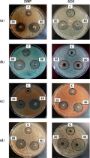


Emerging strategies in the sustainable removal of antibiotics using semiconductor-based photocatalysts
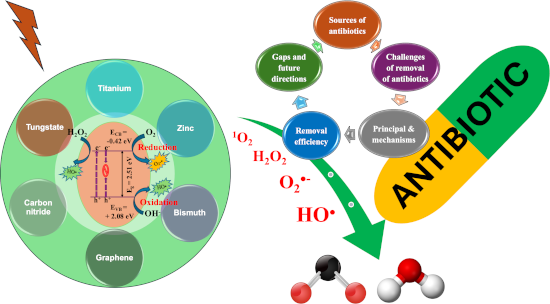
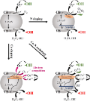
Beilstein J. Nanotechnol. 2025, 16, 264–285, doi:10.3762/bjnano.16.21



Characterization of ZnO nanoparticles synthesized using probiotic Lactiplantibacillus plantarum GP258
Beilstein J. Nanotechnol. 2025, 16, 78–89, doi:10.3762/bjnano.16.8
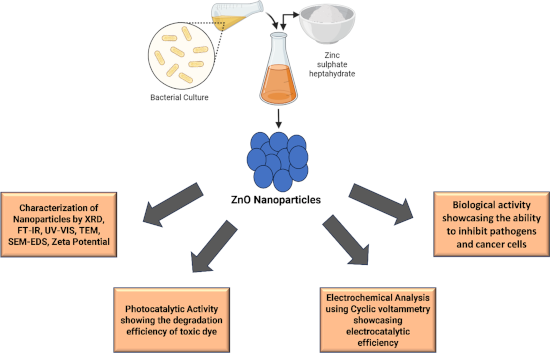
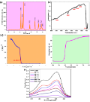
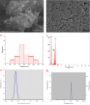
- electronic transition, making them suitable for further applications in photocatalysis, electronics, and optoelectronics. Photocatalytic study ZnO NPs were utilized in a photocatalytic degradation test to reduce the concentration of the harmful dye methylene blue (MB). A solution containing 20 mg of ZnO NP
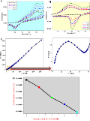
- studies underscored the efficacy of ZnO NPs in photocatalytic degradation and emphasized their potential applications in environmental remediation and catalysis. Because there is a lack of cyclic voltammetry studies using similar biological sources, we expanded our comparison to include ZnO NPs



Various CVD-grown ZnO nanostructures for nanodevices and interdisciplinary applications
Beilstein J. Nanotechnol. 2024, 15, 1390–1399, doi:10.3762/bjnano.15.112
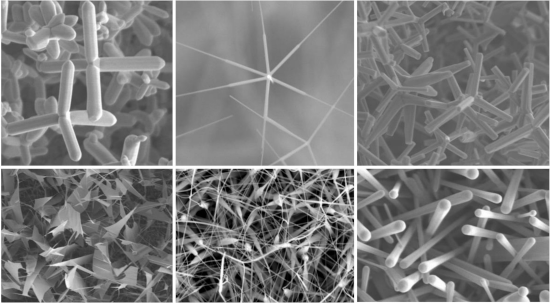
- ], photocatalytic degradation [41], and water splitting for hydrogen technologies [38]. Figure 3a–d show SEM images of ZnO tetrapods. These various morphologies were grown at approx. 625–650 °C. The first one, named T1 in Figure 3a, has needle-like arms of ≈1 μm of length. The dimeter of the arms is less than 50 nm



Intermixing of MoS2 and WS2 photocatalysts toward methylene blue photodegradation
Beilstein J. Nanotechnol. 2024, 15, 817–829, doi:10.3762/bjnano.15.68
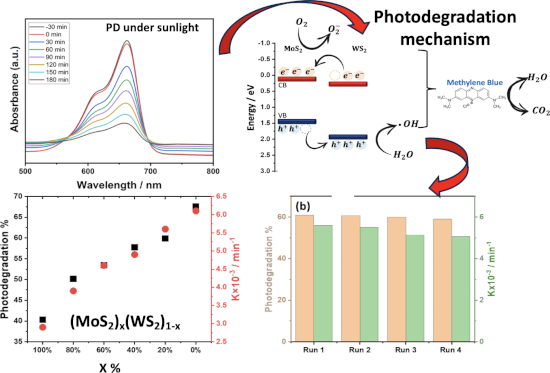
- cost-effective technology. By harnessing impinging photons, the photocatalytic degradation of pollutants takes place at the interface between the photocatalyst surface and the MB-contaminated electrolyte. The photon energy is the driving force for breaking down the MB compound leading to its removal [9


Green synthesis of biomass-derived carbon quantum dots for photocatalytic degradation of methylene blue
Beilstein J. Nanotechnol. 2024, 15, 755–766, doi:10.3762/bjnano.15.63
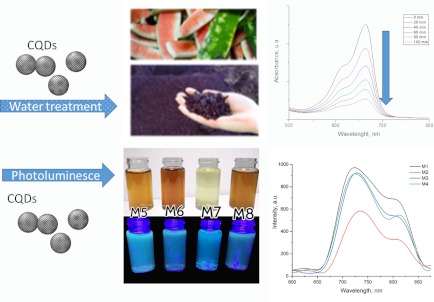
- -conversion luminescence. The results revealed effective photocatalytic degradation of methylene blue under sunlight, highlighting the potential for scalable production of these cost-effective catalytic nanomaterials for synthetic dye degradation. Keywords: biomass; carbon dots; catalysis; methylene blue
- quantum dots (CQDs) through a hydrothermal method using biomass from watermelon peels and grape pomace. This method is chosen for its ease of production, low cost, and scalability. We aim to evaluate the potential of CQDs as catalysts in the photocatalytic degradation of methylene blue (MB) dye in


Aero-ZnS prepared by physical vapor transport on three-dimensional networks of sacrificial ZnO microtetrapods
Beilstein J. Nanotechnol. 2024, 15, 490–499, doi:10.3762/bjnano.15.44
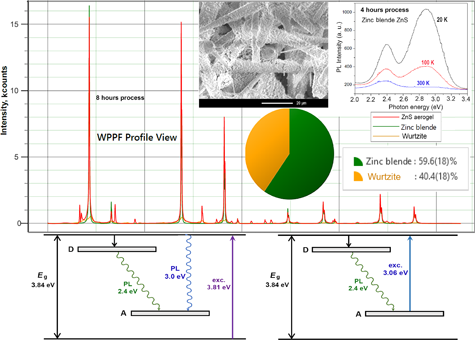
- nanocomposite components with respect to the HOMO and LUMO molecular orbitals of organic compounds subjected to photocatalytic degradation [18][44]. Specific photocatalytic properties of the aero-ZnS materials prepared by physical vapor transport have not been investigated in this paper. However, preliminary
- results suggest their suitability for the photocatalytic degradation of tetracycline. Nevertheless, focused investigations are needed concerning the optimization of the phase composition of the prepared materials for specific photocatalytic applications. Additional investigations of the surface states are



Photocatalytic degradation of methylene blue under visible light by cobalt ferrite nanoparticles/graphene quantum dots
Beilstein J. Nanotechnol. 2024, 15, 475–489, doi:10.3762/bjnano.15.43
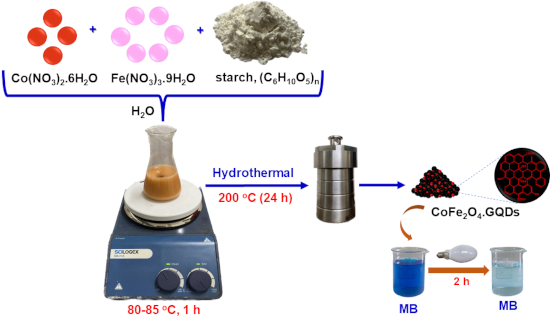
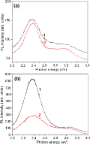
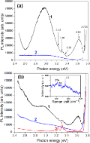
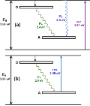
- /GQDs nanoparticles. Magnetic properties, morphology, structure, and fluorescence of the nanocomposites were studied, and the photocatalytic degradation of methylene blue as a dye model and the mechanism of methylene degradation were also addressed. Experimental Materials Cobalt(II) nitrate hexahydrate
- first-order kinetic model is widely employed to assess the kinetic data of photocatalytic degradation. This model is as follows: where Ct and C0 are the MB concentration at the beginning and at the time t, respectively; k1 is the first-order kinetic rate constant. The slope of the linear plot of vs t
- provides the value of k1. The values of k1, along with others from the literature, are presented in Table 3. However, because the reactions were conducted under different conditions, the comparison is arbitrary. To clarify the mechanism of MB photocatalytic degradation, 10 mM isopropyl (IPA), potassium




New application of bimetallic Ag/Pt nanoplates in a colorimetric biosensor for specific detection of E. coli in water
Beilstein J. Nanotechnol. 2024, 15, 95–103, doi:10.3762/bjnano.15.9
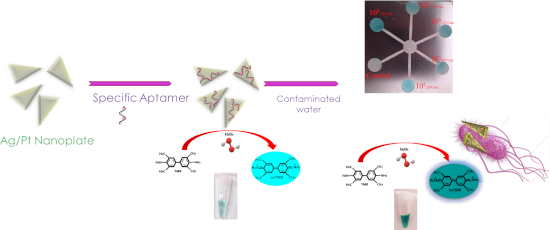
- ], photocatalytic degradation and bactericidal action [21], sensors and biosensors [22][23][24][25], and as electrocatalysts [26]. Aptamers are single-stranded DNA or RNA oligonucleotides that attach to their targets with great affinity and specificity. Aptamers have high stability in a variety of environments and


Titania nanoparticles for photocatalytic degradation of ethanol under simulated solar light
Beilstein J. Nanotechnol. 2023, 14, 616–630, doi:10.3762/bjnano.14.51
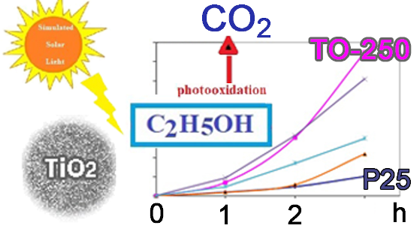
- describes the photocatalytic degradation of ethanol vapors under simulated solar light and low oxygen concentration using TiO2 nanoparticles obtained by laser pyrolysis. The final products are CO2, H2O, and H2. The average particle sizes are between 15 and 22 nm with anatase being the predominant




Conjugated photothermal materials and structure design for solar steam generation
Beilstein J. Nanotechnol. 2023, 14, 454–466, doi:10.3762/bjnano.14.36
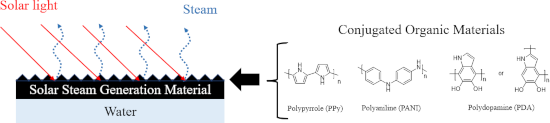
- membranes with hydrophobic photothermal material particles. Over the past years, various types of SSG membranes have been studied [37][39][45][54][56][57]. These SSG membranes can be applied to, for example, seawater desalination and photocatalytic degradation by utilizing the photothermal and separation


Bismuth-based nanostructured photocatalysts for the remediation of antibiotics and organic dyes
Beilstein J. Nanotechnol. 2023, 14, 291–321, doi:10.3762/bjnano.14.26
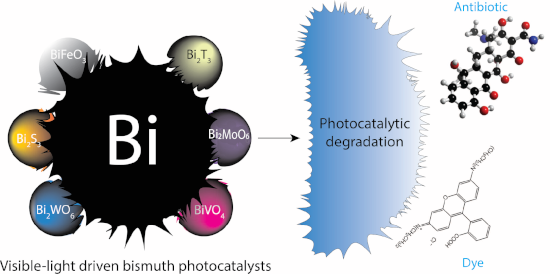
- photocatalytic degradation of organic dyes and antibiotics in water. The general synthesis of nanometre-sized photocatalytic materials based on bismuth employing energy-efficient techniques is examined. A critical review is also given of ways to improve the photocatalytic activity of the photocatalysts. An
- photocatalyst showed a maximum photocatalytic degradation activity of 90% under visible-light irradiation in 1 h, which is higher than the 52% achieved by pure CdS under the same conditions. The improved photocatalytic degradation efficiency is attributed to the surface plasmon resonance effect, doped Bi3+ ions
- light, and simulated sunlight. Several Bi-based photocatalysts are visible-light-driven because of the bandgap, making them useful in a variety of situations. The solution pH value is a critical parameter when it comes to the photocatalytic degradation of textile dyes and antibiotics. The point of zero


Non-stoichiometric magnetite as catalyst for the photocatalytic degradation of phenol and 2,6-dibromo-4-methylphenol – a new approach in water treatment
Beilstein J. Nanotechnol. 2022, 13, 1531–1540, doi:10.3762/bjnano.13.126
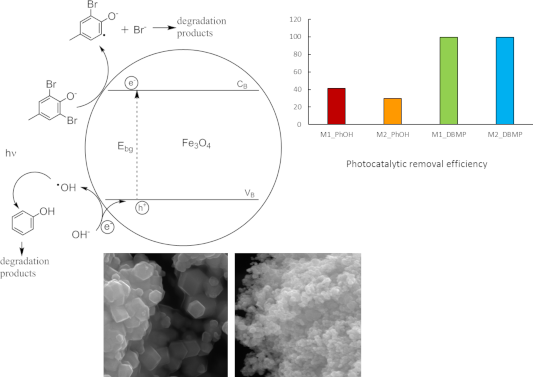
- the organic compounds are discussed, as well as their influence on the degradation reaction rates. The degradation efficiency in photocatalytic processes was higher for DBMP (98%) than for phenol (approximately 50%). This proves the high efficiency of magnetite in the photocatalytic degradation of
- SEM reveals the maximum size of the particles. The catalytic activity of commercially available M1 and M2 was evaluated through the photocatalytic degradation of phenol and DBMP. The photocatalytic activity was compared with the efficiency of ozonolysis. The photocatalytic efficiency is improved by
- the reduction process to the photocatalytic degradation of DBMP. Figure 7 shows the degradation efficiency regarding phenol and DBMP. Phenol degradation reached approx. 65% after 60 min of ozonation whereas the degradation of DBMP was 95%. This is related to the ionic forms of these compounds under


LED-light-activated photocatalytic performance of metal-free carbon-modified hexagonal boron nitride towards degradation of methylene blue and phenol
Beilstein J. Nanotechnol. 2022, 13, 1380–1392, doi:10.3762/bjnano.13.114
- gas chromatograph coupled with a mass spectrometer (GC–MS, Thermo Fisher Scientific) by taking aliquots at 150 min and 330 min. The photocatalytic degradation and mineralization efficiencies were calculated by utilizing the following equations [19]: where Abs(0) symbolizes the initial absorbance, Abs
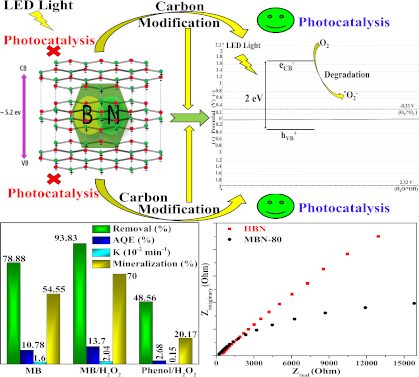
- modified boron nitride Photocatalytic study Figure 7a–g depicts the adsorption and photocatalytic degradation performance of MBN-80 towards MB (20 ppm) and phenol (10 ppm) accomplished through LED irradiation. Specifically, it removed 78.87% of MB (20 ppm solution) which was further enhanced to 93.83% in
- other hand, the photocatalytic degradation of phenol demonstrated a removal rate of 0.0015 min−1 with 48.56% removal and a mineralization efficiency of 20.17%. The AQE for phenol/H2O2 system was found to be at 2.67%. A negligible removal percentage in the order of 4% for MB and 6% for phenol over a



Recent trends in Bi-based nanomaterials: challenges, fabrication, enhancement techniques, and environmental applications
Beilstein J. Nanotechnol. 2022, 13, 1316–1336, doi:10.3762/bjnano.13.109
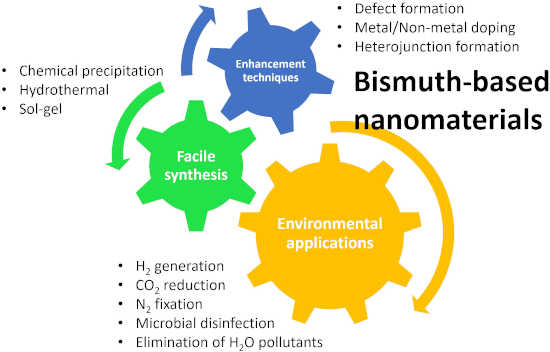
- photocatalysts in eco-friendly applications on a large scale. Bi-based nanomaterials as semiconductor photocatalysts are one of the study’s primary goals, as is the use of Bi-based nanomaterials for wastewater treatment, hydrogen generation, and photocatalytic degradation. Fabrication methods, reliability
- the improved photocatalytic activity of the Fe-doped Bi2WO6 compound. When exposed to visible light, Fe-doped Bi2WO6 exhibited photocatalytic degradation rates that were 11.9 and 8.0 times higher than those of pristine Bi2WO6. This material was also found to be superior to the majority of modified
- photodegradation of RhB under visible light. Their research also revealed that 15% SnO2 precursor solution was the most effective concentration for achieving a photocatalytic degradation efficiency of 80% after 180 min of exposure to visible light. Photogenerated holes were found to be responsible for the




Green synthesis of zinc oxide nanoparticles toward highly efficient photocatalysis and antibacterial application
Beilstein J. Nanotechnol. 2022, 13, 1108–1119, doi:10.3762/bjnano.13.94
- of 10 °C/min. The zeta potential was measured by analyzing 0.1 g of ZnO in 10 mL of water using a Malvern ZetasizerPro. The solid UV–vis DRS was carried out using a JASCO V550 UV–vis spectrometer. Photocatalytic degradation reaction The photocatalytic degradation of a dye solution under visible and
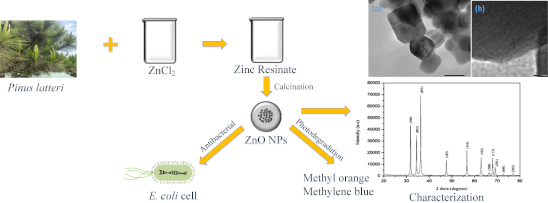
- ), indicating that ZnO NPs are negatively charged and stable in aqueous solution. Photocatalytic degradation of dyes The photocatalytic degradation of ZnO NPs was evaluated through the degradation of methylene blue and methyl orange under visible and UV light and the degradation efficiency was calculated via
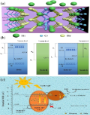
- NPs The mechanism of photocatalytic degradation and E. coli antibacterial activity by ZnO NPs is illustrated in Figure 11. When ZnO is irradiated with visible or UV light whose energy is equal or greater than the bandgap of ZnO, the electrons from the VB of ZnO NPs are excited to the CB generating