


Search results
Search for "photocatalytic properties" in Full Text gives 67 result(s) in Beilstein Journal of Nanotechnology.
Glycerol photoelectrochemical oxidation reaction at carbon nitrides/BiVO4 materials
Beilstein J. Nanotechnol. 2026, 17, 806–817, doi:10.3762/bjnano.17.57
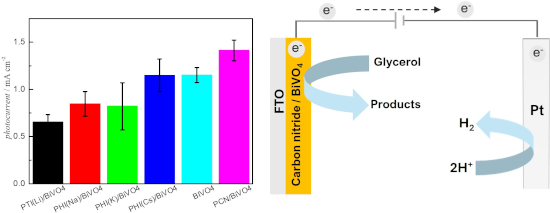
- structural defects [16]. CN materials have been extensively studied as environmentally friendly semiconductors with remarkable photocatalytic properties and facile synthesis [17][18][19][20][21]. Furthermore, it has been demonstrated that incorporating cations during CN synthesis can lead to different




Decontamination from water pollutants and pathogens by electrospun nanofibers doped with heavy-atom-free borafluorene-BODIPY photosensitizers
Beilstein J. Nanotechnol. 2026, 17, 668–682, doi:10.3762/bjnano.17.46
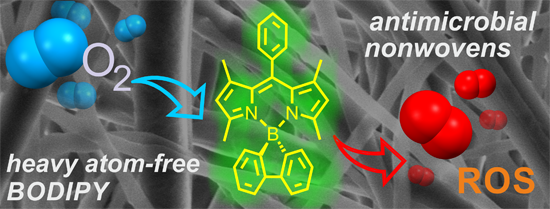
- is lower (QYF = 8%) with respect to the DCM solution (QYF = 20%). For 1(0.50 wt %)@PCL, QYF increases to 26%, to drop to 21% for 1(1.00 wt %)@PCL. Phosphorescence was not detected in the materials, in accordance with the non-emissive nature of the triplet state in BODIPY. Photocatalytic properties of



Durable antimicrobial activity of fabrics functionalized with zeolite ion-exchanged nanomaterials against Staphylococcus aureus and Escherichia coli
Beilstein J. Nanotechnol. 2026, 17, 262–274, doi:10.3762/bjnano.17.18
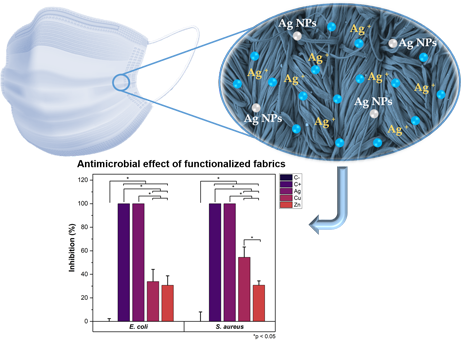
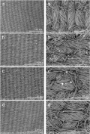
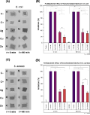
- example, CuO NPs with a size of 4.8 nm demonstrated better antibacterial activity than larger particles (7.8 nm) [16]. The small Cu NPs have a greater capacity to penetrate the cell membrane [17][18]. Zinc oxide NPs are well known for their photocatalytic properties. Also, recent studies have demonstrated




Functional surface engineering for cultural heritage protection: the role of superhydrophobic and superoleophobic coatings – a comprehensive review
Beilstein J. Nanotechnol. 2026, 17, 63–96, doi:10.3762/bjnano.17.6

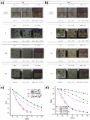
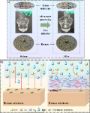
- protection. Gryparis et al. [65] investigated self-cleaning photocatalytic coatings to protect cementitious materials from environmental pollutants (i.e., methylene blue (MB) and methyl orange (MO)). Titanium dioxide, known for its photocatalytic properties, was combined with carbon dots (C-dots) to enhance





Microplastic pollution in Himalayan lakes: assessment, risks, and sustainable remediation strategies
Beilstein J. Nanotechnol. 2025, 16, 2144–2167, doi:10.3762/bjnano.16.148
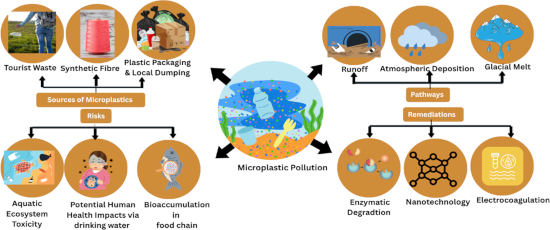
- , attack the polymer chains of MPs. They either break the chains into smaller pieces or mineralize them into CO2 and water. A lot of research is being done on the photocatalytic properties of nanomaterials like TiO2, graphene oxide (GO), and ZnO. An excellent material for breaking down MPs in water systems
- another promising approach. GO may be combined with TiO2 or ZnO to create materials that have both adsorption and photocatalytic properties, which improves their ability to absorb and break down MPs. They are perfect for harsh and isolated environments because of their resilience and flexibility [79]. The


Piezoelectricity of layered double hydroxides: perspectives regarding piezocatalysis and nanogenerators
Beilstein J. Nanotechnol. 2025, 16, 1812–1817, doi:10.3762/bjnano.16.124

- is still in its infancy and this review explores its recent advances. The discussion encompasses LDH-based piezoelectric nanogenerators, piezocatalytic and piezo-photocatalytic properties of LDHs, and composite material synergies that enhance the overall electroactive performance. Looking to the
- addition to zinc-aluminum LDHs, piezo-photocatalytic properties have also been studied for Ni/Fe LDH [15]. A Ni/Fe-LDH/Bi2MoO6−x composite has been designed for the piezo-photocatalytic N2 oxidation to NO3−. The obtained material displayed a high nitric acid production rate (7.23 mg·g−1·h−1). Experimental

Electrical, photocatalytic, and sensory properties of graphene oxide and polyimide implanted with low- and medium-energy silver ions
Beilstein J. Nanotechnol. 2025, 16, 1794–1811, doi:10.3762/bjnano.16.123
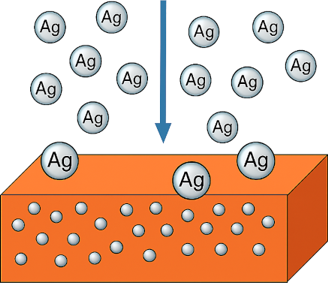
- , sensory, and photocatalytic properties of graphene oxide (GO) and polyimide (PI). Implantations were carried out with fluences ranging from 3.75 × 1012 cm−2 to 1 × 1016 cm−2. Silver ions offer excellent electrical, catalytic, and plasmonic characteristics, making them ideal for multifunctional enhancement
- relative humidity [16]. In addition to improving the affinity for water vapor, the implantation of Ag ions also translates into changes in optical and photochemical properties of the material, such as photocatalytic properties [17]. The modified electronic structure, characterized by a narrowing of the
- detection analysis (ERDA). The other analytical methods used were Raman spectroscopy, Fourier-transform infrared spectroscopy and X-ray photo-electron spectroscopy (XPS). The electrical properties were investigated by the two-point method. The photocatalytic properties were tested in a dark chamber by


Nanotechnology-based approaches for the removal of microplastics from wastewater: a comprehensive review
Beilstein J. Nanotechnol. 2025, 16, 1607–1632, doi:10.3762/bjnano.16.114
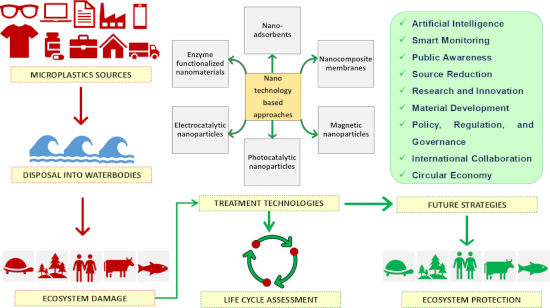
- fabrication process involves thermally transforming Ti3C2Tx MXene into multilayered TiO2 with photocatalytic properties, followed by coating with platinum and decorating the surface with magnetic γ-Fe2O3 nanoparticles. These engineered γ-Fe2O3/Pt/TiO2 microrobots exhibit light-driven, fuel-free movement with



Synthesis and antibacterial properties of nanosilver-modified cellulose triacetate membranes for seawater desalination
Beilstein J. Nanotechnol. 2025, 16, 1380–1391, doi:10.3762/bjnano.16.100
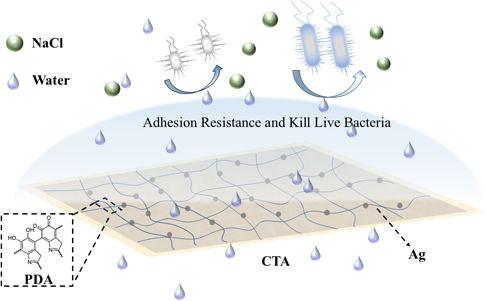
- photocatalytic properties of TiO2, which generate ROS that degrade bacterial membranes [23]. Yang and Wang’s group introduced carbon nanotubes (CNTs) into a mixed cellulose esters (MCE) membrane to create a robust porous bi-layered photothermal membrane (CNT@PEI/MCE) for efficient solar-driven interfacial water


Enhancing the photoelectrochemical performance of BiOI-derived BiVO4 films by controlled-intensity current electrodeposition
Beilstein J. Nanotechnol. 2025, 16, 1289–1301, doi:10.3762/bjnano.16.94
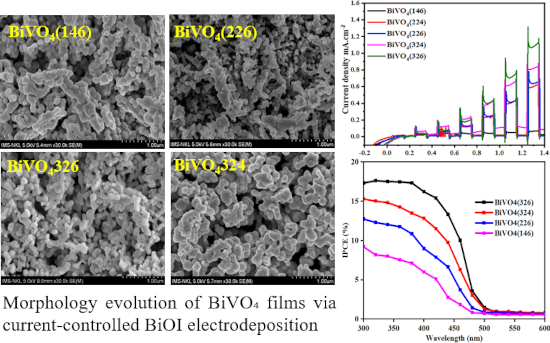
- ) plane exhibited the highest intensity across all samples, which aligns with its high refractive index and superior photocatalytic properties owing to the enhanced adsorption and deionization of water molecules in the structure. Additionally, the (040) peak intensity exhibited a systematic increase at



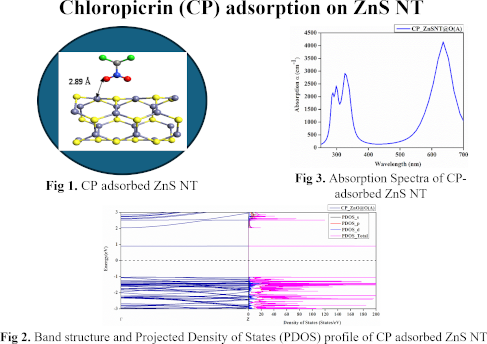
Electronic and optical properties of chloropicrin adsorbed ZnS nanotubes: first principle analysis
Beilstein J. Nanotechnol. 2025, 16, 1184–1196, doi:10.3762/bjnano.16.87
- , which can be tailored through rational design. By precisely controlling their size, shape, synthesis conditions, and functionalization, nanomaterials can achieve extraordinary magnetic, electrical, optical, mechanical, sensing, anticancer, and photocatalytic properties that significantly differ from


Mn-doped ZnO nanopowders prepared by sol–gel and microwave-assisted sol–gel methods and their photocatalytic properties
Beilstein J. Nanotechnol. 2024, 15, 1283–1296, doi:10.3762/bjnano.15.104
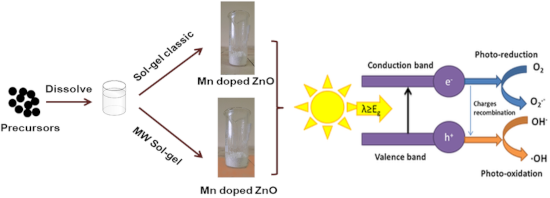
- photocatalytic properties of SG and MW. Based on these preliminary results, it is fully desirable to develop such engineered materials [57] for the removal of organic pollutants. It is important to expand the activity range of the materials from UV to visible light by tailoring the manganese addition to ZnO and


Intermixing of MoS2 and WS2 photocatalysts toward methylene blue photodegradation
Beilstein J. Nanotechnol. 2024, 15, 817–829, doi:10.3762/bjnano.15.68
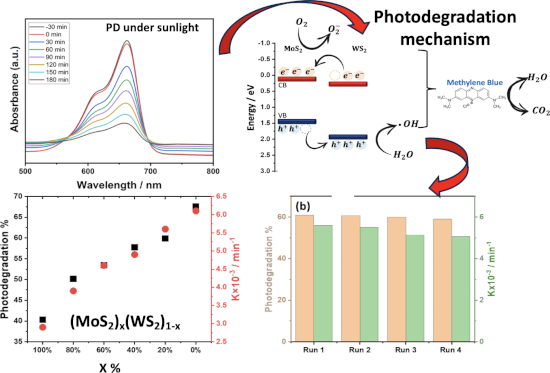
- cocatalysts. Their catalytic properties can be tailored based on their crystal structure, their surface area, and their morphology [12][13]. When TMD catalysts are intermixed, they form semiconductor–semiconductor junctions, enhancing their photocatalytic properties by promoting charge separation and electron


Aero-ZnS prepared by physical vapor transport on three-dimensional networks of sacrificial ZnO microtetrapods
Beilstein J. Nanotechnol. 2024, 15, 490–499, doi:10.3762/bjnano.15.44
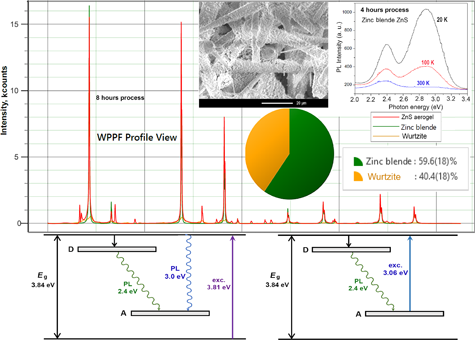
- nanocomposite components with respect to the HOMO and LUMO molecular orbitals of organic compounds subjected to photocatalytic degradation [18][44]. Specific photocatalytic properties of the aero-ZnS materials prepared by physical vapor transport have not been investigated in this paper. However, preliminary
- also needed in view of the large specific surface area inherent to the produced aeromaterials and of the important role played by surface states in shifting the edge of the valence band, improving the visible-light photocatalytic properties, as shown by first-principle investigations in some
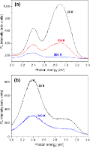
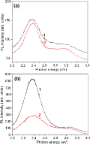
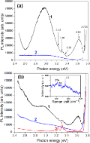
- impurities are present in the photoluminescence spectra, including those associated with surface states. Taking into account that, according to previous reports, the surface states, including those related to oxygen species adsorbed at the aeromaterial surface, play an important role in photocatalytic



Prediction of cytotoxicity of heavy metals adsorbed on nano-TiO2 with periodic table descriptors using machine learning approaches
Beilstein J. Nanotechnol. 2023, 14, 939–950, doi:10.3762/bjnano.14.77
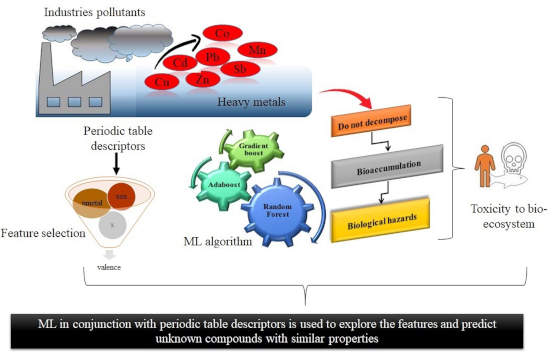
- diverse applications. TiO2 has been shown to be a promising material for practical applications because it is highly photoreactive, inexpensive, non-toxic, chemically and biologically inert, and photostable. Also, nano-TiO2 exhibits high specific surface area and anti-corrosion and photocatalytic
- properties [3]. It absorbs UV radiation and shows self-cleaning ability. Nanoparticles have a susceptibility to adsorb other substances to form a mixture leading to a shift of toxicity to living organisms [4]. Hence, many studies have reported cytotoxic characteristics of TiO2 [5][6]. Some NPs are fatal to


Titania nanoparticles for photocatalytic degradation of ethanol under simulated solar light
Beilstein J. Nanotechnol. 2023, 14, 616–630, doi:10.3762/bjnano.14.51
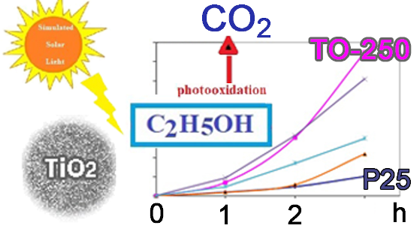
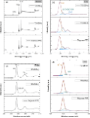
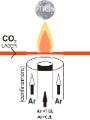
- nanoparticles with dimensions of 40–80 nm, whose number increases with increasing the working pressure. The photocatalytic properties have been investigated regarding the photodegradation of ethanol vapors in Ar with 0.3% O2 using P25 powder as reference under simulated solar light. During the irradiation H2




Plasmonic nanotechnology for photothermal applications – an evaluation
Beilstein J. Nanotechnol. 2023, 14, 380–419, doi:10.3762/bjnano.14.33




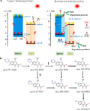
Bismuth-based nanostructured photocatalysts for the remediation of antibiotics and organic dyes
Beilstein J. Nanotechnol. 2023, 14, 291–321, doi:10.3762/bjnano.14.26
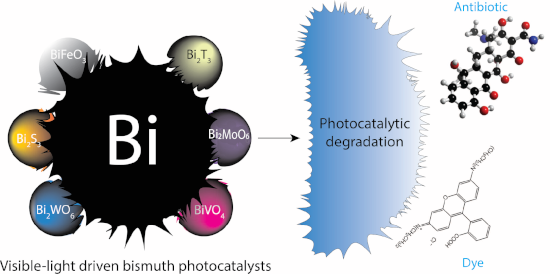
- plasmonic and photocatalytic properties. The typical and most recently applied bismuth-based nanostructure photocatalysts are depicted in Figure 2. Structural, optoelectronic, and magnetic properties Bismuth's peculiar optical, electronic, and more recently discovered photocatalytic and plasmonic properties
- distorted rhombohedral perovskite structure (ABO3), where A is a corner cation, B is a body-centred middle atom, and O is an oxygen atom or anions attached to the crystal faces. BiFeO3 has strong magnetic and multiferroic, and sufficient photocatalytic properties due to this unique structure. BiFeO3 is an
- absorption range. In addition to improving the photocatalytic properties of the Bi-based host materials, doping them with rare earth elements may also give them special ferroelectric and ferromagnetic properties, as well as electrochemical and luminescent properties. To produce an Er-doped Bi2WO6


Recent trends in Bi-based nanomaterials: challenges, fabrication, enhancement techniques, and environmental applications
Beilstein J. Nanotechnol. 2022, 13, 1316–1336, doi:10.3762/bjnano.13.109
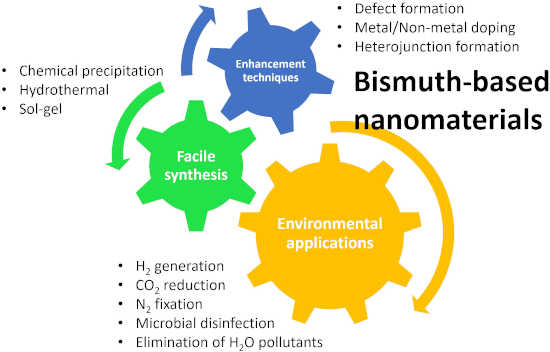
- energies. Many persistent organic contaminants can be degraded at room temperature through the oxidizing power of VB holes in bismuth oxyhalides [26]. BiOCl, BOI, BiOBr, and composites made from them have been widely reported due to their excellent photocatalytic properties [27][28][29]. However, the
- and deposition and doping of metals and non-metallic elements are the most common doping methods. Metal ions modify the crystal structure of the Bi-based semiconductor photocatalysts or induce defects. Also, the photocatalytic properties may be altered by doping or deposition of metallic components




Role of titanium and organic precursors in molecular layer deposition of “titanicone” hybrid materials
Beilstein J. Nanotechnol. 2022, 13, 1240–1255, doi:10.3762/bjnano.13.103
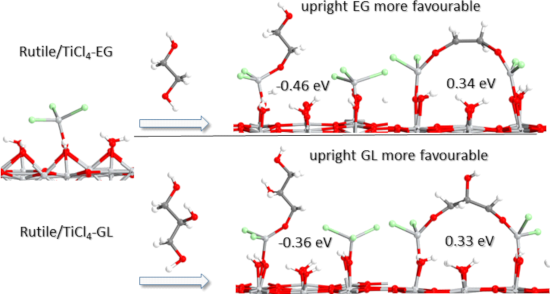
- catalytic and photocatalytic properties [46] porous TiO2 frameworks formed by the annealing of titanicone films may serve as catalytic supports [47]. Titanicone films can also be pyrolyzed under Ar to yield conducting TiO2/carbon composite films with important electrochemical applications as electrodes for


Hierarchical Bi2WO6/TiO2-nanotube composites derived from natural cellulose for visible-light photocatalytic treatment of pollutants
Beilstein J. Nanotechnol. 2022, 13, 745–762, doi:10.3762/bjnano.13.66
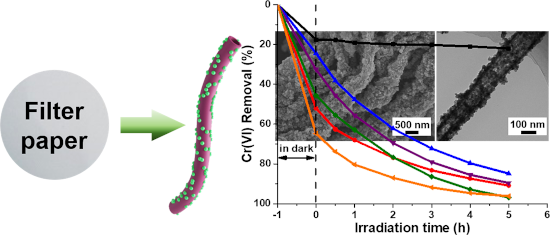
- − units [22]. The hybridized O 2p and Bi 6s orbitals in the conduction band of the material contribute to the effective transfer of photoinduced electron−hole pairs, resulting in good photocatalytic properties under visible-light irradiation [23][24]. However, there is still room for improvement of the
- Cr2O72− block the active sites of the photocatalyst at pH 3, resulting in rather poor photocatalytic properties. In comparison with the pH 4 and pH 5 conditions, although the adsorption capacities toward HCrO4− and Cr2O72− of the photocatalyst are similar, the photocatalytic reduction reaction of Cr(VI
- , all hierarchical Bi2WO6/TiO2-NT nanocomposites present better photocatalytic properties than those of pure TiO2-NT and Bi2WO6 powder samples, which is attributed to the three-dimensional porous network structures inherited from the original cellulose configuration and the formation of compact


Engineered titania nanomaterials in advanced clinical applications
Beilstein J. Nanotechnol. 2022, 13, 201–218, doi:10.3762/bjnano.13.15
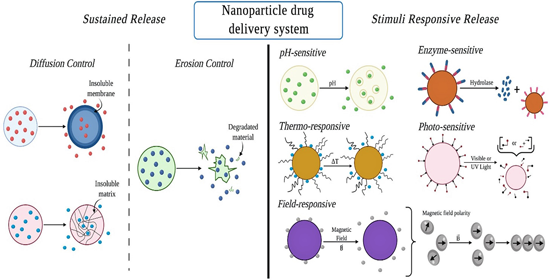
- the TiO2 micropatterns (Figure 3) [96]. TiO2 nps are examined in clinical research regarding the ability to destroy organic dirt and inhibit the viability of pathogenic bacteria effectively upon irradiation with visible and UV light [97]. To obtain antimicrobial and photocatalytic properties


Nanoporous and nonporous conjugated donor–acceptor polymer semiconductors for photocatalytic hydrogen production
Beilstein J. Nanotechnol. 2021, 12, 607–623, doi:10.3762/bjnano.12.50
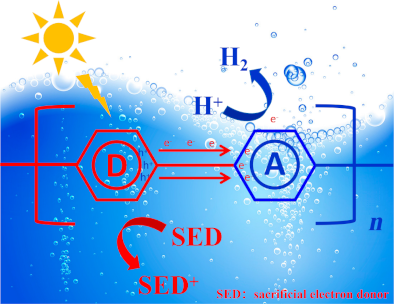
- substituting the S atom in the benzothiadiazole group with O or Se atoms on the optoelectronic and photocatalytic properties of the CTFs P11 and P12 (Figure 2) [51]. Introducing an O atom boosted the ICT and electron–hole separation due to the higher electron negativity; but it lowered the LUMO level, which as
- photocatalytic properties. PDI-containing polymers, such as P15, normally confer smaller HERs than the others. P18, composed of strong electron-donating and bipyridine segments, rendered the best HER, which was attributed to its enhanced light absorption, better wettability, and more efficient charge separation




Boosting of photocatalytic hydrogen evolution via chlorine doping of polymeric carbon nitride
Beilstein J. Nanotechnol. 2021, 12, 473–484, doi:10.3762/bjnano.12.38
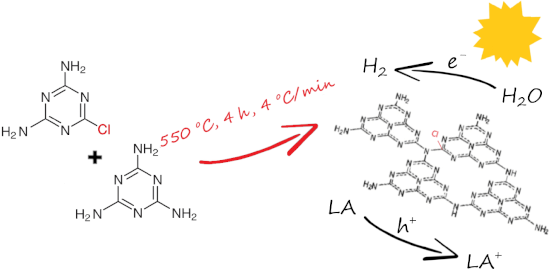
- obtaining a highly efficient HER under visible light conditions [28][29]. One of the most effective methods to modify the electronic structure and improve photocatalytic properties, among so many options, seems to be non-metallic doping [30][31][32][33]. For instance, Ma et al. found that the doping of PCN
- transport bridge between the layers of carbon nitride [45][55]. The presented study revealed that the polycondensation of melamine with 2-chloro-4,6-diamino-1,3,5-triazine leads to formation of Cl-doped polymeric carbon nitride. The presented material showed improved photocatalytic properties in the


A review on the biological effects of nanomaterials on silkworm (Bombyx mori)
Beilstein J. Nanotechnol. 2021, 12, 190–202, doi:10.3762/bjnano.12.15
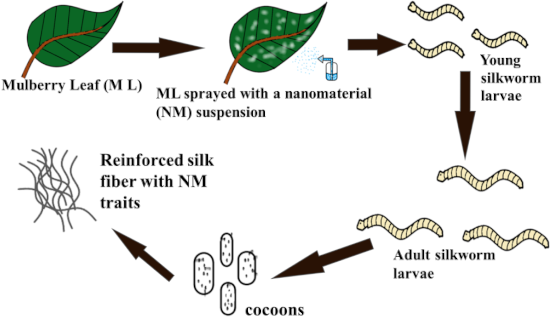
- summarizes some reports on the biological effects of nanomaterials on silkworm and how the application of nanomaterials improves sericulture. Keywords: biological effects; Bombyx mori; nanomaterials; nanotechnology; sericulture; Introduction Nanomaterials have unique optical, electronic, and photocatalytic
- properties which are applied in various fields of science, such as agriculture, cosmetic, food, medicine, and pharmaceutical sectors [1][2][3][4]. Despite the positive contributions of nanomaterials, which include the manufacturing of self-cleaning windows, sunscreen, and thickening agents [5][6], the safety





