


Search results
Search for "photosensitizer" in Full Text gives 43 result(s) in Beilstein Journal of Nanotechnology.
Light-driven ammonia electrooxidation via carbon nitride–ruthenium molecular interfaces
Beilstein J. Nanotechnol. 2026, 17, 854–862, doi:10.3762/bjnano.17.61
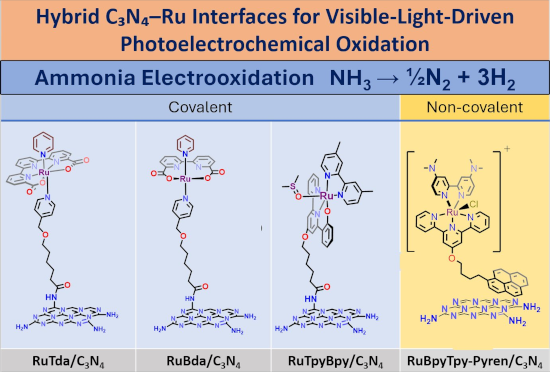
- and charge-conducting scaffold, functionally analogous to a photosensitizer, while the Ru complex serves as the molecular catalytic centre and light absorber too. Transferring this synergistic photoactive interface concept into photoelectrocatalysis for ammonia oxidation, a sustainable hydrogen
- parameter space available for hybrid photoelectrode optimization [4][5]. From the perspective of the antenna analogy introduced in section B, C3N4 occupies the role of the photosensitizer in the hybrid system. It absorbs visible light, generates electron–hole pairs, and transports these charge carriers to


Decontamination from water pollutants and pathogens by electrospun nanofibers doped with heavy-atom-free borafluorene-BODIPY photosensitizers
Beilstein J. Nanotechnol. 2026, 17, 668–682, doi:10.3762/bjnano.17.46
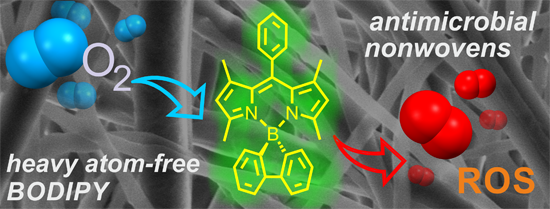
- University of Technology, Strzody 9, 44-100 Gliwice, Poland Centre for Organic and Nanohybrid Electronics, Silesian University of Technology, Konarskiego 22B, 44-100 Gliwice, Poland 10.3762/bjnano.17.46 Abstract A heavy-atom-free and non-toxic spirocyclic C-BODIPY singlet oxygen photosensitizer was
- between perpendicularly oriented donor and acceptor units [36][37][38][39]. In the current study, we investigate the borafluorene-based BODIPY 1 (Figure 1a) as a model heavy-atom-free photosensitizer for deactivating water pollutants and pathogens. Our major goal was to develop a suitable polymeric
- fluorescence spectroscopy was used to check the possible aggregation of photosensitizer in PCL, as the emission behavior of BODIPY is sensitive to self-aggregation effects. The surface free energy value (SFE) was determined using the Kaelble–Owens–Wendt method, which accounts for both the polar component



Biomimetic nanoparticles in cancer photodynamic therapy: a review of targeted delivery systems and therapeutic outcomes
Beilstein J. Nanotechnol. 2026, 17, 396–422, doi:10.3762/bjnano.17.27
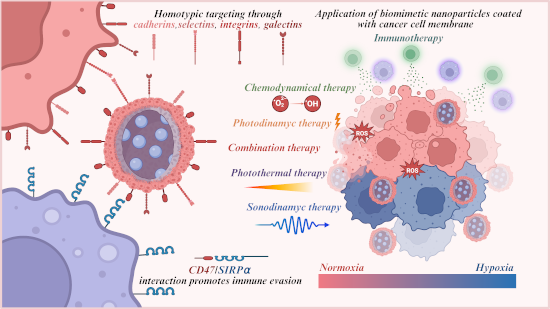
- involving three key components: a photosensitizer (PS), light of a specific wavelength, and molecular oxygen [3]. Upon light activation, the PS transitions to an excited state and transfers energy to surrounding oxygen molecules, generating reactive oxygen species (ROS) that can eradicate tumor cells. While
- with the cytolytic peptide melittin and the photosensitizer mTHPC have been developed. In vitro and in vivo studies demonstrated that these nanoparticles mitigated the acute toxicity of melittin and enhanced tumor accumulation of mTHPC in 4T1 tumor-bearing mice, while facilitating accelerated melittin
- stealth properties during circulation but exposed their homophilic binding sites specifically within the acidic tumor environment, resulting in a 2.5-fold increase in tumor-specific uptake compared to conventional membrane-coated systems. Main classes of biomimetic nanoplatforms for photosensitizer


Development and in vitro evaluation of liposomes and immunoliposomes containing 5-fluorouracil and R-phycoerythrin as a potential phototheranostic system for colorectal cancer
Beilstein J. Nanotechnol. 2026, 17, 97–121, doi:10.3762/bjnano.17.7



Prospects of nanotechnology and natural products for cancer and immunotherapy
Beilstein J. Nanotechnol. 2025, 16, 1644–1667, doi:10.3762/bjnano.16.116
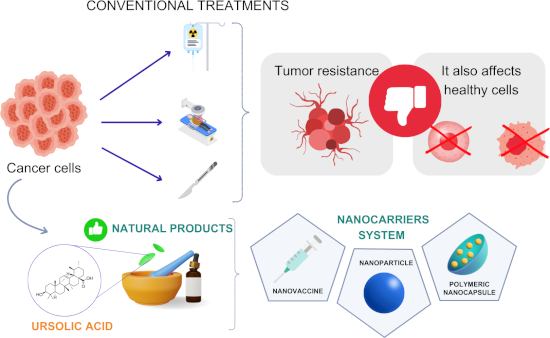
- , significantly improved blood indicators compared to paclitaxel injection (p < 0.01), extended circulation, improved targeting to tumor sites, and reduced toxic side effects [65]. CN109846857 (2019) describes the development of a natural photosensitizer derived from chlorophyllin e6 (Ce6). Self-assembled


Laser processing in liquids: insights into nanocolloid generation and thin film integration for energy, photonic, and sensing applications
Beilstein J. Nanotechnol. 2025, 16, 1428–1498, doi:10.3762/bjnano.16.104




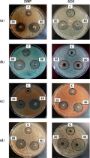


Enhancing the therapeutical potential of metalloantibiotics using nano-based delivery systems
Beilstein J. Nanotechnol. 2025, 16, 1350–1366, doi:10.3762/bjnano.16.98
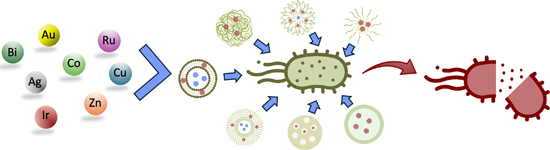
- highly selective and efficient photosensitizer delivery systems. Ir(III) complexes are excellent photosensitizers due to their highly sensitive excited-state properties in response to the surrounding environment, high photostability, and unique intracellular localization [137][138]. However, the


Better together: biomimetic nanomedicines for high performance tumor therapy
Beilstein J. Nanotechnol. 2025, 16, 1246–1276, doi:10.3762/bjnano.16.92
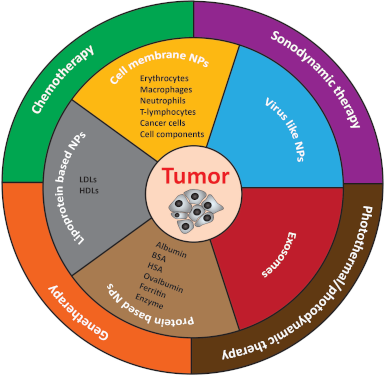
- membrane, the IR780 (NIR) fluorescence dye was loaded as a photosensitizer for PTT to generate biomimetic “IR780-rRBC” NPs. The antitumor effect of IR780-rRBC was also evaluated. After laser treatment, the tumor temperatures in mice treated with IR780-rRBC and IR780-rRBC NPs increased up to 60 and 70 °C


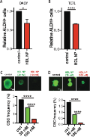




Investigation of the solubility of protoporphyrin IX in aqueous and hydroalcoholic solvent systems
Beilstein J. Nanotechnol. 2025, 16, 1209–1215, doi:10.3762/bjnano.16.89
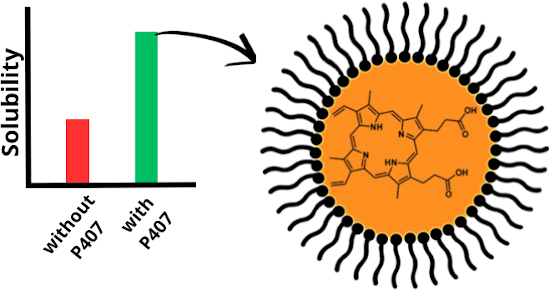
- Michelly de Sa Matsuoka Giovanna Carla Cadini Ruiz Marcos Luciano Bruschi Jessica Bassi da Silva Department of Pharmacy, State University of Maringa, Maringa, PR, Brazil 10.3762/bjnano.16.89 Abstract Photodynamic therapy (PDT) is a non-invasive treatment involving a photosensitizer (PS), light
- ; protoporphyrin IX; shake-flask; solubility test; Introduction Photodynamic therapy (PDT) is a promising therapeutic modality that has raised keen interest in the treatment of various conditions including cancer and microbial infections [1][2]. This non-invasive treatment combines a photosensitizer (PS), a
- , the findings observed at 0.4 mg/mL PpIX are not in line. While spectrophotometric readings indicated high solubility, the visual inspection revealed turbidity, suggesting incomplete dissolution of the photosensitizer. This discrepancy may be attributed to the filtration step performed prior to UV–vis


Fabrication of metal complex phthalocyanine and porphyrin nanoparticle aqueous colloids by pulsed laser fragmentation in liquid and their potential application to a photosensitizer for photodynamic therapy
Beilstein J. Nanotechnol. 2025, 16, 1088–1096, doi:10.3762/bjnano.16.80
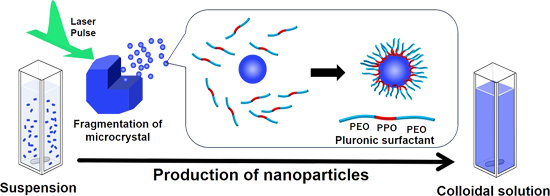
- generation of reactive oxygen species by AlClPc, ZnPc, and PtOEP nanoparticles and the photocytotoxicity for PC12 and HeLa cells, and demonstrated that the nanoparticles can be used as photosensitizers for photodynamic therapy. Keywords: aqueous colloid; photosensitizer; phthalocyanine; pulsed laser
- generation with a conventional water-soluble photosensitizer, Zn(II) meso-tetra(4-sulfonatophenyl)porphine tetrasodium salt (ZnTPPS), and demonstrated that the PtOEP nanoparticles acted as photosensitizers with greater efficiency than ZnTPPS (Figure S8, Supporting Information File 1). The decays of DPBF
- strongly supports that cellular phototoxicity is due to photosensitized ROS generation by the nanoparticles. Therefore, it is concluded that the MPc and PtOEP nanoparticles fabricated by PLAL could be used as a new potential photosensitizer for PDT. The efficiency for PDT in acting as a sensitizer cannot


Nanotechnological approaches for efficient N2B delivery: from small-molecule drugs to biopharmaceuticals
Beilstein J. Nanotechnol. 2024, 15, 1400–1414, doi:10.3762/bjnano.15.113
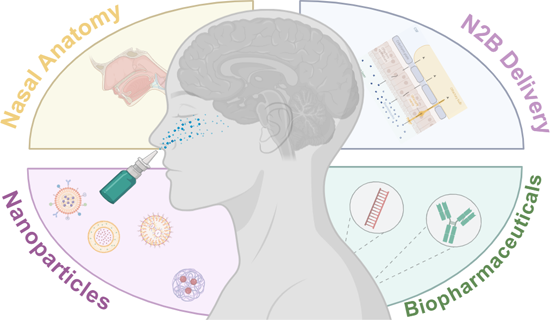
- another widely used complex vector, polyplexes. They took the approach one step further and combined these polyplexes formed by a cationic polymer and anionic mRNA with a photosensitizer for photochemical internalization and subsequent enhancement in delivery to the cytoplasm. They showed that laser


Entry of nanoparticles into cells and tissues: status and challenges
Beilstein J. Nanotechnol. 2024, 15, 1017–1029, doi:10.3762/bjnano.15.83
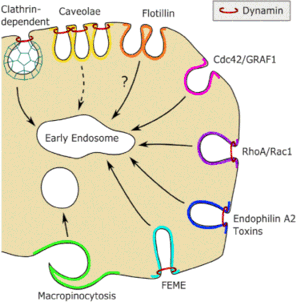
- CC BY 4.0. SIM image showing photosensitizer–chitosan conjugate polymeric NPs within lysosomes. MDA-MB-231 cells were incubated with the NPs (red) for 2 h, followed by a washout and chasing for 2 h at 37 °C. Then, the cells were fixed and stained with an antibody against the lysosomal marker LAMP-1


Therapeutic effect of F127-folate@PLGA/CHL/IR780 nanoparticles on folate receptor-expressing cancer cells
Beilstein J. Nanotechnol. 2024, 15, 954–964, doi:10.3762/bjnano.15.78
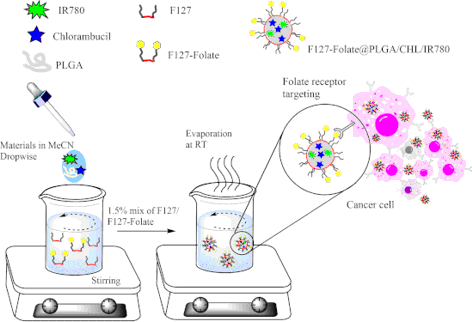
- nanoparticles to follow the targeting of nanoparticles as well as using it as a photosensitizer [23][48][49][50][51][52]. First, IR780 has an excitation wavelength of 777–780 nm and an emission wavelength of 798–823 nm, which is suitable for obtaining noninvasive near-infrared fluorescence images for clinical



Cyclodextrins as eminent constituents in nanoarchitectonics for drug delivery systems
Beilstein J. Nanotechnol. 2023, 14, 218–232, doi:10.3762/bjnano.14.21
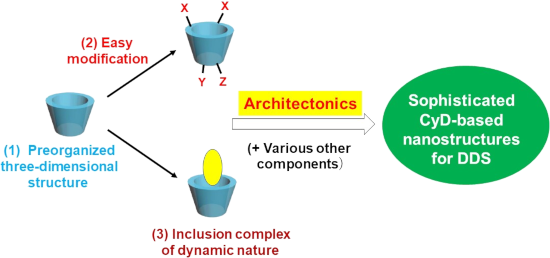
- therapy (PDT) employs a light-sensitive medicine (photosensitizer) and a light source to destroy abnormal cells [72][73]. The photosensitizer absorbs the light and is activated to kill target tissue. In many cases, reactive oxygen species (ROSs) such as singlet oxygen (1O2) generated from 3O2 by a
- accomplish PDT using NIR light irradiation, adamantane-modified phthalocyanine was connected to upconversion nanoparticles using carboxymethyl-β-CyD [76]. Furthermore, boron-dipyrromethene (BODIPY) photosensitizer was complexed with amphiphilic α-CyD bearing oligo(ethylene glycol) chains [77]. By
- encapsulating (a part of) the photosensitizer in the cavities, its self-aggregation was suppressed to accomplish a high quantum yield of 1O2 production. The aggregation of porphyrin was photocontrolled by using complex formation of β-CyD with photoresponsive azobenzene [78]. By delivering nitrogen oxide (NO


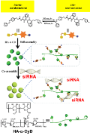


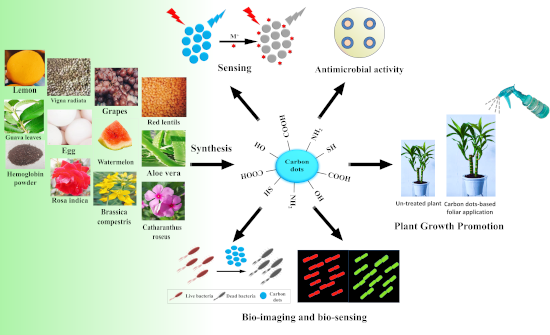
Recent advances in green carbon dots (2015–2022): synthesis, metal ion sensing, and biological applications
Beilstein J. Nanotechnol. 2022, 13, 1068–1107, doi:10.3762/bjnano.13.93


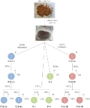


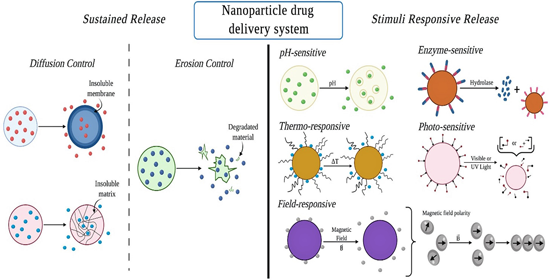
Engineered titania nanomaterials in advanced clinical applications
Beilstein J. Nanotechnol. 2022, 13, 201–218, doi:10.3762/bjnano.13.15
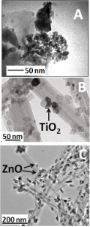
- become superhydrophilic under UV light, function well as photosensitizer. Subsequently, another study established the use of nanoscale TiO2 as a redox coating of in implants [9]. Titanium and its alloys are considered the most promising materials for implants due to their superior properties, which
- cells containing TiO2 nps undergo oxidative degeneration upon light irradiation under the influence of generated ROS and, therefore, these nps are considered as a potent photosensitizer in anticancer photodynamic therapy and the photodynamic inactivation of antibiotic-resistant bacteria [15]. TiO2
- drawback of using TiO2 as photosensitizer is the shallow penetration depth in tissues as it gets activated only by UV light; however, for deep penetration of light into tissues, the wavelength should be in the near-infrared (NIR) window (700–1100 nm) [111]. TiO2 nps can be retained in the body for more


Self-assembly of amino acids toward functional biomaterials
Beilstein J. Nanotechnol. 2021, 12, 1140–1150, doi:10.3762/bjnano.12.85
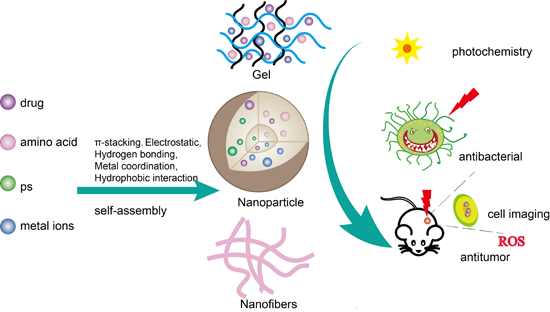
- acid and functional molecule self-assembly (drug, photosensitizer) (Figure 1). In this paper, the self-assembly of single amino acids is discussed first. We then discuss the co-assembly of amino acids and their derivatives with functional components including metal ions, photosensitizers (PS), and
- PS to tumor tissues [76]. Liu et al. [78] designed photosensitizer delivery systems by self-assembling cationic diphenylalanine (H-Phe-Phe-NH2 HCl, CDP) or 9-fluorenylmethoxycarbonyl-ʟ-lysine (Fmoc-ʟ-Lys) with Ce6 into nanoparticles (CCNPs and FCNPs, respectively). Intermolecular hydrophobic and π–π
- ) melanin through a Schiff base reaction to form an adhesive layer, and Fmoc-ʟ-Lys/DOPA fiber simulated an antenna to capture light. As a photosensitizer, Sn(IV)tetrakis(4-pyridyl)porphyrin (SnTPyP) was combined with the photocatalyst Co3O4 NPs by coordination bonds and electrostatic interaction onto the

Recent progress in actuation technologies of micro/nanorobots
Beilstein J. Nanotechnol. 2021, 12, 756–765, doi:10.3762/bjnano.12.59
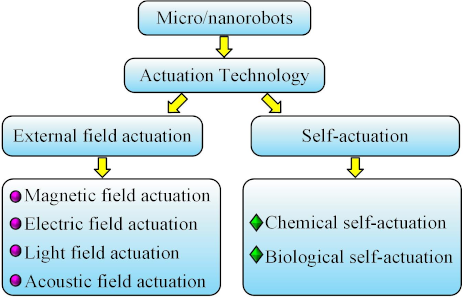
- dual-mode fluorescence and magnetic resonance imaging. Using magnetic targeting, the micro/nanorobot broke through complex physiological barriers and entered tumors while carrying a photosensitizer. After that, local high temperature was generated by a near-infrared laser, and observable and accurate


Photothermally active nanoparticles as a promising tool for eliminating bacteria and biofilms
Beilstein J. Nanotechnol. 2020, 11, 1134–1146, doi:10.3762/bjnano.11.98
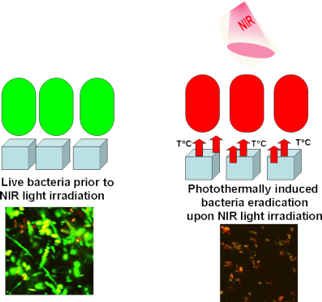
- of a NaYF4:Mn/Yb/Er@photosensitizer doped with SiO2 This allowed for the integration of photodynamic and photothermic therapy to improve the treatment against multidrug-resistant bacteria [82]. It was demonstrated that such nanodevices exhibited superior antibacterial activity towards drug-resistant


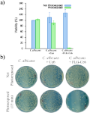
A few-layer graphene/chlorin e6 hybrid nanomaterial and its application in photodynamic therapy against Candida albicans
Beilstein J. Nanotechnol. 2020, 11, 1054–1061, doi:10.3762/bjnano.11.90
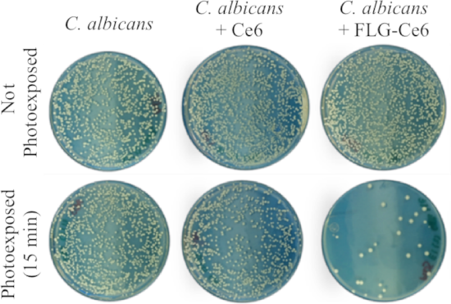
- ; few-layer graphene (FLG); hybrid nanomaterial; photodynamic therapy (PDT); photosensitizer; Introduction The frequency of fungal infections has notably increased in the last decades; for instance, Candida albicans is now reported as the fourth cause of nosocomial septicemia in the United States [1
- Paramecia [5]. PDT consists of the interaction of visible-light photons with a photosensitizer located inside the cell or in close proximity to it. In this interaction, the photosensitizer produces highly reactive oxygen species (ROS) by reacting in the excited state with molecular oxygen present in the
- environment. ROS refer to molecules like singlet oxygen, superoxide anion, and radicals, which are responsible for producing oxidative stress in cells followed by cell death [4]. Photosensitizer molecules must be nontoxic before irradiated with light, must produce high amounts of ROS when irradiated with


Rational design of block copolymer self-assemblies in photodynamic therapy
Beilstein J. Nanotechnol. 2020, 11, 180–212, doi:10.3762/bjnano.11.15
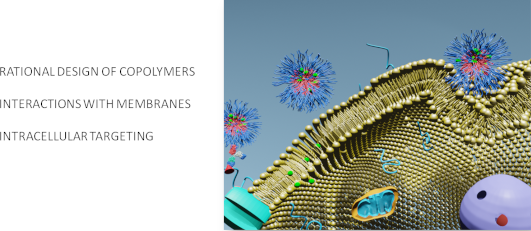
- therapy is a technique already used in ophthalmology or oncology. It is based on the local production of reactive oxygen species through an energy transfer from an excited photosensitizer to oxygen present in the biological tissue. This review first presents an update, mainly covering the last five years
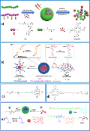
- , regarding the block copolymers used as nanovectors for the delivery of the photosensitizer. In particular, we describe the chemical nature and structure of the block copolymers showing a very large range of existing systems, spanning from natural polymers such as proteins or polysaccharides to synthetic
- photosensitizer formulation, light dosimetry, to planning and monitoring the treatment [15][18][19][20][21][22]. Some of these points have been recently reviewed: ideal photosensitizers [23], challenges in formulating photosensitizers, and choosing the right light dosimetry [24], as well as monitoring the






Air oxidation of sulfur mustard gas simulants using a pyrene-based metal–organic framework photocatalyst
Beilstein J. Nanotechnol. 2019, 10, 2422–2427, doi:10.3762/bjnano.10.232
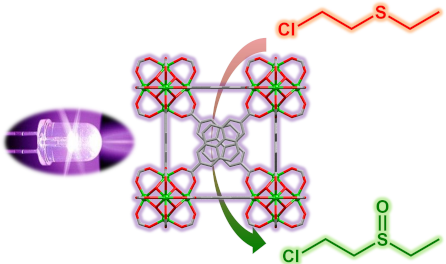
- photosensitizer for generating singlet oxygen and subsequent oxidative degradation of chemical warfare agents (CWAs). The high activity of NU-400 permits photocatalytic conversion of the 2-chloroethyl ethyl sulfide (CEES) mustard gas simulant into a benign sulfoxide derivative, in air, with less than 15 minutes
- nerve gas agents [37][38][39][40][41][42]. Here, we describe the preparation of NU-400 [43], a zirconium-based MOF based on a judiciously chosen pyrene-based linker and utilized it as a photosensitizer for the efficient production of 1O2 and hence photocatalytic conversion of the sulfur mustard simulant
- 2-chloroethyl ethyl sulfide (CEES) into a benign sulfoxide product, using ambient air as the oxygen source. We selected a Zr6-based MOF because of its outstanding stability under a wide range of thermal and chemical conditions. As pyrene has been known as an efficient photosensitizer that is capable




Photoactive nanoarchitectures based on clays incorporating TiO2 and ZnO nanoparticles
Beilstein J. Nanotechnol. 2019, 10, 1140–1156, doi:10.3762/bjnano.10.114
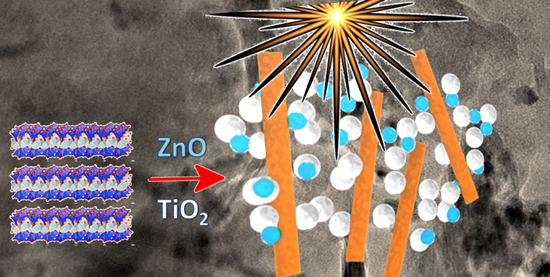
- transformation and for improved overall reaction efficiency. This article tries also to present new steps towards more sophisticated but efficient and highly selective functional nanoarchitectures incorporating photosensitizer elements for tuning the semiconductor–clay photoactivity. Keywords: clays
- represents an additional improvement of the photoactivity tuning of semiconductor–clay nanoarchitectures. For instance, tris(2,2′-bipyridine)ruthenium(II) has been used as photosensitizer for titania, being further applied to TiO2@clay nanoarchitectures. In this way, a synthetic saponite containing tris(2,2
- ′-bipyridine)ruthenium(II) intercalated in the interlayer space was complexed with TiO2 NPs [166]. The resulting material shows enhanced stability toward visible-light irradiation, if compared with the TiO2 (P25) standard material photosensitized by an analogous commercially available photosensitizer (tris(2,2



The nanoscaled metal-organic framework ICR-2 as a carrier of porphyrins for photodynamic therapy
Beilstein J. Nanotechnol. 2018, 9, 2960–2967, doi:10.3762/bjnano.9.275
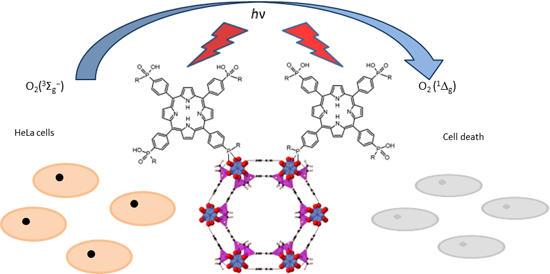
- ) to and the excited O2(1∆g) from the solid photosensitizer [14][15][16]. In our recent work we have shown that microcrystalline porphyrin containing MOFs are poor O2(1∆g) photosensitizers [17], due to the combined effect of the quenching of excited states in tightly stacked porphyrin units and strong
- photosensitizer loading of the nanoparticles. The porphyrins retain part of their photophysical properties including production of singlet oxygen. Interestingly, the photodynamic activity on HeLa cells strongly depends on the R substituent at the P atom, i.e., only the phenyl substituent (TPPPi(Ph)) ensured high


Droplet-based synthesis of homogeneous magnetic iron oxide nanoparticles
Beilstein J. Nanotechnol. 2018, 9, 2413–2420, doi:10.3762/bjnano.9.226
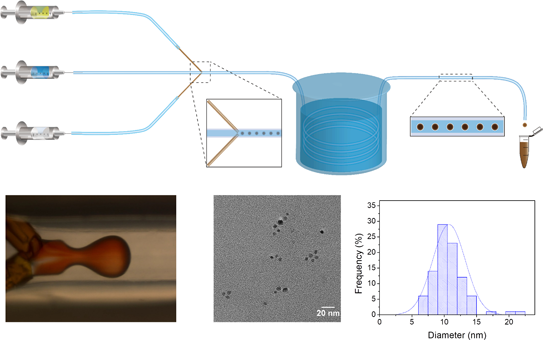
- healthcare significantly [5]. For example, a composite nanomaterial has been developed as a photosensitizer in photothermal therapy (PTT), while also acting as a contrast agent for magnetic resonance imaging (MRI) [6]. Magnetic materials are of particular interest here, as they can be used for targeting [7





