Search results
Search for "relaxation" in Full Text gives 388 result(s) in Beilstein Journal of Nanotechnology. Showing first 200.
Synthesis of carbon dot-mediated gold nanostructures: experimental and quantum chemical insights into turn-on fluorescence sensing of N-acetylcysteine
Beilstein J. Nanotechnol. 2026, 17, 1103–1116, doi:10.3762/bjnano.17.75
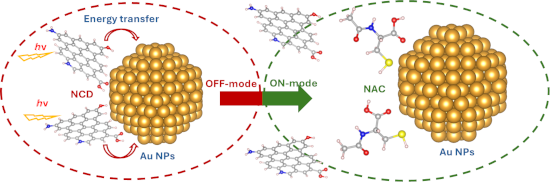
- efficient energy acceptors, where the transferred excitation energy is rapidly dissipated through non-radiative relaxation pathways, leading to fluorescence quenching (OFF state). Upon the introduction of NAC, a ligand exchange process is proposed to occur, in which NAC molecules displace NCDs from the Au


Electrochemical sensing of sildenafil in pharmaceutical formulations using an (S,N)-doped reduced graphene oxide-modified electrode
Beilstein J. Nanotechnol. 2026, 17, 1087–1102, doi:10.3762/bjnano.17.74
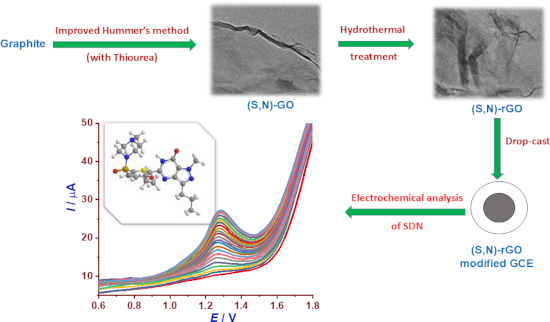
- monophosphate (cGMP), resulting in smooth muscle relaxation and vasodilation. Phosphodiesterase-5 inhibitors, including SDN, are considered first-line therapeutic agents and have demonstrated significant efficacy in improving vascular function and clinical outcomes [1]. Furthermore, these agents enhance nitric



Nanoglasses: a trail towards uncharted regions of vitreous materials and their properties?
Beilstein J. Nanotechnol. 2026, 17, 1047–1062, doi:10.3762/bjnano.17.72

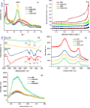
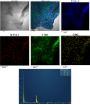
- nanoglasses, where vertically aligned glassy columns create a high density of internal interfaces. We outline how interfacial excess energy, configurational entropy, and relaxation processes influence the metastability and properties of these materials. Furthermore, we discuss perspectives on how the control
- and societal development since the Stone Age. One of the most significant distinctions between glasses and crystalline materials is the ability to tune their properties through processes such as aging, relaxation, or rejuvenation. In fact, glasses offer a unique opportunity to modify their properties
- ), the potential structures can vary much more significantly than in any crystalline state. In fact, it is only through the consideration of processing routes beyond the conventional liquid quenching and subsequent relaxation methods, such as gas-phase condensation, sputtering, or electrochemical


Superconducting artificial neural networks and quantum circuits
Beilstein J. Nanotechnol. 2026, 17, 744–747, doi:10.3762/bjnano.17.51
- triplet pairing [30], and fast vortex dynamics and relaxation processes in NbRe-based heterostructures, which may serve as a basis for devices requiring ultrafast relaxation times [31]. The concept of this thematic issue emerged during the 10th International Conference on Superconductivity and Magnetism
Recent progress in enhancing built-in electric fields of perovskite solar cells via junction engineering
Beilstein J. Nanotechnol. 2026, 17, 602–621, doi:10.3762/bjnano.17.42
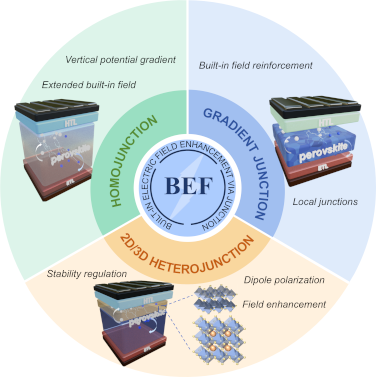
- while optimizing carrier separation, transport, and collection [39]. These processes are often accompanied by synergistic benefits, including improved crystallinity, suppression of defect states, and stress relaxation, which in turn yield concurrent gains in PCE and operational stability. Early efforts



Defects and defect-mediated engineering of two-dimensional materials: challenges and open questions
Beilstein J. Nanotechnol. 2026, 17, 454–488, doi:10.3762/bjnano.17.31
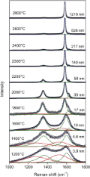
- -active modes of the host material regarding peak position, lineshape, and the relative intensities of peaks. The position and relative intensities are affected by strain and doping induced by defects. In addition, relaxation of the translation symmetry leads to activation of modes that would otherwise be
- (ODMR) has overcome this limitation by exploiting spin-selective non-radiative pathways, enabling optical initialization and single-spin readout in wide-bandgap materials [149]. Yet, ODMR is not universal: It requires both optically bright transitions and spin-dependent relaxation channels, restricting





Biomimetic nanoparticles in cancer photodynamic therapy: a review of targeted delivery systems and therapeutic outcomes
Beilstein J. Nanotechnol. 2026, 17, 396–422, doi:10.3762/bjnano.17.27
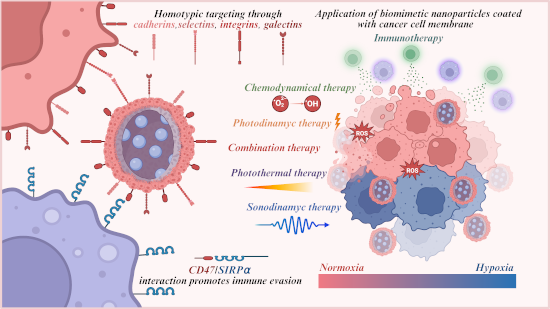
- nanostructured materials, significantly expanding the range of agents available for PDT applications [18]. The photochemical pathway for ROS generation involves non-radiative relaxation of the excited PS, typically occurring through two primary mechanisms [19]. Type-I reactions involve electron transfer
- generation requires efficient excitation and minimal competing non-ROS-producing relaxation pathways. Low dark toxicity minimizes harm in the absence of light. High stability and low aggregation under physiological conditions are essential for maintaining photochemical activity [22]. A balanced


Ferroelectric nanodot reservoir for neuromorphic computing
Beilstein J. Nanotechnol. 2026, 17, 352–364, doi:10.3762/bjnano.17.24
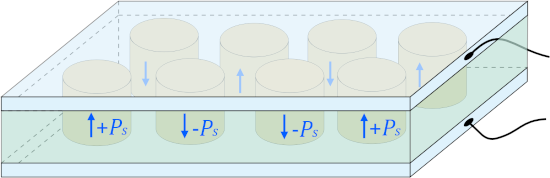
- the original configuration (). Likewise, the inverse sequence (−2q,+2q) results in full up-polarization, followed by relaxation into a new asymmetric state (). These examples highlight the rich state transition dynamics available in ferroelectric reservoirs due to the combination of hysteresis
- . Since the voltage response reflects complex nonlinear processes such as switching and relaxation, it serves as a rich source of output features, analogous to synaptic signals in neuromorphic circuits. A further signal integration scheme, illustrated in Figure 6c, uses spatial multiplexing, where
- -density neuromorphic circuits. The proposed ferroelectric reservoir benefits from several advantageous physical properties intrinsic to nanoscale ferroelectrics – high capacity, with exponentially growing configuration space, fading memory, provided by the slow relaxation dynamics of polarization in


Beam shaping techniques for pulsed laser ablation in liquids: Unlocking tunable control of nanoparticle synthesis in liquids
Beilstein J. Nanotechnol. 2026, 17, 309–342, doi:10.3762/bjnano.17.22
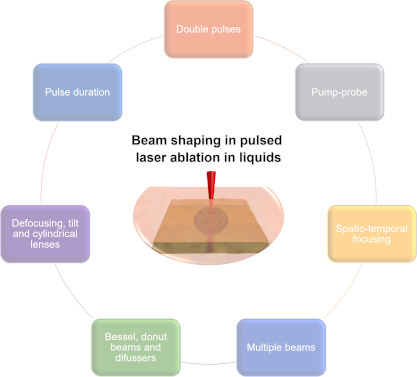
- , which makes CLAL unfeasible for continuous or large-scale nanoparticle production [5]. Nanosecond pulses significantly reduce the thermal interaction with the liquid, but their pulse duration is longer than the typical material electron–phonon relaxation time, of the order of 0.1–10 ps for metals





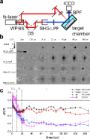


Fast vortex dynamics and relaxation times in NbRe-based heterostructures
Beilstein J. Nanotechnol. 2026, 17, 292–302, doi:10.3762/bjnano.17.20
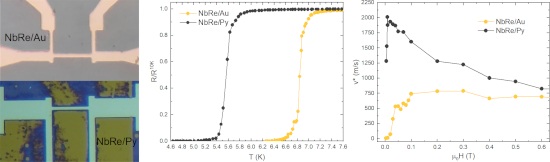
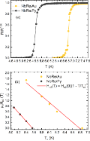
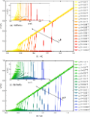
- to extract the quasiparticle energy relaxation time. For external magnetic field values for which edge barrier pinning is dominant and thermal effects are negligible, the relaxation times are about 150 ps and 24 ps for NbRe/Au and NbRe/Py bilayers, respectively. These results indicate that NbRe/Py
- bilayers, having a relaxation time one order of magnitude smaller than values reported in NbRe microbridges, have great potential for the realization of devices where fast relaxation processes are required. Keywords: flux-flow instability; quasiparticle relaxation time; superconducting heterostructures
- the onset of the instability to the maximum value of vortex velocity, v*, and the quasiparticle relaxation time, τE. The latter characterizes how efficiently quasiparticles (unpaired electrons) return to their equilibrium state from a non-equilibrium one [9]. τE represents a key parameter for the


Internal 3D temperature mapping in biological systems using ratiometric light-sheet imaging and lipid-coated upconversion nanothermometers
Beilstein J. Nanotechnol. 2025, 16, 2306–2316, doi:10.3762/bjnano.16.159
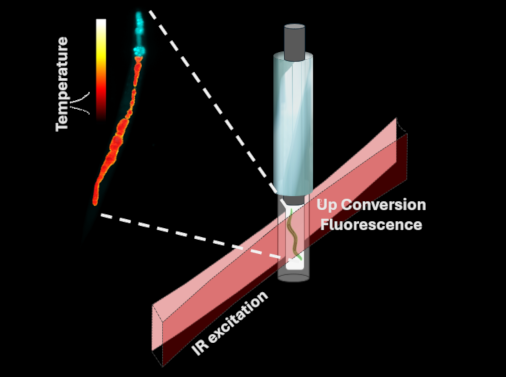
- cross-relaxation, can also affect temperature sensing [37][54]. These effects may introduce variations in the FIR calibration, requiring careful evaluation for accurate thermometry [35][55]. This concern is particularly relevant in Er3+-based FIR thermometry as its sensitivity strongly depends on the


Improving magnetic properties of Mn- and Zn-doped core–shell iron oxide nanoparticles by tuning their size
Beilstein J. Nanotechnol. 2025, 16, 2285–2295, doi:10.3762/bjnano.16.157
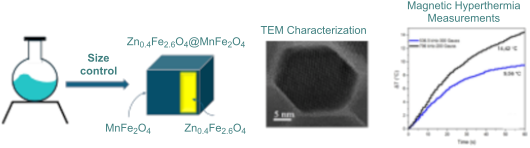
- generate heat through Brownian and Néel relaxation mechanisms [4]. The heat generation capacity of these nanoparticles is often quantified by the specific absorption rate (SAR), which represents the power dissipated as heat per gram of nanoparticles under the influence of an alternating magnetic field. The
- to note, however, that magnetic anisotropy alone does not guarantee enhanced heating efficiency. As highlighted by Dirba et al., there exists an optimal range of magnetic anisotropy for effective energy dissipation in alternating magnetic fields [22]. Excessively high anisotropy may hinder relaxation
- processes and reduce SAR values. In our system, the MnFe2O4 shell likely provides anisotropy within an effective range, enabling efficient Néel and Brownian relaxation while maintaining superparamagnetic behavior [23]. Thus, the observed SAR values result from a balanced interplay between particle size



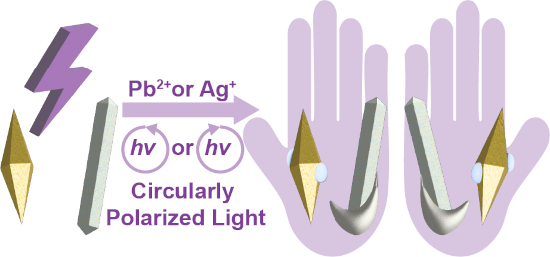
Chiral plasmonic nanostructures fabricated with circularly polarized light
Beilstein J. Nanotechnol. 2025, 16, 2245–2264, doi:10.3762/bjnano.16.154





Calibration of piezo actuators and systems by dynamic interferometry
Beilstein J. Nanotechnol. 2025, 16, 2086–2091, doi:10.3762/bjnano.16.143
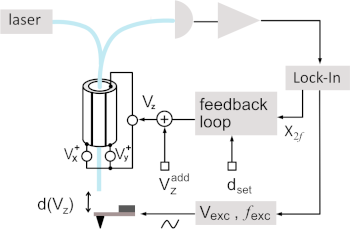
- interferometer is forced back to the initial condition of perfect alignment before each run of amplitude calibration. To allow for piezo relaxation after significant extension or retraction, a waiting time of 10 min has been applied between the change in and the following calibration measurement. The amplitude


Molecular and mechanical insights into gecko seta adhesion: multiscale simulations combining molecular dynamics and the finite element method
Beilstein J. Nanotechnol. 2025, 16, 2055–2076, doi:10.3762/bjnano.16.141
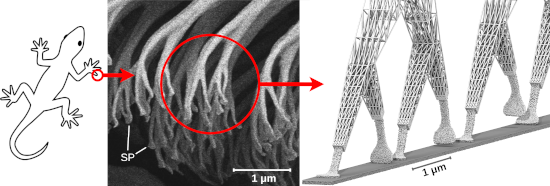
- iterations (1.4 ns) was conducted without any applied displacement. Unlike in typical AFM experiments, where the seta is pulled sideways (sheared) to increase the contact area, we did not actively shear. However, spontaneous sliding of the spatulae was observed during preloading. (4) After relaxation, during
- . In Figure 8, the relaxation phase is the single data point at 225.4 ns (load step 161) consisting of ten FEM–MD iterations (1.4 ns), and the transition to pull-off is identified by a reversal in the force direction from positive (compression) to negative (adhesion). As the pull-off continued, we






Stereodiscrimination of guests in chiral organosilica aerogels studied by ESR spectroscopy
Beilstein J. Nanotechnol. 2025, 16, 2034–2054, doi:10.3762/bjnano.16.140
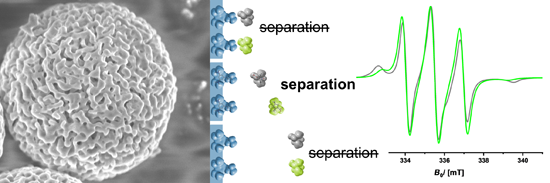
- , one is able to gather information about transport processes happening at 1–3 nm. If one selects an appropriate spin probe, the ESR spectra contain much valuable information. Line shape analysis and spin relaxation times can provide information on the motion and reactivity of trapped radicals. This can




Laser ablation in liquids for shape-tailored synthesis of nanomaterials: status and challenges
Beilstein J. Nanotechnol. 2025, 16, 1963–1997, doi:10.3762/bjnano.16.137
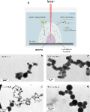
- properties of the surrounding liquid and NPs, and kinetics of relaxation processes in the surrounding medium), thus providing a playground for tailoring NP properties. In general, laser pulses of moderate fluences and longer durations are preferable for shape modification, providing mild conditions and
- by estimation of the absorbed and dissipated heat fluxes from the laser heated NPs. Apart from the laser parameters, these fluxes are determined by NP size and composition as well as by properties of the surrounding liquid which define the kinetics of relaxation processes. The balance between
- into account. [73]. The presence of the gaseous bubble around the heated particles influences the kinetics of the relaxation processes as well as the absorption of the laser beam by the NPs. In [67], the conditions required for melting silver and copper NPs with the formation of a metastable AgCu alloy




Quantum circuits with SINIS structures
Beilstein J. Nanotechnol. 2025, 16, 1931–1941, doi:10.3762/bjnano.16.134
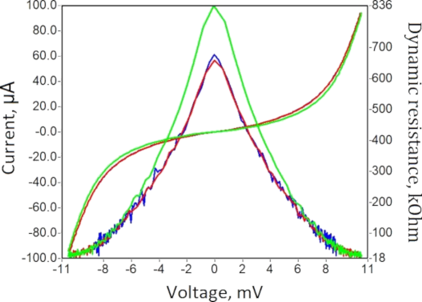
- problems in explaining results is that, when the injection rate of electrons exceeds the internal relaxation rate in the metal to be cooled, the electrons do not obey the Fermi–Dirac distribution, and the concept of temperature cannot be applied as such. This work is an exciting development towards a fully
- an energy much higher than the thermal energy, the quantum absorption mechanism is already realized, and the real absorption picture becomes much more complicated [19]. It is necessary to take into account many other parameters and relaxation mechanisms. An example of the thermalization process of a
- created. The process of electron energy relaxation continues until their characteristic times reach the tunneling time determined by the parameters of the SIN transition, that is, the transparency of the barrier, the thickness of the normal metal film, and the diffusion rate of electrons in it. For


Exploring the potential of polymers: advancements in oral nanocarrier technology
Beilstein J. Nanotechnol. 2025, 16, 1751–1793, doi:10.3762/bjnano.16.122
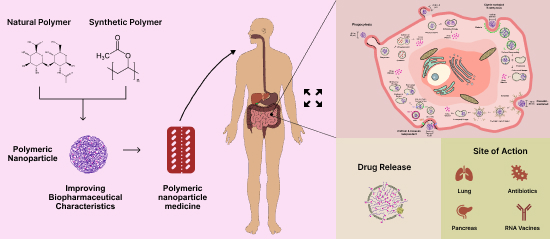
- . Release from nanospheres is generally governed by a combination of polymer degradation and drug diffusion through the matrix. Additionally, when hydrophilic polymers are employed, swelling-induced release becomes relevant, wherein polymer chain relaxation significantly influences the diffusion rate and


Multifunctional anionic nanoemulsion with linseed oil and lecithin: a preliminary approach for dry eye disease
Beilstein J. Nanotechnol. 2025, 16, 1711–1733, doi:10.3762/bjnano.16.120
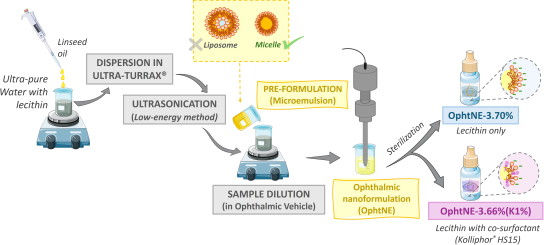
- analysis. As the temperature rises, the double bonds in these unsaturated fatty acids undergo relaxation and changes from cis to trans configuration, distorting the molecular structure. This leads to weaker intermolecular interactions, which is reflected in a reduction in oil viscosity (as shown in Table 2



Modeling magnetic properties of cobalt nanofilms used as a component of spin hybrid superconductor–ferromagnetic structures
Beilstein J. Nanotechnol. 2025, 16, 1557–1566, doi:10.3762/bjnano.16.110
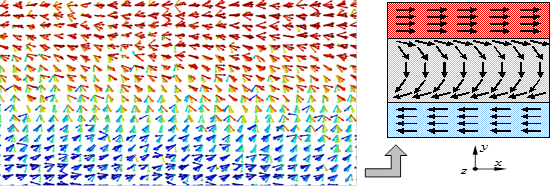
- magnetic behavior of the cobalt crystallite was considered in two stages. At the first stage (50 ps), relaxation of the system was performed, which resulted in mutual ordering of the spins of the atoms and orientation of the magnetization vector of the whole crystallite in some specific direction. At the
- second stage (10 ps), fluctuations of the magnetic values of the system stabilized after the relaxation stage were analyzed. For the stage of fluctuations of magnetic quantities, the graphs of changes in magnetic energy and reduced magnetization modulus (takes values from 0 to 1) of a cobalt crystallite
- moments from the initial random distribution of spins and subsequent relaxation within 50 ps. This stage was necessary to exclude the influence of initial conditions on the magnetic characteristics further investigated. In the second stage, the magnetic properties of the previously energetically


Influence of laser beam profile on morphology and optical properties of silicon nanoparticles formed by laser ablation in liquid
Beilstein J. Nanotechnol. 2025, 16, 1533–1544, doi:10.3762/bjnano.16.108
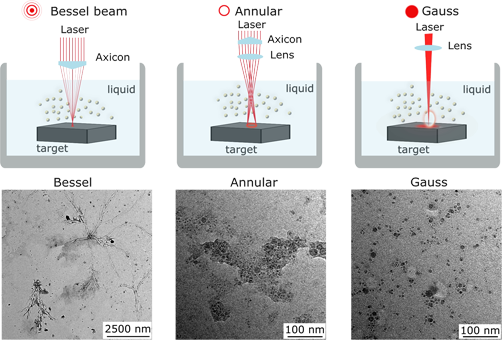
- -uniform energy distribution, which will affect plasma generation and confinement, the hydrodynamic trajectory of the ejected target material and pressure relaxation, as well as plasma and cavitation bubble propagation and temporal evolution. In the case of a Bessel beam, the focusing with an axicon


Single-layer graphene oxide film grown on α-Al2O3(0001) for use as an adsorbent
Beilstein J. Nanotechnol. 2025, 16, 1082–1087, doi:10.3762/bjnano.16.79
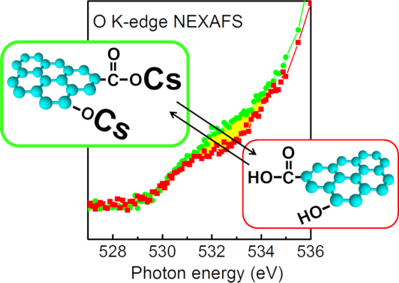
- the relaxation of the interfacial strains and the disappearance of wrinkles as seen in Figure 1b. Figure 3b shows the C K-edge NEXAFS spectra of SLG and SLGO. Two peaks P1 and P2 are observed at 285.4 eV and 287.5 eV. These peaks are assigned to the C 1s to π*(C=C) and to σ*(C–H) transitions


Time-resolved probing of laser-induced nanostructuring processes in liquids
Beilstein J. Nanotechnol. 2025, 16, 968–1002, doi:10.3762/bjnano.16.74
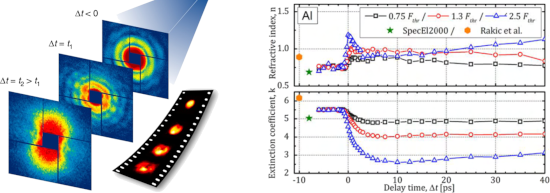
- many fields, such as heterogeneous catalysis [2][3], (bio)photonics [4], and coating or device fabrication [5]. In a bottom-up approach the products of the laser-based synthesis are not defined by direct spatial control, but by harnessing the energetic and structural relaxation pathways of fundamental
- early-time structural relaxation and chemical bond dynamics in laser-induced ionization of liquid water. In the third chapter “Nanoparticle excitation in an ensemble and energy exchange with medium”, an approach is shown on how reactions of both the excited NPs as well as the interaction with the
- surrounding liquid can be resolved in one experiment. And finally, a fourth chapter provides a state-of-the-art overview on the subject “Large-scale optical probing of laser ablation dynamics in liquids”. Here, the relaxation dynamics of a few tens of square micrometer large laser-excited surface, as used in


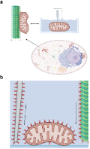
Shape, membrane morphology, and morphodynamic response of metabolically active human mitochondria revealed by scanning ion conductance microscopy
Beilstein J. Nanotechnol. 2025, 16, 951–967, doi:10.3762/bjnano.16.73
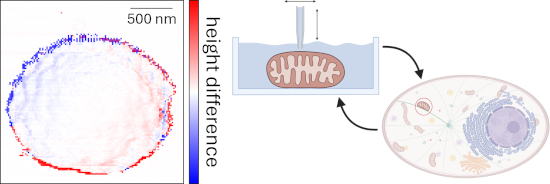
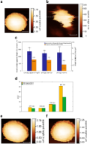
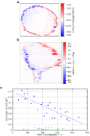
- . This movement is likely driven by residual direct interaction forces or indirect hydrodynamic forces induced by the pipette’s hopping motion. Such tilting and subsequent relaxation can occur only during the pipette’s approach to or retraction from the mitochondrion. Additionally, the steep slope of the