


Search results
Search for "scales" in Full Text gives 403 result(s) in Beilstein Journal of Nanotechnology. Showing first 200.
Nanoglasses: a trail towards uncharted regions of vitreous materials and their properties?
Beilstein J. Nanotechnol. 2026, 17, 1047–1062, doi:10.3762/bjnano.17.72

- discovery of relaxation states hitherto thought of as inaccessible, even on extended time scales surpassing the duration of humanity’s era of materials use [9]. This article presents new perspectives on nanoglasses, with particular emphasis on their thermodynamic description, the observed stability of these
- as glasses, is often described by the term “disorder”. Yet, it is the absence of long-range periodic order that distinguishes the structure of this class of materials from crystalline solids. On more local scales, amorphous materials possess distinct structural arrangements that have been termed as
- excess volume distributions. However, common to all structural descriptions of glasses is the uniformity of the structure on larger length scales. In fact, according to structural models and experimental observations, the structure of amorphous solids is uniform on a length scale of a few tens of


Cross-scale design of chemosensor arrays: from molecular self-assembly in water to paper-based devices for metal ion detection
Beilstein J. Nanotechnol. 2026, 17, 828–838, doi:10.3762/bjnano.17.59
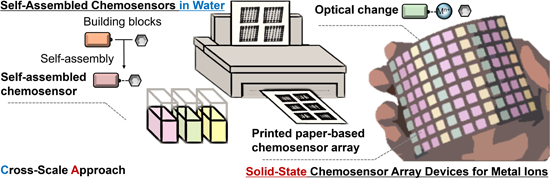
- ions in various water environments across microscopic and macroscopic scales. Keywords: chemosensor; metal ion; paper device; pattern recognition; self-assembly; Introduction Metal ions are essential species in biological systems; however, heavy metal ions act as pollutants and can damage organs and
- in solution and solid-state analytical devices toward practical metal ion assessment. We believe that such cross-scale design approaches will contribute to on-site detection of chemical species in water environments across microscopic to macroscopic scales. More broadly, the cross-scale design


Recent progress in enhancing built-in electric fields of perovskite solar cells via junction engineering
Beilstein J. Nanotechnol. 2026, 17, 602–621, doi:10.3762/bjnano.17.42
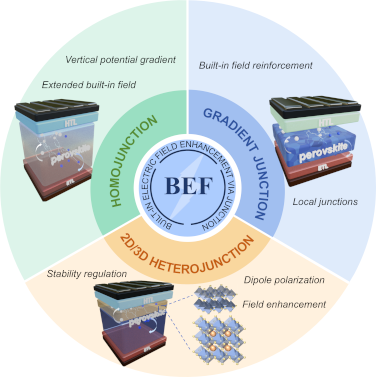
- modulations into the bulk to realize continuous potential profiles over larger length scales. The vertical gradients and thickness-dependent extensions of these effects are discussed in the following section on gradient junctions. In PSCs, the band structures of charge transport layers (CTLs) and their
- 17.50% to 19.50%. The CMA post-treatment controlled the aging attenuation of carbon-based mesoporous devices at 8% after 150 days in air at 25 °C and 40% RH. Although the aforementioned strategies optimize energy-level modulation and carrier transport at different scales, they still impose stringent




Probing tribological evolution in atomically thin MoS2 at different scales
Beilstein J. Nanotechnol. 2026, 17, 586–597, doi:10.3762/bjnano.17.40
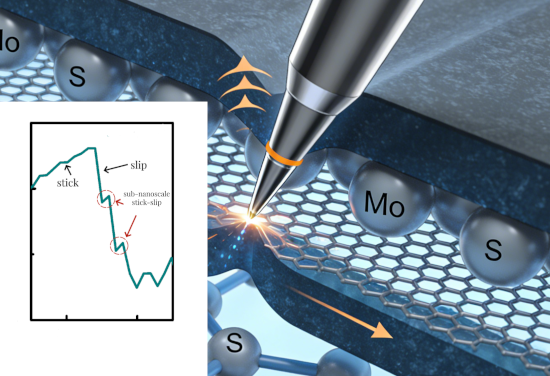
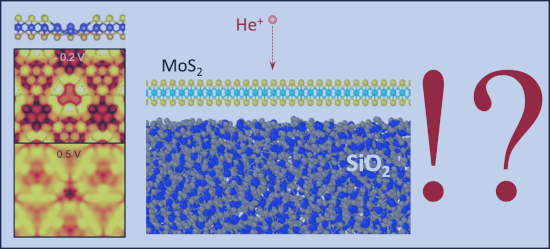
- thin MoS2 poses considerable challenges, primarily due to the ultrasmall time and length scales involved. According to molecular dynamics simulations by Yoon et al. [11], this sub-nanoscale motion is strongly correlated with the in-plane displacement of the AFM tip apex, a motion that can be modulated


Fractional shot noise of an SU(N) Kondo system
Beilstein J. Nanotechnol. 2026, 17, 515–540, doi:10.3762/bjnano.17.34
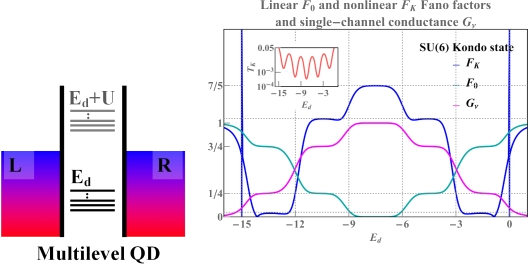


![[Graphic 127]](/bjnano/content/inline/2190-4286-17-34-i187.svg?max-width=637&scale=1.18182)

Defects and defect-mediated engineering of two-dimensional materials: challenges and open questions
Beilstein J. Nanotechnol. 2026, 17, 454–488, doi:10.3762/bjnano.17.31





Nanoinformatics: spanning scales, systems and solutions
Beilstein J. Nanotechnol. 2026, 17, 423–427, doi:10.3762/bjnano.17.28
- questions including the prediction of (nano)materials (NM) functionality, nanomaterials fate in the environment, toxicity or therapeutic ability, and recyclability. As the properties of nanomaterials themselves span several scales, from electronic, atomistic, mesoscopic to continuum, and are highly dynamic
- https://www.Canva.com. The content depicted in Figure 1 is not subject to CC BY 4.0. Acknowledgements We sincerely thank the authors who contributed with quality articles to this Thematic Issue, and the participants of the preceding Beilstein Symposium on this topic (Nanoinformatics: spanning scales

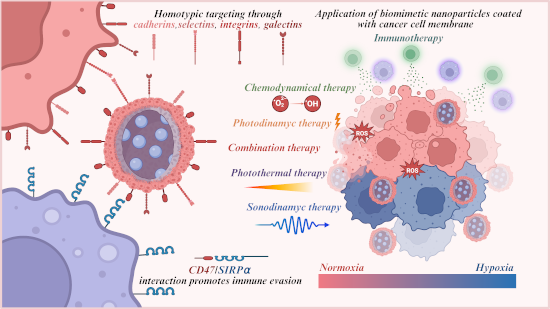
Biomimetic nanoparticles in cancer photodynamic therapy: a review of targeted delivery systems and therapeutic outcomes
Beilstein J. Nanotechnol. 2026, 17, 396–422, doi:10.3762/bjnano.17.27


Ferroelectric nanodot reservoir for neuromorphic computing
Beilstein J. Nanotechnol. 2026, 17, 352–364, doi:10.3762/bjnano.17.24
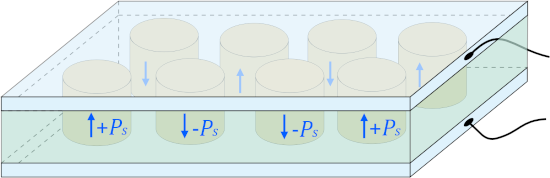
- polarization configuration. This memory is distributed and may decay over time due to charge leakage, mimicking the fading memory property of biological neural networks. (iii) High-dimensional projection. The number of accessible metastable states scales exponentially with the number of nanodots, ensuring that


Beam shaping techniques for pulsed laser ablation in liquids: Unlocking tunable control of nanoparticle synthesis in liquids
Beilstein J. Nanotechnol. 2026, 17, 309–342, doi:10.3762/bjnano.17.22
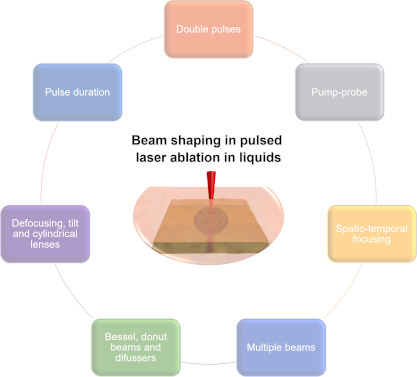
- another key parameter of the laser that can be modified by spatial shaping. The fluence directly influences most of the properties of the ablation process as the size of the CB, where the maximum bubble volume scales linearly with the laser fluence for the high-fluence range, 100–200 J·cm−2 [129]. The NP







Advancing nanolithography: a comprehensive review of materials for local anodic oxidation with AFM
Beilstein J. Nanotechnol. 2026, 17, 275–291, doi:10.3762/bjnano.17.19
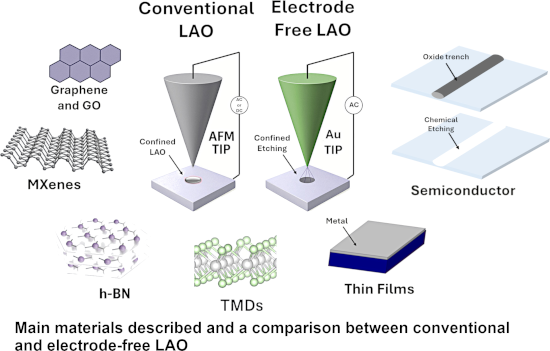
- positive and negative tone as well as self-development reactions within ultrathin molecular resist layers [56][65][66], with resolutions reaching sub-10 nm scales [67]. As demonstrated by Prof. Ivo W. Rangelov and colleagues, FEL relies on the high-intensity electric fields generated at the sharp AFM tip


Micro- and nanoscale effects in biological and bioinspired materials and surfaces
Beilstein J. Nanotechnol. 2026, 17, 214–217, doi:10.3762/bjnano.17.14
- nanostructures play a crucial role in shaping the physical and functional properties of living organisms. They are the basis of key biological phenomena, such as coloration, adhesion, and mechanical stability, and influence the way how organisms interact with light, fluids, and forces at different scales. The
- generalizing nanoscale properties and processes in biology to engineer functional surfaces and interfaces across different scales. In May 2023, the Beilstein Nanotechnology Symposium titled “Functional Micro- and Nanostructured Surfaces: from Biology to Biomimetics” brought together a diverse group of
- characterization of functional plant tissues [19] integrating experiments and finite element models, and animal tissues [20] incorporating molecular dynamics and finite element methods. Investigating the anisotropic hygroscopic behavior of the involved materials in bending in pine cone scales, Ulrich et al. [19
Subdigital integumentary microstructure in Cyrtodactylus (Squamata: Gekkota): do those lineages with incipiently expressed toepads exclusively exhibit adhesive setae?
Beilstein J. Nanotechnol. 2026, 17, 38–56, doi:10.3762/bjnano.17.4
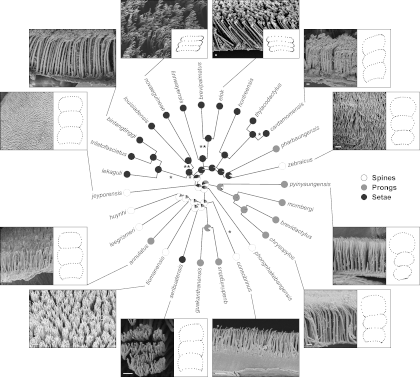
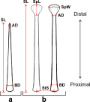
- . Several studies indicate that the form of toepad microstructures might be specific to the exploitation of the attributes of the substrata employed during habitat use. The species-rich genus Cyrtodactylus exhibits extensive variation in the shape of the subdigital scales associated with different habitats
- , making it a promising candidate for studying toepad evolution. We investigated the subdigital microstructures of 27 Cyrtodactylus species occupying a wide range of habitats, and exhibiting a spectrum of subdigital morphology, from the presence of the ancestral condition of small, rounded scales to the
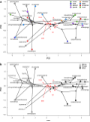
- hypothesis. Most transitions to incipient toepads occurred within this clade, consistent with hypothesis 1, and we reveal that the evolution of setae likely preceded that of broadened scales. Although microstructure types did not significantly correlate with ecotype, specific morphometric traits varied


Internal 3D temperature mapping in biological systems using ratiometric light-sheet imaging and lipid-coated upconversion nanothermometers
Beilstein J. Nanotechnol. 2025, 16, 2306–2316, doi:10.3762/bjnano.16.159
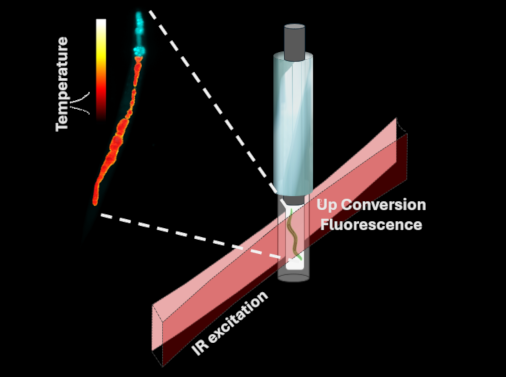
- essential step for advancing non-invasive thermal imaging in living biological systems. We recently demonstrated the feasibility of combining light-sheet fluorescence microscopy (LSFM) with UC micro- and nanocomposites for volumetric temperature mapping across scales ranging from tens of micrometers to


Geometry-controlled engineering of the low-temperature proximity effect in normal metal–superconductor junctions
Beilstein J. Nanotechnol. 2025, 16, 2265–2273, doi:10.3762/bjnano.16.155
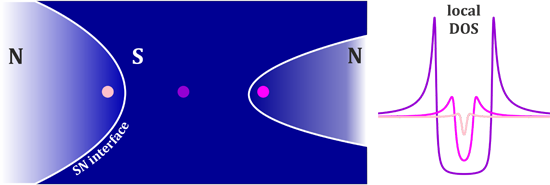
- scales, the proximity effect is determined by the shorter of these two length scales [37][38][39]. These results have been obtained for materials and samples with strictly defined dimensionality. In systems with quasi-low dimensionality or multiband materials, where the single-particle density of states


Ultrathin water layers on mannosylated gold nanoparticles
Beilstein J. Nanotechnol. 2025, 16, 2183–2198, doi:10.3762/bjnano.16.151
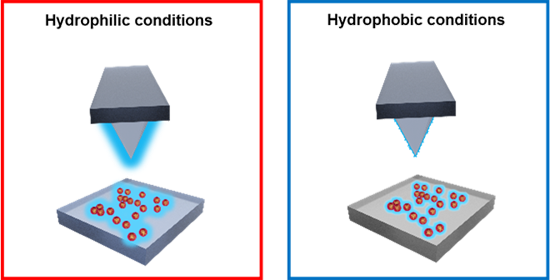
- scales of the liquid evaporation and the particle movement: The solvent evaporates so slowly that particles move over at least mesoscale distances, thus allowing for aggregation in the ring [33]. In our research, the deposition protocol may have influenced the observed phenomena. The hydrophilic APDMES
- VSFG, s vis, p IR) polarization combination. (A) VSFG spectra in H2O. (B) VSFG spectra in D2O. Note the different intensity scales. (C) Model of the proposed conformations of dimanno-AuNPs and PEG AuNPs. PEG AuNPs (left) show little order in the PEG chains. Dimanno-AuNPs (right) show a stretched-out



Missing links in nanomaterials research impacting productivity and perceptions
Beilstein J. Nanotechnol. 2025, 16, 2168–2176, doi:10.3762/bjnano.16.149
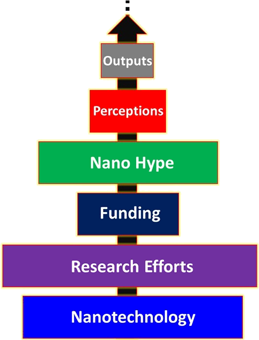
- now visualize materials at molecular and atomic scales with unprecedented resolution. Without the demands of nanomaterials research, such advancements in instrumentation and methodology would likely have taken much longer to emerge. Notably, nanomaterial research not only has expanded the
Molecular and mechanical insights into gecko seta adhesion: multiscale simulations combining molecular dynamics and the finite element method
Beilstein J. Nanotechnol. 2025, 16, 2055–2076, doi:10.3762/bjnano.16.141
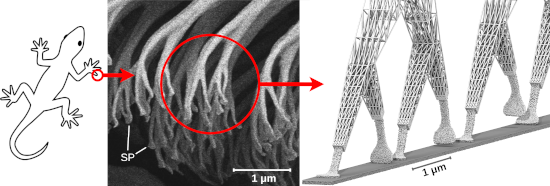
- scales involved. In previous research, we used molecular dynamics simulations to explore various aspects of gecko adhesion [10][11][12][13]. We found that humidity increases the force required to pull a spatula off from a substrate [10][12], a phenomenon also observed in high-humidity atomic force






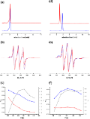
Stereodiscrimination of guests in chiral organosilica aerogels studied by ESR spectroscopy
Beilstein J. Nanotechnol. 2025, 16, 2034–2054, doi:10.3762/bjnano.16.140
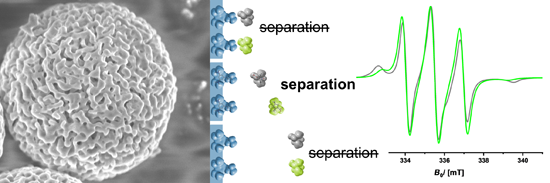
- the spins can be refocused depends on their diffusional displacement during the interval between the gradient pulses. Thus, PFG-NMR is sensitive for processes occurring on length scales from ca. 10 nm to several millimeters and at the milliseconds-to-seconds timescale. Besides the fact that NMR is an




Programmable soliton dynamics in all-Josephson-junction logic cells and networks
Beilstein J. Nanotechnol. 2025, 16, 1883–1893, doi:10.3762/bjnano.16.131

- the concept of applying a small number of key cells, which should create precisely engineered tunable inhomogeneities. Such inhomogeneity may be designed as an element of tunable kinetic inductance [17]. This element has high inductance at small scales and can be controlled using currents [18][19


Current status of using adsorbent nanomaterials for removing microplastics from water supply systems: a mini review
Beilstein J. Nanotechnol. 2025, 16, 1837–1850, doi:10.3762/bjnano.16.127
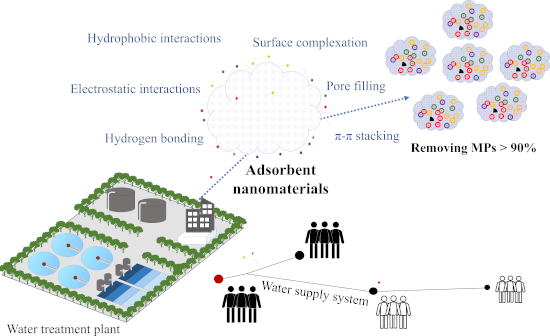
- size in the pipe scales (50–100 μm) than in the water samples (>200 μm) [40]. In Eastern China, the level of MPs in raw water was recorded at 4960 particles·L−1. After being treated by various processes, the MPs concentration significantly reduced from 4712 ± 95 particles·L−1 to 1012 ± 78 particles·L−1


Beyond the bilayer: multilayered hygroscopic actuation in pine cone scales
Beilstein J. Nanotechnol. 2025, 16, 1695–1710, doi:10.3762/bjnano.16.119
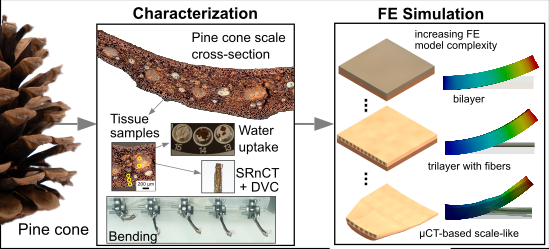
- Thünen Institute of Wood Research, Hamburg, Germany Institute of Materials Physics, Helmholtz-Zentrum Hereon, Geesthacht, Germany 10.3762/bjnano.16.119 Abstract The anisotropic hygroscopic behavior of pine cone scales and its effect on bending motion, with implications for bioinspired actuation, is
- function of relative humidity. There were distinct differences between tissues and a pronounced hysteresis between sorption and desorption. Finite element analysis was performed on geometries ranging from simplified bilayer models to complex remodeled scales. Simulation results showed an underestimation of
- technical applications [1][2][3][4]. Of particular interest are, for example, Banksia seed pods [5][6], Hakea fruits [7][8], and scales of pine cones [9][10][11][12], which passively respond to changes in ambient relative humidity by shape morphing to facilitate seed dispersal. In the case of pine cones


Ambient pressure XPS at MAX IV
Beilstein J. Nanotechnol. 2025, 16, 1677–1694, doi:10.3762/bjnano.16.118
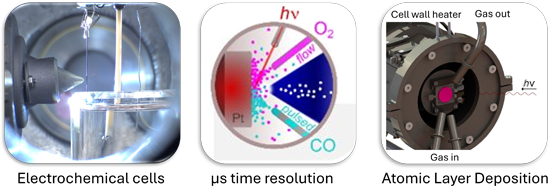
- , contain active sites that are dynamically stabilized, and be in a state of deviation from chemical equilibrium under reaction conditions. Therefore, fully describing a functional catalyst requires addressing a range of dynamics across multiple temporal scales. To examine such a dynamic at the atomic level





Bioinspired polypropylene-based functionally graded materials and metamaterials modeling the mistletoe–host interface
Beilstein J. Nanotechnol. 2025, 16, 1592–1606, doi:10.3762/bjnano.16.113
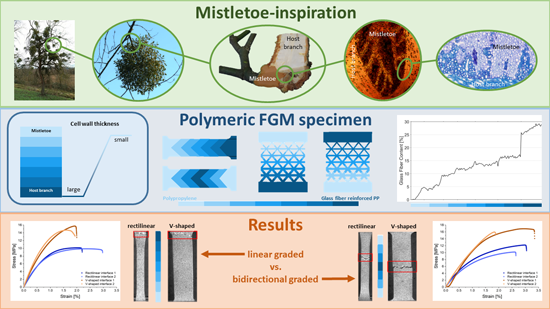
- metamaterials, even more complex and tailored mechanical properties can be achieved at multiple length scales [15]. This integration enables the creation of materials with unprecedented combinations of stiffness, strength, damping, and other mechanical characteristics, offering enhanced performance and
- scales [17]. This approach allows for precise control over stiffness distributions, enabling the creation of materials with tailored mechanical responses that vary spatially or directionally to meet specific performance requirements. Recent advancements in additive manufacturing techniques have
- between layers of different materials [22]. Thus, almost all functionally graded metamaterials are limited to structural gradients and do not feature material gradients. Nature is one prime example of multihierarchical structuring and gradation, which can be found in various forms and on different scales


Modeling magnetic properties of cobalt nanofilms used as a component of spin hybrid superconductor–ferromagnetic structures
Beilstein J. Nanotechnol. 2025, 16, 1557–1566, doi:10.3762/bjnano.16.110
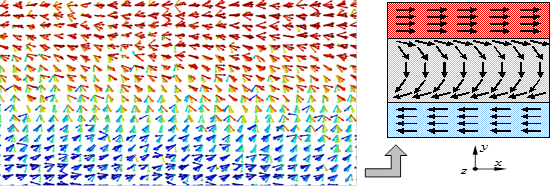
- robustness, since the characteristic time scales of changes in the magnetic moments of atoms are much smaller compared to their spatial counterparts. In the second problem, a unified integration step of 0.1 fs was used for all computational experiments. In the second problem, crystalline cobalt (fcc
- integrating the systems of Equation 1 and Equation 2. Dependences of the deviation of the relative normalized magnetic energy (a) and magnetization modulus (b) from different time steps of integration. The scales on the abscissa and ordinate axes are presented in decimal logarithm values. Variation of the





