


Search results
Search for "sedimentation" in Full Text gives 84 result(s) in Beilstein Journal of Nanotechnology.
Influence of surface characteristics on the in vitro stability and cell uptake of nanoliposomes for brain delivery
Beilstein J. Nanotechnol. 2026, 17, 139–158, doi:10.3762/bjnano.17.9
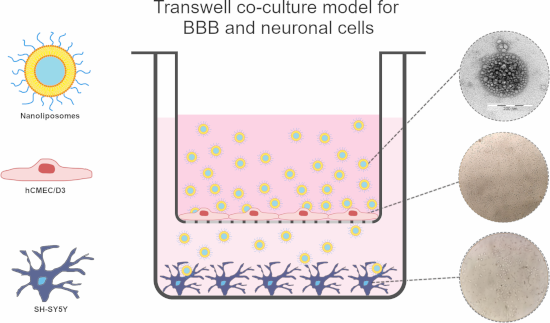
- , focusing rate and duration, sample loading, and carrier conditions. The composition of the carrier buffer, as well as its ionic strength and pH are crucial considerations for stabilizing the structures, preventing agglomeration or sedimentation, and avoiding interference with analytes and the membrane [23




Microplastic pollution in Himalayan lakes: assessment, risks, and sustainable remediation strategies
Beilstein J. Nanotechnol. 2025, 16, 2144–2167, doi:10.3762/bjnano.16.148
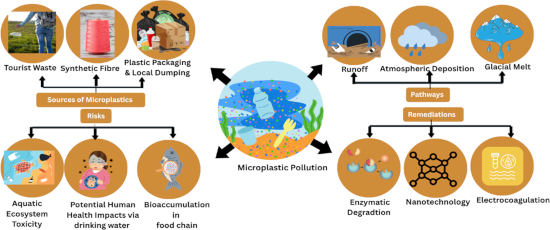
- runoff. Summer melt pulses enhance the transport of MPs from catchment basins, whereas weak winter flows allow for sedimentation. Perennial flow of the Brahmaputra and the Koshi rivers across borders makes sure that extraneous contaminants enter such pristine ecosystems [24]. Hydrological conveyance is
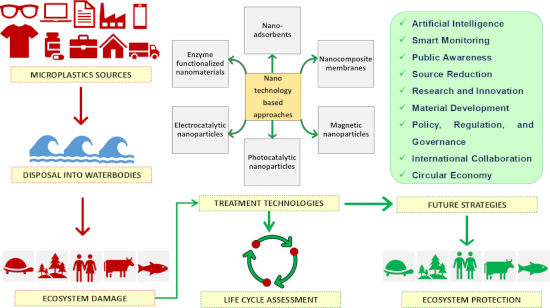
- more than 99% removal efficiencies under controlled conditions [42]. Sedimentation methods are frequently used in wastewater treatment plants, making use of the density difference between MPs and water. But it is difficult to trap particles measuring less than 10 µm with such processes. Physical


Targeting the vector of arboviruses Aedes aegypti with nanoemulsions based on essential oils: a review with focus on larvicidal and repellent properties
Beilstein J. Nanotechnol. 2025, 16, 1894–1913, doi:10.3762/bjnano.16.132
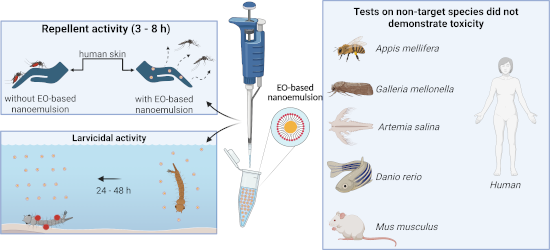
- biomedical applications. These include: (a) superior stability during storage compared to that of macroemulsions, attributed to their small droplet size, which prevents flocculation, creaming, and sedimentation; (b) enhanced bioavailability and improved aqueous solubility of lipophilic molecules; (c


Current status of using adsorbent nanomaterials for removing microplastics from water supply systems: a mini review
Beilstein J. Nanotechnol. 2025, 16, 1837–1850, doi:10.3762/bjnano.16.127
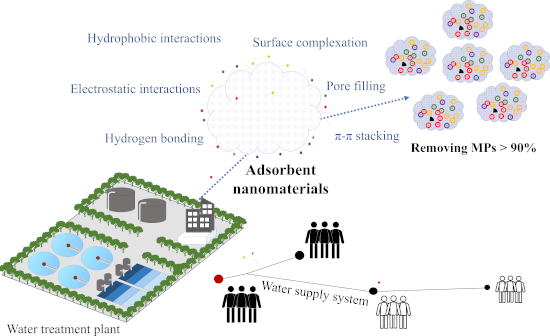
- ]. Comparison of adsorbent nanomaterials and other technologies Water treatment processes play a crucial role in reducing MP concentrations in both water and wastewater. Conventional treatment plants, which typically employ coagulation, flocculation, sedimentation, filtration, and disinfection, can achieve a
- certain level of MP removal depending on the specific treatment processes and operational conditions. To be specific, when applying the coagulation/sedimentation and membrane filtration processes, the concentration of MPs decreased by about 49.6% in raw water. In a WTP, the conventional treatment process
- showed a removal efficiency of about 58.9–70.5% [79]. The efficiency of conventional processes is strongly affected by the size of MPs. Sedimentation has limited performance for small MPs (2–5 μm), achieving only 32.0 ± 4.5% removal [80]. Similarly, Han et al. reported a removal efficiency of 44.3 ± 3.4


Nanotechnology-based approaches for the removal of microplastics from wastewater: a comprehensive review
Beilstein J. Nanotechnol. 2025, 16, 1607–1632, doi:10.3762/bjnano.16.114


Supramolecular hydration structure of graphene-based hydrogels: density functional theory, green chemistry and interface application
Beilstein J. Nanotechnol. 2025, 16, 806–822, doi:10.3762/bjnano.16.61
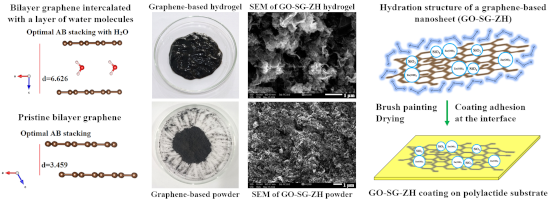
- dispersed in water and sonicated for 1 h. After natural sedimentation overnight, the suspension was decanted to collect the supernatant dispersion of GO nanosheets. Preparation of nanosilica from rice husk ash waste Rice husk ash that was discarded from industrial boilers was collected for recycling
- h. After sedimentation, the material was filtered and thoroughly washed with water. A hydrogel of graphene oxide–nanosilica–zinc hydroxide (GO-SG-ZH hydrogel) was collected and analyzed. To produce a GO-SG-ZH product in powder form, the GO-SG-ZH hydrogel was dried at 80 °C and ground to obtain the


Morphology and properties of pyrite nanoparticles obtained by pulsed laser ablation in liquid and thin films for photodetection
Beilstein J. Nanotechnol. 2025, 16, 785–805, doi:10.3762/bjnano.16.60
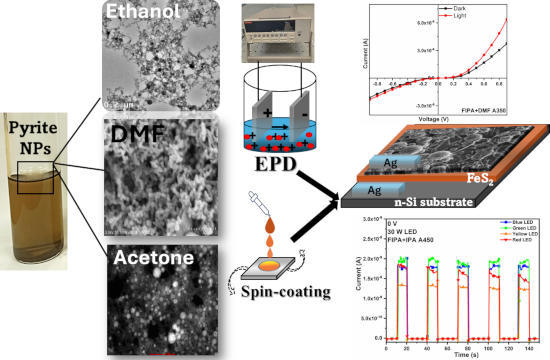
- FeS2 NPs in acetone where sedimentation or settling down of particles was noted within a few hours, which is primarily due to the lower colloidal stability in acetone as explained above, rather than being a direct consequence of the nanosecond ablation process. Pyrite (or fool’s gold) is one of the




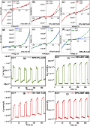


Efficiency of single-pulse laser fragmentation of organic nutraceutical dispersions in a circular jet flow-through reactor
Beilstein J. Nanotechnol. 2025, 16, 711–727, doi:10.3762/bjnano.16.55
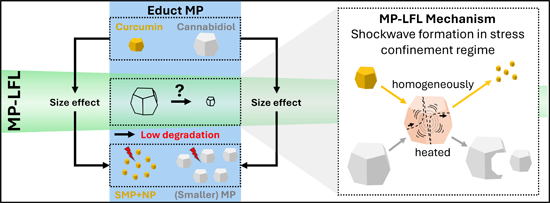
- enhancement in the colloidally stable supernatants of particle dispersions after sedimentation of the colloidally unstable, unfragmented MP educts, determined by UV–vis extinction spectroscopy, which is proportional to the amount of SMPs and NPs [2][22][49]. This extinction enhancement from the unirradiated
- , providing better statistics than SEM. It should be noted here that the analytical centrifuge can, at the given density of organic particles, quantitatively characterize particle suspensions in the range of 100–10000 nm, depending on the used sedimentation protocols; size fractions outside this range cannot
- -generated samples were determined in percentage terms by calculating the area under the curve (AUC). Analytical centrifuge The particle size analysis of CBD was determined using a LUMiSizer 651 dispersion analyzer (LUM GmbH). The number-weighted particle size distribution was determined using sedimentation


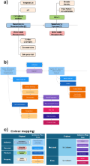
Instance maps as an organising concept for complex experimental workflows as demonstrated for (nano)material safety research
Beilstein J. Nanotechnol. 2025, 16, 57–77, doi:10.3762/bjnano.16.7

- supernatant upon several washing steps. “In Vitro Sedimentation, Diffusion and Dosimetry” studies were undertaken to determine the cell-delivered dose for all culture conditions based on the specific density and size parameters of the bio-nano conjugates [52]. Finally, comprehensive physicochemical


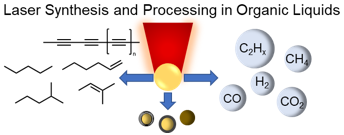
Laser synthesis of nanoparticles in organic solvents – products, reactions, and perspectives
Beilstein J. Nanotechnol. 2024, 15, 638–663, doi:10.3762/bjnano.15.54





Development and characterization of potential larvicidal nanoemulsions against Aedes aegypti
Beilstein J. Nanotechnol. 2024, 15, 104–114, doi:10.3762/bjnano.15.10
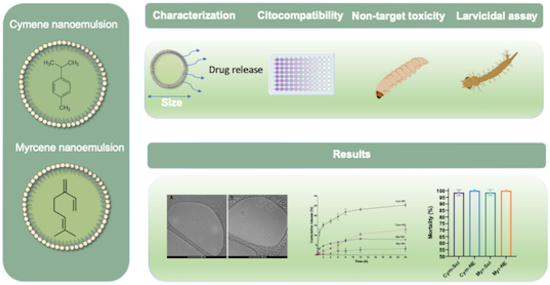
- , and 21 days after preparation. Signs of instability such as creaming, sedimentation, and phase separation were recorded, as well as physical aspects such as color, transparency, and fluidity. Dynamic light scattering analysis The average hydrodynamic diameter and polydispersity index (PdI) of the NEs


Influence of conductive carbon and MnCo2O4 on morphological and electrical properties of hydrogels for electrochemical energy conversion
Beilstein J. Nanotechnol. 2024, 15, 57–70, doi:10.3762/bjnano.15.6
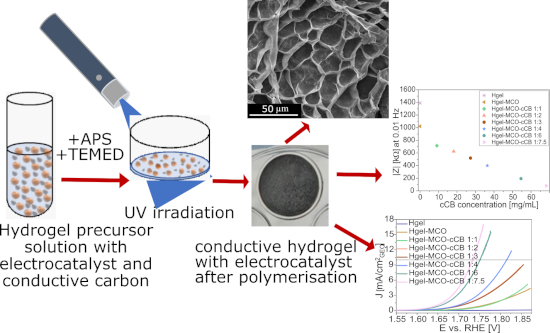
- viscosity of the hydrogel precursor solution to avoid the sedimentation of suspended particles (MCO and cCB). Table 3 presents the amounts of cCB used in the preparation of each conductive hydrogel sample. Ultraviolet irradiation (UV EMITA VP-60, 180 W, 220–240 V AC) in an ice bath lasted 2–4 minutes for


Fluorescent bioinspired albumin/polydopamine nanoparticles and their interactions with Escherichia coli cells
Beilstein J. Nanotechnol. 2023, 14, 1208–1224, doi:10.3762/bjnano.14.100
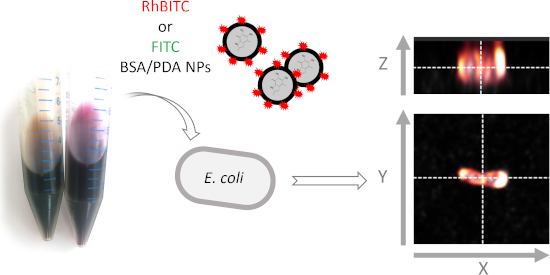
- deteriorated above pH 11 with, first, a decrease in size before the NP morphology changed into nanosheets [28]. However, in the case of BSA/PDA NPs, the NPs size increased when the pH value was above 6.5. In addition, precipitation, sedimentation, or degradation of the dispersion were not observed, showing



Experimental investigation of usage of POE lubricants with Al2O3, graphene or CNT nanoparticles in a refrigeration compressor
Beilstein J. Nanotechnol. 2023, 14, 1041–1058, doi:10.3762/bjnano.14.86
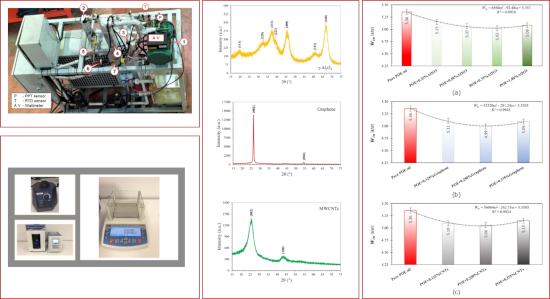
- prevent sedimentation as suggested in previous studies [32]. The zeta potential values of nanolubricants containing Al2O3 were also measured and given in Figure 9. Accordingly, it can be said that the stability of nanolubricant samples with Al2O3 is excellent and normal for the lowest mass fraction (ω





Antibody-conjugated nanoparticles for target-specific drug delivery of chemotherapeutics
Beilstein J. Nanotechnol. 2023, 14, 912–926, doi:10.3762/bjnano.14.75
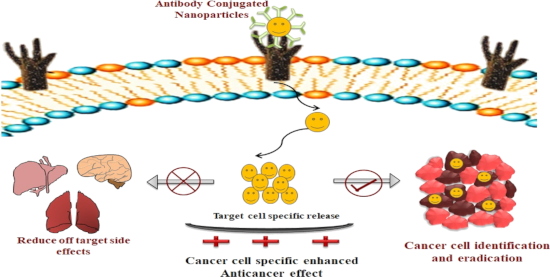
- effect of the protein corona on active targeting. Differential centrifugal sedimentation and immunological dot-blot studies revealed that increased serum concentration significantly reduced the binding of Tf-modified NPs to their receptors. They demonstrated that the protein corona significantly reduced



On the use of Raman spectroscopy to characterize mass-produced graphene nanoplatelets
Beilstein J. Nanotechnol. 2023, 14, 509–521, doi:10.3762/bjnano.14.42
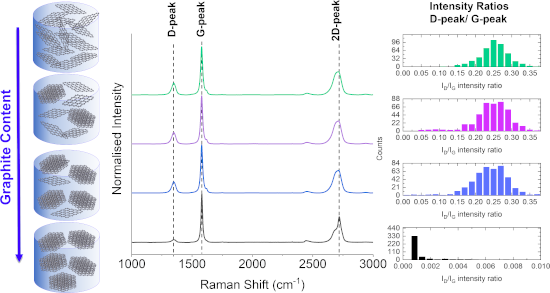
- in the production process [24][25]. Often based on a sedimentation process, this step removes the unexfoliated fraction of the material from the exfoliated product. However, if this process is not well designed and controlled, it is possible for the unwanted sediment to pass into the product stream


Plasmonic nanotechnology for photothermal applications – an evaluation
Beilstein J. Nanotechnol. 2023, 14, 380–419, doi:10.3762/bjnano.14.33




Polymer nanoparticles from low-energy nanoemulsions for biomedical applications
Beilstein J. Nanotechnol. 2023, 14, 339–350, doi:10.3762/bjnano.14.29
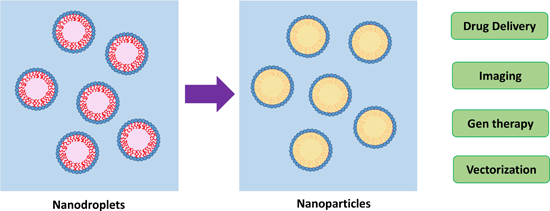
- were obtained upon solvent removal. High colloidal stability (longer than three months without sedimentation), high encapsulation efficiency (>99%), slow drug release (only 15% of the drug after five days), and low cytotoxicity against HeLa cells (cell viability > 80%) were observed. In vivo tests




Bismuth-based nanostructured photocatalysts for the remediation of antibiotics and organic dyes
Beilstein J. Nanotechnol. 2023, 14, 291–321, doi:10.3762/bjnano.14.26
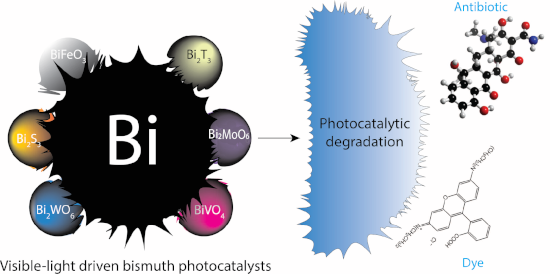
- techniques has demonstrated varying levels of effectiveness and drawbacks that restrict their widespread use. For instance, due to deficiencies such as the formation of harmful by-products and incomplete removal of organic pollutants, traditional water treatment methods such as sedimentation, filtration, and


Solvent-induced assembly of mono- and divalent silica nanoparticles
Beilstein J. Nanotechnol. 2023, 14, 52–60, doi:10.3762/bjnano.14.6
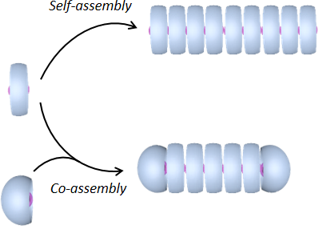
- “diffusion-controlled” stage, which can be attributed to the fact that the sedimentation of the chains becomes the rate-limiting factor when they become relatively long. We recently reported that the length of the chains made of 105 nm or 130 nm 2-PSN can be controlled by the addition of 1-PSN with a PPSR of


Green synthesis of zinc oxide nanoparticles toward highly efficient photocatalysis and antibacterial application
Beilstein J. Nanotechnol. 2022, 13, 1108–1119, doi:10.3762/bjnano.13.94
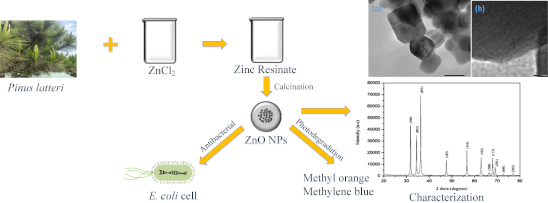
- technologies have been proposed to remove organic pollutants from water, including coagulation coupled with sedimentation, biological processes, membrane filtration, adsorption, advanced oxidation, catalysis, and photocatalysis [1][2][3]. Using semiconductors as photocatalysts has been a widely studied




Comparative molecular dynamics simulations of thermal conductivities of aqueous and hydrocarbon nanofluids
Beilstein J. Nanotechnol. 2022, 13, 620–628, doi:10.3762/bjnano.13.54
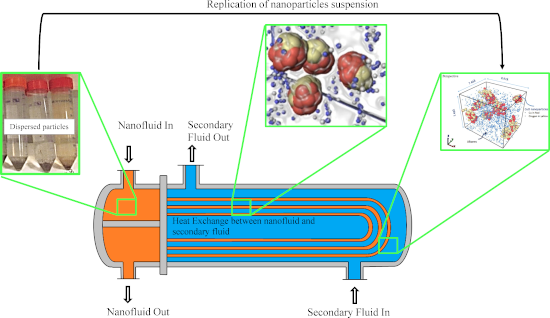
- future considerations, the system under observation should be modified with surfactants to increase stability for longer time periods, as systems without surfactant show agglomeration after a short time. Hence, this causes system destabilisation and creates sedimentation. Finally, surface modification of


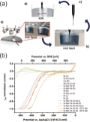
Sputtering onto liquids: a critical review
Beilstein J. Nanotechnol. 2022, 13, 10–53, doi:10.3762/bjnano.13.2






A review on slip boundary conditions at the nanoscale: recent development and applications
Beilstein J. Nanotechnol. 2021, 12, 1237–1251, doi:10.3762/bjnano.12.91
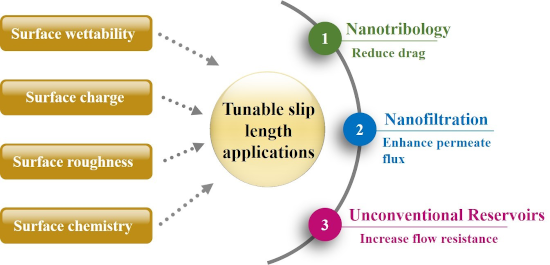
- , electrophoresis, streaming current or potential, and sedimentation potential have played crucial roles in the development of microfluidics and nanofluidics [73][74][75]. Among them, the electro-osmotic flow refers to the motion of an electrolyte solution relative to the stationary charged surface due to an


The role of deep eutectic solvents and carrageenan in synthesizing biocompatible anisotropic metal nanoparticles
Beilstein J. Nanotechnol. 2021, 12, 924–938, doi:10.3762/bjnano.12.69
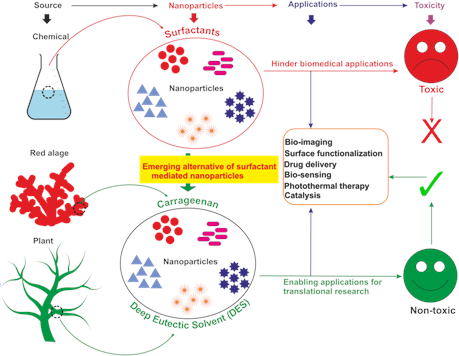
- aggregation and sedimentation above pH 5 [117]. The stability was enhanced upon adhesion of carrageenan to the nanoparticle surface rendering it negatively charged. Although there are little reports on using carrageenan as a safe and sustainable component for synthesizing plasmonic metal nanomaterials, the





